

Legendary Traders · Market Wizards: The Next Generation
Jason Berry
Five Losing Months in Fourteen Years, and Why He Never Traded Bigger
Chapter seven of Market Wizards: The Next Generation, “Mr. Consistency”
Listen on Spotify
Watch on YouTube
Also available on Apple Podcasts · Amazon Music · iHeart
Last reviewed: September 2026. Every figure below is drawn from chapter seven of Market Wizards: The Next Generation unless it is explicitly labelled as our own arithmetic. Complete Trader’s Edge has not audited any trading statement.
In fourteen years of verified monthly statements, Jason Berry has had five losing months. Four of those losses were €7,257 or less. The worst was €28,073, which is smaller than his average monthly return of €30,554.
Schwager opens the chapter by saying Berry’s equity curve looks a lot like Bernie Madoff’s, with three exceptions: it is smoother, the returns are larger, and it is real. He adds that during the years he worked for firms allocating capital to managers, an equity curve like this arriving by email was automatically assumed to be a hindsight-based simulation, and that assumption was always correct.

So the obvious question, the one Schwager asks him directly, is why a trader with returns that consistent has never dramatically increased his size. The answer to that is the most interesting thing in the chapter, and it is not entirely flattering.
Jason Berry at a glance
| Field | Detail |
|---|---|
| Known as | Mr. Consistency |
| Background | Rhinebeck, New York. Small independent high school with no grades, only written reports |
| Education | Clark University: political science and a self-designed Russian Studies major, then a fifth-year MBA scholarship |
| First market job | Floor clerk at LIFFE in London, working for his cousin. He lasted about six months |
| Career length | 27 years |
| Verified record | 14 years of monthly statements, from 2012 |
| Losing months | Five. Four of them €7,257 or less |
| Worst month | €28,073, smaller than his average monthly return |
| Average monthly return | €30,554 |
| Account size | €100,000 through 2023, €200,000 thereafter |
| Stated compound rate | 1,605%, which the book itself flags as misleading. See below |
| Best months | Fifty times the size of his worst months |
| Firm | Positive Equity, founded 2009 with two partners. Dublin plus two offices in Croatia, where he is based |
| Traders trained | Well over 200, some of whom have surpassed his own performance |
| In the book | Chapter 7 of Market Wizards: The Next Generation (2026) |
The record, and the number that is not what it looks like
Berry began trading 27 years ago, but monthly statements were not available before 2012. He says his return profile was very similar in the earlier period: very few down months, none of them consequential. What follows covers the 14 documented years.
| Figure | What the chapter states | What it tells you |
|---|---|---|
| Five | Losing months in 14 years | Roughly 168 months, so about 3% of them |
| €7,257 or less | Four of those five losses | Trivial against the average month |
| €28,073 | The worst month | Smaller than his average winning month |
| €30,554 | Average monthly return | The comparison that defines the record |
| Fifty times | Ratio of best months to worst months | The distribution is almost entirely one-sided |
| €100,000 / €200,000 | Account allocation, before and after 2023 | Deliberately small, because he did not need more |
| 1,605% | Compound annual growth rate | Arithmetic, not compound. See directly below |
The 1,605% deserves the treatment the book itself gives it. Schwager explains that the percentage borders on the ludicrous precisely because the account balance never grew with the profits. Berry uses moderate position size, low risk tolerance and very short holding periods, so he never needed a larger balance. Profits were withdrawn rather than compounded, which means cumulative profits grew arithmetically, not exponentially. The percentage is technically true and practically meaningless as a forecast.
Our arithmetic, not the book’s. An average month of €30,554 on a €100,000 allocation is about 30% of the account per month, or roughly €367,000 a year on capital of €100,000. That is the right way to hold the number: it is a return on deployed risk capital in a prop structure, not a compounding fund return, and it cannot be annualised into the 1,605% figure without misleading yourself. The statistic that actually matters is the one Schwager highlights, and it needs no adjustment: his worst month in fourteen years is smaller than his average month.
What the smoothness does and does not prove
A return profile this smooth normally signals one of three things: a hidden tail risk, a valuation assumption, or a fabrication. Berry’s is none of those. His holding periods are minutes, his risk per trade is tightly capped, and the statements are real. But smooth is not the same as scalable. Schwager and Coyle both make the point that Berry’s method does not scale, and Coyle notes that the traders in this book with jaw-dropping account balances are the ones with reasonably large drawdowns. You can have the curve or you can have the size. This chapter is about a trader who chose the curve.
Rhinebeck, Russian studies and a houndstooth suit
Berry grew up in Rhinebeck, a small town about two hours north of New York City, and went to a small independent high school where most of the students were children of 1970s hippies. Teachers were on a first-name basis. There were no grades, only written reports. He spent his junior year studying abroad in a small French town.
He was, by his own account, at best an average student, and thinks the only reason he got into Clark University in Worcester, Massachusetts was that he hit it off with the admissions counsellor, who later told him she was allowed to admit one student a year regardless of grades or test scores. He majored in political science alongside a self-designed major in Russian Studies, then took a fifth-year scholarship into the university’s MBA programme.
His route into markets was a family accident. His cousin was a prop trader on the floor of LIFFE, the London International Financial Futures and Options Exchange, and had just lost his clerk. The UK offered Americans a six-month guaranteed work visa. Berry applied, got it, and went to work on the exchange floor.
He knew immediately that he did not want to be there. He is honest about why, and it does him no favours. Most of the clerks came from East End working-class backgrounds, and he arrived with a graduate degree and, in his words, a snobbish and condescending attitude. He also disliked what he saw on the floor, including elbow trades: a broker quietly hands a trade to the friend standing at his elbow, who gets a virtually guaranteed winner and reciprocates with lunches, beers or favours. The broker’s client gets a worse fill.
The first-day story is the one that sticks. He wore the only suit he owned, a double-breasted black and white houndstooth, onto a floor where everyone else was in black or navy. The abuse ran for the whole week, and the new man is on the receiving end of every joke. His cousin took him out to buy a navy suit. It did not help. He notes the exchange ran public tours, and whenever an attractive woman was in the group, all trading stopped and the floor turned to catcalls until she left. He had come from a liberal arts university where political correctness was in full swing, and did not like the floor.
He lasted about six months. Then he met a group of prop traders arbitraging the German Bund between LIFFE and Eurex who were planning to leave the floor and trade electronically from Ireland. They offered him a job. His response was: yes, get me out of here.
Learning to trade with no edge and no book
His first trading job was running someone else’s system. The firm had a friend in Naples, Florida who traded a breakout system based on price bands, and they wanted Berry to trade it on European markets overnight, from 2 a.m. to noon every day. Buy if it broke out of the range on the upside, sell if it broke the low end, manage the risk and run the winners as far as he could. He had no idea what he was doing. After two or three months he had made about $3,000.
Schwager points out the obvious: he was a full-salaried employee generating a few thousand dollars. It was a net loss for them. Berry agrees, and explains the real motivation. They were not trying to make money from that system; they were looking for someone to send to Ireland to set up an office in Dublin. Ireland, for tax reasons.
Two things from this period matter more than the money.
The first is the risk rules he was handed. Do not lose more than 10 ticks on any trade. Do not lose more than $300 on any day. Here is a list of six slow-moving markets. There was no further instruction, no trading education and no simulated trading.
The second is what he did with them, which nobody taught him. When he got back to the London office, the risk manager told him he was the only person there who was positive; everyone else doing similar trading was negative. Asked what he was doing differently, Berry gives an answer that turns out to be the whole chapter.
“I got out of my losers. I didn’t hope. I didn’t get attached to anything.”
He had not read a single trading book at that point. He knew nothing about technical analysis, fundamental analysis or trading philosophy. What he had was video games, and he draws a straight line between the two: both require hand-eye coordination and focused states where you are trying to perform as well as you can, and both require you to enjoy sitting in front of a screen.
Years later he turned that into a hiring tool. He played video games he was good at with every new class of trainees, not to test their skill but to watch how they handled stress and how they reacted to losing. Some would go quiet and focused. Others would say they were terrible at the game and give up immediately. He found the parallel to trading behaviour close enough to be useful. Schwager notes this is the first Market Wizards book in which video game experience has come up in several interviews as a positive influence.
Fired twice, then Positive Equity
Most of his trades in the early years were gut feel. He had no defined edge, but the more he traded the better he got, and when the firm asked whether he could instruct trainees he said yes. He trained a class of four who all ended up trading successfully at the firm. That started the training career that has run alongside his trading for 27 years.
A couple of years later his boss in Chicago called on a Friday afternoon and told him to be in Chicago on Monday. Berry said he had friends flying in from London that weekend. The reply was: Monday morning, or you are fired. He took a Sunday flight, arrived early on Monday, and was told at 9 a.m. that he could stay as a trader but was dismissed as head of training. At that point he was training every trainee in both Dublin and Chicago, half his income came from a share of the profits of the traders he had trained, and over 80% of those traders had become successful.
He does not know the reason. There was a new CEO who may have thought he was making too much money from training traders.
Back in Dublin he began making tentative plans to leave. Before he could, the risk manager called him in and told him he was fired. He still does not know why, and suspects they thought he might take other traders with him. He took a couple of months off to go snowboarding.
Then he partnered with another trading firm, Saxon, joining their Dublin office, where he hired and trained traders. Several years later that firm went all in on algorithmic trading, and Berry bought out their half of the Dublin operation. That became Positive Equity, formed with two partners, built around one idea: that every trader who starts with them should be able to have a career for as long as they want it.
Triple-F: the fantastic fill feeling
The first thing he teaches trainees is to find what he calls triple-F trades: fantastic fill feeling. These are trades where the market instantly goes in your direction. One of the better indicators of a good trade, he says, is when you get only a partial fill and the market runs away before the remainder of the order is filled.
Asked how you identify that kind of trade, his answer is experience. The more you trade, the better your chance of working out an edge that gets you that fill.
His trading is mostly momentum, on short time intervals: one, two and five-minute bars. Which raises the obvious objection. On a one-minute bar, how do you tell a meaningless reversal from a real change in the short-term trend?
The answer is the concept Schwager singles out as new to the series.
Time of day
Berry trades each market during specific times every day. He knows how the markets move during those times, and he does not trade during the times of day when a given market typically produces choppy bars. He trades when the market is more prone to trend, and he says he can tell when a market is behaving normally and when it is not.
Those windows are individual to each market. Schwager notes in his closing comments that this is the first time the concept has been raised by any trader in a Market Wizards book, which after six volumes is a striking gap. Most traders filter by setup and by instrument. Berry filters by hour.
He monitors numerous markets and pays attention to specific ones at various times of day, when he knows there is greater potential for one of his trades. Through experience he has identified setups he knows have a 70%, 80% or 90% chance of working. He declines to give an example of a 90% trade, because his colleagues are sensitive about him divulging their strategies. At one point in the interview his wife texts him: they are journalists, keep your secrets.
The edges that died
He is more forthcoming about strategies that no longer work, and the list is a useful education in how edges decay.
| Edge | How it worked | How it died |
|---|---|---|
| Intermarket lag | NASDAQ would spike first, giving him time to sell NASDAQ and buy the S&P to capture a relative value move. Either NASDAQ reverted or the S&P caught up | Speed-focused firms arbitraged it away. It exists in some form, but the easy money is long gone |
| Nokia and the FESX | Nokia was the largest European stock in the Eurostoxx 50 and the king of mobile phones. He traded the FESX outright anticipating it would follow Nokia, and traded the spread when the price ratio between the two stretched too far | Apple. Once Nokia’s business plan was destroyed the stock shrank in importance and the trades disappeared |
| S&P minis versus SPY | Counterparties in the ETF trades were visible. Fidelity or Citibank on the other side meant the trade was good | Investment banks and prop names such as Goldman and Susquehanna started appearing. Nine times out of ten, against one of those, he was the loser. They lacked the infrastructure to compete with hyper-fast order machines, so they moved on |
| The VIX time-of-day trade | Orders that consistently arrived at a specific time of day. It was worth roughly half his monthly profit and loss for about four years | It ended on the day the Ukraine war started in 2022 and never came back. He cannot explain the connection |
His conclusion from the VIX trade is the sentence to take away: no strategy lasts forever. Usually an edge erodes slowly, which is what makes it hard to notice. That one evaporated overnight, which he treats as the exception rather than the rule.
Spreads, scenarios and the daily report
Three working habits sit behind the consistency, and all three are copyable.
Most of his trades are relative
A lot of people think you have to profit from directional moves to make money in markets. Most of Berry’s trades are relative: he is trading one market against another. He says that focus on spread trades, rather than solely directional trades, has been instrumental in achieving the performance he has.
Schwager picks this up in his closing notes and calls it one of three elements Berry raised that are rarely or never mentioned in other Market Wizards interviews. Berry asserts that he has probably made more money trading spreads, buying one market and simultaneously shorting a closely related one, than from directional trades, and almost nobody considers the possibility. Spread trading was also the dominant strategy for Kelvin Chiu in the same book. The hedged structure limits profit potential, but it also significantly limits risk, and the question is only ever whether the return-to-risk ratio implies an attractive trade. For Berry, those opportunities arise when the price ratio of two closely correlated markets approaches an extreme of its prevailing range, which is a form of mean reversion.
He writes the scenarios down before the news breaks
He writes out different scenarios and thinks through the expected impact on different markets. His example at the time of the interview is tariffs. What happens if a 50% tariff is imposed on the EU? What does that mean for US bonds, the US stock market, the European stock market? Because a significant portion of his trading involves spreads between markets, he has to consider relative impacts, not just directional ones. Then he does it again for 20% and for 10%. And again for other scenarios: China attacking Taiwan, the Russia-Ukraine war ending.
The purpose is stated plainly. He tries to be prepared ahead of time so that when the news breaks, he is not caught off guard trying to work things out while the markets are in turmoil. He has already planned his response, so he can react instantaneously.
He also uses the distortion in initial reactions. Say a development should be more bullish for the S&P than for the NASDAQ, but the NASDAQ initially rises more because it is more volatile. That is an opportunity to buy the S&P and sell the NASDAQ.
The daily report
At the end of each day he writes a summary of his trading. It is not profit-and-loss accounting. It is a description of the trades he saw, the trades he took, the results of those trades, the size he used, how long he was in them and how he handled them.
The questions are specific. Did I let the trades run as far as I should have? Did I cut trades when I should have? What was my psychology like? Was I panicky? The report is a daily reminder to himself of what he needs to improve and what he needs to work on, and he rereads it the next morning to remind himself what to focus on before he starts trading.
At month end he reviews the whole set, looking for signs of inefficient trading and strategies hurting returns. If a month is subpar, the daily reports tell him where the problem lies: deficiencies in his trading, or forcing trades when the markets lacked opportunities. The monthly review asks the bigger questions. Do I need to be better at cutting losses? Take more risk? Take less risk? Change my trading size?
He also annotates a chart whenever there is price-impacting news in a market, which over time has given him his own historical record of how different markets responded to various news events. If it sounds like a lot of work, Schwager notes, it is. Our trading journal system covers how to build the same habit at a smaller scale.
Volatility, panic and the one big day
Berry’s best trades come in bear markets and periods of panic. The worse the news, the better the trading performance. He names September 11, 2001 and 2008 as the classic examples, and notes the striking contrast on a day like September 11 between the gut-wrenching emotions you feel and the trading opportunity in front of you.
More volatile markets offer better trades, but size management is the key. The more volatile the market, the wider the stops, and the lower the size. The payoffs are better.
The single big day he gives is 2008, when four central banks cut rates simultaneously. He made 160 grand that day. But he is careful to frame it as the exception. He makes money by trading numerous price moves throughout the day, every day: a grind of low-risk, smaller-sized trades whose small profits add up through the day. All his trades have much higher upside potential than the risk he takes, because he has a very low tolerance for sitting in trades that are offside. That is why his best months are fifty times larger than his worst months.
Why he never traded bigger
This is the question Schwager keeps returning to, and Berry’s answer comes in two parts.
The first part is structural and reasonable. Some of his strategies are limited in the size they can absorb, and he takes up whatever is available. He has also taught many of his trades to other traders at Positive Equity, and they share in the volume. So he limits his own size in capacity-constrained trades where other firm traders are active.
The second part is the one worth reading twice.
“A less flattering answer is that it’s hard to increase size.”
He says he works on it, but he definitely could have done a better job of it over his career. The trades where he can increase size without capacity constraints are probably the trades where his consistency is not as good, which makes scaling them genuinely harder. But he accepts the criticism as fair. And then he offers a diagnosis of himself that most traders never say out loud: he read somewhere that people’s earnings are limited by what they think they deserve, and wonders whether he is sabotaging himself psychologically, being too satisfied with his success level and not working hard enough to capitalise on his edge.
That is the real trade-off in this chapter. The same low tolerance for being offside that produced five losing months in fourteen years is the thing that caps the size. You do not get one without the other.
The three Cs
Berry teaches trainees a progression he calls the three Cs, and he uses it on himself when his own trading goes wrong.
| Stage | For a trainee | For Berry |
|---|---|---|
| Control | All they should be looking for is control of their profit and loss, by limiting the loss on each individual trade to a predefined maximum. A trainee’s P&L generally just goes down, down, down. The goal is to get the daily P&L going sideways | If he is having winners but too many losers, he quits all the markets he cannot control and focuses solely on markets he knows he can control |
| Consistency | Once they have control of their P&L, they can begin the work to develop consistency | Once his P&L is going sideways, he starts looking for consistency, trading only the markets where he is consistent |
| Confidence | Once consistent, they reach the stage where they have confidence. They can take larger trades, hold trades longer, add to winners and expand the markets they trade in | The stage where he trades in larger size, looks for home-run trades and trades more products |
Notice the order. Size is the last thing, not the first, and it is conditional on the two stages beneath it holding. He also teaches trainees that their job is to catch the first bout of momentum and not worry about trying to catch subsequent moves.
Berry is candid that even without major losses he still experiences periods where trading is challenging. When volatility is low and there are few opportunities, it is hard to stay motivated, easy to get bored, and it takes discipline to stay focused and still make correct decisions. He questions his own abilities and career longevity after a few losing days, which he calls a fleeting but lurking thought. When it appears, he knows what to do: take fewer trades, limit himself to his best setups, and get a green day of any amount to reverse the losing string.
Training 200 traders, and what it reveals
Berry has trained well over 200 people. The reason he gives for spending so much of his career on it is not altruism. He says he is rarely the best trader in his own group, and has only been Trader of the Year there twice. He likes surrounding himself with smart people to stay relevant and to have other eyes and ears on the market. He once had a trainee still in simulation point out a trade he could not yet take himself, which turned into a €20,000 trade for Berry. The competitive element of being surrounded by good traders helps, and so does shared research. It is the clearest argument in the book for why traders in an office have an advantage over those trading alone at home.
The programme itself is unusually specific, and the numbers in it are useful whatever your setup.
| Stage | What happens |
|---|---|
| Foundation | Basics of markets and the crucial role of risk management. How interest rates and inflation affect different markets. Considerable time on how specific news impacts specific markets: if nonfarm payrolls came out today, how did the number compare to expectations, were there revisions, what did bonds do, what did the stock indexes do, what did currencies do |
| Historical perspective | Trainees have no historical perspective on how to behave in different scenarios, so whenever there is a market-moving event he prints and annotates charts. They study how key markets responded to a wide range of historical events |
| Simulation | Everyone starts simulated. He calls it a game-changer that captures 90% of the trading experience, and expects trainees to get their mistakes out of the way in it. Typically lasts nine to 18 months |
| Review cadence | Early on he meets the class every day or two to review setups seen, trades taken and trades missed. Each trainee analyses their own trades daily and submits the analysis. As they progress this drops to weekly, then monthly, then quarterly or annually with risk managers handling day-to-day oversight |
| Going live | To transition, a trader must hit a specific profit threshold on a rolling three-month basis, and it cannot come from one-off trades or geopolitical spikes. The profits have to come from the daily grind |
| Staying live | Not guaranteed. If an edge does not carry over into real trading they go back on simulation. He calls live trading a privilege that is earned and continually re-earned |
| Full programme | Typically two to three years. One year is not enough. In two years people are getting there. Only after three years do people start performing at a higher level |
He subscribes fully to the idea that it takes 10,000 hours to become proficient, and frames his own job accordingly: to bring people to a basic level of competence so they can survive long enough to reach those 10,000 hours. He also notes it used to be much faster to get people into green profit and loss, and now they have to support trainees for longer.
Trainees are paid a full-time salary. Not a big one, but a living wage. Positive Equity is not one of the prop firms that charges trainees for the training.
What they teach, and what they deliberately do not
The firm has a list of 20 to 30 strategies taught to every trainee. These are not market-specific: they are structural setups, behaviours or inefficiencies that appear across multiple markets. Trainees are given the concept and then asked to explore where it fits best, because the firm wants them to develop their own edge rather than rely on the taught set.
The reason is stated bluntly, and it is the opposite of how most trading education is sold.
“We don’t want to have 60 traders trading like Jason Berry.”
They want 60 traders who trade their own strategies, partly because they avoid adding entrants to a strategy where volume is limited. Berry estimates that 30% to 40% of a trader’s edge comes from the shared frameworks and the rest is the product of self-discovery, refinement and experimentation. More of the taught setups are used when a trainee starts live trading; then it flips to more of their own.
The strategies he will describe are trend-following, in both outright positions and spread trades, and mean reversion to a significantly lesser extent than in the past. Years ago they actively faded spreads in many markets; now volatility is higher and they have to be much more selective and cautious.
But the most important thing they teach, he says, is independent thought as the path to edge discovery. They teach the tools, the methodology and the philosophy, drum a risk-control framework into them, and then sit back, advise, guide and give them time. He repeats that word. Time is so important. The combination of intense market observation and time is much more important than learning a few specific strategies. His warning to readers follows directly: most people do not take the time to approach markets in a methodical and focused way, and too many are looking to get rich fast. You can make it big, but it takes time to become a pro, as in any other endeavour.
Who makes it
Can anybody be trained to be a good trader? He can teach a large percentage of people to at least break even and maybe make a small income. He believes only a minority can become good traders.
The early tells are behavioural. People who are afraid to trade are easily identifiable by their low trading volume. Traders who cannot cut losers are also easy to spot. He tells the story of one trader who could not cut his losses: after two months Berry told him he could not cut a loser and his losses were too big, and let him go. The trader went to a competitor, had a €10,000 up day followed by multiple days winning €2,000 to €5,000, and Berry started wondering whether he had misjudged him. Then he heard the man had a €245,000 losing day.
The hardest people to cut, he says, are the trainees who are doing everything right and working hard, but whose profits are low and whose progress is painfully slow. The easiest are the ones losing money, because there is a hard cap on how much a trader is allowed to lose, albeit significantly higher than the industry standard.
On success rates he is specific. In a bad year about 30%; the average is above 50%. From 2013 to 2020 they were hiring too many mediocre candidates and the success rate was low, because they accepted too many “maybes”. Of 100 hires, perhaps 50 would be maybes, and from those 50 you might get five to seven good traders. From the clear A-players, the rate is 50% to 70%.
The distinction is character, not aptitude. A candidates tick every box; maybes tick only some. They look for people who have achieved success in a competitive setting where they had to outwit or outplay opponents, with a demonstrated record of hard work and grit and a commitment to a trading career. Occasionally they interview someone who has won at everything they touched, and those candidates rarely disappoint. Maybes might have a passion for trading but only mediocre grades; if they did play something competitively, they could not handle the next level and quit.
His summary of the hiring philosophy is one line: they hire on personality, not trading skills, because you can teach trading skills and you cannot teach personality.
The women question, answered honestly
Asked why there are so few women in the firm, Berry does not deflect. Their first woman hire was about 15 years ago. She went live, made only small profits, eventually put up a big month and then promptly quit, saying she could not handle the stress. She never traded again. Her boyfriend at the time had applied a few months earlier but gone to a different firm because he did not want to work with his girlfriend; that firm went under, he joined Positive Equity while she was still there, they eventually married, and he became their head of trading. More recently they hired several high-level female athletes with excellent college grades, none of whom made it past the simulation stage.
His own reading of it is a deselection bias. The 1980s image of traders screaming and shouting is a stereotype perpetuated in films that persists today, and it turns a lot of women off. Successful traders today are far more likely to stay calm than to have emotional outbursts, but the stereotype overshadows that. They get very few applications from women. Whenever a professional-level application does come in from a woman, they always interview her, because she has already pushed past the societal filter, and that usually signals someone exceptional.
Fifty years old, competing with 22-year-olds
Asked whether traders eventually age out, Berry’s answer is four words: traders do not age out, they effort out.
He turned 50 two days before the interview. His biggest challenge is striking a balance between screen time and family time. He has the most flexible job in the world in that he can step away at any point, get flat and spend a week or two with his family, whatever. He also has the most inflexible job in that if he is not in front of the screen he is not in tune with the markets, and it is hard to get back in sync.
His closing answer is the most valuable thing in the chapter, and it undercuts everything the numbers imply.
He says he has painted an overly rosy picture. Trading demands personal sacrifice and a psychological toll. He is up trading at all kinds of hours of the day and night. Putin attacked Ukraine in the middle of the night. Truth Social posts move markets just before bedtime and again when he wakes up. The market waits for no one. Having a partner who is supportive and can accept all the disruption trading causes is essential.
Then this: he has had big losers that took a heavy psychological toll, and a few times has nearly passed out from the stress of losses. He wonders whether trading will help him live longer because of his success, or whether he is destined for a short life because of the years of trading stress. He is healthy, but says the long-term answer is unknown.
And he finishes grateful. Nothing motivates him more than a trainee who puts on the same trade he does but does it with more size and runs it further. He is 50 and competing with 22-year-olds, and he loves it.
What Coyle and Schwager conclude
Coyle’s note starts with the fill feeling. Great traders want positions to work right away, and when he researched the pattern he traced it back to Jesse Livermore, who claimed his best trades consistently showed a profit right away. He wonders how much better any trader’s results would be if they only stuck with the trades that worked almost immediately. Closely related is promptly cutting losses on unprofitable trades, which appears repeatedly in Market Wizards interviews and is a critical part of maintaining tight risk control. The message, he says, is simple: cut your losses. Our profile of Jesse Livermore covers where that idea originated.
He also takes market feel seriously despite it being unquantifiable, calling it too frequently witnessed to be ignored and a phenomenon observed for over a hundred years. His encouraging point is that this intuitive sense comes from nurture, not nature: he is unaware of any trader who was born with great market feel, and the fact that many great traders blow up a few times before succeeding supports that. He quotes Michael Marcus in the original Market Wizards on eventually learning to have a great market feel, and notes that Berry says the same, which suggests that in theory anyone can develop it with enough effort.
On edge, Coyle relays Berry’s assertion that all edges eventually erode and a trader needs to continually add alpha signals if they want their career to last. He adds the useful caveat that edge is a complicated topic with no universally agreed definition: some traders think their edge is a willingness to stick to a system through drawdowns. But for short-term traders like Berry, most of the good ones say all edges eventually erode, so if you are a short-term trader and want to take their advice, expect your days to be filled with a constant hunt for alpha. If that sounds like a chore, he says, you are probably in the wrong business, and there are plenty of other ways to succeed that do not involve being a short-term trader.
He closes on Berry’s boss. Many people are drawn to trading because they think it is an easy way to make a lot of money without working for a dreaded boss. Berry’s boss is the market. It can call at any time, and if he wants to continue thriving, he must answer. Coyle pairs it with the line from Reminiscences of a Stock Operator about a speculator needing to be on the job all the time or he will soon have no job to be on, and with Ed Seykota’s line from the original Market Wizards about great traders being the ones who are absorbed by the talent.
Schwager’s note calls Berry the embodiment of cutting your losses short, and says he came away with the impression that for Berry this is virtually a reflexive action, a trait he was born with. Even as a rank beginner with no trading knowledge or experience, he instinctively liquidated losing positions.
But rigorous risk control is only half the story. It can explain the smoothness of the equity curve, not its steady upward march. The other half of the source of his return-to-risk performance is the edge he has developed through uncovering and executing a score or more trading strategies which, based on his research, have well over a 50% chance of working, with some patterns having a reliability as high as 80% or even 90%. Those patterns are a byproduct of a career spent carefully monitoring price action and price-impacting news across a broad range of markets.
And Schwager picks out three elements rarely or never mentioned in other Market Wizards interviews: market response anticipation, time of day, and spread trading opportunities.
Mind, Method, Money
Berry is the clearest case in the book of a trader whose Money discipline came first, arrived instinctively, and set the ceiling on everything else.
How Berry maps to the three pillars
| Pillar | What he did | Where it broke |
|---|---|---|
| Mind | Trainee mindset maintained for 27 years. Daily written review, reread the next morning. Treats boredom and low volatility as a named risk with a named response. Openly diagnoses his own size problem | Questions his abilities after a few losing days. Says he has nearly passed out from the stress of losses. Wonders aloud whether he has been too satisfied with his success level to capitalise on his edge |
| Method | Twenty to thirty structural setups, some with 80% to 90% reliability. Time-of-day filtering per market. Spreads over direction. Scenarios written out before the news. Annotated charts building his own historical record | Every edge named in the chapter is dead: the intermarket lag, the Nokia spread, the ETF counterparty read, the VIX time-of-day trade. He replaced them. Most traders would not have |
| Money | Ten ticks and $300 a day as a beginner, and the instinct to honour it without being told why. Very low tolerance for offside trades. Wider stops and lower size when volatility rises. Best months fifty times the worst | The same low tolerance caps the size. He admits he could have done a better job of scaling and that the trades he can scale are the ones where his consistency is weaker |
Set him against the rest of the cohort and the contrast is sharp. Phil Goedeker had the same reflexive exit and used it to run a tiny account to eight figures on maximum margin. Simon Russo knew the rules and had to automate them after a $120 million drawdown. Berry never needed to automate anything, and never got the size either. Our overview of the three pillars explains why they move together.

Eighty-six lives read through Mind · Method · Money, from Livermore reading a chalkboard in 1892 to the traders still working from those ideas today. Told as they happened, with the losses left in, and every quotation traced to a source.
The counterweight
Four things belong beside the record.
The percentage return is not a percentage return. The book says so itself. A 1,605% compound annual growth rate on an account deliberately held at €100,000, with profits withdrawn rather than compounded, describes an arithmetic series dressed as a geometric one. The honest statistic is the one about his worst month, and it does not need dressing up.
The method does not scale, and Berry knows it. Coyle states it directly: Berry and Rick Bandazian have the best risk-adjusted returns in the book, and their respective methods do not scale, while the traders with the jaw-dropping account balances carry reasonably large drawdowns. If you are reading this chapter for a way to compound a growing account, the chapter is not offering one.
The specific edges are gone, and he will not name the live ones. Every strategy described in detail is one that stopped working. He declines to give an example of a 90% trade because his colleagues do not want their strategies divulged, and his wife texts mid-interview to remind him. That is entirely reasonable and it means the transferable content is method and process, not setups.
The lifestyle costs are real and he says so last. Trading at all hours, a market that waits for no one, big losers that took a heavy psychological toll, nearly passing out from stress, and an open question about what the years of stress will do to his lifespan. He calls his own picture of the business overly rosy. Read the counterweight in his own words before you read the equity curve again.
What actually transfers
Compare your worst month to your average month. That single ratio, not the annual return, is the cleanest measure of whether your risk control is real. Berry’s worst is smaller than his average.
Filter by time of day, not just by setup. Work out, per market, the hours when it trends and the hours when it chops, and stop trading the chop. Schwager notes no trader in six Market Wizards volumes has raised this before, which makes it the least crowded idea in the book.
Write the scenarios before the news. Two or three outcomes, and what each does to every market you trade, including the relative effects. The point is not prediction. It is being able to act instantly instead of working it out while the market moves.
Keep a daily report that is not a P&L. Trades seen, trades taken, size, duration, handling, psychology. Reread it the next morning before the open, and review the set at month end. Our journal system gives you a structure.
Run the three Cs in order. Control, then consistency, then confidence. Size is the last stage, not the first, and when your trading breaks down you go back to stage one: cut the markets you cannot control and trade only the ones you can.
Look at relative trades, not only directional ones. Berry believes he has made more money from spreads than from outright direction. The hedged structure caps the profit and cuts the risk, and the question is only whether the return-to-risk ratio is attractive. Our position sizing guide covers how to size them.
Assume your edge is dying. Four named strategies in this chapter are dead. Berry’s answer is a permanent trainee mindset: search for new strategies as if you had none. Complacency, in his framing, is what happens to traders who already have an edge.
Free research sheet
Jason Berry: The Complete Research Sheet
Eight pages covering the verified record and why the headline percentage misleads, the LIFFE floor and the risk rules he was handed, triple-F fills and time-of-day filtering, the four dead edges and how each died, spreads and scenario planning, the daily report, the three Cs, the training programme with its thresholds and success rates, the counterweight, and a printable pre-trade check.
The nine traders in Market Wizards: The Next Generation
- Kristjan Kullamägi
- Lance Breitstein
- Simon Russo
- Lukas Fröhlich
- Phil Goedeker
- Kelvin Chiu
- Jason Berry
- Kenny Sharkness
- Rick Bandazian Jr.
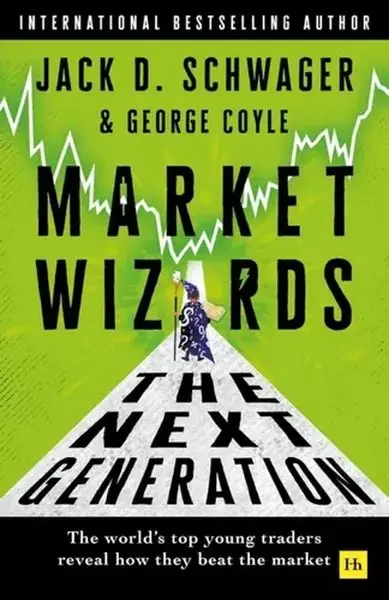
Profiles for the remaining traders are in production. Our full review of the book covers the cohort, the lessons that carry across all nine, and where the book falls short.
Frequently asked questions
Who is Jason Berry?
Jason Berry is the trader profiled in chapter seven of Market Wizards: The Next Generation (2026) by Jack Schwager and George Coyle, under the title “Mr. Consistency”. He grew up in Rhinebeck, New York, started as a floor clerk at LIFFE in London, and has traded for 27 years. Since 2009 he has run the prop firm Positive Equity with two partners, with offices in Dublin and two in Croatia, where he is based.
What is Jason Berry’s track record?
Across 14 years of verified monthly statements he has had five losing months. Four of those losses were €7,257 or less and the worst was €28,073, which is smaller than his average monthly return of €30,554. His best months are about fifty times the size of his worst. His account allocation was €100,000 through 2023 and €200,000 after that.
Why is Jason Berry’s 1,605% return misleading?
Because there was no compounding. The account balance was deliberately kept small and did not increase as profits accumulated, so cumulative profits grew arithmetically rather than exponentially. The book flags this itself. The meaningful statistic is the relationship between his worst month and his average month, not the percentage.
What is Jason Berry’s trading strategy?
Short-term momentum on one, two and five-minute bars, traded only during the specific times of day when each market tends to trend. Most of his trades are relative rather than directional: he believes he has made more money from spreads than from outright positions. He runs 20 to 30 structural setups, some with an 80% to 90% success rate, and writes out news scenarios in advance so he can react instantly.
What are Jason Berry’s three Cs?
Control, consistency and confidence, in that order. Control means capping the loss on every trade until the daily profit and loss stops falling and goes sideways. Consistency follows. Confidence is the final stage, where a trader can take larger size, hold longer, add to winners and expand into more markets. He applies the same sequence to himself whenever his own trading breaks down.
Which Market Wizards book is Jason Berry in?
Market Wizards: The Next Generation (Harriman House, 2026), chapter seven, “Mr. Consistency”. The book also profiles Kristjan Kullamägi, Lance Breitstein, Simon Russo, Lukas Fröhlich, Phil Goedeker and Kelvin Chiu. Our review of the book covers the full cohort.
Sources and further reading
Primary source: Jack D. Schwager and George Coyle, Market Wizards: The Next Generation (Harriman House, 2026), chapter seven, “Mr. Consistency”, including the closing notes from both authors. All figures, trades and dates above are drawn from that chapter. Calculations explicitly labelled as ours are our own derivations, not figures the book publishes. Complete Trader’s Edge has not audited any of the underlying trading statements.
Continue Learning
- Phil Goedeker: $5,000 to $53 Million, and Exactly One Losing Year
- Simon Russo: $40,000 to $500 Million, and the Trades That Nearly Ended It
- Lukas Fröhlich: An Audited 1,132,045% Year, Then Three Different Strategies
- Lance Breitstein: $46 Million at Trillium, $71 Million on His Own
- Kelvin Chiu: The Commodities Trader Who Made Asymmetry His Edge
- Market Wizards: The Next Generation Book Review (2026)
- The Psychology of Losing
- Risk of Ruin: The Mathematics Every Trader Must Understand
- Position Sizing: The Most Important Decision in Every Trade
- The Three Pillars: Mind, Method, Money
- The Complete Trader’s Edge – The Book
 The Complete Trader's Edge
The full Mind · Method · Money framework. 70 chapters.
View on Amazon →
 Market Mayhem
400 years of bubbles, crashes, and the pattern that keeps repeating.
Buy on Amazon →
 Greatest Companies
How the world's greatest companies were built — and what traders learn from them.
View on Amazon →
 Greatest Traders
Eighty-six lives that explain the markets — Livermore to Madoff, told with the losses left in.
View on Amazon →