

GREATEST TRADERS · EPISODE 50
Paul Singer
The Activist Who Took On Companies, Countries, and the Crowd
▶ Watch on YouTube🎵 Listen on Spotify
Also available on Apple Podcasts · Amazon Music
The frigate arrived in Tema port on the morning of 1 October 2012. A 103-metre training ship from the Argentine Navy, three masts rigged for ceremony, the kind of vessel that visits foreign ports so cadets can salute, photograph, and sail home. The Libertad had crossed the Atlantic for a courtesy call in Ghana. Within forty-eight hours she was a hostage.
The order came from a Ghanaian commercial court on 2 October, acting on a petition filed by lawyers for a Cayman Islands company called NML Capital. The crew were told they could not leave. The vessel could not depart. The bond posted to release her was set at roughly twenty million dollars. NML Capital, the petition explained, was owed money by the Republic of Argentina — debt purchased a decade earlier, judgments obtained in New York, payments outstanding. The Libertad, as a state asset of Argentina, was now collateral.
NML Capital was a subsidiary of a New York hedge fund. The hedge fund was run by a sixty-eight-year-old former real-estate lawyer who had founded the firm in 1977 with one-point-three million dollars borrowed from family. His middle name was Elliott. His full name was Paul Elliott Singer. And he had just done what no other creditor on earth had managed in eleven years of trying: he had turned a sovereign debt judgment into a physical seizure of a foreign navy.
The frigate sat in Tema for seventy-seven days. The cadets disembarked. The diplomatic cables flew. Argentina’s president, Cristina Fernández de Kirchner, refused to negotiate. The International Tribunal for the Law of the Sea eventually ordered the Libertad released on 15 December 2012 on grounds of sovereign immunity for warships. Argentina won that round. But the message had landed in every finance ministry in every developing country in the world: this man can find your assets, anywhere, and he will not stop.
This is the story of how Paul Singer built the most feared activist fund in history by treating sovereign default the way a litigator treats a deposition. Patiently. Permanently. And without forgetting a single line of contract.
The Lawyer Who Read the Contracts
Singer was born on 22 August 1944 in Manhattan, raised in Teaneck, New Jersey, the son of a pharmacist. He took a psychology degree from the University of Rochester in 1966 and a J.D. from Harvard Law in 1969. By 1974 he was working as an attorney at the investment bank Donaldson, Lufkin & Jenrette, parsing the small print of corporate offerings in the real-estate division.
What separates Singer from most of the famous traders of his era is that he never trained as a trader. He trained as a reader of documents. The bond indenture, the loan agreement, the prospectus footnote — these were the texts he learned to interrogate first. When he founded Elliott Associates in January 1977 with one-point-three million dollars from friends and family, the strategy he chose was convertible arbitrage: a conservative, document-driven trade where you hold the bond, short the stock, and earn the spread between two instruments the market has mispriced relative to each other.
Convertible arbitrage in the late 1970s was a trade for people who did not believe in market timing. You did not need to predict the economy. You needed to read the terms. Where could the bond convert, at what ratio, with what call protection? The mathematics rewarded careful reading and punished hubris. According to Fortune, Singer’s early career was shaped by losses that bred a permanent risk aversion — by 2012, Elliott had recorded only two down years since 1977. Two down years across thirty-five.
The 1987 crash and the recession of the early 1990s changed everything. Convertible arbitrage produced reliable yield, but yield was not the game Singer wanted to play forever. He had watched the bankruptcy courts during those years and seen something that most of his peers were missing: distressed debt was an asset class where the law itself was the catalyst. Buy a defaulted instrument cheap, work the legal process patiently, and the recovery curve was determined not by sentiment but by jurisdiction, statute, and contract.
By the mid-1990s, Elliott had pivoted. The fund had become one of the leading buyers of distressed corporate debt in the United States. And Singer had begun to ask a question almost no one else in the hedge fund industry was asking seriously: could this work for sovereigns?
Peru, 1995: The Template
In October 1995, Elliott bought roughly twenty-eight-point-seven-five million dollars of defaulted Panamanian sovereign debt for about seventeen-point-five million. By July 1996 the fund had sued Panama, obtained a judgment, and ultimately collected over fifty-seven million dollars. The trade compounded at speed. More importantly, it proved a thesis.
The thesis matured in Peru. In January 1996, on a recommendation from portfolio manager Jay Newman, Elliott began accumulating defaulted Peruvian sovereign debt issued in the late 1980s. The country was emerging from hyperinflation and political violence under President Alberto Fujimori, and most creditors were preparing to participate in a Brady Plan restructuring — a U.S. Treasury initiative encouraging commercial banks to swap bad debt for new bonds at a discount. The Brady Plan was the standard response to a sovereign debt crisis in the early 1990s. Most creditors took the haircut. The system worked because most creditors agreed it should.
Singer refused to take the haircut. Elliott bought roughly eleven-point-four million dollars face value of Peruvian debt and held it. The Peru Brady restructuring closed in March 1997. Elliott held out. By late 1996, the fund had sued Peru in U.S. federal court, demanding full payment. The Peruvian government’s defence was old, technical, and clever: champerty. Champerty is a medieval legal doctrine under New York Judiciary Law §489 that prohibits buying a debt for the sole purpose of suing on it. If the court agreed Elliott had bought Peruvian bonds purely to litigate, the entire claim could be void.
The case went to a bench trial in March 1998 before Judge Robert Sweet in the Southern District of New York. Singer himself testified. According to the trial record, he conceded that Elliott’s strategy from inception in October 1995 was that “Peru would either… pay us in full or be sued.” The district court agreed with Peru and dismissed the claim on champerty grounds in August 1998. It looked like Singer had lost.
He had not. Elliott appealed to the Second Circuit, which reversed the lower court in October 1999, ruling that buying defaulted debt with an intent to sue did not, by itself, violate the champerty statute — intent to sue had to be the sole purpose, and the appellate panel found that Elliott also intended to settle. The Second Circuit awarded Elliott a judgment of approximately fifty-six million dollars against Peru.
Now Singer needed to collect. And here is where the playbook took its definitive shape.
Peru was making interest payments to its other Brady bondholders through the international clearing system Euroclear, headquartered in Brussels. In September 2000, Elliott went into a Belgian court ex parte and asked for an injunction freezing forty-seven million dollars of Peru’s next Brady bond payment, on the grounds of a clause buried in the original loan documents: pari passu. Latin for “in equal step” or “on equal footing,” the clause was boilerplate — a standard provision stating that all of a sovereign’s unsecured debts ranked equally. For thirty years it had been considered legal furniture.
Singer’s lawyers argued something radical. Pari passu, they claimed, did not just mean “equally ranked” — it meant equally paid. If Peru was paying its restructured bondholders, it had to pay Elliott at the same time, in proportion. The Belgian court, in an ex parte hearing, accepted the argument and issued the freeze. With a Brady payment due on 7 September 2000, Peru had two choices: default on every other creditor in the world, or pay Singer.
On 29 September 2000, Peru paid. Fifty-eight-point-four-five million dollars. The Peru trade had compounded from roughly eleven million to fifty-eight million in under five years. More important than the return was the legal architecture: Singer had now established that pari passu, properly weaponised in the right jurisdiction, was an injunction lever powerful enough to bring a sovereign to settlement. He filed the playbook away.
At a Glance: Paul Singer & Elliott Management
| Metric | Detail |
|---|---|
| Born | 22 August 1944, Manhattan, New York |
| Education | B.S. Psychology, University of Rochester (1966); J.D. Harvard Law School (1969) |
| Firm Founded | January 1977 – Elliott Associates L.P. (named for his middle name) |
| Seed Capital | $1.3 million from friends and family |
| Initial Strategy | Convertible arbitrage |
| Down Years Through 2012 | Two (per Fortune, across 35 years) |
| Long-Term Annualised Return | Approximately 14% over 43+ years |
| Peru Trade (1995–2000) | ~$11.4M cost → $58.45M settlement |
| Argentina Trade (2001–2016) | ~$617M principal → $2.4B settlement; 10–15× original investment |
| ARA Libertad Seizure | Tema, Ghana, 2 October 2012; held 77 days |
| Supreme Court Victory | 16 June 2014, NML Capital v. Argentina |
| Argentina Settlement | 29 February 2016, $4.65B total to four holdouts |
| Firm AUM (mid-2025) | ~$76 billion |
| Forbes Net Worth (2025) | ~$6.7 billion |
| Status | Founder, President, Co-CEO, Co-CIO of Elliott Investment Management |
Argentina, 2001: The Default of the Century
On 23 December 2001, in the middle of the worst financial collapse in the country’s modern history, Argentina announced that it would default on roughly ninety-three billion dollars of sovereign debt. It was the largest default in history at that time. Five different presidents passed through the Casa Rosada in less than two weeks. The Argentine peso, pegged at one-to-one with the U.S. dollar since 1991, was about to be unhinged. Unemployment would reach 22.5 percent. The poverty rate would climb to 57.5 percent. The country went into shock.
For Paul Singer, this was the trade he had been preparing for since 1995. Argentine bonds, governed by New York law under a 1994 Fiscal Agency Agreement that included a pari passu clause, were trading for cents on the dollar in a market that assumed they would never be paid. NML Capital, the Cayman Islands subsidiary of Elliott Management, started buying. By the time the dust settled, NML had accumulated bonds with roughly six-hundred-seventeen million dollars of original face value, purchased for a small fraction of that amount. Multiple sources put Elliott’s total cash outlay at roughly one-hundred-seventeen million dollars when including subsequent purchases, though the precise figure has never been disclosed by the firm.
Argentina’s strategy was straightforward. Restructure. Most of the country’s creditors agreed to a debt swap in 2005, accepting roughly thirty cents on the dollar — in some calculations, around a seventy-five percent haircut once interest and inflation were factored in. A second restructuring in 2010 mopped up most of the rest. By 2010, approximately ninety-three percent of bondholders had accepted the swap. The Kirchners declared the restructuring a success and the matter closed.
It was not closed. Roughly seven percent of bondholders — the holdouts — refused both swaps. NML Capital was the largest and most committed of them. Singer was not interested in thirty cents. He wanted one hundred cents, plus interest, plus costs. He had a fifteen-year strategy. Argentina, he calculated, did not.
The Pari Passu War
In 2008, NML Capital filed suit in the Southern District of New York before Judge Thomas Griesa, the same Manhattan judge who would preside over the Argentine bond docket for the next decade. NML’s argument was the one Singer had perfected in Peru: Argentina was paying its exchange bondholders — the ones who had accepted the 2005 and 2010 restructurings — while refusing to pay NML. That, NML said, violated the pari passu clause in the original 1994 Fiscal Agency Agreement.
Argentina’s response was that the world’s bond markets had read pari passu the same way for decades: it meant ranking, not payment. The Argentine government argued that allowing Singer’s interpretation would unravel sovereign debt restructuring globally, encourage future holdouts, and convert a routine boilerplate clause into a holdout’s veto over every restructuring on earth. The U.S. Treasury, Department of State and Department of Justice filed amicus briefs supporting Argentina’s reading. Major bond dealers and academics agreed.
Judge Griesa did not. In February 2012, he ruled that pari passu, in the specific 1994 Argentine bond contract, did include an Equal Treatment Provision. The Second Circuit Court of Appeals affirmed in 2012 and again in 2013. By the autumn of 2012, Griesa had crafted the most aggressive sovereign debt injunction in modern legal history: Argentina could not pay its exchange bondholders unless it simultaneously made a “ratable payment” to NML and the other holdouts. The injunction reached the international payment system itself, threatening sanctions against any bank, trustee, or clearing house that helped Argentina evade it.
Argentina appealed to the U.S. Supreme Court. On 16 June 2014, the Court issued two devastating rulings. First, in a 7-1 decision in Republic of Argentina v. NML Capital, Justice Antonin Scalia held that nothing in the Foreign Sovereign Immunities Act prevented U.S. courts from ordering banks worldwide to disclose Argentine government assets that might be subject to enforcement. Second, in a one-line order issued the same morning, the Court denied Argentina’s petition for certiorari on the pari passu injunction itself. The injunction stood. Forty-five minutes apart, the highest court in the United States had handed Singer the legal architecture to track Argentine government money around the world, and to stop Argentina from paying anyone unless it paid him too.
On 30 July 2014, with Argentina refusing to comply, the country defaulted again on its restructured bonds. Standard & Poor’s declared it a “selective default.” The Kirchner government called Singer a vulture, a financial terrorist, an enemy of the Argentine people. Posters appeared across Buenos Aires reading Patria o Buitres — fatherland or vultures. Singer said almost nothing in public. He let the lawyers, the courts, and the calendar do the talking.
“Peru would either… pay us in full or be sued.”
— Paul Singer, trial testimony, Elliott Associates v. Republic of Peru, 1998
Macri, the Settlement, and the Vindication
On 22 November 2015, Argentina elected Mauricio Macri as its new president. Macri had campaigned, in part, on ending the holdout dispute and reopening Argentina’s access to international capital markets. By February 2016, with Macri’s government signalling good faith, Judge Griesa announced he would conditionally lift the injunction. On 29 February 2016, Argentina announced a settlement of approximately four-point-six-five billion dollars with the four largest holdout funds.
Elliott’s share was roughly two-point-four billion dollars. Multiple reports placed the firm’s gain at ten to fifteen times its original investment. On the bonds NML had purchased for cents on the dollar, the realised return measured against face value was approximately three-hundred-sixty-nine percent. Measured against actual capital deployed, contemporary press estimates put the multiple at closer to twenty times the original purchase. The trade had taken approximately fifteen years from first purchase to final settlement. By any conventional hedge-fund metric, it was the most profitable single sovereign debt trade in the history of capital markets.
What made the trade possible was not insight into Argentina’s economy. Singer was not predicting peso devaluations or commodity cycles or central bank policy. What made the trade possible was a single unshakeable view: that the contract was the contract, that the Cayman jurisdiction and the New York law clause and the pari passu provision meant exactly what they said, and that any creditor with the patience and the legal infrastructure to wait could compel a sovereign to honour them. The market had priced Argentine bonds as if the contract did not matter. Singer priced them as if the contract was the only thing that mattered.
The cost of the wait was real. For nearly fifteen years, Elliott carried defaulted Argentine paper on its books with no current income, no clear settlement timeline, and no guarantee that the legal theory would ultimately prevail. The firm absorbed the U.S. Treasury, State Department, and Justice Department all filing amicus briefs against its core argument. It absorbed the International Monetary Fund publicly questioning the systemic implications of the pari passu interpretation. It absorbed the academic and bond-dealer consensus that Singer was wrong. It absorbed the public branding of Argentina’s vulture campaign and the Samsung cartoons and the perpetual diplomatic friction. None of that moved the position. None of that compressed the timeline. Most hedge funds, holding the same position under the same conditions, would have settled at thirty cents and called it a win. Elliott waited.
The 2016 settlement was, in financial terms, an enormous and unambiguous victory. In structural terms, it confirmed something more important: that the legal theory developed in Peru and refined over the next decade had been correct all along. Pari passu, properly invoked, was a holdout’s lever. Sovereign immunity was not absolute. The combination of New York law, Cayman jurisdiction, and a patient capital base could, in fact, compel a foreign government to honour a contract a previous administration had repudiated. The precedent now exists for every future sovereign borrower, every future bond underwriter, and every future restructuring negotiator. That precedent did not exist before Elliott built it.
The Activist Pivot: From Sovereigns to Boardrooms
Sovereign debt was always only one corner of Elliott’s book. By the mid-2010s the firm had become better known — particularly in the United States — for activist campaigns against public companies. The methodology was the same. Read the documents. Identify the gap between what management was doing and what shareholders were entitled to demand. Build the position quietly. Then push.
Between 2004 and 2015, according to Reuters, Elliott pursued more than forty campaigns against technology companies alone. The firm pressed Hess Corporation in 2013, won three board seats at Alcoa (later Arconic) and exited at a 104% profit, drove athenahealth to substantial cost-cutting and the resignation of co-founder Jonathan Bush, and in 2019 published a public letter to AT&T’s board outlining what it called a “compelling value-creation opportunity.” In 2020 it took a stake in Twitter and pushed to remove Jack Dorsey from the board. The model was consistent: take a stake, identify governance or capital-allocation failures, write a public letter, force engagement, extract change.
The Cabela’s transaction in 2017, in which Bass Pro Shops acquired the outdoor retailer following Elliott pressure, became the symbolic case for critics of the firm’s tactics — the deal triggered significant layoffs in Sidney, Nebraska, where Cabela’s had been headquartered. The Korean campaign against Samsung in 2015, where Elliott opposed the merger of Samsung C&T with Cheil Industries, ended in defeat for Elliott but prompted Samsung to publish anti-Singer cartoons that critics described as antisemitic. Elliott condemned the cartoons. Samsung pulled them and apologised. Singer kept his focus on the next campaign.
Through all of it, the operational core of the firm stayed conservative. Per Fortune, Singer insisted on hedging virtually every position. Employees were largely banned from social media. Headshots of analysts were not permitted online. The firm operated as a low-profile institution where the work product was legal pleadings, governance memos, and deal structures — not market commentary, not directional bets, and almost never an interview with the press.
The activist methodology had its own internal architecture. According to the Fortune profile of the firm, every potential campaign passed through a checklist sometimes attributed to senior portfolio manager Jesse Cohn: is the company genuinely undervalued; can it actually be fixed; can other shareholders be persuaded to back the change. If any of those three failed, the campaign died inside the firm. If all three passed, Elliott built the position quietly, drafted the public letter, and announced the stake. The choreography was almost identical from campaign to campaign because the underlying analytical engine was identical. American Capital, the obscure financial holding company that gave Cohn his moment of personal conviction in 2015, capitulated nine days after Elliott’s letter went public. That speed was not an accident. It was the visible tip of months of preparation.
The portfolio extends beyond the headline campaigns. Elliott took control of AC Milan in July 2018 after the previous owner defaulted on a €415M loan, professionalised the club’s finances, and sold it to RedBird Capital Partners for €1.2 billion in June 2022. The firm acquired Barnes & Noble in 2019, installed Waterstones CEO James Daunt as a turnaround operator, and extracted operational improvement from a business that the U.S. equity market had effectively given up on. In the post-2008 financial crisis restructurings, Elliott took a position in Delphi Automotive that, according to The Guardian, ultimately yielded $12.9 billion in cash and subsidies from the U.S. Treasury’s auto-industry bailout fund. Each of these is, in essence, the same trade architecture: distressed instrument acquired below intrinsic value, legal and operational catalyst engineered, exit at significant multiple of cost basis. The packaging changes. The methodology does not.
The Discipline Underneath the Drama
It is easy to read the Singer story as a series of dramatic episodes — the seized frigate, the Supreme Court ruling, the Argentine settlement — and miss the underlying discipline that made the drama possible. The drama is a consequence, not a strategy. The strategy is something most retail traders would find almost unbearable: be willing to hold a position for fifteen years, hedge the downside obsessively, and trust that contractual rights, properly invoked, eventually prevail.
Three things stand out about how Elliott actually operates beneath the headlines. The first is the obsession with hedging. According to multiple Fortune profiles, Singer insists on hedging “virtually every investment to reduce the risk of loss.” This is not the language of a swing trader chasing momentum. It is the language of a portfolio manager who would rather earn a steady twelve to fourteen percent annualised return for forty years than chase fifty percent and blow up. Two down years since 1977 is not luck. It is policy.
The second is the time horizon. Most hedge funds have a quarterly evaluation cycle. Limited partners want to see returns now. Singer built Elliott on capital that was willing to wait, and he structured trades that needed time. The Peru trade took five years. The Argentina trade took fifteen. The activist campaigns at Hess, Alcoa, athenahealth, AT&T — each ran for years before producing the payoff. A trader who needs to be right inside three months cannot run this strategy. A trader who can wait fifteen years can run very few other strategies as well.
The third is the use of the legal system as alpha. The hedge fund industry has spent forty years importing tools from physics, mathematics, computer science, and behavioural psychology to find edge. Elliott imports tools from contract law, civil procedure, and international arbitration. The firm employs a small army of lawyers and former general counsels. Many of its best trades have hinged on a single clause in a single document that everyone else assumed was boilerplate. Pari passu was boilerplate — until Elliott proved it wasn’t.
The fourth, less often discussed, is the deliberate construction of asymmetry. In the Argentine trade, Singer was not betting on Argentina to recover. He was constructing a position where, under multiple scenarios, the contract would compel payment regardless of macroeconomic outcome. If Argentina ran into surplus, Elliott could collect through ordinary judgment enforcement. If Argentina ran into deficit and tried to restructure again, the pari passu injunction blocked any payment to other creditors. If Argentina shifted assets offshore, the Supreme Court’s June 2014 discovery ruling enabled tracing through banks worldwide. If Argentina elected a populist refusenik, the cost of capital exclusion eventually elected a pragmatist instead. Each scenario funnelled toward the same outcome: settlement on Singer’s terms. The skill was not predicting which scenario would unfold. The skill was constructing a position where the prediction did not need to be made.
Retail traders rarely think this way. Most trade entries are essentially directional — the trader has a view, takes a position, and is right or wrong based on whether the view materialises. Singer’s positions are structural. They convert one form of risk (counterparty solvency, restructuring outcome, political regime) into another form of risk (legal jurisdiction, contract enforcement, time horizon) where Elliott has a comparative edge. The retail-scale analogue is harder than it sounds. It means asking, before every trade: what is the structure of this risk, and does my edge actually apply to it, or am I just guessing about direction?
What We Cannot Know
Honesty about Singer requires honesty about the gaps in the public record. Four uncertainties matter for any reader trying to understand him.
First, the precise cash outlay on the Argentine bonds has never been disclosed. Press estimates of “ten to fifteen times” the original investment, or “twenty times,” are working estimates derived from incomplete legal filings and journalistic reporting. The widely cited one-hundred-seventeen million dollar figure may understate or overstate the true cost basis. Elliott does not disclose individual trade-level returns and Singer has not given a public accounting.
Second, Elliott’s full performance history is not publicly auditable. The “approximately fourteen percent annualised over forty-three years” figure originates from firm marketing materials and industry profiles, not audited public filings comparable to a mutual fund. The “two down years since 1977” claim, repeated by Fortune and others, similarly depends on firm-supplied data. There is no reason to believe these figures are inaccurate, but they are not independently verifiable in the way that, say, Berkshire Hathaway’s per-share returns are.
Third, the ethical question is unresolved and probably will be for a generation. Critics — including the U.S. Treasury and State Department in their amicus filings — argued that Singer’s pari passu interpretation threatened core American policy on sovereign debt restructuring and could inflict severe harm on developing economies. Defenders — including Singer himself in his rare public statements — argued that enforcing contracts strengthens the rule of law and ultimately benefits poor countries by encouraging discipline in sovereign borrowing. Both positions are defensible. Neither has been settled by the events.
Fourth, the political dimension is impossible to ignore and impossible to fully untangle. Singer is one of the largest Republican donors in U.S. history. He funded the American Task Force Argentina, a lobbying organisation that pressured U.S. policy on the Argentine dispute. He is closely connected to the Manhattan Institute. To what degree his political influence shaped the legal and regulatory environment in which his trades played out is a question the historical record cannot fully answer.
What Singer Teaches: Four Lessons in Order of Depth
Most retail traders cannot replicate the legal infrastructure, the decade-plus time horizons, or the institutional capital base that make the Elliott model possible. What is replicable, in scaled-down form, is the underlying discipline. The lessons below run from surface to deep.
Lesson 1 — Read the contract before you take the trade. For Singer, the contract is the bond indenture or the loan agreement. For a retail trader, the contract is the broker agreement, the prop firm rulebook, the funding programme terms, the futures contract specification, the options chain settlement procedure. Most traders skim these. Singer’s career rests on the proposition that almost no one reads them carefully. The retail-scale version of his edge is found in clauses you have never bothered to look at: scaling rules, drawdown calculation methodology, profit split timing, dispute resolution venues, daily loss limit definitions. Read them. Re-read them. The edge is in the footnote.
Lesson 2 — Time is a weapon, not a constraint. Most retail traders are punished by short time horizons. They have to be right this week, this month, this quarter. They size positions accordingly, with too much risk, too much leverage, and too little patience. Singer’s trades worked because he could wait. The retail-scale version is not a fifteen-year horizon. It is a willingness to skip a month of mediocre setups while waiting for the A-grade trade. It is the discipline to take zero positions on a Tuesday because nothing on the screen has the structure you require. In a year of trading, the difference between a trader who takes one hundred B-setups and one who takes thirty A-setups is measured in account-doubling.
Lesson 3 — Hedge the trade you cannot afford to lose. Singer became a billionaire while having only two down years in thirty-five because every position he took included an explicit risk-management overlay. For a retail trader, hedging is not literally shorting a correlated instrument against every long. It is something more fundamental: defining, in writing, before entry, the price at which you are wrong. Position size derives from that definition. If you cannot articulate where the trade is invalidated, you do not have a trade — you have a guess. Singer never took a guess.
Lesson 4 — The market does not have to agree with you for you to be right. For fifteen years, Argentine markets, sovereign debt commentators, the U.S. Treasury, the U.S. State Department, the academic mainstream, and the world’s largest bond investors all said Singer was wrong about pari passu. The Supreme Court of the United States eventually said he was right. The deepest discipline in the Singer story is the willingness to hold a thesis in the face of overwhelming consensus to the contrary — not because contrarianism is a virtue, but because the analysis was correct and the timeline was patient. For a retail trader, this is the hardest lesson. You will hold trades that the price action, the news flow, the social media commentary, and the market-watcher consensus all say are wrong. If your analysis is correct and your risk is defined, you hold. The market is not a referendum. It is a queue.
Continue Reading
Continue Reading
▶ Edward Thorp — First Quant: Beat the Dealer, Beat the Market
▶ Nassim Taleb — Black Swan, Tail Risk Hedging, Antifragile
▶ Joel Greenblatt — Gotham Capital, Magic Formula, Special Situations
Frequently Asked Questions
Who is Paul Singer?
Paul Elliott Singer, born 22 August 1944 in Manhattan, is the founder, president, and co-CEO of Elliott Investment Management, an American hedge fund founded in 1977. A Harvard-trained lawyer, Singer built Elliott from $1.3 million in seed capital into one of the world’s most active hedge funds and activist investors, with approximately $76 billion in assets under management as of mid-2025. Forbes estimated his net worth at roughly $6.7 billion in 2025. He is widely regarded as one of the toughest distressed-debt and activist investors in the industry.
What is Elliott Management’s strategy?
Elliott runs a multi-strategy approach centred on distressed debt, sovereign debt litigation, and activist equity campaigns. The firm pairs deep legal expertise with conservative position-level hedging. According to Fortune, Singer insists on hedging virtually every investment to reduce the risk of loss, which is part of why Elliott has reportedly recorded only two down years since its founding in 1977 and produced approximately 14% annualised returns over more than four decades.
Why was the ARA Libertad seized in Ghana in 2012?
On 2 October 2012 a Ghanaian commercial court ordered the detention of the Argentine naval training frigate ARA Libertad in the port of Tema, acting on a petition from NML Capital, an Elliott Management subsidiary that held defaulted Argentine sovereign debt. The vessel was held for 77 days as collateral for outstanding bond judgments. The International Tribunal for the Law of the Sea eventually ordered her release on 15 December 2012, ruling that warships were entitled to sovereign immunity from civil seizure.
What was the pari passu clause and why did it matter?
The pari passu clause, Latin for “in equal step,” is a standard provision in sovereign bond contracts stating that a borrower’s unsecured debts rank equally. For decades it was treated as boilerplate referring only to ranking. Singer’s lawyers argued in Argentine bond litigation that it also required equal payment — meaning Argentina could not pay restructured bondholders without also paying NML and other holdouts. U.S. District Judge Thomas Griesa accepted this interpretation in 2012, the Second Circuit affirmed, and the U.S. Supreme Court denied Argentina’s appeal on 16 June 2014, making the injunction final.
How much did Elliott make from the Argentina trade?
Elliott’s share of the February 2016 settlement with Argentina was reported at approximately $2.4 billion, on bonds NML Capital had been accumulating since the country’s 2001 default. Multiple press accounts placed the gain at roughly 10 to 15 times Elliott’s original investment. Measured against the face value of the bonds Elliott controlled, the recovery was approximately 369%. The exact cost basis has never been publicly disclosed by the firm.
Why is Singer called a “vulture investor”?
Critics use the term to describe funds that buy distressed sovereign or corporate debt at a steep discount and then pursue full repayment through litigation. Argentina’s previous government, led by Cristina Fernández de Kirchner, used the label repeatedly during the holdout dispute. Singer and Elliott reject the framing, arguing that enforcement of contractual rights ultimately strengthens credit markets and the rule of law. The philosophical argument has not been settled and is unlikely to be settled soon.
What can retail traders learn from Paul Singer?
The replicable lessons are not the legal infrastructure or the capital base. They are the underlying discipline: read every contract carefully before you trade; treat time as a weapon and wait patiently for A-grade setups; define in writing before entry the price at which the trade is wrong, and size accordingly; hold a correctly analysed thesis even when the market consensus disagrees, provided your risk is defined and bounded.
Does Elliott still pursue sovereign debt strategies today?
Sovereign debt is now a relatively small portion of Elliott’s overall portfolio, which has expanded into private equity, distressed corporate credit, activist equity campaigns, and multi-strategy trading across nearly every asset class. As of mid-2025 the firm managed approximately $76 billion across more than 600 employees in offices including New York, London, Tokyo, and Hong Kong. Activist equity campaigns at large public companies are now a defining part of Elliott’s public profile.
From the Book
Paul Singer’s career is a master class in the third pillar of the framework: Money. Patient capital, disciplined hedging, and contractual precision turn a fifteen-year wait into a generational return.
Discover how to build the same patient discipline at retail scale in The Complete Trader’s Edge.
 The Complete Trader's Edge
The full Mind · Method · Money framework. 70 chapters.
View on Amazon →
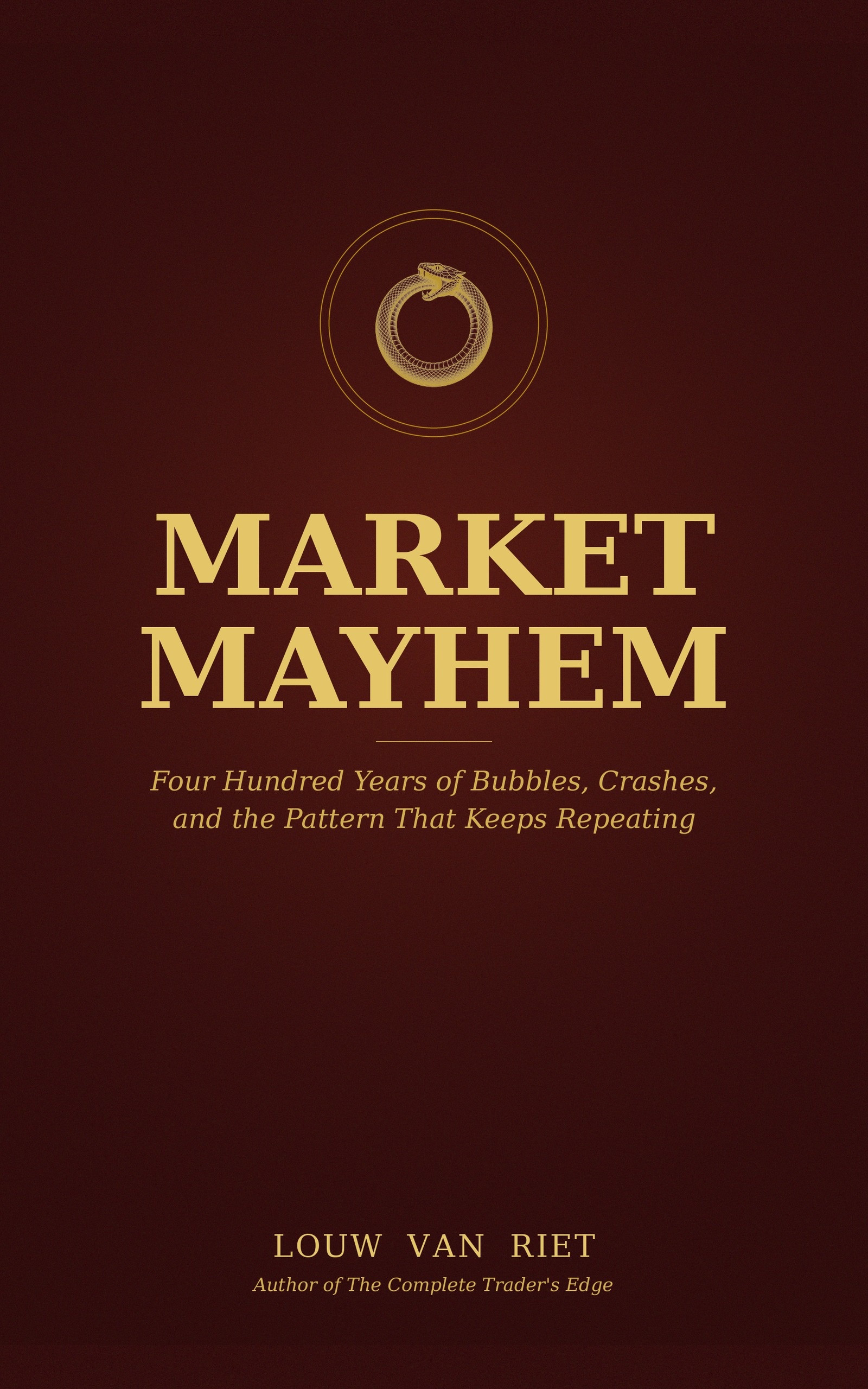 Market Mayhem
400 years of bubbles, crashes, and the pattern that keeps repeating.
Buy on Amazon →
 Greatest Companies
How the world's greatest companies were built — and what traders learn from them.
View on Amazon →
 Greatest Traders
Eighty-six lives that explain the markets — Livermore to Madoff, told with the losses left in.
View on Amazon →