

Legendary Traders · Market Wizards
Steve Watson
Wall Street read the reports. He picked up the phone and called the people the reports left out.
Communication-based research · Featured in Stock Market Wizards
Last reviewed: August 2026. Sources: Jack Schwager’s Stock Market Wizards and public records.
Steve Watson began his career doing the one thing almost everyone hates. Hired as an institutional stockbroker with no accounts of his own, he had to cold-call in front of a room full of colleagues — dialing no-name institutions to pitch stock ideas nobody wanted, getting hung up on, over and over, while everyone around him watched. He was not aggressive by nature. He tried simply being a nice guy. It barely worked. It was, in his own words, a relentless day-after-day process.
Most people would have quit. Watson turned the phone into a weapon. The same instrument that humiliated him as a rookie became the engine of one of the most impressive return-to-risk records in Jack Schwager’s Stock Market Wizards: an approach built almost entirely on talking to people. He is the Wizard who proves that an edge does not have to come from a chart, a model or a Wall Street report — sometimes it comes from picking up the phone and asking the right person the right question.
Key Facts
| Known for | Communication-based research — sourcing information Wall Street missed |
| The edge | Calling companies, competitors, customers and distributors directly |
| Selection | Cheap stocks (P/E 8–12) where perception was about to change |
| Risk record | Worst drawdown just under 4% over ~4.5 years — roughly one month’s return |
| Position limits | Largest holding ~3% of assets; shorts capped near 1.5% |
| Exposure | Typically 20–50% net long |
| Featured in | Stock Market Wizards (Jack Schwager, 2001) |
From humiliated cold-caller to fund manager
Watson entered the business with none of the usual advantages — no ready book of accounts, no network of contacts, no obvious reason to succeed beyond sheer determination. As a young institutional broker he ran waves of calls, put his head down, and dialed, watching colleagues close business while strangers hung up on him. It was demoralising work, and he was temperamentally the wrong person for the hard sell.
But the grind taught him something the polished analysts never learned: how to get people on the phone to tell him things. Several years later he left a secure job at a major fund to start his own hedge fund, and he built it around the one skill his brutal apprenticeship had forged. The rejection had not just toughened him; it had trained him in the exact craft his entire strategy would depend on.
The method: research by conversation
Watson’s philosophy started from a simple, ruthless observation about edges. If everyone uses a tool, the tool gives no advantage. Most traders lean on charts; Watson largely ignored them, precisely because so many people were using the same signals. And blindly following Wall Street analyst reports was, to him, worse than useless — by the time information reached a research note, the edge was gone.
So he went to the source. His research was heavily communication-based: he called a company’s management and employees, then called its competitors, its customers and its distributors. He was hunting for the kind of information that never appears in an earnings report — a shift in how customers were responding to a product, a change in a competitor’s position, an operational turn that Wall Street had not yet noticed. Larger companies were harder to reach, but he argued you could almost always get what you needed by calling the right person and asking the right question.
On top of that information edge sat a disciplined selection filter. Watson focused on relatively cheap companies — price-to-earnings ratios of roughly 8 to 12 — and within that pool looked for businesses where investors’ perceptions were about to change: a company struggling now but about to turn, where he could be first to know. Low price plus an imminent catalyst were his two requirements, and insider buying by management served as confirmation that better days were coming. As he framed the business, the goal was not to invest in great companies but to profit from inefficiently priced ones.
The defining lesson: risk control makes the record
The headline number in Watson’s chapter is not a return; it is a drawdown. In the roughly four and a half years since starting his fund, his worst decline from an equity peak to a subsequent low was just under 4 percent — about the same as his average monthly return after fees. Earning in a typical month roughly what you lose at your worst is an extraordinary ratio, and it placed him among the very best fund managers on a return-to-risk basis.
That record was not an accident of good markets. It was engineered through position limits. His largest single holding was about 3 percent of assets, and even that was rare; his shorts were capped near 1.5 percent. He held stocks for relatively short periods, accepting slightly lower profits in exchange for lower odds of a large loss. The research got him into the right names; the risk discipline is what kept any single mistake from mattering. As Watson himself put it, “You have to be willing to accept a certain level of risk, or else you will never pull the trigger.” — but the whole architecture was built so that the risk he accepted was always small.
Where the Mind · Method · Money framework meets Watson
Method is communication-based research: going directly to companies, competitors, customers and distributors for information Wall Street had not yet priced in, then buying cheap stocks on the edge of a change in perception.
Money is his most underrated strength. Tiny position sizes, capped shorts and short holding periods produced a maximum drawdown of under 4 percent — risk control so tight it, more than any single trade, defined his record.
Mind is the determination that carried him through the humiliation of cold-calling and the conviction to stick to his own beliefs. Schwager’s own lesson from Watson is that a method must fit the trader’s personality — and research-by-conversation fit his easygoing manner perfectly.
The honest counterweight
Watson’s approach is admirable and genuinely instructive, but the specific edge he describes is harder to reproduce today than it sounds — for reasons of both law and temperament.
Start with the law. In 2000, the SEC adopted Regulation Fair Disclosure (Reg FD), which prohibits companies from selectively disclosing material non-public information to some investors and not others. The precise informational advantage Watson describes — a lone manager extracting an insight from a CFO before the wider market had it — is exactly the kind of selective flow Reg FD was designed to curtail. The channel that fed his edge was partly closed by regulation almost as his interview was being published.
Then there is the record itself. A worst drawdown under 4 percent is spectacular, but it spans only about four and a half years, entirely within a bull market. Every manager’s risk profile looks pristine until it meets the regime that punishes their particular style. We do not have a long, multi-cycle track record at scale confirming the discipline holds through a genuine bear market or a liquidity crunch.
The method is also intensely labour- and personality-dependent. Schwager’s explicit takeaway is that it fit Watson’s manner; for a trader who cannot spend their days coaxing information out of strangers, “just call the companies” is not a transferable edge. And primary-source research, for all its rigour, is its own kind of biased channel: insiders talk their book, and a persuasive executive can mislead as easily as a stale analyst note. What made Watson’s calls reliable was the cross-checking — competitors and distributors as a counterweight to management — and the low valuation underneath as a margin of safety. The phone calls alone were never the edge; the discipline around them was.
What to actually take from Steve Watson
You may never call a CFO, but Watson’s principles are among the most practical in this archive.
First, do your own primary research. His entire edge was refusing to outsource his thinking to Wall Street and going to the source instead. You can read primary documents, use the products, check real customer feedback and reason independently rather than repeating the consensus.
Second, look for the catalyst, not just the cheapness. A low price alone was never enough for Watson; he wanted cheap companies where perception was about to change, and he tried to be first to see it. A mispricing needs a reason it will correct.
Third, choose a method that fits your personality. Watson thrived because research-by-conversation matched his temperament. An edge you cannot execute day after day, because it fights your nature, is not really an edge for you.
Fourth, let risk control, not conviction, protect your capital. His pristine drawdown came from hard position limits — roughly 3 percent at most in any name — not from being right every time. And stick to your own beliefs: he never abandoned a well-founded process just because someone else’s contradicted it.
Frequently asked questions
Who is Steve Watson?
Steve Watson is a hedge fund manager profiled in Jack Schwager’s Stock Market Wizards. He is known for a research approach built on direct communication — calling companies, competitors, customers and distributors — and for an exceptional return-to-risk record.
What was Steve Watson’s trading method?
Communication-based research. He gathered information Wall Street had missed by talking directly to management, employees, competitors and customers, then bought cheap stocks — typically price-to-earnings ratios of 8 to 12 — where investors’ perceptions were about to change.
What was his track record?
In roughly the first four and a half years of his fund, his worst drawdown from an equity peak was just under 4 percent — about the same as his average monthly return after fees. That return-to-risk placed him at the very top tier of fund managers.
How did Steve Watson start out?
He began as an institutional stockbroker with no accounts, forced to cold-call and endure constant rejection. The grind taught him how to get information from people on the phone — a skill he later built an entire fund around after leaving a secure job to start his own.
What stocks did Steve Watson buy?
Undervalued companies with price-to-earnings ratios around 8 to 12, where a change in perception looked imminent, with insider buying as confirmation. He kept positions small — his largest holding was about 3 percent of assets and his shorts were capped near 1.5 percent.
Can a retail trader copy Steve Watson?
Not literally — Regulation Fair Disclosure has since curtailed the selective-information edge, and the method is intensely labour- and personality-dependent. But the principles transfer: do your own primary research, demand a catalyst, control risk with position size, and pick a method that fits who you are.
Which book features Steve Watson?
Stock Market Wizards: Interviews with America’s Top Stock Traders by Jack Schwager (2001).
Continue learning
- Stuart Walton — a fellow Stock Market Wizard who, like Watson, shut out Wall Street and trusted his own research.
- Mark Minervini — another Stock Market Wizard who turned a self-built method into a champion record.
- Michael Burry — who built his edge on independent fundamental research while ignoring the consensus.
- David Ryan — a Wizard who fused fundamentals with disciplined, rules-based selection.
- Market Wizards (book review) — our breakdown of the Schwager series Watson appears in.
- The Mind · Method · Money framework — the lens we use to read every trader on this site.
 The Complete Trader's Edge
The full Mind · Method · Money framework. 70 chapters.
View on Amazon →
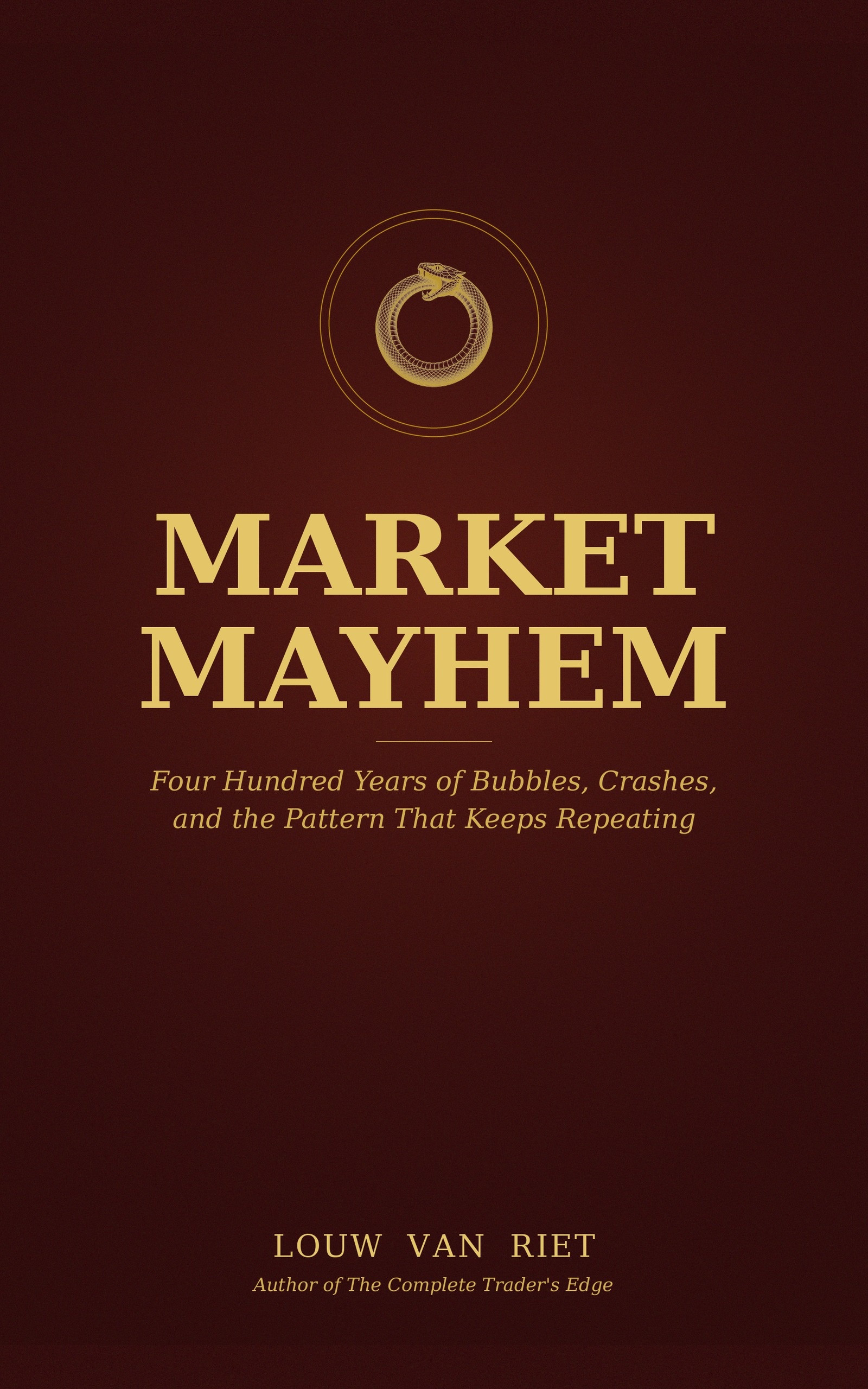 Market Mayhem
400 years of bubbles, crashes, and the pattern that keeps repeating.
Buy on Amazon →
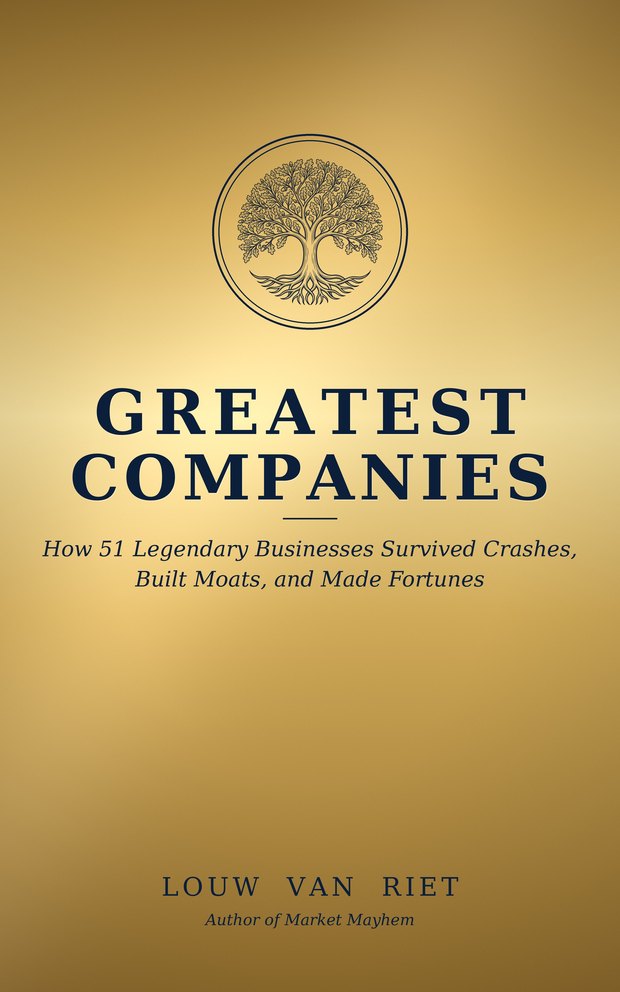 Greatest Companies
How the world's greatest companies were built — and what traders learn from them.
View on Amazon →
 Greatest Traders
Eighty-six lives that explain the markets — Livermore to Madoff, told with the losses left in.
View on Amazon →