

Explore all 80 books in the Trader’s Library →
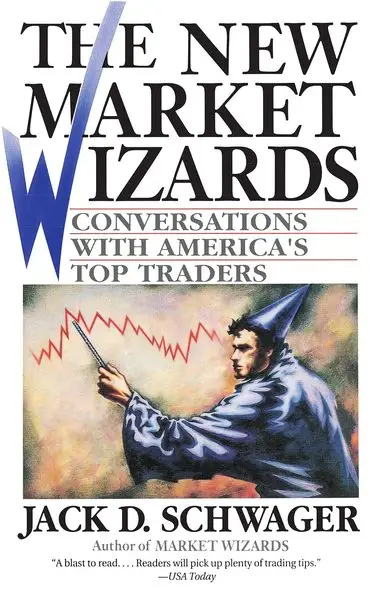
Three years after the original Market Wizards became required reading, Jack Schwager did the obvious thing and did it well: he found a new set of extraordinary traders and interviewed them with the same care. The New Market Wizards (1992) is the sequel, and it is one of the rare sequels that earns its place beside the original rather than living in its shadow.
This volume widens the lens. It brings in a celebrated currency trader, a generation of systematic and trend-following minds, and, importantly, the first prominent woman in the series. It also adds something the original lacked: dedicated interviews on the psychology of trading itself. This review covers what the sequel adds, who to read first, and whether it belongs on your shelf next to the 1989 classic.
At a Glance
| Author | Jack D. Schwager |
| First Published | 1992 |
| Pages | ~500 |
| Genre | Interview collection / trading philosophy |
| Series Position | Second in the Market Wizards series |
| Best For | Readers who finished the original and want more of the same quality |
| Skip If | You have not read the original yet. Start there. |
OVERALL RATING: 8.7 / 10
Who Should Read This Book
| Reader | Verdict | Why |
|---|---|---|
| New trader (0–1 year) | Read the original first | Then come here. The sequel assumes you have already met the series’ core ideas. |
| Intermediate (1–3 years) | Read it | The currency and systematic-trading interviews will land especially well at this stage |
| Advanced / professional | Re-read selectively | The psychology-of-trading interviews reward returning to at different career stages |
| SMC / ICT trader | Read for the FX voice | The currency-trading interview is one of the best accounts of discretionary FX thinking in print |
| Systematic / algo trader | Read it | The trend-following and system-development interviews are essentially a manifesto for mechanical trading |
| Fan of the original | Essential | It is more of what you loved, with a wider cast and the welcome addition of trading psychology |
The Book in Context
By 1992 the original Market Wizards had established interview-driven trading literature as a genre and made Schwager the definitive interviewer of top traders. The sequel had an obvious brief: find a new set of exceptional traders and apply the same rigorous, well-prepared interview style.
What makes the sequel more than a repeat is its breadth. It leans further into currency and systematic trading, it includes Linda Bradford Raschke as the first prominent female trader in the series, and it devotes space to interviews specifically about the psychology and mental mechanics of trading, a subject the original touched only through the traders’ own anecdotes.
What the Sequel Adds
| Addition | Why It Matters |
|---|---|
| A landmark currency interview | One of the clearest accounts of how a top discretionary FX trader actually thinks about risk and conviction |
| Systematic & trend-following voices | Interviews that read as a defence of mechanical, rules-based trading, including the famous nature-versus-nurture debate about whether trading can be taught |
| The first prominent woman wizard | Linda Bradford Raschke’s inclusion begins to address a gap the original was rightly criticised for |
| Dedicated trading-psychology interviews | Conversations focused on the mind itself, which deepen the series’ psychological thread |
“The elements of good trading are cutting losses, cutting losses, and cutting losses.”
— a recurring lesson of The New Market Wizards
The Same Patterns, Confirmed Again
The most valuable thing about reading the sequel right after the original is watching the same conclusions emerge from an entirely different cast. Risk discipline above everything, a method matched to personality, indifference to any single trade, independent thinking, and an unsentimental relationship with losing all reappear, stated by traders who never spoke to the ones in the first book.
That repetition is not a weakness. It is the point. Two independent samples reaching the same conclusions is exactly the evidence that these principles are structural rather than stylistic. This is the same logic that makes the newest volume, Market Wizards: The Next Generation, so striking: a third generation, the same answers.
Where the Book Falls Short
- It is still a sequel. If the original’s format did not work for you, this will not change your mind. It is more of the same, executed well.
- Uneven interviews. As always, some traders articulate their edge beautifully and others struggle. The variance is inherent to the format.
- The psychology interviews have dated. The conversations leaning on the popular mind-training ideas of the era feel more of their time than the trading interviews do.
- Still mostly men. One prominent woman is progress over zero, but the cast remains heavily male, a limitation the series only partly addresses across its volumes.
- Dated instruments. Like the original, the specific markets and tools belong to the early 1990s. The principles port; the mechanics do not.
How the Book Fits the Mind · Method · Money Framework
| Pillar | Contribution | What the Book Delivers |
|---|---|---|
| MIND | PRIMARY | Discipline, independence, and now dedicated interviews on the mental mechanics of trading |
| METHOD | SECONDARY | A wider spread than the original: currency, systematic, trend-following, and pattern-based approaches |
| MONEY | SECONDARY | Cutting losses and disciplined risk control recur across nearly every interview |
Like the rest of the series, the sequel lands hardest on the Mind pillar of the Mind · Method · Money framework, with method and money accumulating across the interviews. Read together, the Market Wizards volumes are the empirical backbone behind the framework’s emphasis on psychology and survival.
Read This Instead Of / Read This After
| Relationship | Book | Why |
|---|---|---|
| Read first | Market Wizards by Jack Schwager | The 1989 original is the entry point. Read it before the sequel. |
| Read next | Market Wizards: The Next Generation | The newest volume completes the arc, confirming the same patterns in a modern, screen-era generation |
| Read alongside | Trading in the Zone by Mark Douglas | Douglas systematises the psychology the wizards describe anecdotally |
Final Verdict: Should You Read This Book in 2026?
Yes, if you have read the original and want more. The New Market Wizards is that rare sequel that holds its own, widening the range of traders and adding a genuine focus on the psychology of the game. The currency and systematic interviews alone justify the read.
Read it as the middle volume of a trilogy: the original to establish the patterns, this one to confirm and broaden them, and the newest volume to see them hold in a fresh generation. Together they are the strongest evidence in print that great trading rests on a small set of timeless principles.
CTE Rating Breakdown
8.7/10
A Sequel That Earns Its Place
| Readability | 9 | |
| Actionability | 7 | |
| Timelessness | 10 | |
| Beginner-Friendly | 6 | |
| Modern Relevance | 9 |
Frequently Asked Questions
What is The New Market Wizards about?
It is the second book in Jack Schwager’s Market Wizards series, a fresh set of long-form interviews with exceptional traders covering currencies, systematic and trend-following methods, and the psychology of trading.
Should I read the original or The New Market Wizards first?
The original first. It invented the format and contains the most-quoted material. The sequel works best as a follow-up that broadens and confirms the original’s findings.
Is the sequel as good as the original?
Close. It is one of the better trading-book sequels, with a wider cast and a welcome focus on psychology. Most readers who valued the original find the sequel well worth their time.
Does it include any women traders?
Yes. Linda Bradford Raschke is the first prominent female trader in the series, which begins to address a gap the original was criticised for, though the cast remains mostly male.
Are the lessons still relevant in 2026?
The principles are timeless: risk discipline, cutting losses, matching method to personality, and emotional control. The specific instruments and tools are dated to the early 1990s and require translation.
How many books are in the Market Wizards series?
The main volumes are Market Wizards (1989), The New Market Wizards (1992), Stock Market Wizards (2001), Hedge Fund Market Wizards (2012), Unknown Market Wizards (2020), and Market Wizards: The Next Generation (2026).
What is the single most important takeaway?
The same one the whole series teaches: cut losses ruthlessly, find a method that fits your personality, and stay emotionally detached from individual trades. A new cast reached the same conclusions as the original.
About the Author
Jack D. Schwager
Jack Schwager spent over forty years in the futures industry as a research director and trading-advisory partner. His training as an analyst gave the Market Wizards interviews their unusual depth, since he came to each conversation with detailed knowledge of the trader’s record and approach.
The series: Market Wizards (1989), The New Market Wizards (1992), Stock Market Wizards (2001), Hedge Fund Market Wizards (2012), Unknown Market Wizards (2020), and Market Wizards: The Next Generation (2026).
His body of work remains the most comprehensive single archive of how successful traders actually operate, in their own words.
Continue Learning
- Market Wizards Book Review (2026)
- Market Wizards: The Next Generation Book Review (2026)
- Trading in the Zone Book Review (2026)
- The Three Pillars: Mind, Method, Money
- The Complete Trader’s Edge — The Book
 The Complete Trader's Edge
The full Mind · Method · Money framework. 70 chapters.
View on Amazon →
 Market Mayhem
400 years of bubbles, crashes, and the pattern that keeps repeating.
Buy on Amazon →
 Greatest Companies
How the world's greatest companies were built — and what traders learn from them.
View on Amazon →
 Greatest Traders
Eighty-six lives that explain the markets — Livermore to Madoff, told with the losses left in.
View on Amazon →