


Explore all 80 books in the Trader’s Library →
This is not a trading book, and that is exactly why every serious trader should read it. Thinking, Fast and Slow is Daniel Kahneman’s summary of a lifetime of research into how the human mind actually makes decisions, and almost every cognitive trap he describes is one that quietly drains trading accounts: holding losers, cutting winners, anchoring to your entry price, mistaking luck for skill, and being far more confident than the evidence allows.
Kahneman won the Nobel Prize in Economics for work he did as a psychologist, much of it with Amos Tversky, that overturned the assumption that people are rational decision-makers. For a trader, the book is essentially a field guide to the opponent you face every day: your own brain.
At a Glance
| Author | Daniel Kahneman |
| First Published | 2011 |
| Pages | ~500 |
| Genre | Behavioural psychology / decision-making |
| Difficulty | Intermediate to advanced — long and academic in places |
| Best For | Traders who want to understand why they self-sabotage at the root |
| Skip If | You want trading-specific tactics and have no patience for theory |
OVERALL RATING: 8.5 / 10
Who Should Read This Book
| Reader | Verdict | Why |
|---|---|---|
| New trader (0–1 year) | Read it | Learning your built-in biases early explains mistakes you will otherwise make for years without understanding them |
| Intermediate (1–3 years) | Read it | You will recognise yourself on nearly every page: loss aversion, overconfidence, the illusion of skill |
| Advanced / professional | Essential reference | The vocabulary of bias is part of how serious risk-takers think. This is the source. |
| Systematic / quant trader | Read it | Understanding the biases your model is designed to remove makes you a better system builder |
| Reader who wants tactics now | Be patient | There are no setups here. The payoff is understanding, which you then apply yourself. |
| Anyone who loved Taleb or Housel | Read it next | This is the academic bedrock their more popular books are built on top of |
The Book in Context
For most of the twentieth century, economics assumed people were rational agents who weighed probabilities and maximised expected value. Kahneman and Tversky demolished that assumption with decades of careful experiments showing that human judgement runs on shortcuts, and that those shortcuts produce systematic, predictable errors. Thinking, Fast and Slow is Kahneman’s accessible summary of that body of work, published late in his career.
For trading, this is foundational rather than instructional. Books like Fooled by Randomness and The Psychology of Money are, in large part, popular applications of the research Kahneman lays out here. Reading the source gives you the underlying machinery, not just the conclusions.
Two Systems, and Why Your Fast One Trades Badly
The book’s organising idea is that the mind runs on two systems. System 1 is fast, automatic, and emotional. System 2 is slow, effortful, and logical. System 1 is brilliant for catching a ball or reading a face, and catastrophic for trading, because it reacts instantly, hates losses, craves patterns in noise, and is wildly overconfident. System 2 is the part you want trading, but it is lazy and tires easily, so System 1 ends up running the show far more than you realise.
Almost every trading mistake is System 1 winning a battle it should have lost. The impulse to take a quick profit, the refusal to accept a loss, the certainty that this setup is different: all System 1. The whole discipline of trading is, in effect, a structure for forcing slow, deliberate System 2 thinking onto a System 1 activity.
“Losses loom larger than gains. We feel a loss roughly twice as intensely as an equivalent win.”
— Loss aversion, the bias that breaks most traders
The Biases That Cost Traders Money
| Bias | How It Shows Up at the Chart |
|---|---|
| Loss aversion | Holding losers too long and cutting winners too early to avoid the pain of a realised loss |
| Overconfidence & the illusion of skill | Believing your wins prove skill when they may be luck. Kahneman discusses stock pickers directly here. |
| Anchoring | Fixating on your entry price, or a round number, as if it has meaning to the market |
| Hindsight bias | Believing, after the fact, that the move was obvious, which corrupts how you learn from trades |
| Regression to the mean | Mistaking a hot streak for a permanent edge, then over-sizing right before it normalises |
Where the Book Falls Short
- It is long and academic. This is a dense book that rewards patience. Some chapters read like the research papers they are based on.
- It is not trading-specific. Kahneman never mentions chart patterns or position sizing. You have to build the bridge from his findings to your own trading yourself.
- Parts have not replicated. Some of the priming research the book cites has failed to reproduce in later studies, and Kahneman himself acknowledged the priming chapter was built on shaky ground. The core findings, prospect theory, loss aversion, the two systems, remain robust, but read the social-priming sections with appropriate caution.
- The two-systems model is a metaphor. It is a useful simplification, not a literal map of the brain. Treat it as a thinking tool, not neuroscience.
How the Book Fits the Mind · Method · Money Framework
| Pillar | Contribution | What the Book Delivers |
|---|---|---|
| MIND | PRIMARY | The complete scientific map of the cognitive biases that drive trading mistakes |
| METHOD | INDIRECT | Understanding your defaults helps you design rules and checklists that pre-empt them |
| MONEY | SECONDARY | Loss aversion and overconfidence are precisely the biases that wreck risk discipline |
This is the scientific foundation beneath the Mind pillar of the Mind · Method · Money framework. Every rule a disciplined trader follows, every checklist and stop and sizing limit, exists to override a specific bias Kahneman documents. Read it to understand why the discipline is necessary in the first place.
Read This Instead Of / Read This After
| Relationship | Book | Why |
|---|---|---|
| Read before | Fooled by Randomness by Nassim Taleb | Kahneman gives the science; Taleb gives the market-flavoured, opinionated application |
| Read alongside | The Psychology of Money by Morgan Housel | Housel is the readable, story-driven version of these same behavioural truths |
| Read after | Trading in the Zone by Mark Douglas | Douglas applies the practical mindset; Kahneman explains the biology underneath it |
Final Verdict: Should You Read This Book in 2026?
Yes, with realistic expectations. Thinking, Fast and Slow will not give you a setup or a system, and it asks for patience. What it gives instead is a permanent understanding of why you make the mistakes you make, which is arguably more valuable than any single tactic.
Read it slowly, skim the more academic detours, and pay closest attention to loss aversion, overconfidence, the illusion of skill, and anchoring. Keep the noted replication caveats in mind for the priming sections. The core framework is solid, profoundly relevant to trading, and has earned its place as required reading for anyone serious about decision-making under uncertainty.
CTE Rating Breakdown
8.5/10
The Science of Self-Sabotage
| Readability | 6 | |
| Actionability | 7 | |
| Timelessness | 10 | |
| Beginner-Friendly | 6 | |
| Depth | 10 |
Frequently Asked Questions
Is Thinking, Fast and Slow a trading book?
No. It is a behavioural psychology book about how people make decisions. But nearly every bias it describes, loss aversion, overconfidence, anchoring, directly explains why traders lose money, which makes it essential reading for traders.
What are System 1 and System 2?
System 1 is fast, automatic, and emotional thinking; System 2 is slow, deliberate, and logical. Most trading mistakes happen when fast, reactive System 1 overrides the careful System 2 thinking that good trading requires.
Why is loss aversion important for traders?
Because we feel losses roughly twice as intensely as equivalent gains. That imbalance is the root cause of holding losers too long and cutting winners too early, the two errors that quietly destroy most accounts.
Is the research in the book reliable?
The core work, prospect theory, loss aversion, and the two-systems model, is robust and Nobel-recognised. Some of the priming studies cited have failed to replicate, and Kahneman acknowledged this. Read the priming sections with caution; trust the central framework.
Is it too academic for a casual reader?
It is dense in places and long. A casual reader can still gain a lot by focusing on the chapters on loss aversion, overconfidence, anchoring, and the illusion of skill, and skimming the more technical detours.
What is the single most important takeaway for traders?
Your brain is wired to trade badly, and you cannot switch that off. The edge comes from naming your biases in real time and building rules that override them before they cost you.
About the Author
Daniel Kahneman
Daniel Kahneman was a psychologist whose research, much of it conducted with Amos Tversky, reshaped economics and earned him the 2002 Nobel Prize in Economic Sciences. Their prospect theory replaced the idea of the rational decision-maker with a far more accurate, and far more flawed, model of human judgement.
His influence runs through almost every modern book on behavioural finance and trading psychology. When a trader talks about bias, anchoring, or loss aversion, they are speaking Kahneman’s language.
Continue Learning
- Trading Psychology: The Complete Guide
- Fooled by Randomness Book Review (2026)
- The Psychology of Money Book Review (2026)
- The Three Pillars: Mind, Method, Money
- The Complete Trader’s Edge — The Book
 The Complete Trader's Edge
The full Mind · Method · Money framework. 70 chapters.
View on Amazon →
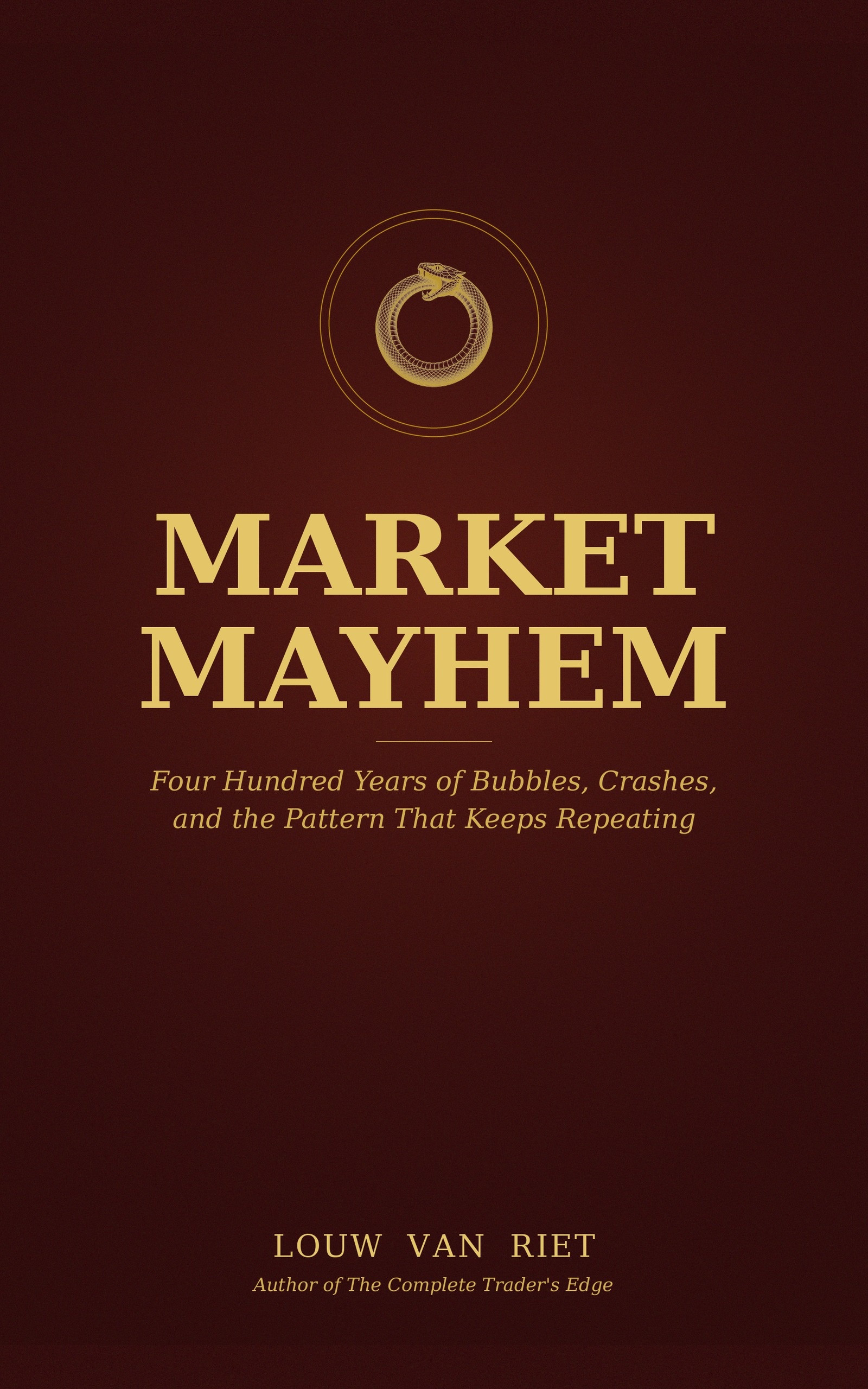 Market Mayhem
400 years of bubbles, crashes, and the pattern that keeps repeating.
Buy on Amazon →
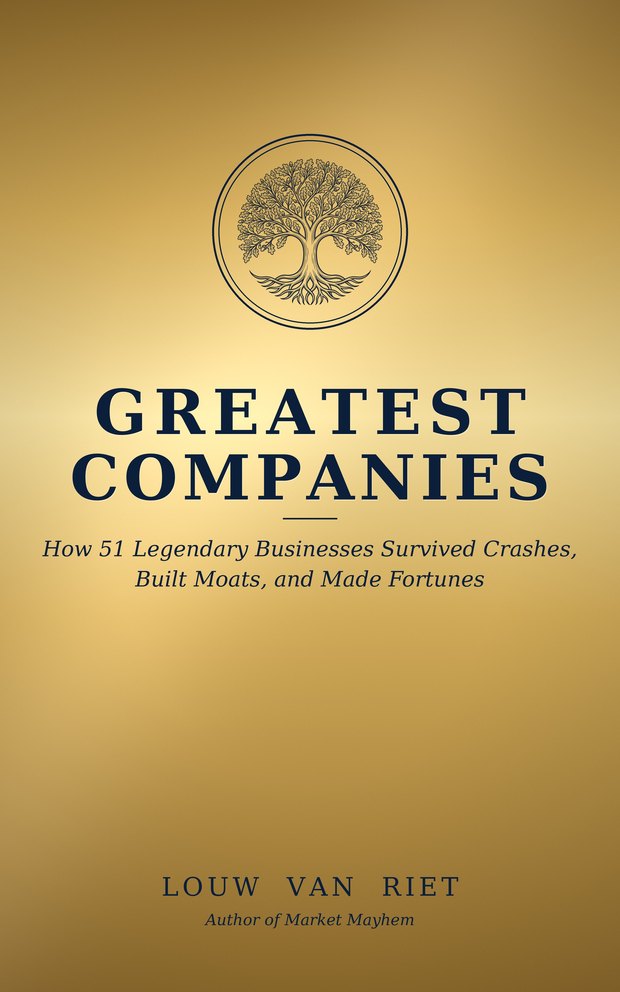 Greatest Companies
How the world's greatest companies were built — and what traders learn from them.
View on Amazon →
 Greatest Traders
Eighty-six lives that explain the markets — Livermore to Madoff, told with the losses left in.
View on Amazon →