

Algorithmic trading and manual discretionary trading are not competitors. They are different tools for different jobs. Understanding what each does well — and where each fails — is more valuable than arguing which is better. The most informed traders in 2026 know exactly which approach fits their personality, capital, and strategy type, and they’re not trying to be something they’re not.
This is a realistic comparison, not a sales pitch for either approach.
What Algorithmic Trading Actually Is
Algorithmic trading means automating entry, exit, and position sizing decisions using a pre-coded ruleset. The algorithm reads market data, evaluates conditions, and sends orders without human intervention at execution time. This ranges from simple moving average crossover bots to high-frequency strategies running millions of calculations per second.
For retail traders, “algorithmic trading” most commonly means one of three things:
- Strategy backtesting: Using code to test whether a defined ruleset would have been profitable historically
- Semi-automated execution: A bot that executes entries and exits based on coded rules, while a human monitors and can override
- Fully automated systems: A bot that runs without human intervention, including risk management and position sizing
The retail algo landscape in 2026 includes TradingView’s Strategy Tester (Pine Script), MetaTrader 4/5 Expert Advisors, Python-based bots using broker APIs, and a growing number of no-code platforms like 3Commas and Composer that allow rule-based automation without writing code.
What Manual Discretionary Trading Actually Is
Manual trading means a human reads market context, identifies a setup, and decides to enter based on judgement — applying rules, but with the ability to override them when context demands it. Most ICT/SMC traders are discretionary: the setup criteria are defined, but the final decision to enter incorporates visual context (candle behaviour, real-time order flow, session timing) that is difficult to code.
Discretionary trading is not random. The best discretionary traders have rules that are as strict as any algorithm. The difference is that rule application is mediated by human pattern recognition and contextual reading rather than code.
Head-to-Head: Where Each Approach Wins
| Dimension | Algorithmic | Manual Discretionary |
|---|---|---|
| Emotion | No emotional interference | Requires discipline to manage emotion |
| Consistency | Executes rules identically every time | Varies with trader state and fatigue |
| Speed | Millisecond execution | Seconds to minutes |
| Scale | Can monitor 100s of instruments simultaneously | Practically limited to 3-5 instruments |
| Context | Cannot read nuance or regime change | Adapts to changing market conditions |
| Complex setups | Struggles with multi-condition, contextual criteria | Handles ICT/OB/FVG with full context |
| Backtesting | Fast, systematic, data-driven | Slow, subject to recall bias |
| Overfitting risk | High — easy to over-optimise to historical data | Lower — judgement adapts, doesn’t overfit |
The Retail Reality: Why Most Algo Approaches Underperform
The algorithmic approach sounds compelling on paper. In practice, retail algo traders face several hard realities:
Overfitting destroys live performance. A backtest that perfectly fits 3 years of historical data is almost certainly overfit. The parameters that produced great backtested results were optimised for conditions that no longer exist. Most retail algo strategies that backtest well fail to replicate performance on live data for more than 3-6 months before requiring re-optimisation.
Regime change breaks mechanical rules. Markets shift between trending, ranging, high-volatility, and low-volatility regimes. A strategy coded for trending conditions loses money systematically in ranging conditions. A discretionary trader notices this and stops trading certain setups. An algorithm does not. Without a regime filter built into the code (complex to implement correctly), the algo trades through unfavourable conditions and loses capital that the discretionary trader preserved.
Infrastructure costs are underestimated. Running a reliable algo requires a VPS (virtual private server), broker API access, backtesting software, and ongoing maintenance when code breaks. For retail traders, this infrastructure cost can easily exceed $100-200/month and several hours per week of maintenance time.
The Best of Both: A Hybrid Approach
The most effective approach for most ICT/SMC retail traders is a hybrid: use algorithmic tools to augment the discretionary process without replacing the discretionary judgement.
Specifically:
- Pine Script alerts to notify when price enters a key zone or Kill Zone timing is active — automated monitoring, manual entry decision
- AI-assisted backtesting to analyse historical setup data without full automation — systematic analysis, discretionary application
- Automated order management for pre-set limit entries, scale-out levels, and trailing stops — removes manual execution errors, preserves the discretionary entry decision
- Performance analytics via spreadsheet or journal app — data-driven review of discretionary decisions
This hybrid gives you the consistency and analytical power of algorithmic tools while preserving the contextual flexibility that makes ICT strategies work. You’re not trying to code the ICT setup — you’re using code to handle everything except the setup identification itself.
Frequently Asked Questions
Can ICT strategies be automated?
Partially. Simple ICT-adjacent rules (price above VWAP, RSI below 30, price at session high) can be coded. The nuanced elements — reading the character of a liquidity sweep, identifying whether a candle structure represents genuine institutional interest or a noise spike, judging whether the HTF context supports a particular entry — cannot be reliably coded with current retail tools. Traders who claim to have fully automated ICT strategies are typically running simplified approximations that capture maybe 30-40% of what a skilled discretionary trader identifies. They may be profitable, but they’re not replicating the full ICT approach.
Is algorithmic trading more profitable than manual trading?
Neither approach is inherently more profitable. Profitability depends on the quality of the underlying strategy, the discipline of execution, and the suitability of the approach to current market conditions. Institutional algorithmic traders are highly profitable because they have proprietary data, co-location infrastructure, and PhDs designing their models. Retail algorithmic trading using consumer-accessible tools faces much more modest expectations. The most profitable retail traders in 2026 are skilled discretionary traders who use algorithmic tools strategically — not traders running fully automated systems.
How much programming do I need to know for algorithmic trading?
It depends on the level of automation you want. Pine Script for TradingView alerts and indicators requires minimal coding knowledge and can be learned in a weekend from this article’s companion guide. Python-based broker API automation requires intermediate programming skills. Full quantitative strategy development requires advanced statistics, time series analysis, and software engineering. For most ICT traders, Pine Script plus a simple position sizing spreadsheet covers 90% of what algorithmic tools can legitimately offer.
What is the most common mistake retail algo traders make?
Optimising a strategy on historical data until the backtested equity curve looks perfect, then going live and discovering the strategy no longer works. This is curve-fitting or overfitting. The solution: always test with out-of-sample data. Build your strategy on 70% of your data, then test without any further optimisation on the remaining 30%. If the out-of-sample performance is close to the in-sample performance, the strategy has genuine edge. If the out-of-sample performance collapses, the strategy was overfit.
Should a beginning trader learn algorithmic trading or discretionary trading first?
Discretionary first, without question. You cannot code a profitable trading strategy without first understanding what makes a trade good or bad. Algorithmic trading formalises and automates an existing edge; it cannot create one. Learning to trade manually — reading price action, identifying structure, managing risk, journaling and reviewing performance — builds the foundational understanding that makes any subsequent algorithmic work meaningful. Most successful algo traders spent years as discretionary traders before transitioning.
▶ CONTINUE READING
Build your complete toolkit:
▶ TradingView Pine Script for Beginners: Your First Indicator in 30 Minutes
▶ The Best AI Trading Tools in 2026: What Actually Works vs What’s Hype
The Complete Trader’s Edge
The Complete Trader’s Edge is built around the discretionary trader’s process — but Chapter 67 covers how to use modern tools and technology to make that process faster, more consistent, and more data-driven.
 The Complete Trader's Edge
The full Mind · Method · Money framework. 70 chapters.
View on Amazon →
The Complete Trader's Edge
The full Mind · Method · Money framework. 70 chapters.
View on Amazon →
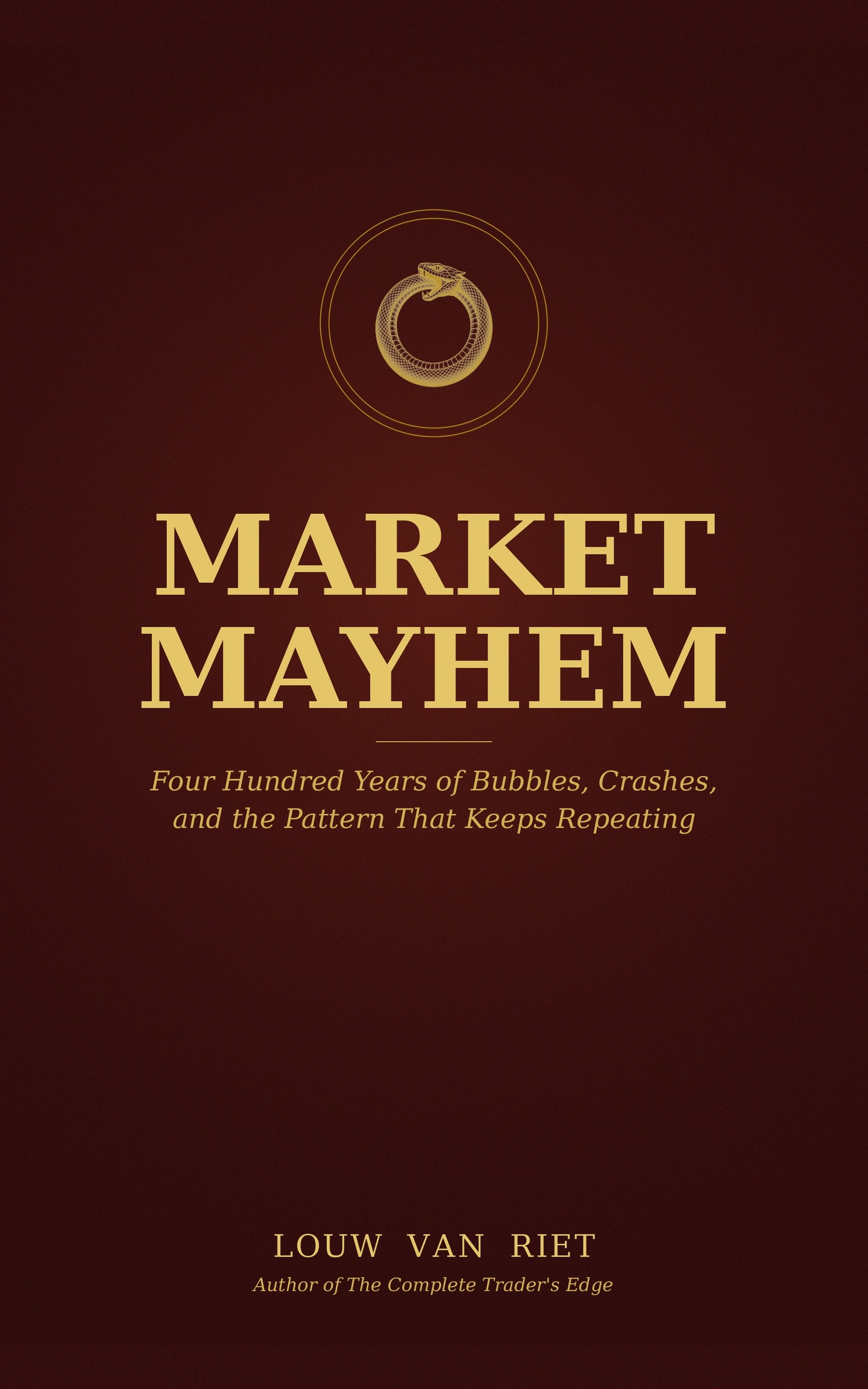 Market Mayhem
400 years of bubbles, crashes, and the pattern that keeps repeating.
Buy on Amazon →
Market Mayhem
400 years of bubbles, crashes, and the pattern that keeps repeating.
Buy on Amazon →
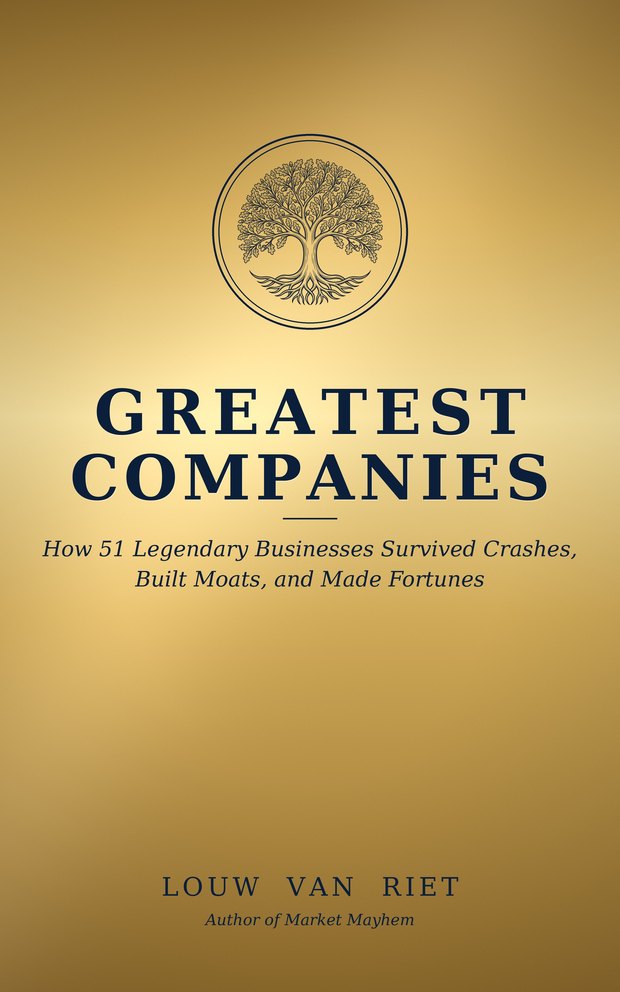 Greatest Companies
How the world's greatest companies were built — and what traders learn from them.
View on Amazon →
Greatest Companies
How the world's greatest companies were built — and what traders learn from them.
View on Amazon →
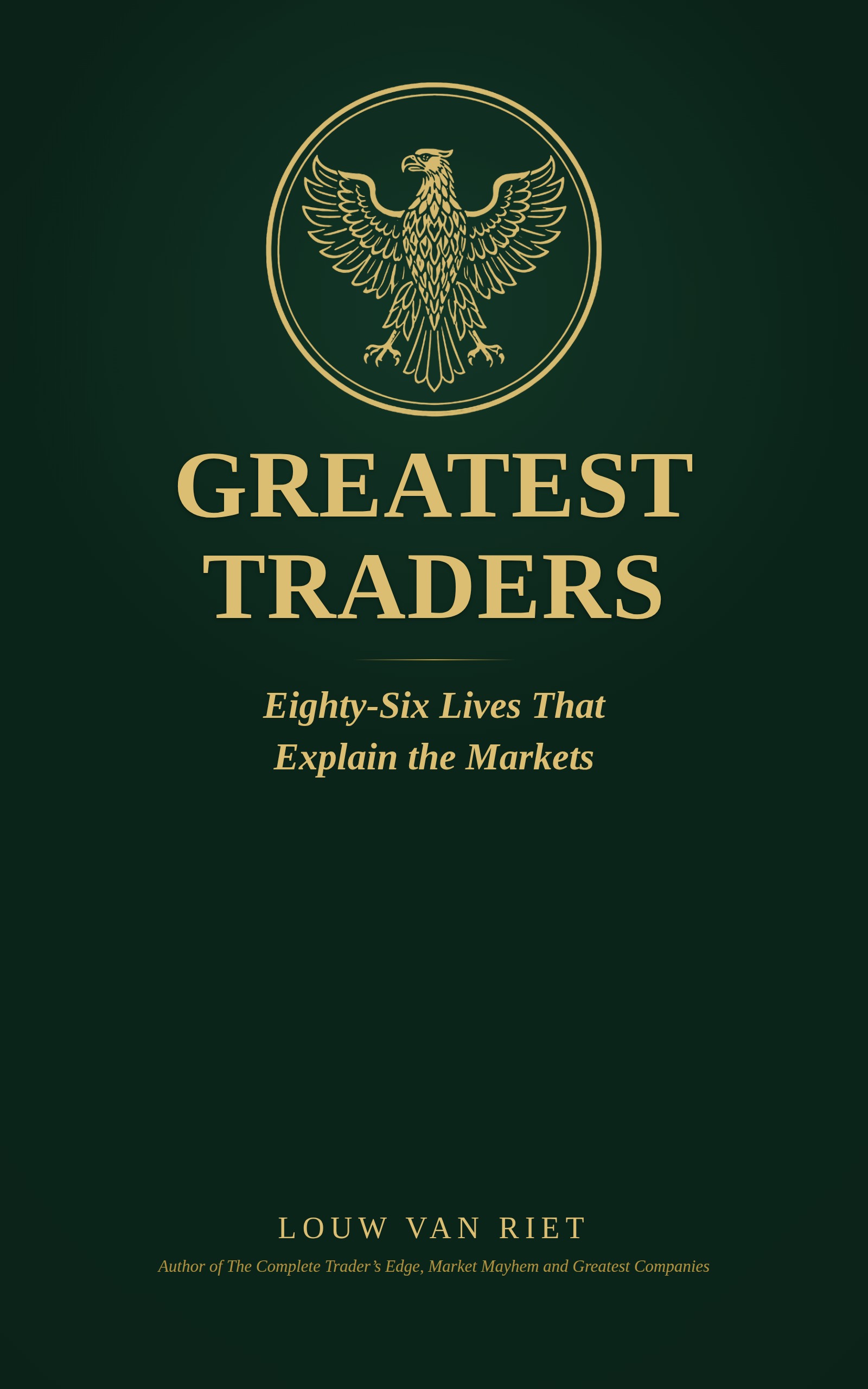 Greatest Traders
Eighty-six lives that explain the markets — Livermore to Madoff, told with the losses left in.
View on Amazon →
Greatest Traders
Eighty-six lives that explain the markets — Livermore to Madoff, told with the losses left in.
View on Amazon →