

ICT Trading Concepts:
Inner Circle Trader Framework Explained
ICT stands for Inner Circle Trader — the smart money methodology developed by Michael J. Huddleston. Price does not move randomly. It moves with purpose to deliver liquidity to large institutional participants. Once you understand the mechanism, every apparent stop hunt, false breakout, and frustrating reversal stops being random and starts being predictable.
Step 1 · The Foundation
Why ICT Works
Most retail trading frameworks ask “what pattern is forming?” ICT asks “where is the liquidity, and who needs it?” Once you answer that, the chart looks completely different.
The master article
Read This First
If you only read one article from this entire pillar, make it this one. Covers the entire framework.
The magnet
Liquidity Mechanics
Buy-side above highs, sell-side below lows. The single biggest reason price moves where it moves.
Read mechanics →Why stops fire
Stop-Hunt Explained
Why your stops keep getting taken right before the move. Not coincidence — design.
Read the mechanism →The ancestor
Wyckoff Method
Almost every ICT concept has a Wyckoff parallel from the 1920s. Reading Wyckoff makes ICT click.
Study the predecessor →The ICT Vocabulary
Three Terms That Explain Everything
ICT borrows the structural reading of classical TA but renames the components and adds precision around the shifts. These three terms are the operating language of the entire framework.
BOS
Break of Structure
Price breaking the most recent significant high or low in the direction of the prevailing trend. Confirms continuation.
MSS
Market Structure Shift
Price breaking against the prevailing trend with displacement. Signals the early phase of a potential reversal.
CHOCH
Change of Character
The first higher high after a downtrend or first lower low after an uptrend. Earliest signal control is changing.
The Definition
What ICT Means in Trading
ICT is short for Inner Circle Trader — a trading methodology developed by American trader and educator Michael J. Huddleston in the early 2010s. The framework teaches retail traders how to read institutional order flow by recognising the specific footprints that banks, hedge funds, and other large market participants leave behind when they move size into and out of positions.
The full form, “Inner Circle Trader,” reflects the central premise of the methodology: profitable trading requires thinking like the institutional inner circle that drives the market, not like the retail crowd that gets driven by it. Where traditional technical analysis asks “what pattern is forming?”, ICT asks “where is the liquidity, and which institution needs it?”
ICT trading concepts include liquidity sweeps, order blocks, fair value gaps, market structure shifts, kill zones, the Power of 3 model (Accumulation, Manipulation, Distribution), and the Optimal Trade Entry framework. Each concept is a specific lens for identifying where institutional participants are likely to act and when.
Is ICT the same as Smart Money Concepts (SMC)? They overlap heavily. SMC is the broader umbrella term used by the wider trading community to describe institutional-flow reading. ICT is the specific framework Huddleston systematised, with its own vocabulary (BOS, MSS, CHoCH, FVG, OTE) and its own emphasis on time-of-day theory through Kill Zones.
Step 2 · The Building Blocks
Order Blocks & Fair Value Gaps
Two concepts dominate ICT entries. Order Blocks mark where institutions accumulated. Fair Value Gaps mark price imbalances that the market returns to fill — often with surgical precision.
Step 3 · Time and Price Theory
Time of Day Matters More Than Setup
The same setup does not behave the same way at 3am as it does at 3pm. Session opens genuinely concentrate volume and volatility, and the London open produces a disproportionate share of the daily range in FX. Time is part of the edge, not separate from it. The Kill Zones are the high-probability windows when institutional participation is heaviest.
London Kill Zone
European session open. Strong directional moves. The first liquidity grab of the trading day.
Read kill zones → 07:00 – 10:00 ESTNew York Kill Zone
The US open. The biggest single window of the day for displacement moves.
Read NY KZ guide → A · M · DPower of 3
Accumulation, Manipulation, Distribution. The three-phase model most major intraday and daily moves follow.
Read AMD model →Step 4 · Specific Setups
The Trades You Will Actually Take
Four specific setups account for the majority of the trades a serious ICT trader takes. Each one is rule-based, time-bound, and has its own data behind it.
The Honest Assessment
Why Most ICT Traders Lose Money
ICT works. The setups are real, the framework is coherent, and traders make money with it. But most retail traders who learn ICT lose money with it. The reason is rarely the framework — it is execution, sizing, and time-of-day discipline.
The setups require patience. A trader who needs to take 10 trades a day will overtrade ICT and ruin the edge.
The framework rewards specialists. Pick two setups, run them 200 times, journal every trade — that beats trying to apply ICT broadly.
ICT works best on high-liquidity instruments during high-liquidity windows. Gold and NQ during NY KZ. EUR/USD during London. Outside that, edge erodes.
Stops placed too close, on the wrong side of liquidity. The professional trade puts stops beyond the next liquidity pool, not above the entry candle.
Adapting for prop firms? 2026 brought significant rule changes that affect ICT trading specifically. Read the adjustment guide →
The Common Questions
Frequently Asked Questions
The questions traders actually ask about ICT — and the honest answers.
What does ICT stand for in trading?
ICT stands for Inner Circle Trader. It is a trading methodology developed by Michael J. Huddleston that teaches retail traders how to identify and trade alongside institutional order flow. The framework decodes how large market participants accumulate positions, sweep liquidity, and drive directional moves — then aligns retail entries with that institutional activity rather than against it. ICT sits within the broader category of Smart Money Concepts (SMC) but uses its own specific vocabulary and emphasis on time-of-day theory.
Is ICT a real edge or just popular?
Both. The institutional behaviours ICT describes are real — liquidity sweeps, order blocks, fair value gaps are observable in any liquid market. Whether the framework produces a profitable strategy depends entirely on execution. The framework is not magic. It is a lens. The lens is real and useful. The trade still has to be executed correctly.
Should beginners learn ICT first or classical TA?
Classical TA first. ICT sits on top of market structure, support/resistance, candlestick reading, and multi-timeframe analysis — all classical TA. Learning ICT before those foundations creates a trader who memorises terminology without understanding the mechanism. Read the foundations in Technical Analysis, then come back to ICT.
What instruments does ICT work best on?
High-liquidity, high-volatility instruments with clear sessions. Gold (XAU/USD), NQ futures, ES futures, EUR/USD, GBP/USD. Bitcoin and ETH increasingly. ICT works less well on low-liquidity altcoins, individual stocks (without specific catalysts), and exotic forex pairs. The framework requires institutional participation to function.
How long does it take to learn ICT?
Conceptual understanding: 2 to 4 weeks of focused reading. Profitable application: most practitioners describe six to twenty-four months of deliberate study and backtesting. The volume is the main failure point rather than the difficulty. The archived private mentorship alone runs to roughly 750 hours of video, and students consume endlessly while executing rarely. Cap your study time, master one concept, backtest it against written rules, and supply the risk management ICT does not teach. We break down why the curriculum defeats people in the full story of the Inner Circle Trader.
Is there an ICT book by Michael Huddleston?
No. Huddleston has never published a book on ICT or anything else, and every title on Amazon carrying the ICT or Inner Circle Trader name is an unaffiliated third-party work that pays him nothing. The teaching was delivered as video and remains free. We break down what is actually on that shelf, how to judge an unofficial ICT book before buying, and what to read instead in Is There an ICT Book by Michael Huddleston?
Do I need a special platform for ICT?
No. TradingView with the standard candlestick chart is sufficient. Some traders use specific ICT indicators (FVG markers, Kill Zone shaders, Order Block highlighters) to save time, but the framework itself does not require them. The reading is in the price, not the indicator. Trading Tools & Platforms covers the platform options.
What is the single highest-probability ICT setup?
The Silver Bullet entry — a fresh FVG within the first hour of the New York Kill Zone, in alignment with higher-timeframe bias, after a confirmed liquidity sweep of the prior session high or low. No published win rate for this setup exists, and any specific figure you see quoted for it is someone’s estimate rather than a measured result. What makes it worth trading is that the rules are tight enough to leave no ambiguity, so you can backtest it and establish your own numbers. Documented in full at ICT Silver Bullet Strategy.
Why do my ICT trades keep getting stopped before the move?
Three likely causes. First: stops placed too close, on the wrong side of the liquidity. Stops should sit beyond the next liquidity pool, not above the entry candle. Second: trading against higher-timeframe bias. ICT is a confirmation framework — it works when aligned with the higher-timeframe trend, fails when fighting it. Third: trading outside kill zones. A setup taken into the thin, range-bound conditions of the Asian session is not the same trade as the one taken into the London or New York open, even when the chart pattern looks identical. Time is part of the edge.
The Full Framework in One Place
21 Chapters of Method, ICT Integrated
The Complete Trader’s Edge dedicates its Method pillar to the integration of Smart Money / ICT concepts with classical price action. Structure, liquidity, order blocks, FVGs, kill zones, Power of 3, and the full intraday playbook on Gold and NQ.
Get The Complete Trader’s Edge →Continue the Framework
Where to Go Next
For where all of this came from, read the complete story of Michael J. Huddleston, the trader who built the framework, with every claim tiered by how well it is actually evidenced.
ICT is the institutional layer. It works on a foundation of TA, requires patience, demands tight risk control. Each connects to the next.
 The Complete Trader's Edge
The full Mind · Method · Money framework. 70 chapters.
View on Amazon →
The Complete Trader's Edge
The full Mind · Method · Money framework. 70 chapters.
View on Amazon →
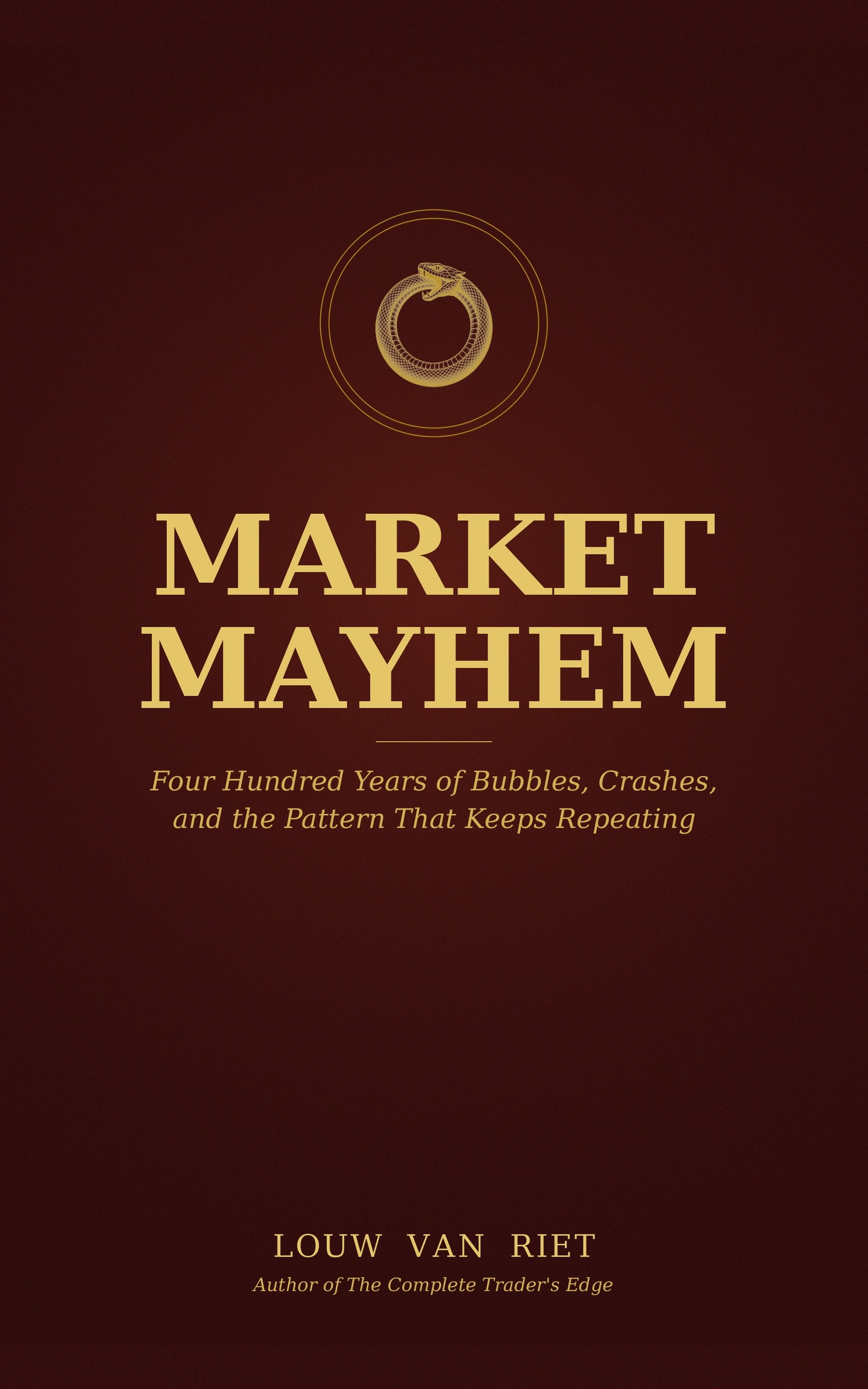 Market Mayhem
400 years of bubbles, crashes, and the pattern that keeps repeating.
Buy on Amazon →
Market Mayhem
400 years of bubbles, crashes, and the pattern that keeps repeating.
Buy on Amazon →
 Greatest Companies
How the world's greatest companies were built — and what traders learn from them.
View on Amazon →
Greatest Companies
How the world's greatest companies were built — and what traders learn from them.
View on Amazon →
 Greatest Traders
Eighty-six lives that explain the markets — Livermore to Madoff, told with the losses left in.
View on Amazon →
Greatest Traders
Eighty-six lives that explain the markets — Livermore to Madoff, told with the losses left in.
View on Amazon →