

GREATEST TRADERS · EPISODE 1
Jesse Livermore
The Boy Plunger of Wall Street
▶ Watch on YouTube🎵 Listen on Spotify
Also available on Apple Podcasts · Amazon Music
Last updated: 15 August 2026
Jesse Livermore is arguably the most studied trader in history. His story, told most vividly in Edwin Lefevre’s thinly fictionalised biography Reminiscences of a Stock Operator, contains more practical trading wisdom per page than most modern textbooks. It also contains the most important cautionary tale in trading: that edge and discipline can coexist in the same person at different times, and that one without the other produces ruin.
Livermore’s career is the definitive proof that the Mind pillar is not optional. He had one of the greatest Methods ever developed. His Money management was pioneering. But his psychological demons ultimately destroyed everything he built, four times over.
Who Was Jesse Livermore?
Born in 1877 in Massachusetts, Livermore began trading in bucket shops as a teenager: unauthorised establishments where customers bet on price movements without actual market transactions. He was so consistently profitable that he was banned from most bucket shops in New England before he was twenty.
He went on to make legendary trades in the early 20th century stock and commodities markets, operating in an era with no electronic trading, no real-time charts, and virtually no regulation. He read price from a ticker tape and made decisions that moved markets.
| Year | Event | Approximate Value |
|---|---|---|
| 1890s | Made first profits in bucket shops as a teenager | $10,000+ |
| 1907 | Shorted the panic of 1907 (asked by J.P. Morgan to stop selling) | $3 million (~$100M today) |
| 1908-1914 | Lost everything through overtrading and cotton speculation | Bankrupt |
| 1929 | Shorted the 1929 crash | $100 million (well over $1B today) |
| 1930s | Lost the fortune again through rule violations and personal turmoil | Bankrupt again |
The Full Story: From a Boston Chalkboard to the Sherry-Netherland
November 28, 1940
The Sherry-Netherland Hotel, Fifth Avenue, New York. A man sits alone in the cloakroom. He is sixty-three years old. He has been the richest speculator alive. He has been bankrupt. He has been both, more than once.
He takes a small leather notebook from his coat and writes eight sentences. A final summary of a life spent reading markets, reading crowds, and failing to read himself. And then Jesse Livermore, the Boy Plunger of Wall Street, the man who made one hundred million dollars in a single week, is gone.
To understand how he ended up in that room, you have to go back to a chalkboard in Boston, forty-eight years earlier. What you find there is not only the story of one man. It is the story of every trader who has ever known exactly what to do and done something else instead.
Boston: The Chalkboard and the Notebooks
Jesse Lauriston Livermore was born in 1877 in Shrewsbury, Massachusetts. His father farmed. The family had nothing. At fourteen, with his mother’s blessing and a few dollars in his pocket, he left for Boston.
He found work at a brokerage office writing numbers on a quotation board. Stock prices and commodity prices, arriving by telegraph in a constant stream, chalked up as fast as they came in. Most boys his age would have seen a dull job. Livermore saw a language.
He started keeping notebooks. Not of the prices themselves, but of the behaviour of prices: how a stock acted in the days before a large advance, how activity shifted before a decline, which sequences repeated and which did not. He was building technical analysis from first principles, without the vocabulary for it, at an age when most people are still at school.
The Boy Plunger
At fifteen he placed his first trade in a bucket shop. Bucket shops were unofficial gambling houses where customers bet on the direction of stock prices without any shares ever changing hands. The house took the other side of every bet, which meant the house had a strong interest in customers who lost.
Livermore won too often. By his late teens he had been banned from every bucket shop in New England. They called him the Boy Plunger, and the name followed him for the rest of his life.
In his early twenties he moved to New York to trade the real market, and discovered quickly that the two were not the same game. In a bucket shop he was filled instantly at the quoted price. On the exchange there was delay, slippage and size, and his first New York years cost him most of what he had made. He rebuilt by learning the difference between a price on a board and a price you can actually get.
What emerged was a method. He read the tape the way a musician reads a score. He did not predict where prices should go. He observed what prices were doing and positioned himself accordingly. He let winners run. He cut losers immediately. He understood momentum decades before the word carried any meaning in a trading context.
By his mid-twenties, Livermore had built something extraordinary: pure price reading, before anyone had given it a name. What he had not built, and what would define the next forty years, was the psychological discipline to follow his own rules under pressure, or the money management to protect what those rules earned him.
A Method without Money and without Mind is a loaded weapon with no safety catch. The next four decades proved it, repeatedly.
1907: The Day J.P. Morgan Asked Him to Stop
In 1907 the American financial system came as close to total collapse as it ever had. Banks were failing, credit was frozen, and the public was in panic.
Livermore had been watching the market weaken for months and had built a large short position. When the break finally came, he made roughly one million dollars in a single day, and around three million across the episode. In today’s money that single day is worth something on the order of thirty million dollars. He was thirty years old.
J.P. Morgan, who was personally organising the rescue of the New York Stock Exchange, sent word to Livermore directly and asked him to stop selling short. The market could not absorb any more pressure. Livermore agreed. He covered his shorts, reversed to the long side, and profited again on the recovery.
That detail matters more than the money. He had no loyalty to his own position. The short was not an opinion he was defending. It was a trade, and when the conditions that justified it changed, so did he.
“It was never my thinking that made big money for me. It was my sitting.”
— Jesse Livermore
Cotton, and the Question He Could Not Leave Alone
Through the 1910s and 1920s Livermore operated at a scale few individual traders have ever matched. He took a position in cotton so large that it drew the attention of the White House, and he was pressed to unwind it. Asked afterwards why he had built it at all, his answer was not about money. He said he wanted to see if he could.
That sentence is worth sitting with. The most gifted price reader of his generation, at the peak of his powers, took the largest position of his life for reasons that had nothing to do with edge. Every trader who has ever sized up because a position felt exciting rather than because the setup justified it is standing in the same place Livermore stood.
1929: One Hundred Brokers and Six Million Down
By the spring of 1929 Livermore had begun quietly assembling one of the largest short positions in market history. He worked through more than one hundred brokers so that no single one of them knew the true size of what he was building. The market was euphoric. Everyone was buying. Livermore was selling.
Through the summer the position moved hard against him. At one point he was down more than six million dollars on paper. Most traders would have covered. Livermore had done the work, he trusted the method, and the thesis had not been invalidated by anything except price. So he sat.
On 24 October 1929 the market broke. Black Thursday, then Black Monday, then Black Tuesday. The Dow fell close to twenty-five per cent in two sessions. Panic consumed Wall Street.
Jesse Livermore made approximately one hundred million dollars. In today’s money that is well over a billion dollars. In a single week, on a single thesis, at the age of fifty-two. It is still, by most reckonings, the single most profitable week any individual has ever had in a market.
“The market is never wrong. Opinions often are.”
— Jesse Livermore
The Falls: Why He Went Broke With a Working Method
If the story ended in 1929 he would be remembered simply as the greatest speculator who ever lived. It does not end there.
Livermore made and lost four fortunes across his career, and filed for bankruptcy three times. Not because his analysis failed. Not because his method stopped working. Because he violated his own rules, repeatedly and systematically, in ways he had already identified in writing as fatal, and still could not stop.
His personal life mirrored the chaos of his trading. He married three times. In one of the darkest episodes of his life, his second wife shot their son, Jesse Junior, during a drunken incident. The boy survived. The family did not. The divorce that followed cost him around ten million dollars.
Study the sequence and a pattern emerges that every trader should take personally. Livermore’s rule violations were not random. They clustered around periods of emotional distress. When his personal life was stable, his trading was disciplined. When his personal life was in chaos, he traded larger, held losers longer, and ignored every principle he had spent decades building.
He knew every rule. He wrote the rules. And in the moments that decided everything, he could not follow them. That is not a failure of intelligence. It is a failure of psychology, and it is the reason the Mind pillar sits first in the Mind · Method · Money framework rather than last.
1934: The Game Changes
In 1934 the newly created Securities and Exchange Commission rewrote the rules of the market. Practices Livermore had used for decades were now regulated or banned outright. The pools, the concealment of size, the operator’s playbook he had mastered: the field he had spent forty years learning no longer existed in the same form.
He could not adapt. That is its own lesson, and an uncomfortable one for anyone who believes a single edge lasts forever. Markets change their structure, and a method tied too tightly to one regime dies with it.
The Final Chapter
He published How to Trade in Stocks in 1940. It did not sell well. The world was at war and the public had little appetite for a broken speculator’s rulebook. The book nevertheless contained the distilled output of four decades of trading, and it is still in print today.
On 28 November 1940, Jesse Livermore took his own life at the Sherry-Netherland Hotel. He was sixty-three.
He left behind a methodology that shaped every generation of trader that followed, and the most powerful argument any trading educator will ever have for why psychology is not an optional module in this profession. It is the foundation the rest is built on.
“The edge is not in the chart. The edge is in you.”
— The Complete Trader’s Edge
The Timeless Lessons from Livermore’s Trading
1. Patience: The Art of Sitting
Livermore described his most profitable trades as requiring months of watching and waiting before the right moment arrived. He famously said that it was never his thinking that made the big money, but his sitting. Sitting, he considered the hardest part of trading.
This principle is as relevant in 2026 as it was in 1926. The best setups do not appear daily. The trader who can wait for the A-grade setup while everyone else is trading B and C-grade opportunities will outperform over any meaningful time period. Overtrading was a problem a century ago, and it remains the most common edge-killer today.
2. Position Building Through Confirmation
Livermore never committed his full position at once. He would take an initial position, let it move in his favour to confirm his thesis, then add. He called this “pyramiding.” This approach kept his losses small on wrong ideas (the initial position was small) and amplified gains on right ones (size increased only after the market confirmed his analysis).
Modern traders use the same principle through scaling in. Enter with a partial position at your initial level. Add at the first pullback after a Break of Structure confirms your direction. This approach improves your average entry price while reducing the risk of committing full size to a thesis that the market has not yet confirmed.
3. Following the Line of Least Resistance
Livermore observed that prices tend to travel in the direction of least resistance, which is the direction of the dominant trend. He did not try to pick tops and bottoms. He waited for the market to show its hand (what ICT traders would now call a Change of Character or Break of Structure) and then traded in the direction the market was already moving.
This aligns directly with the market structure approach taught in the Complete Trader’s Edge framework: let the higher timeframe show you the direction, then find entries on the lower timeframe in that same direction.
4. The Rules He Failed to Apply
Livermore also broke his own rules repeatedly. He traded when he was not operating from his best state. He took tips from others despite knowing that tips are unreliable. He increased size after winning streaks. He held losing positions hoping for reversals instead of cutting them.
He made and lost four separate fortunes. Each cycle followed the same pattern: disciplined trading built the fortune, then psychological breakdown, often triggered by personal turmoil or overconfidence, destroyed it.
The Most Important Lesson
Livermore’s tragedy is that he understood the principles of successful trading as well as anyone who has ever lived, and still could not consistently apply them. His story is the most powerful argument in trading literature for why psychological discipline is not secondary to strategy. It is primary.
He knew that patience was essential, yet he overtraded. He knew that position sizing was critical, yet he oversized after winning streaks. He knew that following tips was foolish, yet he took them. The gap between knowing and doing is the central challenge of the Mind pillar, and Livermore’s life is its most vivid illustration.
For modern traders, his story serves as both inspiration and warning. Inspiration: a teenager with no formal education, no technology, and no institutional backing built one of the greatest trading careers in history through observation, patience, and systematic thinking. Warning: without the psychological framework to sustain discipline, even the greatest edge self-destructs.
Key Lessons
- Livermore’s “sitting,” patience in waiting for the right setup, produced his greatest profits.
- Position building through confirmation (pyramiding) kept losses small and amplified winners.
- The “line of least resistance” principle: trade in the direction the market is already moving.
- He made and lost four fortunes by breaking his own rules, the ultimate cautionary tale on discipline.
- Understanding the principles of trading and consistently applying them are two entirely different skills.
Listen to the Full Episode
Livermore’s story is Episode 1 of the Greatest Traders podcast. The audio version runs about thirty minutes and covers the full arc, from the Boston chalkboard to the Sherry-Netherland. Players are at the top of this page.
What You’ll Hear in the Episode
▶ How a fourteen-year-old farm boy became the most feared speculator on Wall Street
▶ The price reading method he built that still works 130 years later
▶ How J.P. Morgan personally asked him to stop selling during the 1907 panic
▶ The full anatomy of the $100 million 1929 crash trade
▶ Why he went broke repeatedly despite knowing every rule
▶ The psychological lesson his life teaches better than any textbook
| Time | Section | Theme |
|---|---|---|
| 0:00 | The End | Cold open, 28 November 1940 |
| 2:00 | The Bucket Shops | The birth of an edge |
| 8:00 | The Rise | When conviction meets preparation |
| 15:00 | The Falls | The rules you break will break you |
| 21:00 | The Final Chapter | The cost of an unmastered mind |
| 26:00 | The Lesson | Mind, Method, Money and what Livermore teaches every trader |
Frequently Asked Questions
What book should I read about Jesse Livermore?
Reminiscences of a Stock Operator by Edwin Lefevre (1923) is the essential text. It reads like a novel while containing more practical trading wisdom than most modern textbooks. Livermore’s own book, How to Trade in Stocks (1940), is more technical and systematic but less engaging. Read Reminiscences first for the philosophy and mindset, then How to Trade in Stocks for the mechanics.
Are Livermore’s techniques still relevant to modern markets?
The core principles are timeless because they describe human behaviour, which has not changed. Patience, trend following, position building through confirmation, and cutting losses quickly are as valid today as they were a century ago. The specific mechanics (reading a ticker tape, visiting brokerage offices) are obviously obsolete, but the underlying logic translates directly to modern chart reading and ICT concepts.
What was Livermore’s biggest mistake?
His biggest recurring mistake was increasing size after winning streaks and trading outside his established rules during periods of personal stress. Each of his four fortunes was lost not because his analysis failed, but because he abandoned the discipline that had built the fortune in the first place. The lesson: your rules exist specifically for the moments when you most want to break them.
How does Livermore’s approach compare to ICT methodology?
There are striking parallels. Livermore’s concept of watching for “pivotal points” where the market’s direction would be decided maps closely to ICT’s Order Blocks and key structural levels. His observation that markets make false moves before reversing (what he called “shakeouts”) is exactly what ICT calls liquidity sweeps. His insistence on trading with the dominant trend aligns with the higher timeframe bias principle. Livermore was, in many ways, applying Smart Money concepts a century before the terminology existed.
What can modern traders learn from Livermore’s failures?
That skill alone is not enough. Livermore had more raw trading talent than almost anyone alive. What he lacked was the psychological infrastructure to sustain his discipline: a structured routine, a journal, accountability systems, and the self-awareness to recognise when he was deviating from his process. Modern traders have access to all of these tools. Livermore’s story is a reminder to use them.
How did Jesse Livermore die?
Livermore took his own life on 28 November 1940 at the Sherry-Netherland Hotel in New York, at the age of sixty-three. He had been through repeated financial ruin, three marriages and a long period of depression. His death is inseparable from the lesson of his life: the market did not defeat him, and neither did his method. What defeated him was everything happening inside his own head.
How much money did Jesse Livermore make and lose?
He made and lost four fortunes across roughly forty years of trading, and filed for bankruptcy three times. His peak was the 1929 crash, where he made approximately $100 million in a single week, worth well over a billion dollars in today’s money. By the time of his death, almost none of it remained.
Was Jesse Livermore a real person or a character in a book?
He was a real trader. The confusion comes from Reminiscences of a Stock Operator, in which Edwin Lefevre tells Livermore’s story through a fictionalised narrator named Larry Livingston. The book is written as a novel, but it is built on extended interviews with Livermore himself, which is why traders treat it as a primary source rather than fiction.
Continue Reading
▶ Paul Tudor Jones: Lessons from a Market Wizard
▶ George Soros: Reflexivity and the Art of the Macro Trade
▶ Stanley Druckenmiller: The Greatest Trading Record Ever Compiled
From The Book
Jesse Livermore’s principles are discussed in Part 3, Chapter 68 of The Complete Trader’s Edge.
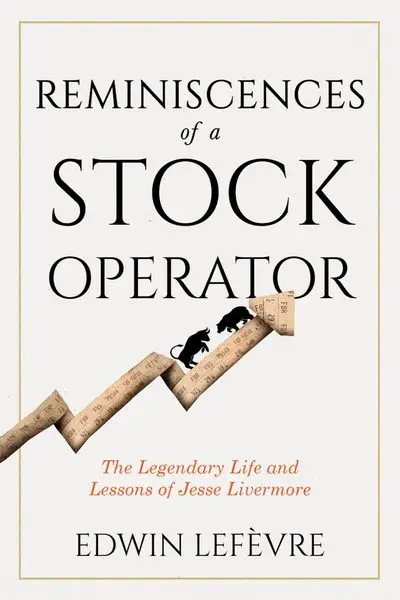
Livermore’s story reached most traders through Reminiscences of a Stock Operator, Edwin Lefevre’s 1923 account written as the fictionalised Larry Livingston. A century later it remains the most quoted trading book ever written, and almost everything in this profile has a counterpart somewhere in it.
Our full review publishes on 25 August 2026. It is rated 9.0/10 in the Trader’s Library.
This article is education, not financial advice. It discusses the death of Jesse Livermore, which involved suicide. If you or someone you know is struggling, please reach out to the 988 Suicide and Crisis Lifeline (call or text 988), or your local crisis service.
 The Complete Trader's Edge
The full Mind · Method · Money framework. 70 chapters.
View on Amazon →
The Complete Trader's Edge
The full Mind · Method · Money framework. 70 chapters.
View on Amazon →
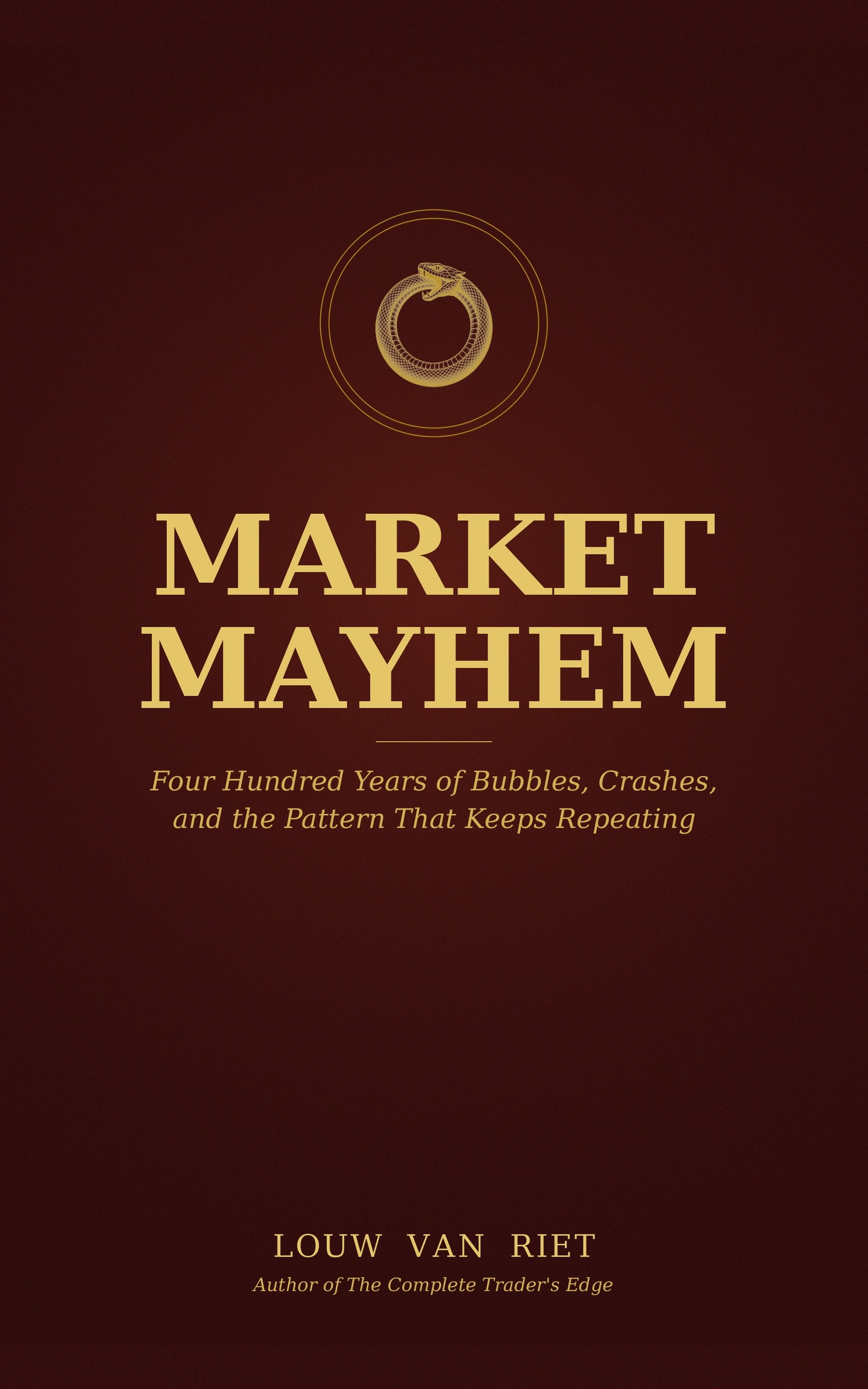 Market Mayhem
400 years of bubbles, crashes, and the pattern that keeps repeating.
Buy on Amazon →
Market Mayhem
400 years of bubbles, crashes, and the pattern that keeps repeating.
Buy on Amazon →
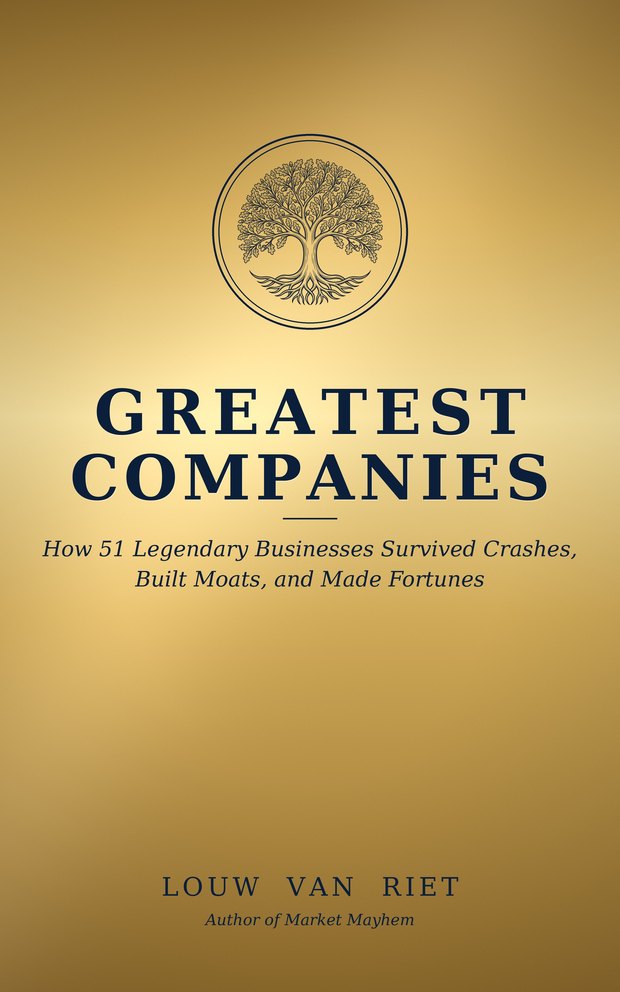 Greatest Companies
How the world's greatest companies were built — and what traders learn from them.
View on Amazon →
Greatest Companies
How the world's greatest companies were built — and what traders learn from them.
View on Amazon →
 Greatest Traders
Eighty-six lives that explain the markets — Livermore to Madoff, told with the losses left in.
View on Amazon →
Greatest Traders
Eighty-six lives that explain the markets — Livermore to Madoff, told with the losses left in.
View on Amazon →