

GREATEST TRADERS · EPISODE 21
Bruce Kovner
From Cab Driver and Juilliard Piano Student to Caxton’s $14 Billion Macro Empire
▶ Watch on YouTube🎵 Listen on Spotify
Also available on Apple Podcasts · Amazon Music
Bruce Stanley Kovner
| Born | 13 January 1945, Brooklyn, New York |
| Education | Harvard (scholarship), Kennedy School PhD coursework |
| Pre-trading career | Cab driver, Juilliard piano student, music critic |
| First trade (1977) | $3,000 MasterCard cash advance |
| First trade arc | $3K → $4K → $40K → $20K (kept ~$22K) |
| Joined Commodities Corporation | 1977 under Michael Marcus |
| Avg returns at Commodities Corp | ~80% annually over ~6 years |
| Caxton Associates founded | 1983, New York |
| Caxton 1985 return | +87% |
| Caxton avg net annual (28 yrs) | ~21% net annual |
| Caxton peak AUM | ~$14 billion |
| Per-trade risk limit | 1–2% of capital, strictly enforced |
| Retired | 2011 (succeeded by Andrew Law) |
| Net worth (2024) | ~$7.7 billion |
| Famous quote | “The first thing I would say is, control your risk.” |
In 1977, a thirty-two year old former Harvard PhD candidate and Juilliard piano student named Bruce Kovner borrowed three thousand dollars on his MasterCard and bought copper and interest rate futures contracts. He was driving a taxi in New York City for income. He had abandoned his political science doctorate after completing the coursework. He had spent the previous several years studying piano and harmony, writing music criticism for Commentary magazine, working on political campaigns, and trying to figure out what to do with his life.
The first trade returned a thousand dollars in profit. Kovner rolled the four thousand into soybean futures during a developing shortage. Within six weeks the position had grown to forty-five thousand dollars. Then the market reverted. Kovner panicked, ignored his stops, watched the position collapse from forty-five thousand to twenty-three thousand in roughly an hour, and finally closed out at twenty-two thousand profit on his original three thousand stake. He has subsequently described being physically sick for a week.
The lesson was the foundation of everything that came after. Six years later, Kovner founded Caxton Associates with his partner Peter D’Angelo. Over the next twenty-eight years, Caxton compounded at approximately twenty-one percent net annual returns, peaked at approximately fourteen billion dollars in assets under management, and earned its founder a net worth of seven point seven billion dollars. The hedge fund Kovner built became one of the longest-running and most consistently successful global macro funds in the industry’s history.
The arc from cab driver borrowing three thousand dollars on a credit card to billionaire founder of one of the most successful macro hedge funds ever built is a story about the integration of intellectual rigor and risk discipline. Kovner was unusual among trading legends in that he came to markets through philosophy, music, and political science rather than through finance. The integration is the point. The frameworks that produce great trading careers are not the same frameworks that produce great traders in the first place.
This is the story of how a Brooklyn-born Harvard scholarship student became the most disciplined macro trader of his generation, what he built at Caxton, and what his career means for working traders trying to compound capital through global macro frameworks of their own.
Brooklyn, Van Nuys, and Harvard
Bruce Stanley Kovner was born on 13 January 1945 in Brooklyn, New York. His parents, Isidore and Sophie Kovner, were the children of Eastern European immigrants who had struggled through the Depression. His father was a mechanical engineer who had briefly played semi-professional football. His mother was a homemaker. Bruce was the second of four siblings.
The family lived in the Borough Park section of Brooklyn until 1953, when they relocated to suburban Los Angeles. Kovner has subsequently described the move as transformative. The cultural distance between Borough Park Brooklyn and the San Fernando Valley was substantial in the early 1950s, and the move broadened his sense of what was possible in ways that would not have happened had the family stayed in New York.
At Van Nuys High School, Kovner emerged as the kind of student who is impossible to ignore. He was a National Merit Scholar. He played varsity basketball. He was elected both Class President and Student Body President in his senior year. He was, by every available measure, the kind of high school student that Harvard exists to recruit. He was awarded a scholarship to attend Harvard College, and he took it.
At Harvard, Kovner studied government and economics. He was particularly influenced by three professors. Henry Kissinger, who would later become Secretary of State. Edward Banfield, the urban policy theorist whose work on cities and political behavior shaped much of late twentieth century conservative political thought. And James Q. Wilson, whose later work on broken windows policing would influence American urban policy for decades. The intellectual lineage matters because it is unusual for a future hedge fund manager. Kovner was being trained to think like a political scientist, not like a finance professional.
One difficult element of Kovner’s Harvard years that should be acknowledged honestly. While he was a student, his mother committed suicide. He has rarely spoken publicly about the event in detail, but it is part of the public record and shaped him in ways that subsequently informed both his trading discipline and his philanthropy. The capacity to absorb difficult life events without letting them disrupt long-term focus is something working traders should think carefully about. Markets are unsentimental. They do not pause for personal grief. The traders who survive long careers are typically those who have, through one means or another, developed the resilience to keep working through difficult personal circumstances.
The Kennedy School and the abandoned doctorate
After graduating from Harvard, Kovner enrolled in the Kennedy School of Government to pursue a PhD in political science. He was the first V.O. Key Fellow of the newly created Joint Center for Urban Studies of Harvard and MIT, where he worked with Daniel Patrick Moynihan, the future U.S. Senator from New York. The intellectual environment was elite. Kovner was being trained to become a senior figure in academic political science, with a clear path to a tenure-track position at a major research university.
He spent four years on the doctorate. He completed the coursework. He passed the qualifying examinations. And then, with only the dissertation remaining, he stopped. The decision is not unusual in PhD programs, where attrition rates are high and the dissertation is the longest single piece of work most academics ever produce. What is unusual is what Kovner did next.
He did not enter academia. He did not take a policy job. He did not pivot into finance. He moved to New York City and began studying piano and harmony at the Juilliard School. He wrote music criticism and book reviews for Commentary magazine. He worked on political campaigns in New York and New Jersey, including time as a Congressional aide. He drove a taxi in New York City for steady income. He was, by his own subsequent description, exploring what to do with his life.
The Juilliard period is the detail that most distinguishes Kovner from his peers in macro trading. Most successful traders come to markets through finance, business, or quantitative disciplines. Kovner came to markets through music. The pattern recognition skills required to read a complex score and understand its harmonic structure, the discipline required to practice piano at a Juilliard level, and the analytical capacity to write music criticism are all unusual preparations for global macro trading. They turn out to be useful preparations.
The first trade and the soybean lesson
By 1977, Kovner was thirty-two years old, recently married, and trying to figure out what to do for a living. He had been studying commodity charts in his spare time, partly out of intellectual curiosity and partly because the volatility of commodity markets in the 1970s was difficult for any economically literate person to ignore. The decade had produced two oil shocks, persistent inflation, and unprecedented agricultural price swings. The macro environment that defined his later career was being created in real time.
Kovner had no capital. He borrowed three thousand dollars on his MasterCard and opened a futures account. His first trades were in copper and interest rate futures. The position quickly moved from three thousand to four thousand dollars. He rolled the gains into soybean futures, identifying a developing shortage that he believed would push prices substantially higher.
The thesis was correct. Within six weeks, the soybean position had grown from four thousand to forty-five thousand dollars. Kovner was, on paper, a successful trader. The position represented a return that any institutional fund would have been thrilled to produce.
And then the market turned. The shortage that had driven prices began to ease. The fundamentals that had supported the position weakened. The price began to fall. Kovner had stops in place that, if respected, would have preserved most of the profit. He ignored them. The position kept losing. By the time he closed out, the account had fallen from forty-five thousand to twenty-three thousand dollars. He had lost roughly half his profits in approximately one hour of trading.
He still walked away with approximately twenty-two thousand dollars in profit on his original three thousand dollar stake. The percentage return was extraordinary. The lesson was more important than the profit. Kovner has described being physically sick for a week after the experience. The combination of having ignored his own risk rules, watched the position destroy itself, and recognized in real time that he had violated the fundamental discipline of trading produced a psychological reckoning that would inform every subsequent year of his career.
The lesson, in the form Kovner has subsequently articulated it, is direct. The first rule of trading is to control your risk. Not to be smart. Not to identify good opportunities. Not to size aggressively when conviction is high. To control your risk. Everything else in trading is secondary. The math underneath is the same risk-of-ruin arithmetic that governs every trading account: the trader who controls risk on every position, regardless of conviction, compounds. The trader who occasionally violates risk discipline because the conviction is high eventually blows up.
Commodities Corporation and Michael Marcus
In 1977, after the soybean experience, Kovner answered a help-wanted advertisement from Commodities Corporation in Princeton, New Jersey. Commodities Corporation was, at the time, one of the most important institutions in the early development of professional commodity trading. The firm had been founded by Helmut Weymar in 1969 with backing from Paul Cootner of MIT and other early quantitative pioneers. Its trading staff included Michael Marcus, Paul Tudor Jones (briefly), and several other traders who would later become household names in macro investing.
Kovner was hired to trade under Michael Marcus, who became his mentor. The relationship was significant. Marcus was already an established trader with a strong track record at Commodities Corporation. He was willing to teach. Kovner was an unusually fast learner, partly because his political science training had given him the analytical frameworks to think clearly about macroeconomic events and their market implications. The mentorship produced a trader whose thinking integrated economic, political, and market factors in a way that few of his peers could match.
Over approximately six years at Commodities Corporation, Kovner reportedly produced annual returns averaging around eighty percent on the capital he was managing. The firm was structured as a meritocratic capital allocator. Traders who produced returns were given more capital. Traders who lost money had their capital reduced or were terminated. Kovner thrived under that structure. By the early 1980s, he had built the track record and the capital base that would make founding his own firm economically viable.
The lesson here for working traders is structural. Commodities Corporation was an unusual institutional environment in that it gave its traders both the operational latitude to develop their own approaches and the discipline of constant performance accountability. The combination of latitude and accountability is the structural feature that produces great traders. Most institutional environments provide one without the other. The retail equivalent is to give yourself the latitude to develop your own approach while imposing on yourself the discipline of constant performance accountability.
Caxton Associates and the macro framework
In 1983, Kovner founded Caxton Associates with his partner Peter D’Angelo. The firm was named after William Caxton, the first English-language printer. The reference is characteristic of Kovner’s intellectual range. Most hedge funds are named after geographic features, classical references, or initials. Kovner named his firm after a fifteenth century printer. The naming choice signaled something about the kind of firm he intended to build.
Caxton’s strategy was global macro from the beginning. Kovner would analyze macroeconomic conditions, geopolitical developments, central bank policy, and political dynamics across major economies. He would identify situations where market prices were likely to move substantially based on changes in those conditions. He would deploy capital, primarily through currencies, futures, and other liquid instruments, to capture those moves. The framework integrated everything Kovner had learned at Harvard, at the Kennedy School, in the political campaigns, and at Commodities Corporation.
Caxton’s first major year was 1985. The firm returned approximately eighty-seven percent in a year when most macro traders produced more modest returns. Capital flowed in. The Rothschild family, among others, became investors. By the late 1980s, Caxton was one of the largest macro hedge funds in the industry. By the early 2000s, it was managing more than ten billion dollars. At its peak, the firm managed approximately fourteen billion dollars in capital.
The performance over the full twenty-eight year period Kovner ran the firm averaged approximately twenty-one percent net annual returns. The consistency is what made the record extraordinary. Many hedge funds have produced eighty-seven percent in a single year. Few have averaged twenty-one percent net for twenty-eight consecutive years. The compounding produced by sustained performance at that level is what built Kovner’s net worth into the billions.
By 1992, Caxton had closed to new outside investors. The firm was operating with the capital it had, deploying it across the global macro framework, and refusing to scale beyond what the strategy could absorb without diluting returns. The decision to close to new capital is the kind of structural discipline that distinguishes long-term great firms from firms that grow themselves into mediocrity.
The risk management regime
The single most distinctive feature of Caxton under Kovner was the rigor of its risk management. Kovner capped individual position risk at one to two percent of total capital. The cap was not a guideline. It was an enforced rule. Traders at Caxton who exceeded the limit on any individual position faced immediate consequences, including termination in repeated cases. The discipline was institutional rather than personal, and it applied to everyone including Kovner himself.
The mathematics behind the one to two percent rule is straightforward. If your maximum loss on any single trade is two percent of capital, you can lose ten consecutive trades and still have eighty percent of your capital remaining. You can lose twenty consecutive trades and still have approximately sixty percent of your capital remaining. The probability of losing twenty consecutive trades, even with a marginal edge, is small enough that survival is essentially guaranteed.
The rule also constrains position sizing. If you are limited to losing two percent of capital on any single trade, the size of the position is determined by the distance to your stop loss. Wider stops mean smaller positions. Tighter stops mean larger positions. The framework forces the trader to think structurally about where the trade is wrong before the trade is placed, rather than scaling positions based on conviction.
Caxton’s twenty-eight year track record is, in large part, a function of this discipline. The firm did not have many catastrophic losses because the position sizing made catastrophic losses structurally impossible. The discipline to refuse to size beyond the rule, even when conviction is extremely high, is what separates the firms that compound for decades from the firms that produce one or two great years and then blow up.
The integration of fundamental and technical analysis
Kovner’s trading approach is unusual among macro traders in the explicit integration of fundamental and technical analysis. Most macro traders are primarily fundamental, building their positions on macroeconomic theses and using technical analysis only for entry timing. Kovner gave technical analysis a more central role.
The reasoning was structural. Fundamental analysis tells you what should happen. Technical analysis tells you what is happening. The two answers are often different, and when they diverge, the trader who weights only fundamentals will hold positions through extended periods of being wrong. Kovner used technical analysis as a check on his fundamental thesis. If the chart was not confirming the fundamental view, he would reduce position size or wait for the chart to confirm before deploying capital aggressively.
The integration is harder than it sounds. Fundamental thinking and technical thinking pull in different directions psychologically. The fundamental thinker wants to hold positions because the analysis says they are right. The technical thinker wants to exit positions when the price action contradicts the entry thesis. Holding both frames simultaneously, and allowing the technical evidence to override the fundamental thesis when they conflict, is a discipline that most traders never internalize. Kovner did, and the integration is part of what produced the consistency of Caxton’s returns.
Stupid governments and the macro edge
Kovner has frequently attributed much of his trading success to what he calls “stupid governments.” The phrase is characteristic of his intellectual style. The point underneath is serious. Government policy decisions, particularly in monetary and fiscal policy, frequently create market disequilibria that systematic macro traders can exploit. Central banks defend exchange rate pegs they cannot ultimately defend. Fiscal authorities pursue policies that are incompatible with their stated currency targets. Regulatory regimes create distortions that markets eventually correct.
The most famous example in the broader macro literature is George Soros’s 1992 trade against the British pound, which broke the United Kingdom’s commitment to the European Exchange Rate Mechanism and produced approximately one billion dollars in profit on a single position. Kovner has been candid that the same structural insight, that government policy creates exploitable disequilibria, was central to Caxton’s framework throughout its history.
The retail application of this insight is more nuanced than it sounds. Most retail traders cannot move in the timeframes that institutional macro funds can. The structural lesson is to think about which government policies are creating disequilibria right now, what the disequilibria imply for asset prices, and how those implications might play out over the timeframes the trader can actually deploy capital. The framework is more applicable to retail traders than the institutional scale would suggest. The intellectual humility to recognize that you do not need to predict government policy, only to recognize when current policy is creating exploitable conditions, is the more useful framing.
Retirement, CAM Capital, and the Juilliard chair
In September 2011, Kovner announced his retirement from his position as CEO of Caxton. He was sixty-six years old. He had run the firm for twenty-eight years. The succession was clean: Andrew Law, who had been Caxton’s chief investment officer, took over as CEO. Kovner remained involved in some capacity through his ownership stake but stepped back from active management of the firm.
In January 2012, Kovner established CAM Capital as a family office to manage his personal investments and business activities. The transition was characteristic of how Kovner had managed his career. He moved from operating a large institutional firm to operating his personal capital with the same systematic discipline he had applied at Caxton, just at a smaller scale and without the operational overhead of running a multi-billion dollar fund.
His philanthropic activities, which had been substantial throughout his career, expanded after retirement. The Kovner Foundation, established in 1996, has supported organizations across arts, education, civil liberties, and academic research. His support of the Juilliard School has been particularly significant. He served as chairman of the Juilliard board from 2001 to 2022 and is now chairman emeritus. In 2013, he and his wife Suzie endowed the Kovner Fellowship Program at Juilliard with a sixty million dollar gift, then the largest one-time gift in the school’s history. The connection between the Juilliard piano student of the 1970s and the Juilliard board chairman of the 2000s is one of the more satisfying arcs in modern philanthropy.
Kovner has also been deeply involved in education reform, including substantial support for the Success Academy charter school network in New York City and for school choice initiatives more broadly. The political and policy interests that drove him toward the Kennedy School in the late 1960s have continued to shape his philanthropic priorities throughout his post-Caxton life.
What Kovner means for your trading practice
Kovner’s career maps onto Mind, Method, Money in ways that translate directly to retail traders, partly because his own framework is unusually explicit about the integration of psychology, methodology, and risk management.
Mind. Develop intellectual range outside of finance. Kovner’s ability to integrate political, economic, musical, and historical thinking gave him an edge in macro trading that pure finance professionals could not match. The retail equivalent is not that you should study Sanskrit and piano. It is that you should develop genuine intellectual interests outside of trading. The traders who read only trading books and follow only finance Twitter eventually run out of frameworks for understanding the markets they are trading. The traders who maintain broader intellectual lives have more frameworks available when markets do something unprecedented.
Method. Integrate fundamental and technical analysis rigorously. Most retail traders are either purely fundamental or purely technical. The integration that defined Kovner’s career is that the two approaches should be used as checks on each other. Fundamental analysis tells you what should happen. Technical analysis tells you what is happening. When they disagree, reduce size and wait for them to align. The discipline to hold both frames simultaneously is what separates great macro traders from competent macro traders.
Money. Cap position risk at one to two percent of capital, no exceptions. The Caxton risk rule was the foundation of the firm’s twenty-eight year track record. The reason it worked is mathematical. A trader who never loses more than two percent on any single trade can survive arbitrarily long sequences of losses without catastrophic damage. A trader who occasionally violates the rule because the conviction is high eventually encounters the loss that ends the career. Apply the rule rigorously. Refuse exceptions. The discipline compounds over time in ways that no individual brilliant trade ever can.
The last word
Bruce Kovner is now in his early eighties. He continues to oversee CAM Capital. He continues to be involved in the Kovner Foundation’s philanthropic work. He continues to play piano every evening at midnight, by his own subsequent description. The intellectual range that distinguished him as a Harvard scholarship student in the 1960s, as a Juilliard piano student in the 1970s, and as a Caxton CEO in the 1980s through 2010s has continued to define his post-retirement life.
The seven point seven billion dollar net worth was built from a three thousand dollar MasterCard cash advance in 1977. The trading career that produced it spanned thirty-four years from the first soybean trade to the Caxton retirement, and approximately fifty years total if you include the CAM Capital years that followed. Throughout that period, the discipline that produced the compounding was the same discipline Kovner had learned from the soybean shortage of 1977. Control your risk. Cap position size. Refuse to override your rules even when the conviction is extremely high.
What Kovner leaves the working trader is a framework that is, in its essential elements, completely accessible. Develop intellectual range. Integrate fundamental and technical analysis. Cap position risk rigorously. Allow the macro framework to identify opportunities, then use technical analysis to time the deployment, then use position sizing to ensure that no single trade can damage the account permanently. None of these requirements depend on Caxton’s institutional infrastructure or on Kovner’s particular intellectual background. They depend on discipline applied with consistency over decades.
The transformation of three thousand dollars borrowed on a MasterCard into a seven point seven billion dollar net worth was not produced by any individual brilliant trade. It was produced by twenty-eight years of consistent application of a structural framework. The trader who learns to internalize that framework, even at much smaller scale, has access to the same compounding arithmetic that built Caxton.
“The first thing I would say is, control your risk.” — Bruce Kovner
Frequently Asked Questions
Who is Bruce Kovner?
Bruce Stanley Kovner is an American billionaire hedge fund manager and philanthropist. Born on 13 January 1945 in Brooklyn, New York, he founded Caxton Associates in 1983 and ran it as CEO for twenty-eight years until his retirement in 2011. Caxton was one of the largest and longest-running global macro hedge funds in the industry, peaking at approximately fourteen billion dollars in assets under management with average net annual returns of approximately twenty-one percent over its full history. Kovner is now chairman of CAM Capital, his family office. As of April 2024, his net worth was estimated at approximately $7.7 billion.
How did Bruce Kovner start trading?
Kovner made his first trade in 1977 at age thirty-two, using a three thousand dollar cash advance on his MasterCard credit card to buy copper and interest rate futures. The position grew quickly, and he rolled the gains into soybean futures during a developing shortage. The position grew from four thousand to forty-five thousand dollars over six weeks, then collapsed to approximately twenty-three thousand dollars in roughly one hour when Kovner ignored his own stop losses. He closed at approximately twenty-two thousand dollars in profit. He has subsequently described being physically sick for a week and credited the experience with shaping the risk discipline that defined his entire subsequent career.
What did Kovner do before trading?
Kovner attended Harvard on a scholarship, studying government and economics under Henry Kissinger, Edward Banfield, and James Q. Wilson. He then enrolled in the Kennedy School of Government to pursue a PhD in political science, completing the coursework but never finishing the dissertation. After leaving Harvard, he moved to New York City, where he studied piano and harmony at the Juilliard School, wrote music criticism and book reviews for Commentary magazine, worked on political campaigns and as a Congressional aide, and drove a taxi for income. He was thirty-two when he made his first commodity trade.
What is Caxton Associates?
Caxton Associates is the global macro hedge fund Kovner co-founded in 1983 with his partner Peter D’Angelo. The firm is named after William Caxton, the first English-language printer. Caxton’s strategy was discretionary global macro, trading currencies, futures, and other liquid instruments based on macroeconomic and geopolitical analysis. The firm returned approximately 87% in 1985, closed to new outside investors by 1992, peaked at approximately $14 billion in assets under management, and produced average net annual returns of approximately 21% over its full twenty-eight year history under Kovner. Kovner retired as CEO in 2011 and was succeeded by Andrew Law.
What is Kovner’s risk management rule?
The defining feature of Caxton’s risk management was a strict cap on per-trade position risk at one to two percent of total capital. The rule was institutionally enforced. Caxton traders who violated the limit faced consequences including termination in repeated cases. The rule applied to Kovner himself as well as to all other traders at the firm. The mathematics behind the rule is that capping individual trade risk at two percent makes catastrophic losses structurally impossible: a trader can lose many consecutive trades and still preserve the bulk of capital. Kovner has been clear in subsequent interviews that this rule was the foundation of Caxton’s twenty-eight year track record.
What was Kovner’s relationship with Commodities Corporation?
After his first soybean trade in 1977, Kovner answered a help-wanted advertisement from Commodities Corporation in Princeton, New Jersey, and was hired as a trader. He worked under Michael Marcus, who became his mentor. Commodities Corporation, founded by Helmut Weymar in 1969, was one of the most important early professional commodity trading firms and produced multiple traders who became macro investing legends, including Marcus, Paul Tudor Jones (briefly), and Kovner himself. Over approximately six years at Commodities Corporation, Kovner reportedly produced average annual returns of around 80% on the capital he was managing. The track record at Commodities Corporation provided the foundation for founding Caxton in 1983.
Why did Kovner study music at Juilliard?
After abandoning his political science doctorate at Harvard’s Kennedy School in the early 1970s, Kovner moved to New York and began studying piano and harmony at the Juilliard School. The decision was part of a broader period of exploration in his late twenties as he tried to determine what he wanted to do with his life. The musical training was not random or recreational. Kovner was an accomplished pianist by the time he ended formal training at Juilliard, and he has continued to play piano throughout his career, reportedly sitting down at his grand piano every evening at midnight. He served as chairman of the Juilliard board from 2001 to 2022 and has been one of the school’s largest donors.
What is Kovner doing now?
Kovner retired as CEO of Caxton in 2011 and established CAM Capital in January 2012 to manage his personal investments and business activities. He continues to oversee CAM Capital. His philanthropic activities through the Kovner Foundation, established in 1996, have continued and expanded since his retirement, with major commitments to the Juilliard School (including a $60 million gift in 2013 to endow the Kovner Fellowship Program), education reform initiatives such as the Success Academy charter school network, and various policy and arts organizations. He remains chairman emeritus of the Juilliard board after stepping down from the chairmanship in 2022. He was inducted into the Institutional Investor’s Alpha Hedge Fund Manager Hall of Fame in 2008.
Continue Learning
- John W. Henry: From a $16K Trading Account to the Red Sox, Liverpool, and the Trend Following Empire · The systematic counterpart to Kovner’s discretionary macro. Same era. Different method.
- Marty Schwartz: Pit Bull, U.S. Investing Champion, and the Trader Who Learned to Lose · The same risk discipline applied at a different timeframe. The 3% rule that mirrors Kovner’s 2% rule.
- Charlie Munger: The Latticework Mind That Built Berkshire · The intellectual humility that runs through every great macro trader’s framework.
- The Risk of Ruin: Mathematics Every Trader Must Understand · The arithmetic underneath Kovner’s 2% rule.
Build Your Own Macro Framework
Kovner integrated political analysis, macroeconomic thinking, and rigorous risk discipline to compound at twenty-one percent net annual returns over twenty-eight years. The Mind · Method · Money structure in The Complete Trader’s Edge codifies the same systematic discipline for retail traders: edge from concrete setups, discipline from systematic risk management, and the long-term thinking that lets both compound.
Kovner was interviewed in Schwager’s original Market Wizards. It is the only extended first-hand account of how he thought about macro positions, and he has given very few interviews since.
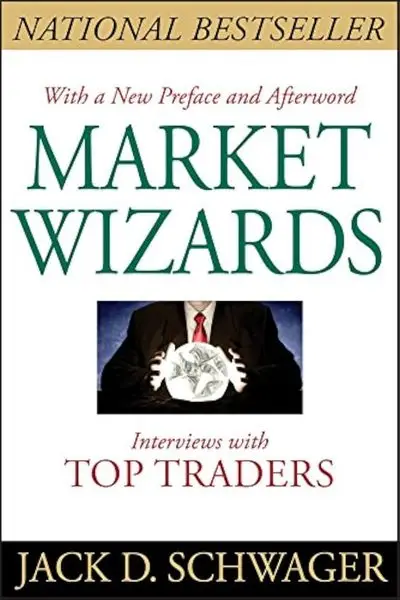
Read our full Market Wizards review.
 The Complete Trader's Edge
The full Mind · Method · Money framework. 70 chapters.
View on Amazon →
The Complete Trader's Edge
The full Mind · Method · Money framework. 70 chapters.
View on Amazon →
 Market Mayhem
400 years of bubbles, crashes, and the pattern that keeps repeating.
Buy on Amazon →
Market Mayhem
400 years of bubbles, crashes, and the pattern that keeps repeating.
Buy on Amazon →
 Greatest Companies
How the world's greatest companies were built — and what traders learn from them.
View on Amazon →
Greatest Companies
How the world's greatest companies were built — and what traders learn from them.
View on Amazon →
 Greatest Traders
Eighty-six lives that explain the markets — Livermore to Madoff, told with the losses left in.
View on Amazon →
Greatest Traders
Eighty-six lives that explain the markets — Livermore to Madoff, told with the losses left in.
View on Amazon →