

People use “investing” and “trading” as if they mean the same thing. They do not. Choosing the wrong one for your goals and temperament is one of the most expensive mistakes a beginner can make, and it happens before a single trade is placed.
The investing vs trading question is the first real fork in the road for anyone putting money into the markets, and most beginners pick a path without realising they had a choice. Both can build wealth. They demand very different amounts of time, skill, and emotional tolerance, and they profit from completely different things. Get the match right and the markets work with your life. Get it wrong and you will spend years frustrated by an activity that was never going to suit you. This guide breaks down the real difference and helps you decide which one you are actually trying to do.
Investing vs Trading: What’s the Difference?
The simplest way to put it: investing is about owning, trading is about timing. An investor buys assets to hold for years, profiting as businesses grow and compounding does its slow work. A trader takes shorter-term positions to profit from price movement, whether prices rise or fall. One is patient and largely passive. The other is active and skill-intensive. Here is how they compare across what matters.
| Investing | Trading | |
|---|---|---|
| Time horizon | Years to decades | Minutes to weeks |
| Source of return | Business growth, compounding, dividends | Price movement, captured actively |
| Time commitment | Low, mostly passive | High, active management |
| Skill curve | Gentle | Steep |
| Emotional demand | Moderate, patience under volatility | High, discipline under fast feedback |
| Typical goal | Long-term wealth | Shorter-term income or growth |
What Investing Actually Is
Investing is buying an asset, a share of a business, a fund, a property, with the expectation of holding it long enough for its value and income to grow. The investor’s edge is time, not timing. They accept that prices fall sometimes, ride out the volatility, and let compounding work over years. Investing rewards patience and consistency far more than cleverness, which is why broad, low-cost, long-held portfolios beat most active efforts over time. It demands little day-to-day attention, which makes it the right fit for the vast majority of people with jobs and lives.
What Trading Actually Is
Trading is taking positions to profit from price movement over a much shorter horizon, and it can profit from falling prices as well as rising ones. The trader’s edge is skill: reading setups, managing risk, and executing a tested plan repeatedly. That skill takes time to build and demands active attention and strong emotional control. Done well, trading can generate returns independent of whether the broad market rises. Done badly, which is how most beginners do it at first, it loses money faster than investing ever could. Our how to start trading roadmap lays out the path if this is the route you choose.
The Core Difference: Time Horizon and Source of Return
Strip away the detail and two things separate them. Time horizon: an investor thinks in years, a trader in minutes to weeks. Source of return: an investor profits from the underlying growing in value over time, a trader profits from correctly timing price moves. Everything else, the skill required, the time commitment, the emotional toll, flows from those two differences. When you understand that, the investing vs trading choice becomes about your life and temperament rather than which one sounds more profitable.
Which Is Right for You?
Ask yourself three honest questions to settle the investing vs trading decision. How much time can you genuinely give the markets each week? If the answer is “very little,” you are an investor, and trying to trade will only frustrate you. How do you handle watching money fluctuate? Trading magnifies that pressure many times over. And what are you actually trying to achieve: long-term wealth that grows quietly in the background, or an active skill you want to develop, possibly for shorter-term income? There is no wrong answer, only a wrong match. Most people are better served by investing as their foundation, whether or not they also trade.
Can You Do Both?
Yes, and many people do, sensibly. A common approach is to keep the bulk of your money in long-term investments and allocate only a smaller, separate portion to active trading, money you can afford to lose while you learn. This keeps your long-term wealth insulated from your trading education, which is wise because the trading account is where the expensive lessons happen. The key is to keep the two genuinely separate, in your accounts and in your head, so a bad trading run never touches your long-term foundation.
Common Misconceptions
“Trading is just faster investing.” It is a different skill with a different source of return and a far steeper learning curve. Speed is not the only difference.
“Investing is safe, trading is risky.” Both carry risk. Investing risk is mostly about time and volatility you ride out. Trading risk is about execution and discipline. Poorly done, either loses money.
“You have to choose one forever.” You do not. Your foundation can be investing while you develop trading as a separate skill, and your balance between them can change over your life.
How to Decide and Start
Match the activity to your time, temperament, and goal first, then act. If you lean toward investing, the path is straightforward: a long-term, diversified approach you can hold through volatility. If you lean toward trading, treat it as a skill to build deliberately, starting with the beginner’s roadmap, practising on a demo account, and protecting your capital with a strict risk management framework. And if you choose to trade, deciding your style, such as swing trading versus day trading, is the next step.
Key Takeaways
- Investing is about owning for the long term; trading is about timing shorter-term price moves.
- Investors profit from growth and compounding; traders profit from skillfully captured price movement.
- Investing needs little time and a gentle learning curve; trading needs active attention and a steep one.
- The right choice is the one that matches your time, temperament and goals, not the one that sounds more profitable.
- You can do both by keeping long-term investments separate from a smaller trading allocation.
- Most people are best served with investing as the foundation, whether or not they also trade.
Frequently Asked Questions
Is trading better than investing?
Neither is universally better; they suit different people and goals. Investing reliably builds long-term wealth with little time and a gentle learning curve, which fits most people. Trading can generate returns independent of the broad market but demands real skill, active time, and emotional discipline, and most beginners lose money before they become consistent. The better choice is the one that matches your life, not the one with the higher ceiling.
Can you make more money trading or investing?
Trading has a higher ceiling for those who develop genuine skill, because it can compound actively and profit in falling markets, but it also has a far higher failure rate. Investing produces more reliable long-term results for the average person with far less effort and risk of ruin. Comparing the best traders to average investors is misleading; compare like for like, and investing wins for most people while skilled trading wins for a disciplined few.
Should a beginner invest or trade first?
For most beginners, building an investing foundation first is the sensible move, because it secures long-term wealth while you decide whether to develop trading as a separate skill. If you want to trade, do it with a small, separate amount you can afford to lose, so your education does not endanger your core savings. The two are not mutually exclusive, but the order protects you.
What is the main difference between trading and investing?
Time horizon and source of return. Investors hold for years and profit from assets growing in value; traders hold for minutes to weeks and profit from correctly timing price movements. Every other difference, in skill, time and emotional demand, follows from those two. If you remember nothing else about investing vs trading, remember owning versus timing.
Is investing safer than trading?
Both involve risk, but of different kinds. Investing risk is largely volatility you ride out over a long horizon, which historically has rewarded patient holders. Trading risk is about execution and discipline over many positions, and it can produce losses quickly when those break down. Neither is “safe,” but a diversified long-term investment approach is generally lower risk than active trading for a beginner.
Can you be both a trader and an investor?
Yes, and it is a common, sensible setup. Many people hold the majority of their money in long-term investments and trade actively with a smaller, ring-fenced portion. The discipline is to keep the two completely separate so a losing trading streak never touches the long-term foundation, and so each activity is judged on its own terms.
The Complete Trader’s Edge
If you choose to trade, choose to do it properly
Trading is a skill, and skills can be built. The book’s Mind, Method and Money framework covers the psychology, strategy and risk discipline that separate traders who last from beginners who don’t, across 70 chapters.
 The Complete Trader's Edge
The full Mind · Method · Money framework. 70 chapters.
View on Amazon →
The Complete Trader's Edge
The full Mind · Method · Money framework. 70 chapters.
View on Amazon →
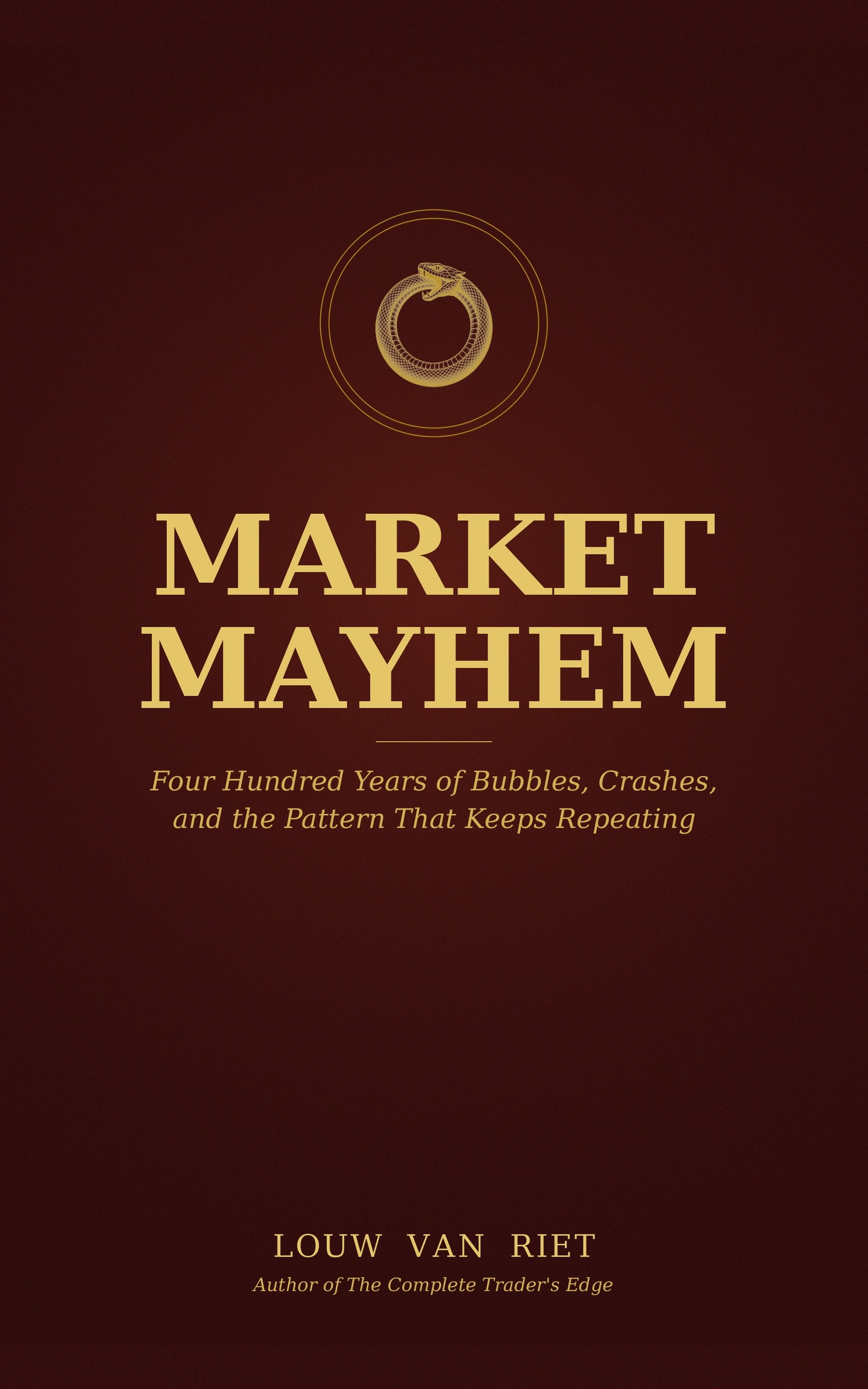 Market Mayhem
400 years of bubbles, crashes, and the pattern that keeps repeating.
Buy on Amazon →
Market Mayhem
400 years of bubbles, crashes, and the pattern that keeps repeating.
Buy on Amazon →
 Greatest Companies
How the world's greatest companies were built — and what traders learn from them.
View on Amazon →
Greatest Companies
How the world's greatest companies were built — and what traders learn from them.
View on Amazon →