GREATEST TRADERS · EPISODE 31
Rakesh Jhunjhunwala
The Big Bull of India Who Turned $100 Into Billions
▶ Watch on YouTube🎵 Listen on Spotify
Also available on Apple Podcasts · Amazon Music
In the summer of 1992, a thirty-two-year-old Bombay stockbroker named Rakesh Jhunjhunwala was approximately one month away from bankruptcy. The Indian stock market was in the manic late stages of what would later be called the Harshad Mehta scam, a fraud that had pumped the Bombay Sensex to surreal heights on borrowed money flowing illegally out of the banking system. Jhunjhunwala thought the entire structure was insane. He had taken massive short positions against it.
He was wrong about the timing. The market kept rising. His broker was demanding margin he did not have. He told an interviewer years later that if Mehta’s scheme had run for one more month, he would have been wiped out completely.
In late April 1992, the scam unravelled. The Sensex collapsed. Jhunjhunwala’s short positions paid out spectacularly. He went from nearly ruined to genuinely rich in weeks.
Three decades later, when he died at the age of sixty-two on August 14, 2022, his net worth was approximately five point eight billion US dollars. Forbes ranked him the four hundred and thirty-eighth richest person in the world. India had a new word for him: the Big Bull. The man who, more than any other single individual, had taught a billion people that the stock market was something an Indian could win at.
He had started, in 1985, with five thousand rupees. About sixty US dollars at today’s exchange rates. A college student’s pocket money.
| RAKESH JHUNJHUNWALA — AT A GLANCE | |
| Born | July 5, 1960, Mumbai, India (Rajasthan-origin family) |
| Died | August 14, 2022, age 62, Breach Candy Hospital, Mumbai |
| Nicknames | The Big Bull, the Warren Buffett of India, Pied Piper of Indian Bourses |
| Starting capital | ₹5,000 (1985), plus ₹2.5 lakh borrowed from his brother’s client |
| Net worth at death | Approximately $5.8 billion (~₹46,000 crore) |
| Forbes rank | #438 richest person globally at time of death |
| Firm | Rare Enterprises (RJ + REkha = RaRE), founded with his wife |
| Largest holding at death | Titan Company — ~₹11,000 crore (over a third of his portfolio) |
| Famous early trade | Tata Tea, 1986: bought 5,000 shares at ₹43, sold at ₹143 in 3 months |
| Career-making trade | Sesa Goa: bought at ~₹25-26, sold tranches up to ₹2,200 |
| Final venture | Akasa Air, low-cost airline, $400M investment for 40% stake |
| Posthumous honour | Padma Shri (India’s fourth-highest civilian award), 2023 |
The Jhunjhunwala story is impossible to tell honestly without telling India’s story alongside it. When he started trading in 1985, the Sensex stood at around one hundred and fifty points. By the time he died, it had risen roughly four hundred-fold. He did not just ride the most extraordinary emerging-market bull run in modern history. He convinced an enormous Indian middle class that they could ride it with him.
To understand why his name is spoken with reverence on a hundred million Indian trading screens today, you have to understand what came before him. In 1985, Indian retail investing barely existed. The economy was closed, the rupee was non-convertible, foreign investment was banned, and the Bombay Stock Exchange was a small, opaque, and notoriously corrupt institution where insiders ran rings around outsiders. A typical educated Indian middle-class family kept its savings in fixed deposits or gold. The market was for sharks.
Jhunjhunwala became the first nationally famous Indian investor who showed his countrymen that an outsider with patience, conviction, and a calculator could beat the sharks at their own game.
The Father Who Said No
Rakesh Radheyshyam Jhunjhunwala was born in Mumbai on the fifth of July, 1960, into a Marwari family from Rajasthan. His father was an income tax officer, a stable government job that supported the family without ever generating wealth. The young Rakesh became fascinated with the stock market by listening to his father discuss share prices with his friends.
The story of how he started is small but revealing. When the teenage Jhunjhunwala asked his father for stock-market money, his father refused. He went further. He told his son that he could pursue any career he wanted, but he was not going to receive any starting capital from him, nor was he allowed to ask any of his father’s friends for capital.
The lesson was not stinginess. It was filtration. Jhunjhunwala’s father, who knew his son better than anyone, understood that capital handed to him would be capital wasted. The son had to want it badly enough to find his own.
Jhunjhunwala did. He completed his commerce degree from Sydenham College, qualified as a Chartered Accountant in 1985, and entered the Bombay Stock Exchange that same year with five thousand rupees of his own savings. The amount in inflation-adjusted dollars today would be roughly fifteen hundred US dollars. It was not nothing. It was not much.
Within a year he was tripling capital. Within seven years he was a millionaire many times over. Within thirty-seven years he was a multi-billionaire. His father lived long enough to see his son’s first crore. The lesson held.
Tata Tea, 1986
The first big win came almost immediately. In 1986, Jhunjhunwala bought five thousand shares of Tata Tea at forty-three rupees per share. Within three months, the stock had risen to one hundred and forty-three rupees. He sold. The profit was about half a million rupees in 1986 money, which equates to several lakh dollars in real terms today.
The Tata Tea trade is worth dwelling on, because it shows the method that Jhunjhunwala would refine and apply for the next thirty-six years.
He did not buy Tata Tea because of a tip. He bought it because he had analysed the global tea market, seen that yields were rising and that prices were therefore likely to firm, and concluded that the market had not yet priced in this dynamic for an Indian tea producer of Tata Tea’s quality. He used borrowed money. He had conviction. He held until the thesis played out, and he sold when the price reflected what he had seen earlier than the rest of the market.
That single trade contained, in miniature, every element of the Jhunjhunwala approach: bottom-up fundamental research, contrarian conviction, willingness to use leverage when the asymmetry was right, and the discipline to sell when the market caught up. The trades got bigger over the years. The method never changed.
Sesa Goa: The Trade That Made Him a Crorepati
The trade that turned Jhunjhunwala from a successful trader into a serious operator was Sesa Goa, an iron-ore exporter (now part of Vedanta Limited). In the late 1980s the company’s stock had been crushed by a collapse in iron-ore prices. Jhunjhunwala saw a recovery story.
He bought shares at around twenty-five to twenty-six rupees, in size, with leverage. As iron-ore prices recovered and the stock began climbing, he refused to take profits early. He sold in tranches over years, with his final exit reportedly around two thousand two hundred rupees per share.
The math is staggering. Even allowing for averaged sales prices over time, the Sesa Goa position alone returned multiples in the tens. It made him, in Indian terminology, a crorepati, someone with more than ten million rupees in liquid wealth, before he was thirty.
It also shaped his second great rule, which he would repeat in interviews for the rest of his life. Buy right, sit tight. The hardest part of investing was not finding good companies. It was holding them long enough to be paid properly for being right.
Harshad Mehta and the Brink
By 1991 Jhunjhunwala was prosperous, well-known in Bombay broker circles, and increasingly suspicious of what was happening in the broader market. The Sensex was rising on liquidity flowing out of unprecedented banking channels. The man at the centre of the rise was a charismatic broker named Harshad Mehta, who would later be exposed for orchestrating one of the largest financial frauds in Indian history.
Jhunjhunwala did not know the precise mechanics of the fraud at the time. What he saw was that valuations had become, in his own word, “incredulous.” He took heavy short positions. The market kept rising. His broker called for margin. He met it. The market kept rising. The margin calls continued.
He told a Reuters interviewer years later that if the Mehta scheme had run for one more month, he would have been bankrupt. He survived because the truth surfaced first, in late April 1992, when journalists exposed Mehta’s diversion of bank funds. The Sensex began its violent collapse. Jhunjhunwala’s short positions paid out at extraordinary multiples.
It is the most important episode in his career, and the most under-discussed. Jhunjhunwala was a bull. The popular image of him is as India’s permanent optimist. But the trade that fundamentally established his fortune was a short. He understood, and he said so plainly in interviews, that being a bull on India did not mean being a bull on every Indian stock all the time. Sometimes the right move was to bet against a market that had lost its mind.
“Short-term trading is for short-term gain. Long-term trading is for long-term capital formation,” he told the Economic Times. “Trading is what gives you the capital to invest.” He never let the public love affair with his bull persona obscure the technical truth: he was an opportunist with a permanent macro tailwind, not an ideologue who could only buy.
“The only rule I have is that there are no rules.”
— Rakesh Jhunjhunwala
Titan, the Hold of a Lifetime
If Sesa Goa was the trade that made Jhunjhunwala rich, Titan Company was the trade that made him a billionaire. Titan, the Tata Group’s watch and jewellery business, was a company most Indian fund managers ignored for years. Jhunjhunwala began accumulating in the early 2000s when the stock was trading around forty to sixty rupees.
By 2022, Titan was trading above two thousand rupees per share. Jhunjhunwala’s stake was worth more than eleven thousand crore rupees, roughly one and a third billion US dollars at the time of his death. It was about a third of his entire disclosed portfolio. He had held it for almost two decades.
The Titan position is the textbook example of Jhunjhunwala’s buy right, sit tight doctrine in action. He had identified a brand-led consumer business in a country whose middle class was about to explode. He took a position. He held it through cycles, through corrections, through years where the stock did nothing. He gave the thesis the time it needed to mature.
Most retail investors who try to copy Jhunjhunwala’s trades get the entry right and the exit wrong. They sell after the first one hundred percent move, then watch the stock multiply twenty more times. He understood that the largest gains in any holding are almost always made in the final third of the holding period, not the first. Patience was not a virtue. It was the entire compounding engine.
Rare Enterprises and Rekha
The firm Jhunjhunwala built to manage his capital was called Rare Enterprises, and the name itself tells a story. Rakesh married Rekha Gupta on the twenty-second of February, 1987. The firm name is a contraction: Rakesh plus Rekha. He sometimes joked in interviews that his wife was his only client.
Rekha was not just a name on the firm. She was an investor in her own right, became co-founder of Rare Enterprises, and operated her own portfolio of Indian equities. They had three children. Their main residence, after years of progressively larger Mumbai apartments, was in Malabar Hill, where Jhunjhunwala bought twelve apartments in the Ridgeway building between 2013 and 2017 for roughly three hundred and seventy crore rupees combined. He demolished the building in 2021 and started construction of a thirteen-story, seventy-thousand-square-foot family home.
The lifestyle was lavish in a way Jhunjhunwala never tried to disguise. He smoked. He drank. He held court at the Mumbai Cricket Club and at film premieres. He had strong opinions about Bollywood, cricket, Indian politics, and the global economy, and shared all of them at length on Indian financial television, becoming for a generation of Indian retail investors something between a market guru and a national mascot.
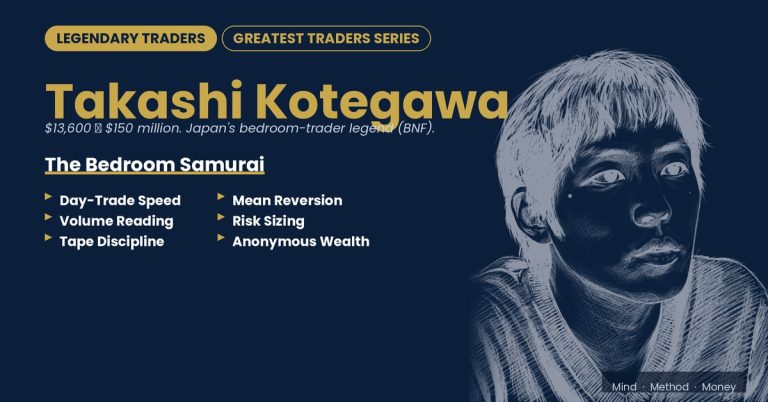
This is the part of his life that diverges most strongly from the BNF model. Where Takashi Kotegawa kept his life and his capital surgically separated, Jhunjhunwala fused them. The fortune was the lifestyle. The lifestyle was part of the public persona that brought deal flow and influence. He was not embarrassed about it. He was India’s first stock-market celebrity, and he understood that his visibility was itself an asset.
The SEBI Settlement
The complete picture requires acknowledging the harder chapter. In July 2021, Jhunjhunwala and his associates settled an insider-trading investigation with the Securities and Exchange Board of India for a total payment of thirty-five crore rupees. Jhunjhunwala personally paid eighteen and a half crore. His wife paid three point two crore.
The case concerned trades in Aptech Limited, a vocational-training company that Jhunjhunwala chaired. SEBI alleged that Jhunjhunwala and others had traded in Aptech shares while in possession of material non-public information about the company’s expansion into the preschool segment. The settlement was a no-admission resolution, a common path in Indian corporate cases. He neither admitted nor formally denied wrongdoing.
It is a meaningful blot on an otherwise extraordinary record. The Indian financial press treated it with restraint, partly out of regard for his stature and partly because the offending behaviour, by the standards of the Indian markets he had grown up in, was relatively minor. He was not Harshad Mehta. He was not Ketan Parekh. He had crossed a line, paid for it, and continued. But the line had been crossed.
Akasa Air and the Last Months
The last great act of Jhunjhunwala’s life was Akasa Air. In July 2021 he committed four hundred million US dollars for a forty percent stake in a new low-cost Indian airline, founded with the former Jet Airways CEO Vinay Dube and the IndiGo veteran Aditya Ghosh. He later increased his stake to forty-six percent, becoming the largest shareholder.
The bet was vintage Jhunjhunwala. India’s domestic aviation market had been a graveyard for investors for decades. Most established carriers had failed. Yet he believed that a country with a billion four hundred million people, a fast-growing middle class, and severely underserved tier-two and tier-three cities had to eventually produce a successful low-cost national carrier.
He did not live to see the thesis play out. Akasa’s first commercial flight was on the seventh of August, 2022. He flew on it himself, between Mumbai and Ahmedabad. It was almost the last time he was seen in public. He had been in declining health for years, with kidney problems and a heart condition that had visibly affected his appearance.
On the fourteenth of August, 2022, he was rushed to Breach Candy Hospital in Mumbai with multiple organ failure. He died at approximately six thirty in the morning. He was sixty-two years old.
India responded as if a head of state had died. Prime Minister Modi tweeted his condolences. The Sensex paused for a moment of silence. Indian financial television ran rolling coverage for days. Eight million retail Indian investors who had grown up watching him on television felt a personal grief that no Indian financier had ever before commanded.
What Jhunjhunwala Teaches
The first lesson is structural. Jhunjhunwala’s career maps almost exactly onto the most extraordinary equity bull market any major economy has produced in the modern era. The Bombay Sensex rose from about one hundred and fifty points in 1985 to over seventy thousand by the time he died. He did not just stock-pick well. He correctly identified the macro tailwind and rode it with leverage and conviction for thirty-seven years. Many Indian investors of his generation were equally talented. Few married their talent to a forty-year directional view of their economy.
The second lesson is on the dual nature of the trader. Jhunjhunwala was famous as a bull, but his fortune was built as much on the 1992 short of the Mehta-era Sensex as on the long Tata Tea position from 1986. He understood, and said so plainly, that trading and investing were two different disciplines and required two different mental modes. Most retail investors try to be one or the other and confuse themselves. He was openly both.
The third lesson is on conviction sizing. Most investors who pick a great stock take too small a position to matter. Jhunjhunwala, in every great trade of his career, sized for outcomes. His Titan stake was a third of his disclosed portfolio. His Sesa Goa stake nearly broke him before it made him. He did not believe in evenly weighted portfolios as a way to express conviction. He believed in evenly weighted portfolios as a confession that you had no conviction.
The fourth lesson, the one his Indian followers most often miss, is on patience. The Big Bull was famous for trading. He was rich because of holding. The trades generated capital. The holds compounded it. He once said that seventy-six percent of the value of his disclosed portfolio in 2022 had been generated in the prior seven years, after he turned fifty-five. Compounding is not a young man’s game. It is an old man’s game played by the person who started young.
Like Buffett, like Munger, like Templeton, Jhunjhunwala had figured out by his late twenties that the secret was not picking the next great stock. The secret was holding the great stock he had already picked.
Frequently Asked Questions
Who was Rakesh Jhunjhunwala?
Rakesh Jhunjhunwala (1960–2022) was India’s most famous stock investor, often called “the Big Bull” or “the Warren Buffett of India.” Starting with ₹5,000 of personal capital in 1985, he built a fortune of approximately $5.8 billion over thirty-seven years through Indian equity investing and trading. At his death he was the 438th richest person in the world according to Forbes. He was a Chartered Accountant, the founder of Rare Enterprises, and a co-founder of the Indian airline Akasa Air.
How did Rakesh Jhunjhunwala start investing?
Jhunjhunwala completed his Chartered Accountancy qualification in 1985 and entered the Bombay Stock Exchange that same year with ₹5,000 of his own savings. His father, an income tax officer, refused to give him capital and forbade him from borrowing from family friends, forcing him to build everything from a small base. He supplemented his initial ₹5,000 with ₹2.5 lakh (~$8,000 at the time) borrowed from one of his brother’s clients.
What was Rakesh Jhunjhunwala’s first big trade?
In 1986 Jhunjhunwala bought 5,000 shares of Tata Tea at ₹43 per share. The stock rose to ₹143 within three months, giving him a profit of approximately ₹5 lakh. He had identified a global tea-yield cycle that the Indian market had not yet priced in. The trade established the bottom-up, fundamentally driven approach he would use for the rest of his career.
What was Rakesh Jhunjhunwala’s largest holding?
His largest single holding at the time of his death was Titan Company, the Tata Group’s watches and jewellery business. He had begun accumulating Titan in the early 2000s at around ₹40–60 per share. By 2022 the position was worth approximately ₹11,000 crore (~$1.4 billion), representing roughly a third of his entire disclosed portfolio. The Titan position is the canonical example of his “buy right, sit tight” philosophy.
How did Rakesh Jhunjhunwala almost go bankrupt?
In 1992 Jhunjhunwala took heavy short positions against the Bombay Sensex during the late stages of the Harshad Mehta scam, when the index was being inflated by illicit banking flows. The market kept rising for months, generating margin calls he barely met. He told Reuters years later that if the scam had run for one more month, he would have been wiped out. The collapse of the scam in late April 1992 produced enormous profits on his short positions and established his fortune. It was the most under-discussed trade of his career.
What was Rare Enterprises?
Rare Enterprises was Jhunjhunwala’s investment firm, founded with his wife Rekha. The name is a contraction of Rakesh and Rekha. It was a partnership rather than an outside-money fund, and it served primarily as the legal vehicle for managing the family’s enormous Indian equity portfolio. He sometimes joked that his wife was his only client.
Did Rakesh Jhunjhunwala have any losses or controversies?
Yes. In July 2021 Jhunjhunwala settled an insider-trading investigation with the Securities and Exchange Board of India over trades in Aptech Limited, where he was chairman. The total settlement was ₹35 crore, with Jhunjhunwala personally paying ₹18.5 crore. The settlement was without admission of wrongdoing. He also acknowledged in interviews that about half of his approximately twenty private-equity investments had failed. His career was not infallible, but it was extraordinarily long-running and consistently positive in net.
What was Akasa Air?
Akasa Air was the low-cost Indian airline Jhunjhunwala invested in during his final years. He committed approximately $400 million for a 40% stake (later increased to 46%, making him the largest shareholder). The airline launched its first commercial flight on August 7, 2022. Jhunjhunwala flew on the inaugural Mumbai-to-Ahmedabad route. He died one week later. The airline has continued to expand under the management he helped install.
Continue Learning
If you enjoyed this profile, explore more legends in the Greatest Traders series:
- Takashi Kotegawa (BNF) — the Japanese counterpart, an introvert where Jhunjhunwala was a showman
- Jesse Livermore — the original speculator who similarly lived large and traded big
- George Soros — one of Jhunjhunwala’s stated influences
- The Mind · Method · Money Framework — the three pillars Jhunjhunwala lived by
The Complete Trader’s Edge
Jhunjhunwala’s rule was simple: buy right, sit tight. Easy to say. Almost impossible to do. The Mind · Method · Money framework gives you the structure to actually do it.
 The Complete Trader's Edge
The full Mind · Method · Money framework. 70 chapters.
View on Amazon →
The Complete Trader's Edge
The full Mind · Method · Money framework. 70 chapters.
View on Amazon →
 Market Mayhem
400 years of bubbles, crashes, and the pattern that keeps repeating.
Buy on Amazon →
Market Mayhem
400 years of bubbles, crashes, and the pattern that keeps repeating.
Buy on Amazon →
 Greatest Companies
How the world's greatest companies were built — and what traders learn from them.
View on Amazon →
Greatest Companies
How the world's greatest companies were built — and what traders learn from them.
View on Amazon →