

GREATEST TRADERS · EPISODE 15
Bill Lipschutz
The Sultan of Currencies, the $12,000 Inheritance, and the Method Behind It
▶ Watch on YouTube🎵 Listen on Spotify
Also available on Apple Podcasts · Amazon Music
Bill Lipschutz
| Born | 1956, Farmingdale, New York |
| Nickname | “The Sultan of Currencies” |
| First trading capital | $12,000 inherited from grandmother (Cornell years) |
| Took it to | $250,000 — then lost it all on one trade |
| Salomon Brothers tenure | 1982–1990 |
| Peak annual P&L for Salomon | $300 million per year (mid-1980s) |
| Best streak | 16 positive months in a row |
| By 1989 | Managing Director and Global Head of FX, Salomon |
| Hathersage Capital co-founded | 1995 (G10 currencies, still active) |
| Education | Cornell BFA (Architecture), Cornell Johnson MBA (1982) |
| Famous quote | “If most traders would learn to sit on their hands 50 percent of the time, they would make a lot more money.” |
When Bill Lipschutz arrived at Salomon Brothers in 1982 as a fresh MBA from Cornell’s Johnson School, he had never traded a currency. He was a Bachelor of Fine Arts in architectural design who had picked up a finance MBA almost as an afterthought. The Salomon training programme was where he would learn what foreign exchange even was. Three years later, he was making three hundred million dollars a year for the firm.
By 1985, Bill Lipschutz was the largest and most profitable currency trader at Salomon Brothers. By 1988 he was Director and Global Head of FX Options. By 1989 he was Managing Director and Global Head of Foreign Exchange. He once strung together sixteen positive months in a row. He was reportedly responsible for half of all currency option volume on the Philadelphia Stock Exchange. The trading community called him the Sultan of Currencies, and the nickname was not generous. It was descriptive.
And yet, the most useful part of his story is not the peak. It is the failure that shaped everything afterwards. Before Lipschutz had ever set foot inside Salomon Brothers, he had inherited twelve thousand dollars worth of stocks from his grandmother during his college years at Cornell. He spent the next several years carefully managing that inheritance and turned it into roughly two hundred and fifty thousand dollars. Then, on a single bad trade, he lost everything. The two hundred fifty grand. The original twelve thousand. All of it. Wiped out.
He was not, as he later said, devastated by the loss of the money. He was devastated by the fact that he had traded badly. The system he had been using had worked for years. One bad decision, one moment of insufficient discipline, had erased everything. From that day forward, Bill Lipschutz built his entire trading career around the principle that survival comes before profit, that risk management is the foundation of everything else, and that the trader who cannot tolerate being wrong cannot be a great trader.
This is the story of how a Cornell architecture graduate who had never heard of foreign exchange became one of the most consistently profitable currency traders in the history of Wall Street.
Farmingdale, Cornell, and the inheritance
William Robert Lipschutz was born in 1956 in Farmingdale, New York, on Long Island. The same year as Steve Cohen, fifteen miles east of Cohen’s Great Neck. Two future giants of Wall Street born in the same year on the same island, both with no early signs they would end up in finance.
Lipschutz attended Cornell University for his undergraduate degree, graduating with a Bachelor of Fine Arts in architectural design. The choice was not arbitrary. Architecture demands the same kind of pattern recognition and structural thinking that markets eventually would. It teaches you to see how individual pieces fit into larger systems. To understand load-bearing relationships, hierarchy, flow. The skills are not finance skills, but they translate.
The pivotal moment came during his college years. His grandmother died and left him an inheritance of approximately twelve thousand dollars in stocks. The portfolio was not professionally managed. It was a hodgepodge of over a hundred different positions accumulated over decades of casual investing. Lipschutz, in the process of liquidating and consolidating it, discovered something about himself: he was good at this. He could read the financial statements. He could understand the businesses. He could make decisions about which positions to hold and which to exit.
Over the next several years, while still at Cornell, he traded the inheritance actively. He read everything he could find on markets in the Cornell library. He watched price movements. He developed a feel for how news, sentiment, and fundamentals moved equity prices. By the time he was ready to graduate, the original twelve thousand dollars had become approximately two hundred and fifty thousand dollars.
And then it was gone.
The defining loss
The details of what Lipschutz has called his defining loss have stayed deliberately vague across his career. What is known is that on one trade, he lost essentially the entire two hundred and fifty thousand dollars. The system he had been using over the previous years, which had compounded his original inheritance more than twentyfold, broke on a single decision.
Lipschutz has been clear in interviews about why this loss mattered, and the framing is the most important thing he ever wrote about trading. He was not, he said, particularly upset about the money itself. He was upset about how he had traded. The loss was a process failure, not a market failure. The market had not done something irrational or surprising. He had simply violated his own rules at a critical moment, and the violation had been catastrophic.
What he learned from this is the foundation of everything he did at Salomon Brothers afterwards. Three principles, named explicitly in interviews across his career.
First, no single trade and no single trading day should ever be allowed to threaten the survival of the entire portfolio. The drawdown rule. If one decision can wipe you out, you have not built a sustainable trading operation. You have built a fragile one that has not yet failed.
Second, position size should be directly proportional to confidence in the analysis. If your read is eighty percent clear, size aggressively. If it is fifty-fifty, stand aside. The mistake is not in being wrong. The mistake is in being aggressive when you should be cautious.
Third, focus on the quality of the process, not the emotional impact of the result. A good trade can lose money. A bad trade can win money. Over time, the quality of the process determines the outcome. The trader who optimises for process beats the trader who optimises for individual outcomes.
This is the same arithmetic that underpins all serious risk management, and Lipschutz arrived at it earlier than most traders by being forced to. The two hundred and fifty thousand dollars was an expensive education. It was also the cheapest education he could have received, given what was coming next.
Salomon Brothers and the FX department that did not yet exist
Lipschutz earned his MBA in Finance from Cornell’s Johnson School of Management in 1982. He joined Salomon Brothers immediately afterwards as part of their training programme. The timing was extraordinary, and Lipschutz has acknowledged this in interviews. The currency options market, Salomon’s currency options department, and Bill Lipschutz the FX trader all started at exactly the same time and grew together.
Salomon was, in 1982, an investment bank dominated by fixed-income trading. Foreign exchange was a small backwater operation. The firm had no real presence in currencies. The training programme assigned new MBAs to various desks. Lipschutz ended up assigned to FX almost by accident, and the department that did not yet really exist became the launching pad for his entire career.
What he discovered, almost immediately, was that foreign exchange was structurally different from equities. The market was twenty-four hours, six days a week. The participants were largely institutional. Information edge came less from corporate fundamentals and more from understanding global capital flows, central bank policy, and macroeconomic positioning. The trades were larger, faster, and more leveraged than anything in equities.
His architectural background turned out to be relevant. Currencies do not move in isolation. They move in relationship to each other. The dollar’s strength against the yen depends on what the yen is doing against the mark, and the mark against the pound, and the pound against the dollar. The whole system is interconnected. Reading currencies well requires the same kind of structural pattern recognition that reading building plans does.
By 1985, three years into his career, Lipschutz was generating approximately three hundred million dollars per year for Salomon Brothers from currency trading. Not in his career. Per year. The firm had grown from no FX presence to one of the largest currency trading operations on Wall Street, and Lipschutz was responsible for an outsized share of that profit.
The Plaza Accord and the macro overlay
One of the most instructive episodes in Lipschutz’s career was the Plaza Accord of September 1985. The Plaza Accord was a coordinated agreement among the United States, Japan, Germany, France, and the United Kingdom to weaken the U.S. dollar against the Japanese yen and German mark through coordinated intervention. The agreement was negotiated in secret and announced to the market on a Sunday evening.
The dollar collapsed at the open on Monday. Most traders were caught completely off guard. They had been positioned long the dollar based on U.S. economic strength, and the coordinated devaluation hit them at full force. Lipschutz, however, had been positioned for a dollar decline based on his analysis of U.S. trade deficits and the political pressure for intervention. He had not known about the Plaza Accord specifically. He did not need to. He had read the macroeconomic landscape correctly.
This is the part of Lipschutz’s method that gets the least attention but matters the most. He was not a technical trader who watched charts in isolation. He combined deep macroeconomic analysis with execution discipline. He studied trade balances. He tracked central bank policy. He understood political pressure. The directional bias came from the macro work. The technical work was for entries and exits.
The 1987 stock market crash provided a similar opportunity. Currency markets experienced extreme volatility as global capital moved in panic. Lipschutz understood that the crisis would force coordinated central bank action and that the resulting currency moves would be predictable for traders who kept their composure. Many traders were destroyed in the volatility. He profited from it.
The lesson here, for working traders, is that a multidisciplinary mental framework that combines macro context with technical execution beats either approach in isolation. The macro tells you which direction. The technical tells you when to act. Without the macro, you are guessing. Without the technical, you are right but unable to capitalise.
The relative-value edge
Lipschutz’s actual analytical method had a name that did not get much public attention but was central to how Salomon’s FX desk operated: relative value analysis.
Most retail FX traders ask the wrong question. They ask: is the dollar going up or down? Lipschutz asked a different question. He asked: which currency pair is mispriced relative to the others? If the dollar-yen and the dollar-mark and the dollar-Swiss-franc and the yen-mark all imply slightly different things about where the dollar is heading, the differences contain tradeable information. The pair that is most out of line with the others is offering an asymmetric setup.
This relative-value approach is closer to how a sophisticated equity arbitrageur thinks than to how a retail FX trader thinks. It treats the currency complex as a system rather than as a collection of individual pairs. The trades are often spread positions, holding one currency long against another short, capturing the relative move rather than the absolute direction.
The discipline of forcing yourself to think in relative terms does something quietly powerful. It removes directional bias from your analysis. You stop arguing with the market about whether the dollar should be stronger. You start asking which currency pair the market is pricing inconsistently. The first question is a fight you usually lose. The second is a question that has a tradeable answer.
Pyramiding into winners, sitting on hands when undecided
Two related principles run through every interview Lipschutz has given about his trading method, and they sit in tension with each other in ways that most traders never resolve.
The first is that when you have a trade working, you should add to it. Lipschutz pyramids into winners. If a position is moving in his direction and the analytical thesis is being confirmed, he scales the position larger, not smaller. The structural insight is that confidence in a trade should grow as the market validates the thesis, not shrink. Most retail traders do the opposite. They take profits early, “lock in” gains that turn out to be a fraction of what was available, and then watch the position they exited continue running for weeks or months without them.
The second is that when you do not have a clear edge, you should not be in the market at all. Lipschutz’s most quoted line: “If most traders would learn to sit on their hands fifty percent of the time, they would make a lot more money.” The point is not that fifty percent is the right number. The point is that most traders are over-trading. They feel they need to be in the market because that is what traders do. The result is taking trades with poor probabilities, paying spreads on positions that have no edge, and accumulating losses on the marginal trades that overwhelm the winnings on the high-edge trades.
The two principles together describe a barbell strategy. When you have a clear edge, lean into it heavily and let the position grow as the thesis is validated. When you do not have a clear edge, do nothing. Wait. Watch. Read. Save your capital and your psychological energy for the trades that matter. The math underneath is the asymmetric distribution that powers all professional trading: most of your annual return comes from a small number of high-conviction trades, and the discipline to size those trades correctly is what separates great traders from average ones.
Time as a risk factor
One of the more subtle Lipschutz principles, and one that does not get enough attention in retail trading literature, is that time itself is a risk factor.
The longer a position is open, the more exposure it has to events the trader cannot anticipate. Macroeconomic releases. Central bank surprises. Geopolitical shocks. Liquidity dislocations. Each additional hour or day a position remains open is an additional opportunity for some unexpected event to invalidate the original thesis.
This does not mean Lipschutz was a day trader. He held positions for hours to weeks depending on the trade. But the duration was always a deliberate choice, weighted against the increased exposure to outside forces. A trade that needs to remain open for a month to capture its expected value carries fundamentally different risk than a trade that captures the same expected value in a week.
For retail traders, this principle has a practical implication that runs counter to common advice. The instruction to “hold for the long term” is not always sound. The longer you hold, the more events you are exposed to. Sometimes the right answer is to capture a partial move quickly and step aside, rather than wait for the full move and accept the increased risk that the world will change in the meantime.
Leaving Salomon and Hathersage
By 1990, Lipschutz had been at Salomon Brothers for eight years. He had built a personal track record that was unmatched in currency trading. He decided to leave. The reasons were partly cyclical, partly personal, and partly structural.
His first stop was a brief tenure as CEO of North Tower Group, a subsidiary of Merrill Lynch focused on currency trading. The arrangement did not last. By 1995, Lipschutz had co-founded Hathersage Capital Management with classmates from Cornell. Hathersage specialised in G10 currency trading and remains active today, with Lipschutz serving as Principal and Director of Portfolio Management.
The shift from running a desk inside an investment bank to running an independent fund is more significant than it sounds. At Salomon, Lipschutz had access to the firm’s information flow, its market-making capabilities, and its capital base. At Hathersage, he had to build all of that infrastructure himself, with smaller resources, while also marketing the fund to outside investors and managing the operational realities of running an independent business.
That he made this transition successfully, and has continued to operate Hathersage for over thirty years now, is itself a testament to the durability of his method. Most floor-trained traders fail at the move to independent fund management. The skills are different. The pressures are different. Lipschutz adapted.
The screens in every room
Jack Schwager’s interview with Lipschutz in The New Market Wizards (1992) contains an observation that has become part of trading legend. Schwager visited Lipschutz at his apartment and noticed that there were market quote screens in essentially every room. The living room. The kitchen. The bedside table. Even the bathroom, where Schwager observed a screen positioned at standing height with what he described as somewhat tongue-in-cheek precision.
The screens were not affectation. The currency markets are open twenty-four hours, and the most active periods often occur during U.S. nighttime hours, when European and Asian sessions overlap. Lipschutz could roll over in his sleep and check quotes. He routinely did. His ability to monitor the market continuously, even outside formal trading hours, was part of his edge.
This is the part of Lipschutz’s career that retail traders should understand carefully. The level of obsession required to be a top-tier currency trader is real. Markets do not pause when you sleep. The relationships between currencies shift continuously. The trader who is paying attention has an edge over the trader who is not. Lipschutz’s screens-in-every-room habit was not a quirk. It was a logical consequence of how the FX market actually works.
For working retail traders, the takeaway is not that you need quote screens in your bathroom. The takeaway is that the time and attention you give to markets is itself a form of edge. Half-attention produces half-results. The professional trader is paying attention when the market is moving, even if the moves come at inconvenient hours.
What Lipschutz means for your trading practice
Lipschutz’s career maps onto Mind, Method, Money with unusual precision because his entire framework is explicitly built around discipline.
Mind. Accept losses as part of the process. Lipschutz has said many times that the trader who cannot tolerate being wrong cannot be a great trader. Markets are probabilistic. Even high-conviction trades fail sometimes. The mental capacity to take a loss without flinching, to exit a trade that has invalidated the thesis without arguing with the market, and to move on to the next setup with full focus, is the foundation of professional trading. The defining loss at age twenty-something was the moment Lipschutz internalised this. Most traders never internalise it.
Method. Combine macro context with technical execution. The macro tells you which direction has the wind behind it. The technical tells you when to act. Without both, you are operating with one eye closed. Lipschutz also emphasised relative value over absolute direction, which is a more sophisticated frame than most retail FX traders use and produces more consistent edge. Pyramid into winners. Sit on your hands when uncertain.
Money. Position size in proportion to conviction. The biggest losses in trading are not from being wrong on small positions. They are from being wrong on positions that were sized too aggressively for the conviction available. Lipschutz’s drawdown rule is the bedrock principle: no single trade and no single day should be allowed to threaten the portfolio’s survival. Once you internalise this, everything else gets easier.
The last word
Bill Lipschutz is now in his late sixties. He has been actively trading currencies for over four decades, longer than most professional traders survive in any market. Hathersage Capital is still operating. He still maintains the screens in every room. He still trades.
His public profile has always been smaller than his accomplishments would suggest. He spent his entire Salomon career in deliberate anonymity, generating hundreds of millions in profits for the firm without seeking attention. He gave one major interview to Schwager for The New Market Wizards in 1992 and has been more available to the trading community in the years since, but the contrast with traders of similar stature who actively cultivate public personas is stark. He has stayed focused on the work.
What he leaves the working trader is a method that is more transferable than most legendary trader frameworks. The Soros macro framework requires Soros’s intellectual breadth. The Lynch consumer-research method requires Lynch’s company-by-company patience. The Munger latticework requires a lifetime of reading across disciplines. Lipschutz’s framework requires something more concrete: discipline about position sizing, willingness to sit out trades without clear edge, willingness to size up when conviction is high, and the psychological capacity to take losses as part of the process.
The original twelve thousand dollar inheritance taught him these principles before he ever traded a currency. The Salomon years let him scale them. Hathersage has let him sustain them for thirty years and counting. The trader who learns to internalise the same principles, even with a much smaller account, has access to the same arithmetic that built the Sultan of Currencies.
“If most traders would learn to sit on their hands 50 percent of the time, they would make a lot more money.” — Bill Lipschutz
Frequently Asked Questions
Who is Bill Lipschutz?
Bill Lipschutz is an American currency trader and the co-founder of Hathersage Capital Management, a hedge fund specialising in G10 currencies. He is best known for his career at Salomon Brothers from 1982 to 1990, where he became Global Head of Foreign Exchange and reportedly generated over $300 million per year in trading profits for the firm at his peak. He is widely referred to as “The Sultan of Currencies” and was profiled in Jack Schwager’s The New Market Wizards (1992). He was inducted into the Trader Monthly Hall of Fame in 2006.
How did Bill Lipschutz get started in trading?
Lipschutz began trading during his undergraduate years at Cornell University, where he inherited approximately $12,000 in stocks from his grandmother. Over several years of active management while still in school, he grew the account to roughly $250,000. He then lost the entire amount on a single bad trade. The loss became the foundation of his subsequent trading career, teaching him the principles of risk management, position sizing, and process discipline that he carried into Salomon Brothers and his own fund Hathersage.
How much did Lipschutz make at Salomon Brothers?
By the mid-1980s, Lipschutz was reportedly generating approximately $300 million per year in trading profits for Salomon Brothers from his currency trading operations. He had a streak of 16 positive months in a row during his time there, and at one point was reportedly responsible for half of the currency option volume on the Philadelphia Stock Exchange. His personal compensation has never been disclosed publicly. He left Salomon in 1990 after eight years to pursue independent fund management.
What is Hathersage Capital Management?
Hathersage Capital Management is a hedge fund specialising in G10 currency trading that Bill Lipschutz co-founded in 1995 with classmates from Cornell. The firm focuses on global macro currency strategies and has been operating continuously for over thirty years. Lipschutz serves as Principal and Director of Portfolio Management. The fund’s approach combines macroeconomic analysis with relative-value currency positioning and disciplined risk management, the same framework Lipschutz developed at Salomon.
What is Bill Lipschutz’s trading strategy?
Lipschutz’s trading method combines three core elements. First, macroeconomic analysis to identify the direction of major currency moves based on trade balances, interest rates, central bank policy, and geopolitical positioning. Second, relative-value analysis to identify which currency pairs are mispriced relative to the broader currency complex. Third, disciplined risk management with position sizing proportional to conviction, pyramiding into winning trades, and sitting out the market when no clear edge is present. He emphasises that being right less than half the time can still be highly profitable if losses are managed correctly and winners are allowed to run.
What is the Plaza Accord trade?
The Plaza Accord of September 1985 was a coordinated agreement among the United States, Japan, Germany, France, and the United Kingdom to weaken the U.S. dollar through coordinated intervention. Lipschutz had been positioned for a dollar decline before the announcement based on his macroeconomic analysis of U.S. trade deficits and political pressure for intervention. While most traders were caught off guard by the surprise announcement, Lipschutz profited substantially from the dollar’s collapse. The episode is often cited as illustrating his macro-driven approach to currency trading.
What is Bill Lipschutz’s most famous quote?
Lipschutz’s most quoted line is: “If most traders would learn to sit on their hands 50 percent of the time, they would make a lot more money.” The point is that most retail traders are over-trading, taking marginal trades with poor probability that erode their capital. The discipline to wait for high-conviction setups, even if it means being out of the market for extended periods, is one of the most counterintuitive but most important principles of professional trading.
Does Bill Lipschutz still trade?
Yes. Lipschutz is still actively trading currencies through Hathersage Capital Management, where he has served as Principal and Director of Portfolio Management since 1995. He has been continuously involved in foreign exchange markets for over forty years, making him one of the longest-tenured currency traders working today. Hathersage continues to specialise in G10 currency strategies. Lipschutz is also a frequent speaker at trading conferences and educational events, sharing principles drawn from his career.
Continue Learning
- Steve Cohen: SAC Capital, the $1.8 Billion Fine, and the Rebirth as Point72 · Born the same year as Lipschutz, fifteen miles east on Long Island, with a very different relationship to risk.
- Linda Raschke: Turtle Soup, the First Market Wizard, and One Losing Year · A different model of risk discipline producing similarly extraordinary longevity.
- Charlie Munger: The Latticework Mind That Built Berkshire · The intellectual humility that runs through every great trader’s framework.
- The Risk of Ruin: Mathematics Every Trader Must Understand · The arithmetic underneath Lipschutz’s defining loss and the principles he built afterwards.
Build Your Own Discipline Framework
Lipschutz built his entire career on the discipline he learned from one catastrophic loss. The Mind · Method · Money structure in The Complete Trader’s Edge codifies the same principles: process over outcome, sizing proportional to conviction, survival as the foundation of everything else.
Lipschutz gave one of the most quoted interviews in The New Market Wizards, Schwager’s 1992 follow-up. It is the fullest first-hand account of how he actually traded size.
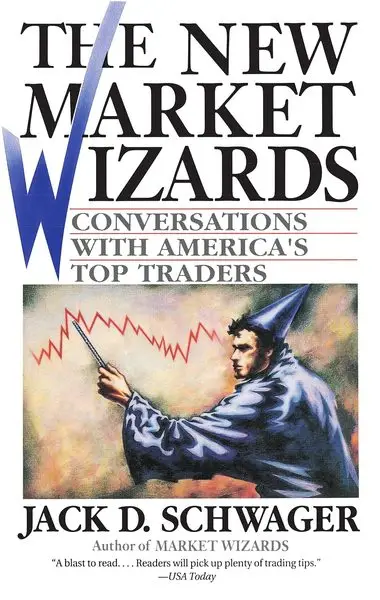
See also our review of the original Market Wizards.
 The Complete Trader's Edge
The full Mind · Method · Money framework. 70 chapters.
View on Amazon →
The Complete Trader's Edge
The full Mind · Method · Money framework. 70 chapters.
View on Amazon →
 Market Mayhem
400 years of bubbles, crashes, and the pattern that keeps repeating.
Buy on Amazon →
Market Mayhem
400 years of bubbles, crashes, and the pattern that keeps repeating.
Buy on Amazon →
 Greatest Companies
How the world's greatest companies were built — and what traders learn from them.
View on Amazon →
Greatest Companies
How the world's greatest companies were built — and what traders learn from them.
View on Amazon →
 Greatest Traders
Eighty-six lives that explain the markets — Livermore to Madoff, told with the losses left in.
View on Amazon →
Greatest Traders
Eighty-six lives that explain the markets — Livermore to Madoff, told with the losses left in.
View on Amazon →