

Trading culture sends two contradictory messages about emotion. One says emotions are the enemy, that the goal is to become a cold machine that feels nothing. The other says “trust your gut,” as if a random hunch were a trading edge. Both are wrong, and following either one will cost you money.
The truth is more useful. Intuition in trading is real, but it is not magic. It is compressed experience, the silent output of thousands of charts your brain has already processed. And emotions are not noise to be suppressed. They are data, a stream of signals about your state and sometimes about the market itself. The skill is learning to read both, separating the trained instinct that helps you from the raw impulse that destroys you.
This is advanced Mind pillar work. It builds directly on the basics of managing fear and greed, and it is where the professional trading mindset separates from the crowd.
What intuition in trading actually is
When an experienced surgeon, a chess grandmaster, or a veteran trader makes a snap decision that turns out right, it looks like a sixth sense. It is not. It is pattern recognition running below conscious awareness. The brain has seen the pattern so many times that it produces the answer before the slow, verbal part of your mind can explain why.
This is why a trader with five years of screen time can glance at Gold and feel that a move is “off” before spotting the lower-timeframe divergence that confirms it. The feeling arrived first. The reasoning caught up later. That is genuine intuition, and it is one of the most valuable assets in trading.
But here is the catch that nobody tells beginners: intuition is only as good as the experience compressed into it. A new trader’s “gut feeling” is not intuition at all. It is hope, fear, or boredom wearing a costume. You cannot have an instinct for a pattern you have never seen ten thousand times. This is why “trust your gut” is dangerous advice for anyone in their first few years. There is nothing trustworthy in the tank yet.
Trained instinct versus raw impulse
The entire game is telling these two apart, because they feel almost identical in the moment. Both arrive fast, both feel certain. Use these tests to separate them in real time:
- Source test: Trained intuition is calm and quiet. It often shows up as hesitation, a soft “not this one.” Impulse is loud and urgent, it pushes you toward action, usually toward more risk. Urgency is a red flag, not a green light.
- Direction test: Real intuition usually argues for caution or patience, because the experienced brain knows how many ways a trade can fail. Impulse almost always argues for chasing, adding, or revenge. If the feeling wants you to break your rules, it is impulse.
- History test: Have you logged this pattern before? If the feeling matches setups you have documented and seen play out, it is probably intuition. If you cannot point to where it comes from, treat it as noise.
A simple way to hold this: trained intuition makes you want to wait for your setup. Impulse makes you want to abandon it.
Emotions are an instrument panel, not a fault
Now the emotions half. The goal is not to feel nothing. A trader who genuinely felt nothing would have no signal at all, and would also tend toward recklessness, because fear is what keeps risk respected. The goal is to treat each emotion as a reading on a dashboard, information about your internal state that you act on deliberately instead of automatically.
Here is what the common readings usually mean:
- Fear before entry: Often a useful signal. Ask what it is pointing at. Is the size too big? Is this actually outside your plan? Sometimes fear is your trained intuition flagging a bad trade. Other times it is just the normal discomfort of risk, which you hold through.
- Excitement and urgency: Almost always a warning. Euphoria is the emotional signature of the dopamine loop. When a trade feels thrilling, you are usually oversized or chasing. Excitement is the emotion that precedes giving money back.
- Boredom: The quiet account killer. Boredom manufactures trades that do not exist. When you notice it, that is the signal to step away from the screen, not to find action.
- Frustration after a loss: The direct on-ramp to revenge trading. Frustration is a hard stop signal. The reading says: your judgment is now compromised, close the platform.
Notice the reframe. You are not trying to delete these feelings. You are reading them, the way you read volume or structure, and converting them into a decision. That is emotional regulation, and it is a skill that improves with reps.
The danger of confusing the two
The expensive mistakes happen when traders mislabel their signals. They feel the urgent pull of impulse and call it “intuition,” giving themselves permission to chase a move that has already run. Or they feel genuine, trained caution and override it as “just fear,” forcing a trade their experience was quietly warning against.
This mislabelling is why analysis paralysis and impulsive overtrading are two sides of the same coin. Both come from a broken relationship with your own internal signals. Fix the labelling and both problems shrink.
How to actually train and validate your intuition
You cannot trust a signal you have never tested. The bridge between feeling and edge is the trading journal, and this is where the real work happens.
Add an emotional and intuitive layer to your log:
- Record the feeling at entry. One word. Calm, fearful, excited, bored, frustrated. Capture it before you know the outcome.
- Record any “gut” read you had. If something told you to skip a trade or hold longer, write it down whether or not you obeyed it.
- Review the correlation monthly. Over fifty trades, patterns emerge that are impossible to see in the moment. Maybe your “calm” trades win at twice the rate of your “excited” ones. Maybe the gut reads you ignored would have saved you real money.
This is how a hunch becomes a tested instrument. You are not asking yourself to blindly trust feelings. You are gathering evidence on which of your feelings are actually predictive, and for most traders, the data is humbling and clarifying in equal measure. Within a few months you will know that your “excited” state is poison and your quiet hesitation is gold, because the numbers will have proven it.
The professional relationship with feeling
The mature trader is not emotionless. They are emotionally literate. They feel the fear and read it. They feel the excitement and distrust it. They notice the quiet intuitive nudge built from years of screen time and they respect it, because they have the journal to prove it earns its keep.
Emotions and intuition are not bugs in the trading machine to be patched out. They are part of the instrument. Your job is not to silence them. It is to become fluent enough to know which reading to act on, which to fade, and which to simply observe. That fluency, more than any indicator, is what years of deliberate practice actually buys you.
Strengthen the Mind pillar
Fear in Trading: Overcoming Fear of Loss
The Mind pillar of The Complete Trader’s Edge devotes 22 chapters to the inner game, from fear and greed to the mastery stages where intuition is finally built.
Frequently asked questions
Is intuition real in trading or just luck?
Genuine intuition is real, but it is not magic. It is pattern recognition running below conscious awareness, the output of thousands of charts your brain has already processed. It only exists once you have the experience to compress, which is why a beginner’s “gut feeling” is usually hope or fear rather than true intuition.
How do I tell intuition from a reckless impulse?
Trained intuition is calm and usually argues for patience or caution. Impulse is loud, urgent, and almost always pushes you toward more risk, chasing, or revenge. A reliable rule: trained intuition makes you want to wait for your setup, while impulse makes you want to abandon it.
Should I suppress my emotions while trading?
No. A trader who feels nothing has no signal and tends toward recklessness, since fear is what keeps risk respected. The goal is to treat each emotion as a reading on a dashboard, information you act on deliberately rather than automatically.
What does fear before a trade mean?
It can mean two things. Sometimes it is trained intuition flagging a genuinely bad trade, oversized or outside your plan. Other times it is just the normal discomfort of risk, which you hold through. Ask what the fear is pointing at before deciding whether to act on it.
How do I train my trading intuition?
Log the emotion you felt at entry and any gut read you had, before knowing the outcome, then review the correlation across fifty or more trades. Over time the data shows which of your feelings actually predict results, turning a vague hunch into a tested instrument.
 The Complete Trader's Edge
The full Mind · Method · Money framework. 70 chapters.
View on Amazon →
The Complete Trader's Edge
The full Mind · Method · Money framework. 70 chapters.
View on Amazon →
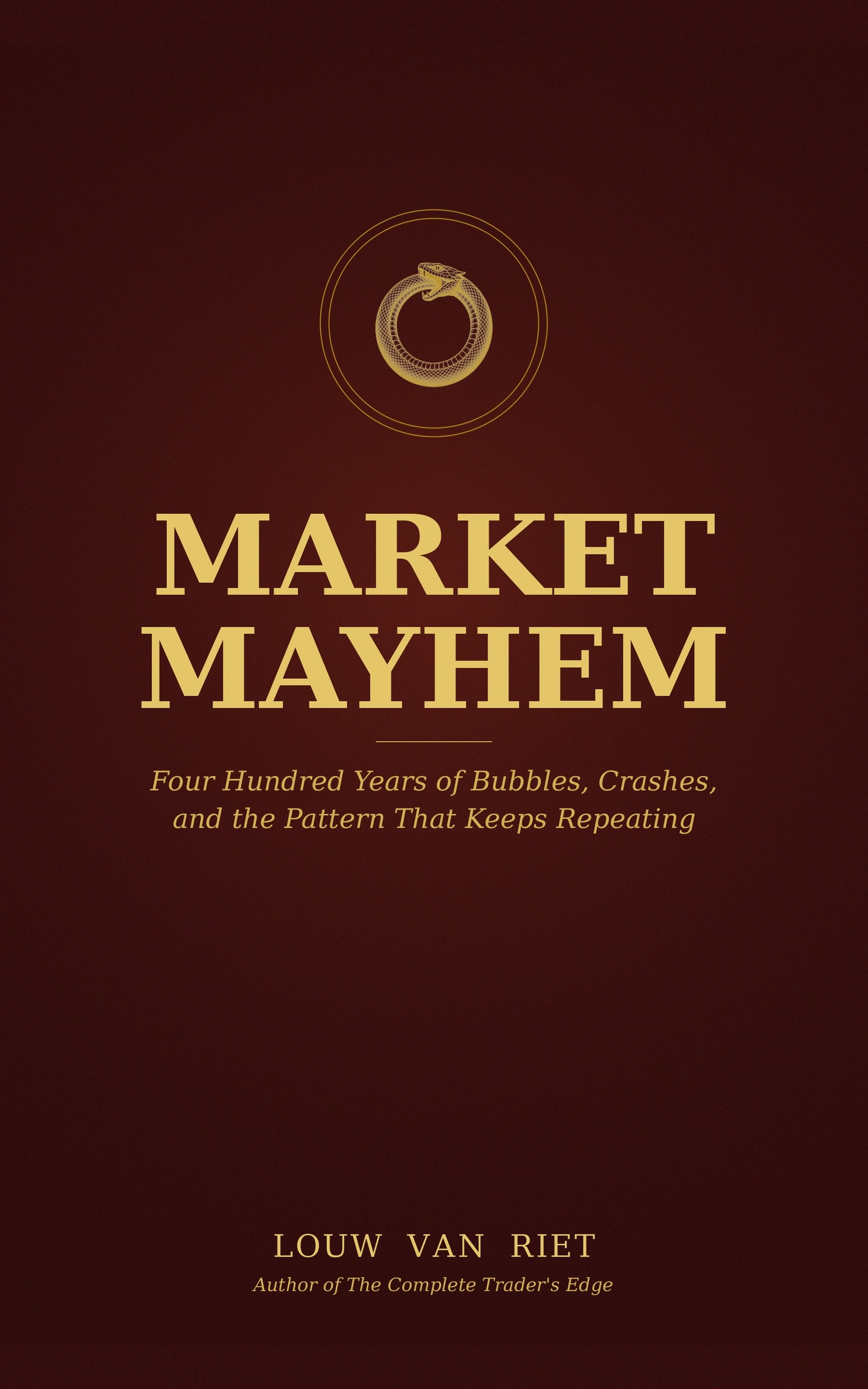 Market Mayhem
400 years of bubbles, crashes, and the pattern that keeps repeating.
Buy on Amazon →
Market Mayhem
400 years of bubbles, crashes, and the pattern that keeps repeating.
Buy on Amazon →
 Greatest Companies
How the world's greatest companies were built — and what traders learn from them.
View on Amazon →
Greatest Companies
How the world's greatest companies were built — and what traders learn from them.
View on Amazon →