

Explore all 80 books in the Trader’s Library →
This book has two halves and they are not the same quality. Being useful about it means saying which is which.
The first half is one of the best explanations of the foreign exchange market available to a retail reader. Who actually trades currencies and why. Why a market with no exchange, no closing bell and no central tape behaves nothing like the equity market you learned on. What the sessions do to liquidity. How interest rate differentials drive flows. Why the carry trade works until it violently does not. Kathy Lien is a currency strategist by trade and this is her actual expertise, and it shows on every page.
The second half contains the strategies the title is selling, and they are the weakest material in the book. Mechanical setups, presented with confidence and without evidence. No backtests. No sample sizes. No expectancy. Patterns described as though description were validation.
The rating splits the difference and the recommendation is unusually specific: read the first half carefully and treat the second half as a list of hypotheses somebody else has not tested for you.
At a Glance
| Author | Kathy Lien |
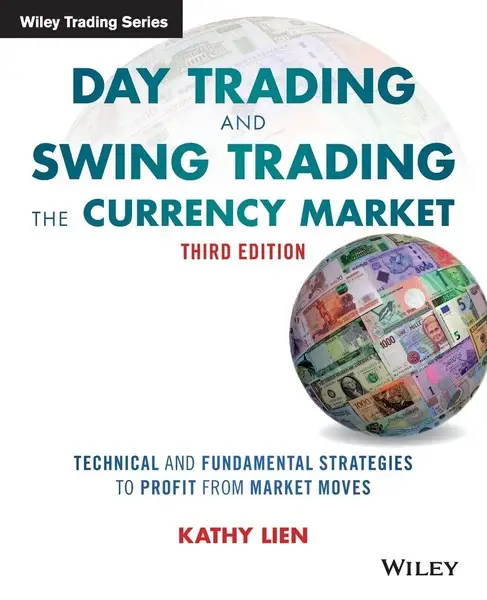
| Full Title | Day Trading and Swing Trading the Currency Market: Technical and Fundamental Strategies to Profit from Market Moves |
| First Published | 2005; third edition 2016 (Wiley) |
| Pages | ~300 |
| Difficulty | Easy. Clear, well-organised, genuinely accessible. |
| Best For | Understanding how the FX market actually works. It is a primer, whatever the title says. |
| Skip If | You want a validated edge. The setups here have not been tested in these pages. |
OVERALL RATING: 7.5 / 10
Who Should Read This Book
| Reader | Verdict | Why |
|---|---|---|
| New to FX | Read the first half | The best accessible explanation of FX market structure on this shelf. That alone is worth the price. |
| Equity trader moving to FX | Yes, urgently | Your instincts do not transfer. This explains precisely why, before the market explains it to you. |
| Trader wanting FX setups | Manage expectations | The setups are the weak half. Read them as untested ideas, not as an edge you have been handed. |
| Macro-curious trader | Strong yes | Rate differentials, central bank policy, intervention and the carry trade are her home ground and she is very good on them |
| Experienced FX trader | Little here | You know the structure. Go to Donnelly for the professional’s account of actually taking risk in it. |
| Prop-firm FX challenger | Read for context only | The book predates your entire ecosystem. The market mechanics still apply; the environment described does not. |
The Book in Context
Lien is a currency strategist and analyst, not primarily a risk-taker, and this fact explains almost everything about the book’s shape. She has held senior strategy roles in the retail FX and asset management world, co-founded a currency advisory business, and has been a fixture of financial television for years. Her professional output is analysis: what is driving the euro, what the central bank will do, where the risk sits.
That is a real skill and it is not the same skill as trading. An analyst is judged on whether her explanation is coherent and her call is defensible. A trader is judged on whether the account is bigger. Those diverge more often than either profession likes to admit, and the divergence is visible in this book: the analytical chapters are excellent and the trading chapters are the part that a professional risk-taker would have written differently.
Its context also deserves an honest structural note. This book emerged from the retail FX ecosystem of the mid-2000s, an industry built around brokerages whose revenue scaled with client trading volume and which, under the dealing-desk model common at the time, frequently sat on the other side of client trades. That is not an accusation about any individual, and nothing in this book is dishonest. It is simply the incentive environment in which a great deal of retail FX education was produced, and a reader in 2026 is entitled to know that a genre encouraging frequent short-term currency trading grew up inside an industry that profited from frequent short-term currency trading.
The Strong Half: How the FX Market Actually Works
Where Lien is genuinely excellent, and where the book earns its place on the shelf, is in explaining that FX is a structurally different animal and not simply “stocks but currencies.”
There is no exchange. There is no closing price, no opening bell, no consolidated tape, no single order book. The market is a decentralised network of banks quoting each other, and the price you see is your broker’s version of a price that does not have a single true value. Volume, the number an equity trader leans on constantly, is not available in any meaningful market-wide sense. That fact alone quietly invalidates a large amount of the technical analysis retail traders import from equities, and Lien is one of the few accessible authors who says so plainly.
Why Your Equity Instincts Do Not Transfer
| Feature | Equities | FX |
|---|---|---|
| Venue | Central exchange, one order book | A decentralised network. Your price is your broker’s price. |
| Volume | Published, reliable, tradeable information | Not available market-wide. Most volume indicators are your broker’s slice. |
| Session | Open, close, gaps, defined day | Continuous. Liquidity rotates around the globe and character changes with it. |
| Who is trading | Mostly people seeking profit | Corporates hedging, central banks, importers. Many participants are price-insensitive. |
| The instrument | A claim on a company’s cash flows | A ratio between two economies. There is no intrinsic value to anchor to. |
The last row is the one traders underweight. A currency pair cannot be cheap. It can only be cheap relative to something, and that something moves too.
The chapter on currency correlations is the book’s most underrated and the one most likely to save a reader money. Retail FX traders routinely hold what they believe are four independent positions and in fact hold one position four times over, because they are long three dollar-negative pairs and short a fourth. Lien lays out the correlation structure clearly, and it is the same lesson the options shelf teaches through position Greeks: several sensible decisions that all lean the same way are one large decision nobody made.
Her material on the carry trade is also strong, and correctly framed. Borrow in a low-yielding currency, hold a high-yielding one, collect the differential. It works for months or years, produces a beautifully smooth equity curve, and then unwinds in days, taking back the accumulated gains in a fraction of the time it took to earn them. Anyone who has read the options shelf will recognise the shape immediately: it is short gamma wearing a different costume. Lien does not use that language, but she describes the phenomenon accurately, which is more than most FX books manage.
The Weak Half: Patterns Presented as Edges
Then the book turns to strategies, and the standard of evidence collapses.
The setups are described clearly: entry conditions, stop placement, target. They are plausible. Some of them are things experienced traders genuinely do. What they are not is tested. There are no backtests in these pages. No sample sizes. No win rates with confidence intervals. No expectancy. No out-of-sample validation. No discussion of how the setup performed across different volatility regimes, which for a market as regime-dependent as FX is not a technicality.
A pattern that has been described is not a pattern that has been tested. The description is free. The testing is the entire job.
— The standard this half does not meet
This matters more than it might seem, because a clearly-described setup in a book by a recognised authority arrives with an implicit warranty. The reader assumes that someone checked. The presentation does the persuading that evidence should be doing, and nowhere does the book state plainly that these are ideas rather than validated systems.
It is also, in fairness, the standard of the entire genre in 2005 and largely still. Almost no trading book validates its setups. Lien is not unusual here; she is typical, and typical is the problem. But a reader in 2026 has access to backtesting tools that did not exist when this was written, which changes the calculus. You can test these ideas yourself in an afternoon. Treat the second half as a list of hypotheses generated by someone who knows the market well, and then do the work the book did not.
How Lien Built the Book
She structures it as a course. Market mechanics, then participants, then drivers, then strategies. The architecture is genuinely good and the reason the book has survived three editions. It builds, it does not assume, and a reader who knows nothing about FX finishes chapter six understanding the market.
She writes clearly and without ego. Readability is an 8 and it is earned. No jargon for its own sake, no posturing, no war stories deployed as credentials. For a genre that specialises in all three, the plainness is a real virtue.
She writes from the analyst’s chair throughout. This is the structural fact that produces both halves. The analytical material is first-rate because she does that work professionally every day. The trading material is thin because the book’s centre of gravity is explanation rather than execution, and explanation is what she is actually good at.
Five Ideas Worth Carrying With You
There is no price. There is only your broker’s price.
FX has no central exchange and no consolidated tape, which means the chart you are analysing is one venue’s rendering of a decentralised market. Volume indicators show your broker’s slice, not the market’s. A surprising amount of imported equity technique quietly assumes a single order book that does not exist here.
Half the people in this market are not trying to make money.
Corporates hedging receivables, importers converting, central banks defending a level: these participants are price-insensitive and enormous. In equities almost everyone is seeking profit. In FX a large share of flow has no view at all, which is why some moves have no narrative and never will.
Your four FX positions are probably one position.
Currency pairs share legs. Long three dollar-negative pairs and short a fourth is not diversification; it is a single dollar bet with four tickets. This is the same failure the options shelf catches with position Greeks, and it kills FX traders more often because the correlation is hidden inside the pair names.
The carry trade is short gamma with a yield attached.
You collect a rate differential daily, the curve is smooth for years, and then it unwinds in days and gives back what took a decade to earn. It is not a broken strategy. It is a strategy that pays you to absorb tail risk, and the payment arrives before the bill. Anyone who read the options shelf recognises the shape instantly.
A currency cannot be cheap. It can only be cheap against something that also moves.
There is no intrinsic value to anchor to and no cash flows to discount. Every FX view is a relative view about two economies, two central banks and two rate paths simultaneously. Traders who import a valuation mindset from equities are looking for a floor that does not exist.
Common Misreadings of the Book
Misreading #1: “These setups are validated because they’re in a book”
The central hazard, and the reason the rating sits where it does. Publication is not validation. A recognised author describing a setup clearly, in a Wiley title, in its third edition, feels like evidence and is not. No backtest appears in these pages. The confidence of the presentation is doing work that data should be doing, and readers reliably mistake the one for the other.
Misreading #2: “It’s a strategy book”
It is a primer with a strategy section attached and a strategy title on the cover. Read as a strategy book it disappoints and misleads. Read as an explanation of the FX market it is one of the better things available at this level. The title is a marketing decision, not a description.
Misreading #3: “The carry trade is free money”
Lien does not say this and readers hear it anyway, because the equity curve is seductive and the mechanism sounds like a rate you earn. It is compensation for holding a risk that shows up rarely and all at once. The years of smooth accrual are the premium being paid to you, not evidence that the risk was not there.
Misreading #4: “The 2016 edition is current”
It is a decade old and the decade was eventful. The rate environment it describes was written near the end of a long period of extraordinarily low rates and does not contemplate the hiking cycle that followed, which transformed the carry landscape entirely. Retail leverage rules have tightened materially in several jurisdictions. The prop-firm model did not exist. The mechanics are intact; the world around them is not the one on the page.
Misreading #5: “An analyst and a trader are the same job”
They are not, and the gap explains this book’s two halves. An analyst is graded on whether the explanation holds up. A trader is graded on the account. Lien is very good at the first job, which is why the analytical chapters are strong, and the book’s trading content is what you get when explanation rather than risk-taking is the author’s centre of gravity.
Where the Book Falls Short
- The strategies are unvalidated. The main charge and the reason for the 7.5. Setups are described, never tested. No backtests, no sample sizes, no expectancy, no regime analysis. In a market as regime-dependent as FX that is not a gap, it is the whole question.
- Written from the analyst’s chair. The analytical material is excellent because that is her profession. The trading material is thin for the same reason. This is a structural feature of the book, not a lapse.
- Materially dated. Third edition 2016. It predates the post-2021 hiking cycle that rewrote the carry trade, the tightening of retail leverage in multiple jurisdictions, and the entire prop-firm ecosystem that now dominates retail FX participation.
- Genre context worth knowing. Retail FX education of this era grew out of a brokerage industry whose revenue scaled with client volume and which frequently took the other side of client flow. Nothing here is dishonest, and the incentive environment surrounding the genre is still part of how a careful reader should weigh its enthusiasm for frequent short-term trading.
- Description mistaken for evidence throughout the second half. The setups are presented with a confidence their support does not justify, and the book never tells the reader these are untested ideas.
- Almost no psychology or risk process. Position sizing, drawdown management and the behavioural reality of trading a leveraged 24-hour market get little attention, which for a book aimed at day traders is a significant omission.
How the Book Fits the Mind · Method · Money Framework
| Pillar | Contribution | What the Book Delivers |
|---|---|---|
| MIND | ABSENT | Essentially nothing, which is a real gap in a book aimed at leveraged day traders |
| METHOD | PRIMARY | Market structure, participants, sessions, rate differentials, correlations, the carry trade. Strong on understanding, weak on validated setups. |
| MONEY | SECONDARY | The correlation material is genuine risk management: knowing your four positions are one position is a sizing insight before it is an analytical one |
A Method primer whose best contribution is quietly a Money one. Read against the Mind · Method · Money framework and The Complete Trader’s Edge, and pair it with something from the Mind shelf, because a leveraged 24-hour market punishes the absence of process faster than most.
Read This Instead Of / Read This After
| Relationship | Book | Why |
|---|---|---|
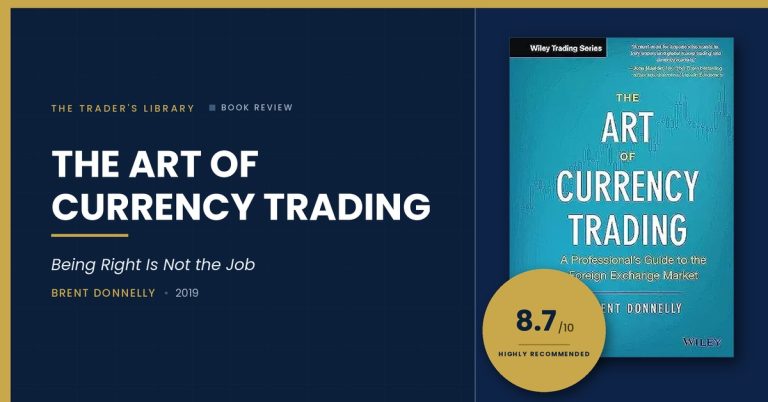
| Read before | The Art of Currency Trading by Brent Donnelly | The essential FX pairing. Lien explains the market; Donnelly, a career bank FX trader, explains what taking risk in it is actually like. Structure then reality. |
| Read instead of | Any “forex secrets” course | The first half of this contains the market knowledge those courses assume you lack and rarely supply themselves |
| Read after | Alpha Trader by Brent Donnelly | Donnelly supplies the process, risk and psychology this book has almost none of |
| Pair with | Trade Your Way to Financial Freedom by Van Tharp | The antidote to the second half. Tharp teaches expectancy and testing, which is exactly the discipline these setups need before they touch your account. |
| Do not read as | A validated system | Nothing in the strategy half has been tested in these pages. That is the single most important sentence in this review. |
Final Verdict: Should You Read This Book in 2026?
Yes, for the first half, and with your guard up for the second.
The 7.5 is an average of two very different books bound together. As an explanation of the foreign exchange market for a reader who does not have one, this is close to the best accessible option available: readability 8, beginner-friendliness 8, genuinely well-structured, and strong precisely where Lien’s professional expertise lies. The material on market structure, participants, correlations, rate differentials and the carry trade is worth the cover price on its own.
As the strategy manual its title promises, it does not meet the standard. Actionability scores a 6 because setups without validation are not actions, they are suggestions, and presenting them with the authority of a third-edition Wiley title creates a warranty the evidence does not support. Modern relevance scores a 6 because a decade has passed and that decade rewrote the rate environment, the leverage rules and the entire retail participation model.
Buy it, read to the end of the fundamentals, and then change gears. When you reach the setups, do not trade them. Test them. You have tools Lien’s readers in 2005 did not have, and the honest use of this book in 2026 is as a source of well-informed hypotheses from someone who understands the market, followed by the validation work she never did.
CTE Rating Breakdown
7.5/10
Recommended With Reservations
| Readability | 8 | |
| Actionability | 6 | |
| Timelessness | 6 | |
| Beginner-Friendly | 8 | |
| Modern Relevance | 6 |
Frequently Asked Questions
What is Day Trading and Swing Trading the Currency Market about?
It has two parts. The first explains how the FX market works: its structure, participants, sessions, fundamental drivers, currency correlations and the carry trade. The second presents technical and fundamental trading setups. The first part is considerably stronger than the second.
Are the strategies in the book any good?
They are untested, which is the honest answer. The book contains no backtests, sample sizes or expectancy figures. The setups are plausible ideas from someone who understands the market, and they arrive with an implicit warranty the evidence does not support. Test them before you trade them.
Who is Kathy Lien?
A currency strategist and analyst who has held senior FX strategy roles in the retail brokerage and asset management world, co-founded a currency advisory business, and appears regularly on financial television. Her profession is analysis rather than risk-taking, which shapes the book significantly.
Is it good for beginners?
Very, for the first half. It is clear, well-structured and assumes nothing. A beginner will finish the fundamentals chapters genuinely understanding how currencies trade, which is more than most FX education delivers.
Is the 2016 edition still relevant?
The market mechanics are. The environment is not. It predates the post-2021 hiking cycle that transformed the carry trade, tightened retail leverage rules in several jurisdictions, and the entire prop-firm model that now dominates retail FX.
Why does FX need its own book?
Because it is structurally different. No central exchange, no consolidated volume, continuous sessions, and a large share of participants who are hedging rather than seeking profit. Equity instincts transfer badly, and a good deal of imported technical analysis quietly assumes an order book that does not exist.
What is the carry trade?
Borrowing in a low-yielding currency to hold a high-yielding one and collecting the rate differential. It accrues smoothly for long periods and then unwinds violently, returning years of gains in days. It is compensation for holding tail risk, not free money.
Lien or Donnelly?
Both, in that order. Lien explains the market from the analyst’s chair and does it well. Donnelly is a career bank FX trader and writes about what taking risk in that market is actually like. Structure first, then reality.
Why does the retail FX industry context matter?
Because a genre encouraging frequent short-term currency trading grew up inside an industry whose revenue scaled with client volume and which often took the other side of client trades. That is context, not an accusation, and nothing in this book is dishonest. It is simply worth knowing when weighing any era’s enthusiasm for active retail FX.
What is the single most important takeaway from the book?
That your FX positions are correlated in ways the pair names conceal. Long three dollar-negative pairs is one dollar bet with three tickets, not diversification, and that insight will protect more capital than any setup in the second half.
About the Author
Kathy Lien
Kathy Lien is a currency strategist and analyst who has held senior FX strategy roles across the retail brokerage and asset management worlds, and co-founded a currency advisory business. She has been a regular presence on financial television for many years and is among the most recognisable names in retail FX commentary.
Why this shapes the book: her profession is explanation rather than risk-taking. An analyst is judged on whether the account of the market is coherent; a trader is judged on the account balance. That distinction produces this book’s two halves almost exactly, and it is why the fundamentals chapters are excellent and the setups are not.
Read her for what she genuinely knows: how currencies move, who moves them, and why. That is a real body of expertise, honestly delivered, and it is worth having.
Continue Learning
- The Art of Currency Trading Book Review (2026)
- The Top Trading Books Explorer
- Recommended Reading for Traders
- The Mind · Method · Money Framework
- The Complete Trader’s Edge — The Book
 The Complete Trader's Edge
The full Mind · Method · Money framework. 70 chapters.
View on Amazon →
 Market Mayhem
400 years of bubbles, crashes, and the pattern that keeps repeating.
Buy on Amazon →
 Greatest Companies
How the world's greatest companies were built — and what traders learn from them.
View on Amazon →
 Greatest Traders
Eighty-six lives that explain the markets — Livermore to Madoff, told with the losses left in.
View on Amazon →