

Trading Around the World · Australia
Trading and Investing in Australia
Australia gives investors one of the most generous capital gains regimes in the developed world, and gives traders none of it. The difference between those two sentences is worth more than any strategy on this site – and from 1 July 2027 the generous half is being rewritten.
Everything a retail trader wants to do is legal in Australia – shares, ETFs, CFDs, futures, forex and crypto. ASIC regulates how much leverage a licensee may offer you, under a product intervention order capping retail CFD leverage between 30:1 and 2:1, requiring margin close-out and negative balance protection, and banning inducements to trade.
The tax question is where Australia is genuinely unusual, and it cuts the opposite way to what most traders assume. A share investor holding more than twelve months halves their taxable gain. A CFD trader gets none of that, because the ATO treats CFD profits as ordinary income on revenue account rather than capital gains. Same market, same screen, completely different tax outcome – decided by the instrument, not by how long you held it.
Australia at a glance
What ASIC actually restricts
Nothing you want to do is banned. What is capped is the rope an Australian licensee may hand a retail client.
ASIC’s product intervention order took effect on 29 March 2021 and was extended in April 2022 for a further five years, to 23 May 2027. It restricts retail CFD leverage by asset class, standardises margin close-out, guarantees negative balance protection, and prohibits inducements to become a client or to trade.
| CFD referencing | Maximum retail leverage |
|---|---|
| A major currency pair | 30:1 |
| A minor currency pair, gold, or a major stock index | 20:1 |
| A commodity other than gold, or a minor stock index | 10:1 |
| Crypto-assets | 2:1 |
ASIC’s own figures on the order’s first six months are the most useful argument for it: aggregate net losses on retail client accounts fell by 91%, from an average of $372 million a quarter to $33 million, with negative balance occurrences down 88% and margin close-outs down 87%. Before the order, retail CFD exposure could run to 500 times the original outlay.
The order expires in May 2027, and ASIC is consulting now.
The current instrument lapses on 23 May 2027. ASIC’s regulatory timetable has a review beginning in Q3 2026 and consultation in Q4 2026 on whether to extend it again. Industry submissions were largely unsupportive of the leverage caps last time and the caps survived unamended, but nothing about the next decision is settled. If you are building a strategy around current Australian leverage limits, that is a date to have in the diary rather than an assumption to rely on.
How the ATO taxes each instrument
The highest-value section on this page, and the one where Australian traders most often get the wrong answer from a forum.
| What you do | Treated as | Rate | 50% CGT discount | Losses |
|---|---|---|---|---|
| Hold shares over 12 months as an investor | Capital gain | Marginal, on half the gain | Yes | Capital losses only |
| Hold shares under 12 months as an investor | Capital gain | Marginal, on the full gain | No | Capital losses only |
| Trade CFDs or retail forex | Ordinary income | Marginal, on the full profit | No | Generally deductible against other income |
| Carry on a share-trading business | Ordinary income, shares as trading stock | Marginal, on the full profit | No | Deductible, subject to non-commercial loss rules |
The CFD point is the one that surprises people. Under taxation ruling TR 2005/15 the ATO generally assesses CFD trading as a profit-making activity on revenue account. Profits are ordinary income at your marginal rate regardless of how long the position was open, and the 50% discount never applies, because you never owned an underlying asset for it to attach to. The compensation is symmetry: losses are generally deductible against other ordinary income, subject to the non-commercial loss rules.
The investor-versus-trader question is the other half. The ATO does not use a trade count, a holding period or a dollar threshold. It weighs the whole activity: commercial purpose, profit intention, repetition and regularity, organisation and record-keeping, and scale – whether the activity resembles an ordinary business. Being classified as a trader is not automatically better. It converts discountable capital gains into fully taxed income, and for a profitable long-horizon holder that is a large step backwards.
Diarise this: 1 July 2027.
Changes to capital gains tax announced in the 2026–27 Federal Budget replace the 50% CGT discount with cost base indexation plus a minimum tax on capital gains, from 1 July 2027. The ATO has confirmed the changes do not affect Tax Time 2026, and gains accrued before that date are reported as keeping the existing treatment. This is the largest change to Australian investor taxation in two decades, and it matters far more to long-term share investors than to CFD traders, who are already on revenue account and have nothing to lose. Verify the final legislated detail before acting – announced is not the same as enacted.
Prop firms and the Australian perimeter
Legal to buy, and almost never regulated. The same structural gap as the UK, with one difference that matters more here.
A prop firm selling a simulated evaluation is generally not carrying on a regulated financial service under Australian law, which is why almost none hold an Australian Financial Services licence. Buying a challenge is legal. The consequence is that you are not a client of a licensee: no access to the Australian Financial Complaints Authority, and no regulated dispute route at all. Your protection is the contract.
The difference from Britain: Australia has no equivalent of the UK’s FSCS cover for investment firm failure. With an AFS licensee your money sits under client money rules and AFCA handles complaints, but the backstop structure is not the same, and outside the licensing perimeter there is nothing at all. Check any firm on ASIC Connect’s professional registers and the ASIC investor alert list before paying, and read the payout clause before the pricing page.
A payout, when it arrives, is ordinary income. It is not a capital gain and no discount applies to it – the same answer the CFD section gives, for the same reason.
Affiliate disclosure: CTE earns a commission on some outbound links at no cost to you. It does not influence which firms are covered or how they are assessed.
Brokers and platforms
The useful filter is the licence and the account type, not the spread.
Check the AFS licence
Search ASIC Connect for the exact entity and its authorisations, and match the AFSL number against the one in the website footer. Group branding is not a licence.
CHESS-sponsored or custodial
An Australian-specific question. CHESS sponsorship puts the shares in your own HIN; a custodial model holds them on your behalf. Cheaper brokers are usually custodial, and it matters if the broker fails.
Franking credits need the right account
If a large part of your return comes from fully franked Australian dividends, the account and entity you hold them in decides whether you get the credit refunded.
The offshore temptation
Higher leverage exists outside the perimeter, along with no AFCA, no client money rules and no recourse. The 30:1 cap is the protection, not the obstacle.
How to start trading in Australia
The order that actually works, rather than the order most people try.
Learn a method before funding anything, prove it across at least twenty logged demo sessions, and only then decide what you are trading and in what structure – because in Australia that decision sets your tax treatment permanently for the year. Size the account on what you can genuinely lose. For index traders, our complete guide to trading the NASDAQ is the natural next read, and the trading calculators handle the sizing.
Sessions and killzones in Australian time
Australia has the hardest clock of any major English-speaking market, and pretending otherwise helps nobody.
The Australian trading day · 24 hours, AEST
Read it this way. The London killzone lands in the Australian evening, which is workable for someone with a job. The New York killzone starts around 22:00 and runs past midnight, which is not, and it is the block where most of the volume an index trader wants actually sits. Australians who trade US indices are choosing a sleep deficit, and the honest options are to trade the London session instead, trade the ASX in daylight, or accept the cost deliberately rather than drifting into it.
The session facts behind the bars. Times are AEST, which is UTC+10. Eastern states observe daylight saving from October to April, and because the UK and US shift on different dates, the two Western blocks move by an hour several times a year. Queensland, Western Australia and the Northern Territory do not observe daylight saving at all, so a trader in Perth is on a different clock again. Check the clock in October and April rather than trusting the habit.
Investing in Australia, not trading it
Most people reading this should be investing. Australia makes that unusually rewarding, for two reasons that exist almost nowhere else.
The 50% CGT discount. Hold an asset more than twelve months and only half the gain enters your assessable income. A $10,000 gain on a 30% marginal rate costs $1,500 rather than $3,000. Until 1 July 2027, that is the single largest tax advantage available to an ordinary Australian investor, and it rewards nothing except patience.
Dividend imputation. Australian companies pay tax before distributing profit, and franking credits attached to dividends prevent that profit being taxed twice. For an individual whose marginal rate sits below the company rate, excess franking credits can be refunded – a genuinely unusual feature of the Australian system and the reason domestic income portfolios behave differently here than anywhere else.
Superannuation sits underneath both. Concessional contributions are taxed at a lower rate going in, earnings inside the fund are concessionally taxed, and for anyone comparing the after-tax return of a trading account against a super contribution, the comparison is rarely close. A self-managed fund adds control and a compliance burden that most people underestimate.
| Trading | Investing | |
|---|---|---|
| Horizon | Minutes to days | Years to decades |
| Tax treatment | Ordinary income, full rate | Capital gain, discounted over 12 months |
| Franking credits | Not applicable to CFDs | Attached to Australian dividends |
| Time cost | Daily screen time, at night | A few hours a quarter |
| Failure mode | Blown account, fast | Selling at the bottom, slow |
Context worth having
Australia is a commodity economy with a financial market attached, and the commodity half explains most of the volatility.
The History of Gold
Five thousand years of money, power and markets – and the metal that built more Australian fortunes, and ruined more Australian speculators, than any other.
One Australian profile is already in the queue: Simon Russo, from $40,000 to $500 million and the trades that nearly ended it, publishing 5 October. Browse the rest through the Legendary Traders Explorer.
Run the numbers before you commit
Every tool below is already live on CTE.
Common questions from Australian traders
Is forex and CFD trading legal in Australia?
Yes, through an AFS licensee. ASIC’s product intervention order caps retail CFD leverage between 30:1 and 2:1 by asset class, requires margin close-out and negative balance protection, and bans inducements to trade. The order runs to 23 May 2027, with a review and consultation scheduled before then.
Do CFD profits get the 50% CGT discount?
No. Under TR 2005/15 the ATO generally treats CFD trading as a profit-making activity on revenue account, so profits are ordinary income taxed at your marginal rate no matter how long the position was held. The discount only attaches to a capital asset you actually owned. The other side of that coin is that losses are generally deductible against other income.
Am I a share trader or a share investor?
The ATO weighs commercial purpose, profit intention, repetition and regularity, organisation and record-keeping, and scale. There is no trade count or holding period that decides it. Trader status is not automatically better – it turns discountable capital gains into fully taxed ordinary income.
What is changing with capital gains tax in 2027?
Changes announced in the 2026–27 Federal Budget replace the 50% CGT discount with cost base indexation and a minimum tax on capital gains from 1 July 2027. The ATO has confirmed it does not affect Tax Time 2026. It principally affects long-term investors; CFD traders are already on revenue account. Check the legislated detail before making decisions on it.
Are prop firms legal for Australians?
Buying an evaluation is legal, and almost no prop firm holds an AFS licence, because selling a simulated assessment is generally not a regulated financial service. You are therefore not a client of a licensee and have no AFCA route. Payouts are ordinary income, with no CGT discount.
What are franking credits and do they matter to me?
They are credits attached to Australian dividends for company tax already paid, preventing the same profit being taxed twice. For an individual on a marginal rate below the company rate, excess credits can be refunded. They apply to shares you own, not to CFDs over them.
Worth reading first
The framework, the history, and the businesses – the three volumes this site is built on.
The Complete Trader’s Edge
70 chapters. Mind, Method and Money taught from the ground up.
Market Mayhem
Four hundred years of bubbles, including the commodity booms Australia knows well.
Greatest Companies
51 businesses, how the moats were really won. The investor’s volume.
Other country hubs
Same structure, different rulebook. Each hub is written for the trader who lives there.
New to all of this?
Start with the framework rather than the firm. Mind, Method and Money, in that order, for the reason most funded accounts fail on the first one.
Not tax, legal or financial advice. Australian tax and regulatory rules change and their application depends on individual circumstances. Nothing here substitutes for a registered tax agent, an AFS-licensed adviser, or your own reading of primary sources – the ATO, ASIC and legislation.gov.au. Verify all rates, thresholds and regulatory positions before acting.
Affiliate disclosure. CTE earns commission on some outbound links at no additional cost to you. It does not influence which firms are included or how they are assessed.
Last reviewed 26 September 2026. Next scheduled review after the ASIC consultation closes.
 The Complete Trader's Edge
The full Mind · Method · Money framework. 70 chapters.
View on Amazon →
The Complete Trader's Edge
The full Mind · Method · Money framework. 70 chapters.
View on Amazon →
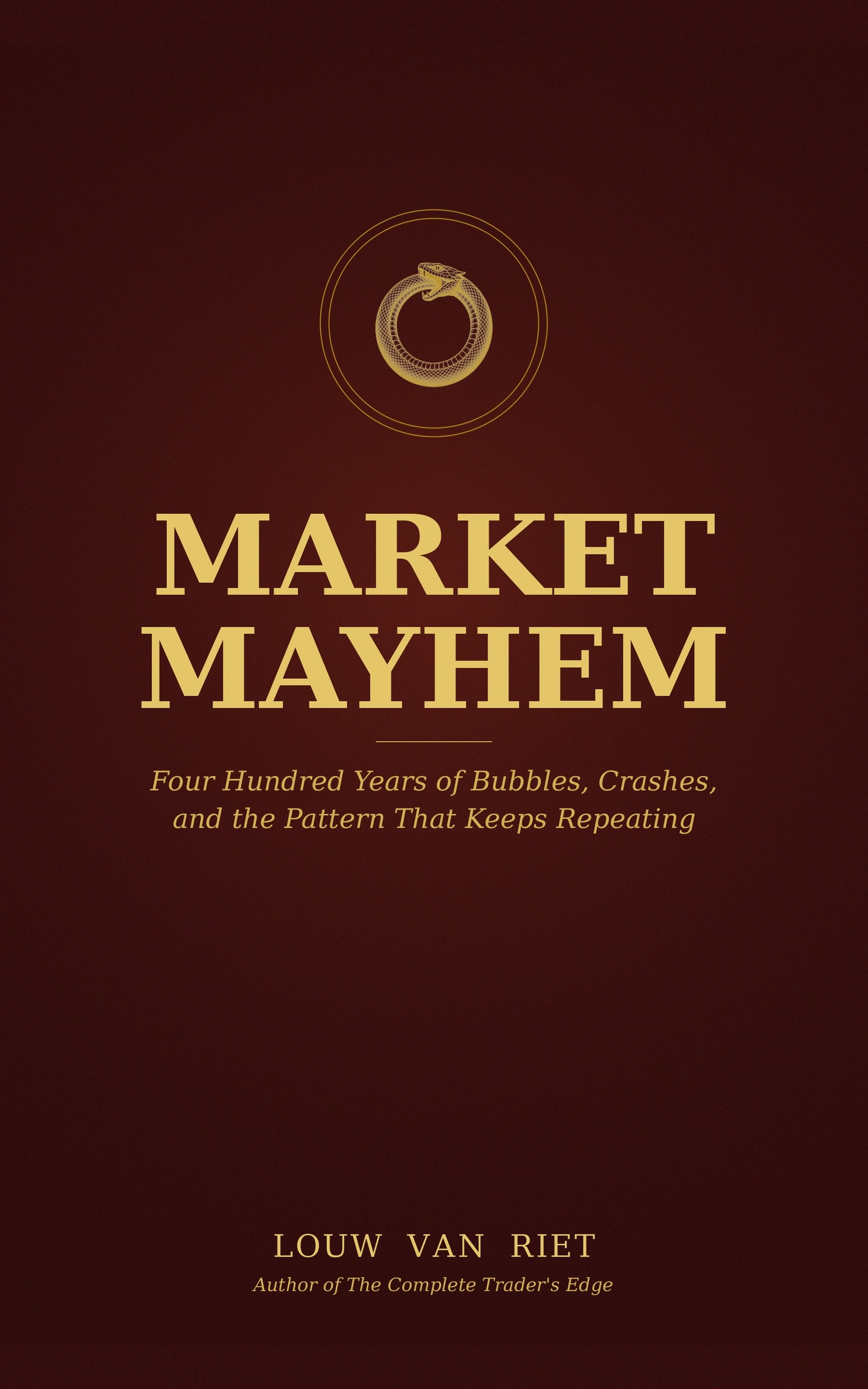 Market Mayhem
400 years of bubbles, crashes, and the pattern that keeps repeating.
Buy on Amazon →
Market Mayhem
400 years of bubbles, crashes, and the pattern that keeps repeating.
Buy on Amazon →
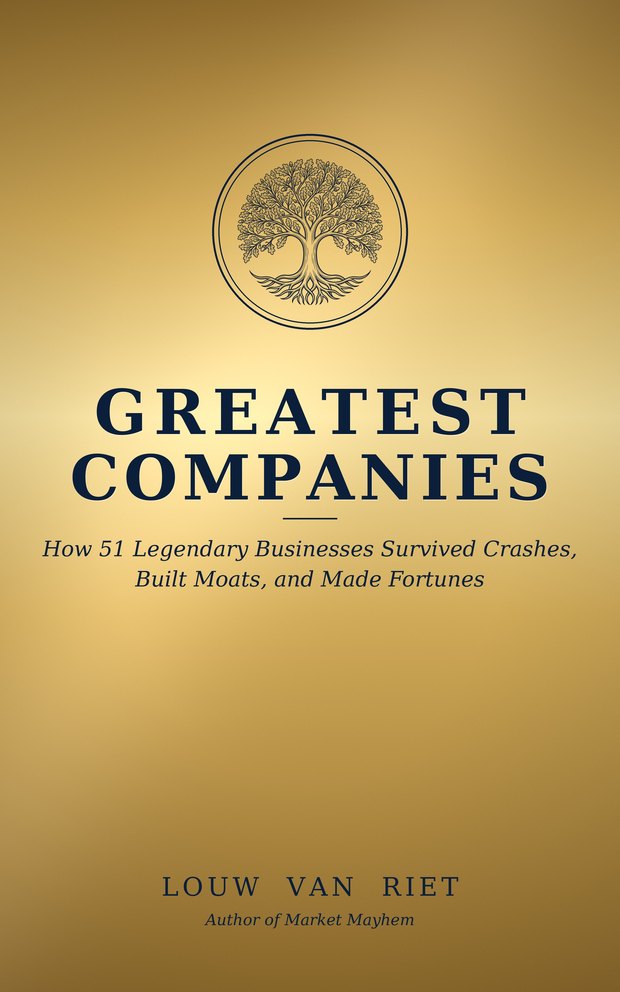 Greatest Companies
How the world's greatest companies were built — and what traders learn from them.
View on Amazon →
Greatest Companies
How the world's greatest companies were built — and what traders learn from them.
View on Amazon →
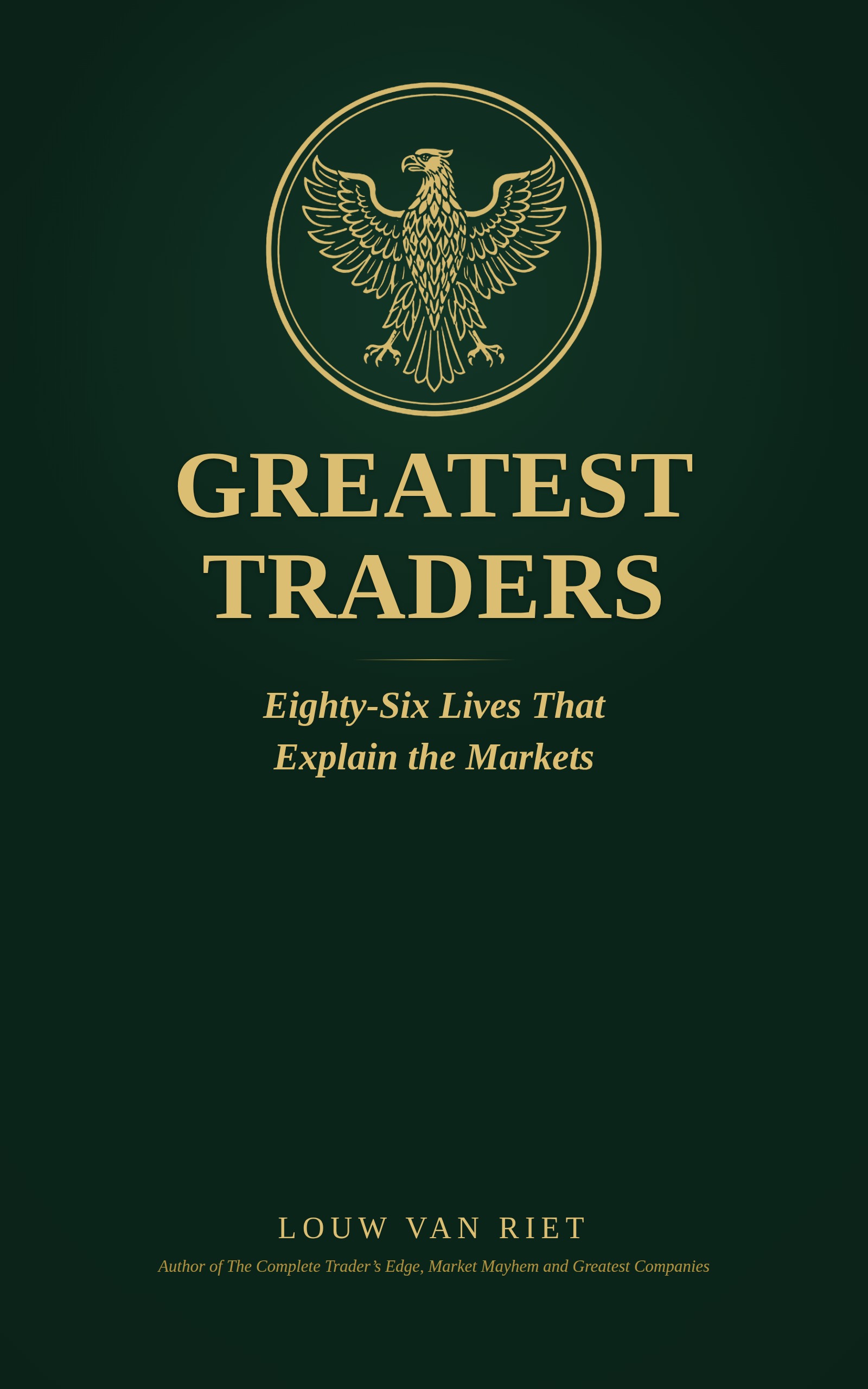 Greatest Traders
Eighty-six lives that explain the markets — Livermore to Madoff, told with the losses left in.
View on Amazon →
Greatest Traders
Eighty-six lives that explain the markets — Livermore to Madoff, told with the losses left in.
View on Amazon →