

Trading Around the World · United States
Trading and Investing in the United States
The US has the strictest retail-forex regime on earth and its deepest futures and prop ecosystem. Which firms can legally take you, how each instrument is taxed, and why you already live inside the New York killzone.

Trading is legal across the board in the United States – but the country ring-fences retail forex so tightly that most of the offshore CFD brokers and CFD prop firms advertised everywhere cannot legally accept you. The lawful path runs through CFTC and NFA-registered dealers, and for funded accounts, through US futures prop firms rather than the offshore names.
Each instrument then sits under a different tax code. Futures fall under Section 1256 and its 60/40 split, spot forex under Section 988, stocks under capital gains with the wash-sale rule, and prop payouts as self-employment income. Getting the classification right is worth more than most strategies.
The United States at a glance
What US traders are and are not allowed to do
The area where most people get into trouble, because the offshore marketing and the actual law point in opposite directions.
| Activity | Status | Governed by | The catch |
|---|---|---|---|
| US equities and ETFs | Permitted | SEC and FINRA | Through a registered broker-dealer |
| Futures and futures options | Permitted | CFTC and NFA | Broadly open; requires a registered FCM |
| Retail spot forex | Permitted, tightly | CFTC and NFA | Only with an NFA-member RFED – 50:1 cap, FIFO, no hedging |
| Offshore CFD and high-leverage forex | Restricted in practice | CFTC and NFA | Most cannot legally onboard US residents |
| Offshore CFD prop-firm challenges | Mostly unavailable | – | Most exclude US residents; futures firms are the route |
| Funded futures prop accounts | Permitted, evolving | Under scrutiny | See section 03 – the model itself is contested |
The single most important thing on this page: an offshore broker or prop firm that advertises “US clients accepted” is showing you a warning sign, not a feature. Legitimate access to US retail forex runs through a short list of CFTC-registered, NFA-member dealers. Everything else is either unavailable to you or operating where US regulators cannot protect you.
Read next: Is forex trading legal in the US? – how the CFTC and NFA rules actually work, the 50:1 cap, FIFO, the no-hedging rule, and how to verify a dealer on NFA BASIC before you fund.
How each instrument is taxed in the US
The highest-intent question on this page, and the one where the right classification is worth more than most trading systems.
Futures and index options
Section 1256. The 60/40 split treats 60% as long-term and 40% as short-term regardless of how long you held, for a blended top rate around 26.8%. Marked to market at year-end, and the wash-sale rule does not apply. Form 6781.
Spot forex
Section 988. Ordinary income or loss by default. You can elect out into 1256 treatment for major pairs. The upside of 988 is that losses are not capped the way capital losses are.
Stocks and equity options
Capital gains – short-term at ordinary rates, long-term lower. The wash-sale rule applies, and net capital losses beyond gains are capped at $3,000 a year against ordinary income.
Prop-firm payouts
Normally a 1099-NEC as self-employment income on Schedule C, carrying 15.3% self-employment tax on top of income tax. The 2025 tax law raised the 1099-NEC reporting threshold to $2,000.
Read next: Trader tax status and how US trading income is taxed – each instrument in its own bucket, the Section 475 mark-to-market election and its five-year lock, and the honest answer on whether an entity saves you money.
The prop-firm question after My Forex Funds
No honest US prop guide can start with a list of firms. It has to start with what happened to the biggest one.
In August 2023 the CFTC charged Traders Global Group, trading as My Forex Funds – then one of the largest prop firms in the world – with fraud, alleging it took more than $300 million from over 135,000 customers. In May 2025 a federal judge dismissed the case with prejudice, but on the CFTC’s own procedural misconduct, and sanctioned the agency more than $3 million.
Read that carefully, because both halves matter. The firm was not cleared on the merits. The prop-firm model was never tested in court and never validated – the case collapsed on how the regulator behaved, not on whether the business was sound. The legal status of the retail funded-account model in the US remains unsettled and actively contested.
What that means in practice: treat any firm’s “regulated” or “CFTC-approved” badge with suspicion and verify registration yourself on NFA BASIC. Firms operating through CFTC-registered futures infrastructure sit on firmer ground than offshore CFD challenges, but nobody should pretend the question is closed.
| Prop type | US residents | Why |
|---|---|---|
| US futures prop firms – Apex, Topstep and peers | Broadly accepted | Trade CME futures through a US-regulated chain |
| Offshore CFD and forex prop firms – FTMO and most peers | Usually excluded | Cannot legally onboard US retail forex clients |
Read next: Prop firms that accept US traders – which firms take US residents, the evaluation rules that bite hardest, and exactly what the payout is when the 1099 arrives.
Affiliate disclosure: CTE earns a commission on some outbound links at no cost to you. It does not influence which firms are covered or how they are assessed.
Brokers and platforms
A short, verifiable list beats a long marketed one. In the US the short list is the point.
Retail forex, NFA-registered
Only a handful of CFTC-registered, NFA-member dealers can legally serve US retail forex – the names traders actually use are tastyfx, FOREX.com, OANDA and Interactive Brokers, with Charles Schwab via thinkorswim. Verify any dealer on NFA BASIC before funding.
Futures and equities
For futures, Tradovate, NinjaTrader and Interactive Brokers are the common routes, and the prop firms plug into the same infrastructure. For stocks, any FINRA-member broker-dealer.
Brokers for US traders and investors, split by what you are actually trying to do, with the leverage and FIFO rules that catch people out.
How to start trading in the US
The order that actually works, rather than the order most people try.
Learn a method before funding anything. Prove it on a demo across at least twenty sessions, so you have a sample rather than a story. Only then choose between a domestic broker and a futures prop challenge, and base that on the capital you can genuinely afford to lose rather than the account size you would like to trade. For anyone drawn to US index futures, our complete guide to trading the NASDAQ is the natural next read.
The full step-by-step for US traders, including what to skip and how long each stage honestly takes.
Sessions and killzones in Eastern Time
Every other country on this site has to convert ICT killzones into local hours. Americans do not. You live inside them.
The US trading day · 24 hours ET
Read it this way. The London killzone lands before the equity open and the New York killzone runs straight into it, so an American trader can work both without staying up for either. There is no timezone maths to get wrong and no session you have to lose sleep over. The cost of that convenience is the opposite of India’s: your edge cannot come from being awake when others sleep, because everyone in your market is awake with you. Daylight saving shifts nothing – the market keeps Eastern Time year-round.
The session facts behind the bars. The equity session runs 09:30–16:00 ET on NYSE and Nasdaq. The London overlap, 08:00–11:00 ET, carries the deepest FX liquidity of the day. Index futures trade nearly 24 hours on CME Globex, Sunday through Friday. Equities settle T+1, and have done since May 2024.
Investing in the US, not trading it
Most people reading this page should be investing rather than trading. That is an awkward thing for a site carrying prop firm links to say, so let us say it properly.
The US is the deepest, most-studied market on earth, and over any full year the boring index route has beaten most active retail traders. If you have a stable income, no edge you can describe in one sentence, and no appetite for a twenty percent drawdown, the boring route is the correct route.
What follows is not stock tips or fund selection. CTE does not do those, and Fidelity, Schwab and the rest already do them well. What CTE covers is the part almost nobody does: how the people who compounded capital over decades actually thought – and the US produced more of them than anywhere on earth.
| Trading | Investing | |
|---|---|---|
| Horizon | Minutes to days | Years to decades |
| Edge comes from | Execution, timing, risk control | Business quality, patience, temperament |
| Time cost | Daily screen time, non-negotiable | A few hours a quarter |
| Tax treatment | 1256, 988 or self-employment income | Capital gains |
| Failure mode | Blown account, fast | Selling at the bottom, slow |
How the US market was built
From a handshake under a buttonwood tree in 1792 to the world’s largest wealth machine – and the crashes that wrote every rule you now trade under.
The History of the US Stock Market
From the 1792 Buttonwood Agreement to a market above 50,000: the epic story, the titans who built it, and what each era teaches a trader.
Black Tuesday, 1929
The day America stopped believing, and the crash that built the SEC and the whole apparatus of disclosure.
Black Monday, 1987
508 points in a single session, the birth of circuit breakers, and the first crash blamed on machines.

The Dot-Com Crash
A trillion dollars of hope and Pets.com – the mania that still shapes how we read the AI boom today.
The 2008 Crisis
How Wall Street burned the world, and why every risk rule you trade under now traces back to it.
American traders and investors worth studying
Not for their picks. For how they thought when everyone around them was wrong – including what each of them got badly wrong.

Jesse Livermore
The greatest speculator who ever lived, the tape-reading mind behind him, and the discipline he could never keep off the tape.

Warren Buffett
The Oracle of Omaha and the power of compounding – the patience almost nobody can actually copy.

Paul Tudor Jones
The macro trader who called 1987 and made loss avoidance the whole of his method.

Jim Simons
The mathematician who broke the market with data, and proved most human discretion is noise.

Ray Dalio
The machine behind the markets – principles, radical transparency, and what actually transfers to a trading account.

Ken Griffin
From a Harvard dorm room to a $51 billion empire, and the 2008 near-death that reforged Citadel.

Michael Burry
The contrarian who bet against the housing market and made the trade that defined a generation.

John Paulson
The greatest trade ever – how one man made $15 billion betting against Wall Street’s consensus.
Explore all legendary traders →
Run the numbers before you commit
Every tool below is already live on CTE.
Common questions from US traders
Is prop firm trading legal in the US?
It is not prohibited, but the model is contested. The CFTC’s case against My Forex Funds was dismissed in 2025 on the regulator’s own misconduct rather than on the merits, so the underlying legal question is still open. US-based futures prop firms operating through CFTC-registered infrastructure sit on firmer ground than offshore CFD challenges. Verify any firm on NFA BASIC before paying.
How are futures taxed compared with stocks?
Futures fall under Section 1256, which splits gains 60/40 into long and short term regardless of holding period and ignores the wash-sale rule. Stocks are taxed as capital gains, with short-term at ordinary rates and the wash-sale rule in force. For an active trader the difference is large enough to matter more than most setups.
Do I still need $25,000 to day trade?
No, not since June 2026. On 14 April 2026 the SEC approved FINRA’s amendments to Rule 4210, eliminating the $25,000 minimum equity requirement, the pattern-day-trader designation and the day-trade count together, and replacing them with a risk-based intraday margin standard. FINRA set the effective date at 4 June 2026 in Regulatory Notice 26-10. The catch is implementation: firms needing systems upgrades may phase the change in over 18 months from that notice, so some brokers still apply the old threshold. The change covers margin accounts at FINRA member broker-dealers, which means equities and equity options. Futures, forex and crypto were never under the rule at all, which is part of why small-account traders gravitate to futures. Check your own broker before assuming either way. Sources: SEC Release No. 34-105226 (File No. SR-FINRA-2025-017); FINRA Regulatory Notice 26-10.
Can I use FTMO or an offshore prop firm as a US resident?
Usually not. Most offshore CFD and forex prop firms exclude US residents because they cannot legally onboard US retail forex clients. US-based futures prop firms are the route that is actually open to you.
Are offshore brokers advertising “US accepted” safe?
Treat it as a red flag rather than a selling point. Legal US retail forex runs through a short list of CFTC-registered, NFA-member dealers. An offshore firm courting US clients is operating where US regulators cannot protect you.
Should I be investing instead of trading?
Probably, if you have a stable income and no edge you can describe in one sentence. Trading is a craft worth learning if you want the craft. It is a poor plan for getting rich faster.
Worth reading first
The framework, the history, and the businesses – the three volumes this site is built on.
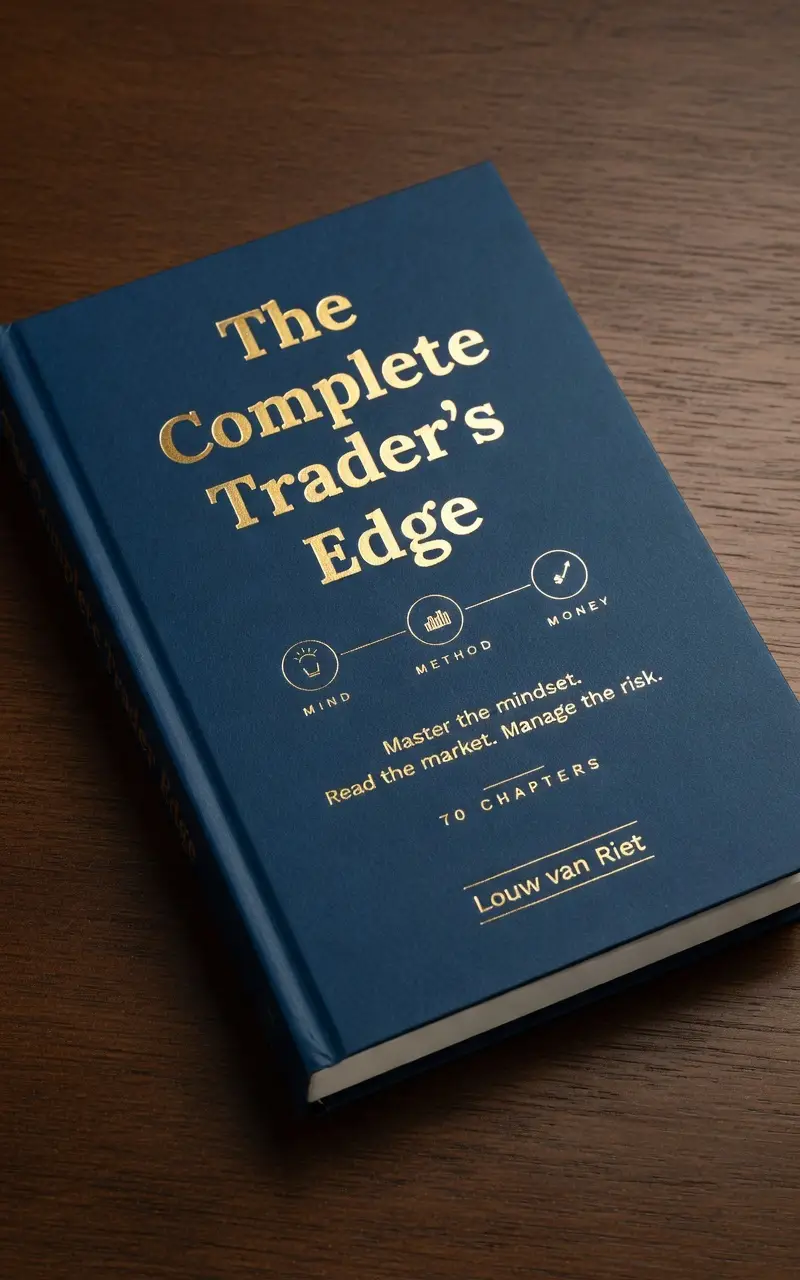
The Complete Trader’s Edge
70 chapters. Mind, Method and Money taught from the ground up.
Market Mayhem
Four hundred years of bubbles, including the American ones that wrote the rules.
Greatest Companies
51 businesses, how the moats were really won. The investor’s volume.
Other country hubs
Same structure, different rulebook. Each hub is written for the trader who lives there.
New to all of this?
Start with the framework rather than the firm. Mind, Method and Money, in that order, for the reason most funded accounts fail on the first one.
Not tax, legal or financial advice. US tax and regulatory rules change and their application depends on individual circumstances. Nothing here substitutes for a qualified CPA, a licensed adviser or your own reading of primary sources – the IRS, CFTC, NFA, FINRA and SEC. Verify all rates, thresholds and regulatory positions before acting.
Affiliate disclosure. CTE earns commission on some outbound links at no additional cost to you. It does not influence which firms are included or how they are assessed.
Last reviewed 26 September 2026. Next scheduled review after the 2027 tax-filing season.
 The Complete Trader's Edge
The full Mind · Method · Money framework. 70 chapters.
View on Amazon →
The Complete Trader's Edge
The full Mind · Method · Money framework. 70 chapters.
View on Amazon →
 Market Mayhem
400 years of bubbles, crashes, and the pattern that keeps repeating.
Buy on Amazon →
Market Mayhem
400 years of bubbles, crashes, and the pattern that keeps repeating.
Buy on Amazon →
 Greatest Companies
How the world's greatest companies were built — and what traders learn from them.
View on Amazon →
Greatest Companies
How the world's greatest companies were built — and what traders learn from them.
View on Amazon →
 Greatest Traders
Eighty-six lives that explain the markets — Livermore to Madoff, told with the losses left in.
View on Amazon →
Greatest Traders
Eighty-six lives that explain the markets — Livermore to Madoff, told with the losses left in.
View on Amazon →