

Trading Around the World · India
Trading and Investing in India
Is forex trading legal here? How are prop payouts actually taxed? Which firms will take an Indian trader, and which sessions can you reach from IST? The answers, without the wishful thinking.

Trading is legal in India, and so is trading a foreign prop firm’s simulated account – but the two sit under completely different rulebooks. Domestic equity, F&O and commodity trading falls under SEBI. Sending money abroad for a prop challenge falls under FEMA and the RBI’s Liberalised Remittance Scheme.
Prop payouts are normally taxed as business income at slab rates, not as capital gains, and not at the near-zero rate some Indian trading channels claim. That claim is contested and depends on your CA’s reading.
India at a glance
What Indian traders are and are not allowed to do
The most misunderstood area in Indian retail trading, and the one where bad information carries real legal consequence.
| Activity | Status | Governed by | The catch |
|---|---|---|---|
| Domestic equity and F&O | Permitted | SEBI | Requires a demat account with a registered broker |
| Currency derivatives on Indian exchanges | Permitted | SEBI and RBI | Limited to specified INR pairs |
| Offshore retail forex with a foreign broker | Restricted | FEMA | The RBI publishes an alert list of unauthorised platforms |
| Foreign prop firm challenge (simulated) | Grey – see guide | FEMA and LRS | Turns on whether the fee is a service purchase or a capital transfer |
| Receiving a prop payout from abroad | Permitted | FEMA | Must be declarable income with a clean paper trail |
Read the full LRS and FEMA breakdown →
How trading income is taxed in India
The highest-intent question on this page, and the one most competitors either skip or get wrong.
Intraday equity
Speculative business income, taxed at slab rates. Losses carry forward but only against speculative gains.
Futures and options
Non-speculative business income at slab rates. Losses carry forward longer and offset more broadly.
Delivery equity
Capital gains, short or long term depending on holding period, each with its own rate.
Foreign prop payouts
Normally business income at slab rates. The presumptive-taxation shortcut is contested and CA-dependent.
Funding a challenge and getting paid
Acceptance is not the same as workability. A firm can accept your signup and still be unusable if its payout rail will not reach an Indian bank.
Card declines, crypto routing and bank scrutiny are the three places Indian traders lose time and money. The fix is choosing a firm whose rails your bank already clears, and keeping the paper trail consistent from the first payment onward.
Prop firms that accept Indian traders
Firms change their restricted-country lists without notice. Acceptance depends on residency at signup and again at payout – verify directly with the firm before purchasing.
Before any list of firms, the thing almost no comparison site tells Indian readers: the RBI publishes an Alert List of entities not authorised to deal in forex or operate a forex trading platform in India. It runs to 95 names, and several firms marketed heavily to Indian traders are on it.
| Entity | On the RBI Alert List? | Entry |
|---|---|---|
| FTMO | Listed | No. 13 |
| FundedNext | Listed | No. 83 – the firm disputes this publicly |
| Smart Prop Trader | Listed | No. 82 |
| Exness | Listed | No. 6 |
| XM | Listed | No. 33 |
| MetaTrader 4 and 5 | Listed | Nos. 46 and 47 |
| FundingPips | Not listed | Not the same as approved – see below |
| The5ers | Not listed | Not the same as approved |
| FXIFY | Not listed | Not the same as approved |
Read this carefully, because both halves matter. The RBI states plainly that the list is not exhaustive and that an entity’s absence should not be taken as authorisation. So “not listed” means only that – not listed. Equally, FundedNext published a response arguing its inclusion was an error on the grounds that it has no operations in India, and the RBI’s own framing is informational rather than a penalty on the firm. The risk the list describes sits with the Indian resident, not the foreign company.
What that means in practice: if you deal with a listed entity you are outside the protection of Indian regulators, and forex transactions through unauthorised platforms can attract action under FEMA. Verify current status before depositing anywhere. Source: RBI, list updated 19 November 2025.
See all 95 entities on the RBI Alert List, with what listing does and does not mean →
Is FundedNext legal in India? What entry No. 83 actually means for you →
Affiliate disclosure: CTE earns a commission on some outbound links at no cost to you. It does not influence which firms are covered or how they are assessed.
Brokers and platforms
Domestic and offshore serve different purposes, and confusing the two is where people get into regulatory trouble.
Domestic, SEBI registered
The only lawful route to Indian equity, F&O and commodities. A demat account is required, and the broker must be SEBI registered.
Offshore, for prop and CFD
Relevant mainly because prop firms route through them. Direct retail forex with an offshore broker sits in FEMA-restricted territory – read section 01 first.
How to start trading in India
The order that actually works, rather than the order most people try.
Learn a method before funding anything. Prove it on a demo across at least twenty sessions, so you have a sample rather than a story. Only then decide between a domestic broker and a prop challenge, and base that on the capital you can genuinely afford to lose rather than the account size you would like to trade.
The full step-by-step, including what to skip and how long each stage honestly takes.
Sessions and killzones in Indian Standard Time
Nobody else converts ICT killzones into IST and says plainly which of them you can trade alongside a job. Here is the whole day at once.
The Indian trading day · 24 hours IST
Read it this way. The London killzone lands on top of the Indian equity close, so you have to choose between them. The New York killzone opens at 18:30 IST, after the working day ends for most people. That single fact makes India one of the better-positioned countries on earth for trading US index futures alongside a job – and it is the reason a great many Indian traders end up on NQ and gold rather than Nifty. Winter shifts the two Western blocks one hour later.
The session facts behind the bars. The Indian equity session runs 09:15–15:30 IST on NSE and BSE. London opens at 12:30 IST, overlapping the local close. New York opens at 18:30 IST, or 19:30 IST in winter. Equity delivery settles T+1.
Investing in India, not trading it
Most people reading this page should be investing rather than trading. That is an uncomfortable thing for a site carrying prop firm links to say, so let us say it properly.
A large majority of Indian retail participants who trade equity derivatives lose money over a full year. The same period has been kind to people who bought index funds and did nothing. If you have a stable income, no edge you can describe in one sentence, and no appetite for a twenty percent drawdown, the boring route is the correct route.
What follows is not stock tips or fund selection. CTE does not do those, and Indian domestic platforms already do them well. What CTE covers is the part almost nobody does: how the people who compounded capital over decades actually thought.
| Trading | Investing | |
|---|---|---|
| Horizon | Minutes to days | Years to decades |
| Edge comes from | Execution, timing, risk control | Business quality, patience, temperament |
| Time cost | Daily screen time, non-negotiable | A few hours a quarter |
| Tax treatment | Business income, slab rates | Capital gains |
| Failure mode | Blown account, fast | Selling at the bottom, slow |
How to start investing in India, written for someone who has decided against day trading.
How India’s markets were built
From a banyan tree on Dalal Street to one of the world’s largest equity markets, and the scandals that shaped every rule you now trade under.

The History of the Indian Stock Market
151 years: the BSE’s founding, the NSE’s disruption, Harshad Mehta, and why SEBI exists at all.
Indian traders and investors worth studying
Not for their picks. For how they thought when everyone around them was wrong – including what each of them got badly wrong.

Rakesh Jhunjhunwala
The Big Bull. India’s most-followed investor, the leverage he used, and who holds the title now.

Radhakishan Damani
Shorted Harshad Mehta while the market was long, then spent thirty years building DMart.

Prem Watsa
Left India with eight dollars and built a forty-five billion dollar insurance empire in Canada.

Mohnish Pabrai
Cloned Buffett openly and said so. Heads I win, tails I do not lose much. 23 November
Run the numbers before you commit
Every tool below is already live on CTE.
Common questions from Indian traders
Is prop firm trading legal in India?
Trading a simulated account for a foreign prop firm is not prohibited. The regulated question is the money movement: paying the challenge fee abroad falls under FEMA and the LRS, and receiving a payout must be declared as income. The legality question people usually mean is really a remittance question.
Do I need a demat account to trade with a prop firm?
No. A demat account holds Indian securities. Prop firm accounts sit with the firm’s broker, usually offshore, and never touch your demat.
Will my bank block a prop firm payout?
It happens, particularly with crypto-routed payouts and unfamiliar remitters. The fix is a clean, consistent paper trail and choosing a firm whose rails your bank will actually clear.
Is prop income really taxed at almost nothing under presumptive taxation?
This circulates widely on Indian trading channels and it is contested. Whether presumptive taxation applies depends on classification, turnover and your CA’s reading. Treat any channel promising a specific near-zero rate as marketing, not tax advice.
Which session should I trade from India?
The New York killzone opens at 18:30 IST in summer, which is unusually convenient for anyone with a day job. It is the biggest structural advantage Indian traders have over European ones.
Should I be investing instead of trading?
Probably, if you have a stable income and no edge you can describe in one sentence. Trading is a craft worth learning if you want the craft. It is a poor plan for getting rich faster.
Worth reading first
The framework, the history, and the businesses – the three volumes this site is built on.
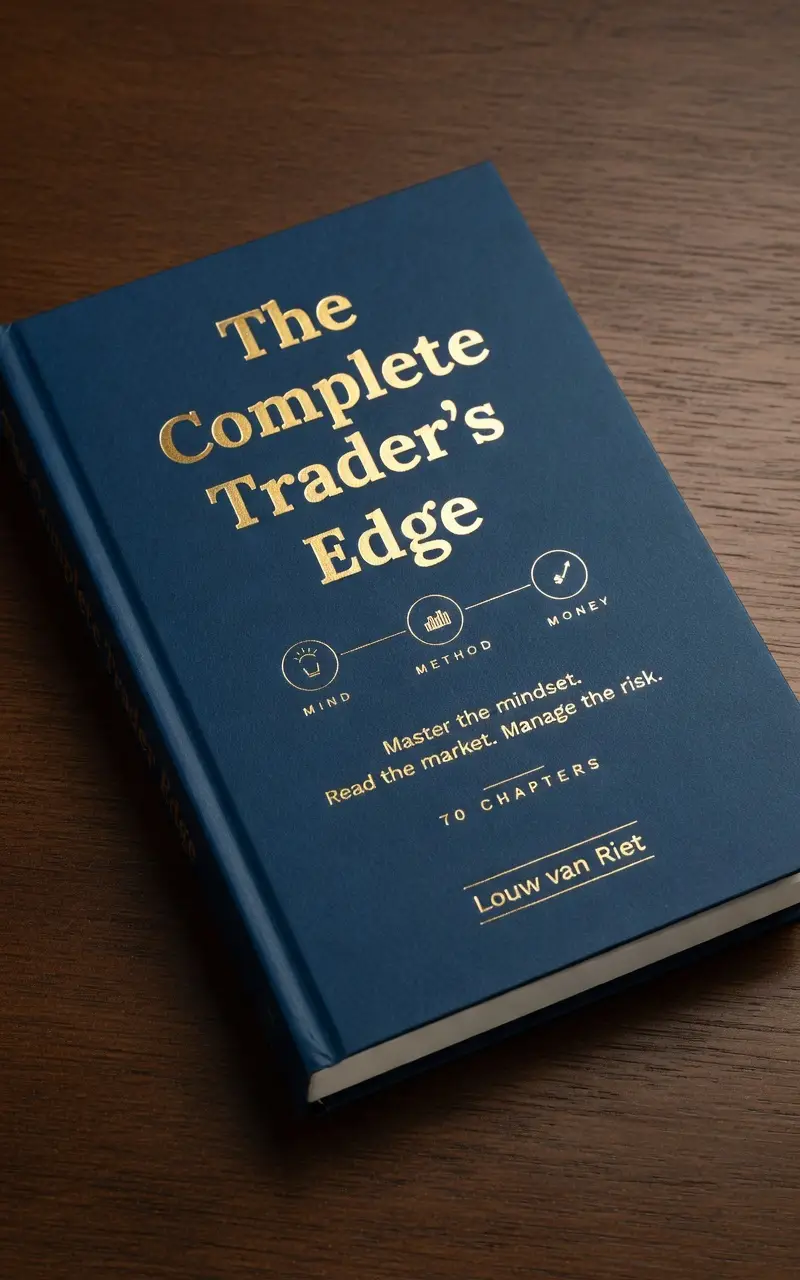
The Complete Trader’s Edge
70 chapters. Mind, Method and Money taught from the ground up.

Market Mayhem
Four hundred years of bubbles, including the ones India lived through.

Greatest Companies
51 businesses, how the moats were really won. The investor’s volume.
Other country hubs
Same structure, different rulebook. Each hub is written for the trader who lives there.
New to all of this?
Start with the framework rather than the firm. Mind, Method and Money, in that order, for the reason most funded accounts fail on the first one.
Not tax or financial advice. Indian tax and remittance rules change with each Budget and their application depends on individual circumstances. Nothing here substitutes for a qualified Chartered Accountant or a SEBI-registered adviser. Verify all rates, thresholds and regulatory positions against primary sources – the Income Tax Department, CBDT, RBI and SEBI – before acting.
Affiliate disclosure. CTE earns commission on some outbound links at no additional cost to you. It does not influence which firms are included or how they are assessed.
Last reviewed 26 September 2026. Next scheduled review April 2027, after the Union Budget.
 The Complete Trader's Edge
The full Mind · Method · Money framework. 70 chapters.
View on Amazon →
The Complete Trader's Edge
The full Mind · Method · Money framework. 70 chapters.
View on Amazon →
 Market Mayhem
400 years of bubbles, crashes, and the pattern that keeps repeating.
Buy on Amazon →
Market Mayhem
400 years of bubbles, crashes, and the pattern that keeps repeating.
Buy on Amazon →
 Greatest Companies
How the world's greatest companies were built — and what traders learn from them.
View on Amazon →
Greatest Companies
How the world's greatest companies were built — and what traders learn from them.
View on Amazon →
 Greatest Traders
Eighty-six lives that explain the markets — Livermore to Madoff, told with the losses left in.
View on Amazon →
Greatest Traders
Eighty-six lives that explain the markets — Livermore to Madoff, told with the losses left in.
View on Amazon →