
GREATEST TRADERS · EPISODE 2
George Soros
The Man Who Broke the Bank of England
▶ Watch on YouTube🎵 Listen on Spotify
Also available on Apple Podcasts · Amazon Music
Last updated: 15 August 2026
George Soros has generated more profit from financial market speculation than any individual in history. His Quantum Fund returned an average of 30% annually for decades. His most famous single trade, shorting the British pound in September 1992, made approximately $1 billion in a single day and forced sterling out of the European Exchange Rate Mechanism. Understanding how he thinks about markets is worth any serious trader’s time.
What makes Soros unique among legendary traders is that he built an intellectual framework, reflexivity, that explains why markets behave the way they do. While most traders develop rules of thumb and pattern recognition, Soros developed a theory of market dynamics that informed every position he took. His career demonstrates that understanding the why behind market movements is at least as valuable as understanding the what.
From Budapest to the London School of Economics
1944: The Year That Built the Trader
George Soros was born Gyorgy Schwartz in Budapest on 12 August 1930, into an upper-middle-class Jewish family. His father, Tivadar, was a lawyer who had been captured by the Russian army in the First World War and spent years in a Siberian prisoner-of-war camp. He escaped, walked out across the frozen tundra, and survived by reading people and deciding faster than the people around him. That experience marked him permanently. He raised his son to understand that normal rules stop applying the moment the world stops being normal.
When the Nazis occupied Hungary in March 1944, most Jewish families waited. They trusted the institutions. They believed that following the rules would protect them. More than four hundred thousand Hungarian Jews were deported within weeks.
Tivadar did not wait. He obtained forged identity documents for every member of the family and split them up. George, then fourteen, spent the final year of the war living under a false identity, placed with a non-Jewish official whose job was cataloguing confiscated Jewish property. He watched the machinery of destruction from the inside.
Soros later called 1944 the most formative year of his life, and it left him with three convictions that would define his entire career:
- The people who survive are the ones who see reality clearly and act on it, even when that reality is terrifying. His father did not hope for the best. He assessed the situation accurately and moved.
- Institutions and rules that appear permanent can collapse overnight. The traders who assume the current regime will last forever are the ones wiped out when it changes.
- The gap between perception and reality is where the greatest danger and the greatest opportunity both live. That sentence is, in effect, reflexivity stated thirty years before he named it.
London, Popper, and the Idea Behind the Idea
Soros left Hungary in 1947 at seventeen, with almost nothing. He reached London and worked as a railway porter and a waiter while enrolling at the London School of Economics.
There he encountered the philosopher Karl Popper. Popper argued that no amount of observation can ever prove a theory true, only prove it false, that certainty is an illusion, and that the best available position is to hold theories loosely and abandon them the moment evidence contradicts them. For most students this was abstract. For Soros it was a precise description of what he had already lived through. The families in Budapest who held their assumptions too tightly did not survive.
Popper gave Soros the intellectual language for what his father had taught him through action. The result was reflexivity.
The Quantum Fund: Three Decades of Dominance
Soros co-founded the fund with Jim Rogers in 1969. It went through several names before becoming the Quantum Fund, and over the following three decades it compounded at roughly thirty per cent a year. One hundred thousand dollars invested at inception would have been worth more than four billion by the time Soros converted the fund to a family office in 2000.
| Period | Quantum Fund | S&P 500 | Outperformance |
|---|---|---|---|
| 1970–1980 | +3,365% | +47% | +3,318% |
| 1980–1990 | +840% | +408% | +432% |
| 1990–2000 | +1,710% | +431% | +1,279% |
| 1969–2000 | ~30% annualised | ~10% annualised | ~20% a year |
Two things set the fund apart. The first was the framework: Soros was not predicting where prices would go, he was identifying structural conditions under which prices had to move. The second was sizing. When a true reflexive dislocation appeared, and they were rare, he did not take a comfortable position. He committed as much as the risk framework would allow.
“Markets are constantly in a state of uncertainty and flux, and money is made by discounting the obvious and betting on the unexpected.”
— George Soros
The Theory of Reflexivity
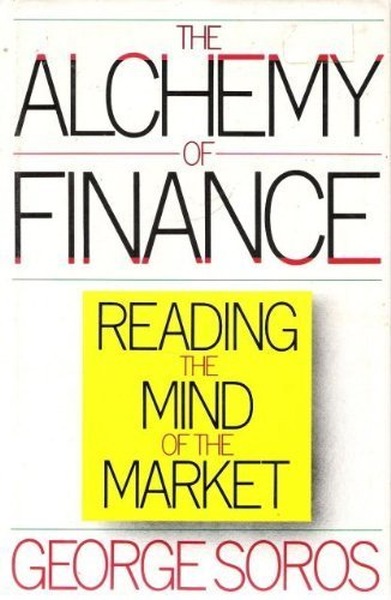
Soros’s intellectual framework is his theory of reflexivity, laid out in his book The Alchemy of Finance. The core idea challenges the efficient market hypothesis at its foundation: market prices do not simply reflect economic fundamentals. They influence them. Investors’ perceptions of reality affect reality itself, creating feedback loops between market prices and the underlying conditions those prices are supposed to represent.
In practical terms, here is how a reflexive cycle works:
| Phase | Bullish Reflexive Loop | Bearish Reflexive Loop |
|---|---|---|
| 1. Initial move | Asset prices rise based on improving fundamentals | Asset prices fall based on deteriorating fundamentals |
| 2. Feedback effect | Higher prices improve creditworthiness, enabling more borrowing and growth | Lower prices reduce creditworthiness, forcing selling and contraction |
| 3. Self-reinforcement | Improved fundamentals justify even higher prices, attracting more buyers | Worse fundamentals justify lower prices, triggering more selling |
| 4. Excess | Prices detach from sustainable valuations. Bubble forms. | Prices overshoot to the downside. Panic selling exceeds fundamental decline. |
| 5. Reversal | Reality can no longer support prices. The loop reverses violently. | Prices fall below fair value. Contrarian buyers step in. Recovery begins. |
Soros’s edge was identifying which phase of the reflexive cycle a market was in, positioning early in the self-reinforcing phase, and exiting (or reversing) before the inevitable correction. This is a fundamentally different approach from technical analysis, but the principle of identifying where the crowd is wrong and positioning for the correction has direct parallels to how ICT liquidity concepts work at a micro level.
Soros divided market conditions into two states, and the distinction is the practical heart of the theory:
- Near-equilibrium. The feedback loop is mild. Prices oscillate around fundamental value and nothing dramatic is available. Most of the time, most markets are here.
- Far-from-equilibrium. The feedback loop turns strong and self-reinforcing, producing boom-bust cycles that eventually destroy themselves. This is where the historic returns live, and it is the only condition Soros was really hunting.
The Breaking of the Bank of England: Black Wednesday
In 1992, the British pound was fixed in the European Exchange Rate Mechanism (ERM) at a rate Soros believed was unsustainably high relative to Germany’s interest rates. The UK was in recession; Germany was raising rates after reunification. The UK could not simultaneously maintain the ERM peg and cut rates to stimulate its economy. This was a structural imbalance: a policy that could not be maintained indefinitely.
Soros identified this as an untenable position and built a short position of approximately $10 billion against sterling. The trade was structured with asymmetric risk-reward: if Soros was wrong and the peg held, the pound would remain roughly where it was and his losses would be limited to the carrying cost of the position. If he was right and the peg broke, sterling would devalue significantly and the profit would be enormous. The downside was limited. The upside was massive.
On Black Wednesday, September 16, 1992, the Bank of England’s defence of the peg failed despite raising interest rates twice in a single day. Sterling was forced out of the ERM and devalued. Soros’s fund reportedly made approximately $1 billion on the trade. The key insight: Soros was not fighting the Bank of England. He was betting that economic reality would eventually overwhelm a policy that contradicted it. The Bank of England was fighting reflexivity itself.
The mechanics of that day are worth stating precisely, because the scale is what people forget. The Bank of England raised its base rate from ten per cent to twelve, then announced a further rise to fifteen, all inside a single trading session. It spent billions buying its own currency in the open market. By seven that evening Britain announced it was suspending ERM membership. Sterling fell close to fifteen per cent.
| Detail | Fact |
|---|---|
| Asset | British pound (GBP) |
| Direction | Short GBP, long Deutsche Mark |
| Position size | Approximately $10 billion |
| Bank of England defence | Rates 10% to 12% to 15% in one day, roughly £27 billion spent |
| Result for Soros | Approximately $1 billion in a single day |
| Outcome for the UK | Forced exit from the European Exchange Rate Mechanism |
The insight underneath it: no central bank can defend an exchange rate indefinitely against global currency markets when the underlying economic conditions do not support it. Soros identified that structural vulnerability months in advance, then acted with conviction at scale.
How Reflexivity Applies to Retail Trading
Soros operates on a macro scale that most retail traders will never approach. But reflexive dynamics exist at every scale. Consider how the same feedback loop plays out in markets you trade daily:
Bitcoin rallies. Rising prices attract media attention, which attracts new buyers, which drives prices higher, which attracts more media attention. This reflexive loop powered every major BTC rally. The reversal happens when the supply of new buyers is exhausted and prices can no longer be sustained by enthusiasm alone.
A stock earnings beat. The stock gaps up on earnings. Rising price attracts momentum traders. Short sellers cover (buying pressure). Analyst upgrades follow (more buying). The reflexive loop drives the stock far beyond what the earnings alone justified, until the momentum exhausts itself.
Liquidity sweeps on the 15-minute chart. Price breaks a support level, triggering stops (selling). The selling pushes price lower, triggering more stops. The reflexive cascade of forced selling creates the liquidity that institutions use to fill buy orders. Then the loop reverses. This is reflexivity at the micro level, and it is exactly what the ICT framework teaches you to identify and trade.
Soros’s Key Principles for All Traders
It does not matter if you are right or wrong. What matters is how much you make when right and how much you lose when wrong. This is the asymmetric risk-reward principle that every professional trader applies. Soros’s trades were structured so that being wrong cost little and being right paid enormously.
When you have conviction backed by analysis, bet big. Soros did not take small positions on his best ideas. When the analysis was complete and the thesis was confirmed, he committed significant capital. Stanley Druckenmiller, who managed money for Soros, described this as the most important lesson he learned: it is not about being right. It is about how much you make when you are right.
Be willing to be early and temporarily wrong. Many of Soros’s positions were underwater before they became profitable. The willingness to hold through adversity when the fundamental case is strong, while maintaining strict risk limits on the overall position, separates great traders from mediocre ones.
Invest first, investigate later. Soros established positions on a thesis and then used the live trade itself as the test. Profit or loss was feedback on whether the thesis held. This follows directly from Popper: certainty is impossible, so you test with real money at manageable size before scaling up. It is not an argument for recklessness. It is an argument against waiting for a confirmation that never arrives.
Know when the thesis is wrong, and exit. Soros had no emotional attachment to being right. When the thesis broke he closed the position, often at a significant loss, and moved on. That psychological flexibility is among the rarest traits in this business, and it is the exact trait Livermore lacked at his worst.
“The worse a situation becomes, the less it takes to turn it around, and the bigger the upside.”
— George Soros
George Soros: Key Facts
| Fact | Detail |
|---|---|
| Born | 12 August 1930, Budapest, Hungary (as Gyorgy Schwartz) |
| Education | London School of Economics, under Karl Popper |
| Main vehicle | Quantum Fund, co-founded 1969 with Jim Rogers |
| Career returns | Roughly 30% annualised over three decades |
| Most famous trade | Short GBP, Black Wednesday 1992, approximately $1 billion |
| Key theory | Reflexivity |
| Signature trait | Massive conviction when right, rapid reversal when wrong |
What Retail Traders Can Actually Take From This
- Read the macro context. Understand what fundamental forces are actually driving the market you trade.
- Look for feedback loops. Self-reinforcing trends are the ones that eventually reverse hardest.
- Size to your conviction, inside your position sizing rules, not outside them.
- Carry no emotional attachment to being right. The market is not a debate to be won.
- Define your exit conditions before you enter, and honour them when they trigger.
Key Lessons
- Reflexivity: prices and fundamentals influence each other. Markets are not simply reflections of reality; they shape it.
- The greatest trades exploit structural imbalances that the consensus refuses to acknowledge.
- Asymmetric risk-reward: structure every trade so that being wrong costs little and being right pays enormously.
- When conviction backed by thorough analysis is high, commit significant capital.
- Being early and temporarily wrong is part of the process when the fundamental case is strong.
Listen to the Full Episode
Soros is Episode 2 of the Greatest Traders podcast, roughly thirty minutes covering the full arc from wartime Budapest to Black Wednesday. Players are at the top of this page.
What You’ll Hear in the Episode
▶ How surviving Nazi-occupied Budapest shaped his trading psychology
▶ The theory of reflexivity, and why most economists rejected it
▶ How the Quantum Fund averaged 30% annual returns for three decades
▶ The full anatomy of the $10 billion pound trade on Black Wednesday
▶ Why he sized up massively when conviction was highest
▶ What his life teaches about conviction and intellectual courage
| Time | Section | Theme |
|---|---|---|
| 0:00 | Black Wednesday | Cold open, 16 September 1992 |
| 2:00 | Budapest | Survival instincts forged in wartime |
| 8:00 | Reflexivity | The framework no one understood |
| 13:00 | The Quantum Fund | Building a macro machine |
| 18:00 | Breaking the Bank | The $10 billion trade |
| 24:00 | The Lesson | Mind, Method, Money and what Soros teaches every trader |
Frequently Asked Questions
How much money has George Soros made from trading?
Soros’s Quantum Fund generated over $40 billion in profits across its life. His personal net worth as of 2026 is estimated at approximately $6.7 billion, reduced from higher levels by his extensive philanthropy through the Open Society Foundations (to which he has donated over $32 billion). His returns in the early decades of Quantum Fund averaged over 30% annually, one of the greatest track records in hedge fund history.
Can retail traders use reflexivity theory?
Yes, at every scale. Reflexivity describes feedback loops in markets. When you see a liquidity sweep cascade below a support level triggering stops that create more selling that triggers more stops, you are witnessing micro-reflexivity. When you see Bitcoin rally 50% because rising prices attract buyers whose buying drives more rising prices, you are witnessing macro-reflexivity. Understanding these feedback dynamics helps you identify when a move is self-reinforcing (trade with it) and when it is exhausting (prepare for the reversal).
How does Soros compare to other legendary traders?
Soros is unique in combining a philosophical framework (reflexivity) with exceptional trading execution. Jesse Livermore was a pure tape reader and price action trader. Paul Tudor Jones combines technical analysis with macro understanding. John Paulson built one extraordinary thesis trade. Soros sustained exceptional performance across decades by applying a consistent intellectual framework to shifting macro conditions. His longevity is what sets him apart.
What book should I read about Soros?
The Alchemy of Finance by George Soros himself is the essential text for understanding his reflexivity theory and how it applies to trading. Soros on Soros provides a more accessible interview-format discussion of his methods. The Man Who Broke the Bank of England covers the Black Wednesday trade in detail. For the broadest context, More Money Than God by Sebastian Mallaby places Soros within the wider history of hedge fund trading.
Did Soros use technical analysis?
Not in the traditional sense. Soros relied primarily on macro-fundamental analysis: central bank policies, economic data, political dynamics, and the reflexive feedback loops between market prices and these fundamentals. However, Stanley Druckenmiller, who managed money under Soros from 1988 to 2000, used technical analysis extensively for timing entries and exits. The combination of Soros’s macro thesis with Druckenmiller’s technical execution was one of the most profitable partnerships in trading history.
Could a retail trader have made the same trade?
Not at that scale, but the logic transfers completely. Soros identified a structural imbalance, a currency peg that could not be maintained, and positioned with asymmetric risk to reward. A retail trader can do the same thing: find situations where the consensus is demonstrably wrong, structure the trade so the downside is limited and the upside is large, and size according to conviction inside disciplined risk limits.
What is the ERM and why did it matter?
The European Exchange Rate Mechanism held European currencies within narrow bands against each other, a precursor to the euro. Britain joined in 1990 at a rate Soros believed was unsustainably high. The UK could not simultaneously defend the peg and cut interest rates to lift itself out of recession. That contradiction was the structural imbalance he traded.
What can day traders learn from a macro trade like this?
Three things transfer directly. First, asymmetric structure: small defined risk against large potential gain. Second, patience while the thesis matures, since Soros built the position over weeks rather than in a morning. Third, the conviction to size properly once the evidence confirms the thesis. Druckenmiller, who executed the trade under Soros, used technical analysis for timing, the same toolkit day traders use now.
How much did Soros make breaking the Bank of England?
Approximately $1 billion in a single day on 16 September 1992. Estimates of the Quantum Fund’s total profit across the whole sterling position run to $1 to $2 billion. The trade forced the pound out of the ERM and made Soros the most famous macro trader alive.
Continue Reading
▶ Stanley Druckenmiller: The Greatest Trading Record
▶ Paul Tudor Jones: Lessons from a Market Wizard
Soros set out reflexivity himself. Be warned that it is a genuinely difficult book, and Soros has said as much about his own writing. Read it for the theory rather than for a method you can copy.
Rated in the Trader’s Library.
 The Complete Trader's Edge
The full Mind · Method · Money framework. 70 chapters.
View on Amazon →
The Complete Trader's Edge
The full Mind · Method · Money framework. 70 chapters.
View on Amazon →
 Market Mayhem
400 years of bubbles, crashes, and the pattern that keeps repeating.
Buy on Amazon →
Market Mayhem
400 years of bubbles, crashes, and the pattern that keeps repeating.
Buy on Amazon →
 Greatest Companies
How the world's greatest companies were built — and what traders learn from them.
View on Amazon →
Greatest Companies
How the world's greatest companies were built — and what traders learn from them.
View on Amazon →