


Explore all 80 books in the Trader’s Library →
Some trading books give you a hundred tactics. Stan Weinstein’s Secrets for Profiting in Bull and Bear Markets gives you one framework, and it is so clean and durable that traders have built entire careers on it. That framework is Stage Analysis: the idea that every stock and every market moves through four repeating stages, and that knowing which stage you are in tells you almost everything about what to do.
Published in 1988, the book has aged remarkably well, because the cycle it describes, basing, advancing, topping, declining, is structural to how markets behave. Crucially, the title is a promise the book keeps: it teaches you to profit on the way up and on the way down, which most trend books ignore entirely.
At a Glance
| Author | Stan Weinstein |
| First Published | 1988 |
| Pages | ~350 |
| Genre | Technical analysis / trend stages |
| Difficulty | Beginner to intermediate — clear and well-structured |
| Best For | Swing and position traders who want one durable trend framework |
| Skip If | You trade purely intraday and want fast scalping tactics |
OVERALL RATING: 8.5 / 10
Who Should Read This Book
| Reader | Verdict | Why |
|---|---|---|
| New trader (0–1 year) | Read it | One clean framework that organises the whole market is the perfect first lens for a beginner |
| Intermediate (1–3 years) | Read it | Stage Analysis will sharpen your timing on entries and, just as importantly, exits |
| Advanced / professional | Read it | A timeless reference, and one of the few classic books that takes shorting seriously |
| Swing / position trader | Essential | This is built for your timeframe: weekly charts, stage transitions, and trend-following the cycle |
| Trader who only goes long | Read it | The Stage 4 material on bear markets and shorting fills a gap most trend books leave open |
| Pure intraday scalper | Read for context | The framework is fractal and gives valuable bias, even if the examples are higher-timeframe |
The Book in Context
Stan Weinstein built his reputation analysing market trends, and this book distils his approach into a single, teachable system. Rather than drowning the reader in indicators, he organises everything around one observation: markets and individual stocks cycle through the same four stages, over and over, and most trading mistakes come from acting as if you are in a different stage than you really are.
It belongs alongside the other momentum and trend classics, Darvas, O’Neil, Minervini, but with a distinctive strength: it treats the full cycle, including the decline. Where most books teach you only how to ride uptrends, Weinstein insists that recognising tops and trading the downside is half the job.
The Four Stages, and Why They Matter
The heart of the book is the four-stage cycle. Stage 1 is the base, where a stock moves sideways after a decline. Stage 2 is the advance, the markup where you want to be a buyer. Stage 3 is the top, where the trend stalls and distributes. Stage 4 is the decline, where you want to be out, or short.
Weinstein anchors the analysis with a key trend filter, the 30-week moving average, and confirms moves with relative strength against the broader market and with volume. The result is a simple discipline: buy as a stock breaks out of a Stage 1 base into Stage 2, ride it, and step aside or short as it rolls into Stage 4. The framework tells you not just what to do, but when.
“Buy in Stage 2, sell in Stage 3, and never fight a Stage 4 decline.”
— The core discipline of Stage Analysis
What Makes Stage Analysis Endure
| Element | What It Gives You |
|---|---|
| The four-stage cycle | A single map that tells you whether to buy, hold, sell, or short any chart in front of you |
| The 30-week moving average | A simple, robust trend filter that keeps you on the right side of the major move |
| Relative strength | Focusing on stocks outperforming the market, so you trade leaders, not laggards |
| Trading both directions | A genuine framework for profiting in bear markets, not just surviving them |
Where the Book Falls Short
- The examples are dated. The charts and references belong to the 1980s. The framework is timeless, but you will be translating the visuals into a modern context.
- Built for higher timeframes. Stage Analysis shines on weekly and daily charts for swing and position trading. Intraday traders can use the bias it provides, but the method is not designed for scalping.
- Moving-average signals can lag. Like any approach anchored to a moving average, stage transitions can whipsaw in choppy, rangebound markets, and the book is light on handling those conditions.
- It can feel simple to a point. The clarity is a strength, but advanced traders may want more nuance than the four-stage model alone provides.
How the Book Fits the Mind · Method · Money Framework
| Pillar | Contribution | What the Book Delivers |
|---|---|---|
| MIND | SECONDARY | The discipline to act with the stage rather than fighting the trend out of hope |
| METHOD | PRIMARY | A complete, durable framework for identifying trend stage and trading both directions |
| MONEY | SECONDARY | Stage boundaries give logical, structural places for stops and for stepping aside |
This is a Method-pillar classic, and one of the cleanest trend frameworks you can pair with the Mind · Method · Money framework. Stage Analysis gives you a structural read on whether to be long, flat, or short, the kind of top-down bias that makes every other decision easier.
Read This Instead Of / Read This After
| Relationship | Book | Why |
|---|---|---|
| Read after | Technical Analysis of the Financial Markets by John Murphy | Murphy gives the broad toolkit; Weinstein gives you one elegant framework to organise it |
| Read alongside | How I Made $2,000,000 in the Stock Market by Nicolas Darvas | Darvas’s boxes and Weinstein’s stages are two views of the same breakout-and-trend logic |
| Read with | Think and Trade Like a Champion by Mark Minervini | Minervini’s modern momentum rules sit naturally on top of Weinstein’s stage framework |
Final Verdict: Should You Read This Book in 2026?
Yes. Secrets for Profiting in Bull and Bear Markets is one of the most useful trend books ever written, precisely because it gives you a single, durable framework instead of a pile of tactics. Stage Analysis is simple enough to learn quickly and deep enough to use for a lifetime.
Read it, translate the dated charts into modern markets, and apply the four-stage lens to whatever you trade. Its rare attention to the downside, profiting in bear markets, not just enduring them, makes it especially valuable for traders who have only ever learned to go long.
CTE Rating Breakdown
8.5/10
One Framework for the Whole Cycle
| Readability | 8 | |
| Actionability | 9 | |
| Timelessness | 9 | |
| Beginner-Friendly | 8 | |
| Framework Clarity | 10 |
Frequently Asked Questions
What is Secrets for Profiting in Bull and Bear Markets about?
It is Stan Weinstein’s guide to Stage Analysis, the framework that every stock and market moves through four stages, basing, advancing, topping, and declining, and how to trade each one, including profiting on the downside.
What are the four stages?
Stage 1 is the base after a decline, Stage 2 is the advance where you buy, Stage 3 is the top where the trend stalls, and Stage 4 is the decline where you stay out or short. The goal is to align your trading with the current stage.
Is Stage Analysis still relevant today?
Yes. The four-stage cycle is structural to how markets move, so the framework remains widely used. The charts are dated, but the underlying logic of trend stages and the 30-week moving average holds up well.
Is it good for beginners?
Very much so. The single, clear framework is an excellent first lens for organising the market, and the writing is approachable. It suits swing and position traders especially well.
Does it cover short selling?
Yes, and that is one of its strengths. Unlike most trend books, Weinstein devotes real attention to Stage 4 declines and how to profit in bear markets, not just how to survive them.
What is the single most important takeaway?
Know your stage. Buy in Stage 2, sell in Stage 3, and never fight a Stage 4 decline. Aligning with the stage you are actually in prevents the most common and costly trading mistakes.
About the Author
Stan Weinstein
Stan Weinstein is a market analyst best known for popularising Stage Analysis, a framework for reading where a stock or market sits in its cycle. His work focused on trend identification, relative strength, and disciplined entries and exits anchored to the major trend.
This book remains his defining contribution, and Stage Analysis continues to be taught and used by swing and position traders decades after its publication, a testament to how durable a clear framework can be.
Continue Learning
- Technical Analysis of the Financial Markets Book Review (2026)
- How I Made $2,000,000 in the Stock Market Book Review (2026)
- Think and Trade Like a Champion Book Review (2026)
- The Three Pillars: Mind, Method, Money
- The Complete Trader’s Edge — The Book
 The Complete Trader's Edge
The full Mind · Method · Money framework. 70 chapters.
View on Amazon →
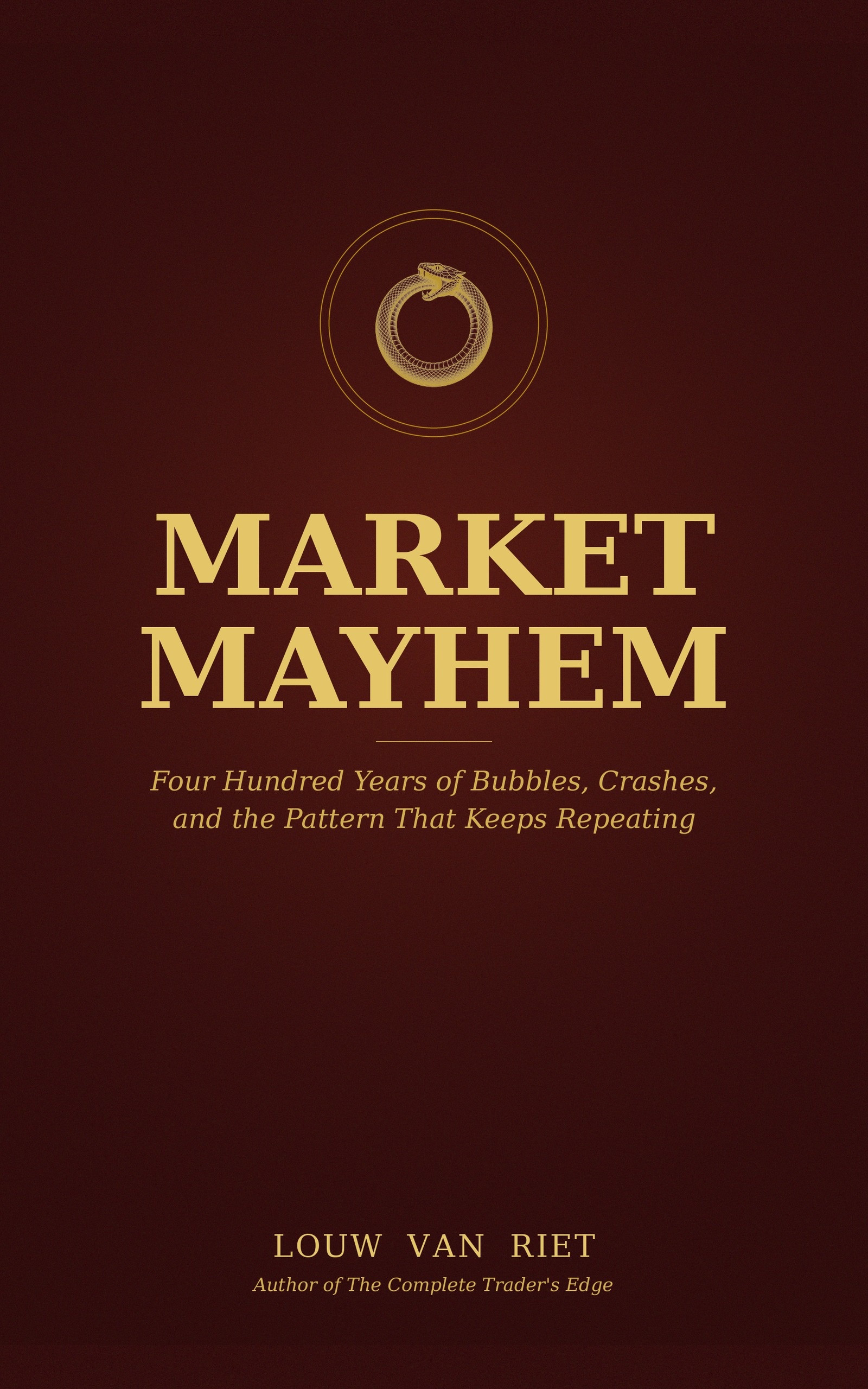 Market Mayhem
400 years of bubbles, crashes, and the pattern that keeps repeating.
Buy on Amazon →
 Greatest Companies
How the world's greatest companies were built — and what traders learn from them.
View on Amazon →
 Greatest Traders
Eighty-six lives that explain the markets — Livermore to Madoff, told with the losses left in.
View on Amazon →