

Explore all 80 books in the Trader’s Library →
Almost everyone who buys their first call option believes they are betting that the stock will go up.
They are not. They are betting that the stock will move more than the option’s price already assumes it will move. Those are different bets. You can be completely right about direction and lose, and traders discover this the hard way when the stock rallies exactly as predicted and the call they paid for expires worth less than they paid.
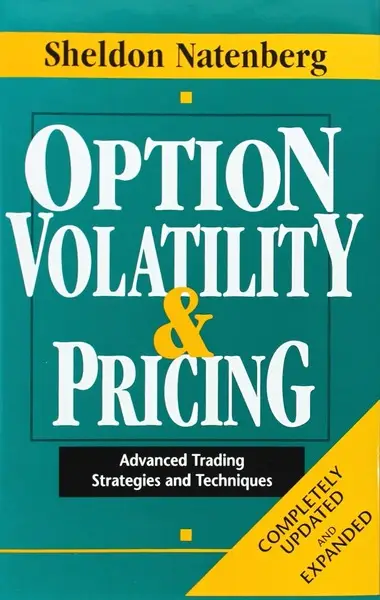
The gap between those two sentences is where retail options money goes to die, and Sheldon Natenberg’s book is the standard against which every attempt to close that gap is measured. It has been the training text inside options market-making firms for decades, and there is a reason nothing has displaced it: it does not teach you what the Greeks are. It teaches you what they mean, which is a different and much harder thing to write.
This is the most demanding book on the shelf and the highest-rated. Both facts are the same fact.
At a Glance
| Author | Sheldon Natenberg |
| Full Title | Option Volatility & Pricing: Advanced Trading Strategies and Techniques |
| First Published | 1988; second edition 2014 (McGraw-Hill) |
| Pages | ~550 (2nd edition) |
| Difficulty | Hard. A textbook. Expect months, not a weekend. |
| Best For | Anyone who intends to trade options seriously, at any level, ever |
| Skip If | You want to be told which trade to put on. This book teaches you to think, then leaves. |
OVERALL RATING: 9.0 / 10
Who Should Read This Book
| Reader | Verdict | Why |
|---|---|---|
| Options beginner | Required, but not first | Learn what a contract is somewhere gentler, then come here before you risk a cent. This is not optional reading; it is deferred reading. |
| Retail options trader | The most important book you will read | If you sell premium or buy calls without understanding implied volatility, you are a counterparty, not a trader |
| Professional / market maker | You have already read it | It is the training text at firms that do this for a living. That is not marketing; it is the book’s actual role. |
| Equity trader curious about options | Read chapters 1–10 at minimum | Enough to understand why your directional instinct does not transfer, which may save you from the whole asset class |
| 0DTE / weeklies trader | Urgently | You are trading the most gamma-sensitive instrument available. The book predates your product and explains it better than anything written since. |
| Someone wanting a strategy list | Wrong book | You want McMillan. Read this one anyway, or the list will be a list of ways to lose money precisely. |
The Book in Context
Natenberg came up as a market maker on the floor of the Chicago Board Options Exchange, in the era when options pricing was a physical activity conducted by shouting. He later moved into education, spending years at a Chicago trading firm teaching the people the firm was hiring. That second career is what produced this book, and it explains its peculiar quality.
Most options literature is written by one of two people. Academics, who derive the models correctly and have never had to price a contract while a market moved against them. Or retail educators, who have a system to sell and a strong incentive not to explain why it stops working. Natenberg is neither. He was a professional whose job became explaining professional practice to new professionals, and the book carries the texture of a curriculum that had to actually produce competent traders or the firm lost money.
Its canonical status is unusual in this field. Trading books do not typically become standards; they become fashions. This one first appeared in 1988, was substantially expanded in 2014, and has been the reference text throughout, surviving the disappearance of the floor it was written on. Nothing else on this shelf occupies that position in its own domain.
The Core Argument: You Are Trading Volatility, Not Direction
Everything in the book descends from a single reframe, and it is worth stating slowly because most readers nod at it and then fail to apply it.
An option’s price contains a forecast. Embedded in what the market charges you for that contract is an assumption about how much the underlying will move between now and expiry. That assumption is implied volatility, and it is not a technical detail. It is the actual price of the thing you are buying.
So when you buy a call, you are not expressing the view “this will go up.” You are expressing the view “this will move more than the market currently expects it to move, in a direction I have specified, within a window I have specified.” Three claims, not one. You can be right about the direction and wrong about the magnitude and lose. You can be right about direction and magnitude and wrong about timing and lose. The market can grant your thesis in full, late, and you lose.
The stock did exactly what you said it would, and you still lost. This is not bad luck. It is the instrument working correctly.
— The lesson the market charges you for
Turn it around and the edge becomes visible. If the option’s price is a volatility forecast, then trading options profitably means having a better volatility forecast than the market’s. Not a better view on the company. A better view on how much it will move. That is a genuinely different research question, and it is the one almost no retail options trader is actually asking.
The Greeks: What They Mean, Not What They Are
The Greeks are where every options education either succeeds or quietly fails, and where Natenberg’s teaching instinct separates him from the field.
Anyone can tell you delta is the rate of change of the option’s price with respect to the underlying. That sentence is correct, useless, and the reason most traders never internalise it. Natenberg’s method is to make each Greek into a thing a trader recognises from experience: a position’s character, its behaviour under stress, the specific way it will hurt you.
What the Greeks Actually Tell You
| Greek | The textbook definition | What it actually means at the screen |
|---|---|---|
| Delta | Sensitivity to the underlying’s price | How much stock you effectively own right now, whether you meant to or not |
| Gamma | Rate of change of delta | How fast your position changes its mind about what it is. Short gamma is why small moves become emergencies. |
| Theta | Sensitivity to time passing | Rent. You are paying it or collecting it every single day, including the ones where nothing happens. |
| Vega | Sensitivity to implied volatility | Your exposure to the market changing its mind about the forecast. The Greek that ruins people who never learned it existed. |
| The pairing | Gamma and theta have opposite signs | You are always paying for movement or being paid to fear it. There is no position that is long both. |
The last row is the whole book in one line. Every options position is a trade of gamma against theta, and knowing which side you are on is not optional.
The gamma-theta relationship is the single most valuable thing a retail trader can take from this book, because it exposes the premium-selling fantasy for what it is. Selling options collects theta. It feels like income. It looks like a business with a high win rate and a smooth equity curve, and for long stretches it is. But you did not find free money. You sold gamma, which means you have been paid to absorb the cost of movement, and the day movement arrives you will discover the price you agreed to. The strategy did not fail. It performed exactly as contracted.
How Natenberg Built the Book
He strips the mathematics without dumbing down the concept. This is the achievement, and it is rarer than it sounds. Black-Scholes can be derived, which teaches you nothing about trading, or hand-waved, which teaches you nothing at all. Natenberg does a third thing: he explains what the model assumes, why those assumptions are wrong, and what it costs you when they break. You finish understanding a model you cannot derive, which is exactly the right outcome for a trader.
He builds strictly in order. The book is genuinely sequential and does not forgive skipping. Contract mechanics, then pricing, then the Greeks, then spreads, then volatility, then the ways the model fails. Readers who jump to the volatility chapters find them impenetrable, conclude the book is too hard, and quit. It is not too hard. They arrived without the scaffolding.
He teaches the model’s failure alongside the model. Most texts present Black-Scholes and move on. Natenberg presents it and then spends serious time on why the assumptions do not hold, which is where the volatility skew comes from and where professional money is actually made. The model is the starting point, not the answer.
Five Ideas Worth Carrying With You
The option’s price already contains the forecast. You are betting against the forecast, not on the stock.
This is why being right about direction is not enough and never was. Implied volatility is the market’s estimate of future movement, and you are taking the other side of that estimate whether you know it or not. A trader who cannot say whether implied vol is high or low right now is not trading options. He is buying lottery tickets with Greek letters on them.
Selling premium is not income. It is being paid to absorb movement.
The high win rate is real and it is not evidence of an edge. You collect theta in exchange for short gamma, which means small profits arrive constantly and the bill arrives all at once. The equity curve that climbs smoothly for eleven months and gives it all back in one week is not a strategy failing. It is the contract you signed, executing.
Every position is a trade of gamma against theta. Know which side you are on.
There is no free lunch available in this relationship and no position long both. Long gamma means you want movement and pay for the privilege every day. Short gamma means you are paid daily and fear movement. If you cannot say which one you are, you have a position with an opinion you never formed.
The model is wrong, and the shape of its wrongness is where the money is.
Black-Scholes assumes things about the world that are false, and the market knows it, which is why the volatility skew exists. Options at different strikes trade at different implied volatilities because the market is pricing in the model’s known failures. Understanding the skew is understanding where professionals disagree with the textbook and get paid for it.
Your position has exposures you did not choose and cannot see.
You opened a trade with a directional view and acquired vega, gamma and theta as a package deal. The Greeks are not analytics; they are the inventory of what you actually own. Most retail losses in options are not wrong directional calls. They are exposures the trader never knew were on the book.
What the Book Tells You to Do (and Why Most Readers Skip It)
Actionability scores a 9, but not in the way readers expect, and the mismatch is worth naming.
The instruction is: form a view on volatility before you form a view on price. Know your Greeks as a position inventory rather than a dashboard. Understand that every structure you can build is a specific bet on the relationship between implied and realised volatility, and be able to state that bet in a sentence before you enter. Know where implied vol sits relative to its own history and relative to what actually happened last time. Understand the skew rather than treating it as noise in the chain.
Readers skip it because it is not a strategy. Natenberg will not tell you to sell 30-delta puts on Fridays. He gives you the apparatus to evaluate whether selling 30-delta puts on Fridays is a bet worth making, which requires you to do the work rather than follow the instruction. That is an enormous amount less satisfying, and it is the reason the book is universally recommended and rarely finished.
Common Misreadings of the Book
Misreading #1: “It’s too advanced for me”
This is usually a sentence about the trader’s willingness rather than the trader’s ability. The material is difficult, sequential and slow, and it does not require mathematics beyond what a competent secondary education supplies. What it requires is that you read it in order and do not skip. A trader who is prepared to put real capital into options and not prepared to work through 550 pages has made an interesting statement about which risks he takes seriously.
Misreading #2: “I only buy calls, so I don’t need the Greeks”
You have the Greeks. You have them right now. Buying a call gives you delta, gamma, theta and vega whether you have heard of them or not; the only variable is whether you know what you are holding. Not knowing does not reduce the exposure. It reduces your ability to see the loss coming.
Misreading #3: “It’s a market maker’s book, and I’m retail”
Partly fair, and the weaknesses section takes it seriously. But the objection gets the direction wrong. The market maker is your counterparty. He priced the contract you bought, using this framework, and set the price such that his edge is positive against traders who have not read it. Declining to learn his framework does not exempt you from it. It just means you are trading against someone who understands the instrument and you do not.
Misreading #4: “Implied volatility is high, so I should sell”
The most expensive half-understanding this book produces. High implied vol is not a signal; it is a price. It is often high because something genuinely volatile is about to happen, and the forecast is correct. The trade is only good if implied exceeds what will actually be realised, which is a claim about the future requiring evidence. “IV rank is 80” is not that evidence. It is the observation that the market also thinks something is coming.
Misreading #5: “I’ve read it, so I understand options”
Reading it once produces recognition, not understanding. This is a reference text that professionals return to for years, and the volatility chapters in particular do not open on first contact. Treat a first pass as orientation. The book has not finished with you.
Where the Book Falls Short
- It is written for market makers, and you are not one. The framework assumes continuous delta-hedging, institutional execution costs and a book of positions rather than a trade. A retail trader cannot hedge continuously and should not pretend otherwise. The concepts port; the operational model does not, and the book never addresses the translation.
- It will not help you find a trade. Natenberg teaches you to price and manage risk. He is silent on where a volatility edge actually comes from, which is the question a reader is left holding after 550 pages of excellent apparatus.
- Nothing on the modern retail product set. Written before 0DTE became a retail phenomenon, before weeklies proliferated, before commission-free options flow reshaped the market’s microstructure. The physics still apply. The environment they apply in has changed considerably.
- Zero psychology. Not a criticism of what the book set out to do, but worth knowing: the reason traders blow up on short gamma is rarely that they misunderstood gamma. It is that they understood it and sold it anyway because the income felt good. Natenberg has nothing to say about that.
- Genuinely hard going. Readability is a 6 and that is generous by trade-book standards. It is a textbook with the pacing of a textbook, and the abandonment rate is high enough that “universally recommended, rarely finished” is close to a fair summary of its reception.
- The floor it was born on no longer exists. Some examples and framings carry the residue of pit trading. The reasoning is untouched by this; the texture occasionally reads as period detail.
How the Book Fits the Mind · Method · Money Framework
| Pillar | Contribution | What the Book Delivers |
|---|---|---|
| MIND | ABSENT | Nothing. Natenberg assumes a rational operator, which is the one assumption in the book that is definitely false. |
| METHOD | PRIMARY | The complete apparatus: pricing, the Greeks, volatility spreads, skew, model assumptions and their failure |
| MONEY | STRONG | Arguably a risk book wearing a pricing book’s cover. The Greeks are a position risk inventory, and the gamma-theta trade is a risk decision above all else. |
The purest Method book on the shelf, and a reminder that Method and Money are not separable once the instrument has convexity. Read against the Mind · Method · Money framework and The Complete Trader’s Edge, and pair it deliberately with something from the Mind shelf, because Natenberg will give you a perfect map of a risk you may still take for emotional reasons.
Read This Instead Of / Read This After
| Relationship | Book | Why |
|---|---|---|
| Read before | Options as a Strategic Investment by McMillan | The classic pairing, and the order matters enormously. Natenberg teaches you to think; McMillan catalogues what exists. The catalogue is dangerous without the thinking. |
| Read alongside | Trading Options Greeks by Passarelli | A gentler treatment of the same core material. If Natenberg’s pace defeats you, this is the ramp rather than the substitute. |
| Read instead of | Any options course promising monthly income | This book explains precisely what that income is and what you sold to get it. Read it first and most of those courses become unbuyable. |
| Read after | Trading in the Zone | Natenberg’s blind spot is that he assumes you will act on what you know. Douglas addresses the gap between knowing your gamma exposure and closing it. |
| Read alongside | The Misbehavior of Markets by Mandelbrot | Natenberg tells you the model’s tails are wrong. Mandelbrot tells you how wrong, and why the skew is the market quietly agreeing with him. |
Final Verdict: Should You Read This Book in 2026?
If you trade options, this is not a recommendation. It is a prerequisite, and the 9.0 reflects a book that has no real competitor rather than a book without flaws.
The case is simple and slightly brutal. Options are a professional instrument. The person on the other side of your trade prices contracts for a living using this framework, and the price he showed you was set so that his edge is positive against traders who have not learned it. You are free to trade options without reading this book. You are not free to do so and also be the informed party.
The costs are real. Readability is a 6 and beginner-friendliness a 4, because it is a genuine textbook that punishes skipping and takes months. It is written for market makers and never translates itself for the retail reader who cannot hedge continuously. It will not find you a single trade. And it is completely silent on the psychology that causes traders who fully understand short gamma to sell it anyway.
None of that moves the verdict, because the alternative is not an easier book. The alternative is trading a convex instrument against people who have read this one. Timelessness scores a 10 for a reason: the mathematics of optionality has not changed since 1988 and will not change, and a book that explains it this well is a permanent asset. Buy it, work through it in order, and expect to return to the volatility chapters for years.
CTE Rating Breakdown
9.0/10
Essential
| Readability | 6 | |
| Actionability | 9 | |
| Timelessness | 10 | |
| Beginner-Friendly | 4 | |
| Modern Relevance | 9 |
Frequently Asked Questions
What is Option Volatility and Pricing about?
It teaches options from a professional trader’s perspective: how contracts are priced, what the Greeks actually mean for a position, how volatility spreads work, and why the pricing model’s assumptions fail. Its central argument is that options are traded on volatility rather than direction.
Do I need to be good at maths to read it?
No. Natenberg deliberately teaches intuition rather than derivation, because he was training traders who had to price contracts in real time. You need patience and a willingness to read sequentially far more than you need mathematics.
Which edition should I buy?
The second edition, published 2014. It is substantially expanded over the 1988 original and includes material on volatility products that the first edition predates.
Natenberg or McMillan?
Natenberg first, without exception. He teaches you how options work so you can evaluate a structure. McMillan catalogues every structure that exists. A trader who reads the catalogue without the theory has a list of precise ways to lose money and no way to tell which is which.
What does “trading volatility, not direction” actually mean?
An option’s price contains the market’s forecast of how much the underlying will move before expiry. When you buy it, you are betting movement exceeds that forecast, in your direction, in your window. You can be right about direction and still lose, because you were wrong about magnitude or timing.
Is selling options really “income”?
No, and this is the book’s most valuable correction. Selling premium collects theta in exchange for short gamma. You are being paid to absorb the cost of movement. The high win rate and smooth curve are the shape of the trade, not evidence of an edge, and the bill arrives all at once.
Is it still relevant if I trade 0DTE?
More relevant, not less. The book predates 0DTE as a retail product and explains it better than anything written since, because 0DTE is a pure gamma-theta instrument and those are exactly the mechanics Natenberg teaches. You are trading the most convex thing on the board.
Isn’t this a market maker’s book?
Yes, and that is a real limitation: it assumes continuous delta-hedging and institutional costs that retail cannot replicate. But the market maker is your counterparty, and he priced your contract with this framework. Not learning it does not exempt you from it.
Will it tell me which trades to put on?
No, and this is the main thing readers want that the book refuses. Natenberg gives you the apparatus to price and manage risk. Where a volatility edge comes from is a question he leaves entirely to you.
What is the single most important takeaway from the book?
That every options position is a trade of gamma against theta, and if you cannot say which side you are on, you are holding an opinion you never consciously formed. Most retail options losses are not wrong directional calls. They are exposures the trader did not know were on the book.
About the Author
Sheldon Natenberg
Sheldon Natenberg traded options as a market maker on the floor of the Chicago Board Options Exchange, pricing contracts in an open-outcry pit in the era before the screen replaced the shouting. He later moved into education at a Chicago trading firm, where his job was to turn new hires into people who could price and manage a book of options without losing the firm’s money.
Why the book reads the way it does: it is a curriculum before it is a book. Natenberg was not writing to persuade a retail audience; he was writing down what he had to teach people who would be held accountable for the results. That is why it explains intuitions rather than selling systems, and why it has stayed standard for nearly forty years.
His distinguishing quality is that he is a professional who became a teacher, in that order. Most options authors are one or the other. Being both is what allowed him to write the book that neither an academic nor a marketer could have produced.
Continue Learning
- The Top Trading Books Explorer
- Recommended Reading for Traders
- Trading in the Zone Book Review (2026)
- The Mind · Method · Money Framework
- The Complete Trader’s Edge — The Book
 The Complete Trader's Edge
The full Mind · Method · Money framework. 70 chapters.
View on Amazon →
 Market Mayhem
400 years of bubbles, crashes, and the pattern that keeps repeating.
Buy on Amazon →
 Greatest Companies
How the world's greatest companies were built — and what traders learn from them.
View on Amazon →
 Greatest Traders
Eighty-six lives that explain the markets — Livermore to Madoff, told with the losses left in.
View on Amazon →