

Explore all 80 books in the Trader’s Library →
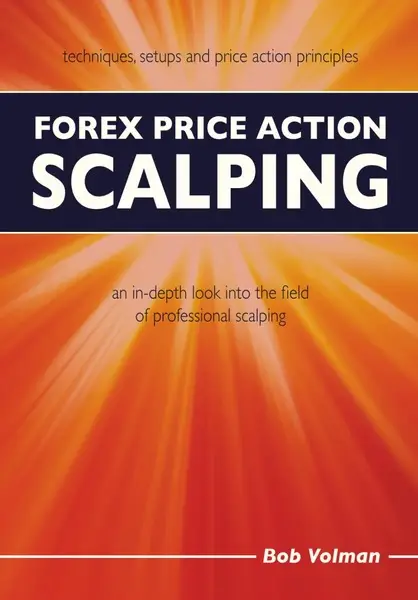
This is the narrowest book in Volume II and possibly the narrowest on the entire shelf. It is about scalping one currency pair on one chart type using one moving average, and its author is not interested in whether that describes you.
That narrowness is a design decision rather than a failure, and it produces a strange rating problem. Judged on the dimensions this site scores every book by, it looks mediocre: not beginner-friendly, not broadly applicable, tied to a market microstructure that has since moved. Judged on whether it does the thing it set out to do, it is one of the more honest and effective teaching books in the genre.
Both of those are true. The review has to hold them at once, and the rating below is the honest weighted answer rather than an average.
At a Glance
| Author | Bob Volman |
| Full Title | Forex Price Action Scalping: An In-Depth Look into the Field of Professional Scalping |
| Published | 2011 (independently published) |
| Difficulty | Hard, in an unusual way. The prose is clear; the skill is the difficult part. |
| Best For | Traders committed to learning discretionary price-action reading, who want an apprenticeship in book form |
| Skip If | You are not going to scalp, or you want a method you can validate statistically |
OVERALL RATING: 7.8 / 10
Who Should Read This Book
| Reader | Verdict | Why |
|---|---|---|
| Aspiring price-action reader | Strong yes | Hundreds of annotated charts with the reasoning attached. This is the closest thing to sitting next to someone. |
| Trader who wants to scalp | Read it, then read the costs section | Volman is honest that the edge is thin. Whether it survives your spread is a question the book cannot answer for 2026. |
| Systematic trader | No | Discretionary pattern recognition, no backtests, selected examples. Nothing here meets your standard of evidence. |
| Beginner | Absolutely not | Scalping is the hardest way to start and the fastest way to pay for the lesson |
| Swing trader | Surprisingly, maybe | The chart-reading skill generalises even though the method does not. That is the case for reading it anyway. |
| Prop-firm challenger | Careful | High trade frequency against a drawdown limit is a bad combination. The method fights the rule set. |
The Book in Context
Volman self-published this in 2011 and followed it with a broader price-action book a few years later. It is a specialist’s work in the most literal sense: a single method, on a single instrument, explained exhaustively.
One thing worth stating plainly, because this site does not paper over gaps: the book’s authority rests on the quality of the analysis on the page rather than on a publicly verifiable professional track record. I am not asserting he lacks one, and I am not going to imply he has one I cannot check. What I can assess is the work, and the work is careful, internally consistent and notably free of the promises that usually accompany this genre. Weigh it on that basis, which is the honest basis available.
Its cultural position is odd. It became something close to a cult text among retail price-action traders, in a corner of the market where cult texts are usually terrible. This one is not, which is most of why it is here.
The Core Argument: You Are Not Learning a System, You Are Learning to See
The book’s real product is not the setups. It is the several hundred annotated charts.
Volman’s method rests on reading raw price behaviour on a very fast chart with minimal tooling, and the argument underneath it is that this is a perceptual skill rather than a rule set. You cannot be given it in a paragraph. What you can be given is repetition with commentary: here is the chart, here is what I saw, here is why I did not take the one before it that looked identical to you.
The setup can be written on an index card. The judgement about which instance of it to take cannot be written down at all, which is why the book is mostly pictures.
— What the annotated charts are actually for
This is genuinely how discretionary skill transfers, and almost no trading book commits to it at this volume. Most describe a pattern, show three flattering examples, and move on. Volman shows you the pattern failing, the pattern in poor conditions, the pattern you should have skipped. The teaching value is real and it is the reason this book outlived its cohort.
It is also, and this must be said in the same breath, the source of the book’s central epistemological problem.
The Problem: Hundreds of Charts Is Not a Backtest
Volume of examples feels like evidence. It is not, and the distinction matters more here than almost anywhere else on the shelf.
Several hundred annotated charts, selected by the person making the argument, is a curated sample. It is not a sample in the statistical sense at all. There is no population, no selection protocol, no out-of-sample period, no expectancy figure, no distribution of outcomes. Volman is more honest than most about the method’s difficulty and about the thinness of the edge, and the book still never tells you what the edge actually is as a number, because the format cannot.
What Annotated Charts Can and Cannot Tell You
| They can teach | They cannot establish |
|---|---|
| What the pattern looks like in the wild, including when it is ugly | How often it works across all instances, not just the ones shown |
| The reasoning of an experienced reader, made explicit | Whether that reasoning has positive expectancy after costs |
| Discrimination: why this instance and not that one | Whether the discrimination is real or is hindsight narrating |
| A perceptual vocabulary you did not previously have | Whether the edge survived 2011, let alone reaches 2026 |
The left column is worth a lot. It is not the right column, and readers routinely bank it as though it were.
The hindsight problem deserves its own sentence. When an expert annotates a chart after the fact and explains why he would have skipped the failed instance, there is no way for the reader, or for the expert, to know how much of that discrimination was available in real time. This is not an accusation of dishonesty. It is a structural feature of teaching discretionary skill through retrospective examples, and it is unfalsifiable from the page.
The Costs Problem, Which Is Now the Whole Problem
A scalping method’s viability is a function of transaction costs, and nothing else about it matters if that arithmetic fails.
When your target is a handful of pips, the spread is not a friction on the edge; the spread is comparable in size to the edge. Move the cost by a fraction of a pip and a profitable method becomes an unprofitable one, with no change whatsoever to the pattern recognition the book spent 400 pages teaching. This is why scalping edges are the most perishable category in trading: they are the thinnest, so they die from environmental changes that a swing method would never notice.
Fifteen years have passed. Spreads, execution, algorithmic participation and the microstructure of the pair Volman built this around have all changed, in some respects substantially. Whether the specific method still carries positive expectancy after costs in 2026 is an empirical question that this book, written in 2011 and containing no expectancy figure to begin with, simply cannot answer. Nobody should assume the answer is yes because the charts are persuasive.
Five Ideas Worth Carrying With You
Reading price is a perceptual skill, and perceptual skills transfer through repetition, not explanation.
You cannot be told how to see. You can be shown several hundred instances with the reasoning attached until the discrimination becomes automatic. This is why the book is mostly pictures and why that is the correct design rather than padding.
The skill is not spotting the setup. It is declining the one that looks identical and is not.
Every trader can find the pattern after a week. The expensive part is context: the same shape in the wrong conditions is not the same trade. Volman spends most of the book on refusals, which is the right emphasis and an unusual one.
When the target is a few pips, the spread is not friction. It is the opponent.
Scalping edges are thin by construction, which makes them uniquely fragile to cost changes that a swing trader would never feel. A fraction of a pip decides viability. Any scalping method must be evaluated against your actual costs before its logic is even worth discussing.
Hundreds of examples feel like proof and are a curated sample.
The charts were selected by the person making the argument, annotated after the outcome was known. That is teaching material, and it cannot establish expectancy. The distinction is easy to state and almost impossible to feel while reading, which is exactly what makes it dangerous.
A method built on a specific microstructure has an expiry date the author cannot print on it.
The more precisely a method is tuned to an environment, the more completely it depends on that environment persisting. Volman’s specificity is what makes the book teachable and what makes it perishable. Those are the same property.
Common Misreadings of the Book
Misreading #1: “The charts prove the method works”
The central error. Selected, retrospectively annotated examples are pedagogy, not evidence. They cannot tell you the win rate across all instances, the expectancy after costs, or how much of the author’s discrimination was genuinely available in real time. Persuasiveness and proof are different things and this book is far better at the first.
Misreading #2: “It still works because it’s price action, and price action is timeless”
Price action reading is durable. A specific scalping edge on a specific pair with a specific cost structure is not, and conflating the two is how a 2011 method gets traded in 2026 on faith. The skill generalises. The edge does not automatically survive.
Misreading #3: “Scalping is easier because the risk per trade is small”
Small risk per trade, enormous trade count, and costs paid on every single one. Scalping is the hardest retail approach, not the safest, and the frequency that makes each loss trivial is what makes the cumulative cost drag decisive. Volman does not sell it as easy, which is to his credit.
Misreading #4: “The book has nothing for me because I don’t scalp”
The most defensible reason to read it anyway is the chart-reading apprenticeship, which is transferable to any timeframe. The volume of worked examples with reasoning attached is unusual and valuable regardless of what you intend to trade.
Misreading #5: “Self-published cult text means low quality”
The retail price-action corner is full of terrible books, and this one survived on merit rather than marketing. It is careful, internally consistent, honest about difficulty and free of promises. The critique here is epistemological, not about sloppiness.
Where the Book Falls Short
- No statistical validation of any kind. No expectancy, no sample, no out-of-sample period, no distribution. Hundreds of curated examples that read as proof and are not.
- The hindsight problem is unfalsifiable. Retrospective annotation cannot distinguish real-time discrimination from narration after the fact. This is structural to the format rather than a lapse by the author, and it cannot be resolved from the page.
- Costs decide everything and have changed. A few-pip target makes the spread comparable to the edge. Fifteen years of change to spreads, execution and algorithmic participation means the 2011 viability arithmetic cannot be assumed to hold.
- Extremely narrow. One pair, one chart type, one approach. For most readers the method is simply irrelevant, and only the perceptual training carries over.
- Track record not publicly verifiable. Stated as a gap rather than an accusation. The book’s authority rests on the work, and readers should know that is what they are weighing.
- Fights the prop-firm rule set. High frequency against a hard drawdown limit is a poor structural match, which matters given how many retail FX traders now operate under exactly that constraint.
How the Book Fits the Mind · Method · Money Framework
| Pillar | Contribution | What the Book Delivers |
|---|---|---|
| MIND | SECONDARY | Real material on execution discipline and the patience to refuse the setup that looks right. Honest about how hard this is. |
| METHOD | PRIMARY | The entire book. A perceptual apprenticeship in reading price, wrapped around a specific and now dated method. |
| MONEY | WEAK | The most serious gap. A method whose viability is decided by cost arithmetic contains no expectancy figure. |
The Money column is where this book and this site part company. Volman teaches you to see beautifully and never tells you what the seeing is worth as a number, which for an approach this cost-sensitive is the one thing that decides everything. Read against the Mind · Method · Money framework and The Complete Trader’s Edge, and supply the missing pillar yourself.
Read This Instead Of / Read This After
| Relationship | Book | Why |
|---|---|---|
| Read after | Alpha Trader | The essential correction. Donnelly supplies the expectancy and sizing arithmetic that decides whether anything in Volman is tradeable. |
| Read after | Day Trading and Swing Trading the Currency Market | Get the market structure first. Volman assumes you know what you are looking at. |
| Read instead of | Any “price action course” | Same material, more honest, more examples, no monthly subscription and no promises |
| Pair with | Trade Your Way to Financial Freedom | The testing discipline this book lacks entirely. Read them together or the charts will do your thinking for you. |
| Do not read as | A validated 2026 method | It was never validated and it is fifteen years old in the most cost-sensitive category of trading there is |
Final Verdict: Should You Read This Book in 2026?
For the right reader, yes. For most people, no. And the 7.8 needs explaining, because the axes below do not add up to it.
Every dimension this site scores penalises narrowness. Beginner-friendliness is a 5 because scalping is a terrible place to start. Modern relevance is a 6 because the microstructure moved. Timelessness is a 7 because the skill outlives the method but the method is the book’s stated subject. Averaged, those numbers land near 6.5.
The 7.8 reflects a judgement the axes cannot express: narrowness is this book’s design, not its failure. For a reader who genuinely wants to learn discretionary price reading, the several hundred annotated charts with the reasoning attached are close to unique, and the honest emphasis on refusals rather than entries is the correct emphasis that almost nobody else chooses. That reader gets something like an 8.5. Everyone else gets nothing, because the book was never addressed to them. The 7.8 is the weighted answer, and pretending it is a general recommendation would be the dishonest version.
So take the skill and leave the system. Read it for the eye it builds, which does not expire. Do not trade the 2011 method on the strength of the charts, because the charts were selected by the man making the case and the arithmetic that actually decides scalping viability is not in this book at all. Volman will teach you to see. What you are seeing is worth something only if the costs allow it, and that is a number you will have to go and get yourself.
CTE Rating Breakdown
7.8/10
Recommended For Its Reader Only
| Readability | 7 | |
| Actionability | 8 | |
| Timelessness | 7 | |
| Beginner-Friendly | 5 | |
| Modern Relevance | 6 |
The axes penalise narrowness. Narrowness is this book’s design. The overall is the weighted judgement, not the mean.
Frequently Asked Questions
What is Forex Price Action Scalping about?
It teaches a specific discretionary scalping approach built on reading raw price behaviour on a very fast chart with minimal tooling. Its real product is several hundred annotated chart examples with the author’s reasoning attached.
Does the method still work in 2026?
Unknown, and the book cannot tell you. It contains no expectancy figure, it was written in 2011, and scalping viability is decided by transaction costs that have changed materially since. Nobody should assume yes because the charts are convincing.
Are hundreds of chart examples the same as a backtest?
No. They are a curated sample chosen by the person making the argument and annotated after outcomes were known. That is excellent teaching material and it establishes nothing about expectancy across all instances.
Is it worth reading if I don’t scalp?
Possibly yes. The chart-reading apprenticeship transfers to any timeframe, and the volume of worked examples with reasoning attached is unusual. Take the perceptual training and ignore the method.
Is scalping good for beginners?
No. It is the hardest retail approach and the fastest way to pay for the lesson. Small risk per trade combined with enormous trade count means costs dominate, and the execution demands are severe.
Why do costs matter so much for scalping?
Because when your target is a few pips, the spread is comparable in size to the edge rather than a small friction on it. A fraction of a pip decides viability, with no change at all to the pattern recognition.
What is the hindsight problem with annotated charts?
When an expert explains after the fact why he would have skipped a failed setup, neither he nor the reader can establish how much of that discrimination was genuinely available in real time. It is structural to the format and unfalsifiable from the page.
Who is Bob Volman?
A price action trader and author who self-published this in 2011 and a broader price-action book later. His work became something close to a cult text among retail price-action traders. His professional track record is not publicly verifiable, so the book should be weighed on the quality of the analysis it contains.
Is it suitable for prop-firm challenges?
Structurally poor fit. High trade frequency running against a hard drawdown limit is an awkward combination, and the cost drag from frequency works against you in exactly the accounts that punish drawdown hardest.
What is the single most important takeaway from the book?
That the skill is not spotting the setup but declining the one that looks identical and is not. Volman spends most of the book on refusals rather than entries, which is the correct emphasis and one almost nobody else chooses.
About the Author
Bob Volman
Bob Volman is a price action trader who independently published this book in 2011 and followed it with a broader treatment of price action a few years later. The books found a substantial following among retail price-action traders, a corner of the market where lasting reputations are rare and usually unearned.
An honest gap: his professional trading record is not publicly verifiable. That is stated as a fact about what can be checked, not as an insinuation. This site does not assert credentials it cannot confirm, in either direction.
What can be assessed is the work, and the work is careful, internally consistent, unusually honest about difficulty, and free of the promises the genre runs on. He does not tell you scalping is easy or that the edge is large. Weigh the book on the analysis, which is the honest basis available.
Continue Learning
- Alpha Trader Book Review (2026)
- Day Trading and Swing Trading the Currency Market Book Review (2026)
- The Art of Currency Trading Book Review (2026)
- The Top Trading Books Explorer
- Recommended Reading for Traders
- The Mind · Method · Money Framework
- The Complete Trader’s Edge — The Book
 The Complete Trader's Edge
The full Mind · Method · Money framework. 70 chapters.
View on Amazon →
 Market Mayhem
400 years of bubbles, crashes, and the pattern that keeps repeating.
Buy on Amazon →
 Greatest Companies
How the world's greatest companies were built — and what traders learn from them.
View on Amazon →
 Greatest Traders
Eighty-six lives that explain the markets — Livermore to Madoff, told with the losses left in.
View on Amazon →