


Explore all 80 books in the Trader’s Library →
Plenty of books tell you to “follow the trend” or “manage your risk” and leave you to figure out the rest. John Carter’s Mastering the Trade does the opposite. It hands you specific, named setups, tells you exactly when to take them and when to stand aside, and surrounds them with the unglamorous realities of trading for a living: the routine, the psychology, and the business of it all.
Carter trades futures, options, and stocks, and runs one of the larger trading-education communities. That practitioner’s perspective runs through the whole book. It is less a theory of markets and more a working trader’s manual, with the kind of concrete intraday and swing setups that most authors are too vague to commit to.
At a Glance
| Author | John F. Carter |
| First Published | 2005 · expanded editions since |
| Pages | ~430 |
| Genre | Trading strategy / setups |
| Difficulty | Intermediate — practical and example-driven |
| Best For | Intraday and swing traders who want concrete, repeatable setups |
| Skip If | You dislike indicator-based setups or want a single pure method |
OVERALL RATING: 8.0 / 10
Who Should Read This Book
| Reader | Verdict | Why |
|---|---|---|
| New trader (0–1 year) | Read it | Concrete setups and a realistic picture of the trading day are exactly what beginners lack |
| Intermediate (1–3 years) | Read it | You can lift a setup or two straight into your own plan and test them immediately |
| Advanced / professional | Selective read | The psychology and business-of-trading chapters hold up even if you know the setups |
| Intraday futures / index trader | Essential | The opening-range, pivot, and squeeze material is built for exactly this kind of trading |
| Swing trader | Read it | Several setups and the trade-management logic apply directly to higher timeframes |
| Pure price-action purist | Mixed fit | Some setups lean on indicators, which may clash with a strictly naked-chart approach |
The Book in Context
Most trading books fall into one of two camps: high-level philosophy or narrow single-method manuals. Mastering the Trade sits in a more useful middle ground. Carter gives you a toolbox of setups for different market conditions, the discipline to know which one fits the moment, and an unusually honest account of what trading full-time actually demands.
That second part is where the book quietly earns its place. Carter treats trading as a business, with a pre-market routine, record-keeping, risk limits, and a realistic view of the emotional grind. For traders who have read plenty of setups but never built the surrounding structure, this is the missing half.
The Setups and the Structure Around Them
Carter is best known for a handful of specific, repeatable setups. The “squeeze,” which identifies when a market has coiled into low-volatility consolidation and is primed to expand, is his signature, alongside opening-range tactics, pivot-based trades, and clear rules for handling the first hour of the session. Each comes with entry, stop, and management guidance rather than vague encouragement.
Just as valuable is what surrounds the setups. Carter is firm that a setup without discipline, risk control, and a routine is worthless, and he devotes real space to the psychology of execution and the practical business of trading. The setups draw readers in; the structure is what keeps them solvent.
“A setup is only as good as the discipline and risk control wrapped around it.”
— The practical core of Mastering the Trade
What You Actually Get
| Area | What It Covers |
|---|---|
| Named, specific setups | Concrete intraday and swing entries with defined risk, including the signature squeeze |
| Trading the open | Rules for the volatile first hour, where most damage and opportunity live |
| Trade management | Clear logic for holding, trimming, and exiting rather than improvising |
| The business of trading | Routine, record-keeping, psychology, and treating trading as a business, not a hobby |
Where the Book Falls Short
- Indicator dependence. Several setups rely on specific indicators, which can sit awkwardly with a strict price-action approach and add moving parts to manage.
- A promotional undertone. Carter runs a trading-education business, and the book occasionally points toward his own tools and community.
- It tries to cover a lot. Futures, options, and stocks, plus psychology and business, in one book. The breadth is useful but can feel scattered.
- Some material dates. Specific market behaviours and tool references shift over time, so test rather than assume any setup still performs as described.
How the Book Fits the Mind · Method · Money Framework
| Pillar | Contribution | What the Book Delivers |
|---|---|---|
| MIND | SECONDARY | Honest psychology chapters and a routine that builds disciplined execution |
| METHOD | PRIMARY | A toolbox of concrete, defined-risk setups for intraday and swing trading |
| MONEY | SECONDARY | Defined stops, trade management, and a business-like approach to risk and records |
This is a Method-pillar book with strong support for the others, a practical companion to the Mind · Method · Money framework for traders who want named setups inside a disciplined, business-like structure.
Read This Instead Of / Read This After
| Relationship | Book | Why |
|---|---|---|
| Read after | Trading Price Action: Trends by Al Brooks | Brooks builds the raw price-reading foundation; Carter adds packaged, named setups on top |
| Read alongside | Mind Over Markets by James Dalton | Carter’s intraday setups pair well with Dalton’s read on where value sits |
| Read with | The Daily Trading Coach by Brett Steenbarger | Steenbarger reinforces the discipline and routine Carter says the setups depend on |
Final Verdict: Should You Read This Book in 2026?
Yes, if you want concrete setups inside a realistic picture of full-time trading. Mastering the Trade is one of the more genuinely practical day-trading books available, and its honesty about routine, psychology, and the business side sets it apart from setup-only manuals.
Read it selectively. Take the one or two setups that fit your market and timeframe, test them properly, and adopt the surrounding discipline and routine wholesale. Be mindful of the indicator dependence and the occasional nudge toward the author’s own tools, and you have a strong working manual.
CTE Rating Breakdown
8.0/10
A Working Trader’s Manual
| Readability | 8 | |
| Actionability | 9 | |
| Timelessness | 7 | |
| Beginner-Friendly | 7 | |
| Practical Depth | 9 |
Frequently Asked Questions
What is Mastering the Trade about?
It is a practical guide to intraday and swing trading built around specific, named setups, with strong sections on trading psychology, routine, and treating trading as a business. It is a working manual rather than a theory book.
What is the “squeeze” setup?
It is Carter’s signature setup that identifies when a market has contracted into low-volatility consolidation and is primed for a volatility expansion, signalling a potential breakout in either direction.
Is it good for futures and index traders?
Yes. The opening-range, pivot, and squeeze material is especially well suited to intraday index and futures trading, which is much of what the book focuses on.
Does it rely on indicators?
Several setups do. If you trade strictly on naked price action, some of Carter’s methods will need adapting or may not fit your approach.
Which edition should I get?
The most recent expanded edition, which updates examples and adds material. As with any setup-based book, treat the specifics as a starting point to test rather than rules guaranteed to still perform.
What is the single most important takeaway?
Setups are only the visible part. The routine, risk control, and discipline wrapped around them are what actually make a trader profitable, which is why Carter spends so much of the book on the business side.
About the Author
John F. Carter
John Carter is a futures, options, and stock trader and the founder of a large trading-education community. He is best known for popularising specific, named setups, the squeeze chief among them, and for an unusually candid view of what trading full-time really involves.
His emphasis on routine, risk control, and treating trading as a business has made Mastering the Trade a long-running favourite among active intraday and swing traders.
Continue Learning
- Trading Price Action: Trends Book Review (2026)
- Mind Over Markets Book Review (2026)
- The Daily Trading Coach Book Review (2026)
- The Three Pillars: Mind, Method, Money
- The Complete Trader’s Edge — The Book
 The Complete Trader's Edge
The full Mind · Method · Money framework. 70 chapters.
View on Amazon →
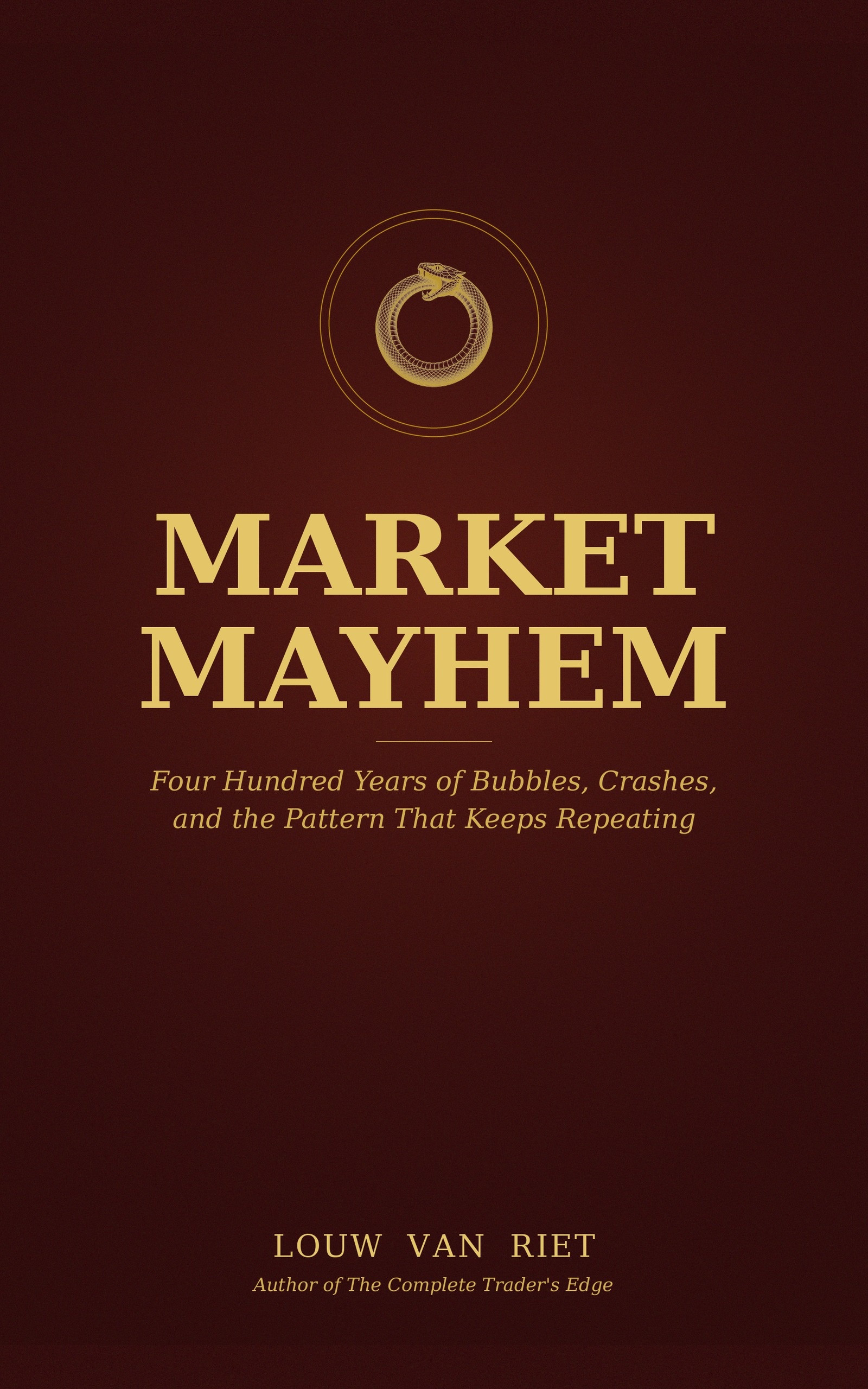 Market Mayhem
400 years of bubbles, crashes, and the pattern that keeps repeating.
Buy on Amazon →
 Greatest Companies
How the world's greatest companies were built — and what traders learn from them.
View on Amazon →
 Greatest Traders
Eighty-six lives that explain the markets — Livermore to Madoff, told with the losses left in.
View on Amazon →