

Explore all 80 books in the Trader’s Library →
The strategies in this book are dead. Ernest Chan would probably tell you so himself.
They were published in 2008, which means every quant with a data feed has known about them for the better part of two decades, and the fate of a public edge is not a mystery. Anyone who buys this expecting to lift a mean-reversion pair out of chapter seven and switch it on has misunderstood the transaction so completely that the book cannot help him.
What has not decayed, and cannot, is the chapter on why your backtest is lying to you. Look-ahead bias. Survivorship bias. Data-snooping. Transaction costs modelled by someone who wants the result to be good. Those are not features of the 2008 market. They are features of the human being running the test, and that person has not been arbitraged away.
Read this for the pitfalls, not the profits. On that basis it is one of the more useful books on the shelf, and the 8.0 is almost entirely earned by material the title does not advertise.
At a Glance
| Author | Ernest P. Chan |
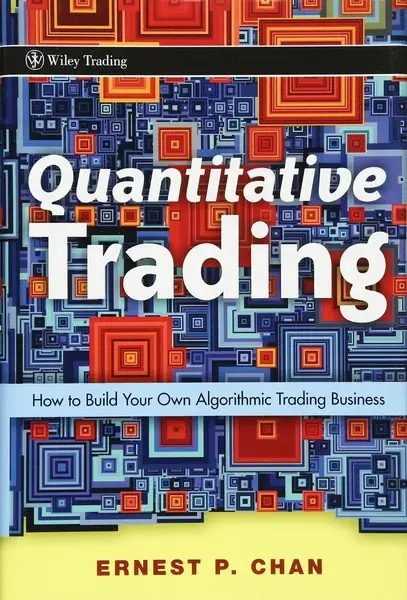
| Full Title | Quantitative Trading: How to Build Your Own Algorithmic Trading Business |
| First Published | 2008; second edition 2021 (Wiley) |
| Difficulty | Moderate. Written by a physics PhD who is deliberately not showing off. |
| Best For | Anyone about to trust a backtest. Which is to say, anyone building a system. |
| Skip If | You want strategies. The ones here have been public since 2008. |
OVERALL RATING: 8.0 / 10
Who Should Read This Book
| Reader | Verdict | Why |
|---|---|---|
| Aspiring systematic trader | Yes, first | The cheapest possible education in the ways a backtest deceives its author. Buy it before you build anything. |
| Discretionary trader | Read the pitfalls chapter | You do the same self-deception informally, without a computer to make it explicit. That is worse, not better. |
| Trader with a working backtest | Urgently | Your beautiful equity curve is the symptom this book diagnoses. Read it before you fund the account. |
| Working quant | Nothing new | You know all of this. Go to López de Prado for material that will still stretch you. |
| Reader who wants the business setup | Read with a 2026 eye | The infrastructure chapters are the most dated part. Principles hold; every specific recommendation needs rechecking. |
| Beginner | Not yet | Learn what an edge is before learning how to fool yourself into thinking you have one |
The Book in Context
Chan has a physics PhD, spent time doing machine learning research at IBM, worked at large banks, and then went independent, running quant strategies and later building businesses around quant tooling and services. That last part is the commercial context and it belongs on the table rather than in a footnote: he sells things adjacent to this book’s subject. The text is clean and there is no funnel in it, but a reader is entitled to know the structure.
The book’s premise is in its subtitle: build your own algorithmic trading business. That premise was optimistic in 2008 and it is considerably more optimistic now. The independent quant is competing against institutions with better data, better execution, better funding and people who do this all day with a research budget. Chan is more honest about the smallness of available edges than most, and the framing still promises a career path that has narrowed sharply since publication.
Read it as the correction to Volman and you see the shelf assemble itself. Volman teaches you to see a pattern and never tells you what the seeing is worth. Chan tells you exactly how you will convince yourself it is worth something when it is not.
The Core Argument: Your Backtest Is an Advocate, Not a Witness
The insight organising the valuable part of this book is that a backtest is not a measurement. It is an argument, constructed by someone who wants a particular answer, using data he selected, over a period he chose, with costs he estimated.
Nobody backtests a strategy they hope will fail. Every knob you turn, you turn in one direction, and the machine has no way of telling you that is what you are doing.
— The problem the pitfalls chapter exists to name
The biases Chan catalogues are not exotic technical failures. They are the specific mechanisms by which an honest person produces a dishonest result without ever intending to. That is why the chapter has not aged and will not: the market changes, the strategies decay, and the cognitive machinery that manufactures false confidence is a constant.
The Four Ways Your Backtest Flatters You
| Bias | What actually happened | Why you did not notice |
|---|---|---|
| Look-ahead | Your rule used information that did not exist yet at the moment it traded | Nothing in the code announces it. The equity curve just looks excellent. |
| Survivorship | You tested on the companies that made it. The dead ones left the database. | The absent are silent. You cannot see a sample that is not there. |
| Data-snooping | You tried two hundred things and kept the one that worked | It felt like research. Torture data long enough and it confesses to anything. |
| Cost optimism | You assumed fills you will not get at spreads you will not see | The cost estimate was made by the person hoping the strategy works |
None of these require dishonesty. All of them require only enthusiasm, which you have in abundance or you would not be backtesting.
Data-snooping deserves singling out, because it is the one that survives every technical precaution. You can eliminate look-ahead with careful code and survivorship with a proper database. You cannot eliminate the fact that you personally tried a hundred and ninety-nine variants and are now looking at the two hundredth. The test was clean. The search was not, and the search is invisible in the result.
How Chan Built the Book
He deliberately does not show off. A physics PhD writing about quantitative trading has every opportunity to make the reader feel small and declines all of them. The mathematics is present, minimal and used rather than displayed. Readability of 8 from an author with those credentials is a choice, and a generous one.
He writes about the business, not just the maths. This is genuinely unusual and it is why the book found its audience. Brokers, data, infrastructure, what it costs, how you actually go live. Most quant writing floats above the operational reality; Chan lands in it. The specifics are now the most dated part of the book, and the instinct to cover them was right.
He is honest that the edges are small. No promises of extraordinary returns, no suggestion this is easy money. Chan states repeatedly that independent quant edges are thin and hard-won, which is a considerable act of restraint in a book whose subtitle promises you a business.
Five Ideas Worth Carrying With You
A backtest is an argument made by someone who wants to win it.
You chose the data, the period, the parameters and the cost assumptions, and you chose all of them while hoping for a particular outcome. The computer confers an air of objectivity on a process that was steered by a human being with a preference throughout.
The search is invisible in the result.
You tried two hundred variants and are looking at the winner. The backtest of that winner is clean, the code is correct, and the number is meaningless, because the selection happened outside the test. This is the bias that survives every technical fix, and almost nobody counts their attempts.
The dead are missing from your data, and they were the point.
Survivorship bias is not a technicality; it is testing a strategy on a universe that was selected, after the fact, for not having failed. The companies that went to zero left the database quietly, and their absence is the one thing your equity curve cannot show you.
A published edge is a former edge.
The strategies in this book were real and are now eighteen years public. That is not a criticism of Chan; it is the physics of the thing. Any edge printed in a book is being run by everyone who read it, which is why no book can hand you one and why the ones promising to are lying.
Model the costs before you admire the returns.
Transaction cost assumptions are made by the person who wants the strategy to work, which makes them the softest number in the test and frequently the decisive one. A thin edge with optimistic fills is a losing strategy wearing a good disguise.
Common Misreadings of the Book
Misreading #1: “The example strategies are strategies”
They are illustrations of method, published in 2008, and they have been public knowledge for the entire career of most people reading this. Chan uses them to demonstrate how testing works. Trading them because they appear in a book is precisely the error the rest of the book is trying to prevent.
Misreading #2: “I’m discretionary, so backtesting bias doesn’t apply to me”
Inverted, and dangerously so. A discretionary trader runs the same biased search, in his head, over remembered charts, with no log of how many ideas he discarded and no record of the costs he assumed. The systematic trader at least produces an artefact that can be audited. You are doing the identical thing invisibly.
Misreading #3: “The second edition fixes the datedness”
It updates tooling and refreshes material, and it does not and could not restore edges that were competed away. Nor does it change the fundamental fact that the independent quant’s competitive position has deteriorated substantially since the first edition. The pitfalls survive both editions intact; that is the point.
Misreading #4: “Build your own algorithmic trading business”
Read the subtitle as an aspiration rather than a plan. Independent quant trading against institutions with superior data, execution and research capacity is brutal, and it has become more so every year since 2008. Chan is honest about thin edges; the framing still promises more than the landscape now supports.
Misreading #5: “Passing the pitfalls means the strategy works”
Avoiding look-ahead, survivorship and snooping means your result is not obviously fake. It does not mean it is real. The pitfalls chapter is a filter that removes false positives; it cannot manufacture a true one, and surviving it is the beginning of the question rather than the answer.
Where the Book Falls Short
- The strategies are gone. Public since 2008. This is not a flaw in Chan’s work so much as the inevitable fate of any published edge, and readers still routinely mistake the illustrations for merchandise.
- The premise has aged badly. The independent quant business the subtitle promises was hard in 2008 and is markedly harder now. The competitive gap against institutions has widened every year since.
- Thin. It is a short book and an overview. Nothing in it is treated to the depth a serious practitioner needs; it points at the right problems without going far into any of them.
- The infrastructure chapters are the most perishable. Brokers, data vendors, platforms and tooling recommendations from 2008, partially refreshed in 2021. Every specific needs rechecking against 2026.
- Commercial context. Chan has built businesses selling quant tooling and services. Nothing in the text behaves like a pitch, and the adjacency is worth knowing rather than discovering.
- Kelly without enough of the caveats. The sizing material is useful and the practical dangers of Kelly under parameter uncertainty deserve more weight than they get. Your edge estimate is itself an estimate, which changes the arithmetic considerably.
How the Book Fits the Mind · Method · Money Framework
| Pillar | Contribution | What the Book Delivers |
|---|---|---|
| MIND | SECONDARY | Unintentionally strong. The pitfalls chapter is a catalogue of motivated reasoning wearing a technical costume. |
| METHOD | PRIMARY | Strategy families, backtesting discipline, and the operational reality of running a system |
| MONEY | SECONDARY | Kelly-based sizing and cost modelling, though both want more caveats than they receive |
The interesting result is that a quant book scores on Mind almost by accident. Every bias Chan catalogues is a cognitive failure that happens to leave its fingerprints in code, which is why the systematic trader has an advantage the discretionary trader lacks: his self-deception is written down. Read against the Mind · Method · Money framework and The Complete Trader’s Edge.
Read This Instead Of / Read This After
| Relationship | Book | Why |
|---|---|---|
| Read before | Building Winning Algorithmic Trading Systems | Chan names the ways your backtest lies. Davey gives you the process that catches the lie. The pair is the actual curriculum. |
| Read after | Forex Price Action Scalping | Volman shows you hundreds of persuasive charts and never validates one. This is the antidote to exactly that. |
| Read instead of | Any book promising strategies | Chan explains why that promise cannot be kept by anyone, which is more valuable than the promise |
| Read after, if serious | Advances in Financial Machine Learning | López de Prado takes the same problems to professional depth. Chan is the on-ramp; that is the road. |
| Pair with | Alpha Trader | Donnelly on expectancy and variance is the human-side complement to Chan’s machine-side rigour |
Final Verdict: Should You Read This Book in 2026?
Yes, for one chapter, and that chapter is worth the book.
The 8.0 sits above where the axes land, and the reason is concentration of value. Modern relevance is a 6 and timelessness a 7 because the strategies are public, the business premise has aged, and the infrastructure advice needs rechecking line by line. Those are real deductions and I am not going to soften them.
But the material on how a backtest deceives the person running it is permanent, cheap to acquire here, and expensive to learn any other way. The usual alternative curriculum is funding an account on the strength of a curve that was fake for reasons you could have read about in an afternoon. Measured against that tuition, an 8.0 is not generous.
So buy it, read the pitfalls chapter twice, skim the business chapters with a sceptical eye on every specific, and understand that the example strategies are a museum. Then go to Davey, who supplies the process that operationalises all of it. Chan tells you your backtest is lying. Davey tells you how to catch it.
CTE Rating Breakdown
8.0/10
Recommended
| Readability | 8 | |
| Actionability | 8 | |
| Timelessness | 7 | |
| Beginner-Friendly | 7 | |
| Modern Relevance | 6 |
The value is concentrated, not distributed. One permanent chapter carries a dated book.
Frequently Asked Questions
What is Quantitative Trading by Ernest Chan about?
It covers how an independent trader builds and runs a systematic strategy: finding ideas, backtesting them, avoiding the biases that make backtests lie, setting up the operational side, and sizing positions. Its most durable material is the chapter on backtesting pitfalls.
Do the strategies in the book still work?
They have been public since 2008, which answers the question. They are illustrations of method rather than merchandise. Any edge printed in a book is being run by everyone who read it.
What is data-snooping bias?
Trying many variants and keeping the one that worked. The backtest of the winner is clean and the result is still meaningless, because the selection happened outside the test. It is the bias that survives every technical precaution, and almost nobody counts their attempts.
Is it useful for discretionary traders?
More than they think. A discretionary trader runs the same biased search in his head, over remembered charts, with no log of discarded ideas. The systematic trader at least produces an artefact that can be audited.
Chan or López de Prado?
Chan first if you are new to systematic trading; he is the accessible on-ramp. López de Prado takes the same problems to professional depth and will stretch anyone. They are not competitors, they are sequential.
Which edition should I buy?
The second, from 2021. It refreshes the tooling and examples. It does not and cannot restore edges that were competed away, and the pitfalls material, which is the reason to buy the book, is intact in both.
Can you really build your own algorithmic trading business?
Treat the subtitle as an aspiration. Independent quant trading against institutions with better data, execution and research budgets was hard in 2008 and has grown harder every year since. Chan is honest that edges are thin; the framing still promises more than the landscape supports.
Does passing the pitfalls mean my strategy works?
No. It means your result is not obviously fake. The pitfalls chapter removes false positives; it cannot manufacture a true one. Surviving it is where the question starts.
Does the author have a commercial interest?
Chan has built businesses selling quant tooling and services, which is adjacent to the book’s subject and worth knowing. Nothing in the text behaves like a pitch, and there is no system or funnel embedded in it.
What is the single most important takeaway from the book?
That the backtest is not the thing that tells you whether the strategy works. It is the thing you are trying to break. The question is never “does this show a profit” but “what is the most likely way this result is fake, and have I ruled it out.”
About the Author
Ernest P. Chan
Ernest Chan holds a doctorate in physics, worked on machine learning research at IBM, spent time in quantitative roles at large banks, and then went independent, running systematic strategies and building businesses around quant tooling and services. He has written several books on systematic trading, of which this was the first.
Commercial context: he sells products and services adjacent to this book’s subject. The text contains no pitch, no proprietary system and no funnel, but the adjacency belongs on the table rather than in a footnote.
His real gift is restraint. A physics PhD writing about quantitative trading could make every reader feel stupid and he declines to, keeping the mathematics minimal and useful. That choice is why an accessible book about backtesting rigour exists at all.
Continue Learning
- Building Winning Algorithmic Trading Systems Book Review (2026)
- Forex Price Action Scalping Book Review (2026)
- Alpha Trader Book Review (2026)
- The Top Trading Books Explorer
- Recommended Reading for Traders
- The Mind · Method · Money Framework
- The Complete Trader’s Edge — The Book
 The Complete Trader's Edge
The full Mind · Method · Money framework. 70 chapters.
View on Amazon →
 Market Mayhem
400 years of bubbles, crashes, and the pattern that keeps repeating.
Buy on Amazon →
 Greatest Companies
How the world's greatest companies were built — and what traders learn from them.
View on Amazon →
 Greatest Traders
Eighty-six lives that explain the markets — Livermore to Madoff, told with the losses left in.
View on Amazon →