

Legendary Traders · Market Wizards
Kristjan Kullamägi
The Security Guard Who Built a $100 Million Momentum Record
Known online as Qullamaggie · Chapter one of Market Wizards: The Next Generation
Last reviewed: August 2026. Figures below are drawn from Kullamägi’s own published account and multiple secondary sources, and are reconciled where they disagree.
The convenient version of this story is a single number. A few thousand dollars turned into more than one hundred million. It is the number every headline leads with, and it is the least useful part of the whole thing.
The useful part is the sequence. He failed, repeatedly and expensively. He stopped, studied for years, narrowed his focus until almost nothing was left, and then survived long enough for a small edge to compound. Most of his trades still lose money today. He is one of the most followed momentum traders alive not because he found a magic pattern, but because he built the discipline to be wrong most of the time and stay in business anyway. That is the part worth reading for.
Key Facts
Born: 1988, Sweden
Known as: Qullamaggie (@Qullamaggie)
Style: Momentum swing trading on leading stocks
Claim to fame: A few thousand dollars grown to a reported $100M+ (roughly 2011–2021)
In the book: Market Wizards: The Next Generation (2026), chapter one
The security guard who had never heard of the stock market
In 2010, Kullamägi was a working-class 23-year-old doing security shifts around Stockholm, one of them at the Nasdaq building itself. He watched men in suits and expensive cars come and go and had no idea what any of them actually did. By his own account he had never heard of the stock market. Curiosity did the rest. Within a year he had read enough to decide that trading was what he wanted, and he did not bother to finish his degree first.
He began day trading in 2011 with a small account and no process at all. He followed alerts, chased whatever was moving, and by his own description had no idea what he was doing. The result was predictable. He blew up three or four accounts in his first two years, making every classic beginner mistake: trading too often, sizing too large, and treating risk as an afterthought.
What separates him from the thousands who quit at that stage is what he did next. He went back to work, saved more money, and studied instead of trading. He went through thousands of historical charts and built a database of screenshots of what the biggest winning stocks looked like before they made their largest moves. That obsessive pattern study became the foundation of everything that followed. 2013 was his first profitable year, and around the same time he abandoned day trading for swing trading, because he had realised the opportunity in holding winners for days and weeks was far larger. He became financially independent in 2017, at 29.
The three setups
Kullamägi trades a deliberately tiny playbook. He calls them his three timeless setups, and he applies them only to leading stocks that are already making outsized moves. He is not hunting for turnarounds or bargains. He is buying strength that is already visible.
Momentum breakouts. A stock makes a large move, 30 to 100 percent or more over one to three months, then rests and tightens into a consolidation for two to eight weeks. Flags, volatility contraction patterns, cup-and-handles, flat bases. When price breaks out of that base on expanding volume, above its 10-day and 20-day moving averages and never below the 50-day, he buys the breakout.
Episodic pivots. A stock that has been quiet for months gaps up ten percent or more on unexpected news, usually an earnings surprise, on volume many times its average. Institutions cannot build positions in a single day, so that first gap often starts a sustained trend. He buys near the opening range high with a stop at the day’s low. He learned this setup from Pradeep Bonde of Stockbee and credits him openly.
Parabolic reversals. The counter-trend of the three. When a stock has run too far, too fast, it eventually snaps back, and that exhaustion can be traded in either direction. It is the least emphasised of the three and the most dangerous for beginners.
The rules he trades by
• Risk roughly 0.25% to 1% of the account on any single trade.
• The stop is never wider than one Average Daily Range (ADR). If the logical stop is wider than that, he skips the trade.
• Sell the first one-third to one-half of the position into the initial burst of strength, typically three to five days in, and move the stop to breakeven.
• Trail the remainder on the 10-day or 20-day moving average, and exit on the first close below it.
That is close to the entire system. There is no proprietary indicator, no secret data feed. The complexity lives in the years of chart study that let him recognise a genuine setup, not in the rules themselves, which fit on the card above.
A 25 percent win rate that still compounds
Here is the fact that trips up almost everyone who tries to copy him. Kullamägi’s win rate sits around 25 to 30 percent. Most of his trades are losers. He loses more often than he wins, every year, and it does not matter, because the structure of the payoff makes accuracy nearly irrelevant.
The stops are tight, so the losses are small and uniform. The winners, when they come, are allowed to run into multiples of the initial risk, often ten to twenty times it in a strong market. Lose one unit of risk seven times and make fifteen units on two of the remaining three, and the account still climbs steeply. His own summary of the approach is blunt: keep the losses small and let a handful of winners carry everything.
This is the same asymmetry that runs through nearly every trend-following fortune, from Jesse Livermore to the Turtles. What makes Kullamägi worth studying is not that the idea is new, but that he documented, in public and in real time, exactly how a modern retail trader executes it on liquid stocks with a fixed set of rules.
Where the Mind · Method · Money framework meets Qullamaggie
His entire record is a clean illustration of the three pillars pulling in the same direction.
Method is the visible half: three setups, defined entries, defined exits, and the thousands of hours of chart study that make the pattern recognition reliable. It is narrow on purpose. He does not add setups; he refines the ones he has.
Mind is the half that actually gates the results. A 25 percent win rate means long strings of losses are normal, and the psychological capacity to keep executing the same plan through a losing streak is the real barrier. His early blow-ups were pure Mind failures: overtrading, revenge trading, no patience. The mature version does the opposite. He waits, he does not force trades, and he has said plainly that the goal is to trade well rather than often.
Money is the architecture that keeps him alive long enough for the method to work: a fraction of a percent risked per position, a hard cap on stop width at one ADR, and a staged exit that banks strength and protects the rest. Take that risk framework away and the exact same setups would have ended his career in a bad month.
Read them together and the lesson lands. The setups are the least important of the three. The psychology and the risk control are what let an ordinary edge compound into an extraordinary number.
The honest counterweight
A profile that stopped there would be doing the same thing the headlines do. Several things deserve to sit next to the success.
2022 was brutal. His method is built for trending, momentum-friendly markets, and 2022 was neither. He suffered a severe drawdown that year and has spoken about it openly. It is the clearest evidence that the approach is regime-dependent: in a choppy, downtrending market that punishes breakouts, the edge shrinks or inverts. Anyone copying the setups needs to know they are borrowing a bull-market engine.
The numbers are reported, not audited by you. Public accounts of the peak vary, from around $80 million to roughly $105 million, reached near 2021. The lower and higher figures come from different sources and different dates. He is genuinely profiled in Schwager’s 2026 book, which lends the record real weight, but the honest phrasing is “a reported nine-figure peak,” not a precise, independently verified balance.
Survivorship is doing quiet work. The three setups are freely published and have been for years. Tens of thousands of traders run them. Almost none reach anything close to his results, which tells you the edge was never really in the rules. It was in the chart-study reps, the temperament to sit through a 25 percent win rate, and, honestly, some fortune of timing and market regime that cannot be reverse-engineered from a screenshot.
He is not selling you the dream. To his considerable credit, Kullamägi runs no paid service, no alerts, and no course. He shares his method free on his site, YouTube, X and Twitch. As he has put it, he makes his money trading and prefers to help rather than prey on people who want to learn. That integrity is rare enough to be worth naming, and it also means the free material is the real material, not a funnel.
What to actually take from him
Strip away the account size and a small number of transferable lessons remain, and they are the valuable part.
Asymmetry beats accuracy. You do not need to be right often. You need your winners to dwarf your losers, and you need the discipline to cut the losers before they grow. A 25 percent win rate is a feature of the design, not a flaw in it.
A tiny playbook beats a large one. Three setups, executed thousands of times, taught him more than fifty setups executed once each ever could. Depth in a few patterns is worth more than shallow familiarity with many.
Define the risk before the entry. The stop, the size, and the maximum loss are decided before the trade exists. The ADR cap is simply a rule that refuses trades whose risk cannot be kept small.
Do the chart-study reps. The part nobody wants to copy is the years of going through thousands of charts. It is also the part that actually built the edge. The rules are free; the pattern recognition is earned.
Frequently Asked Questions
Who is Qullamaggie?
Qullamaggie is the online name of Kristjan Kullamägi, a Sweden-based momentum swing trader born in 1988. He started trading in 2011 while working as a security guard, became profitable in 2013, and grew a small account into a reported nine-figure record. He is profiled in the first chapter of Market Wizards: The Next Generation (2026).
How much money did Kullamägi actually make?
He started with a stake of a few thousand dollars around 2011 and reached a peak that public accounts place somewhere between roughly $80 million and $105 million by about 2021. The exact figure varies by source and date, so it is most honestly described as a reported nine-figure peak rather than a single verified number.
What are the three Qullamaggie setups?
Momentum breakouts (a strong stock consolidates, then breaks out on volume above its short-term moving averages), episodic pivots (a quiet stock gaps up on a news or earnings catalyst with heavy volume), and parabolic reversals (a too-far-too-fast move snapping back). All three are applied only to leading stocks already in motion.
What is his win rate?
Around 25 to 30 percent. Most of his trades lose. The approach works because losses are kept tiny with tight stops while winners are allowed to run to many multiples of the initial risk, so a few large wins outweigh many small losses.
Does Qullamaggie sell a course or signals?
No. He has stated that he runs no paid service, no alert service, and sells nothing. His method, videos and streams are published free on his website, YouTube, X and Twitch.
Which Market Wizards book is he in?
He appears in Market Wizards: The Next Generation (2026), by Jack Schwager and George Coyle, as the opening chapter. You can read our review of Market Wizards: The Next Generation for how the volume compares to the originals.
What is the biggest risk in copying him?
Assuming the setups alone are the edge. His method is built for trending markets and struggled badly in 2022, his win rate demands the temperament to sit through long losing streaks, and his results rest on years of chart study most people skip. Copy the risk discipline first, the setups second.
Continue Learning
- Market Wizards: The Next Generation Book Review (2026)
- Market Wizards vs The Next Generation: Which to Read First
- Jesse Livermore: The Greatest Speculator
- Richard Dennis: The Turtle Trader Who Proved Trading Can Be Taught
- The Three Pillars: Mind, Method, Money
- The Complete Trader’s Edge — The Book
 The Complete Trader's Edge
The full Mind · Method · Money framework. 70 chapters.
View on Amazon →
The Complete Trader's Edge
The full Mind · Method · Money framework. 70 chapters.
View on Amazon →
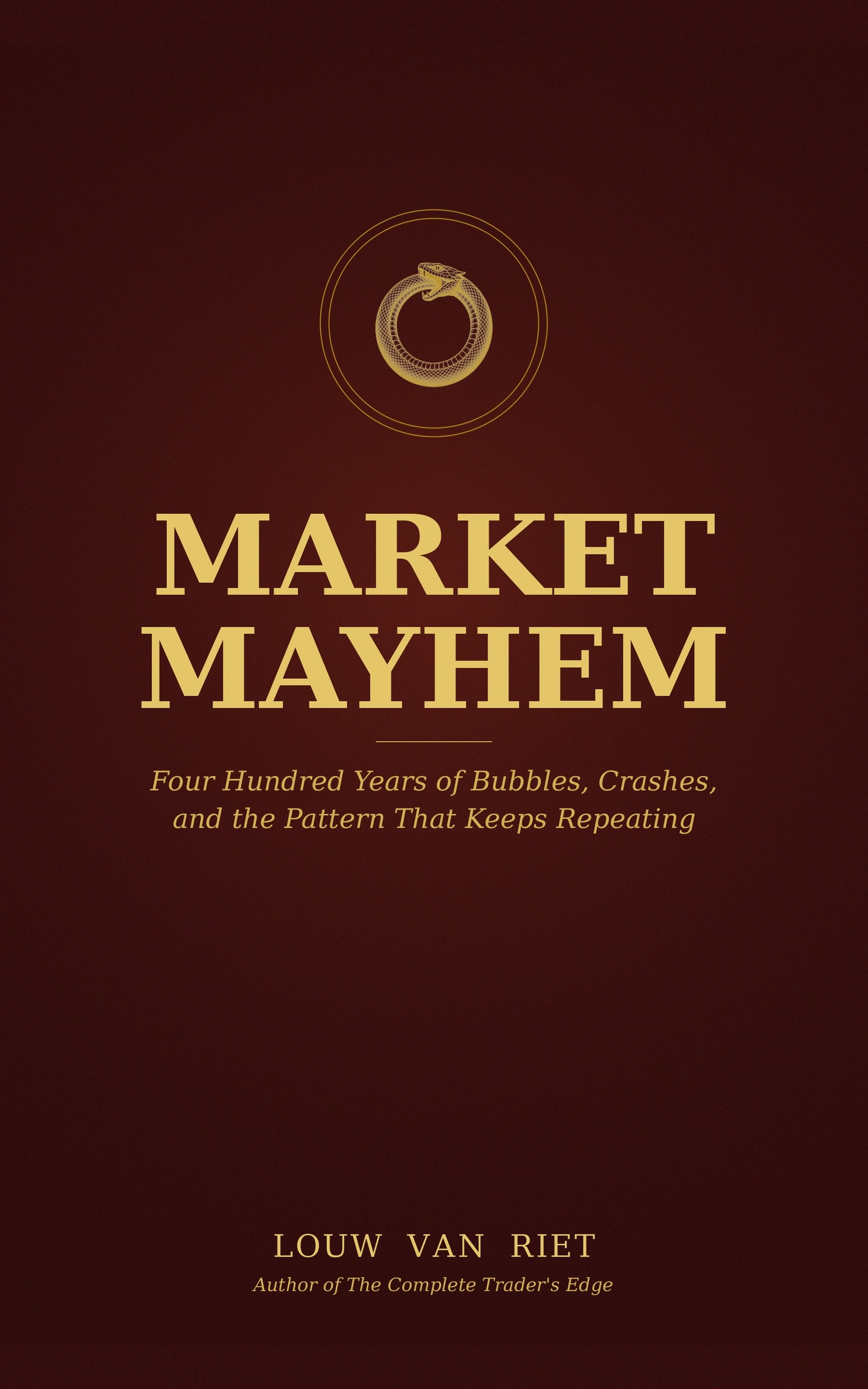 Market Mayhem
400 years of bubbles, crashes, and the pattern that keeps repeating.
Buy on Amazon →
Market Mayhem
400 years of bubbles, crashes, and the pattern that keeps repeating.
Buy on Amazon →
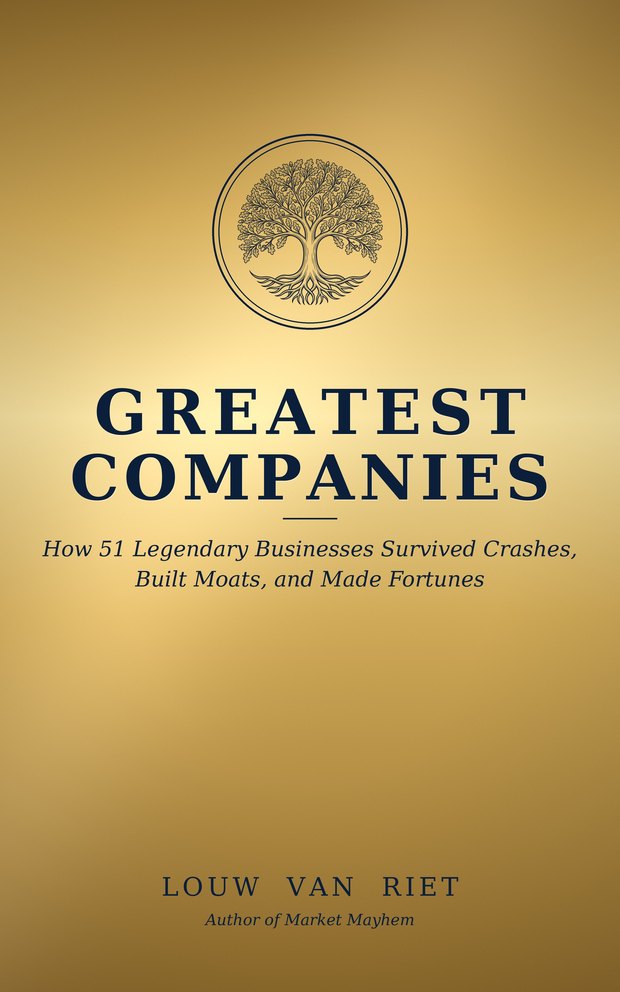 Greatest Companies
How the world's greatest companies were built — and what traders learn from them.
View on Amazon →
Greatest Companies
How the world's greatest companies were built — and what traders learn from them.
View on Amazon →