

There is no ICT book by Michael Huddleston. As of August 2026 he has never published one – not through a publisher, not self-published, not on Amazon, not as a paid PDF. Every book you will find with “ICT” or “Inner Circle Trader” on the cover was written by somebody else, sells without his involvement, and pays him nothing.
That matters more than it sounds. If you searched for an ICT book expecting the official text, you are about to land on a shelf of third-party titles that look official, are priced like textbooks, and carry subtitles engineered for the exact search you just ran. This article tells you what is actually on that shelf, how to judge it before you spend money, and what we would put in your hands instead.
Why people assume an ICT book exists
Michael J. Huddleston built one of the most systematised retail trading frameworks of the last fifteen years. Order blocks, fair value gaps, liquidity sweeps, kill zones, the Power of 3, Optimal Trade Entry: it has its own vocabulary, its own internal logic, and enough structure that it reads like a curriculum. Frameworks that coherent usually get written down.
This one did not, and the reason is deliberate. Huddleston’s material was delivered as video. The private mentorship ran as a recorded course, and the bulk of the teaching sits on YouTube for free. There is no course funnel, no upsell ladder, no companion volume. The absence of a book is not an oversight in the catalogue. It is the catalogue.
What that leaves is a vacuum with enormous search demand sitting on top of it. Vacuums like that get filled.
What the ICT books on Amazon actually are
Search Amazon for “ICT trading” and you get dozens of results. Here are six that surface near the top, with details confirmed from the listings themselves.
| Title | Listed author | ASIN |
|---|---|---|
| ICT Trading Strategy (Inner Circle Trader) | Derrick Woods | B0CKNL8R53 |
| ICT Trading: Smart Money Concept, Market Structure, BOS, Price Action | Kenny Brandon | B0C6C7B5SX |
| Learn ICT and Smart Money Concept | Jasper Frost | B0DCVD8YHH |
| Smart Money, Simplified: Your Complete ICT Blueprint | Maor Saadia | B0FMDZ98CL |
| Smart Money Concepts: Unlocking the Path to High Probability Trading | Frank Miller | B0DS8N1W9X |
| SMC Trading Strategy From Scratch | VasilyTrader | B0H6XY1D8V |
Some links on this page go to Amazon and we may earn a small commission at no extra cost to you. It does not change what we tell you about any book.
THE HONEST DISCLOSURE
We have not read any of the six books above, so we are not reviewing them and we are not recommending them. They are listed because if you searched for an ICT book, this is the shelf you were going to hit anyway, and you deserve to see it with the context attached rather than discover it cold. If we later read one and it is good, we will say so on its own review page.
What the listings themselves tell you
Without opening a single one, three things are checkable from the metadata.
They are independently published. Every one of those six carries a 979-8 ISBN. That block is what Amazon issues to books published through KDP, which means no acquiring editor, no technical reviewer, no publishing house staking its name on the accuracy of the content. That is not automatically a mark against a book. Plenty of genuinely useful trading books are self-published, including our own. It simply means the quality filter you are used to from Wiley or McGraw-Hill is not present, and you are the filter instead.
The subtitles are search strings, not descriptions. One of the titles above runs: “Smart Money Concept, Daily Trader Session, Market Structure, BOS, Price Action, Fibonacci, Liquidity Pools and Voids, Fair Value Gaps, Order Blocks, Breaker Blocks, PO3, Imbalances, HTF”. That is not a subtitle. That is a keyword list wearing a subtitle’s clothes, written for Amazon’s algorithm rather than for a reader. It tells you the author’s priority was discoverability.
Some of the neighbouring shelf makes claims no honest trading book can make. Browse the same category and you will find a title promising a “75% winning rate proven strategy”. Nobody can promise you a win rate. Win rate is a function of your instrument, your timeframe, your stop placement, your exits and your discipline, and it varies across market regimes even when the rules stay identical. A book that leads with a number like that has told you something important about itself on the cover.
How to judge an unofficial ICT book before you buy
If you still want to buy one, use Amazon’s Look Inside and run these checks. They take about four minutes and they filter out most of the shelf.
- Are there real charts? ICT is a visual framework. A book teaching order blocks and fair value gaps without annotated charts on most pages is teaching definitions, and you can get definitions free. Check the illustration density in the preview.
- Does it define risk before it defines setups? Any ICT book that reaches chapter five without discussing position sizing, stop placement or expectancy has skipped the pillar that actually determines whether you survive. This is the single most common failure in the category.
- Does it give falsifiable rules? “Wait for a bullish order block” is not a rule. “On the 5-minute chart, after a sweep of the prior session low during the New York kill zone, enter on the first FVG that forms above the sweep, stop below the sweep low, target the prior day high” is a rule. Rules you can backtest are the only ones worth paying for.
- Check the page count against the price. A 90-page paperback at $29.99 is a pamphlet with a textbook price tag.
- Read the one-star and three-star reviews first. Five-star reviews on new self-published trading books are frequently thin. The three-star reviews are where you find out whether the charts are legible and the text is edited.
- Ask what it adds to the free material. If the answer is “it organises it”, that may genuinely be worth twenty dollars to you. If the answer is “nothing”, you have your answer.
The free curriculum is the real one
Here is the awkward truth for anyone selling an ICT book: the source material is free, complete, and taught by the person who built it. The archived mentorship and the public teaching sit on YouTube at no cost. No third-party book has access to anything Huddleston withheld, because he did not withhold anything.
What the free material does have is a volume problem. There are hundreds of hours of it, sequenced loosely, with concepts introduced and revisited across years of uploads. Students consume endlessly and execute rarely. That is the actual failure mode, and no book fixes it, because the problem was never a shortage of information.
The fix is structural, and it is free. Pick two setups. Write the rules down in a form specific enough that another person could execute them without asking you a question. Backtest those rules across at least a hundred occurrences. Journal every one. Then, and only then, go looking for the next concept. A trader who does that with the Silver Bullet alone will outperform one who has watched the entire archive twice.
Our own structured route through the framework is free too: the ICT Trading Concepts hub sequences the whole thing from liquidity through to specific setups, and the complete story of Michael J. Huddleston covers the man behind it with each claim tiered by how well it is actually evidenced.
What we would actually put in your hands
These are books we have read and can stand behind. None of them is an ICT book. That is the point. ICT is a modern vocabulary layered over ideas that have been documented for a century, and reading the originals makes the framework click in a way that another ICT summary never will.
THE SHELF WE ACTUALLY STAND BEHIND
 Trading in the Zone Mark Douglas | 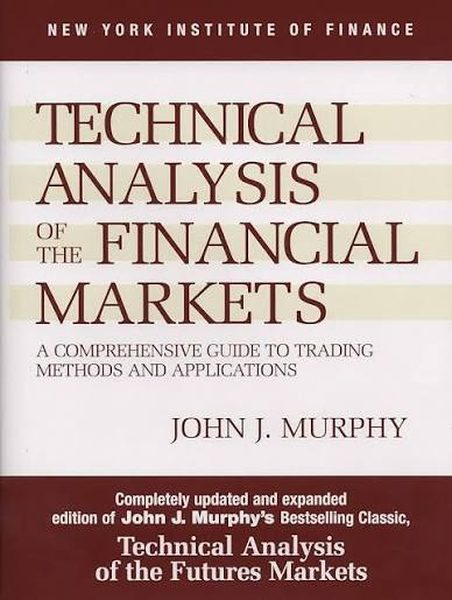 Technical Analysis of the Financial Markets John J. Murphy |  Market Wizards Jack D. Schwager | 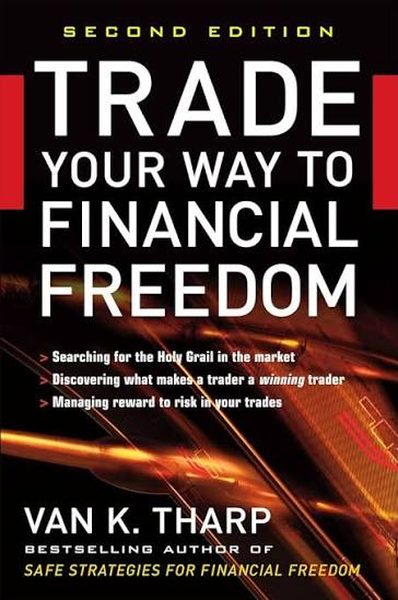 Trade Your Way to Financial Freedom Van K. Tharp |
Four books we have read in full. None of them mentions ICT once.
Wyckoff, for where all of it came from
Richard Wyckoff was describing accumulation, distribution, the composite operator and the spring in the 1920s. Read his work and the ICT vocabulary starts looking like renaming rather than invention: the spring is a liquidity sweep, accumulation is the A in Power of 3, the composite operator is smart money. This is the highest-leverage reading a serious ICT trader can do, and we cover it in full in our Wyckoff Method guide.
Murphy, for the foundation ICT sits on
ICT assumes you already read structure, support and resistance, and multiple timeframes competently. Most people who struggle with ICT are actually struggling with that layer underneath. Murphy is the reference text for it. Our review of Technical Analysis of the Financial Markets reads it specifically through a smart-money lens.
Douglas, for the part ICT does not teach at all
The framework will not tell you why you moved your stop, took profit at 0.4R, or revenge-traded after a sweep took you out. Mark Douglas will. We compare his two books in Trading in the Zone vs The Disciplined Trader.
Tharp or Elder, for the pillar that decides survival
ICT gives you entries. It does not give you position sizing, expectancy or drawdown maths, and those decide whether you are still trading in two years. Our Van Tharp vs Alexander Elder comparison helps you pick between the two standard treatments.
Schwager, for perspective
Nobody in Market Wizards traded ICT. They also made a great deal of money. Reading them is the cheapest available cure for the belief that one framework is the whole answer. Start with our guide to which Schwager book to read first.
The full sequence, mapped to Mind, Method and Money, is on our recommended reading page, and the wider library is browsable in the Top Trading Books Explorer.
If you want the ICT framework in book form
We should be straight about our own position here, since we publish books too. The Complete Trader’s Edge is not an ICT book and does not claim to be one. It is a 70-chapter framework across Mind, Method and Money, and its Method pillar integrates smart money concepts with classical price action: structure, liquidity, order blocks, fair value gaps, kill zones and the intraday playbook.
If what you want is a pure ICT reference, it is not that, and you should not buy it expecting one. If what you want is the risk management, psychology and execution scaffolding that ICT deliberately leaves to you, that is exactly what it is for. Judge it on that, not on the ICT keyword.
Frequently asked questions
Did Michael Huddleston write any book at all?
No. As of August 2026 there is no book authored by Michael J. Huddleston, on ICT or any other subject. If a listing implies otherwise, check the author field on the Amazon page rather than the cover art, because several titles use design and phrasing that reads as official at a glance.
Do the ICT books on Amazon pay him royalties?
No. They are unaffiliated third-party works. Buying one supports its author, not Huddleston, and none of them is endorsed by him.
Is there an official ICT PDF or course to buy?
The teaching is on YouTube at no cost. Treat any paid “official ICT mentorship” offer with suspicion and verify the source before sending money, because impersonation is common in this space.
Can you learn ICT from a book at all?
Partly. A book can sequence the concepts better than a loose video archive, which is a genuine service. What it cannot do is show you live chart reading, and it cannot supply the screen time. Books shorten the study phase. They do not replace the reps.
What should a complete beginner read first?
Not an ICT book. Learn to read price with Murphy, learn the psychology with Douglas, then come to ICT with the foundations in place. Beginners who start at ICT usually end up fluent in the terminology and unable to execute, which is a worse position than knowing nothing, because it feels like progress.
START WHERE IT ACTUALLY HELPS
If you came here looking for the ICT book, the closest thing that exists is a properly sequenced free curriculum and the discipline to work through it slowly. Both are on this site.
 The Complete Trader's Edge
The full Mind · Method · Money framework. 70 chapters.
View on Amazon →
The Complete Trader's Edge
The full Mind · Method · Money framework. 70 chapters.
View on Amazon →
 Market Mayhem
400 years of bubbles, crashes, and the pattern that keeps repeating.
Buy on Amazon →
Market Mayhem
400 years of bubbles, crashes, and the pattern that keeps repeating.
Buy on Amazon →
 Greatest Companies
How the world's greatest companies were built — and what traders learn from them.
View on Amazon →
Greatest Companies
How the world's greatest companies were built — and what traders learn from them.
View on Amazon →