

On 3 January 2009, an anonymous programmer switched on a piece of software and mined the first block of a new kind of money. Buried in that block was a line of text: a newspaper headline from that morning – “Chancellor on brink of second bailout for banks.” It was a message, a timestamp, and a declaration of war on the entire financial system, all at once. The system that had just collapsed in the 2008 crisis had a new rival, and it did not need banks, governments, or trust.
What began as a nine-page whitepaper written by someone the world has never identified grew into an asset worth more than a trillion dollars, adopted by nations, held by the largest asset managers on earth, and hated by some of the greatest investors alive. This is the story of Bitcoin: the most divisive, most volatile, and most fascinating money ever invented, told era by era, with the numbers, the people, the crashes, and the lessons its wild history holds for anyone who trades.
It is a long read. Use the contents to jump around, and download the research sheet at the end if you want the timeline, cycle data, and key numbers on one page.
Contents
- The History of Bitcoin at a Glance
- Before Bitcoin: the 30-Year Search for Digital Cash
- The Whitepaper and the Genesis Block
- Hal Finney and the First Transaction
- Who Is Satoshi Nakamoto?
- Bitcoin Gets a Price: 2009–2010
- Pizza, Silk Road, and the First Bubble: 2011–2013
- Mt. Gox: the First Great Exchange Disaster
- The Four-Year Heartbeat
- Winter and the Blocksize War: 2015–2017
- The 2017 Mania and the 2018 Winter
- Black Thursday and the Corporate Turn: 2020
- Wall Street, Tesla, and El Salvador: 2021
- The 2022 Contagion
- From Rebel to Reserve Asset: 2023–2025
- The 2026 Correction and Where Bitcoin Stands Today
- How Bitcoin Works: Mining, Halvings, and Hashrate
- Regulation: From Outlaw to Executive Order
- The History of Bitcoin, Cycle by Cycle
- The Critics and the Early Believers
- Bitcoin Against Weak Currencies
- HODL and the Culture of a Rebellion
- What Bitcoin Teaches a Trader
- Frequently Asked Questions
- Sources and Further Reading
The History of Bitcoin at a Glance
Seventeen years compressed into one table. Every date below is expanded in the sections that follow.
| Date | Event | Why it mattered |
|---|---|---|
| 1982–2004 | Chaum, Haber & Stornetta, Hashcash, b-money, Bit Gold, RPOW | The intellectual parts Bitcoin would assemble |
| 31 Oct 2008 | Whitepaper posted to a cryptography mailing list | Nine pages that solved double-spending without a bank |
| 3 Jan 2009 | Genesis block mined with the bailout headline | The network goes live |
| 12 Jan 2009 | Satoshi sends 10 BTC to Hal Finney | First transaction: proof it worked |
| Oct 2009 | New Liberty Standard publishes first exchange rate | $1 = 1,309 BTC, priced on electricity cost |
| 22 May 2010 | Laszlo Hanyecz pays 10,000 BTC for two pizzas | First real-world purchase |
| Jul 2010 | Mt. Gox launches | The exchange that would dominate, then collapse |
| Feb 2011 | Bitcoin reaches $1 | Parity with the dollar |
| Jun 2011 | Peak near $31, then a 93% crash | The first bubble and bust |
| 28 Nov 2012 | First halving: 50 → 25 BTC per block | The metronome starts |
| 2 Oct 2013 | Silk Road seized by the FBI | The outlaw era ends |
| Nov 2013 | Bitcoin crosses $1,000 | First mainstream mania |
| Feb 2014 | Mt. Gox collapses, ~850,000 BTC missing | “Not your keys, not your coins” |
| 9 Jul 2016 | Second halving: 25 → 12.5 BTC | |
| 1 Aug 2017 | Bitcoin Cash forks off; SegWit activates 24 Aug | The Blocksize War is settled |
| Dec 2017 | CME futures launch; peak near $19,800 | Wall Street gets a way to short |
| Dec 2018 | Bottom near $3,200, 84% below the high | Crypto winter |
| 12 Mar 2020 | Black Thursday: ~50% fall in a day | Fastest crash in Bitcoin history |
| 11 May 2020 | Third halving: 12.5 → 6.25 BTC | |
| Aug 2020 | MicroStrategy moves its treasury into Bitcoin | The corporate playbook |
| Feb 2021 | Tesla buys $1.5bn of Bitcoin | Mainstream corporate adoption |
| Jun 2021 | China bans Bitcoin mining | Hashrate halves, then migrates and recovers |
| 7 Sep 2021 | El Salvador makes Bitcoin legal tender | First nation-state adoption |
| 10 Nov 2021 | Peak near $69,000 | Cycle top |
| May 2022 | Terra/Luna collapses | The contagion begins |
| 11 Nov 2022 | FTX files for bankruptcy | Bottom near $15,500 ten days later |
| 11 Jan 2024 | Spot Bitcoin ETPs begin trading in the US | Wall Street distribution |
| 20 Apr 2024 | Fourth halving: 6.25 → 3.125 BTC | |
| 5 Dec 2024 | Bitcoin crosses $100,000 | |
| 6 Mar 2025 | US Strategic Bitcoin Reserve established by executive order | A state asset |
| 18 Jul 2025 | GENIUS Act signed: US stablecoin law | |
| 6 Oct 2025 | All-time high near $126,000 | Cycle top, so far |
| 10 Oct 2025 | ~$19bn of leveraged positions liquidated in a day | Largest liquidation event on record |
| Jun–Jul 2026 | Low near $58,000 | ~54% below the high |
| 2 Sep 2026 | Trading near $77,000 | ~39% below the high |
Before Bitcoin: the 30-Year Search for Digital Cash
Bitcoin did not appear from nowhere in 2008. The nine-page whitepaper has eight references, and half of them are to people who had spent decades failing to build exactly this thing. Satoshi Nakamoto’s achievement was not inventing digital money. It was assembling parts that already existed into a machine that finally ran.
The story starts in 1982, when the cryptographer David Chaum published a paper on blind signatures, a way to make a payment untraceable while still letting a bank verify it. He turned the idea into a company, DigiCash, in 1989, and its ecash product ran briefly in the mid-1990s. It failed in 1998. The problem was not the cryptography; it was that ecash still needed a bank in the middle, and the banks were not interested.
In 1991, Stuart Haber and W. Scott Stornetta published “How to Time-Stamp a Digital Document,” describing a chain of cryptographic hashes in which each record depends on the one before, so that altering history means altering everything after it. Satoshi cited it directly. It is, in all but name, a blockchain.
In 1992 a group of programmers and privacy activists in the San Francisco Bay Area started a mailing list. They called themselves the cypherpunks. Their manifesto, written by Eric Hughes in 1993, argued that privacy in the electronic age would have to be built with code rather than granted by governments, and that anonymous digital money was part of the job. Over the next fifteen years the list produced most of the ideas Bitcoin would use, and most of the people who would run it first.
Adam Back’s Hashcash (1997) was an anti-spam scheme: to send an email, your computer had to solve a small puzzle that cost a fraction of a second of work. Satoshi borrowed it wholesale as proof-of-work, the mechanism that makes rewriting Bitcoin’s history prohibitively expensive. Wei Dai’s b-money (1998) proposed a currency created by computational work and tracked on a shared ledger by every participant; it is the first reference in the whitepaper. Nick Szabo’s Bit Gold, conceived in 1998 and published in 2005, described a scarce digital commodity produced by solving puzzles, with each solution chained to the last. And in 2004, Hal Finney built Reusable Proofs of Work, a working system that turned Hashcash tokens into something transferable.
Every one of these had a gap. Chaum needed a bank. Dai and Szabo never solved how strangers could agree on which ledger was the real one without a trusted party. Finney’s RPOW relied on a trusted server. Meanwhile the centralised alternatives, e-gold (1996) and later Liberty Reserve, demonstrated the other failure mode: they worked until a government shut them down.
Satoshi’s contribution was a single idea that closed the gap: let the longest chain of proof-of-work be the truth, and pay whoever extends it in the currency itself. That aligned every participant’s greed with the network’s honesty. It is the reason Bitcoin has run for seventeen years without a bank, a server, or a founder.
The Whitepaper and the Genesis Block
The domain bitcoin.org was registered on 18 August 2008. On 31 October 2008, in the middle of the worst financial crisis since the 1930s, a message appeared on a cryptography mailing list: “I’ve been working on a new electronic cash system that’s fully peer-to-peer, with no trusted third party.” Attached was Bitcoin: A Peer-to-Peer Electronic Cash System. Nine pages, one diagram, eight references, no jargon it did not need.
The paper described a currency with no central authority, secured by cryptography and a shared public ledger, and with a supply that would be capped forever at 21 million coins. The cap was the philosophical core. Where every fiat currency could be expanded at will, Bitcoin’s issuance was written into the code in advance, and no one could change it without persuading the whole network to follow.
On 3 January 2009, Satoshi mined the genesis block, and embedded that day’s headline from The Times of London inside it. The 50 bitcoins created in that block are, by a quirk of the code, permanently unspendable. Six days later, version 0.1 of the software was released. The block reward was 50 BTC, blocks arrived roughly every ten minutes, and anyone with an ordinary computer could mine.
“The root problem with conventional currency is all the trust that’s required to make it work. The central bank must be trusted not to debase the currency, but the history of fiat currencies is full of breaches of that trust.”
– Satoshi Nakamoto, P2P Foundation forum, February 2009
Hal Finney and the First Transaction
The first person to download the software, other than its author, was Hal Finney, a veteran cypherpunk and one of the original developers of PGP encryption. On 10 January 2009 he posted two words on Twitter: “Running bitcoin.” On 12 January, in block 170, Satoshi sent him 10 BTC. It was the first Bitcoin transaction in history, and it proved the thing worked.
Finney was more than the first user. In an email the day after the software launched, he ran a thought experiment: if Bitcoin became the world’s dominant payment system, its total value would have to match the world’s wealth, which put the price of a single coin somewhere around $10 million. He was diagnosed with ALS later that year, kept contributing to the code as his body failed, and died in August 2014. His body was cryonically preserved. He held the first bitcoins ever received, and he is on most short lists of who Satoshi might have been. He always denied it.
Satoshi guided the project for two more years, then handed the alert key and the code repository to a developer named Gavin Andresen. The last public post came in December 2010. In April 2011, in an email to a contributor, Satoshi wrote that they had “moved on to other things.” Nothing has been heard since.
Who Is Satoshi Nakamoto?
The profile on the P2P Foundation forum claimed a 37-year-old man living in Japan. Almost nobody believes it. The writing used British spellings and idioms (“bloody hard”), the posting hours pointed away from a Japanese timezone, and the code was written by someone fluent in C++ with an unusual grasp of economics. Analysis of early mining patterns by researcher Sergio Demian Lerner suggests a single miner, almost certainly Satoshi, accumulated around 1.1 million BTC in the first year. Those coins have never moved. At $77,000 they are worth roughly $85 billion, which would make their owner one of the richest people alive, if the owner is alive, and if the keys still exist.
The candidates, and why none holds up:
- Hal Finney. Right skills, right list, first recipient, lived in the same town as a man named Dorian Nakamoto. Denied it; the emails between Satoshi and Finney read as two people.
- Nick Szabo. Bit Gold is the closest precursor, and stylometric studies have matched his prose. Denied it repeatedly.
- Adam Back. Cited in the paper and the first person Satoshi emailed. Denied it; the timing of his own work argues against it.
- Dorian Nakamoto. A Californian engineer named by Newsweek in March 2014. Denied it; the story collapsed within days, and the dormant Satoshi account posted “I am not Dorian Nakamoto.”
- Craig Wright. An Australian who claimed to be Satoshi from 2016 and sued anyone who said otherwise. In March 2024 the High Court of England and Wales ruled that he is not Satoshi and that his evidence was forged on an industrial scale.
- Peter Todd. Named by an HBO documentary in October 2024 on thin circumstantial evidence. Denied it.
The honest answer is that we do not know, and the design suggests we were never meant to. Bitcoin’s central claim is that it needs no trusted authority. A known founder would be exactly that. The creator disappeared; the creation kept running.
Bitcoin Gets a Price: 2009–2010
For most of its first year Bitcoin had no price at all. It was mined by a few dozen hobbyists and passed around as a curiosity. The first exchange rate was published on 5 October 2009 by a site called New Liberty Standard, which worked out what a bitcoin cost to produce in electricity and arrived at 1,309.03 BTC to the dollar. The first exchange, Bitcoin Market, opened in March 2010. A second, Mt. Gox, followed in July.
The most famous transaction in Bitcoin’s history came on 22 May 2010, when a Florida programmer named Laszlo Hanyecz offered 10,000 BTC on a forum to anyone who would order him two pizzas. Someone did. The pizzas cost about $41. At the October 2025 high those 10,000 coins were worth $1.26 billion, and “Bitcoin Pizza Day” is still celebrated every year as a monument to how far the price would travel. Hanyecz, to his credit, has said he does not regret it: someone had to prove the thing could buy something.
Three months later Bitcoin nearly died. On 15 August 2010 someone exploited a bug in the code to create 184 billion bitcoins in a single transaction, nearly nine thousand times the supply cap. Within five hours Satoshi and the developers had patched the software and the network had abandoned the bad chain. It remains the only serious protocol failure in Bitcoin’s history, and the only time the ledger was rolled back. Later that year the first mining pool, Slush Pool, opened, and miners began switching from CPUs to graphics cards. The industrialisation of mining had begun.
Pizza, Silk Road, and the First Bubble: 2011–2013
Bitcoin reached parity with the dollar in February 2011. That same month an online marketplace called Silk Road opened on the Tor network, selling drugs for bitcoin, and in June a Gawker article about it introduced the currency to a mass audience for the first time. The price ran from $1 to nearly $31 in four months. Then Mt. Gox was hacked, the price on its order book briefly printed one cent, and the wider market collapsed to about $2 by November. Peak to trough, Bitcoin’s first bubble gave back 93%.
The ecosystem kept building through the wreckage. Litecoin, the first serious alternative coin, launched in October 2011. Coinbase was founded in 2012, along with BitPay, the Bitcoin Foundation, and a wave of venture money. On 28 November 2012 the first halving cut the block reward from 50 BTC to 25 BTC, with the price near $12. Almost nobody outside the community noticed.
2013 was the year Bitcoin became a financial asset. In March, the Cyprus banking crisis saw a government seize deposits over €100,000 to fund a bailout, and for the first time Bitcoin traded as a hedge against confiscation, spiking to $266 in April before halving in a day. In the same month the US Treasury’s FinCEN issued the first regulatory guidance, treating exchanges as money transmitters. In October the FBI seized Silk Road and arrested its founder, Ross Ulbricht, who was later sentenced to two life terms without parole (and pardoned in January 2025). The first Bitcoin ATM opened in Vancouver the same month. Grayscale launched a Bitcoin trust for accredited investors in September, the ancestor of the ETF a decade later.
Then China arrived. Chinese exchanges came to dominate volume, and in November 2013, after a US Senate hearing that was unexpectedly friendly, the price crossed $1,000 and peaked near $1,150. On 5 December the People’s Bank of China barred financial institutions from handling Bitcoin, and the top was in. Two weeks later a drunk forum poster typed “I AM HODLING” and accidentally coined the word for the strategy that would define the next decade.

Mt. Gox: the First Great Exchange Disaster
Mt. Gox began life in 2007 as a website for trading Magic: The Gathering cards, hence the name. Its founder repurposed the domain as a Bitcoin exchange in July 2010 and sold it the following year to Mark Karpelès, a French developer living in Tokyo. By 2013 it was handling around 70% of all Bitcoin trading in the world. It was also, behind the scenes, a disaster: no proper accounting, a single developer who could push code to production, and a private key that had been stolen as early as 2011.
On 7 February 2014 Mt. Gox halted withdrawals. On 28 February it filed for bankruptcy protection in Tokyo and admitted that roughly 850,000 bitcoins were missing: 750,000 belonging to customers and 100,000 of its own. At the time that was about 7% of every bitcoin in existence, worth around $450 million. A month later Karpelès “found” 200,000 coins in an old wallet. The remainder had been drained slowly over years by attackers who, according to a 2017 US indictment, laundered them through a Russian exchange called BTC-e.
The collapse crashed the price and gave the currency a reputation it took a decade to shed. It also seeded the phrase that became Bitcoin’s first commandment: not your keys, not your coins. And it produced the longest creditor saga in crypto history. Because the 200,000 recovered coins were worth vastly more by the 2020s than the dollar claims against them, the estate eventually had bitcoin to give back. Repayments to creditors finally began in July 2024, more than ten years after the exchange died, and the overhang of those coins hitting the market weighed on price for months.
Keep Mt. Gox in mind when you reach 2022. The failure of Bitcoin’s largest exchange did not kill Bitcoin. It happened again eight years later, at ten times the scale, and did not kill it then either.
The Four-Year Heartbeat
Beneath the chaos, Bitcoin had a metronome. Roughly every four years, an event called the “halving” cuts in half the rate at which new coins are created, steadily throttling supply toward the hard cap of 21 million. Around this built-in scarcity the market has, so far, displayed a striking rhythm: a halving, then a surge to a new all-time high over the following 12 to 18 months, then a bear market that has erased 70% to 85% of the value, then a long, quiet accumulation before the next halving begins the cycle again.
Whether the halving causes the cycle is debated, and you should be suspicious of anyone who states it as a law. Liquidity, interest rates, the pace of adoption, and plain speculation have all played major roles, and the sample size is four. What is not debated is the pattern in the data so far, which is tabulated in the cycle section below. Bitcoin crossed $1,000 in 2013, then crashed. It reached nearly $19,800 in December 2017 amid a retail frenzy, then fell more than 80% through 2018. Each cycle minted new fortunes and destroyed the latecomers who bought the top on borrowed conviction. And through it all, a new narrative took hold: with a fixed supply and no central issuer, Bitcoin was becoming “digital gold,” a hedge against the endless printing of everything else.
Bitcoin compresses the entire history of financial manias into four-year cycles you can watch in real time. The same greed and fear that took decades to play out in the stock market run their full course in months here. That is what makes it the purest, and most dangerous, laboratory of trader psychology on earth.
Winter and the Blocksize War: 2015–2017
The bear market that followed Mt. Gox bottomed near $170 in January 2015, 85% below the 2013 high. The years that followed were quiet on the chart and violent inside the community, because Bitcoin was fighting a civil war over what it was for.
The issue was a single line of code: a 1 megabyte limit on the size of each block, which capped the network at a few transactions per second. One camp, including Gavin Andresen and most of the large exchanges and miners, wanted to raise the limit so Bitcoin could work as everyday cash, the “peer-to-peer electronic cash” of the whitepaper’s title. The other camp, centred on the Bitcoin Core developers, argued that bigger blocks would make running a node too expensive for ordinary people, concentrating power in a few data centres, and that the base layer should stay small and secure while payments moved to second layers like the Lightning Network, first proposed in a 2015 paper.
It became a fight over a deeper question: who gets to decide what Bitcoin is? Successive attempts to raise the limit, Bitcoin XT, Bitcoin Classic, Bitcoin Unlimited, each gathered miner support and each failed to reach consensus. In 2017 the small-block camp proposed a compromise called Segregated Witness, and when miners stalled, users organised a “user-activated soft fork” to force it through. It worked. SegWit locked in during July and activated on 24 August 2017. The big-block camp responded by splitting the chain on 1 August 2017, creating Bitcoin Cash. A further compromise, SegWit2x, collapsed in November.
The market delivered the verdict. Bitcoin Cash traded at a fraction of Bitcoin’s price and kept falling. The lesson mattered more than the code: the people who ran nodes, not the miners and not the companies, had shown they could veto a change to the rules. Bitcoin’s governance was proven to be exactly as decentralised as advertised, and exactly as slow.
Two other events from these years belong in the record. On 2 August 2016 the Bitfinex exchange was hacked for about 120,000 BTC, the second-largest theft after Mt. Gox; the couple who laundered the coins were arrested in 2022 when the haul was worth $3.6 billion. And on 9 July 2016 the second halving cut the reward to 12.5 BTC, with the price near $650. The next bull market was already under way.
The 2017 Mania and the 2018 Winter
2017 was the year the world heard about Bitcoin. In April, Japan recognised it as a legal method of payment. Through the summer, a new fundraising model called the initial coin offering let anyone with a whitepaper raise millions in Ethereum and Bitcoin, and thousands did; more than $6 billion was raised through ICOs that year, most of it for projects that never shipped. In September, China banned ICOs and ordered its exchanges to close, and the price dipped and recovered within weeks. Jamie Dimon of JPMorgan called Bitcoin “a fraud” and “worse than tulip bulbs” the same month. He later said he regretted the remark; his bank now custodies it.
Then Wall Street built a door. The CBOE listed Bitcoin futures on 10 December 2017, and the CME followed a week later. For the first time, institutions could short Bitcoin with regulated leverage. The price peaked at roughly $19,800 on 17 December, the day the CME contract launched, and never saw that level again for three years. Whether the futures caused the top or simply arrived at it is still argued; what is certain is that a wave of retail buyers who had discovered Bitcoin on the evening news, and overloaded Coinbase’s servers trying to open accounts, bought the exact high.
The winter was long. Bitcoin fell through 2018 to a low near $3,200 in December, 84% below the top. ICO tokens fell 90% to 100%. It was during this bear market that Warren Buffett, at the May 2018 Berkshire Hathaway meeting, delivered the most quoted attack in Bitcoin’s history.
“Bitcoin is probably rat poison squared.”
– Warren Buffett, Berkshire Hathaway annual meeting, May 2018
Yet the builders kept building. The Lightning Network went live on mainnet in early 2018. Fidelity announced a digital asset custody business. The Intercontinental Exchange, owner of the NYSE, launched Bakkt. In June 2019 Facebook announced Libra, a corporate stablecoin that terrified regulators enough to be regulated out of existence, and Bitcoin rallied to $13,800 on the attention. By the end of 2019 the price had settled around $7,000, roughly where it had been eighteen months earlier, and the next halving was five months away.
Black Thursday and the Corporate Turn: 2020
The fastest crash in Bitcoin’s history took about a day. On 12 March 2020, as the pandemic shut down the world economy and every asset on earth was sold for dollars, Bitcoin fell from around $7,900 to a low near $3,850. Roughly half its value, gone in 24 hours. The mechanism matters for traders: on the derivatives exchange BitMEX, leveraged long positions were liquidated automatically, each forced sale pushing the price into the next cluster of stops, until the exchange itself went offline. When it came back, the cascade stopped. The bottom was in within hours.
What followed was the most important narrative shift in Bitcoin’s life. Governments and central banks responded to the pandemic with the largest monetary and fiscal expansion in history, and the fixed-supply story that had circulated among cypherpunks for a decade suddenly had a mainstream audience. The third halving arrived on 11 May 2020, cutting the reward to 6.25 BTC with the price near $8,600. That same month Paul Tudor Jones, one of the great macro traders of his generation, told his investors he was buying.
“The best profit-maximising strategy is to own the fastest horse. If I am forced to forecast, my bet is it will be Bitcoin.”
– Paul Tudor Jones, investor letter, May 2020
In August 2020, the software company MicroStrategy announced it had moved $250 million of its corporate treasury into Bitcoin, calling cash a “melting ice cube.” Its chief executive, Michael Saylor, then kept buying, funding purchases with convertible debt and share sales in a strategy that would make the company (renamed Strategy in 2025) the largest corporate holder in the world by a wide margin. Square bought $50 million in October. PayPal opened Bitcoin trading to its users the same month. In November, Stanley Druckenmiller said on television that Bitcoin could work better than gold as a store of value. In December the price broke the 2017 high, and it ended the year near $29,000.
Wall Street, Tesla, and El Salvador: 2021
The institutional era arrived in a rush. In February 2021 Tesla disclosed a $1.5 billion Bitcoin purchase and briefly accepted it for cars, before Elon Musk reversed course in May over the energy used in mining. Coinbase listed directly on the Nasdaq on 14 April 2021, and the price peaked near $64,800 that same day, another top that coincided precisely with a mainstream milestone.
The crash that followed came from China. In May and June 2021 Beijing ordered Bitcoin mining shut down across the provinces where most of the world’s hashrate lived. Within two months the network’s computing power fell by roughly half, and the price with it. Then something remarkable happened: the miners packed their machines into shipping containers and left. By the following year the United States, Kazakhstan, and Canada had absorbed them, the hashrate had fully recovered, and China’s share had gone from around two-thirds to near zero. In September, China declared all cryptocurrency transactions illegal. It made no difference to the network at all. No other event in Bitcoin’s history has demonstrated the point of decentralisation so cleanly.
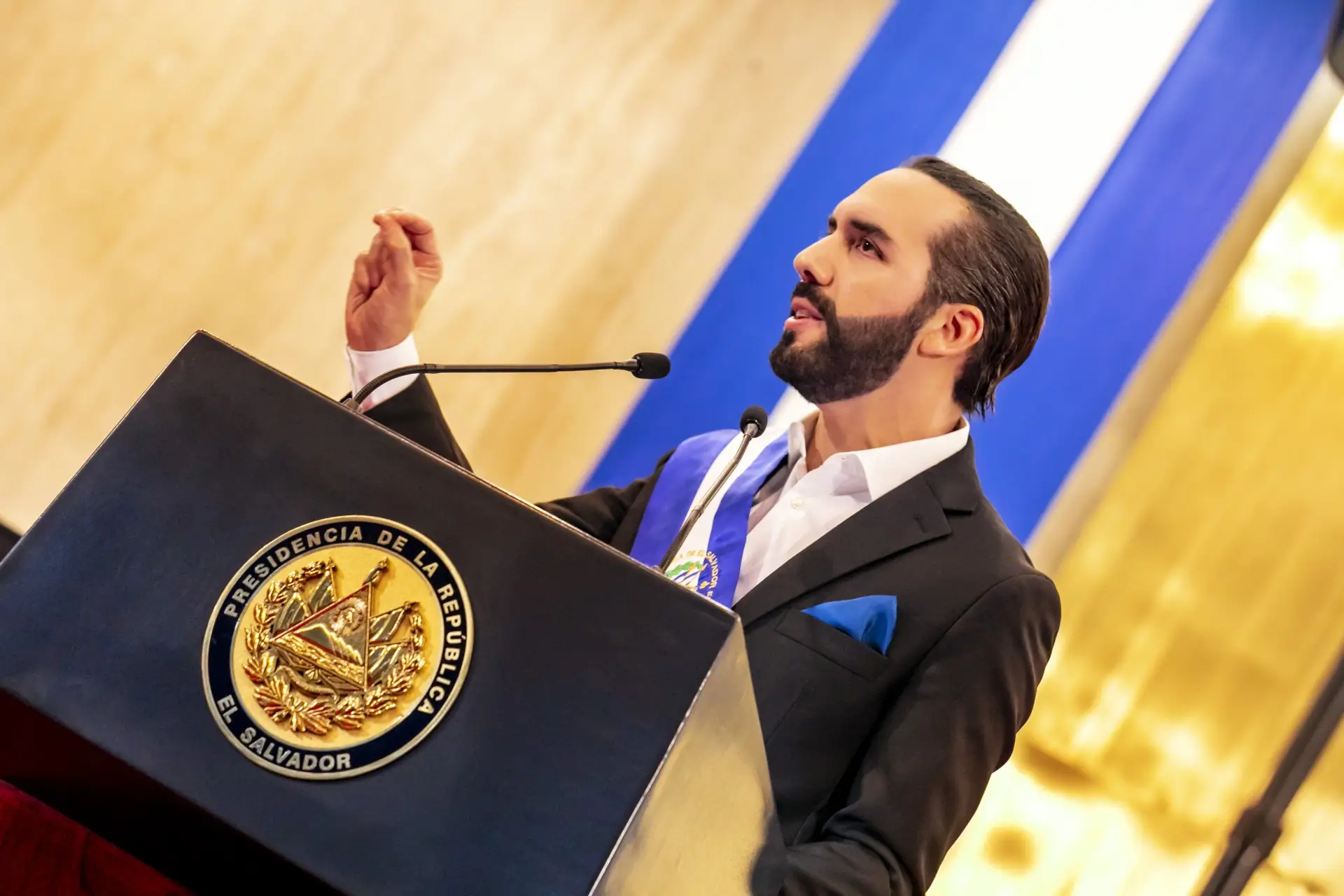
On 7 September 2021 El Salvador became the first country to adopt Bitcoin as legal tender. President Nayib Bukele’s government built a national wallet called Chivo, gave every citizen $30 in Bitcoin to download it, and began buying coins for the treasury. Adoption among ordinary Salvadorans was thin, the IMF objected loudly, and the experiment was scaled back in January 2025 when, as a condition of a $1.4 billion IMF loan, the law was amended to make acceptance voluntary. The government kept buying anyway, one bitcoin a day, and by 2026 held more than six thousand coins. Whatever its economic merit, the law crossed a line that had never been crossed: a nation-state had put Bitcoin on its balance sheet.
The US market got its first Bitcoin ETF in October 2021, the ProShares BITO, which held futures rather than coins and was, for that reason, a poor tracker. It set a record for opening-day inflows anyway. On 10 November 2021 Bitcoin printed its cycle high near $69,000. Four days later, the Taproot upgrade activated at block 709,632, the first major protocol change since SegWit, improving privacy and enabling more complex scripts. It was the last good news for a year.
The 2022 Contagion
2022 was not two headlines. It was a credit collapse, and it ran through the whole industry in a chain.
It began with the Federal Reserve. As rates rose from zero for the first time in a decade, every leveraged bet in crypto came under pressure. In May, the Terra ecosystem, an “algorithmic stablecoin” called UST and its sister token Luna, lost its dollar peg and collapsed to zero in under a week, erasing around $40 billion. Terra had been the collateral behind half the industry’s loans. In June the lender Celsius froze withdrawals. The hedge fund Three Arrows Capital, which had borrowed from everyone, defaulted and was ordered into liquidation. Voyager and BlockFi, which had lent to Three Arrows, followed it down. Bitcoin fell below $20,000, under the 2017 high, for the first time in a cycle.
Then, in November, the biggest one. FTX was the second-largest exchange in the world, its founder Sam Bankman-Fried was on magazine covers and in Congress, and it had spent the summer rescuing the firms that Terra had broken. On 2 November a leaked balance sheet showed its sister trading firm, Alameda Research, was propped up by FTX’s own token. Customers ran. On 11 November 2022 FTX filed for bankruptcy with an $8 billion hole where customer deposits should have been. Bankman-Fried was arrested a month later, convicted of fraud in November 2023, and sentenced to 25 years. Bitcoin bottomed near $15,500 on 21 November 2022, 77% below the high. We told the full story in Market Mayhem EP18.


Notice what broke and what did not. Terra was not Bitcoin. Celsius, Three Arrows, Voyager, and FTX were companies that held Bitcoin for other people. Every one of them died of the same disease as Mt. Gox: a trusted intermediary that turned out not to deserve the trust. The network itself did not miss a block. And as it had after Mt. Gox, and after every crash before, Bitcoin did not die. It bottomed, and it began, quietly, to climb.
From Rebel to Reserve Asset: 2023–2025
The recovery started in the wreckage of the banks. In March 2023 three crypto-friendly US lenders, Silvergate, Silicon Valley Bank, and Signature, failed within a week, and the second-largest stablecoin briefly lost its peg. Bitcoin, the asset built as an answer to bank failures, rallied 40% in the same month. In August a federal appeals court ruled that the SEC had been “arbitrary and capricious” in blocking Grayscale from converting its Bitcoin trust into an ETF. In November, Binance, the largest exchange in the world, pleaded guilty to money-laundering violations and paid $4.3 billion, and its founder stepped down. The industry’s last big overhang was gone.
On 10 January 2024, after a decade of rejections, the SEC approved eleven spot Bitcoin exchange-traded products, and they began trading the next day. BlackRock, Fidelity, and the rest of the largest asset managers on earth were now distributing Bitcoin through ordinary brokerage accounts. BlackRock’s IBIT reached $10 billion in assets faster than any ETF in history. For the first time ever, Bitcoin set a new all-time high, near $73,700 in March 2024, before a halving rather than after one. The fourth halving followed on 20 April 2024, cutting the reward to 3.125 BTC.
The summer was heavy. Mt. Gox began distributing its recovered coins to creditors, the German state of Saxony sold 50,000 seized bitcoins on the open market, and the price chopped between $55,000 and $70,000 for months. Then politics took over. In July, Donald Trump told a Bitcoin conference in Nashville that he would make the United States “the crypto capital of the planet.” He won the election in November. On 5 December 2024 Bitcoin crossed $100,000 for the first time.
2025 completed the transformation from outlaw to institution. On 21 January the new president pardoned Ross Ulbricht. On 6 March an executive order established a Strategic Bitcoin Reserve, capitalised with coins the government had seized in criminal cases, and instructed the Treasury never to sell them. In July the GENIUS Act became the first federal law governing stablecoins. A wave of “digital asset treasury” companies copied the MicroStrategy playbook, and Strategy itself passed 600,000 coins. Bitcoin reached a new all-time high near $126,000 on 6 October 2025.
Four days later came the reckoning that every cycle eventually delivers. On 10 October 2025, after a surprise escalation in US tariffs on China, around $19 billion of leveraged crypto positions were liquidated in roughly 24 hours, the largest forced-selling event in the history of the asset class. Bitcoin’s own fall that day was modest compared with the altcoins, but the top was in. By late November the price was below $90,000 and the fourth bear market of the ETF era had begun.
The 2026 Correction and Where Bitcoin Stands Today
Bitcoin opened 2026 near $90,000, rallied to a January high around $98,000, and then ground lower for five months. It printed $60,000 in February, recovered into the $70,000s, and finally bottomed near $58,000 in late June and early July, roughly 54% below the October 2025 peak. Through July and August it traded in a narrow band around $63,000 to $65,000. Then, in the third week of August, it jumped about 18% in two days, reclaiming $70,000 for the first time since May; the most cited trigger was the US Treasury doubling the size of its long-term bond buybacks, a liquidity signal the market read as easing. As at 2 September 2026 Bitcoin trades near $77,000, about 39% below its all-time high. Those figures will change; the chart below will not.
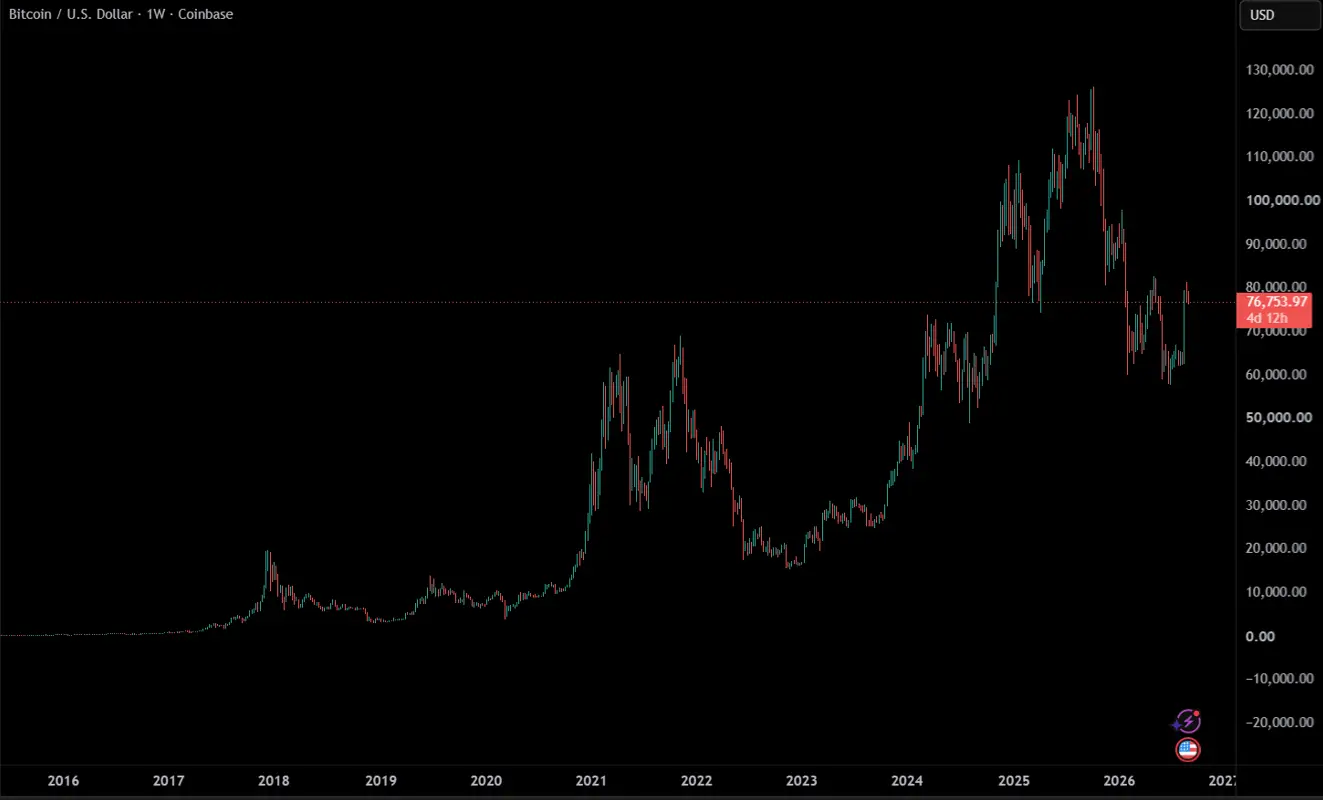
This drawdown is different from every one before it in one respect. In 2014 it was Mt. Gox. In 2018 it was the ICO bubble. In 2022 it was Terra and FTX. In 2025 and 2026, nothing inside crypto broke. No exchange collapsed, no fraud was uncovered, no lender froze withdrawals. The fall came from ordinary market forces: interest rates, fund flows, tariff shocks, and the unwinding of leverage. Bitcoin had finally become a mainstream financial asset, and it was behaving like one.
How Bitcoin Works: Mining, Halvings, and Hashrate
You cannot read Bitcoin’s history without a working model of its machinery, so here is one in four paragraphs.
The ledger. Every transaction is broadcast to a network of thousands of computers called nodes, each holding a complete copy of the history. Transactions are bundled into blocks, and each block contains a cryptographic hash of the block before it, so the chain cannot be altered without redoing every block after the change. That is the idea Haber and Stornetta published in 1991.
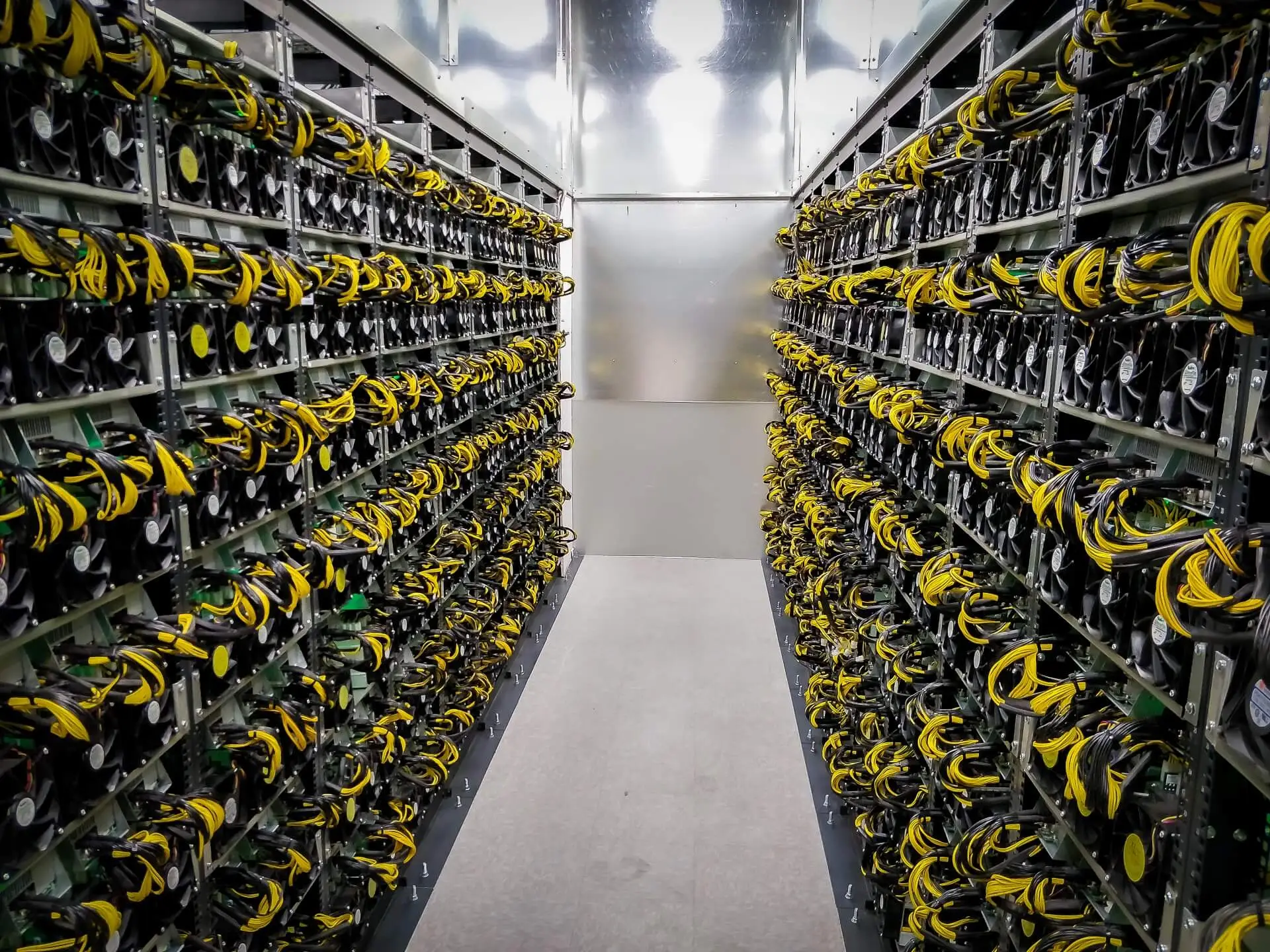
Mining. To add a block, a miner must find a number that, hashed together with the block’s contents, produces a result below a target. It is a lottery won by computing power, and the winner is paid the block reward plus the fees in the block. This is Adam Back’s Hashcash, repurposed. The reward is what makes the lottery worth playing, and the cost of the hardware and electricity is what makes cheating uneconomic: to rewrite history you would have to outwork the entire honest network. Mining hardware went from ordinary CPUs in 2009 to graphics cards in 2010, to programmable chips in 2011, to purpose-built ASICs from 2013, and today runs in industrial facilities the size of warehouses. The network’s total computing power, the hashrate, is measured in hundreds of exahashes per second, more than a million times what it was in 2013.
The difficulty adjustment. Every 2,016 blocks, roughly every two weeks, the network adjusts the target so that blocks keep arriving every ten minutes regardless of how much hashrate joins or leaves. This is why China’s 2021 mining ban did not slow the network for long, and why the price of mining tracks the price of Bitcoin: when miners leave, difficulty falls and the survivors earn more.
The halving. Every 210,000 blocks, the block reward halves. It began at 50 BTC in 2009, fell to 25 in November 2012, 12.5 in July 2016, 6.25 in May 2020, and 3.125 in April 2024. The next halving, expected around 2028, will take it to 1.5625. The schedule continues until around the year 2140, when the last fraction of the 21 millionth coin is mined and miners are paid entirely in fees. More than 19.9 million coins already exist, so 95% of all the bitcoin that will ever exist has been issued. A single bitcoin divides into 100 million units, each called a satoshi.
| Halving | Date | Block | Reward after | Price at halving | Next cycle high | Months to high |
|---|---|---|---|---|---|---|
| Genesis | 3 Jan 2009 | 0 | 50 BTC | $0 | ~$31 (Jun 2011) | |
| 1st | 28 Nov 2012 | 210,000 | 25 BTC | ~$12 | ~$1,150 (Nov 2013) | 12 |
| 2nd | 9 Jul 2016 | 420,000 | 12.5 BTC | ~$650 | ~$19,800 (Dec 2017) | 17 |
| 3rd | 11 May 2020 | 630,000 | 6.25 BTC | ~$8,600 | ~$69,000 (Nov 2021) | 18 |
| 4th | 20 Apr 2024 | 840,000 | 3.125 BTC | ~$64,000 | ~$126,000 (Oct 2025) | 18 |
| 5th | ~2028 | 1,050,000 | 1.5625 BTC |
The energy debate deserves a sentence. Bitcoin mining consumes on the order of 150 terawatt-hours a year, comparable to a mid-sized country, and critics regard this as indefensible. Defenders reply that a majority of it comes from renewable or otherwise stranded power that would not be sold to anyone else, and that the cost is the security. Both sides have data; the disagreement is about values, not facts.
Regulation: From Outlaw to Executive Order
| Date | Jurisdiction | Event |
|---|---|---|
| Mar 2013 | US | FinCEN guidance: exchanges are money transmitters |
| Dec 2013 | China | People’s Bank of China bars banks from handling Bitcoin |
| Mar 2014 | US | IRS rules Bitcoin is property, taxed on every disposal |
| Jun 2015 | New York | BitLicense; several firms leave the state rather than comply |
| Sep 2015 | US | CFTC classifies Bitcoin as a commodity |
| Apr 2017 | Japan | Bitcoin recognised as legal method of payment |
| Sep 2017 | China | ICOs banned; domestic exchanges ordered to close |
| Jun 2021 | China | Mining banned |
| Sep 2021 | El Salvador / China | Legal tender in one; all crypto transactions illegal in the other, the same month |
| Oct 2022 | South Africa | FSCA declares crypto assets a financial product |
| 2024 | EU | MiCA, the first comprehensive crypto framework, comes into force |
| Jan 2024 | US | SEC approves spot Bitcoin ETPs |
| Mar 2025 | US | Executive order establishes the Strategic Bitcoin Reserve |
| Jul 2025 | US | GENIUS Act: federal stablecoin law |
The arc is one of the strangest in financial history. In 2013 Bitcoin was money for drug markets. In 2017 the head of the largest US bank called it a fraud. In 2022 the chair of the SEC treated the whole industry as unregistered securities. By 2025 the US government held it as a reserve asset by presidential order, and the same bank was custodying it for clients. No regulator planned this. The network simply outlasted every attempt to define it out of existence.
The History of Bitcoin, Cycle by Cycle
This is the page traders screenshot. Five bull markets, five bear markets, and what actually broke in each.
| Cycle | High | Low | Drawdown | Narrative at the top | What broke |
|---|---|---|---|---|---|
| 2011 | ~$31 (Jun 2011) | ~$2 (Nov 2011) | −93% | Silk Road, Gawker, first media attention | Mt. Gox hacked |
| 2013–15 | ~$1,150 (Nov 2013) | ~$170 (Jan 2015) | −85% | Cyprus, China, “digital gold” is born | Mt. Gox collapsed; China banned banks |
| 2017–18 | ~$19,800 (Dec 2017) | ~$3,200 (Dec 2018) | −84% | ICO mania, futures, retail frenzy | The ICO bubble |
| 2021–22 | ~$69,000 (Nov 2021) | ~$15,500 (Nov 2022) | −77% | Institutions, Tesla, El Salvador, inflation hedge | Terra, Three Arrows, Celsius, FTX |
| 2025–26 | ~$126,000 (Oct 2025) | ~$58,000 (Jul 2026, so far) | −54% (so far) | ETFs, national reserve, corporate treasuries | Nothing inside crypto. Rates, tariffs, leverage |
Two things stand out. First, every top coincided with a moment of maximum mainstream legitimacy: the CME launch, the Coinbase listing, the ETF-and-reserve era. The crowd arrives when the story is safest, which is when the risk is highest. Second, the drawdowns are shrinking: 93%, 85%, 84%, 77%, and, so far, 54%. A maturing asset with deeper pools of capital falls less far. It still falls far enough to destroy anyone who is over-leveraged.
For the reader who wants the counterfactual, here is what $100 would have become if invested at the key moments and held to today’s price of about $77,000.
| Bought at | Price | $100 became |
|---|---|---|
| Pizza Day, May 2010 | $0.0041 | ~$1.9 billion |
| Dollar parity, Feb 2011 | $1 | ~$7.7 million |
| Cyprus spike, Apr 2013 | $100 | ~$77,000 |
| First $1,000, Nov 2013 | $1,000 | ~$7,700 |
| 2017 top, Dec 2017 | $19,800 | ~$389 |
| 2018 bottom, Dec 2018 | $3,200 | ~$2,400 |
| 2021 top, Nov 2021 | $69,000 | ~$112 |
| 2022 bottom, Nov 2022 | $15,500 | ~$497 |
| 2025 top, Oct 2025 | $126,000 | ~$61 |
Read the last four rows together. The difference between buying a top and buying a bottom, a year apart each time, is a factor of six to eight. Timing, not thesis, decided the outcome. Nobody can time the exact turn; anyone can refuse to buy when the story is on the evening news and the crowd is euphoric.
Run your own numbers below. The tool works two ways: a single investment held from a date of your choosing, or a fixed amount invested every month since then. It also shows the part most calculators leave out, which is how far the position fell and how long it stayed underwater before it paid.
CTE TOOL
The Bitcoin Time Machine
What would an investment in Bitcoin have become, and what would you have had to survive to keep it?
This is an assumption you set, not historical index data. Long-run global equity returns have varied widely by period.
Past performance says nothing about future returns. This tool is for education, not advice. Bitcoin has fallen more than 50% in every market cycle of its history.
The Critics and the Early Believers
No asset has been declared dead more often. The site 99Bitcoins has kept a running tally of media “obituaries” since 2010; the count passed 400 years ago and keeps climbing. Here are the critics who mattered, dated, with the believers who took the other side of the trade.
| Year | Critic | Said | Bitcoin price then |
|---|---|---|---|
| Dec 2013 | Paul Krugman, Nobel laureate | Titled a column “Bitcoin Is Evil” | ~$700 |
| Sep 2017 | Jamie Dimon, JPMorgan | “It’s a fraud” and “worse than tulip bulbs” | ~$4,000 |
| Oct 2017 | Larry Fink, BlackRock | Called it “an index of money laundering” | ~$5,500 |
| May 2018 | Warren Buffett | “Probably rat poison squared” | ~$9,500 |
| Oct 2018 | Nouriel Roubini, economist | Told the US Senate it was “the mother of all scams and bubbles” | ~$6,500 |
| Dec 2021 | Charlie Munger | “I wish they’d never been invented” (Sohn conference, Sydney) | ~$56,000 |
| Jun 2022 | Bill Gates | Described crypto as based on “greater fool theory” | ~$20,000 |
Larry Fink deserves a second row. In January 2024, the week his firm launched the largest Bitcoin ETF in the world, he told CNBC he now believed Bitcoin was a legitimate financial instrument. Dimon’s bank custodies it. Nobody has heard from Krugman on the subject for a while. The critics were not stupid; every one of them had a coherent argument, and several of those arguments (the energy cost, the use in crime, the absence of cash flows) are still unanswered. What they got wrong was the same thing the 2000 dot-com critics got wrong about the internet: they mistook the excesses of the early adopters for the limits of the technology.
On the other side, the believers who were early and specific:
- Hal Finney, January 2009: calculated a coin could be worth $10 million if Bitcoin became the world’s payment system. The price was zero.
- Paul Tudor Jones, May 2020: “the fastest horse,” at about $9,000.
- Michael Saylor, August 2020: put his company’s treasury in at about $11,000 and never stopped.
- Stanley Druckenmiller, November 2020: said on CNBC it could work better than gold as a store of value, at about $16,000.
- Jack Dorsey, 2018: predicted Bitcoin would become the single currency of the internet within a decade. Half right so far: it became the reserve asset of the internet instead.
Notice the dates. The believers were loudest at the bottoms. The critics were loudest at the tops. That is not a coincidence; it is the whole history of markets in one table.
Bitcoin Against Weak Currencies
Almost every history of Bitcoin is written in dollars. That hides the other half of the trade. In countries where the local currency is losing purchasing power, the relevant benchmark is that currency, not the dollar.
Argentina, Turkey, and Nigeria are the cleanest examples. Each ran high inflation and repeated devaluations across Bitcoin’s life. A holder who bought bitcoin in pesos, lira, or naira captured two moves at once: Bitcoin’s rise in dollars and the local unit’s fall against the dollar. Measured in those currencies, every Bitcoin bear market was shallower than the dollar chart, because the local money was sliding at the same time.
That is why some of the highest per-capita adoption on earth sits in countries with the weakest money. Chainalysis has ranked Nigeria at or near the top of its global adoption index for years; Argentina and Turkey sit in the same band. In these markets Bitcoin is volatile in both directions. The local currency is not.
The trading implication is simple. If you trade BTC/USD from a non-dollar account, you are running two positions – Bitcoin and the dollar – and you should size for both. If you trade a local pair such as BTC/ARS or BTC/TRY, the drawdowns in your account currency will look gentler than the dollar charts, and the rallies steeper. Neither is safer. Both reward knowing which currency you are actually short.
HODL and the Culture of a Rebellion
Bitcoin is the only financial asset with a folklore, and the folklore is part of the history because it shaped how people behaved at every top and bottom.
HODL comes from a bitcointalk forum post on 18 December 2013, in the middle of the China crash, titled “I AM HODLING.” The author admitted he was drunk, admitted he was a bad trader, and declared that he would therefore simply hold. The typo became the doctrine. “Not your keys, not your coins” came out of Mt. Gox and was vindicated by FTX. Bitcoin Pizza Day is celebrated every 22 May. Laser eyes appeared on Twitter avatars in early 2021 as a signal that the holder expected $100,000, which arrived nearly four years late. “Have fun staying poor” was the community’s reply to critics at the 2021 top, and it aged exactly as well as every other top-of-cycle taunt in market history. And the community keeps a counter of every published claim that Bitcoin has died, which is the purest expression of its founding attitude: the system was built to survive the people who ran it, and it has.
What Bitcoin Teaches a Trader
You do not have to own a single satoshi for Bitcoin’s history to make you a better trader, because it is the clearest demonstration of every timeless market truth, played at high speed. Here are the seven lessons, each anchored to a date in the record above.
1. The cycle is universal; only the clock speed changes. The same greed and fear that drove 1929 and 2000 ran their full course in Bitcoin every four years. Read the cycle table again: the tops coincided with the CME launch, the Coinbase listing, the ETF era. The crowd buys legitimacy, and legitimacy is priced at the top.
2. Drawdowns of 70% to 85% are the historical norm for this asset, not a surprise. Which is why position sizing and survival matter more here than anywhere. The trader who oversizes does not get a second cycle. Size every Bitcoin position as if a 54% fall (the smallest bear market so far) is the base case, because it is.
3. Leverage is the mechanism of every crash. Black Thursday in March 2020 and the October 2025 cascade were not caused by news; the news was the match. The fuel was leveraged long positions that were liquidated automatically, each forced sale triggering the next. Funding rates and open interest tell you how much fuel is stacked. When both are extreme, the match is coming.
4. Narrative moves price in the short run and cannot save you in a bear market. “Digital gold,” “inflation hedge,” “institutions are coming,” “supercycle”: every one of these was true at some point and every one was still true while the price fell 77%.
5. Counterparty risk is the risk that actually kills. Mt. Gox, Bitfinex, Celsius, Three Arrows, FTX. Not one of these was a failure of Bitcoin; all of them were failures of the people holding it for you. The network has never lost a coin. Exchanges have lost millions. This applies to every broker and prop firm you will ever use: know who holds your money and what happens if they fail.
6. Since 2020, Bitcoin is a liquidity asset. It rallied on pandemic stimulus, fell on rate rises, bottomed when the Fed pivoted, topped on a tariff shock, and jumped 18% on a Treasury buyback announcement. Anyone trading it without a macro view is trading blind.
7. Volatility is both the opportunity and the destroyer. The same violent swings that create the fortunes erase the traders who mistake conviction for a plan. Bitcoin’s chart is a masterclass in the two emotions that have driven every market since the buttonwood tree. Trade it, or any market, through Mind, Method, and Money: a repeatable edge, ruthless risk control, and the discipline to hold both when the crowd loses its head. If you are new to crypto specifically, start with our complete guide to trading cryptocurrencies.
Want it all on one page? Download the free History of Bitcoin research sheet, No. 02 in the CTE research series. Six A4 pages: the complete 44-entry timeline, the cycle and halving tables, the drawdown chart, the regulation record, the dated critics and the seven lessons. No email required.
Frequently Asked Questions
Who created Bitcoin?
Bitcoin was created by a person or group using the pseudonym Satoshi Nakamoto, who published the whitepaper on 31 October 2008, launched the network on 3 January 2009, and disappeared in 2011. Their identity has never been confirmed. Craig Wright’s claim was rejected by the English High Court in 2024. The roughly 1.1 million bitcoins attributed to Satoshi have never moved.
What is the Bitcoin halving?
The halving is a pre-programmed event, every 210,000 blocks or roughly every four years, that cuts the block reward paid to miners in half. It has happened four times: in 2012, 2016, 2020, and 2024, taking the reward from 50 BTC to 3.125 BTC. Each halving so far has been followed within 12 to 18 months by a new all-time high, although whether the halving causes the rally is disputed.
Why is Bitcoin so volatile?
Because it is a young, sentiment-driven asset with a fixed supply, no central bank to smooth its moves, and a derivatives market that lets traders use extreme leverage. It trades on narrative, liquidity, and crowd psychology, which produces enormous swings: many multiples in a bull run, then 54% to 93% falls in the bear market that follows. Every major crash in its history has been amplified by forced liquidation of leveraged positions.
What is a satoshi?
The smallest unit of Bitcoin: one hundred-millionth of a coin, named after its creator. At $77,000 per bitcoin, a satoshi is worth $0.00077. The unit exists because 21 million coins would be far too few to run a global payment system if they could not be divided.
When will the last bitcoin be mined?
Around the year 2140. More than 19.9 million of the 21 million coins already exist, and the halving schedule means the remaining supply is issued ever more slowly. After the last coin, miners will be paid entirely in transaction fees. In practice, several million coins are already lost forever, including Satoshi’s, so the effective supply is smaller than the cap.
Why did “digital gold” win over “electronic cash”?
The whitepaper’s title promised a payment system. The Blocksize War of 2015 to 2017 settled that the base layer would stay small and secure rather than scale for everyday payments, pushing that role to second layers like Lightning and, later, to stablecoins. What remained was a scarce, censorship-resistant, bearer asset with a fixed supply, which is the description of gold. The market priced it accordingly, and the institutions that arrived after 2020 bought the gold story, not the cash story.
Who holds Satoshi’s bitcoins?
Nobody knows. Around 1.1 million coins mined in 2009 and 2010 sit in addresses that have never spent, worth around $85 billion at today’s price. If the keys were lost, the coins are gone forever and the supply cap is effectively 20 million. If they still exist, their movement would be the largest single event in the asset’s history. Their stillness for seventeen years is the strongest evidence that Satoshi either died or meant what they said about never being a trusted party.
Where can I trade Bitcoin?
There are two main routes. To buy and hold actual Bitcoin, or to trade it with leverage, you use a crypto exchange; Bybit is one of the largest. To trade Bitcoin’s price movements as a CFD alongside forex and indices, brokers such as XM and Exness offer BTC/USD. For the full list of platforms we use, see our best trading tools guide. Because Bitcoin has fallen 54% to 93% in every cycle, size every position for that reality, start small, and never risk more than 1% of your capital on a trade. (Some of these are partner links; they cost you nothing and help keep our guides free.)
Sources and Further Reading
Primary sources used for this history, in the order they appear:
- Satoshi Nakamoto, Bitcoin: A Peer-to-Peer Electronic Cash System (2008), bitcoin.org/bitcoin.pdf, and the collected posts and emails at the Nakamoto Institute
- Haber and Stornetta, “How to Time-Stamp a Digital Document,” Journal of Cryptology (1991); Adam Back, Hashcash (1997); Wei Dai, b-money (1998); Nick Szabo, Bit Gold (2005)
- Bitcoin Improvement Proposals 141 (SegWit), 148 (UASF), and 341 (Taproot) at bitcoin.org/bip
- Mt. Gox bankruptcy filings, Tokyo District Court (2014) and the US Department of Justice BTC-e indictment (2017)
- SEC statement on the approval of spot Bitcoin exchange-traded products (10 January 2024); Grayscale v. SEC, DC Circuit (29 August 2023)
- Crypto Open Patent Alliance v. Wright, High Court of England and Wales (14 March 2024)
- Executive Order 14233, “Establishment of the Strategic Bitcoin Reserve and United States Digital Asset Stockpile” (6 March 2025); the GENIUS Act (18 July 2025)
- Cambridge Centre for Alternative Finance, Bitcoin Electricity Consumption Index and Bitcoin Mining Map
- Price data: Coinbase and Bitstamp historical series via TradingView; CoinGecko for the October 2025 high
For the long-form narrative, four books cover the ground well: Nathaniel Popper’s Digital Gold (2015) on the early years, Saifedean Ammous’s The Bitcoin Standard (2018) for the monetary case, Zeke Faux’s Number Go Up (2023) on the 2021 mania and its collapse, and Michael Lewis’s Going Infinite (2023) on FTX. For the trader’s library that shaped this site, see our recommended reading order.
The full story of markets, manias, and the framework for trading any of them with discipline lives in The Complete Trader’s Edge by Louw van Riet, the Mind · Method · Money approach across 70 chapters. For the crashes themselves, from the tulips to FTX, there is Market Mayhem.
 The Complete Trader's Edge
The full Mind · Method · Money framework. 70 chapters.
View on Amazon →
The Complete Trader's Edge
The full Mind · Method · Money framework. 70 chapters.
View on Amazon →
 Market Mayhem
400 years of bubbles, crashes, and the pattern that keeps repeating.
Buy on Amazon →
Market Mayhem
400 years of bubbles, crashes, and the pattern that keeps repeating.
Buy on Amazon →
 Greatest Companies
How the world's greatest companies were built — and what traders learn from them.
View on Amazon →
Greatest Companies
How the world's greatest companies were built — and what traders learn from them.
View on Amazon →
 Greatest Traders
Eighty-six lives that explain the markets — Livermore to Madoff, told with the losses left in.
View on Amazon →
Greatest Traders
Eighty-six lives that explain the markets — Livermore to Madoff, told with the losses left in.
View on Amazon →