

Every trader knows the feeling. You are staring at a perfect setup. Your analysis is clear. Your levels are marked. Your position size is calculated. And you cannot press the button. Something inside you freezes. Not because the trade is wrong, but because the possibility of being wrong feels unbearable. That freeze is not a technical problem. It is a vulnerability problem. And Brené Brown has spent two decades researching exactly how vulnerability works, why we avoid it, and why avoiding it guarantees failure.
Brown’s research, spanning thousands of interviews and published in books like Daring Greatly, The Gifts of Imperfection, and Rising Strong, reveals a counterintuitive truth: vulnerability is not weakness. It is the birthplace of courage, innovation, and change. For traders, where every single trade is an act of vulnerability (you are putting capital at risk based on an uncertain outcome), this research is not optional reading. It is the missing piece that explains why technically competent traders fail to execute.
Brown’s research on vulnerability and shame. Daring Greatly is the one to start with; The Gifts of Imperfection is the shorter companion.
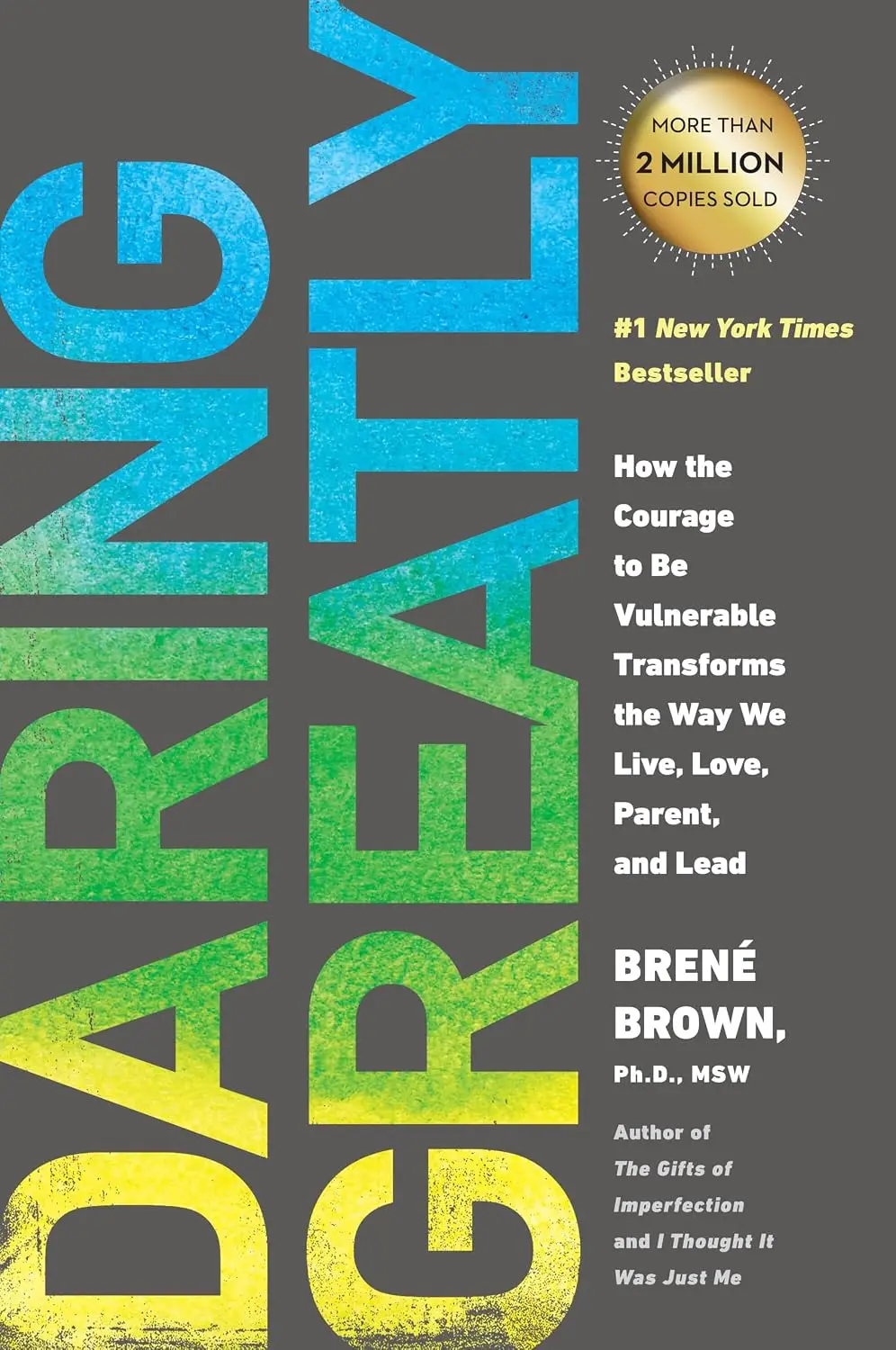
Daring Greatly: The Arena and Your Trading Screen
Brown’s most famous concept borrows from Theodore Roosevelt’s “Man in the Arena” speech: it is not the critic who counts, but the person actually in the arena, whose face is marred by dust and sweat and blood. Brown argues that most people spend their lives in the stands, criticising those in the arena, because stepping into the arena requires vulnerability.
| Key Concept | Original Context | Trading Translation |
|---|---|---|
| Meaning through suffering | Finding purpose in unavoidable pain transforms the experience | A drawdown with no journal is pointless suffering. A drawdown with data and review has meaning: it teaches. |
| Stimulus and response gap | Between what happens and how you respond, there is a space. In that space is your freedom. | Between a losing trade and your next action is the space where revenge trading or disciplined review is chosen. |
| Tragic optimism | Saying yes to life in spite of everything | Stay in the game through the hard months. The compound curve rewards those who persist through difficulty. |
| Self-transcendence | The highest fulfilment comes from serving something beyond yourself | Trade to build a life, not to win an argument with the market. The purpose beyond P&L sustains discipline. |
Every time you place a trade, you step into the arena. You are exposed. The trade might work or it might not. Your analysis might be wrong. You might lose money. You might look foolish in your journal or to your trading partner. That exposure is vulnerability, and most traders spend enormous energy trying to avoid it rather than embracing it.
The avoidance takes predictable forms: not taking valid setups (staying in the stands), trading so small that the outcome is meaningless (being in the arena but wearing full armour), or never sharing your results honestly (pretending you are not in the arena at all). Brown would say that all of these strategies protect you from vulnerability but simultaneously prevent you from ever developing real skill, because skill only develops through genuine exposure to risk and honest assessment of results.
This connects to what building your trader identity requires: the willingness to show up, take the trade, accept the result, and learn from it without the protective armour of avoidance or self-deception.
Shame Resilience: The Hidden Force Behind Revenge Trading
Brown’s research identifies shame as the most powerful and least discussed emotion in human experience. Shame is not guilt (“I did something bad”). Shame is identity-level: “I am bad.” Guilt says: “I made a losing trade.” Shame says: “I am a losing trader.”
When shame hits during a trading session, the typical responses are fight (revenge trade to prove you are not a loser), flight (close the platform and avoid trading for days), or freeze (stare at the screen unable to make any decision). Every one of these is a shame response, not a strategic response. And every one compounds the original problem.
Brown’s shame resilience framework has four elements that map directly onto trading recovery:
1. Recognise shame. Learn to identify the physical sensation: the flush of heat, the tightening in the chest, the sudden urge to do something impulsive. In trading, this is the moment after a loss when you feel the pull toward revenge. Name it: “This is shame. It is not strategy.”
2. Reality-check the narrative. Shame tells a story: “You are not good enough. Real traders do not lose like this. Everyone else is profitable except you.” Reality-check: losing trades are a mathematical certainty in any probabilistic system. The probability mindset is shame’s antidote.
3. Reach out. Shame thrives in secrecy and isolation. The trader who hides their losses, who never discusses their struggles, who pretends everything is fine, is creating the perfect environment for shame to fester. Sharing your experience with a mentor or trusted peer breaks shame’s power immediately.
4. Speak shame. Name it out loud or in your journal: “I feel ashamed because I moved my stop and lost more than I should have.” The act of articulating shame reduces its power. This is why the trading journal, used with radical honesty, is a shame resilience tool as much as a performance analysis tool.
The Vulnerability Paradox: Why the Traders Who Risk Feeling Bad Perform Best
Brown’s central paradox: we admire vulnerability in others (the trader who honestly shares their blowup and what they learned from it) but avoid it in ourselves (hiding our own losses, pretending we always follow our rules). This double standard keeps us stuck.
The traders who perform best are the ones willing to be vulnerable in specific, productive ways. They are honest in their journals about what they actually did, not what they wish they had done. They share losing trades with mentors and ask for feedback. They admit when they do not understand something. They take valid trades knowing they might lose, because they understand that the alternative, never taking the trade, guarantees they will never win either.
Brown would say this is not recklessness. It is courageous vulnerability: the willingness to show up and be seen even when you cannot control the outcome. In trading, this is the willingness to execute your plan even though you know, with absolute certainty, that some of those executions will result in losses. The fear of loss is ultimately a fear of vulnerability. And the only way through it is through it.
Rumbling with Losses: Brown’s Framework for Processing Difficult Emotions
In Rising Strong, Brown introduces the concept of “rumbling” with difficult emotions: sitting with them, investigating them, and processing them rather than numbing, avoiding, or reacting impulsively. The process has three stages: the reckoning (recognising you are in an emotional response), the rumble (getting curious about what is really going on), and the revolution (integrating the insight into changed behaviour).
The Reckoning: After a loss, notice your emotional state. Are you angry? Ashamed? Anxious? Defeated? The first step is simply acknowledging: “I am having an emotional reaction to this loss.” Not suppressing it. Not acting on it. Just noticing.
The Rumble: Get curious. Brown suggests asking: “What story am I telling myself right now?” After a trading loss, the story might be: “I always pick the wrong direction. I am not smart enough for this. Everyone else saw that reversal coming.” None of these stories are accurate. They are shame narratives. The rumble means challenging them: “What actually happened? Was my setup valid? Did I follow my rules? What can I learn?”
The Revolution: Integrate the insight. “My setup was valid but I entered too early before confirmation. Next time, I will wait for the candle close.” This is a process improvement, not an identity crisis. This is the drawdown management protocol expressed in Brown’s language.
Perfectionism: The Enemy of Trading Development
Brown draws a sharp distinction between healthy striving (pursuing excellence because you want to improve) and perfectionism (pursuing flawlessness because you are afraid of being judged). Perfectionism is not a positive quality. It is a defence mechanism against vulnerability.
In trading, perfectionism shows up as: waiting for the “perfect” setup that never comes, refusing to start journalling until you have the “perfect” template, not taking a valid trade because there is one small element that is not quite right, or beating yourself up for a loss that was a perfectly executed trade that simply did not work.
The perfectionist trader does not trade better. They trade less, learn slower, and punish themselves more harshly. Brown’s alternative is what she calls “wholehearted” living: showing up imperfectly, accepting that mistakes are part of the process, and defining yourself by your willingness to engage rather than by your results.
For traders, wholehearted trading means: taking every valid setup even though some will lose, journalling honestly even though the entries will sometimes be uncomfortable, sharing your process even though it is not polished, and measuring progress over months rather than demanding perfection in any single session.
Belonging vs Fitting In: Finding Your Trading Community
Brown makes a critical distinction between belonging (being accepted for who you really are) and fitting in (changing yourself to be accepted). Many trading communities reward fitting in: only winners get posted, only profitable months get celebrated, struggle is hidden.
A trading community built on belonging looks different. Losing trades get analysed with curiosity. Psychological struggles get discussed openly. The culture celebrates process adherence and honest self-assessment, not just profitable results. Finding or building this kind of community is one of the most valuable things a trader can do for their long-term development.
This is why the professional mindset values process over outcome. A community that celebrates process creates an environment where vulnerability is safe, learning is accelerated, and shame cannot take root.
Putting It All Together: Brown’s Framework for Traders
Step into the arena. Take the valid trade. Risk being wrong. The alternative is never being right.
Build shame resilience. Learn to recognise shame responses (revenge trading, avoidance, freezing) and apply the four-step framework: recognise, reality-check, reach out, and speak it.
Embrace vulnerability as strength. Honest journalling, sharing losses with mentors, admitting gaps in knowledge. These are acts of courage, not weakness.
Rumble with your losses. Notice the emotion, challenge the shame narrative, and extract the process insight. Then move on.
Replace perfectionism with wholehearted trading. Show up imperfectly. Take valid setups. Journal honestly. Measure progress over months, not minutes.
Find belonging, not fitting in. Build or join a community where honest vulnerability is valued over curated highlights.
Brown’s work reveals that the qualities most traders try to hide, the fear, the uncertainty, the willingness to be wrong, are actually the qualities that make great trading possible. Vulnerability is not the obstacle to consistent profitability. It is the path. The trader who can sit with uncertainty, process shame constructively, and show up honestly session after session has already won the psychological game that defeats most participants. That is the Mind pillar at its most courageous.
Continue Reading: The Inner Edge
▶ Tony Robbins & Trading Psychology
The Complete Trader’s Edge
This article is part of The Inner Edge series, exploring peak performance principles for traders.
Frequently Asked Questions
How does Brené Brown’s research on vulnerability apply to trading?
Every trade is an act of vulnerability because you are risking capital on an uncertain outcome. Brown’s research shows that avoiding vulnerability (not taking valid trades, trading too small, hiding losses) prevents skill development. The traders who embrace vulnerability, by executing their plan honestly and processing results without shame, develop faster and perform more consistently.
What is shame resilience and how does it help traders?
Shame resilience is the ability to recognise shame responses (revenge trading, avoidance, freezing), reality-check the narrative (“I am a bad trader” versus “I took a loss within normal parameters”), reach out to trusted peers, and speak the shame openly. Building this resilience prevents the destructive emotional spirals that turn single losses into account-threatening sequences.
How does perfectionism hurt trading performance?
Perfectionism causes traders to wait for setups that never come, refuse to start journalling until conditions are ideal, avoid valid trades with minor imperfections, and punish themselves for normal losses. Brown distinguishes this from healthy striving. Wholehearted trading means showing up imperfectly, taking valid setups, and measuring progress over months rather than demanding flawless sessions.
What is the Rising Strong process applied to trading losses?
Brown’s Rising Strong has three stages: the reckoning (noticing your emotional reaction to a loss), the rumble (challenging the shame narrative and getting curious about what actually happened), and the revolution (extracting a process improvement and integrating it). This transforms losses from identity crises into learning opportunities.
Why is honest journalling an act of vulnerability?
Honest journalling requires writing what you actually did rather than what you wish you had done. This means admitting when you moved a stop, took a revenge trade, or deviated from your plan. Brown’s research shows that this kind of honest self-examination, while uncomfortable, is the fastest path to behavioural change because it breaks the secrecy that allows destructive patterns to persist.
 The Complete Trader's Edge
The full Mind · Method · Money framework. 70 chapters.
View on Amazon →
The Complete Trader's Edge
The full Mind · Method · Money framework. 70 chapters.
View on Amazon →
 Market Mayhem
400 years of bubbles, crashes, and the pattern that keeps repeating.
Buy on Amazon →
Market Mayhem
400 years of bubbles, crashes, and the pattern that keeps repeating.
Buy on Amazon →
 Greatest Companies
How the world's greatest companies were built — and what traders learn from them.
View on Amazon →
Greatest Companies
How the world's greatest companies were built — and what traders learn from them.
View on Amazon →
 Greatest Traders
Eighty-six lives that explain the markets — Livermore to Madoff, told with the losses left in.
View on Amazon →
Greatest Traders
Eighty-six lives that explain the markets — Livermore to Madoff, told with the losses left in.
View on Amazon →