Explore all 80 books in the Trader’s Library →
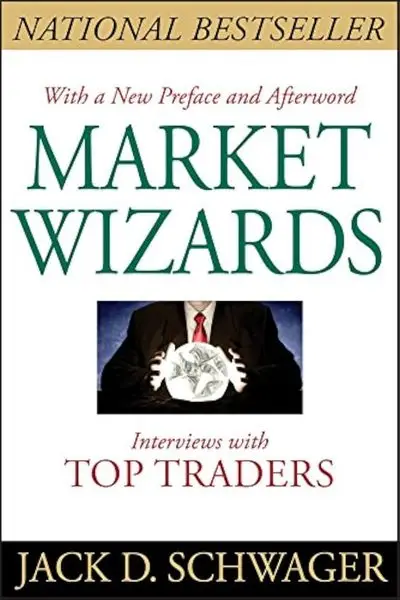
In 1989 Jack Schwager did something nobody had done before. He picked up the phone and called the most successful traders alive, one after another, and asked them how they actually did it.
The result was Market Wizards, and the book did something more important than its sales numbers suggest. It established interview-driven trading literature as a genre and produced the single most concentrated source of insight into how top performers actually think, in their own words, before survivorship bias and hindsight had cleaned up their stories.
Thirty-seven years later, the book still sits on every serious trader’s shelf. The strategies are dated. The traders are mostly retired or dead. But the patterns that emerge across seventeen interviews remain the most useful map of what works in this profession that has ever been published.
This review breaks down what the book actually delivers, the recurring patterns that emerge across its interviews, where it falls short, and why it is required reading even if every name in it is unfamiliar to you.
At a Glance
| Author | Jack D. Schwager |
| First Published | 1989 |
| Pages | ~500 |
| Genre | Interview collection / trading philosophy |
| Difficulty | Intermediate — accessible interviews, technical depth varies |
| Best For | Traders looking for pattern recognition across multiple proven approaches |
| Skip If | You want step-by-step systems rather than principles distilled from many practitioners |
OVERALL RATING: 9.0 / 10
Who Should Read This Book
| Reader | Verdict | Why |
|---|---|---|
| New trader (0–1 year) | Read selectively | Some interviews assume context. Pick four or five to start, return for the rest later. |
| Intermediate (1–3 years) | Read it now | You have the context to recognise what each trader is actually saying |
| Advanced / professional | Re-read every few years | Different interviews land differently depending on what you are trading and how you are doing |
| SMC / ICT trader | Read for context | The book covers an earlier era’s methods, but the principles of edge, risk, and psychology port directly |
| Algo / quant trader | Read it | Some interviews (Seykota, Trout, Hite) are essentially early systematic trading manifestos |
| Long-term investor | Skip to specific chapters | Most interviews are short-term oriented. Read Lipschutz, Steinhardt, and Rogers and move on. |
The Book in Context
Jack Schwager was a futures research analyst who wanted to know whether top traders had anything in common. He picked seventeen of the most successful traders he could get access to in the late 1980s and conducted long-form interviews with each of them.
The book arrived at a unique moment. The 1987 crash was still fresh. Computerised trading was emerging but not yet dominant. Several interviewees had built their careers in the pit-trading era and were transitioning into the screen era. Schwager captured a generation of traders at the inflection point between two worlds, before any of them had been canonised, and before survivor narratives had cleaned up the messy details.
The format itself was new. Trading books before this were almost entirely written by single authors describing single methods. Schwager produced a polyphonic text: seventeen voices, seventeen approaches, no single hierarchy. The reader has to do the synthesis work, and that work is the most valuable part of reading the book.
The Core Argument: Patterns Emerge Across Wildly Different Approaches
The book has no thesis statement. Schwager presents the interviews and lets the reader find the pattern. That is part of why the book has aged so well. The synthesis is portable across eras because the reader does it themselves.
That said, there is an underlying argument the book is making by example: there is no single way to trade successfully, but there is a small number of principles every successful trader has internalised, regardless of style. Whether you are a trend follower like Ed Seykota, a global macro discretionary trader like Bruce Kovner, or a contrarian like Marty Schwartz, the same handful of disciplines show up in every interview.
Schwager’s contribution is not to identify these patterns explicitly. It is to give you enough raw material to identify them for yourself. The exercise of cross-referencing seventeen successful traders and noticing what they share is more instructive than any single trader’s stated philosophy could be.
“The desire to maximize every trade will get you in trouble. There has to be a willingness to accept good trades, not perfect ones.”
— from Market Wizards
The Patterns That Emerge Across Every Interview
Read all seventeen interviews and a small number of common threads become impossible to miss. These are the patterns most reviewers gloss over, because each one looks obvious in isolation. Their power is in the fact that every wizard, despite using completely different methods, has internalised all of them.
Seven Patterns Across All Seventeen Wizards
| # | The Pattern | How It Shows Up |
|---|---|---|
| 1 | Obsessive risk control | Every wizard talks about losses before profits. None of them treat risk as an afterthought. |
| 2 | A blown-up account in their past | Almost every interview includes a story of getting wiped out at least once. The wipeout was the education. |
| 3 | A method that fits their personality | No two wizards trade the same way. All of them found a style that matched how their mind actually works. |
| 4 | Indifference to being right on any single trade | Each wizard talks about losses without flinching. The next trade matters. The last one does not. |
| 5 | Independent thinking | None of them rely on tips, gurus, or consensus. They form their own views and trade them. |
| 6 | Patience as an active discipline | All of them wait for setups that match their criteria. None of them feel obligated to be in the market. |
| 7 | A relationship with losing that is unsentimental | Losses are framed as the cost of doing business, not as personal failures. This is the single biggest psychological difference from retail traders. |
These seven patterns appear in every interview, regardless of method or market.
If you read the book looking for setups, you will be disappointed. If you read it looking for these patterns, you will leave with the closest thing to a unified theory of trading that exists.
How Schwager Built the Book
The book’s craft is in the interviews themselves. Schwager was a trained analyst, not a journalist, and the interviews show it. Three structural choices made the book work.
Long-form, lightly edited transcripts. Each interview runs twenty to forty pages. Schwager lets the wizards talk at length, follows their tangents, and resists the urge to summarise. The result is that the reader hears each trader’s actual voice, including the moments where they contradict themselves or hedge.
Pre-interview research. Schwager came to each interview having read the trader’s letters, tracked their published track records, and prepared specific questions about specific trades. The wizards respected this and opened up in ways they would not for a generalist journalist.
Brief framing sections, no editorial overlay. Schwager introduces each wizard with a short biographical note and then steps out of the way. He does not interpret. He does not draw conclusions. He lets the interviews speak. This forces the reader into the synthesis role, which is exactly where the value of the book is.
Five Passages Worth Carrying With You
Five quotes that capture what the book is doing, each with a 2026 reading.
“If you can learn to create a state of mind that is not affected by the market’s behavior, the struggle will cease to exist.”
— Ed Seykota. The single most quoted line from any wizard. It became the seed of the entire trading psychology genre. Mark Douglas’s later work is essentially an attempt to operationalise this sentence.
“There are old traders and there are bold traders, but there are very few old, bold traders.”
— Ed Seykota. The book’s most quoted aphorism. Survival in this business is a function of risk discipline, not aggression. Every wizard in the book agrees with this, even the aggressive ones.
“Risk control is the most important thing in trading. If you have a losing position that is making you uncomfortable, the solution is very simple: get out, because you can always get back in.”
— Bruce Kovner. The cleanest statement of risk discipline in the book. The trade is not your child. Exiting and re-entering is allowed. Most traders forget this.
“Whenever I enter a position, I have a predetermined stop. That is the only way I can sleep.”
— Bruce Kovner. The sleep test. If a position would keep you awake without a stop, you do not have a system. You have a hope.
“You don’t get rewarded for taking risk; you get rewarded for buying cheap and selling dear.”
— Jim Rogers. The reframe that destroys “risk equals return” thinking. Asymmetric trades come from buying assets that have already de-risked, not from taking more risk.
Which Interviews to Read First
Seventeen interviews is a lot. Most readers do not finish them all in one go. Five of the interviews are disproportionately useful and worth prioritising.
- Bruce Kovner. The cleanest articulation of global macro thinking and risk management you will find anywhere. Read this first if you trade discretionarily.
- Ed Seykota. Trend following and trading psychology, decades ahead of their time. The interview reads more like philosophy than a trading conversation, which is exactly the point.
- Paul Tudor Jones. Famous for the line about playing defense first, but the interview’s real value is in how he describes thinking probabilistically while still trading aggressively. A rare combination.
- Marty Schwartz. The “Pit Bull” interview shows what intense, short-term discretionary trading actually looks like when done well. The psychological insights are sharper than the methods.
- Tom Baldwin. A floor trader whose entire edge was discipline, focus, and stamina. The interview reads differently in the screen era but the principles port.
If you only read five interviews, read these. The other twelve are valuable but build on patterns these five establish first.
Common Misreadings of the Book
Misreading #1: “The methods are dated, so the book is too”
The methods are dated. The principles are not. Every wizard’s specific approach has been arbitraged away or evolved. But the discipline, the risk control, the relationship with losing, the patience — none of these have changed. Anyone who finishes the book thinking it is about pit trading or 1980s futures has read the wrong layer.
Misreading #2: “Find the wizard whose style matches mine and copy them”
The book argues the opposite. Each wizard developed a style that matched their own personality, not someone else’s. The lesson is not “trade like Kovner” or “trade like Seykota.” It is “develop a style that fits how your mind actually works.” Copying any specific wizard is the surest way to miss what the book is teaching.
Misreading #3: “Schwager glamorises gambling”
This misreading comes from people who skim. Every wizard in the book talks about risk discipline more than they talk about wins. The book is the opposite of gambling promotion. It is a sustained argument that survival is everything and that aggressive return comes from disciplined position-taking, not from swinging hard.
Misreading #4: “Some of these traders failed later, so the lessons are invalid”
Several wizards had drawdowns or closed funds in the decades after the book was published. None of this invalidates what they said in 1989. The book captured them at peak performance, articulating principles they followed when they were winning. Later failures usually come from drifting away from those principles, not from the principles being wrong.
Misreading #5: “Schwager should have synthesised more”
This is the most common complaint and the most wrong. The refusal to synthesise is the design. If Schwager had given you “the seven habits of highly successful traders” at the end, the book would be a list. By forcing the reader to do the synthesis, he created a text that rewards re-reading and produces different insights at different career stages.
Where the Book Falls Short
An honest review names the weaknesses.
- Survivorship bias. Schwager interviewed traders who had succeeded. We do not hear from the equally disciplined traders who blew up. This is the book’s biggest structural limitation and it is not fully solved by Schwager’s later volumes.
- No women. The first volume has no female traders. Later volumes correct this somewhat. Read this one knowing it is a particular slice of a particular era.
- Heavy focus on futures and macro. The interviewees skew toward commodity futures, currencies, and macro trading. Equities and especially long-term investing get short shrift.
- The interviews vary in quality. Some wizards are articulate and self-aware. Others struggle to explain what they actually do. Schwager could have been firmer in pushing back when answers got vague.
- No coverage of modern instruments. Crypto, ETFs, retail options, prop firms — none of this exists in the book. The principles port, the instruments do not.
- The book is long. Five hundred pages is a commitment, and the structure means there is no clean way to skim. Pick five interviews and accept you may not read the rest for a year.
How the Book Fits the Mind · Method · Money Framework
The genius of the book is that it touches all three pillars across the interviews, even though each individual wizard usually emphasises one.
| Pillar | Contribution | What the Book Delivers |
|---|---|---|
| MIND | PRIMARY | Discipline, independence, the relationship with losing, patience, the willingness to be wrong, mental flexibility across regime changes |
| METHOD | SECONDARY | Trend following (Seykota), global macro (Kovner), pattern trading (Schwartz), system development (Hite, Trout), pit-based discretionary (Baldwin) |
| MONEY | SECONDARY | Every wizard discusses risk control, position sizing, drawdown management. No single comprehensive treatment, but cumulative coverage is heavy. |
If you have read The Complete Trader’s Edge, you will recognise that the patterns Schwager exposes across his interviews are the empirical evidence behind the framework. The wizards arrived at the same conclusions independently, across different markets and styles, which is the strongest possible validation that the principles are universal. Reading Market Wizards alongside the Mind · Method · Money framework gives you the lived examples that animate the framework.
Read This Instead Of / Read This After
| Relationship | Book | Why |
|---|---|---|
| Read after | The New Market Wizards by Jack Schwager | The sequel covers a different generation of traders and reinforces the same patterns from new angles. Worth it after the original. |
| Read alongside | Reminiscences of a Stock Operator | Lefèvre captures one trader in depth. Schwager captures seventeen at breadth. Together they triangulate the same principles. |
| Read after | Trading in the Zone by Mark Douglas | Douglas gives you the operating manual for the psychological patterns Schwager’s wizards describe |
| Read instead of | Generic “top traders” listicles online | The web is full of summaries of Market Wizards. None of them substitute for reading the actual interviews. |
| Read after | Hedge Fund Market Wizards by Jack Schwager | The most modern volume in the series, covering more recent traders and quant approaches. Useful for connecting the original principles to current markets. |
Final Verdict: Should You Read This Book in 2026?
Yes. Without question. The book is one of three or four texts every serious trader should own.
It is required reading not because the strategies are current. They are not. It is required reading because the cross-section of interviews reveals what is invariant about successful trading across personalities, markets, and decades. No single trading book can give you that. You can only get it from a collection like this.
The caveat is the one Schwager himself implies. Do not try to copy any single wizard. Find the patterns that show up across all of them, and then build your own style around those patterns. That is the actual lesson of the book, and it is the lesson most readers miss because they fixate on the most charismatic interviewee instead of doing the synthesis work.
CTE Rating Breakdown
9.0/10
Essential Reading
| Readability | 9 | |
| Actionability | 7 | |
| Timelessness | 10 | |
| Beginner-Friendly | 7 | |
| Modern Relevance | 9 |
Frequently Asked Questions
What is Market Wizards actually about?
The book is a collection of long-form interviews with seventeen of the most successful traders of the late 1980s, covering their methods, philosophies, biggest wins and losses, and their views on what separates successful traders from unsuccessful ones.
Are the strategies in the book still relevant in 2026?
The specific strategies are dated. Most of them have been arbitraged away or evolved beyond recognition. The principles underneath the strategies — risk discipline, patience, independence, the relationship with losing — are completely current and apply to every market and instrument.
How long is the book?
About 500 pages depending on edition. Most readers do not finish it in one go. Plan to dip in and out over several months, prioritising the most relevant interviews first.
Which interview should I read first?
Bruce Kovner for global macro and risk discipline. Ed Seykota for trend following and psychology. Paul Tudor Jones for aggressive but disciplined discretionary trading. These three are the most useful starting point.
Should I read Market Wizards or The New Market Wizards first?
The original first. It is where the format was invented and where the most quoted material lives. The New Market Wizards is the sequel and works best as a follow-up, not a replacement.
Is the book good for complete beginners?
Selectively. Some interviews assume context that beginners do not have. The Kovner, Seykota, and Jones interviews are accessible to almost anyone. Others are better read after a year or two of trading experience.
How many books are in the Market Wizards series?
Five main volumes: Market Wizards (1989), The New Market Wizards (1992), Stock Market Wizards (2001), Hedge Fund Market Wizards (2012), and Unknown Market Wizards (2020). The first is the most widely cited and the best starting point.
Is there an audiobook?
Yes. The audiobook works well for the long-form interview format. Many traders listen to single interviews repeatedly rather than working through the book linearly.
Did any of the wizards fail later?
Several had drawdowns or closed funds in the decades after the book was published. This does not invalidate what they said in 1989. Most later failures came from drifting away from the principles they articulated, not from the principles being wrong.
What is the single most important takeaway from the book?
That successful trading is not about any single method. It is about a small number of disciplines that every successful trader internalises regardless of approach: obsessive risk control, indifference to individual outcomes, independent thinking, and a style that matches your own personality.
About the Author
Jack D. Schwager (b. 1948)
Jack Schwager spent over forty years in the futures industry as a research director, partner in a commodity trading advisor, and founder of multiple data and research businesses. His training as an analyst gave the Market Wizards interviews their unusual depth, since he came to each conversation with detailed knowledge of the trader’s record and approach. He continues to write and research, with his most recent volume Unknown Market Wizards (2020) returning to the original format with a new generation of traders.
Other notable works: The New Market Wizards (1992), Stock Market Wizards (2001), Hedge Fund Market Wizards (2012), Unknown Market Wizards (2020), plus a multi-volume technical analysis series and A Complete Guide to the Futures Market.
Schwager’s body of work remains the most comprehensive single-author archive of how successful traders actually operate in their own words.
Continue Learning
- The Three Pillars: Mind, Method, Money
- Trading Psychology: The Complete Guide
- Reminiscences of a Stock Operator Book Review (2026)
- Trading in the Zone Book Review (2026)
- The Complete Trader’s Edge — The Book
 The Complete Trader's Edge
The full Mind · Method · Money framework. 70 chapters.
View on Amazon →
The Complete Trader's Edge
The full Mind · Method · Money framework. 70 chapters.
View on Amazon →
 Market Mayhem
400 years of bubbles, crashes, and the pattern that keeps repeating.
Buy on Amazon →
Market Mayhem
400 years of bubbles, crashes, and the pattern that keeps repeating.
Buy on Amazon →
 Greatest Companies
How the world's greatest companies were built — and what traders learn from them.
View on Amazon →
Greatest Companies
How the world's greatest companies were built — and what traders learn from them.
View on Amazon →
 Greatest Traders
Eighty-six lives that explain the markets — Livermore to Madoff, told with the losses left in.
View on Amazon →
Greatest Traders
Eighty-six lives that explain the markets — Livermore to Madoff, told with the losses left in.
View on Amazon →