

Legendary Traders · U.S. Investing Championship
Tito Adhikary
The Cancer Scientist Who Set the Championship’s 2,115% Record
$20,000+ Enhanced Growth Division · Options · 2026 standings through 31 October
Latest update · 25 November 2026
Adhikary is not on the ten-month standings, through 31 October. A month earlier he led the $20,000+ Enhanced Growth Division at +1,919.5%. Absence is not proof of a loss: the board appears to list only entrants in profit, and a trader can also stop reporting. Emanuela Elias now leads the division at +159%. In the Stock Division, Martin Luk stands at +2,115.4%, 0.3 points above Adhikary’s all-division year-end record. Adhikary’s +2,115.1% remains the record until the final standings are published. All four boards on the hub →
Last reviewed: 25 November 2026. Contest figures come from the organiser’s published standings at financial-competitions.com and its Business Wire releases. Details of Adhikary’s history and method come from his own account in a March 2026 TraderLion podcast interview and are labelled as his. Complete Trader’s Edge has not seen any account statement, and the 2026 competition is not over.
Part of our championship research
Every modern winner, every division and the month-by-month path behind this profile live on our U.S. Investing Championship hub, with an explorer you can filter by year, board and name.
Tito Adhikary holds the highest year-end return in the history of the U.S. Investing Championship: +2,115.1% in the $20,000+ Enhanced Growth Division in 2025. The organiser’s releases call it a new record across all divisions. In 2026 he led the same division at +1,919.5% through 30 September, then did not appear on the ten-month board.
He did it as a cancer researcher. The organiser’s releases describe him as a Harvard Ph.D. in Biomedical Sciences working at the Dana-Farber Cancer Institute. He trades options on growth stocks.
The record is the end of a much rougher story. By his own account he lost most of his early gains through revenge trading, once lost $33,000 in a day on a graduate student’s stipend, gave back a run from $15,000 to $90,000 in two days, and rebuilt from $5,000.
Tito Adhikary at a glance
| Field | Detail |
|---|---|
| Background | Ph.D. in Biomedical Sciences, Harvard. A member of the Loren Walensky Lab at the Dana-Farber Cancer Institute (organiser’s October 2025 release) |
| Origin | Grew up in India and moved to the United States in 2015 for his Ph.D. (his account) |
| Started trading | March 2020, with $80,000 in blue-chip stocks (his account) |
| Instruments | Options on growth stocks: calls, debit spreads and longer-dated LEAPS |
| 2025 result | +2,115.1%, winner, $20,000+ Enhanced Growth. The all-division record |
| 2025 in dollars | About $48,000 to just over $1 million (his account) |
| 2026 position | First at nine months, +1,919.5%. Not on the ten-month board |
| Verification | Checked against brokerage statements by the organiser. Not an audited composite |
Tito Adhikary’s U.S. Investing Championship record
| Month-end | 2025 | 2026 |
|---|---|---|
| January | +81% | – |
| February | +194.2% | – |
| March | +336.9% (leading) | – |
| April | +542.6% | – |
| July | +1,229.9% | +1,626.6% (second) |
| August | – | +1,887.6% (second) |
| September | +1,573.5% (leading) | +1,919.5% (leading) |
| October | – | Not on the board |
| Final | +2,115.1% (winner) | Due early 2027 |
Every 2025 print we could find was higher than the one before. Our hub’s Path Tracker calls it the all-division record built in a near-straight line, and that is unusual on these boards, where most large numbers peak before December and fall back.
In 2026 he spent July and August second behind Omar Barkawi, who reached +2,854% at the end of August and was not on the September board. Our analysis of the 2026 leaders who left the board covers that month. Adhikary added about 15% to the account in August and about 1.6% in September, by our arithmetic. At that point he was 195.6 points short of his own record with three months to run.
He does not appear on the ten-month board, through 31 October. Neither does Abdulmajid M. Al Qurashi, the September leader of the $1m+ Stock Division. The same thing happened to Barkawi a month earlier, and to Jandy Lam, who has since returned to the top of her board. Absence tells you only that no profit was reported for the period, not what happened in the account.
Before the record: five years in his own words
The detail here comes from his March 2026 interview on the TraderLion podcast, as summarised in the episode notes.
2020 to 2021. He started in March 2020 with $80,000 in blue-chip stocks and grew it to about $200,000 by early 2021.
The first collapse. He then lost much of it through the bubble in speculative growth stocks, revenge trading and a $33,000 loss in a single day, at a time when his graduate stipend was $40,000 a year.
2022. He grew a $15,000 account to $90,000, then gave it all back in two days around a Federal Reserve announcement.
2023. He moved to a $5,000 account to rebuild his confidence and his equity curve.
2025. He took about $48,000 to just over $1 million and won the championship. He has said he used the profits to buy his first home.
The method, as he describes it
He frames stock selection as three tests: the right stock, the right sector, the right market. All three have to line up before a trade.
On the options side, he has described choosing strikes with implied volatility in mind and choosing between debit spreads and buying calls outright depending on the setup. His scaling rule is specific: sell a quarter of the position at a 50% gain, sell half at a 100% gain, and trail the rest.
The risk controls he names are behavioural rather than technical. He trades a cash account as a psychological guardrail, uses a daily circuit breaker, wires profits out of the account, and reviews every weekend. He has also described applying a scientist’s habit of hypothesis, experiment and result to each trade.
The trades he walked through include Tesla calls bought at $3 that reached $40, AppLovin calls that went from $2 to $20 in a day after earnings, Rocket Lab LEAPS that returned five times their cost in three weeks, and a Qualcomm and Arm sympathy trade that produced his best day. He also covered losing trades in Strategy, Coinbase and a biotech position that gapped down.
Why the division matters
The Enhanced Growth Division is where any account with futures or long options is placed. Bought options let a small account control a much larger position, and that is why the largest numbers in the contest come from this division. Martin Luk’s +969.8% Stock Division record in the same year was made without them.
That does not make Adhikary’s result smaller. It makes it different. A call option can lose all of its value, and an account built on calls can fall a long way very quickly. His own 2022 episode, giving back a run from $15,000 to $90,000 in two days, is the clearest example in his story.
Mind, Method, Money
Tito Adhikary through the three pillars
| Pillar | What the record and his own account support | What it cannot tell you |
|---|---|---|
| Mind | Two large givebacks, a deliberate reset to $5,000, and rules aimed at his own behaviour: a cash account, a daily circuit breaker, profits wired out | How those rules hold in a losing month on a seven-figure account |
| Method | Stock, sector and market alignment, with options chosen for the setup and a fixed scaling plan | Win rate, trade count or average holding period from an independent source |
| Money | A rising account through every published 2025 month and a 2026 lead | Position size, drawdown inside the months, or how much of the account each trade risked |
The framework behind the table is set out in The Three Pillars: Mind, Method, Money.
Eighty-six lives read through Mind · Method · Money, from Livermore reading a chalkboard in 1892 to the traders still working from those ideas today. Told as they happened, with the losses left in, and every quotation traced to a source.
The counterweight
The method is his own account. The contest checks returns against statements. It does not check how they were made.
Options returns are concentrated. In most options records a handful of large winners carry the year. The standings cannot show how concentrated his was.
Twice, earlier gains disappeared quickly. He has been open about it. Anyone reading the record as a template should read those years too.
The account was small when the record began. About $48,000 at the start of 2025, by his account. The percentages would be far harder to repeat with millions in options on the same names.
What actually transfers
Rules for your behaviour, not just your setups. A daily stop on losses, profits taken out of the account and a weekly review are things any trader can copy without his options knowledge.
A planned exit for winners. His quarter-at-50%, half-at-100% rule decides in advance what happens when a trade works.
Rebuild small. After two collapses he cut the account to $5,000. Shrinking size to rebuild confidence is cheaper than trying to win back a loss at full size. Our pieces on the psychology of losing and risk of ruin explain why.
Know your division. If you trade options, compare yourself with option traders. A percentage quoted without its instruments is half a fact.
Frequently asked questions
Who is Tito Adhikary?
Tito Adhikary is a cancer researcher with a Harvard Ph.D. in Biomedical Sciences who trades options. He won the 2025 U.S. Investing Championship $20,000+ Enhanced Growth Division with +2,115.1%, the highest year-end return in the contest’s history. He led the same division at nine months of 2026.
What is the U.S. Investing Championship record?
Tito Adhikary’s +2,115.1% in the 2025 $20,000+ Enhanced Growth Division is the highest year-end return in any division. The Stock Division record is Martin Luk’s +969.8%, also from 2025.
How does Tito Adhikary trade?
By his own description, he buys calls and debit spreads on growth stocks when the stock, its sector and the market line up, sells a quarter at a 50% gain and half at a 100% gain, and trails the rest. He trades a cash account and uses a daily loss limit.
Where does Tito Adhikary stand in 2026?
He led the $20,000+ Enhanced Growth Division at +1,919.5% through 30 September 2026 but is not on the ten-month board through 31 October, where Emanuela Elias leads at +159%. His +2,115.1% remains the all-division year-end record until the final standings, normally published in late January or early February. Martin Luk is above it at ten months, at +2,115.4% in the Stock Division.
Sources and how we built this profile
Results come from the organiser’s standings at financial-competitions.com (ten-month board read 25 November 2026, plus the previous-standings archive) and its Business Wire releases for the 2025 nine-month results (30 October 2025), the 2025 final results (2 February 2026) and the 2026 nine-month results (30 October 2026). Monthly 2025 figures come from our transcribed dataset, free to download from the championship hub. History and method come from the TraderLion podcast episode of 22 March 2026, as described in its episode notes. Figures labelled as ours are derived from the organiser’s cumulative returns. Complete Trader’s Edge has no relationship with Tito Adhikary.
Continue Learning
- The U.S. Investing Championship: Winners, Records and Results by Year
- Up 2,854% in August, Gone in September: The 2026 Championship Leaders Who Left the Board
- Up 960% in November, Third by December: What the Championship Leaderboard Hides
- Only 8% of Traders in the U.S. Investing Championship Made Money
- The Best Trader in the U.S. Investing Championship Has Never Won It
- The Psychology of Losing
- The Three Pillars: Mind, Method, Money
 The Complete Trader's Edge
The full Mind · Method · Money framework. 70 chapters.
View on Amazon →
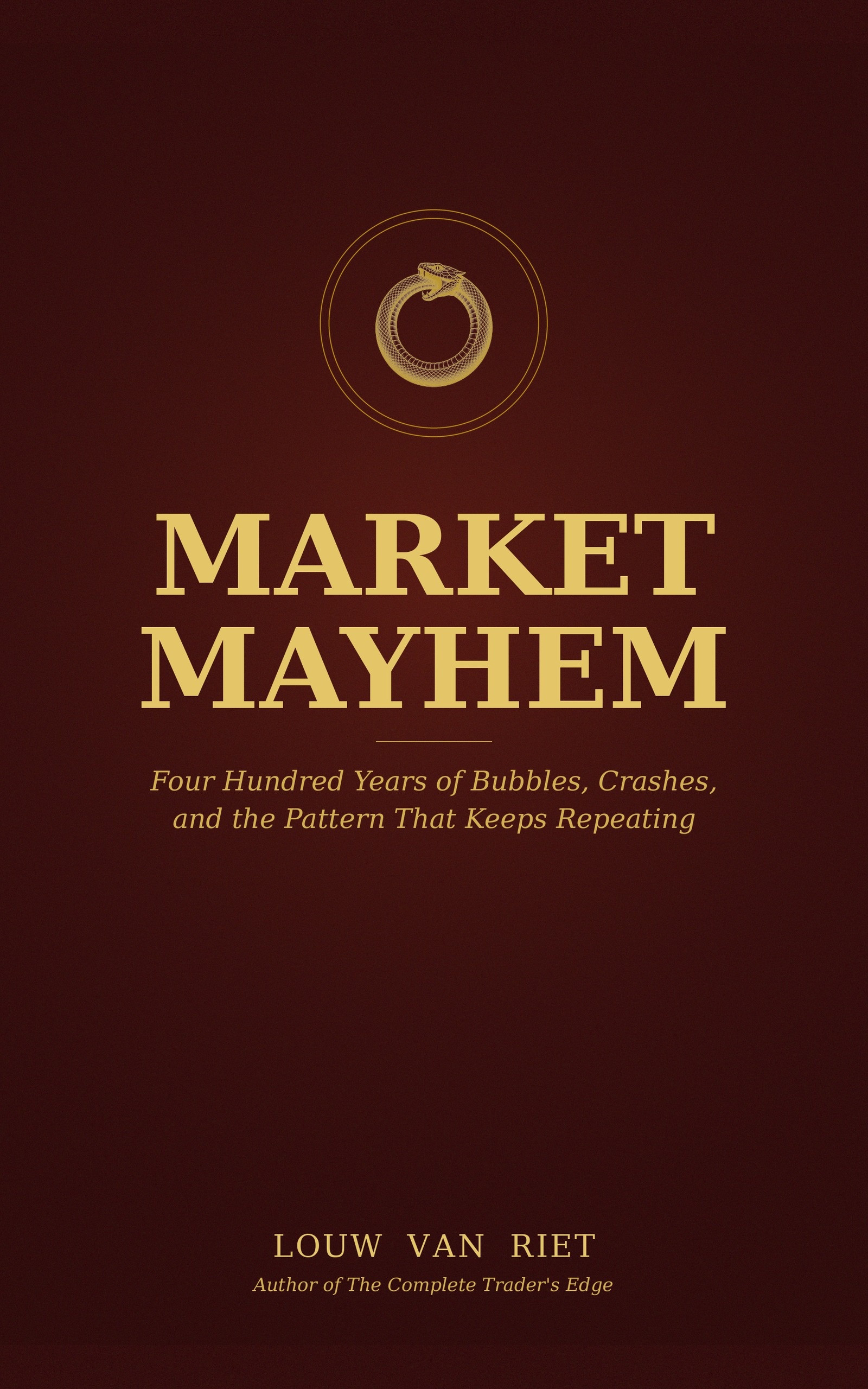 Market Mayhem
400 years of bubbles, crashes, and the pattern that keeps repeating.
Buy on Amazon →
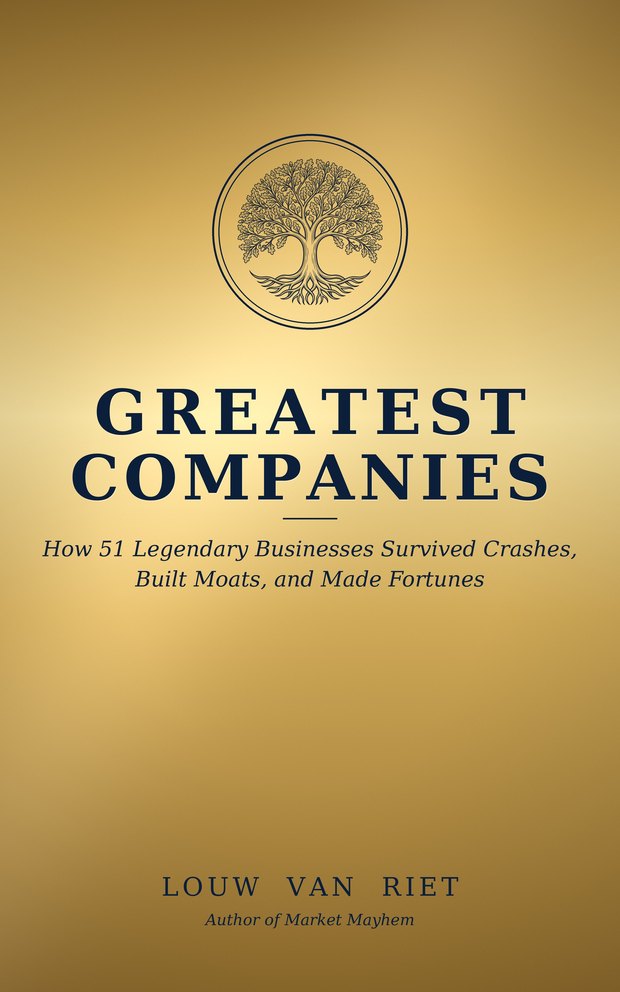 Greatest Companies
How the world's greatest companies were built — and what traders learn from them.
View on Amazon →
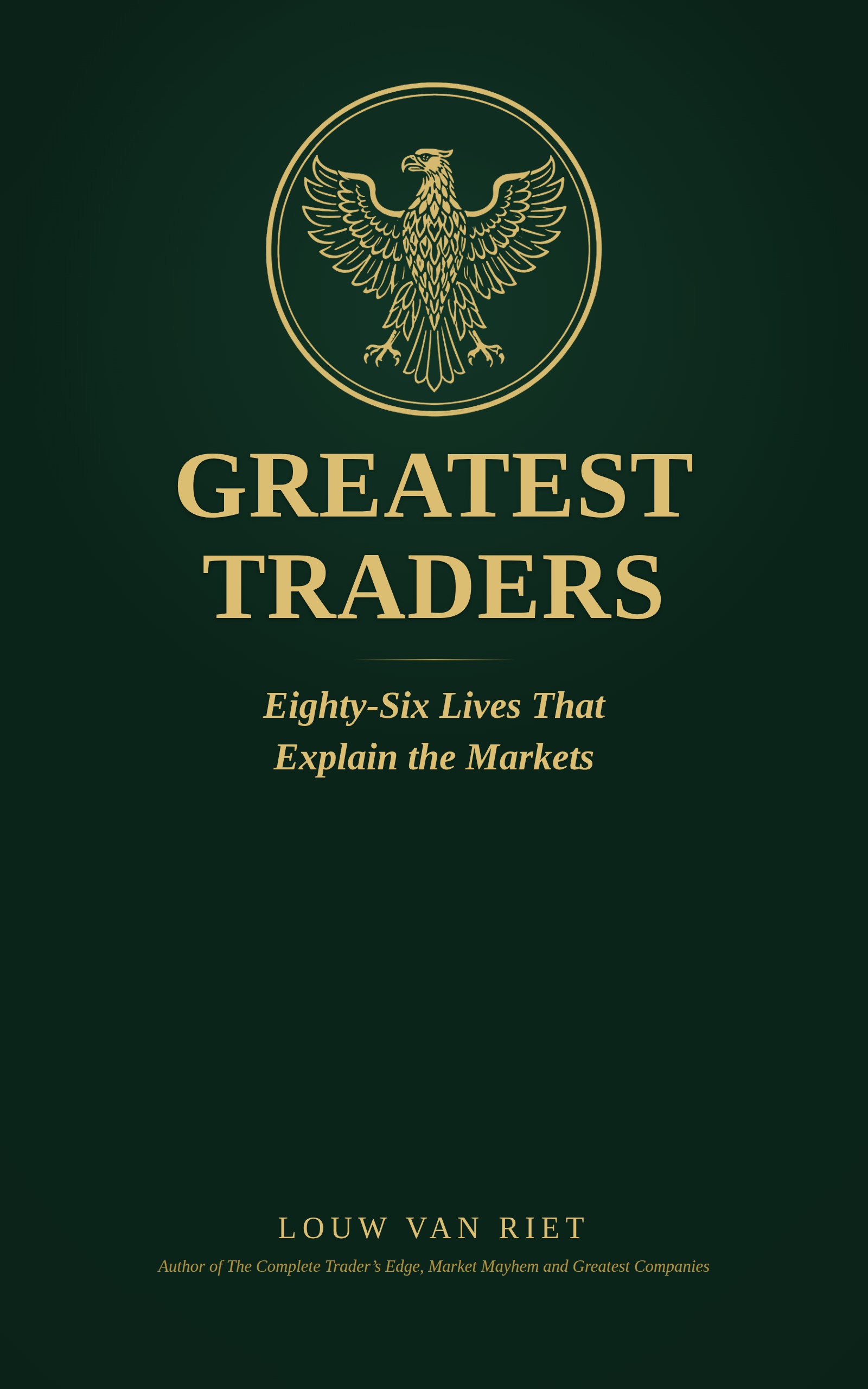 Greatest Traders
Eighty-six lives that explain the markets — Livermore to Madoff, told with the losses left in.
View on Amazon →