

Legendary Traders · Market Wizards
Jason Shapiro
The contrarian who made a career out of being on the opposite side of the crowd.
Contrarian futures trader · Crowded Market Report · Unknown Market Wizards
Last reviewed: August 2026. Sources: Jack Schwager’s Unknown Market Wizards, public interviews, and Shapiro’s own Crowded Market Report.
Jason Shapiro spent his early years as a trader losing money doing what felt right. Then he did something almost no one has the honesty to do: he studied his own trades, concluded that his instincts were reliably wrong, and built a system around betting against himself. When his gut screamed to buy, he learned to look for a reason to sell. He turned his own worst impulse — and the crowd’s — into an edge.
The result is one of the most distinctive records in the Schwager canon: two decades without a losing year, produced by a strategy that is negatively correlated to almost everything else. Shapiro is the Market Wizard who proves that if you cannot beat the crowd at its own game, you can make a living fading it — provided you have the discipline to survive being early.
Key Facts
| Known for | Contrarian futures trading using positioning data |
| Core tool | The weekly Commitments of Traders (COT) report |
| Experience | 30+ years; has managed portfolios and run a CTA business |
| Record | No losing years across the past two decades; returns largely uncorrelated to other strategies |
| Today | Runs Crowded Market Report — motto “Don’t Trade, Fade” |
| Featured in | Unknown Market Wizards (Jack Schwager), chapter “The Contrarian” |
The trader who learned to bet against himself
Shapiro’s professional journey stretches over three decades, across portfolio-management roles at investment firms and stretches running his own commodity trading advisor business handling substantial capital. But the story that matters is the early one. For years he traded without consistency, and the pattern in his losses eventually became impossible to ignore: he kept taking the popular side, the comfortable side, the side that felt obviously right — and it kept costing him.
His breakthrough was to invert. Instead of tracking price as the thing that discounts information, he began tracking positioning — who was already in the trade. His reasoning is disarmingly simple: if everyone who wants to be long is already long, there is no one left to buy, and the market can only fall. Extreme crowding is not confirmation; it is exhaustion. From that insight grew a fully contrarian method and, eventually, a record with no losing years across the past two decades.
Today he channels it through Crowded Market Report, a research and education business built around the same idea, under a slogan that doubles as his entire philosophy: don’t trade, fade.
The method: read the crowd, fade the extreme, wait for the turn
Shapiro’s process has three moving parts, and all three must line up.
The COT report tells him where the crowd is. Every week the CFTC publishes the Commitments of Traders report, which breaks futures positioning into groups: commercial hedgers, large speculators, and small speculators. Shapiro watches for extremes in speculator positioning. When speculators are piled up on one side, he wants to be on the other — which usually means siding with the commercial hedgers, the group that tends to be right at turning points.
News failure tells him the crowd is exhausted. Extreme positioning alone is not enough, because extremes can get more extreme. So Shapiro waits for the market to stop responding to news that should move it. When relentlessly bearish headlines can no longer push a market lower, everyone who was going to sell has already sold. The bad news has been fully discounted. That failure to react is his signal that the crowd is spent and a turn is forming.
The market must confirm. He does not simply catch a falling knife because positioning looks stretched. He waits for price to actually begin reversing in his direction before committing, using the market’s own behaviour as the final filter. Sentiment sets up the trade; price confirms it.
He treats loud, confident financial television as a useful contrarian input in its own right — when the consensus on air is unanimous, it often marks the very extreme he is looking to fade.
The defining lesson: positioning, not news, is the real discounting mechanism
The idea at the centre of Shapiro’s work is that markets do not bottom on good news or top on bad news — they bottom and top on participation. A market falls on bearish news only until every seller has sold; at that point the same bearish news becomes fuel for a rally, because there is no one left to act on it. Price does not discount information in the abstract; it discounts the positions people have actually taken.
That reframing is liberating, because it stops you arguing about whether the news is good or bad and makes you ask a more useful question: is anyone left to act on it? A stock everyone already hates and has already sold is far safer than a stock everyone loves and already owns. Shapiro built a career on that single distinction.
Where the Mind · Method · Money framework meets Shapiro
Method is the positioning read: COT extremes, news failure, and price confirmation stacked together to time turns against the crowd. It is a genuine system, not a hunch, and it is deliberately uncorrelated to trend-following and to the market itself.
Money is where Shapiro is uncompromising. His one absolute rule is a stop-loss on every position, no exceptions — because a contrarian who is early looks exactly like a contrarian who is wrong, and only the stop tells them apart in time. He also manages risk at the portfolio level, cutting size and adding inversely correlated trades when markets become dangerously correlated.
Mind is the core of the man. Fading the crowd means being uncomfortable almost all the time, holding a view the whole room disagrees with, and betting against your own natural instincts. Shapiro leans on a contrarian temperament and a meditation practice to sit with that discomfort. Without the psychology, the method is unlivable.
The honest counterweight
Contrarian trading is seductive on paper and lethal in practice for most people, and Shapiro would be the first to say so.
The central danger is that fading a trend can ruin you before the reversal ever arrives. Overcrowded markets can become far more overcrowded; a market that “should” turn can keep running for months. The graveyard of trading is full of contrarians who were eventually right but got carried out first. Shapiro survives this only because of two things most imitators skip: an unbreakable stop on every trade, and the patience to wait for the market to confirm the turn rather than guessing at it. Take away either and the same strategy becomes a wealth-destruction machine.
His edge is also specific. The COT report is a futures tool; reading it well is an interpretive art, not a plug-in formula, and it does not translate cleanly to someone trading a handful of stocks. And his years of early struggle are the part everyone forgets — the method only emerged after a long, expensive apprenticeship in getting it wrong. The clean record came later.
Finally, like many wizards who now run education businesses, Shapiro sells his research, so his public presence carries a commercial incentive. That does not diminish the record, but it is worth reading his content as a working trader would read any promoter’s: for the thinking, not as a signal service.
What to actually take from Jason Shapiro
You do not need his COT models to use his insight. Three ideas transfer to any trader.
First, ask who is left. Before taking a trade, consider whether the crowd is already positioned the way you want to go. If everyone who could buy has already bought, the upside is thin no matter how good the story sounds.
Second, watch for news failure. When a market stops falling on bad news or stops rising on good news, the crowd is fully committed and a turn may be near. That non-reaction is often more informative than the news itself.
Third, never fade without a stop. Being early is indistinguishable from being wrong until time passes, and only a predefined exit protects you in the gap. Contrarian conviction without a stop is not courage — it is how contrarians go broke.
Frequently asked questions
Who is Jason Shapiro?
Jason Shapiro is an American futures trader with over thirty years of experience, known for a contrarian strategy built on market positioning. He was profiled as “The Contrarian” in Jack Schwager’s Unknown Market Wizards and runs the research business Crowded Market Report.
What is Jason Shapiro’s strategy?
He fades the crowd. Using positioning data, he takes the opposite side of extreme speculator sentiment, siding with commercial hedgers, and times his entries around moments when markets stop responding to news — then waits for price to confirm the turn.
What is the COT report and how does he use it?
The Commitments of Traders report is a weekly CFTC publication showing how commercial hedgers, large speculators and small speculators are positioned in futures markets. Shapiro looks for extremes in speculator positioning as a contrarian signal that a trend is running out of participants.
What is “news failure”?
It is Shapiro’s timing tool: when a market can no longer fall on bad news (or rise on good news), it means everyone who was going to act has already acted. That failure to react signals that the crowd is exhausted and a reversal may be forming.
How does Jason Shapiro manage risk?
His one absolute rule is a stop-loss on every single position, placed where it would prove his thesis wrong. He also manages risk at the portfolio level, reducing size and adding inversely correlated trades when markets become highly correlated.
Can a retail trader copy Jason Shapiro?
The mindset transfers; the exact method is harder. Reading COT data well takes years, and contrarian trading without strict stops is dangerous. The usable lessons are to respect positioning, watch for news failure, and never fade a trend without a predefined exit.
Which book features Jason Shapiro?
Unknown Market Wizards (Jack Schwager, 2020), in the chapter “The Contrarian.”
Continue learning
- Chris Camillo — a fellow Unknown Market Wizard who also built an edge outside the mainstream.
- Larry Hite — the wizard who, like Shapiro, treats a stop on every trade as non-negotiable.
- Ed Seykota — the trend-following counterpoint to Shapiro’s contrarian, negatively correlated style.
- Victor Sperandeo — another master of reading market turns and avoiding losses.
- Market Wizards (book review) — our breakdown of the Schwager series Shapiro appears in.
- The Mind · Method · Money framework — the lens we use to read every trader on this site.
 The Complete Trader's Edge
The full Mind · Method · Money framework. 70 chapters.
View on Amazon →
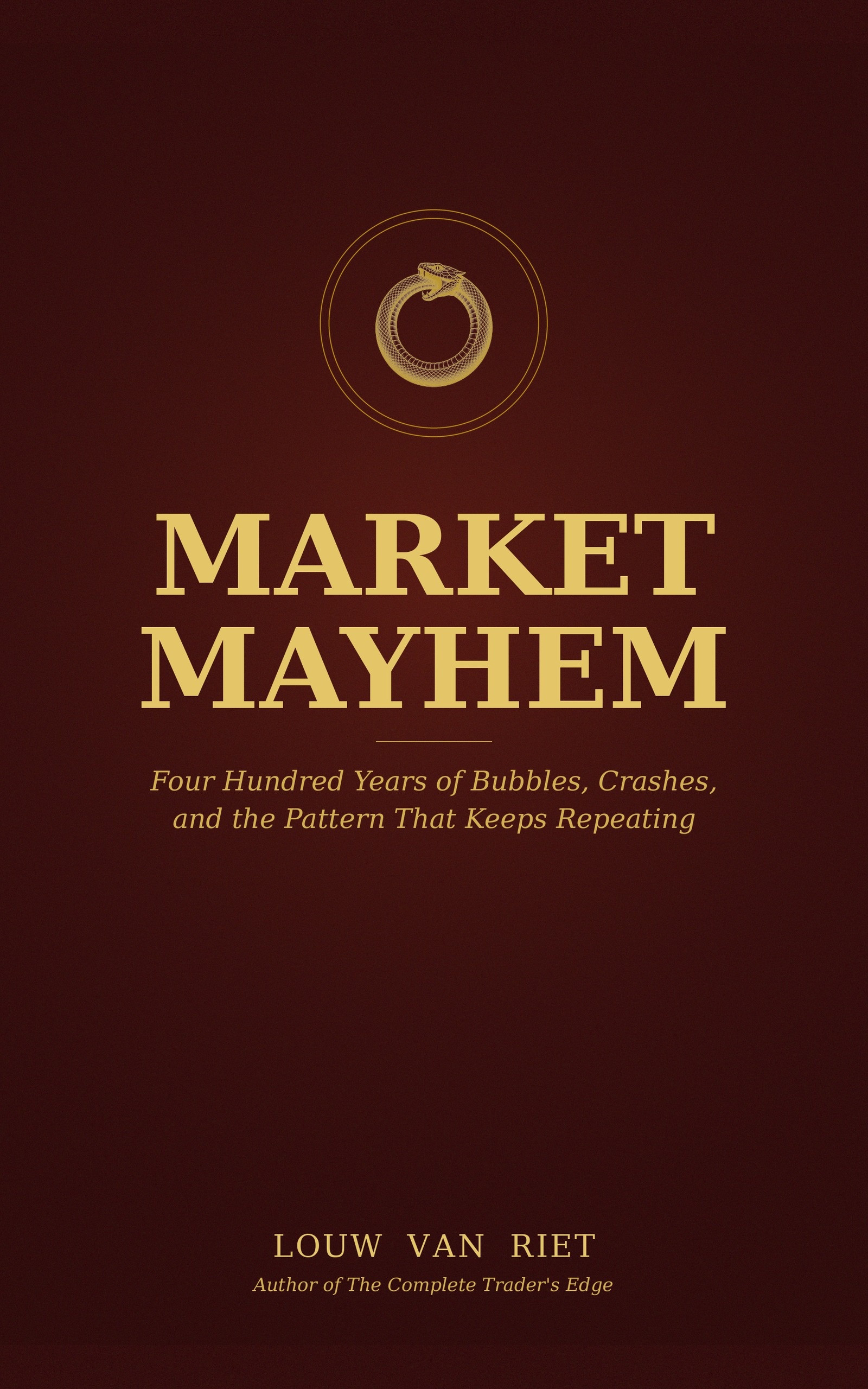 Market Mayhem
400 years of bubbles, crashes, and the pattern that keeps repeating.
Buy on Amazon →
 Greatest Companies
How the world's greatest companies were built — and what traders learn from them.
View on Amazon →
 Greatest Traders
Eighty-six lives that explain the markets — Livermore to Madoff, told with the losses left in.
View on Amazon →