

Legendary Traders · Market Wizards
Larry Hite
The trader who got rich by asking one question first: how much can I lose?
Systematic trend follower · Co-founder, Mint Investment Management · Market Wizards
Last reviewed: August 2026. Sources: Jack Schwager’s Market Wizards, Larry Hite’s The Rule (2019), and public records of Mint Investment Management.
Eighty-six lives read through Mind · Method · Money, from Livermore reading a chalkboard in 1892 to the traders still working from those ideas today. Told as they happened, with the losses left in, and every quotation traced to a source.
Most traders are seduced by the upside. They open a chart and ask what they could make. Larry Hite built one of the largest hedge funds of its era by refusing to ask that question first. His opening move on every trade was the opposite: not what can I win, but how much can I lose — and can I survive it. He described his own approach as facing the market backward, and it made him a fortune.
Hite is the Market Wizard who barely talks about how to make money. Read his Schwager interview and you get page after page about risk, ruin, and the psychology of not blowing up. That is the whole point. His entire edge was the belief that if you take care of the downside relentlessly, the upside takes care of itself.
Key Facts
| Known for | Risk-first systematic trend following |
| Firm | Mint Investment Management (co-founded 1981) |
| Track record | Composite compounded above 30% a year before fees over a 13-year tenure |
| Milestone | Grew Mint into the world’s largest commodity trading advisor; first to raise over $1 billion |
| Core rule | Never risk more than a tiny fraction of capital on any single trade |
| Featured in | Market Wizards (Jack Schwager); author of The Rule (2019) |
From Brooklyn underdog to the largest fund of its day
Hite’s story is not the usual tale of a maths prodigy. He grew up working-class in Brooklyn, dyslexic and partially sighted, told early and often that he was not built for success. He drifted through jobs, including a spell as a rock-concert promoter, before landing as a stockbroker. That outsider’s eye turned out to be his advantage: he could see how much of the industry ran on confident talk that had no bearing on outcomes.
In 1981 he co-founded Mint Investment Management with partners including Peter Matthews. Mint was fully systematic — rule-governed, computerised, stripped of the human urge to override the plan. It worked. By the end of the decade Mint had become the largest commodity trading advisor in the world by assets under management, and it was the first firm of its kind to raise more than a billion dollars. Over Hite’s roughly thirteen-year tenure, the composite of funds compounded at more than 30% a year before fees. He later moved into a family office and further ventures, and told the fuller story of his life in his 2019 book, The Rule.
The method: markets are just risk, reward, and money
Hite reduced trading to a set of ideas simple enough to state in a sentence and hard enough to follow that most people never do.
Follow the trend, mechanically. Mint did not forecast. It waited for a market — any market, currency or commodity or bond — to start trending, then followed that trend with a defined system. The system did not care what it was trading. It cared only whether price was moving and whether the risk-reward of the current signal met its criteria. Removing the human from the decision removed the ego, the hope, and the fear that wreck discretionary traders.
Cap the loss on every single trade. This is the heart of Hite. Before any position went on, its maximum loss was already defined and deliberately tiny — a small fraction of total capital. No single trade could ever hurt the fund badly, no matter how wrong it went. He was fond of pointing out that if you never bet, you cannot win, but if you lose all your chips, you cannot bet at all. Staying in the game was the precondition for everything else.
Diversify across many uncorrelated markets. Because the system was abstract, Mint could run it across dozens of markets at once. Losses in one were offset by trends in another, smoothing the ride and keeping any single position from mattering too much. Risk was controlled at the portfolio level as well as the trade level.
Respect the four kinds of bets. Hite framed every decision as one of four outcomes: good bets, bad bets, winning bets, and losing bets. The trap most people fall into is winning a bad bet — getting rewarded for a reckless decision and learning exactly the wrong lesson. He cared about the quality of the bet, not the result of any one roll.
The defining lesson: survival is the strategy
The reason Hite spends so little time on entries is that he believed entries barely matter. What matters is that you are still solvent, still composed, and still able to place the next trade when the big trend finally comes. Ruin is the one outcome you can never recover from, so avoiding it is not a defensive footnote to the strategy — it is the strategy.
Everything else in his approach flows from that single commitment. The tiny per-trade risk, the diversification, the mechanical rules, the indifference to being wrong often: all of it exists to guarantee he lives to trade another day. Profits, in his framing, are simply what accrues to a trader who has made losing catastrophically impossible.
Where the Mind · Method · Money framework meets Hite
Money is where Hite lives, more completely than almost any trader we cover. His whole reputation rests on position sizing and loss control. Capping risk at a small fraction of capital per trade, controlling exposure across a diversified book, and treating survival as the first objective — this is the Money pillar in its purest institutional form.
Method supports it. Systematic trend following gave Hite a repeatable, testable process that removed discretion and let the risk rules run without interference. The method was almost deliberately unglamorous; its job was to execute the risk framework consistently, not to be clever.
Mind is quietly present too. It takes real emotional discipline to endure a strategy that is wrong more often than it is right, to sit through long flat stretches, and to never override the system in a moment of conviction. Hite built machines partly so his own psychology could not sabotage the plan — which is itself a profound piece of self-knowledge.
The honest counterweight
Hite’s philosophy is as close to universally sound as trading advice gets, but the full picture still needs stating plainly.
His 30%-plus returns came from a specific era — the 1980s — when trending commodity and currency markets, and unusually high interest rates, were extraordinarily kind to systematic trend followers. Part of Mint’s famous “guaranteed fund” structure worked precisely because interest rates were high enough to protect client capital while a small slice traded. That backdrop does not repeat on demand, and trend following has endured long, painful flat stretches in the decades since, when choppy markets refused to trend.
His edge was also institutional. Running dozens of markets with computerised systems, low costs, and deep diversification is a professional’s game; a retail trader with a handful of positions cannot replicate that smoothing. And “risk only a tiny fraction per trade” is simple to say and brutally hard to hold to when you are staring at a run of small losses and the temptation to size up screams at you. The rule is not the hard part. Obeying it for years is.
Finally, Hite himself is refreshingly undogmatic: in his own writing he concedes that buy-and-hold, the near-opposite of his approach, can also work, and that different styles make up a healthy ecosystem. He is not selling his way as the only way. Anyone who quotes him as gospel should extend him the same honesty.
What to actually take from Larry Hite
You do not need a systematic fund to use the most valuable thing Hite proved. Three ideas transfer to any trader.
First, ask the loss question before the profit question. On every trade, define your maximum loss before you enter, and make sure it is small enough that being wrong is a non-event. This one habit prevents more blow-ups than any entry signal ever created.
Second, judge the bet, not the outcome. A reckless trade that happens to win is still a bad trade. Grade yourself on whether your decisions were sound and properly sized, not on whether the last roll paid off.
Third, protect your ability to keep playing. Every rule Hite followed served one goal: never be knocked out of the game. Treat staying solvent and composed as your first job, and let the profits be the by-product of not losing.
Frequently asked questions
Who is Larry Hite?
Larry Hite is an American hedge fund manager and a pioneer of systematic, computerised trend following. He co-founded Mint Investment Management, grew it into the world’s largest commodity trading advisor, and was profiled in Jack Schwager’s Market Wizards for his risk-management philosophy. He later wrote The Rule (2019).
What is Larry Hite famous for?
For putting risk management ahead of everything else. His signature idea is to approach markets “backward” — asking first how much you can lose on a trade, keeping that loss tiny, and letting profits follow from never blowing up.
What was Mint Investment Management?
The systematic trend-following firm Hite co-founded in 1981. By the late 1980s it was the largest commodity trading advisor in the world by assets and the first of its kind to raise more than a billion dollars, with composite returns above 30% a year before fees during his tenure.
What is Hite’s core risk rule?
Never risk more than a very small fraction of total capital on any single trade, so that no one position can seriously damage the account. Combined with broad diversification, this made ruin extremely unlikely.
What are Hite’s “four kinds of bets”?
Good bets, bad bets, winning bets, and losing bets. The dangerous one is winning a bad bet, because it rewards reckless behaviour and teaches the wrong lesson. Hite focused on the quality of the decision, not the result of a single trade.
Is trend following still profitable today?
It can be, but it is regime-dependent. Hite’s biggest returns came from the strongly trending, high-interest-rate markets of the 1980s. Trend following has since suffered long flat and drawdown periods in choppy markets, which is why the risk discipline matters more than the entry.
What book did Larry Hite write?
The Rule: How I Beat the Odds in the Markets and in Life — and How You Can Too (2019), part memoir and part trading philosophy, written with Michael Covel.
Continue learning
- Ed Seykota — the other forefather of system trading, who turned trend following into four simple rules.
- Tom Basso — the systematic trend follower who proved exits and sizing matter more than entries.
- Monroe Trout — the quant who, like Hite, made risk-adjusted return the whole scorecard.
- William Eckhardt — the mathematician who proved bet size and the exit outweigh the entry.
- Market Wizards (book review) — our full breakdown of the Schwager classic Hite appears in.
- The Mind · Method · Money framework — the lens we use to read every trader on this site.
 The Complete Trader's Edge
The full Mind · Method · Money framework. 70 chapters.
View on Amazon →
The Complete Trader's Edge
The full Mind · Method · Money framework. 70 chapters.
View on Amazon →
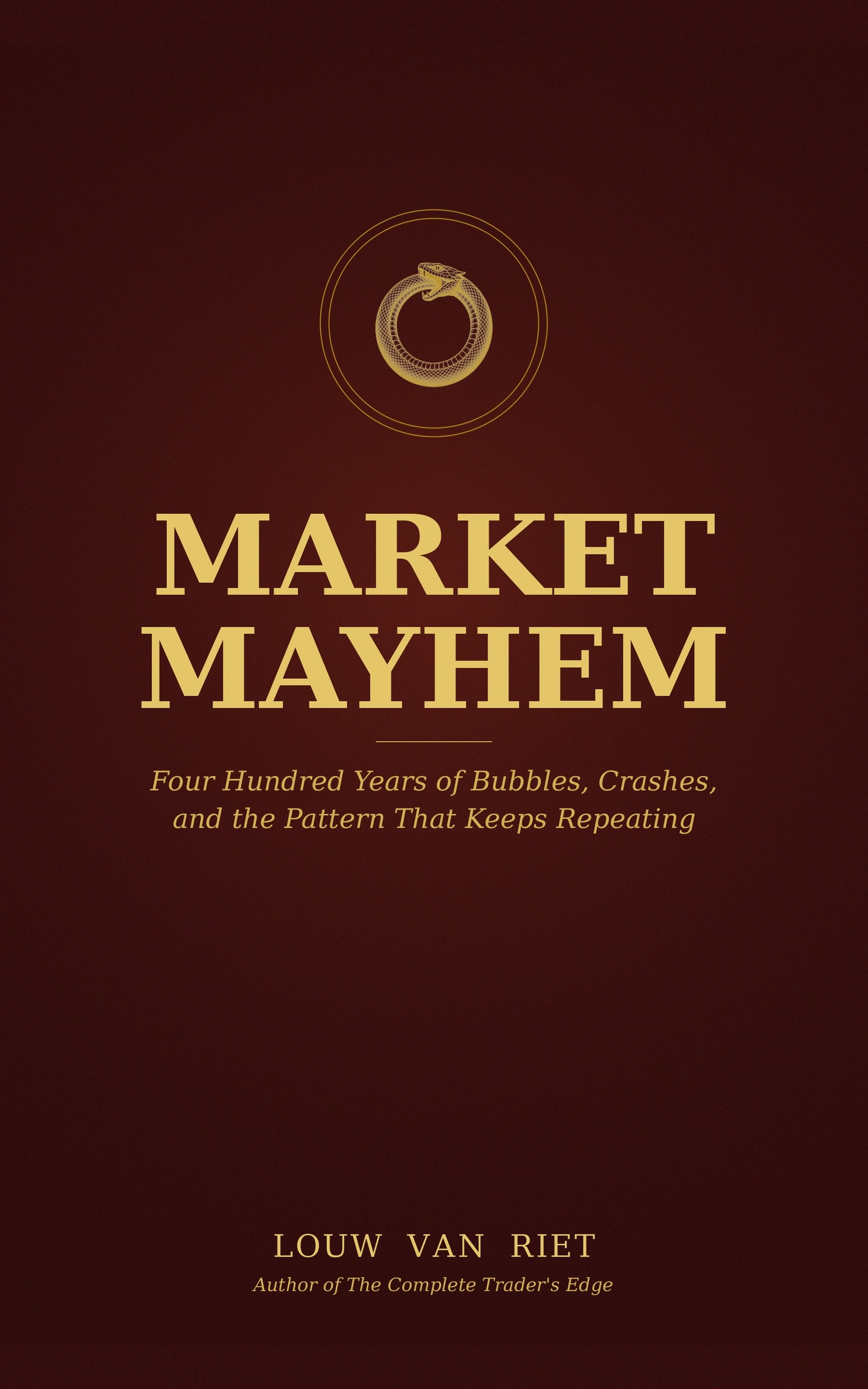 Market Mayhem
400 years of bubbles, crashes, and the pattern that keeps repeating.
Buy on Amazon →
Market Mayhem
400 years of bubbles, crashes, and the pattern that keeps repeating.
Buy on Amazon →
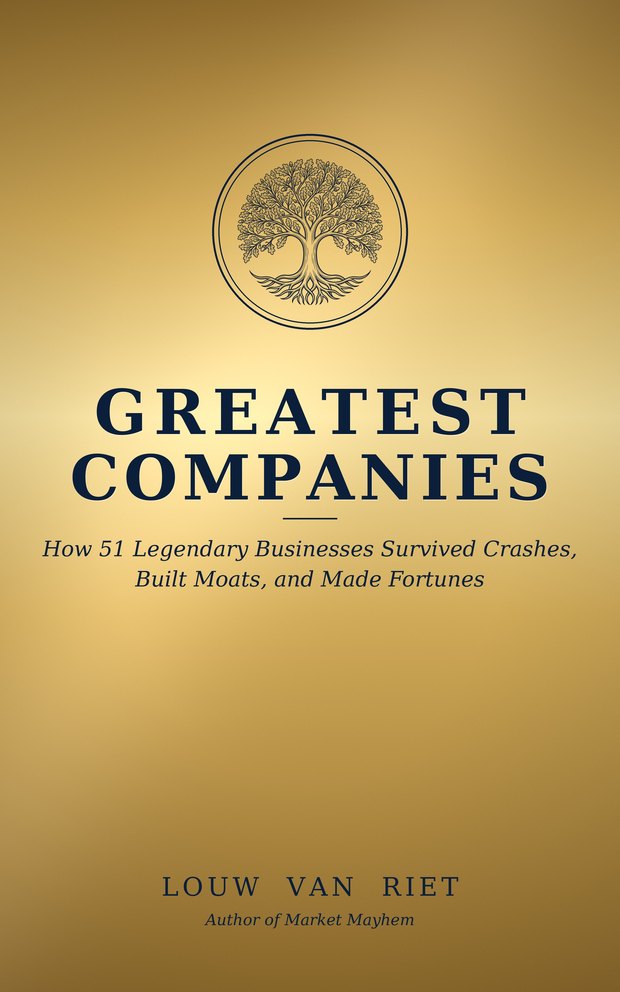 Greatest Companies
How the world's greatest companies were built — and what traders learn from them.
View on Amazon →
Greatest Companies
How the world's greatest companies were built — and what traders learn from them.
View on Amazon →
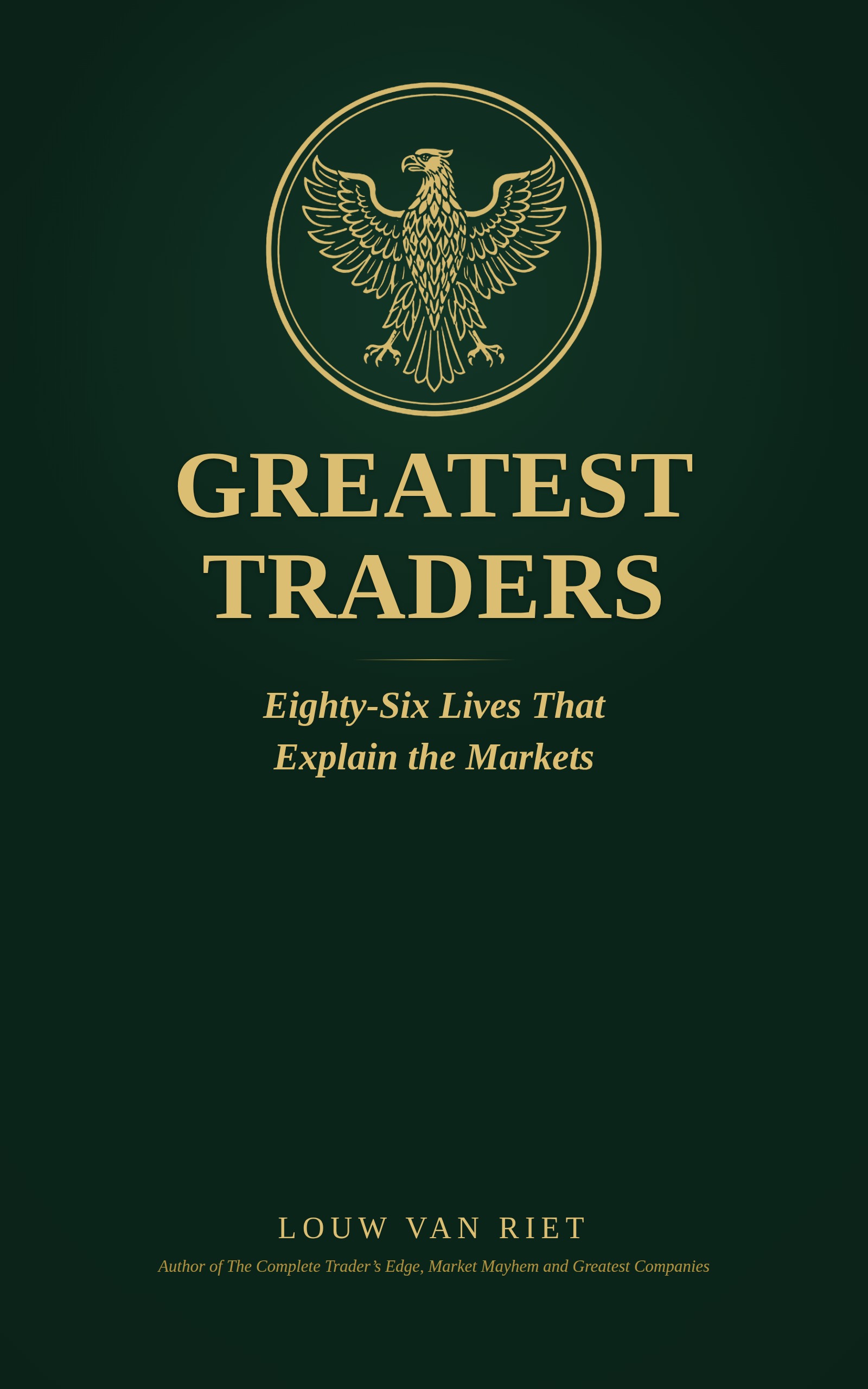 Greatest Traders
Eighty-six lives that explain the markets — Livermore to Madoff, told with the losses left in.
View on Amazon →
Greatest Traders
Eighty-six lives that explain the markets — Livermore to Madoff, told with the losses left in.
View on Amazon →