

Explore all 80 books in the Trader’s Library →
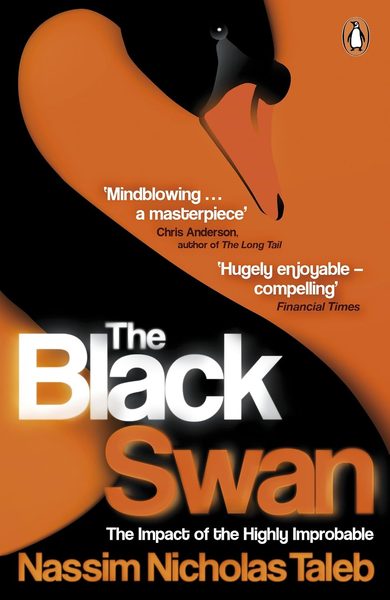
Some books teach you a strategy. The Black Swan teaches you why most strategies eventually break, and why the thing that ends a career is almost always the thing nobody modelled. Nassim Taleb’s 2007 work is not a trading manual. It is an argument about the limits of prediction, and it is one every trader needs to lose an argument with at least once.
The core idea is simple and uncomfortable. The events that shape markets and lives are the rare, extreme, unpredictable ones, and we are systematically blind to them until after they happen. We build models on the assumption that tomorrow looks like yesterday, and then a single outlier erases years of careful gains.
This review covers the book’s central argument, what it means for how you size and hedge, where Taleb’s style gets in his own way, and whether the philosophy translates into anything you can actually do at the screen.
At a Glance
| Author | Nassim Nicholas Taleb |
| First Published | 2007 · 2nd edition 2010 |
| Pages | ~400 |
| Genre | Risk, probability, philosophy |
| Difficulty | Intermediate to advanced — digressive, demanding |
| Best For | Traders who want to understand tail risk and stop trusting tidy models |
| Skip If | You want step-by-step risk rules. This is a worldview, not a checklist. |
OVERALL RATING: 8.5 / 10
Who Should Read This Book
| Reader | Verdict | Why |
|---|---|---|
| New trader (0–1 year) | Read Fooled first | Start with Fooled by Randomness, then graduate to this. The ideas build. |
| Intermediate (1–3 years) | Read it | You have probably been hit by one black swan already. This explains what happened and how to position for the next. |
| Advanced / professional | Essential | Tail risk is the professional’s permanent enemy. This is the definitive popular treatment of it. |
| SMC / ICT trader | Read it | It reframes why a single news-driven liquidity event can blow past every level you mapped |
| Options / derivatives trader | Required | Taleb made his name on convexity and tail hedging. This is the book where the worldview behind it is laid out. |
| Reader who hates digression | Be warned | Taleb wanders, lectures, and settles scores. The ideas are worth the friction, but the friction is real. |
The Book in Context
The Black Swan is the central book of Taleb’s multi-volume project on uncertainty, the Incerto, which also includes Fooled by Randomness, Antifragile, and Skin in the Game. It was published in 2007, months before the financial crisis appeared to prove its thesis in real time, which did no harm to its sales or its reputation.
Taleb is a former options trader turned scholar, and the book carries both backgrounds. The trader’s instinct for tail risk and the academic’s appetite for argument run side by side, sometimes productively and sometimes at war. The second edition adds a long essay, “On Robustness and Fragility,” that begins to bridge toward the practical ideas he would develop fully in Antifragile.
The Core Argument: We Are Blind to the Extreme
A black swan, in Taleb’s definition, has three features. It is an outlier beyond normal expectations, it carries an extreme impact, and after the fact we construct an explanation that makes it seem predictable. The 1987 crash, the 2008 crisis, and every sudden gap that wiped out a “safe” position fit the pattern.
His deeper claim is that most of human and market history is driven by these rare events, not by the predictable middle of the distribution, and that our tools, models, and intuitions are built for the middle. We are pattern-finding animals dropped into a world where the patterns that matter most are the ones we cannot see coming. We mistake absence of evidence for evidence of absence, and we trust track records that quietly omit the blow-up that has not happened yet.
“It is easy to see that life is the cumulative effect of a handful of significant shocks.”
— Nassim Nicholas Taleb
The Ideas That Change How You Trade
| The Idea | What It Means for Your Risk |
|---|---|
| Extremistan vs Mediocristan | Markets live in Extremistan, where a single observation can dominate the whole sample. Risk models built on bell-curve averages understate exactly the events that matter. |
| The turkey problem | A turkey fed daily grows more confident right up to the day before Thanksgiving. A rising equity curve can mean your risk is building, not falling. Confidence from a calm track record is the trap. |
| Silent evidence | You only hear from the survivors. The strategy everyone praises may simply not have met its black swan yet. Judge a method by what could end it, not by its winning streak. |
| The barbell | Keep most of your capital extremely safe and a small slice exposed to large asymmetric upside. Avoid the fragile middle where a tail event quietly ruins you. |
The practical core: position so that no single event can end you, and stay exposed to the rare events that pay.
The Trading Application Taleb Leaves Half-Stated
Taleb is better at diagnosis than prescription, so the practical translation is partly left to the reader. Here is the version that matters for an active trader.
First, never let a single position be capable of ending you. The 1% risk rule and a hard cap on leverage are black-swan insurance, because the gap that jumps your stop is precisely the event the book is about. Second, distrust strategies whose track record is suspiciously smooth. A consistently calm equity curve can mean you are selling tail risk and collecting small premiums in front of a steamroller. Third, treat the rare large winner as the point, not the nuisance. If a handful of trades produce most of your return, your job is to survive the quiet periods and stay positioned for the outliers rather than over-trading the middle.
Where the Book Falls Short
- Taleb’s style is divisive. The book digresses constantly, lectures the reader, and spends real estate settling scores with academics and forecasters. The ideas survive it, but the tone costs him readers.
- Long on diagnosis, short on prescription. It tells you the world is wilder than your models admit and is far less specific about what to do on Monday morning. The barbell is the main concrete prescription, and it is thinly developed here.
- Repetitive. The central idea is stated, restated, and illustrated many times. A sharp reader gets it early and then waits for the book to catch up.
- Easy to misread as fatalism. Some readers conclude that since nothing is predictable, planning is pointless. That is the opposite of the lesson, which is about robust positioning, not surrender.
How the Book Fits the Mind · Method · Money Framework
| Pillar | Contribution | What the Book Delivers |
|---|---|---|
| MIND | PRIMARY | Intellectual humility, the narrative fallacy, and a permanent suspicion of your own certainty |
| METHOD | NONE | No setups or analysis. It questions the reliability of prediction itself. |
| MONEY | PRIMARY | Tail-aware position sizing, the barbell, and the case for robustness over optimisation |
The book sits on the Mind and Money pillars of the Mind · Method · Money framework. It is the philosophical backbone of survival-first risk management, the reason the 1% rule and a hard leverage cap are not timidity but insurance against the event that has not arrived yet.
Read This Instead Of / Read This After
| Relationship | Book | Why |
|---|---|---|
| Read before | Fooled by Randomness by Nassim Taleb | The earlier, more accessible Incerto book. Read it first, then come here for the deeper argument. |
| Read after | Antifragile by Nassim Taleb | Where Taleb turns the diagnosis into a positive programme: how to benefit from disorder rather than just survive it |
| Read alongside | The Psychology of Money by Morgan Housel | Housel’s “tails drive everything” is Taleb’s thesis in gentle, practical form |
| Read for the mechanics | Trade Your Way to Financial Freedom by Van Tharp | Turns tail-awareness into concrete position-sizing rules |
Final Verdict: Should You Read This Book in 2026?
Yes, with patience for the style. The Black Swan will not give you a setup or a rule sheet, and Taleb will test your tolerance for digression. But it will permanently change how you think about risk, and that change is worth more than any single strategy. After this book you stop asking “what is most likely” and start asking “what could end me,” which is the question that keeps traders alive.
Read Fooled by Randomness first if you are new to Taleb. Then read this for the full argument, and let it make you a little more humble and a lot more robust.
CTE Rating Breakdown
8.5/10
Worldview-Altering
| Readability | 6 | |
| Actionability | 6 | |
| Timelessness | 10 | |
| Beginner-Friendly | 5 | |
| Modern Relevance | 10 |
Ready to read it?
Get the second edition with the “On Robustness and Fragility” essay.
Frequently Asked Questions
What is The Black Swan about?
It argues that rare, extreme, unpredictable events shape markets and history far more than the predictable everyday events we build our models around, and that we are systematically blind to them until after they occur.
Is it useful for traders?
Very, as a risk philosophy. It will not give you setups, but it reframes position sizing, leverage, and the danger of smooth track records in a way that makes you size for survival rather than for the comfortable middle of the distribution.
Should I read The Black Swan or Fooled by Randomness first?
Fooled by Randomness first. It is shorter and more accessible, and it introduces the ideas that The Black Swan develops in depth.
What is a black swan event?
An event that is an outlier beyond normal expectations, carries an extreme impact, and is rationalised as predictable only after it has happened. Market crashes are the classic example.
Is the book hard to read?
Moderately. The ideas are clear but Taleb’s style is digressive and combative, with frequent tangents and arguments against forecasters and academics. The substance rewards the effort.
What is the barbell strategy?
Keeping the large majority of your capital extremely safe while exposing a small portion to large asymmetric upside, and avoiding the fragile middle where a tail event can quietly ruin you. It is Taleb’s main concrete prescription.
What is the single most important takeaway?
Stop trying to predict the rare event and instead position so that no single event can end you, while staying exposed to the rare outcomes that pay. Robustness beats forecasting.
About the Author
Nassim Nicholas Taleb (b. 1960)
Nassim Nicholas Taleb is a former options trader turned scholar and essayist. He spent years on derivatives desks specialising in tail risk before turning to writing, and that hands-on experience of the rare, ruinous event runs through everything he publishes. He is now best known for his work on uncertainty, probability, and risk.
Other notable works: the rest of the Incerto series, including Fooled by Randomness (2001), Antifragile (2012), and Skin in the Game (2018).
Whatever you make of his style, Taleb did more than any other modern writer to put tail risk at the centre of how serious practitioners think about markets.
Continue Learning
- Fooled by Randomness Book Review (2026)
- The Psychology of Money Book Review (2026)
- The Three Pillars: Mind, Method, Money
- Trading Psychology: The Complete Guide
- The Complete Trader’s Edge — The Book
 The Complete Trader's Edge
The full Mind · Method · Money framework. 70 chapters.
View on Amazon →
The Complete Trader's Edge
The full Mind · Method · Money framework. 70 chapters.
View on Amazon →
 Market Mayhem
400 years of bubbles, crashes, and the pattern that keeps repeating.
Buy on Amazon →
Market Mayhem
400 years of bubbles, crashes, and the pattern that keeps repeating.
Buy on Amazon →
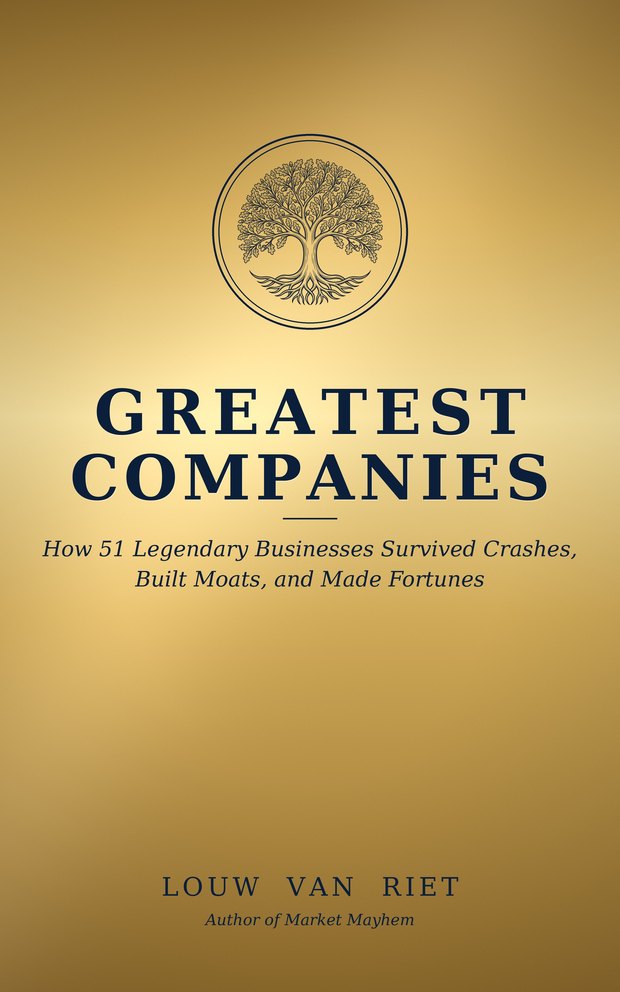 Greatest Companies
How the world's greatest companies were built — and what traders learn from them.
View on Amazon →
Greatest Companies
How the world's greatest companies were built — and what traders learn from them.
View on Amazon →