

Notice what happens in your body the moment before you break a rule. There is a small release. Adding to the losing position eases the discomfort of being wrong. Closing the winner early ends the tension of watching profit fluctuate. Standing aside during the ugly, choppy open feels sensible. Each action arrives wearing the face of good judgement, and each one is the market quietly buying your edge back from you at a discount. This is the comfort trap.
The Trading Comfort Zone Is Where the Losses Live
Trader and author Mikkel Hougaard argues that normal behaviour is the losing edge: that the actions which feel natural in markets are, on average, the ones that lose, and that profitable trading requires tolerating what feels wrong. Treat Hougaard’s claim as a working hypothesis rather than a proven law. Then test it where it can actually be tested, against your own trade record, and see how often the rule you broke was broken in the direction of comfort.
The mechanism is not mysterious. Markets are one of the few environments where the emotionally correct response and the mathematically correct response systematically diverge. In most of life, discomfort signals danger and relief signals safety, and following those signals keeps you alive. In markets, discomfort frequently signals that you are holding a position the crowd wants to be rid of, and relief frequently signals that you have joined them.
Why the Wrong Move Feels Right
Every comfort-seeking behaviour has a documented bias underneath it. Averaging into a loser feels like conviction; it is the risk-seeking-in-losses half of prospect theory. Snatching a profit feels like prudence; it is the risk-aversion-in-gains half. Skipping the trade after two losses feels disciplined; it is recency dressed as caution. Sizing up after a hot streak feels earned; it is overconfidence with a spreadsheet.
The pattern is consistent enough to be useful as a signal. When an in-trade action promises immediate emotional relief, the odds are high that it also transfers expectancy to the other side of the trade. Relief is not evidence. Relief is a fee.
DO THIS
Install a single in-trade rule: when an action feels relieving, pause before taking it. Ask one question, out loud if you must. “Am I doing this because the plan says so, or because it will make me feel better right now?” If the answer is the second, the action is not a decision; it is a symptom. Return to the written plan and execute what it says.
Discomfort Is Not the Goal
This idea is easily corrupted, and the corruption is dangerous, so state the limit plainly. The claim is not that discomfort indicates a good trade. Recklessness is deeply uncomfortable and reliably ruinous. Holding an unstopped position is agonising and idiotic. A trader who inverts the rule into “do whatever scares me” has swapped one emotional compass for another and will find the second one considerably more expensive.
The correct formulation is narrower. Within a plan you have written and tested, the moments where following the plan feels bad are the moments where following the plan pays. The plan supplies the direction. The discomfort merely tells you that you have arrived at the place where most participants leave, which is exactly where edge is harvested. Comfort inside an untested plan is not a virtue; it is ignorance that has not been billed yet.
Structure Beats Sensation
Because the sensation is unreliable and the plan is not, the durable answer is to reduce the number of in-trade decisions available to you. Bracketed stops, pre-written exits, an entry trigger specified before the open. Each removes a moment where relief could vote. What remains is the small set of situations where you must hold your nerve consciously, and those are manageable in a way that a continuous stream of micro-decisions never is.
On the Trader’s Roadmap, the comfort trap is a tier-four Mind node requiring both tilt profiles and prospect theory, and it gates watching R rather than currency. That dependency is exact: you cannot stop chasing relief until you can see the two machines, tilt and prospect theory, that manufacture the urge.
Catch the relief impulse in real time with the free Edge Companion check-in, and work the full Mind pillar on the Trader’s Roadmap.
 The Complete Trader's Edge
The full Mind · Method · Money framework. 70 chapters.
View on Amazon →
The Complete Trader's Edge
The full Mind · Method · Money framework. 70 chapters.
View on Amazon →
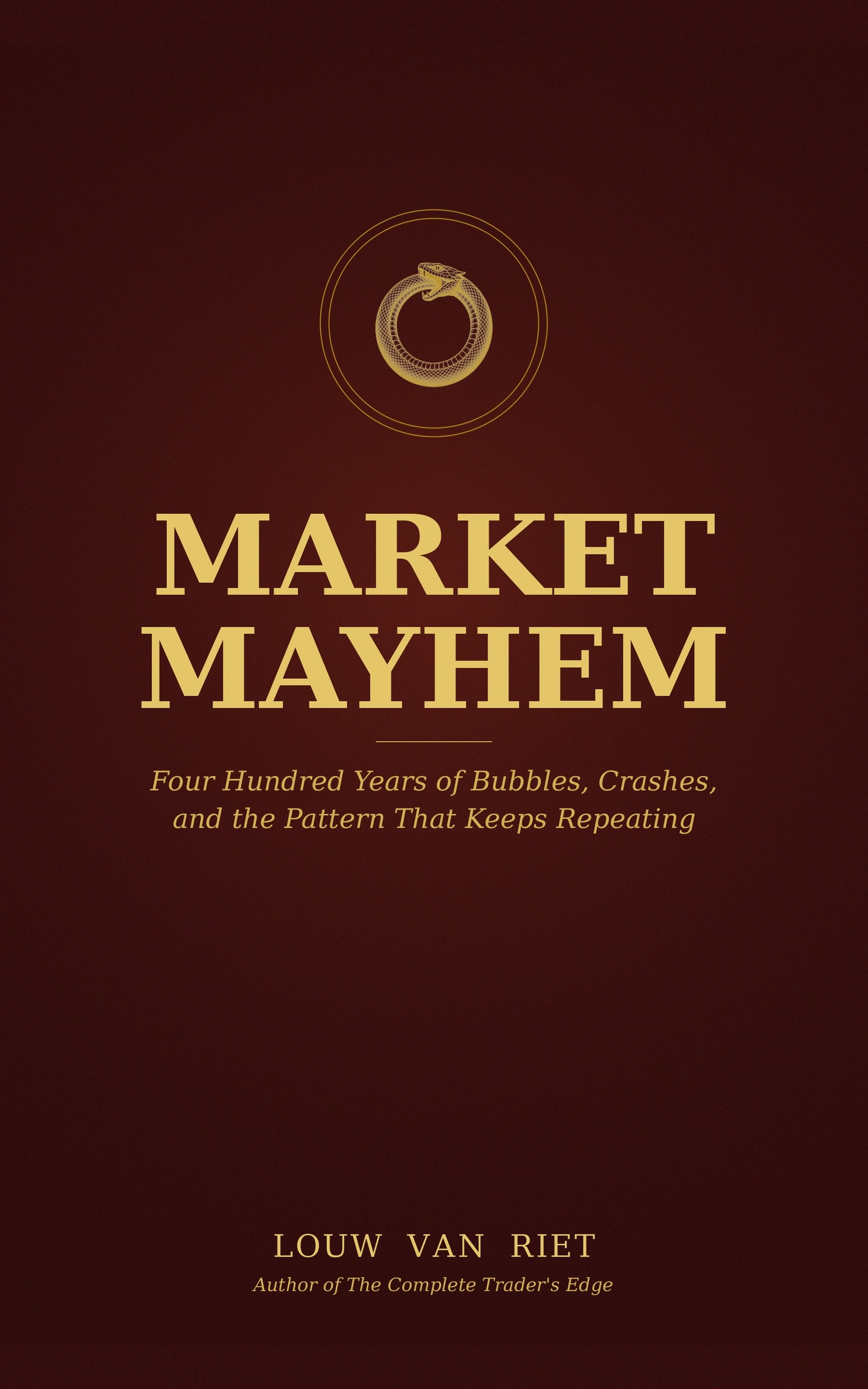 Market Mayhem
400 years of bubbles, crashes, and the pattern that keeps repeating.
Buy on Amazon →
Market Mayhem
400 years of bubbles, crashes, and the pattern that keeps repeating.
Buy on Amazon →
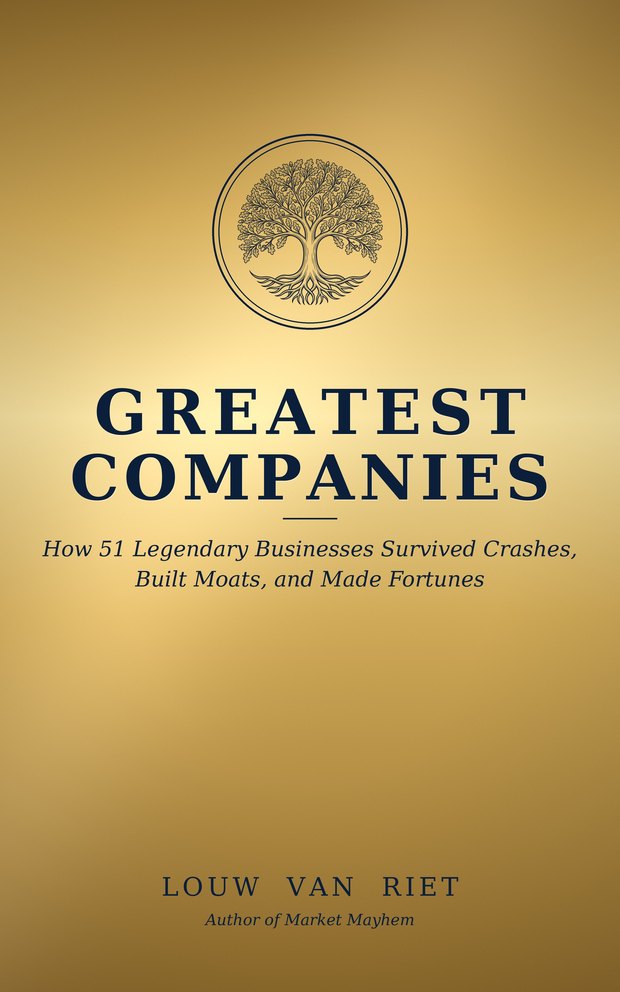 Greatest Companies
How the world's greatest companies were built — and what traders learn from them.
View on Amazon →
Greatest Companies
How the world's greatest companies were built — and what traders learn from them.
View on Amazon →
 Greatest Traders
Eighty-six lives that explain the markets — Livermore to Madoff, told with the losses left in.
View on Amazon →
Greatest Traders
Eighty-six lives that explain the markets — Livermore to Madoff, told with the losses left in.
View on Amazon →