

Explore all 80 books in the Trader’s Library →
Most technical analysis books try to convince you their patterns work. This one opens by telling you that most technical analysis does not work, that markets are mostly random, and that the burden is on you to prove any edge exists at all. It is the rare TA book written by someone who sounds like he would fail his own ideas in testing if the data told him to.
That honesty is the whole reason it belongs near the top of this shelf. Adam Grimes takes the discretionary chart-reading tradition and runs it through a quantitative filter: markets are dominated by noise, a small amount of exploitable non-randomness exists, and the trader’s job is to find that minority with statistical rigour and then execute it with discipline. It is technical analysis with the superstition removed and the accountability added.
The catch is that this is demanding, testing-heavy work that hands you a research program rather than a system. It is also, by the numbers this site scores, a specialist book whose difficulty drags the axis mean well below what the quality deserves. The final section explains the gap in full, because the gap is real.
At a Glance
| Author | Adam Grimes |
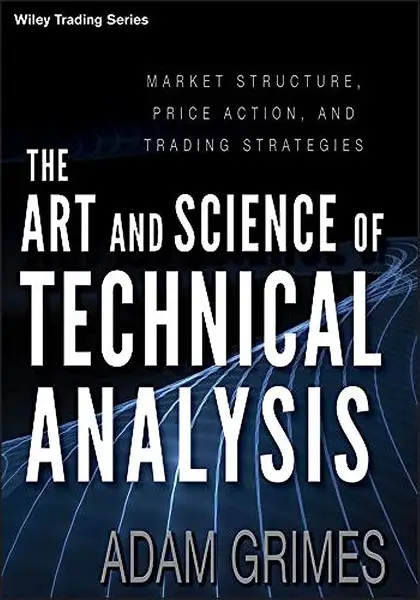
| Full Title | The Art and Science of Technical Analysis: Market Structure, Price Action and Trading Strategies |
| Published | 2012 (Wiley) |
| Difficulty | Hard. Clear prose, but it asks you to think statistically and to test rather than believe. |
| Best For | Serious traders ready to treat TA as a testable hypothesis rather than a set of rituals |
| Skip If | You want reassuring patterns, or you are not willing to do the testing the book keeps insisting on |
OVERALL RATING: 8.8 / 10
Who Should Read This Book
| Reader | Verdict | Why |
|---|---|---|
| Serious discretionary trader | Essential | This is the book that makes chart reading defensible. It separates the exploitable minority from the ritual most traders mistake for method. |
| Quant-curious trader | Strong yes | It bridges discretionary and statistical thinking better than almost anything in print, without pretending either side is complete alone. |
| Complete beginner | Not first | It assumes enough context to know what it is arguing against. Get a foundation, then let this book tear the superstition out of it. |
| Pattern collector | Uncomfortable yes | If you love your patterns, this book will hurt. That is exactly why you should read it. |
| ICT / SMC trader | Yes, for rigour | It gives your market-structure intuition a statistical spine and a habit of testing claims rather than repeating them. |
| Trader who will not test | Save your money | The book’s value is unlocked only by doing the work it demands. Read passively, it becomes another book you agreed with and ignored. |
The Book in Context
Technical analysis has a credibility problem it earned honestly. For every genuinely useful idea about market structure, there are ten indicators sold on faith and back-fitted anecdote. Grimes wrote this book from inside that mess, as a working trader and educator with a quantitative bent, to draw a hard line between the part of TA that survives scrutiny and the part that does not.
On credentials, the honest position is clear enough. Grimes is an established trader and educator with a substantial public body of teaching on exactly this material. That is checkable. What this site will not do is attach specific return figures or a documented performance record the book does not itself provide. Weigh the work on the rigour and internal consistency of the argument, which is unusually high, and that is the honest basis available.
Its position in the literature is close to unique. It is one of the very few technical analysis books a quant would not be embarrassed to recommend, and one of the few a discretionary trader can read without being asked to abandon judgement. It occupies the narrow ground where art and science actually meet, which is what the title promises and, unusually, delivers.
The Core Argument: Find the Signal, Kill the Ritual
The book’s foundation is a claim most TA books cannot afford to make: markets are dominated by randomness, and most of what traders see in charts is noise they have taught themselves to read as meaning.
From there Grimes builds carefully. A small amount of exploitable non-randomness does exist, rooted in the repeated behaviour of market participants and the structure of how markets move between balance and imbalance. The trader’s job is to isolate that minority, define it precisely enough to test, measure whether it actually carries an edge, and then execute it with the discipline to survive the long stretches where the edge is invisible under the noise. Chart reading is not abandoned; it is promoted from ritual to hypothesis, something you propose and then try to disprove rather than something you believe.
The question is never whether a pattern exists. Your eye will always find one. The question is whether it does anything, and the only honest way to answer that is to measure it.
— The discipline the book is built to install
This is the most intellectually honest posture in the entire technical-analysis literature, and it is why the book ages so well. It is not tied to a set of setups that can expire. It is tied to a way of thinking about evidence, and ways of thinking about evidence do not go out of date. A trader who internalises this chapter alone is protected from most of the nonsense the industry will ever try to sell them.
The difficulty is that this posture asks something most readers will not give.
The Problem: It Gives You a Research Program, Not a System
The book’s honesty is also its commercial disadvantage, and its practical one. It refuses to hand you a system, because handing you a system would contradict everything it argues.
What Grimes gives you instead is a set of well-defined, testable ideas about market structure and price behaviour, and an insistence that you validate them yourself before trusting them. That is the correct approach and it is a genuine barrier. Most readers want a method they can trade on Monday. This book gives them homework, and homework that requires enough statistical literacy and enough patience to run and interpret tests honestly. The people who do that work get enormous value. The people who do not get an interesting read and no change in their trading, and then blame the book for being theoretical when the theory was the point.
What It Gives You and What It Asks Back
| It gives you | It asks back |
|---|---|
| A way to tell signal from noise in your own charts | The statistical literacy to run and read the tests |
| Precisely defined, testable market-structure ideas | The willingness to discard the ones that fail your data |
| A durable posture toward evidence and edge | The patience to trade an edge through long invisible stretches |
| The integration of discretion, statistics and psychology | The honesty to keep testing after you have found something you like |
The left column is worth more than most trading educations. The right column is why most readers never collect it.
The secondary weakness is length and density. This is a big, thorough book, and the thoroughness that makes it authoritative also makes it a slow read that a busy trader can bounce off. It rewards deliberate study and punishes skimming, which is fair for the material but worth knowing before you commit.
Five Ideas Worth Carrying With You
Markets are mostly random, and the whole game is finding the small part that is not.
Accepting this is the price of admission. Once you stop trying to explain every wiggle, you can concentrate your effort on the thin slice of behaviour that actually repeats, which is where any real edge lives.
Your eye will always find a pattern. That is a bug in your wiring, not evidence about the market.
Humans see patterns in noise by default. The discipline the book installs is to treat every pattern as a claim to be tested rather than a truth to be traded, which quietly disarms most of the ways charts fool people.
An edge you have not measured is a belief, and beliefs do not survive contact with a losing streak.
The reason to test is not academic. It is that only a measured edge gives you the conviction to keep executing through the drawdowns where an unmeasured belief quietly collapses. The number is what lets you hold the line.
Discretion and statistics are not rivals. The best traders use each to check the other.
The book refuses the usual tribal split. Statistics keep discretion honest; discretion supplies the context statistics miss. Holding both is harder than picking a side, and it is where the durable edge is found.
The market does not owe your method an explanation, and neither should you owe it your loyalty.
The willingness to discard an idea that fails the data is the rarest trait in trading. Grimes models it throughout, and it is the single habit that most reliably separates the traders who last from the ones who defend a broken method to the end.
Common Misreadings of the Book
Misreading #1: “It says technical analysis doesn’t work”
It says most of it does not, which is different. The book’s project is to isolate the exploitable minority and hold it to a standard of evidence, not to dismiss chart reading wholesale. The nuance is the entire value.
Misreading #2: “It’s a quant book, so discretionary traders can skip it”
It is the opposite of that. It is written to make discretionary trading more rigorous, not to replace it with code. A discretionary trader who reads it comes away with better judgement and a testing habit, not a demand to become a programmer.
Misreading #3: “The setups are the point”
The setups are examples of the method, not the deliverable. The point is the posture toward evidence. Traders who copy the setups and skip the testing habit have taken the packaging and left the product.
Misreading #4: “It’s too theoretical to be useful”
It is theoretical in the way a research method is theoretical, which is to say intensely practical for anyone who actually applies it. The charge usually comes from readers who wanted a system handed to them and were asked to build one instead.
Misreading #5: “I already test my ideas, so there’s nothing here for me”
Possibly, but the book’s treatment of how markets actually move between balance and imbalance, and of what a defensible edge looks like, tends to sharpen even experienced testers. Familiarity with the idea of testing is not the same as testing well.
Where the Book Falls Short
- It hands you homework, not a system. The value is unlocked only by doing the testing it demands, and most readers will not. That is a feature of the philosophy and a barrier in practice.
- It requires statistical literacy. To run and interpret the tests honestly you need a level of quantitative comfort that a lot of the audience does not have and the book does not fully teach.
- Long and dense. The thoroughness that makes it authoritative also makes it a slow, demanding read that rewards study and punishes skimming.
- The discretionary synthesis is hard to transfer. Holding statistics and discretion together is a skill, and the book can describe it far more easily than it can install it.
- Light on the account side. It is superb on edge and evidence and comparatively thin on the full money-management architecture that turns an edge into a survivable career.
- Not for beginners. It argues most effectively against errors a beginner has not yet made, and lands hardest for readers with enough scar tissue to recognise the traps.
How the Book Fits the Mind · Method · Money Framework
| Pillar | Contribution | What the Book Delivers |
|---|---|---|
| MIND | SECONDARY | Strong material on the discipline of testing, discarding failed ideas, and executing an edge through invisible stretches. |
| METHOD | PRIMARY | The whole book. A rigorous, evidence-based way to build and validate a technical method rather than believe one. |
| MONEY | SECONDARY | More engaged with expectancy and edge than most method books, though not a full position-sizing treatment. |
This is a Method book that quietly strengthens all three pillars, which is rare. Read against the Mind · Method · Money framework and The Complete Trader’s Edge, Grimes supplies the evidence discipline that keeps a method honest, and you supply the full money architecture around it. Of every technical book on this list, it is the one whose way of thinking is most worth stealing wholesale.
Read This Instead Of / Read This After
| Relationship | Book | Why |
|---|---|---|
| Read instead of | Most indicator and pattern books | It gives you the tools to evaluate all of them, which is worth more than any single one of them. |
| Read after | Technical Analysis of Stock Trends | Get the classical vocabulary from Edwards and Magee first, then let Grimes tell you which parts of it actually survive testing. |
| Read alongside | Reading Price Charts Bar by Bar | Brooks gives you obsessive price-action detail; Grimes gives you the evidence discipline to know which of it matters. |
| Read after | Alpha Trader | Donnelly supplies the sizing and expectancy architecture that turns a validated edge into a survivable operation. |
| Do not read as | A source of ready-made setups | It is a way of thinking about edge. Mining it for setups and skipping the method is missing the entire point. |
Final Verdict: Should You Read This Book in 2026?
Yes, and for the committed reader it is close to essential. The 8.8 sits well above the axis mean, and that gap is the point rather than an error.
The dimensions this site scores penalise exactly what makes this book demanding. Beginner-friendliness is low because it argues against errors a novice has not made yet. Readability is dragged by length and density. Averaged, the axes land near 7.6, which would describe a merely good book.
The 8.8 reflects a judgement the axes cannot carry: this is the most intellectually honest treatment of technical analysis in print, and its central lesson, to test rather than believe, is durable in a way no set of setups can be. It protects a trader from most of the nonsense the industry will ever sell them, and it does so with a rigour almost nothing else in the genre attempts. For the reader who does the work, it is worth more than a stack of ordinary trading books combined. For the reader who will not test, it is an interesting book that changes nothing, and that reader should score it far lower and spend the money elsewhere. The 8.8 is the weighted answer for the trader this book was written for, and it flags openly that the axis mean sits lower because the book is hard, not because it is worse.
CTE Rating Breakdown
8.8/10
The Honest One
| Readability | 7 | |
| Actionability | 8 | |
| Timelessness | 9 | |
| Beginner-Friendly | 5 | |
| Modern Relevance | 9 |
A specialist text: the axes penalise its difficulty and average near 7.6. The 8.8 reflects the rigour and durability of its central lesson, which the axes cannot score.
Frequently Asked Questions
What is The Art and Science of Technical Analysis about?
It argues that markets are mostly random, that only a small amount of exploitable non-randomness exists, and that the trader’s job is to isolate that minority with statistical rigour and trade it with discipline. It is technical analysis reframed as testable hypothesis rather than ritual.
Is it good for beginners?
Not as a first book. It argues most effectively against mistakes a beginner has not made yet and assumes enough context to know what it is pushing back on. It lands hardest for traders with some experience and scar tissue.
Do I need to be good at statistics?
To extract the full value, yes, to a degree. The book insists you test its ideas, and running and interpreting those tests honestly requires some quantitative comfort that the book does not fully teach on its own.
Does the book give me a trading system?
No, deliberately. It gives you well-defined, testable ideas and insists you validate them yourself. Handing over a fixed system would contradict its central argument that you must measure an edge before you trust it.
Is it a quant book or a discretionary one?
Both, which is its distinctive strength. It brings statistical rigour to discretionary chart reading without asking you to abandon judgement or become a programmer. It is written to make discretionary trading more honest.
Is it still relevant in 2026?
More than ever. Its core lesson is about evidence and edge, not about specific setups, so it does not date. If anything, the flood of unverified trading content since publication has made its testing discipline more valuable, not less.
Who is Adam Grimes?
He is an established trader and educator with a large public body of teaching on technical trading and market structure. His specific performance record is not documented in the book, so it should be weighed on the rigour of the argument rather than on unverified track-record claims.
Does it cover risk management?
It engages with expectancy and edge more seriously than most method books, but it is not a full position-sizing or money-management treatment. You should pair it with a dedicated risk framework.
Why do some readers call it too theoretical?
Because it asks them to build and test rather than copy. The complaint usually comes from readers who wanted a ready-made method. For anyone who actually does the testing, the book is intensely practical.
What is the single most important takeaway?
That a pattern your eye finds means nothing until you have measured whether it does anything. Test rather than believe, and be willing to discard what fails. That posture, more than any setup, is what the book is really teaching.
About the Author
Adam Grimes
Adam Grimes is a trader and educator known for a quantitatively grounded approach to discretionary technical trading, with a substantial public body of teaching on market structure, price action, and the evidence behind trading claims. This book is his best-known work and a standard recommendation for traders who want rigour rather than reassurance.
An honest boundary: his standing as a trader and educator on this material is established and checkable. His specific returns and track record are not documented in the book. This site states the verifiable claim and does not manufacture the rest, in either direction.
What can be assessed is the argument, and the argument is rigorous, internally consistent, and unusually honest about the limits of the very discipline it teaches. That intellectual honesty is the reason a demanding book earns a place near the top of this list.
Continue Learning
- Technical Analysis of Stock Trends Book Review (2026)
- Reading Price Charts Bar by Bar Book Review (2026)
- Alpha Trader Book Review (2026)
- The Top Trading Books Explorer
- Recommended Reading for Traders
- The Mind · Method · Money Framework
- The Complete Trader’s Edge — The Book
 The Complete Trader's Edge
The full Mind · Method · Money framework. 70 chapters.
View on Amazon →
The Complete Trader's Edge
The full Mind · Method · Money framework. 70 chapters.
View on Amazon →
 Market Mayhem
400 years of bubbles, crashes, and the pattern that keeps repeating.
Buy on Amazon →
Market Mayhem
400 years of bubbles, crashes, and the pattern that keeps repeating.
Buy on Amazon →
 Greatest Companies
How the world's greatest companies were built — and what traders learn from them.
View on Amazon →
Greatest Companies
How the world's greatest companies were built — and what traders learn from them.
View on Amazon →
 Greatest Traders
Eighty-six lives that explain the markets — Livermore to Madoff, told with the losses left in.
View on Amazon →
Greatest Traders
Eighty-six lives that explain the markets — Livermore to Madoff, told with the losses left in.
View on Amazon →