

Explore all 80 books in the Trader’s Library →
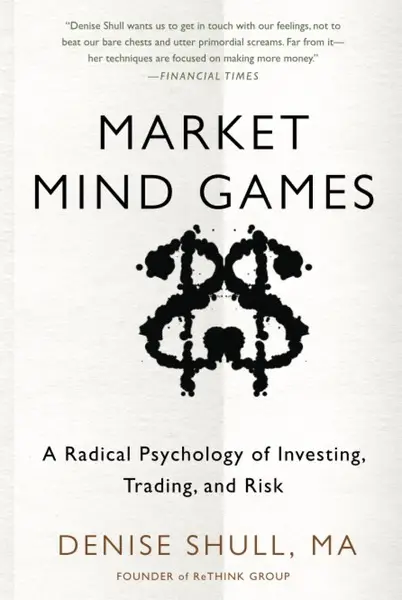
If you have watched Billions, you have met a version of this book’s author. Wendy Rhoades, the in-house performance coach who knows the traders better than they know themselves, has been widely reported as drawing on Denise Shull, who consulted on the series and who has spoken publicly about that work. Treat the connection as reported rather than settled, but the resemblance is close enough that the show functions as an unusually effective advertisement for a difficult book.
Difficult is the operative word, and this review will be blunter about that than most.
Shull’s central claim is a direct assault on the single most repeated instruction in trading education. Every book, every mentor, every forum post tells you to control your emotions, remove emotion from your process, trade without feeling. Shull says this advice is not merely difficult. It is neurologically incoherent, it is the reason you keep failing, and the people dispensing it have misunderstood what a decision is.
Her alternative: your feelings are not interference in the signal. They are signal. Not always accurate signal, often distorted by a history that has nothing to do with the current market. But data, to be read, not static to be suppressed.
It is a genuinely important argument, and Shull has buried it inside some of the most frustrating prose on this shelf.
At a Glance
| Author | Denise Shull |
| Full Title | Market Mind Games: A Radical Psychology of Investing, Trading and Risk |
| First Published | 2011 (McGraw-Hill) |
| Pages | ~250 |
| Difficulty | Hard — not conceptually, but as prose. Budget re-reads. |
| Best For | Traders who have tried for years to suppress emotion and concluded it cannot be done |
| Skip If | You want a protocol. The idea is superb; the instructions are thin. |
OVERALL RATING: 7.5 / 10
Who Should Read This Book
| Reader | Verdict | Why |
|---|---|---|
| New trader (0–1 year) | No | You need rules and a method. This is an argument against a piece of advice you have not yet failed at. |
| Intermediate (1–3 years) | Read if you are stuck on emotion | If “be less emotional” has failed for two years, Shull explains why the instruction was never executable |
| Advanced / professional | Worth the effort | The pattern-recognition argument, that your reaction to this trade encodes a much older one, is subtle and rings true at experience |
| Trader who has read everything | Yes | One of the few genuinely heterodox books in the field. You have not read this argument elsewhere. |
| Systematic / algo trader | Marginal | Aimed at discretionary decision-making. Relevant only to the human choosing whether to keep the system running. |
| Reader who wants a checklist | You will be annoyed | A book of reframes, not procedures. Manage that expectation or do not start. |
The Book in Context
Shull’s route into this material is unusual on both sides. She has worked in markets, including on trading desks, and she pursued graduate study in neuroscience, working in the territory where neuroscience meets psychoanalytic thinking. She went on to found a consultancy advising traders, portfolio managers and other high-stakes performers, and it is that practice, rather than an academic post, that the book is written from.
The psychoanalytic inheritance is what makes this book strange, and it deserves stating plainly because it determines whether you will find the book profound or unfalsifiable. Modern trading psychology is overwhelmingly cognitive-behavioural in flavour: identify the distorted thought, challenge it, install a better one. Douglas is CBT with a trading accent. Steenbarger is CBT with a research protocol. Shull is somewhere else entirely, arguing from a tradition that says the material driving your behaviour is largely unconscious, historically laid down, and not available for inspection by simply thinking harder.
Her position in the canon is as its most useful heretic. Where John Coates attacks the rationalist model from below, with endocrinology, Shull attacks it from the side, with the unconscious. The two books are natural companions and rarely read together, which is a shame, because between them they dismantle the “control your emotions” instruction from two independent directions.
The Core Argument: Feelings Are Data
Shull’s argument runs in three steps, and the first is the one that does the damage.
Emotion cannot be removed from decision-making, because decision-making is built out of it. This is not a motivational claim; it rests on a body of neuroscience showing that damage to the emotional processing regions of the brain does not produce a cold, hyper-rational decider. It produces someone who cannot decide at all, who can list the pros and cons of every option indefinitely and never choose. Feeling is not a contaminant in the machinery of choice. It is the mechanism by which options get weighted.
Follow that through and the standard instruction collapses. “Remove emotion from your trading” is not difficult advice. It is a request to remove the faculty that lets you choose between two things, issued by people who have not thought about what would be left.
You were told to remove the thing you decide with, and then blamed for failing to.
— The book’s opening move
Second: your feeling about this trade is rarely about this trade. Here the psychoanalytic machinery arrives. Shull argues that a present situation triggers a recognition of past situations, and that the emotional response you experience is calibrated to the historical pattern rather than the current facts. The panic in a position sized at one percent is not a reaction to one percent. It is a reaction to something older that this moment resembles: a previous blow-up, or something that has nothing to do with markets at all.
Third: therefore the work is perception, not suppression. If the feeling is data, and if the data is often mis-calibrated by history, the task is to read it accurately. Name the feeling precisely. Ask what it is actually about. Then decide how much weight it earns, which may be a great deal or none.
Two Models of Trading Emotion
| Question | The standard model | Shull’s model |
|---|---|---|
| What is a feeling? | Noise interfering with a rational process | Data. The thing the decision is made out of. |
| The goal? | Suppress it. Trade like a machine. | Perceive it accurately. Then weight it. |
| Why did I panic? | Weak discipline. Insufficient control. | The moment resembled an older one. You reacted to that. |
| The fix? | Rules, willpower, more discipline | Naming, context, recognising the pattern you are actually in |
| Failure mode | Suppressed feeling returns, larger, at the worst moment | Endless introspection that never reaches a trade |
Both columns have a failure mode. Shull is thorough about the one on the left and largely silent about the one on the right.
The Precision Problem: Feelings, Emotions, Affect
One of Shull’s better contributions is insisting that the words be used carefully, because traders describe their entire inner life with about four of them.
A trader says he felt fear. Shull’s objection is that “fear” is doing far too much work. Was it a physical arousal state, a raised heart rate and tightened chest that you then labelled fear? Was it a conscious perception of that state? Was it the whole package with a history attached, the specific dread of being wrong in front of people, which is not fear of loss at all but fear of humiliation and behaves completely differently?
This matters operationally rather than semantically. “I was afraid” leads nowhere; the only available response is to resolve to be braver, which does nothing. “I felt the specific dread of having to report this loss to my wife” is a different object entirely, and it is actionable, because it is not about the trade and can be addressed where it actually lives. The resolution of the language is the resolution of the diagnosis.
The trouble is that Shull’s own vocabulary, having made this case, becomes so idiosyncratic and so densely coined that the precision she is arguing for gets lost inside her prose. It is the book’s core irony, and readers feel it long before they can name it.
How Shull Built the Book
Honesty first: this is where the rating comes down, and no amount of respect for the argument changes it.
She coins heavily. The book invents and repurposes terminology at a rate that outpaces the reader’s ability to absorb it. Some coinages earn their place by naming something the existing vocabulary genuinely misses. Others relabel familiar ideas and make them harder to recognise. A reader cannot easily tell which is which while reading, and that uncertainty is corrosive over 250 pages.
She writes associatively. The argument does not march. It circles, doubles back, arrives at a destination and then keeps going past it. Individual passages are sharp and quotable. The connective structure between them is weak enough that many readers cannot say what the last chapter established.
She commits to the heterodoxy. Credit where it is due. It would have been easy to soften the psychoanalytic frame into something more palatable to a finance audience and sell more copies. Shull does not. The book is what she thinks, presented at full strength, which is why it has a small readership and an unusually devoted one.
Five Ideas Worth Carrying With You
You cannot remove emotion from a decision, because emotion is how deciding works.
Strip out the emotional weighting and you do not get a cold rational trader. You get someone who can analyse forever and never pull the trigger, which is a failure mode most traders will recognise immediately from their own worst weeks. The advice to trade without feeling was never executable. Two years of failing at it is not a character defect.
Suppressed feeling does not disappear. It sizes your next position.
The emotion you refuse to acknowledge does not stop operating; it stops being visible, which is worse, because it now acts on your decisions without your knowledge. The trader who insists he is unemotional is not calm. He is unaware, and the unexamined feeling is choosing his size.
Your reaction to this trade is calibrated to an older one.
The panic in a small position is not about the position. Something in the moment resembles a previous experience, and your response is correctly sized for that, not for this. The useful question is not “why am I so emotional?” but “what does this remind me of?” The second question has an answer.
“I felt fear” is not a diagnosis. It is a refusal to look.
Fear of losing money, fear of being wrong in public, fear of having to explain yourself, fear of proving your father right: these produce completely different behaviours and demand completely different responses. Collapsing them into one word guarantees that whatever you do next is aimed at the wrong target. The precision of the name is the intervention.
Risk is not calculated. It is felt, and mostly it is social.
Your sense of how risky a trade is has little to do with the arithmetic on the screen and a great deal to do with anticipated feeling: how you will feel if it goes wrong, and who will know. This is why the same one percent feels weightless in a good month and unbearable in a bad one. The number did not move.
What the Book Tells You to Do (and Why Most Readers Skip It)
Thin, and this is the honest reason actionability scores a 6 despite the quality of the thinking.
Distilled: notice what you feel, name it far more precisely than “fear” or “greed”, ask what the feeling is actually about and what it resembles from your history, and then decide deliberately how much weight it deserves in the trade in front of you. Sometimes the answer is a lot, because an experienced trader’s unease is real pattern recognition. Sometimes it is none, because you are twelve years old and someone is shouting.
Readers skip it because it is a practice rather than a procedure, and because it takes months to develop the granularity Shull is asking for. There is no checklist. There is no rule to follow at 09:31. Compared with the reassuring specificity of “risk one percent per trade”, “perceive your affective state with greater resolution” feels like being handed nothing at all, even when it is the more accurate instruction.
Common Misreadings of the Book
Misreading #1: “So I should trade on my feelings”
The catastrophic inversion, and the reason this book is dangerous in the wrong hands. Shull says feelings are data, not instructions. Data gets evaluated, weighted and often discarded. A novice with no pattern library who reads this as permission to follow his gut has taken a book about perception and used it to justify impulse, which is the precise opposite of the argument.
Misreading #2: “This is just be mindful”
It is not. Mindfulness typically asks you to observe a feeling non-judgementally and let it pass. Shull asks you to interrogate it: what is this, where is it from, what is it telling me, does it deserve a vote? One approach lets the wave go by. The other reads what is written on it.
Misreading #3: “The unconscious stuff is unfalsifiable, so ignore the book”
A fair objection carried too far. The psychoanalytic frame is genuinely weakly evidenced and hard to test, and a sceptical reader is right to hold it loosely. But the core claim, that emotion is inseparable from decision, rests on far firmer neuroscience than the framework surrounding it. You can accept the foundation and remain agnostic about the superstructure, which is roughly the right posture for this book.
Misreading #4: “I’m not emotional, so this doesn’t apply”
Shull would say this sentence is the diagnosis. The trader who experiences himself as unemotional is not free of feeling; he has poor access to it. And a feeling you cannot perceive is not neutralised. It is unsupervised, and it is still voting on your size.
Misreading #5: “It’s the Billions book”
The connection is real enough to be worth mentioning and misleading enough to be worth qualifying. Wendy Rhoades delivers a decisive intervention in forty-five minutes of television. This book is a dense, unglamorous argument about the resolution of your emotional vocabulary. Readers who arrive expecting the show are the ones who abandon it by chapter four.
Where the Book Falls Short
- The prose is the problem. Say it plainly: this book is harder to read than it needs to be. Coined terms, associative structure, an argument that circles. Readability scores a 5 and that is the single largest reason a book with first-rate ideas rates 7.5. Many readers who would benefit will not finish.
- The framework is weakly evidenced. Psychoanalytic thinking is not a mainstream contemporary research tradition, and claims about unconscious historical material shaping present perception are difficult to test. Plausible and clinically resonant is not the same as demonstrated.
- Almost nothing to do on Monday. The book reframes and then stops. For a reader whose problem is behavioural, arriving at a superior understanding of why the old advice failed, with no replacement protocol, is genuinely unsatisfying.
- The introspection trap is never addressed. If feelings are data requiring interrogation, what stops a trader from interrogating indefinitely and never placing a trade? Shull is exhaustive about the failure mode of suppression and silent about the failure mode of her own method.
- Some coinages relabel rather than reveal. A portion of the vocabulary names things that already had names. It is not always separable, in the moment, from the portion that names something real.
- Written before the retail environment it now lands in. 2011 predates the phone terminal, the prop-firm challenge and the social-media trading identity. The social dimension of risk perception is arguably the book’s most prescient idea, and it is the one the world has changed most underneath.
How the Book Fits the Mind · Method · Money Framework
| Pillar | Contribution | What the Book Delivers |
|---|---|---|
| MIND | PRIMARY | Emotion as data, precision of emotional naming, historical patterns driving present reactions, the incoherence of the suppression model |
| METHOD | ABSENT | No setups, no market analysis, no system |
| MONEY | SECONDARY | The argument that risk perception is felt and social, not calculated, is a real contribution to why traders abandon correct sizing under pressure |
The most heterodox Mind-pillar book on the shelf, and the necessary counterweight to the suppression model that dominates everything else. Read against the Mind · Method · Money framework, the complete guide to trading psychology, and The Complete Trader’s Edge.
Read This Instead Of / Read This After
| Relationship | Book | Why |
|---|---|---|
| Read alongside | The Hour Between Dog and Wolf | The natural pairing, and almost nobody makes it. Coates attacks the rational-trader model with endocrinology; Shull attacks it with the unconscious. Same target, two directions. |
| Read against | Trading in the Zone | Deliberately opposed. Douglas wants you to install beliefs that neutralise feeling. Shull says the feeling was information you just deleted. Reading both is more useful than accepting either. |
| Read after | The Mental Game of Trading by Jared Tendler | Tendler shares the premise that emotion signals something real, and then supplies the systematic protocol Shull never does. He is the practical translation of her insight. |
| Read instead of | Any book telling you to trade like a robot | The whole point is that the instruction describes a neurological impossibility, and that years of failing to achieve it were never your fault |
| Read alongside | Thinking in Bets | A useful corrective in the other direction. Duke will keep your feelings honest with a decision framework; Shull keeps Duke’s framework from pretending the feelings were not there. |
Final Verdict: Should You Read This Book in 2026?
Conditionally, and the condition is real: only if you have already failed at the standard advice.
The 7.5 is the most split rating on this shelf, and it should be read as an average of two very different numbers rather than a middling verdict. The central argument is a 9. Shull identified something the entire field had wrong, said so before it was respectable, and was substantially vindicated as the neuroscience of decision-making became mainstream. The execution is a 5. The prose is thick, the terminology proliferates, the structure wanders, and the book demands more from a reader than it needs to.
What tips it to recommended is that nobody else is making this argument at this depth, and that for a specific trader it is the book that ends years of self-blame. If you have spent two years being told to control your emotions, failing, and concluding you lack the constitution for this, Shull’s answer is that you were handed an instruction that cannot be carried out by a human nervous system. That reframe is worth the difficult prose.
Read it slowly, with a pen, expecting to reread. Take the argument and forgive the delivery. And if you want the protocol Shull never supplies, pair her with Tendler, who agrees with her premise and actually tells you what to do on Monday.
CTE Rating Breakdown
7.5/10
Recommended With Reservations
| Readability | 5 | |
| Actionability | 6 | |
| Timelessness | 8 | |
| Beginner-Friendly | 5 | |
| Modern Relevance | 8 |
Frequently Asked Questions
What is Market Mind Games about?
It argues that the standard instruction to control or eliminate emotion in trading is neurologically incoherent, because emotion is the mechanism by which decisions get made. Shull’s alternative is to treat feelings as data to be perceived precisely and weighted deliberately, rather than noise to be suppressed.
Is Denise Shull the inspiration for Wendy Rhoades in Billions?
She has been widely reported as an inspiration for the character and consulted on the series, and has discussed that work publicly. Treat it as reported rather than as an official designation. The resemblance is in the role, an in-house performance coach to high-stakes traders, rather than in any specific storyline.
Who is Denise Shull?
A performance coach with an unusual dual background: experience in markets, including on trading desks, and graduate study in neuroscience with a focus on where it meets psychoanalytic thinking. She founded a consultancy advising traders, portfolio managers and other high-stakes decision-makers, and the book comes out of that practice.
Does she really say emotions are good for trading?
Not quite, and the distinction is the whole book. She says emotions are unavoidable and informative: data, not instructions. Data gets evaluated and often discarded. Reading her as permission to trade on your gut inverts the argument completely.
Why is the book considered hard to read?
Dense, idiosyncratic prose with a great deal of coined terminology and an associative structure that circles rather than progresses. The ideas are not conceptually difficult; the delivery is. This is the main reason the rating sits at 7.5 despite first-rate thinking.
Is it good for beginners?
No. It is an argument against advice you have not yet failed at, and it is actively risky for a novice who might read “feelings are data” as licence to follow impulses with no pattern library behind them. Get a method and a couple of years first.
How is this different from mindfulness?
Mindfulness generally asks you to observe a feeling without judgement and let it pass. Shull asks you to interrogate it: what is this precisely, where does it come from, what is it telling me, and how much weight has it earned in this decision? Observation versus interrogation.
What if I don’t buy the psychoanalytic framework?
Reasonable, and you can hold it loosely without discarding the book. The claim that emotion is inseparable from decision-making rests on much firmer neuroscience than the framework built on top of it. Accept the foundation, stay agnostic about the superstructure.
What should I read if I want the practical version?
The Mental Game of Trading by Jared Tendler. He shares Shull’s core premise that emotional signals encode real information, and then supplies the systematic protocol she never does. Reading them together gives you the insight and the instructions.
What is the single most important takeaway from the book?
That “I felt fear” is not a diagnosis. Fear of losing money, of being wrong publicly, of having to explain yourself, are different problems requiring different responses. Until you can name which one you are in, every fix you attempt is aimed at the wrong target.
About the Author
Denise Shull
Denise Shull arrived at trading psychology from two directions that rarely meet. She has worked in markets, including on trading desks, and she pursued graduate study in neuroscience, specialising in the territory where it intersects with psychoanalytic thinking, a combination almost nobody in this field shares. She went on to found a consultancy advising traders, portfolio managers and other high-stakes performers.
Cultural footprint: she has been widely reported as an inspiration for Wendy Rhoades, the performance coach in Showtime’s Billions, and consulted on the series. Reported rather than official, but it has introduced her ideas to an audience far larger than the book itself ever reached.
Her defining quality is that she was early and unfashionable. Arguing in 2011 that emotion was central rather than contaminating put her against the entire consensus of trading education. The neuroscience has moved substantially in her direction since, which is the best thing that can be said about a heretic.
Continue Learning
- The Hour Between Dog and Wolf Book Review (2026)
- Trading in the Zone Book Review (2026)
- Trading Psychology: The Complete Guide
- The Top Trading Books Explorer
- The Mind · Method · Money Framework
- The Complete Trader’s Edge — The Book
 The Complete Trader's Edge
The full Mind · Method · Money framework. 70 chapters.
View on Amazon →
The Complete Trader's Edge
The full Mind · Method · Money framework. 70 chapters.
View on Amazon →
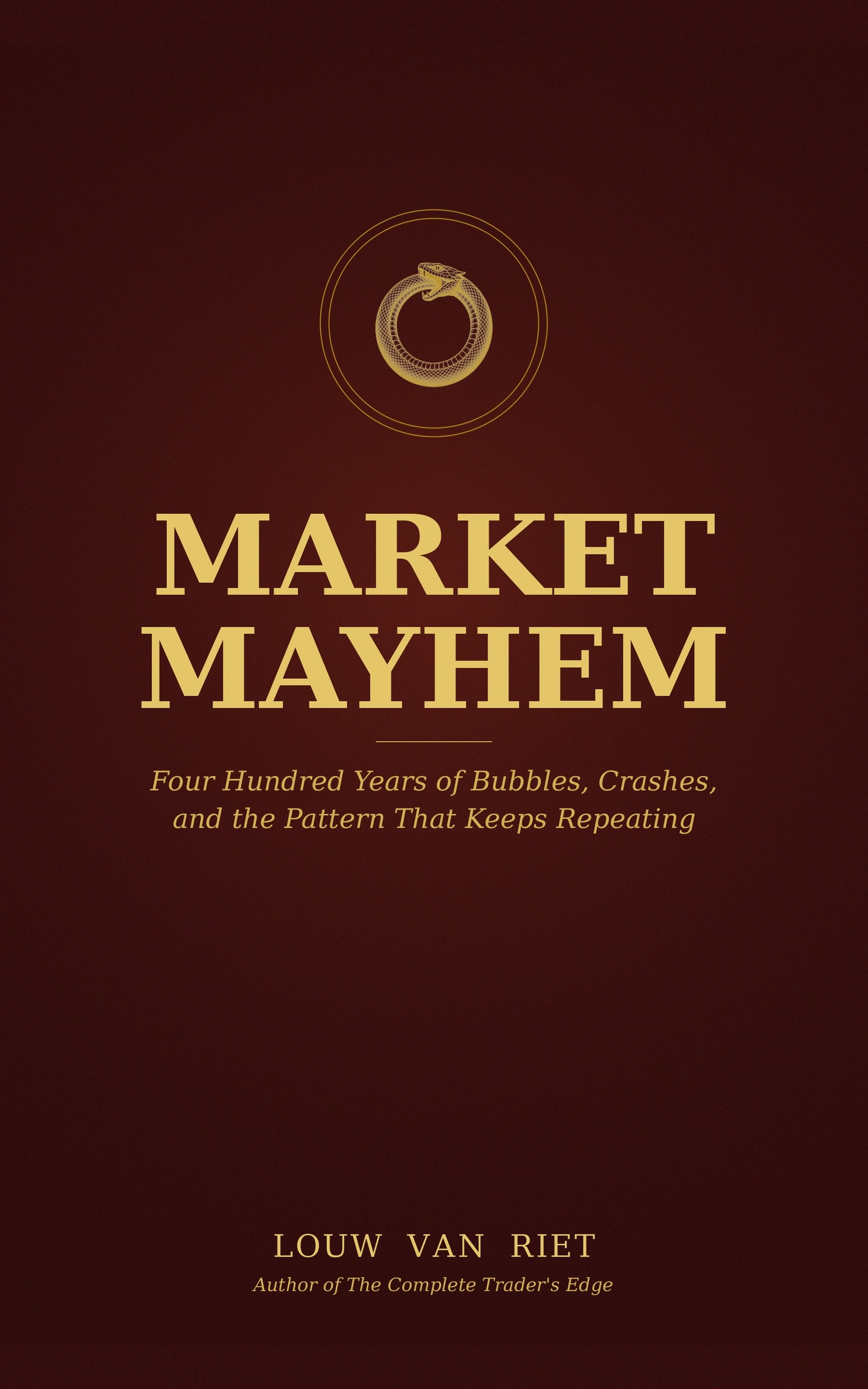 Market Mayhem
400 years of bubbles, crashes, and the pattern that keeps repeating.
Buy on Amazon →
Market Mayhem
400 years of bubbles, crashes, and the pattern that keeps repeating.
Buy on Amazon →
 Greatest Companies
How the world's greatest companies were built — and what traders learn from them.
View on Amazon →
Greatest Companies
How the world's greatest companies were built — and what traders learn from them.
View on Amazon →
 Greatest Traders
Eighty-six lives that explain the markets — Livermore to Madoff, told with the losses left in.
View on Amazon →
Greatest Traders
Eighty-six lives that explain the markets — Livermore to Madoff, told with the losses left in.
View on Amazon →