

VOL · IV
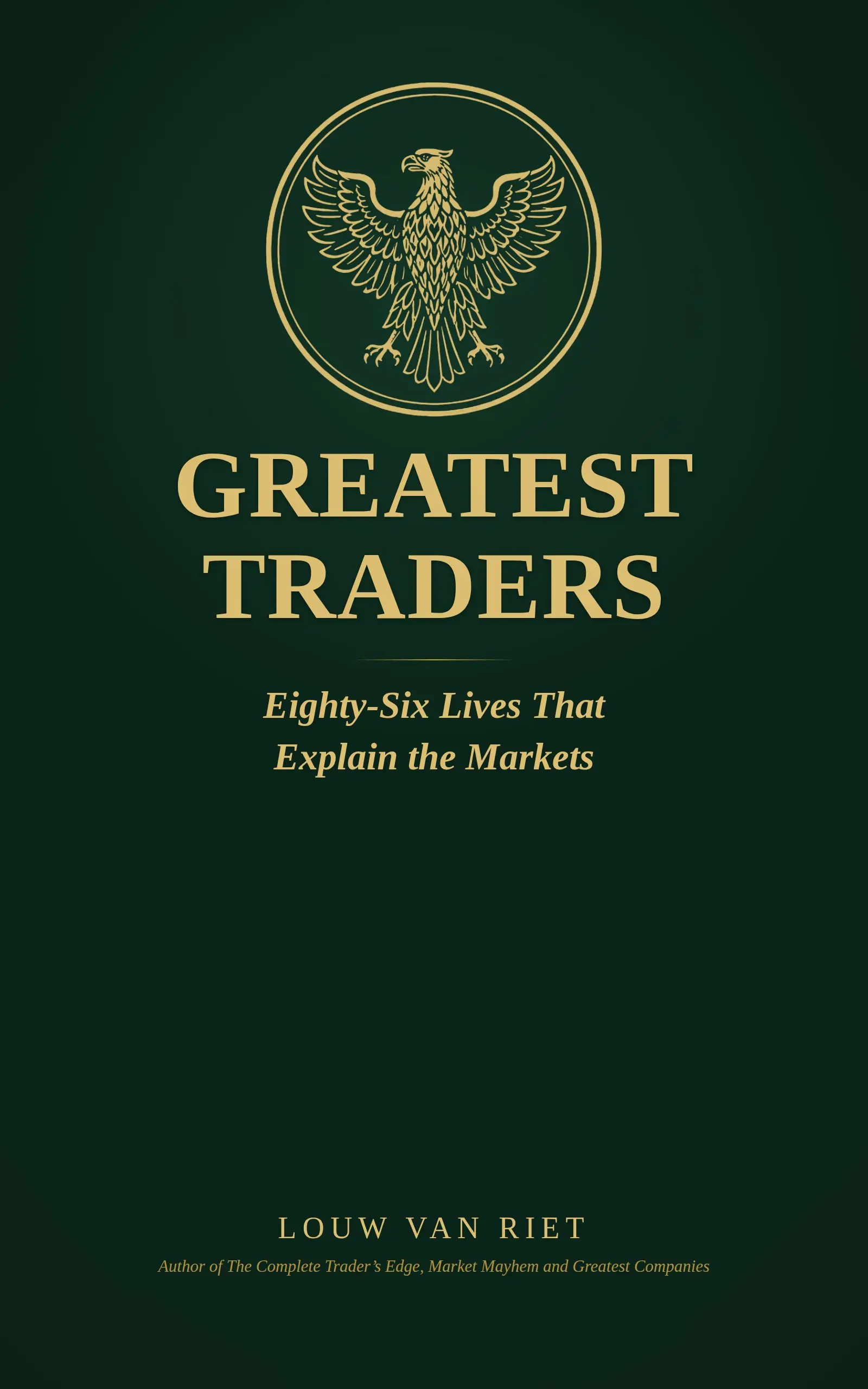
Greatest
TradersEighty-six lives that explain the markets.
From Jesse Livermore reading a chalkboard in 1892 to the traders still working from those ideas today — told as they happened, with the losses left in.
The ones wholasted were notthe best informed.
They were the ones who could hold a position, size it correctly, and survive being wrong. Every trader who lasted had the same three things. Most who failed were missing one.
Mind. Method. Money.
Every chapter closes the same way, under the same three headings. Mind is what the trader could bear. Method is what the trader actually did. Money is how the position was held, sized and financed.
The failures get the same three headings as the successes, because the same framework explains both. That is the whole argument of the book.
Mind
Method
Money
Eighty-six lives. Eight parts.
The book is organised not by fame or fortune, but by what each group of traders proves about the framework.
The Origins
Chapters 1–7
- Jesse Livermore
- Richard Wyckoff
- Benjamin Graham
- Nicolas Darvas
- Edward Thorp
- John Bogle
- Hetty Green
The Mind
Chapters 8–20
- Mark Douglas
- Warren Buffett
- Charlie Munger
- Marty Schwartz
- Nassim Taleb
- Morgan Housel
- Howard Marks
- Ray Dalio · and more
The Method
Chapters 21–41
- Richard Dennis
- William O’Neil
- George Soros
- Paul Tudor Jones
- Jim Simons
- Michael Burry
- Ken Griffin · and more
The Money
Chapters 42–53
- Bill Lipschutz
- Michael Steinhardt
- David Tepper
- Bill Gross
- Carl Icahn
- Paul Singer
- John Paulson · and more
The Globals
Chapters 54–63
- Takashi Kotegawa
- Rakesh Jhunjhunwala
- Allan Gray
- André Kostolany
- Radhakishan Damani
- Prem Watsa
- Li Lu · and more
The Modern Voices
Chapters 64–74
- Cathie Wood
- Michael Saylor
- Keith Gill
- Peter Brandt
- Leda Braga
- Terry Smith
- David Einhorn · and more
The Cautionary Tales
Chapters 75–82
- Jim Chanos
- Nick Leeson
- Jérôme Kerviel
- Bill Hwang
- Bernie Madoff
- Yasuo Hamanaka
- Sam Bankman-Fried
- LTCM
The Operators
Chapters 83–86
- Bill Ackman
- Eike Batista
- Daniel Loeb
- Nelson Peltz
Eighty-six marks. One for each life.
Every chapter opens with an engraved medallion drawn for that trader, and every one carries a line. Hover a mark to read it. Filter by Part to see how the book is built.
Every trader who lasted had the same three things. Most who failed were missing one.
Nothing here is invented.
Most books in this genre repeat quotations that have never been traced to a source. This one does not.
Every quotation was audited
Each of the 48 quotations in the book was traced to a transcript, a filing, a letter, or a printed page. Where the wording could not be verified, the quotation marks came off and the substance was carried into the prose as reported speech.
No encyclopedia citations
Where a summary was the route to a source, the source itself was pulled and the summary discarded. Three chapters were corrected during the final pass because a quotation had been built from a paraphrase rather than the document it paraphrased.
Elisions are marked
Where a quotation is a splice of two separate remarks, an ellipsis says so. Where a hedge was cut to sharpen a line, the hedge is restored. Attributions name a venue and a date wherever one exists.
Uncertainty is stated in the line
An unaudited return is described as unaudited where it appears. A disputed figure carries its range. A number resting on one uncorroborated telling says so on the page, not 200 pages later.
The notes admit what is missing
The 100 notes exist where sources disagree, where a record is thin, or where the book is inferring rather than reporting. Several say, in terms, that the answer could not be established.
Further reading, honestly sourced
Each Part closes with a reading list drawn only from the books, memoirs and documentaries named in its own chapters — so you start with the primary voices, not with anything assembled here.
For anyone who has held a position and felt it.
The Working Trader
You have a method. What you want is the evidence of how eighty-six other people held one under pressure, and what it cost the ones who could not.
The Long-Term Investor
You are not day trading, and neither were Graham, Buffett, Templeton or Watsa. The framework applies at every holding period.
The Curious Reader
You want the stories. Each chapter is a self-contained life, with a fortune on the line and a documented ending.
Read it however you want.
The complete text as one ebook, or the two-volume print edition in paperback or hardcover. 86 lives will not physically bind into one book.
Kindle
- Every chapter, Part and note
- 86 chapter medallions
- No DRM · keep the file
- Available worldwide
Paperback · Vol I
- Forty-one lives, Chapters 1–41
- Parts I to III
- Cream stock, matte cover
- Ships internationally
Paperback · Vol II
- Forty-five lives, Chapters 42–86
- Parts IV to VIII
- The Common Thread and Epilogue
- Ships internationally
Hardcover · Vol I
- Forty-one lives, Chapters 1–41
- Parts I to III
- Case laminate, cream stock
- Built to hold a shelf
Hardcover · Vol II
- Forty-five lives, Chapters 42–86
- Parts IV to VIII
- Case laminate, cream stock
- The Common Thread and Epilogue
Four books. One framework.
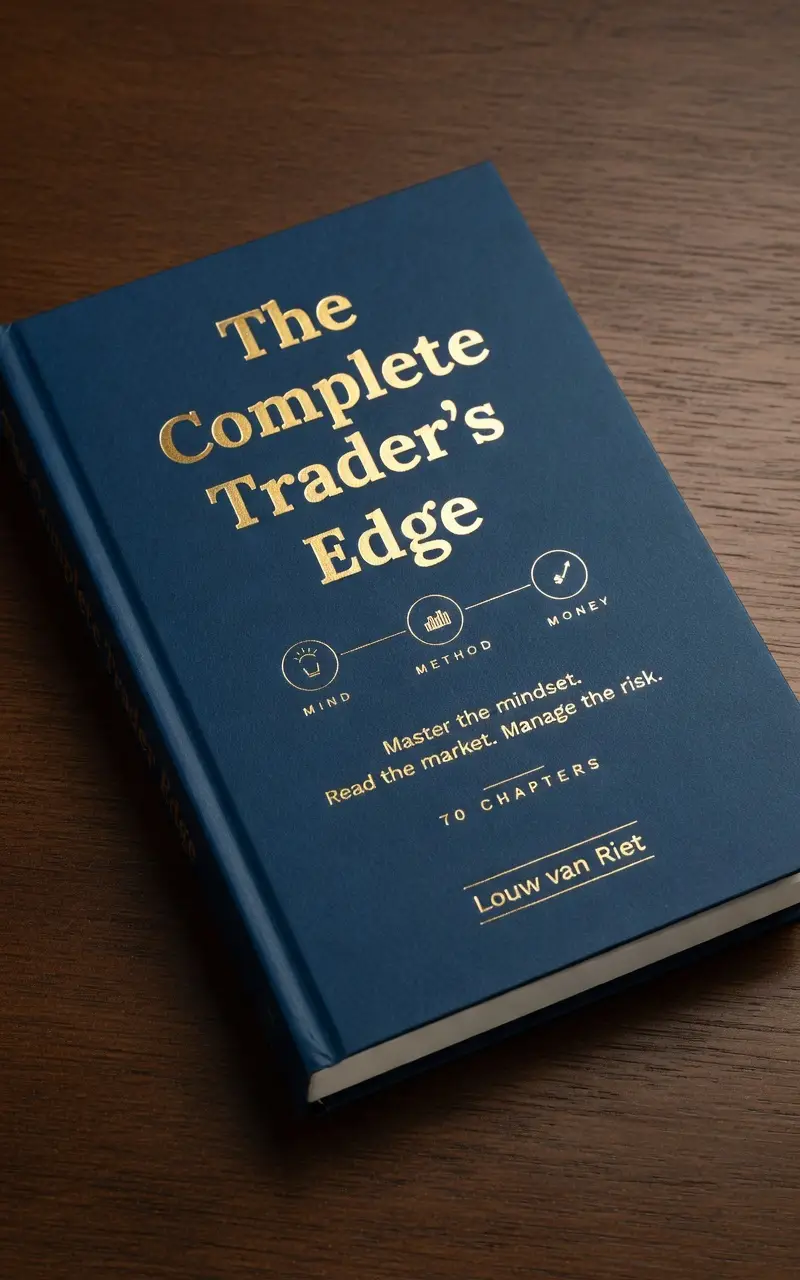
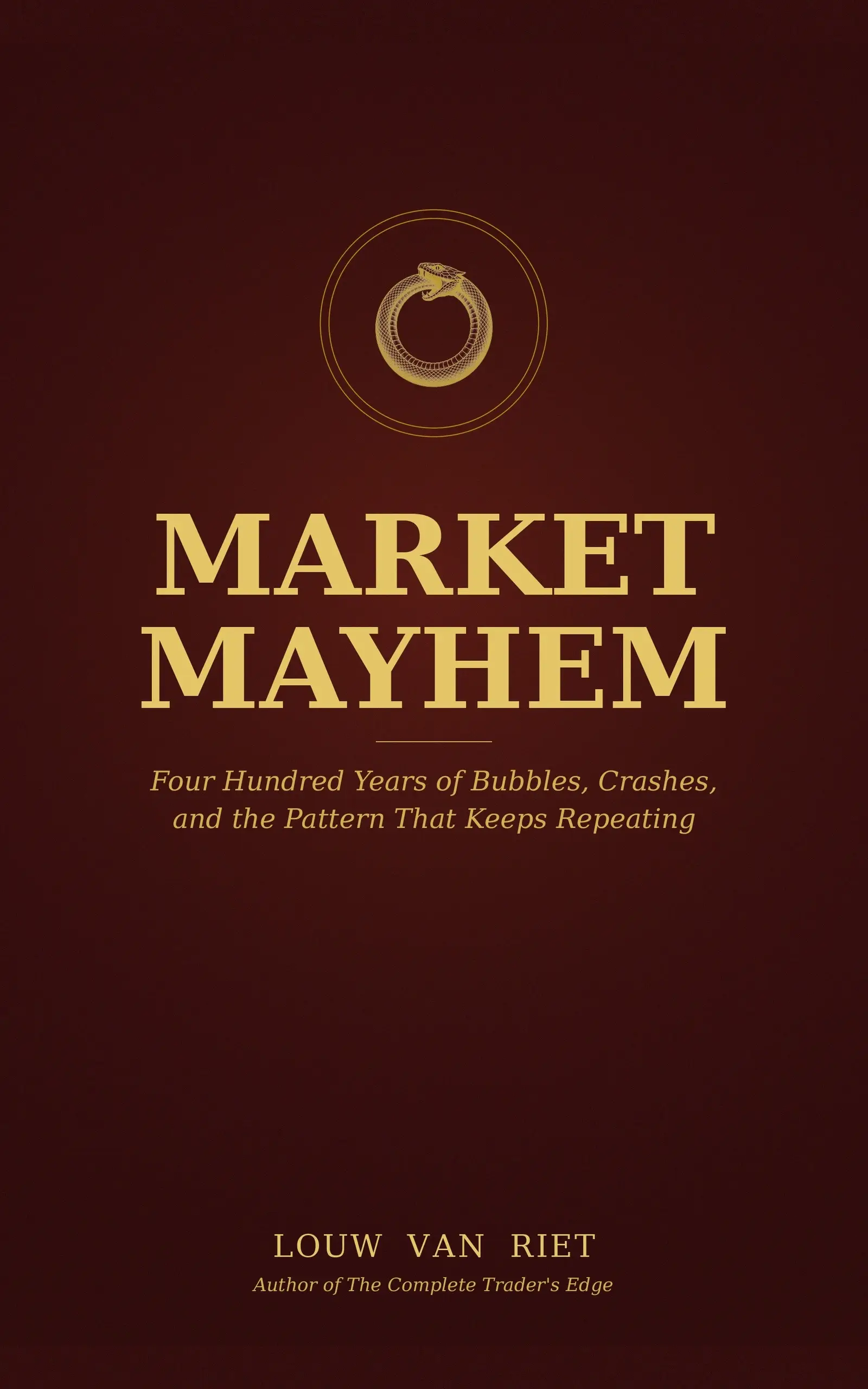
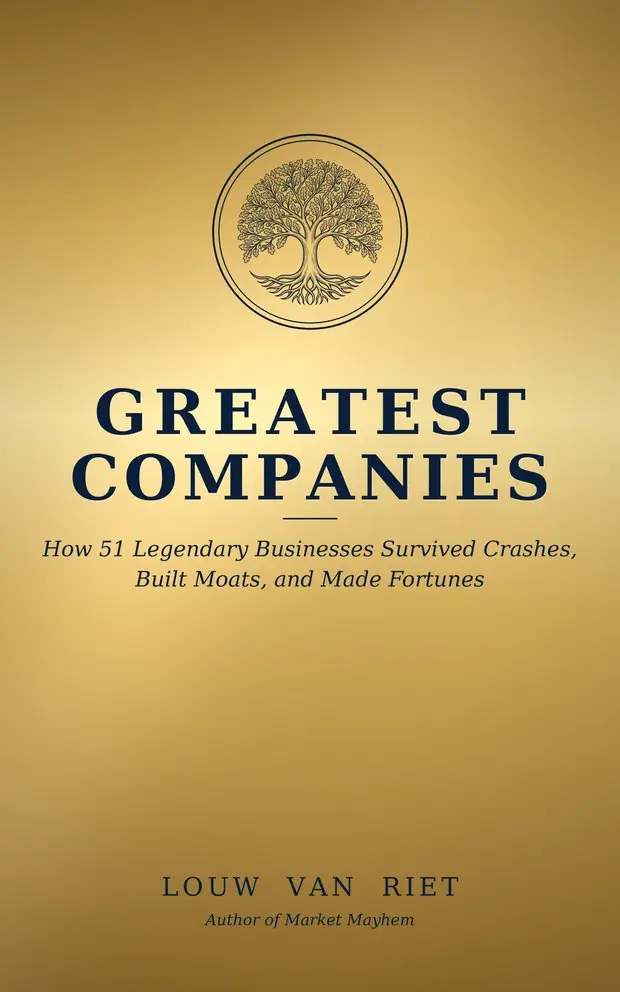
The Complete Trader’s Edge teaches the system. Market Mayhem proves why it matters. Greatest Companies turns it on the businesses. Greatest Traders turns it on the people.
Louw van Riet
Founder of Complete Trader’s Edge and author of The Complete Trader’s Edge, Market Mayhem and Greatest Companies. He trades equities, gold and futures, and hosts the Greatest Traders and Market Mayhem podcasts.
The Mind · Method · Money framework runs through every book. Greatest Traders is the fourth, and the one that turns the framework on the people who built it.
Eighty-six lives. One lesson.
They were not the best informed. They were the ones who could hold a position,
size it correctly, and survive being wrong.
 The Complete Trader's Edge
The full Mind · Method · Money framework. 70 chapters.
View on Amazon →
The Complete Trader's Edge
The full Mind · Method · Money framework. 70 chapters.
View on Amazon →
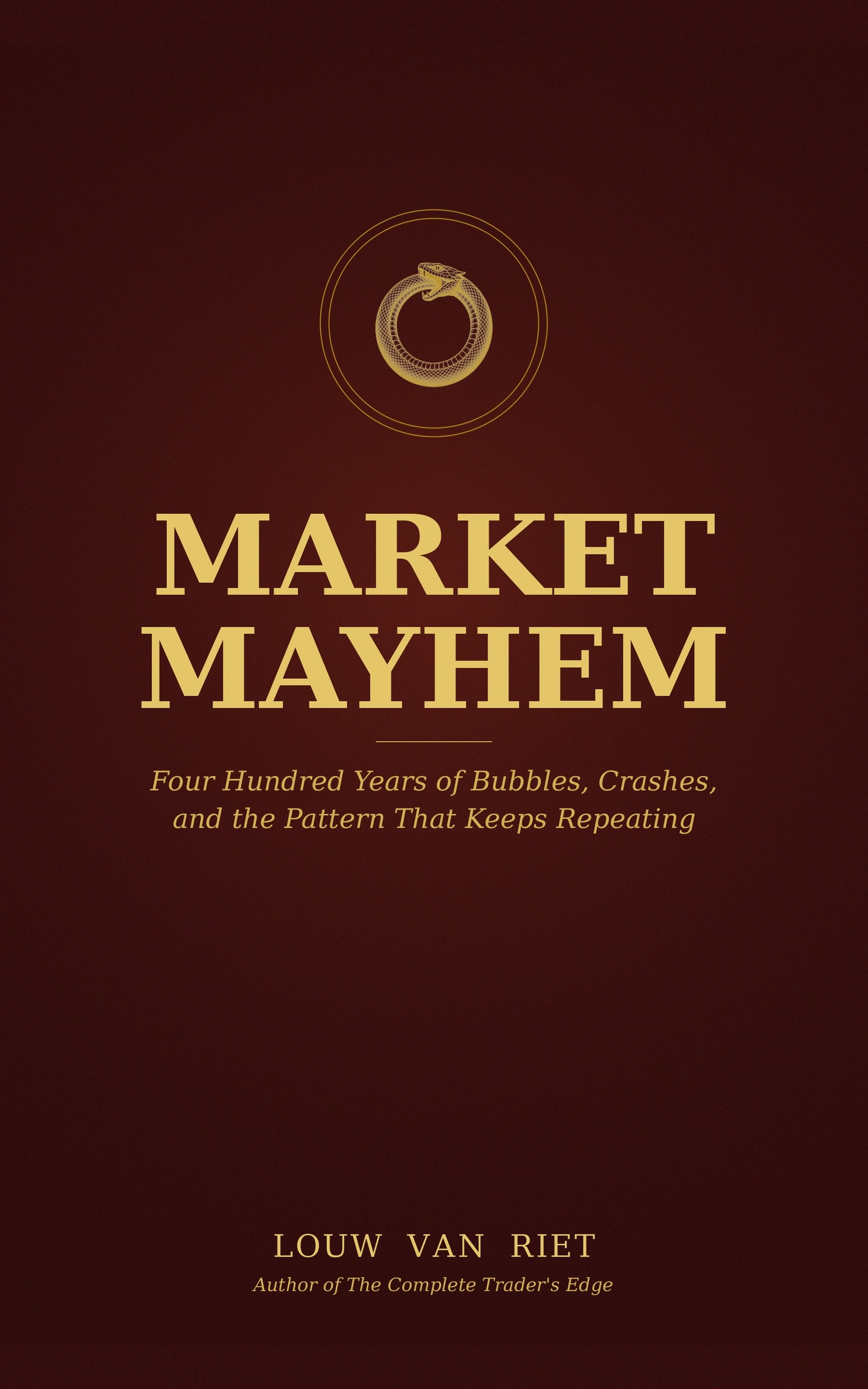 Market Mayhem
400 years of bubbles, crashes, and the pattern that keeps repeating.
Buy on Amazon →
Market Mayhem
400 years of bubbles, crashes, and the pattern that keeps repeating.
Buy on Amazon →
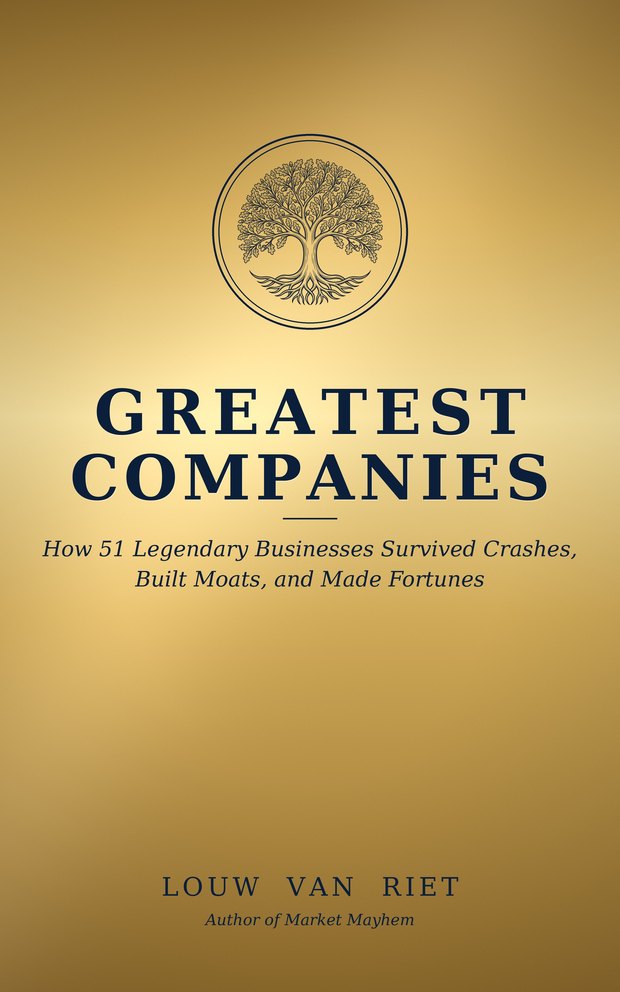 Greatest Companies
How the world's greatest companies were built — and what traders learn from them.
View on Amazon →
Greatest Companies
How the world's greatest companies were built — and what traders learn from them.
View on Amazon →
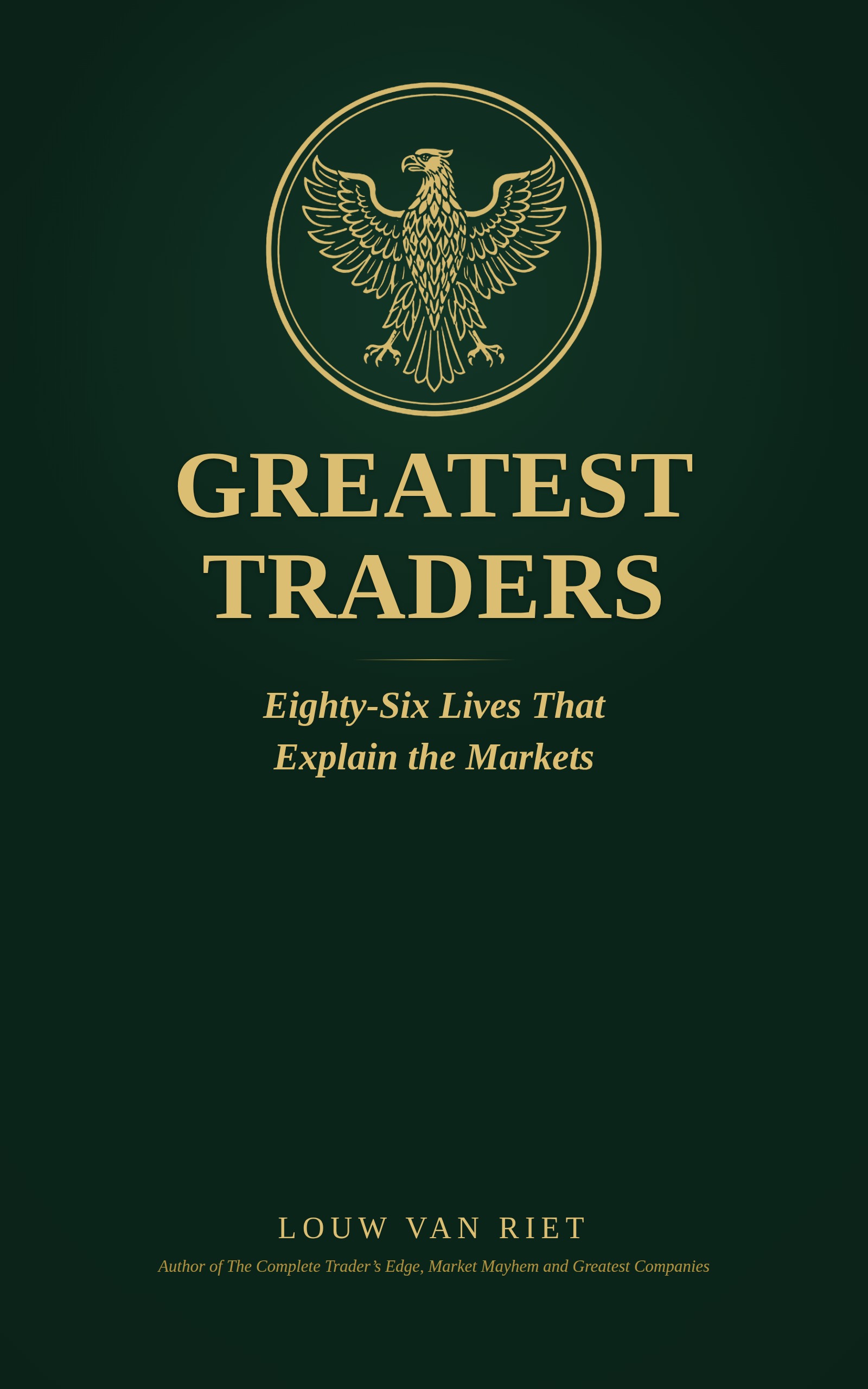 Greatest Traders
Eighty-six lives that explain the markets — Livermore to Madoff, told with the losses left in.
View on Amazon →
Greatest Traders
Eighty-six lives that explain the markets — Livermore to Madoff, told with the losses left in.
View on Amazon →