

Explore all 80 books in the Trader’s Library →
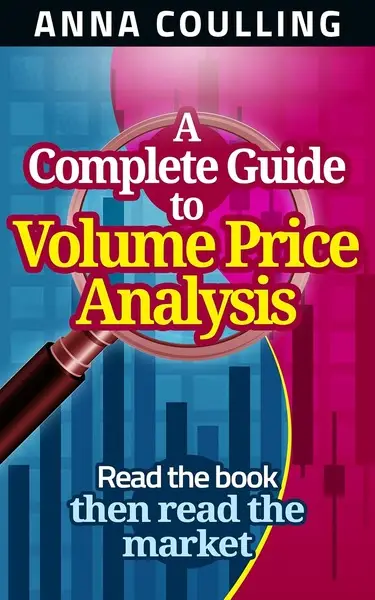
Almost every retail trader looks at price and ignores volume, which is strange, because volume is the only part of a chart that tells you how much conviction was behind the move you are staring at. This book exists to fix that blind spot, and it does the job better than its self-published, slightly repetitive packaging would lead you to expect.
A Complete Guide to Volume Price Analysis is an on-ramp. It takes a lineage that runs back through Richard Wyckoff and Richard Ney, strips out the jargon, and teaches a beginner how to read a price bar and its volume together as a single piece of evidence. That is a durable and valuable skill, and Coulling is an unusually clear teacher of it.
What it also carries, inseparable from the method, is a particular story about who moves markets and why. That story is useful as a teaching device and dangerous as a literal belief, and the review has to hold both the clarity and the caveat at once. The rating reflects an accessible, honest entry point to a real idea, with the caveat stated in full rather than buried.
At a Glance
| Author | Anna Coulling |
| Full Title | A Complete Guide to Volume Price Analysis |
| Published | First published 2013 (independently published) |
| Difficulty | Accessible. One of the more beginner-friendly books in this cluster. |
| Best For | Traders who read price only and want to add volume as a second, confirming dimension |
| Skip If | You trade only spot forex and expect real volume, or you need statistical proof before you will believe a method |
OVERALL RATING: 8.0 / 10
Who Should Read This Book
| Reader | Verdict | Why |
|---|---|---|
| Price-only trader | Strong yes | This is the cleanest introduction to reading a bar and its volume as one piece of evidence. It fixes a genuine blind spot. |
| Wyckoff-curious beginner | Yes, start here | It is a gentler on-ramp than the primary Wyckoff sources, and it points you at them once you are ready. |
| Spot forex trader | Yes, with the volume caveat | Spot FX has no centralised volume. You will be reading tick volume, a proxy, and the book is only partly candid about how much that changes things. |
| Systematic trader | For the concept only | There is no backtest, no expectancy, no sample. The idea is testable; the book does not test it. |
| Futures / equities day trader | Yes | These markets have real centralised volume, which is where the method has the firmest ground to stand on. |
| Advanced discretionary trader | Skim it | You may already do most of this. The value is the clean articulation, not new material. |
The Book in Context
Volume analysis is one of the oldest ideas in technical trading. Richard Wyckoff was writing about the relationship between price and volume a century ago, and Richard Ney carried a version of it forward decades later. Coulling’s contribution is not originality. It is accessibility. She took a body of thinking that usually reaches beginners in dense, dated, or cultish forms and wrote the plain-language version.
Anna Coulling is an active trading author and educator with a substantial catalogue of books and a long-running public presence. That much is checkable. What this site will not do is attach specific performance figures, returns, or a documented track record to her name, because the book does not provide them and I will not manufacture them. The thing you are weighing is the quality of the teaching, and on that measure the book earns its rating. That is the honest boundary.
Its place in the literature is as a bridge. It sits below the primary Wyckoff sources and below the more theoretical auction-market books, and it does the job those books cannot: it gets a complete beginner reading volume within an afternoon. Underrating it because it is simple would be a mistake. Simple and correct is rarer than complicated and impressive.
The Core Argument: Volume Is the Second Dimension
The whole book turns on one idea: a price move means nothing until you know how much volume was behind it.
Price tells you where the market went. Volume tells you how much effort it took to get there, and the relationship between effort and result is where the information lives. A large up-bar on huge volume that barely closes higher is effort without reward, a sign that selling is meeting the buying. A quiet drift higher on collapsing volume is a move nobody is defending. Coulling teaches you to read these effort-versus-result relationships bar by bar, and to treat agreement between price and volume as confirmation and disagreement as a warning.
Price without volume is a claim with no evidence behind it. The volume is where you find out whether the market meant it.
— The book’s argument in one line
This is genuinely good, and it is the part of the book that does not expire. Effort versus result is a durable analytical idea that applies to any market with real volume data, and Coulling explains it more clearly than almost anyone. A reader who takes only this away has already got their money’s worth.
The trouble starts when the book explains why the relationship exists.
The Problem: The Insider Story Is a Teaching Device, Not a Fact
The book explains volume behaviour through a narrative of insiders, market makers, and big operators quietly accumulating and distributing while manipulating everyone else. That framing is vivid, memorable, and where a careful reader has to slow down.
The problem is that the story is unfalsifiable. Any bar can be explained after the fact as insiders doing something. High volume with no follow-through is distribution; high volume with follow-through is accumulation breaking out; low volume is insiders standing aside. There is no bar the narrative cannot absorb, and a model that explains every outcome predicts none of them. The effort-versus-result observation is real and checkable. The causal story layered on top of it is a mnemonic dressed as a mechanism, and it invites exactly the confirmation bias that wrecks discretionary traders.
The Durable Idea vs the Convenient Story
| Keep this | Hold this loosely |
|---|---|
| Effort versus result: big volume with a small move is information | The claim that a specific insider caused that specific bar |
| Divergence between price and volume as a warning | The idea that the market is being deliberately manipulated at you |
| Volume confirms or questions a breakout | A narrative flexible enough to explain any outcome after the close |
| A repeatable observation you can log and test | A story you cannot test and therefore cannot be wrong about |
The left column is the trade. The right column is the campfire story that makes it memorable. Enjoy the story; do not stake money on it as literal truth.
The second caveat is more concrete and more important for this site’s audience: volume data quality. In centralised markets like futures and exchange-traded stocks, volume is a real, reported number. In spot forex there is no central exchange, so what your platform shows is tick volume, a count of price updates that stands in as a proxy for real volume. It correlates with activity, but it is not the thing the method assumes. Coulling acknowledges this, but a beginner can easily read the book, open an FX chart, and start interpreting a proxy as though it were the genuine article.
Five Ideas Worth Carrying With You
A price move without volume is a rumour. The volume is the fact-check.
This is the whole book in a sentence and the reason to read it. Once you are reading effort alongside result, a chart stops being a line and becomes a record of how hard each move actually was to produce.
Effort with no result is the most important bar on the chart, and the one beginners ignore.
A wide bar on heavy volume that closes near where it opened means one side pushed hard and got nowhere. That stalemate, visible only if you are watching volume, is often the first sign a move is exhausting.
A breakout on falling volume is a door nobody is holding open.
The single most practical filter in the book. Moves that matter usually arrive with participation. When price breaks out and volume shrinks, the market is telling you the conviction is not there, and that is worth listening to before you chase.
A story that explains every bar tells you nothing about the next one.
Carry the effort-versus-result observation and be sceptical of the insider narrative that comes with it. The moment your analysis can never be wrong, it has stopped being analysis and become a comfort.
Know what your volume number actually is before you trust it.
Real centralised volume and forex tick volume are not the same measurement. The method leans on the former and most retail FX traders only have the latter. Reading a proxy as though it were the real thing is a quiet, common error the book could warn about more loudly.
Common Misreadings of the Book
Misreading #1: “The insiders are literally manipulating my chart”
The insider framing is a teaching device that makes volume behaviour memorable. Taken literally it becomes an unfalsifiable narrative that can rationalise any outcome. Keep the effort-versus-result observation, which is checkable, and hold the manipulation story loosely.
Misreading #2: “Volume price analysis works the same on forex as on futures”
It does not, because spot forex has no centralised volume. You are reading tick volume, a proxy for activity, not the reported volume the method assumes. The skill still helps, but your confidence should be lower and the book is only partly candid about this gap.
Misreading #3: “It’s simple, so it must be shallow”
Simplicity is the achievement here. Coulling took a century of volume thinking and made it teachable to a beginner without dumbing it down. Clear and correct is harder to write than complicated and impressive, and rarer.
Misreading #4: “The examples prove the method”
The examples teach the method. They do not prove it. There is no sample, no expectancy figure, and no out-of-sample test anywhere in the book. The idea is testable and worth testing; the book simply is not the test.
Misreading #5: “Once I read volume, I don’t need risk management”
Reading volume improves your context, not your survival odds. The book has almost nothing on position sizing or expectancy, and a great read on a chart still ruins you if the sizing is wrong. Volume is a lens, not a risk model.
Where the Book Falls Short
- The causal story is unfalsifiable. The insider-manipulation narrative can explain any bar after the fact, which makes it a memory aid rather than a mechanism, and a magnet for confirmation bias.
- The forex volume caveat is underplayed. Spot FX gives you tick volume, a proxy. The method leans on real centralised volume, and a beginner can miss how much that distinction matters.
- No statistical validation. No sample, no expectancy, no out-of-sample period. The examples are illustrative and selected, and they establish nothing about how often the readings hold.
- Repetitive. The core ideas are few and circled many times. Efficient readers will feel the padding, even if the repetition helps genuine beginners.
- Thin on risk and money management. This is a reading skill, not a trading system. The Money pillar is largely absent and must be supplied elsewhere.
- Track record not documented. Stated as a fact about what can be checked, not an accusation. The authority to weigh is the teaching, which is strong, not a verified performance record.
How the Book Fits the Mind · Method · Money Framework
| Pillar | Contribution | What the Book Delivers |
|---|---|---|
| MIND | LIGHT TOUCH | Some useful discipline around not chasing unconfirmed moves, but psychology is not the book’s subject. |
| METHOD | PRIMARY | The entire book. A clean, teachable skill for reading price and volume together as one piece of evidence. |
| MONEY | WEAK | Little on sizing, risk of ruin, or expectancy. The reading improves context but does not manage risk. |
This is a Method book that does one thing and does it well. Read against the Mind · Method · Money framework and The Complete Trader’s Edge, volume analysis becomes a confirmation layer inside a complete system rather than a system in itself. Take the second dimension it teaches, then bring your own risk arithmetic, because the book will not.
Read This Instead Of / Read This After
| Relationship | Book | Why |
|---|---|---|
| Read this first | This book, before any Wyckoff primary source | It is the gentlest on-ramp to volume thinking. Start here, then climb. |
| Read after | Trades About to Happen | Weis takes the same price-and-volume instinct into a disciplined, modern Wyckoff method with more structure. |
| Read after | Markets in Profile | Dalton widens the lens from a single bar to where value is built. Same instinct, bigger frame. |
| Read after | Alpha Trader | The Money pillar this book lacks. Donnelly supplies the sizing and expectancy that turn a good read into a survivable strategy. |
| Do not read as | A validated, plug-and-play system | It is a reading skill with an untested causal story attached, not a strategy with an edge you can measure from the page. |
Final Verdict: Should You Read This Book in 2026?
Yes, for most developing traders, and the 8.0 is close to what the axes below produce rather than a large override.
The dimensions this site scores land this book near 7.8: highly readable, genuinely actionable, reasonably timeless, unusually beginner-friendly, with modern relevance pulled down slightly by the forex data-quality issue and the untestable causal story. The 8.0 leans a fraction above that mean for one reason: books that make a durable idea genuinely accessible to beginners are rare and undervalued, and this is one of them. It is not a large divergence and it does not need a special pleading; it is a small, honest thumb on the scale for clarity.
Read it to add the second dimension to your chart reading. Keep the effort-versus-result skill, which does not expire and works anywhere real volume exists. Treat the insider narrative as a story that helps you remember, not a fact you trade on, and if you are in spot forex, never forget you are reading a proxy. Do that, and this is one of the better first books a volume-blind trader can pick up. Bring the risk arithmetic yourself.
CTE Rating Breakdown
8.0/10
The Best On-Ramp to Volume
| Readability | 9 | |
| Actionability | 8 | |
| Timelessness | 8 | |
| Beginner-Friendly | 9 | |
| Modern Relevance | 7 |
Axes average near 7.8. The 8.0 leans a fraction higher for making a durable idea genuinely accessible, which the axes do not directly reward.
Frequently Asked Questions
What is A Complete Guide to Volume Price Analysis about?
It teaches you to read price and volume together, bar by bar, so that the effort behind a move confirms or questions the move itself. It draws on the Wyckoff tradition and is written as an accessible introduction for beginners.
Is it good for beginners?
Yes, it is one of the most beginner-friendly books in the volume and order-flow cluster. It assumes little and builds the core skill quickly, which is its main strength.
Does volume price analysis work on forex?
Partly, and with an important caveat. Spot forex has no centralised volume, so your platform shows tick volume, a proxy for activity rather than reported volume. The skill still helps, but it stands on firmer ground in futures and exchange-traded stocks where volume is real.
Is the insider-manipulation idea true?
Treat it as a teaching device rather than a literal fact. Large participants clearly exist, but the narrative that a specific insider caused a specific bar is unfalsifiable and can rationalise any outcome. Keep the effort-versus-result observation, which is checkable.
How is this different from Wyckoff?
It is a simplified, accessible descendant of Wyckoff’s price-and-volume thinking. Coulling strips the jargon and writes for a beginner, where the primary Wyckoff sources are denser. It is a good on-ramp to the older material rather than a replacement for it.
Does the book include backtests or statistics?
No. There is no sample, expectancy figure, or out-of-sample test. The chart examples are illustrative and selected. The idea is testable, but the book is a teaching text, not a study.
Is the book repetitive?
Somewhat. The core ideas are few and revisited often. Beginners tend to benefit from the reinforcement; faster readers will feel some padding.
Who is Anna Coulling?
An active trading author and educator with a substantial catalogue and a long-running public presence. Her professional performance record is not documented in the book, so it should be weighed on the quality of its teaching rather than on unverified track-record claims.
Does it cover risk management?
Barely. It is a reading skill, not a full strategy, and it says little about position sizing or expectancy. You need to bring the risk arithmetic from elsewhere.
What is the single most important takeaway?
That a price move means little until you know how much volume was behind it. Reading effort against result is a durable skill that improves your context on any market with real volume data.
About the Author
Anna Coulling
Anna Coulling is a trading author and educator with a substantial catalogue of books across forex, volume analysis, and technical trading, and a long-running public presence in retail trading education. She writes for beginners and intermediate traders, and this book is among her best-known titles.
An honest boundary: her professional trading record is not documented in this book. That is stated as a fact about what can be checked, not an insinuation. This site does not attach performance figures it cannot confirm, in either direction.
What can be assessed is the teaching, and the teaching is clear, patient, and unusually good at making an old idea land for a newcomer. That is the basis on which the book earns its place, and it is a strong one.
Continue Learning
- Trades About to Happen Book Review (2026)
- Markets in Profile Book Review (2026)
- Alpha Trader Book Review (2026)
- The Top Trading Books Explorer
- Recommended Reading for Traders
- The Mind · Method · Money Framework
- The Complete Trader’s Edge — The Book
 The Complete Trader's Edge
The full Mind · Method · Money framework. 70 chapters.
View on Amazon →
 Market Mayhem
400 years of bubbles, crashes, and the pattern that keeps repeating.
Buy on Amazon →
 Greatest Companies
How the world's greatest companies were built — and what traders learn from them.
View on Amazon →
 Greatest Traders
Eighty-six lives that explain the markets — Livermore to Madoff, told with the losses left in.
View on Amazon →