

Explore all 80 books in the Trader’s Library →
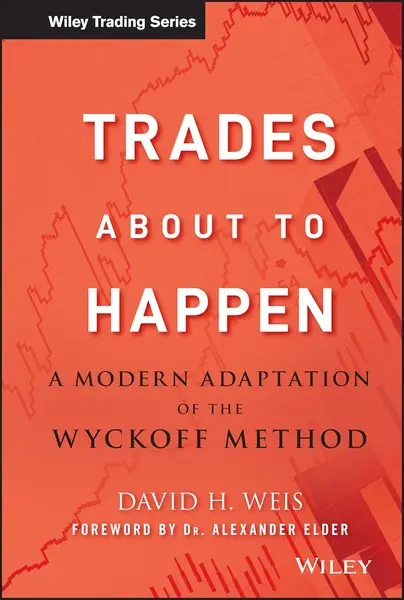
The Wyckoff method is a hundred years old, and most attempts to modernise it either dilute it into slogans or bury it in reverence. This book does neither. It is a working trader’s attempt to take the oldest idea in tape reading, that price and volume together reveal the balance of supply and demand, and make it legible on a modern chart.
David Weis is one of the more credible people alive to attempt it. He is a long-recognised authority on the Wyckoff tradition and the originator of the Weis Wave, a modern reworking of Wyckoff’s wave charts. That pedigree is the book’s real asset, and it is also the source of its one honest commercial complication, which the review will name plainly.
What you get is a genuine apprenticeship in reading price and volume bar by bar, taught by someone who has spent a career doing it. What you do not get is a mechanical system, a set of statistics, or any pretence that the skill is easy to transfer. The rating holds both of those truths, and the overall sits above the axis mean for reasons the final section explains in full.
At a Glance
| Author | David H. Weis |
| Full Title | Trades About to Happen: A Modern Adaptation of the Wyckoff Method |
| Published | 2013 (Wiley) |
| Difficulty | Hard. The prose is readable; the discretionary skill it teaches is not quick to acquire. |
| Best For | Traders serious about learning to read price and volume the Wyckoff way, from a genuine authority |
| Skip If | You want a mechanical system, statistical proof, or a method you can trade without months of screen time |
OVERALL RATING: 7.8 / 10
Who Should Read This Book
| Reader | Verdict | Why |
|---|---|---|
| Serious Wyckoff student | Strong yes | A modern, working-trader treatment from a recognised authority. This is the current-era statement of the method. |
| Volume / order-flow reader | Yes | The bar-by-bar reading of effort and result is the deep version of what lighter volume books introduce. |
| Complete beginner | Not first | Get a gentler volume on-ramp under you first, or the reading will feel like intuition you cannot yet copy. |
| Systematic trader | For the concept only | This is discretionary chart reading with no backtest or expectancy. There is nothing here to code. |
| ICT / SMC trader | Read for the roots | Supply, demand, and the footprint of large operators are the Wyckoff ancestors of a lot of modern language. |
| Prop-firm challenger | Later | The skill takes screen time to build. It will not carry you through an evaluation on a deadline. |
The Book in Context
Richard Wyckoff was a tape reader in the early twentieth century who built a method around the idea that large operators leave a readable footprint in price and volume. The method has survived a century because the underlying claim, that supply and demand imbalances show up before the trend does, keeps being partly true. What it has always lacked is a modern, plain-spoken teacher who actually trades it. Weis is that teacher.
On credentials, this is one of the rare cases where the boundary can be drawn generously and still honestly. Weis is widely recognised within the Wyckoff tradition, taught the method over a long career, and originated the Weis Wave, a genuinely influential modern tool. That is better evidence than most trading authors offer, and it is not the same as an audited return stream. This site states the strong, checkable claim, that he is a recognised authority who has taught and developed the method for decades, and stops there. It is better evidence, not proof, and it is enough to take the book seriously.
The book’s place in the literature is as the credible modern Wyckoff text. It sits above the beginner volume books and beside the more theoretical auction-market works, and it is the one most likely to reward a reader who is willing to put in the screen time the method demands.
The Core Argument: Read the Balance, Not the Bar
The method rests on reading the relationship between how far price travelled, where it closed, and how much volume it took, then stringing those readings together into a story about supply and demand.
A single bar tells you little. A wide bar up on high volume that closes on its low is a very different message from a narrow bar up on low volume, and the message only emerges in sequence, as one bar confirms or contradicts the last. Weis teaches you to read effort against result the way Wyckoff did, and then adds his own contribution: the Weis Wave, which aggregates volume by directional wave rather than by bar, so that the effort behind an entire up-swing or down-swing becomes a single comparable number. That aggregation is the modernising move, and it makes exhaustion and absorption easier to see than raw bar volume does.
The trade you are looking for is not on the bar in front of you. It is in the relationship between this bar and the twenty before it.
— What reading the balance actually means
This is the real thing, taught properly. Weis does not sell it as easy and does not hide behind jargon. He shows you the reasoning, walks through the sequence, and models the patience the method requires. For a reader willing to do the work, it is close to an apprenticeship in a skill that genuinely exists.
And, as with every book of this kind, the format has a ceiling the author cannot lift.
The Problem: The Charts Are Clear Because They Are Finished
Every worked example in the book is a completed chart, annotated after the outcome was known, and that is both how the teaching works and where its limit lives.
When Weis shows you a point where supply overwhelmed demand and the trend turned, the reading is lucid and convincing. What the page cannot show you is how that same moment looked at the hard right edge, before the next twenty bars existed. The discrimination that separates a real Wyckoff read from a plausible-sounding one is exactly the part that is hardest to transfer through retrospective examples, because neither the author nor the reader can fully separate what was visible in real time from what became obvious afterwards. This is not a criticism of Weis specifically. It is structural to teaching discretionary skill on paper, and it is unfalsifiable from the page.
What the Method Teaches and What It Cannot Promise
| It teaches | It cannot promise |
|---|---|
| A disciplined way to read supply and demand in sequence | That you will read it correctly in real time |
| The Weis Wave as a clearer view of effort per swing | An expectancy figure, sample, or win rate for the readings |
| The reasoning of an expert, made explicit | That the reasoning was available before the outcome was known |
| A durable analytical vocabulary for tape reading | The screen time it will take you to make it yours |
The left column is genuinely valuable and honestly taught. The right column is the work that no book of worked examples can do for you.
The second thing to state plainly is commercial. The Weis Wave, in its polished, ready-to-use form, is a commercial indicator sold separately from the book. The book teaches the concept and the reasoning, which is real value on its own, but a reader should know that the frictionless version of the tool is a paid product. That does not make the teaching less honest. It does mean the book sits one step upstream of a thing you may end up paying for, and you should decide with your eyes open.
Five Ideas Worth Carrying With You
The information is in the sequence, not the bar. One bar is a word; the trend is the sentence.
The central discipline of the book. Beginners read bars in isolation and chase noise. Reading each bar against the ones before it is what turns a chart into a story about who is winning the supply-and-demand fight.
Big effort with a small result is the market telling you the trend is meeting resistance it did not expect.
Wyckoff’s oldest and best idea, taught cleanly. A large-volume push that fails to move price much means the other side is absorbing it, and absorption is often the quiet start of the turn.
Measure the volume of the whole swing, and effort becomes visible in a way single bars hide.
The Weis Wave insight. Aggregating volume by directional wave lets you compare the conviction behind one swing against the last, which surfaces exhaustion and demand shifts that raw bar volume can obscure.
A read that only becomes obvious after the close is not yet a skill. It is a memory of one.
The warning to carry. The annotated charts are lucid because they are finished. Your job is to build the real-time version of that judgement through repetition, and to stay honest about the gap until you have.
Patience is not a virtue here. It is a component of the method.
Weis models waiting for the sequence to complete before acting. Most of the edge in this style is in the trades you decline while the balance is still unresolved, which is a discipline, not a mood.
Common Misreadings of the Book
Misreading #1: “The Weis Wave is a signal that tells me when to trade”
It is a way of seeing effort per swing, not a trigger. It makes the supply-and-demand story easier to read; it does not make the decision for you. Traders who wait for the wave to flash a signal have misunderstood what the tool is.
Misreading #2: “The annotated charts prove the method works”
They demonstrate the reasoning; they do not establish a win rate or expectancy. The examples are finished charts annotated in hindsight, which is excellent teaching and, by itself, no proof of real-time performance.
Misreading #3: “Wyckoff is outdated, so this is a history lesson”
The supply-and-demand logic keeps resurfacing under new names, including much of modern liquidity and order-flow language. Reading the disciplined original tends to sharpen the newer methods rather than replace them.
Misreading #4: “I can learn this in a weekend”
You cannot. The book is readable in a few sittings; the skill takes months of screen time to build. Weis is honest about this, and readers who expect a quick method will feel misled by their own expectations rather than by the book.
Misreading #5: “The book gives me a complete trading system”
It gives you a reading skill and a way of thinking, with little on position sizing, risk of ruin, or expectancy. That is half of a complete approach. The other half is yours to build.
Where the Book Falls Short
- The hindsight problem is structural. Every example is a finished, retrospectively annotated chart, and that cannot convey the real-time ambiguity that is the actual difficulty of the method.
- No statistical validation. No sample, no expectancy, no out-of-sample test. The readings are taught, not measured, and the reader has no number to anchor confidence to.
- Slow to transfer. The skill demands substantial screen time. For a reader without months to invest, the book will feel like watching an expert do something they cannot yet copy.
- The polished tool is commercial. The frictionless Weis Wave is a paid product sold separately. The book teaches the concept honestly, but sits one step upstream of something you may end up buying.
- Thin on risk and money management. A reading method with almost nothing on sizing or expectancy is only ever half a system, and the missing half is the one that decides survival.
- Assumes some Wyckoff grounding. A complete beginner will get more from it after a gentler volume introduction has built the vocabulary first.
How the Book Fits the Mind · Method · Money Framework
| Pillar | Contribution | What the Book Delivers |
|---|---|---|
| MIND | SECONDARY | Strong modelling of patience and of waiting for the sequence to resolve before acting. Discipline is baked into the method. |
| METHOD | PRIMARY | The whole book. A disciplined, modern Wyckoff reading of price and volume, plus the Weis Wave view of effort per swing. |
| MONEY | WEAK | Little on sizing, risk of ruin, or expectancy. The reading sets up trades; it does not manage the account. |
This is a Method book with real Mind discipline built in and a familiar Money gap. Read against the Mind · Method · Money framework and The Complete Trader’s Edge, the Wyckoff reading becomes the entry logic inside a system that brings its own risk arithmetic. Weis teaches you to see the trade forming. What that sighting is worth is a function of sizing he does not cover, and you will have to supply it.
Read This Instead Of / Read This After
| Relationship | Book | Why |
|---|---|---|
| Read before | A Complete Guide to Volume Price Analysis | Coulling builds the volume vocabulary gently. Come to Weis with it and the deeper reading lands faster. |
| Read alongside | Markets in Profile | Dalton gives the auction-theory frame for the same accept-or-reject question Weis reads bar by bar. |
| Read after | Alpha Trader | The Money pillar this book omits. Donnelly supplies the sizing and expectancy discipline the reading needs to survive. |
| Read instead of | Any “smart money course” promising the same | Same lineage, taught by a genuine authority, without the recurring subscription or the hype. |
| Do not read as | A quick, complete system | It is a slow, discretionary reading skill with no risk model attached, and treating it as plug-and-play will disappoint you. |
Final Verdict: Should You Read This Book in 2026?
For the committed reader, yes, and the 7.8 needs the same explanation the rest of this specialist cluster does: the axes below sit lower than the overall.
The dimensions this site scores penalise exactly what this book is. Beginner-friendliness is low because the method demands prior grounding and months of screen time. Readability and actionability are solid but not spectacular, because the skill resists quick transfer by its nature. Averaged, those numbers land near 6.8.
The 7.8 reflects a judgement the axes cannot express: this is the credible modern statement of a century-old method, taught by a recognised authority who actually trades it, and that is rare enough to be worth more than the mean suggests. For a reader serious about learning to read price and volume in the Wyckoff tradition, there are few better guides in print, and the Weis Wave is a real contribution rather than a gimmick. That reader gets close to an 8.5. A beginner looking for a fast system gets frustration. The 7.8 is the weighted answer, and calling it a general recommendation would be dishonest. Take the reading skill, respect the screen time it demands, treat the polished tool as optional, and bring the risk arithmetic Weis leaves out. The eye this book builds does not expire, even if any single method eventually does.
CTE Rating Breakdown
7.8/10
Modern Wyckoff, Done Right
| Readability | 7 | |
| Actionability | 7 | |
| Timelessness | 8 | |
| Beginner-Friendly | 5 | |
| Modern Relevance | 7 |
The axes penalise the screen time and grounding the method demands. The overall reflects the rarity of a credible modern Wyckoff teacher, not the mean.
Frequently Asked Questions
What is Trades About to Happen about?
It is a modern adaptation of the Wyckoff method that teaches you to read price and volume bar by bar to judge the balance of supply and demand. It also introduces the Weis Wave, which aggregates volume by directional swing to make effort easier to compare.
Who is David Weis?
He is a widely recognised authority within the Wyckoff tradition who taught and developed the method over a long career, and the originator of the Weis Wave. That is stronger evidence of expertise than most trading authors offer, though it is not the same as an audited return record.
What is the Weis Wave?
It is a reworking of Wyckoff’s wave charts that sums volume across each directional swing rather than each bar, so the effort behind an entire up-move or down-move becomes a single comparable figure. In its polished, ready-to-use form it is a commercial indicator sold separately from the book.
Is the method mechanical or discretionary?
Discretionary. It teaches a way of reading and judging, not a fixed rule set, which is why it takes screen time to develop and cannot be backtested from the page.
Is it good for beginners?
Not as a first book. It rewards readers who already have some volume vocabulary and who can commit real screen time. A gentler introduction first makes it far more useful.
Does the book prove the method with statistics?
No. There is no sample, expectancy, or out-of-sample test. The worked examples are finished charts annotated in hindsight, which teaches the reasoning but does not measure the results.
Do I have to buy the Weis Wave indicator?
No. The book teaches the concept and the reasoning on their own. The polished indicator is an optional paid convenience, and you should decide whether you want it with that in mind rather than assuming it is required.
How does it relate to modern smart-money and order-flow trading?
Much of that language descends from the same Wyckoff supply-and-demand thinking. Reading the disciplined original tends to sharpen the modern methods rather than compete with them.
Does it cover risk management?
Barely. It is a reading and entry method with little on sizing, risk of ruin, or expectancy. You need to bring the money-management half of the system from elsewhere.
What is the single most important takeaway?
That the information is in the sequence, not the single bar. Reading effort against result across a series of bars, and waiting for the balance to resolve before acting, is the discipline the whole book is built to teach.
About the Author
David H. Weis
David Weis is a widely recognised authority within the Wyckoff tradition, who studied, taught, and developed the method across a long career in the markets. He is the originator of the Weis Wave, a modern reworking of Wyckoff’s wave charts that has become an influential tool in volume-based analysis.
On the credential boundary: his standing as a Wyckoff authority and teacher is well established and checkable, which is better evidence than most trading books offer. This site states that strong, verifiable claim and stops there, rather than attaching specific returns or performance figures the book does not document. Better evidence, not proof.
What can be assessed is the teaching, and the teaching is disciplined, honest about difficulty, and free of the shortcuts the genre usually sells. He does not tell you the method is easy or fast. He shows you how it is done and leaves the screen time to you.
Continue Learning
- A Complete Guide to Volume Price Analysis Book Review (2026)
- Markets in Profile Book Review (2026)
- Alpha Trader Book Review (2026)
- The Top Trading Books Explorer
- Recommended Reading for Traders
- The Mind · Method · Money Framework
- The Complete Trader’s Edge — The Book
 The Complete Trader's Edge
The full Mind · Method · Money framework. 70 chapters.
View on Amazon →
 Market Mayhem
400 years of bubbles, crashes, and the pattern that keeps repeating.
Buy on Amazon →
 Greatest Companies
How the world's greatest companies were built — and what traders learn from them.
View on Amazon →
 Greatest Traders
Eighty-six lives that explain the markets — Livermore to Madoff, told with the losses left in.
View on Amazon →