

Artificial intelligence has entered the retail trader’s toolkit in a meaningful way. ChatGPT, Claude, and other large language models are not crystal balls — they cannot predict price. But used correctly, they are extraordinarily powerful tools for research, strategy development, journal review, and market education. This guide covers exactly how to use them and where their limits lie.
| AI Use Case | How to Use It | Limitation |
|---|---|---|
| Strategy development | Brainstorm entry criteria, backtest logic, rule refinement | Cannot see charts or execute trades. Ideas still need manual testing. |
| Journal analysis | Paste journal data and ask for pattern analysis across wins/losses | Quality depends on data quality. Garbage in, garbage out. |
| Pine Script / coding | Generate TradingView indicators, alerts, and strategy scripts | Code needs testing. AI can introduce subtle bugs in trading logic. |
| Market research | Summarise earnings reports, explain macro events, research correlations | Knowledge may be outdated. Always verify with current sources. |
| Education | Explain concepts, quiz yourself, create study plans | Cannot replace screen time and live trading experience. |
What AI Can Actually Do for Traders
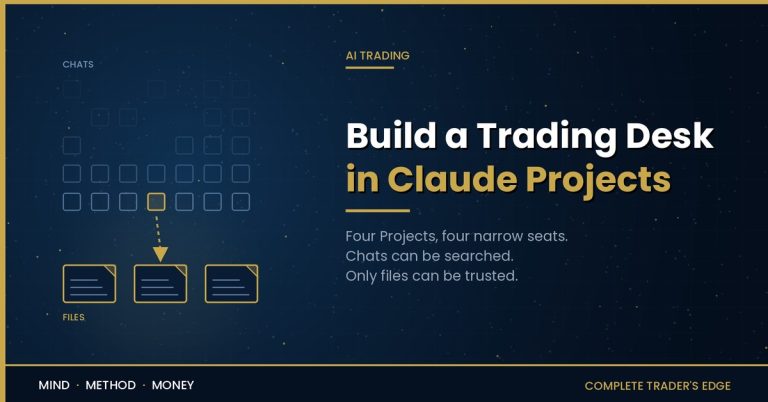
Related guide: research is one seat of four. How to build a trading desk of Grok bots sets out the whole roster, including the source-hygiene rules that keep a research assistant from inventing an authority.
Market Research and Education
AI tools excel at explaining complex concepts, summarising research, and providing structured educational content on demand. Need to understand how the Federal Reserve’s interest rate decisions affect the US Dollar? How options expiry affects equity market volatility? The mechanics of a carry trade? Ask an AI — and follow up with “explain the counterarguments” or “what are the risks of this view” for a more complete picture.
Strategy Development and Rules Testing
Describe your trading setup to an AI tool and ask it to identify edge cases, find logical weaknesses, suggest improvements, or help you write the rules more precisely. This is one of the most underused applications — AI as a strategy stress-testing partner. It will not backtest for you, but it will help you think through your rules more rigorously than most traders ever do on their own.
Trading Journal Review and Pattern Analysis
Paste a week or month of your trading journal entries into an AI tool and ask it to identify patterns in your mistakes, analyse your emotional language across entries, or compare your rule-following rate across different session types. This turns qualitative journal data into structured insight faster than manual review.
Coding and Automation
For traders who want to automate parts of their process — backtesting scripts, alert systems, journal templates, data analysis tools — AI coding assistants have dramatically lowered the barrier to entry. You do not need to be a programmer to get functional code for straightforward trading automation tasks.
Where AI Falls Short
- It cannot predict price — any AI that claims to predict market direction is either wrong or a scam. Markets are non-deterministic and no language model changes this.
- It confabulates — AI tools generate plausible-sounding answers even when they do not know the correct answer. Always verify specific facts, statistics, or research claims independently.
- It has no real-time data access by default — most AI tools have knowledge cutoffs and cannot access live market data unless specifically integrated with data feeds.
- It cannot replace experience — AI can accelerate learning but cannot substitute for the hours of screen time and the lived psychological experience of trading real money.
Best Prompts for Traders
- “Explain [concept] to me as if I understand basic technical analysis but have not studied [specific topic] before.”
- “Here are my trading rules: [paste rules]. What edge cases am I missing? What situations are not covered?”
- “Here are my last 20 journal entries: [paste]. What patterns do you see in my mistakes or emotional language?”
- “Write a Pine Script indicator for [description of indicator logic].”
- “Explain the bull case and the bear case for [market/trade idea].”
Key Lessons
- AI tools are research accelerators and thinking partners — not price predictors or trading systems.
- The best uses: market education, strategy stress-testing, journal review analysis, and coding assistance.
- AI confabulates — always verify specific facts independently.
- AI accelerates learning but cannot replace screen time, experience, or the psychological development of trading real capital.
→ AI for Traders: Complete Guide
Frequently Asked Questions
Can ChatGPT predict market movements?
No. ChatGPT and similar AI models cannot predict prices. They can help with research (summarising economic data, explaining concepts), strategy documentation (writing your trading plan), journalling analysis (reviewing patterns in your trade data), and education. Use AI as a research assistant, not a crystal ball.
How can I use AI to improve my trading journal?
Export your journal data and ask AI to identify patterns: which sessions produce your best results, which setups have the highest win rate, whether emotional state correlates with rule violations. AI is excellent at pattern recognition in structured data that humans might miss.
Should I use AI to generate trading strategies?
AI can help brainstorm ideas and backtest parameters, but it should not replace your understanding of why a strategy works. A strategy you understand will be followed during drawdowns. A strategy an AI generated that you cannot explain will be abandoned at the first losing streak.
What are the limitations of AI in trading?
AI cannot account for unprecedented events (black swans), does not understand context the way experienced traders do, and can produce confidently wrong outputs. Always verify AI-generated analysis against your own chart reading. AI is a tool. You are the decision-maker.
Is using AI in trading “cheating”?
No more than using a calculator is cheating in accounting. AI tools process data faster and can identify patterns across larger datasets. Professional institutional traders use AI extensively. The traders who adopt these tools wisely have an advantage over those who do not. The key is using AI to enhance your process, not replace your understanding.
From The Book
This article covers concepts from Chapter 50 of The Complete Trader’s Edge.
 The Complete Trader's Edge
The full Mind · Method · Money framework. 70 chapters.
View on Amazon →
The Complete Trader's Edge
The full Mind · Method · Money framework. 70 chapters.
View on Amazon →
 Market Mayhem
400 years of bubbles, crashes, and the pattern that keeps repeating.
Buy on Amazon →
Market Mayhem
400 years of bubbles, crashes, and the pattern that keeps repeating.
Buy on Amazon →
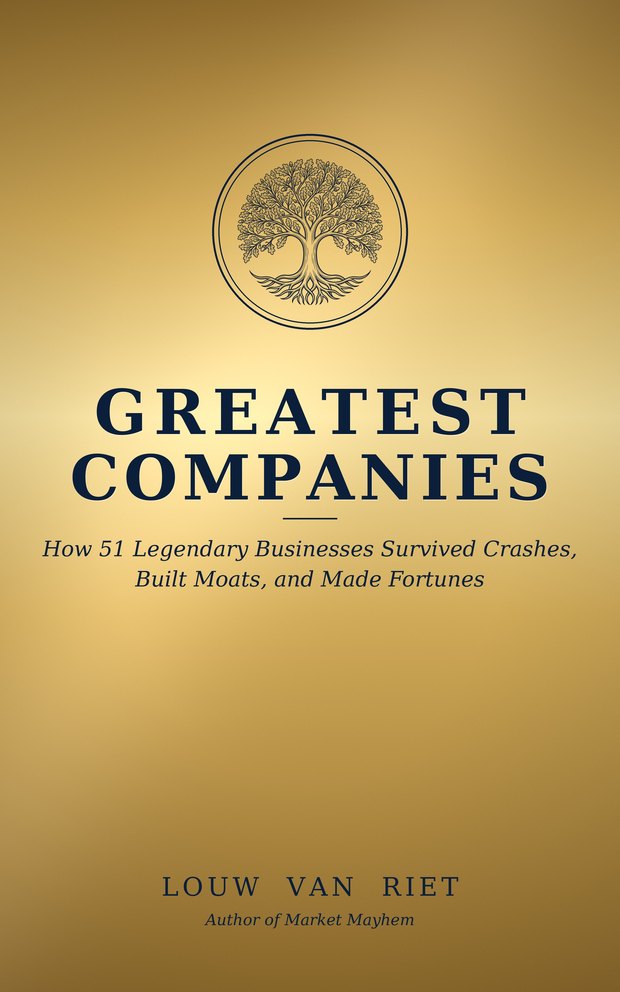 Greatest Companies
How the world's greatest companies were built — and what traders learn from them.
View on Amazon →
Greatest Companies
How the world's greatest companies were built — and what traders learn from them.
View on Amazon →
 Greatest Traders
Eighty-six lives that explain the markets — Livermore to Madoff, told with the losses left in.
View on Amazon →
Greatest Traders
Eighty-six lives that explain the markets — Livermore to Madoff, told with the losses left in.
View on Amazon →