


External Systems
Build the scaffolding that does the work willpower cannot.
The trader who blames their last loss on a lapse of discipline is almost always wrong. Not because discipline does not matter, but because the loss they are calling a discipline failure was the predictable output of a missing system. The trader who oversized had no position-size calculator in front of them at order entry. The trader who moved their stop had not pre-committed to the rule that stops do not move. The trader who took the revenge trade had no daily loss limit set in the platform. In each case, the failure looks like willpower; the cause is infrastructure.
This is the work of episode fourteen. Most retail traders try to trade well using willpower alone. Most professionals trade well because the systems around them make poor execution structurally harder. Your trading platform, your journal, your pre-trade checklist, your risk automation, your accountability structure, your record-keeping: each of these is a piece of external scaffolding that, when properly built, removes a category of error from being possible in the first place. When the scaffolding is missing, willpower is asked to do work it cannot reliably do. Across thousands of decisions, willpower loses. Across the same thousands of decisions, systems win.
The case for systems is empirical, not theoretical. Atul Gawande’s The Checklist Manifesto documented in detail how the introduction of simple pre-flight checklists reduced aviation accident rates dramatically, and how surgical checklists similarly reduced complications and deaths in operating theatres. The professionals using these checklists were not less skilled than before; they were skilled people whose skill was now protected by a system that caught the predictable lapses. Trading is structurally similar work: high-stakes, time-pressured decisions performed thousands of times, with predictable failure patterns. The checklists, journals, and automated controls are the trader’s equivalent of the surgical pause.
Systems Stack Checker
Six systems run your trading. Audit what's missing.
Why systems beat willpower across long timescales
The single most-cited finding from the willpower research literature is that self-control is depletable, contextual, and unreliable under fatigue. Baumeister, Vohs, and Tice’s overview of self-regulation research documented that the same person making the same decision at hour one versus hour four of a demanding task will make systematically different choices, with the later-hour choices being more impulsive and worse on average. This is not a moral failing; it is the biology of sustained cognitive control.
The trader who relies on willpower to enforce their rules is therefore relying on a resource that is reliably depleted at exactly the moments rules matter most: late in a losing session, after a stop-out, during a drawdown, in the last hour of a long week. The trader who has built external systems is not relying on willpower in those moments. The platform refuses to let them open a position above their size limit. The daily loss limit kicks them out of the platform at the pre-set threshold. The journal entry requirement creates friction that breaks the impulse. The pre-trade checklist forces a pause that breaks the autopilot. None of these requires willpower at the moment of decision; they were all built when willpower was abundant, days or weeks before.
This is the entire game. Build systems while you are calm and rested. Let the systems do the work when you are tired and emotional. Most trading careers improve dramatically the year a trader stops trying to be disciplined and starts building infrastructure that removes the need for discipline at the moment of decision.
The six external systems every serious trader needs
The auditor above covered six dimensions. Each one closes a specific category of error. A trader missing any one of them is exposed to the errors that system would have caught.
1. The trading journal
The journal is the foundational external system. Without one, the trader has no record of what they did, why they did it, or what they have learned. With one, every trade becomes a data point that feeds the weekly review and the long-term pattern recognition. Strong journal tools exist commercially (Edgewonk, TradesViz, TraderSync, Tradervue), and structured Notion or Google Sheets templates work equally well for traders who prefer to roll their own.
The minimum journal entry contains: setup name, entry rationale, entry price, stop, target, exit price, exit rationale, execution quality (was the entry exact or sloppy, was the stop honoured, was the exit at the planned level), one-sentence note on emotional state, and ideally a screenshot of the chart at entry. Five minutes per trade. Without this, every other system below is operating on incomplete data.
2. The pre-trade checklist
The checklist is a five-to-seven item list, printed on a card, taped beside the monitor, read before every entry. Items vary by strategy but typically include: setup criteria fully met, position size calculated, stop placed at order entry, target set, daily loss limit unbreached, news risk in the next hour checked, mental state acceptable.
The point of the checklist is not the information it contains; the information is already in the trader’s head. The point is the forced pause. The trader who reads the card before clicking buy has interrupted the autopilot decision sequence with an explicit verification step. Most rule violations happen on autopilot. The pause breaks the autopilot, even if the items themselves seem trivial.
3. Risk management automation
Position sizing should not be done mentally. Most platforms have a built-in position size calculator, and free standalone calculators exist for any market. The size is entered before order placement, not as part of order placement. The stop is set at order entry and not moved manually; if your platform supports a hard stop attached to the order, use it. The daily loss limit is set in platform settings if available; if not, the trader sets a manual rule plus a partner-check.
The principle here is severe and counter-intuitive: risk controls should not require willpower in the moment. The trader who has to “decide” to honour their stop, every time, will eventually fail to. The trader whose stop is set automatically at order entry and is not user-movable has removed the decision from the late-session, fatigue-impaired moment when it would otherwise be made. Move the decision to a calm moment in advance. Let the system enforce it later.
4. Broker and platform hygiene
The broker is part of your system, not separate from it. Use a reputable broker registered with a major regulator (FCA in the UK, SEC and CFTC in the US, ASIC in Australia, FSCA in South Africa, or equivalent). Use two-factor authentication on the broker account; the account is a target for hijacking and the consequences are catastrophic. Maintain separate accounts for trading capital, profits taken, and personal funds. Never commingle. Withdraw profits weekly or monthly; this forces the win to become real rather than remain as a number on a screen.
The broker hygiene point is often dismissed as obvious until it goes wrong. The trader who skips 2FA and has the account drained learns the lesson once. The trader who commingles trading capital and personal funds finds tax season impossible and may invite legal exposure depending on jurisdiction. These are not exotic risks; they are routine, and the protections are five-minute setup costs.
5. External accountability
Internal accountability decays. The trader who promises themselves they will journal every trade does so for two weeks, then misses one, then misses another, then stops. External accountability is structurally different. A mentor or peer who reviews your journal entries weekly creates a feedback loop the internal voice cannot replicate. You know someone will see this week’s trades. You journal more carefully. You take fewer marginal trades because you do not want to explain them.
The accountability structure does not need to be elaborate. A weekly fifteen-minute call with one peer who looks at your journal is enough to change behaviour. The relationship is built in the same way as the peer group in EP12; the difference is that this one has a specific scope (the journal) rather than general support.
6. Data backup and record keeping
Cloud-backed journal. Monthly broker statement downloads. Tax records kept current in a labelled folder. None of this is glamorous; all of it matters. The trader who has to reconstruct two years of records at tax time has lost a week of trading and is exposed to penalty risk. The trader whose journal is on a local drive that fails has lost their entire trading record. These are infrastructure costs that prevent crisis later; pay them in calm times.
10 protocols for building the external systems stack
Protocol 1: Build the journal before any other system
Edgewonk, TradesViz, TraderSync, Tradervue, or a structured Notion / Google Sheets template. Every trade logged with: setup, entry rationale, execution quality, exit rationale, screenshot, one note on emotional state. Five minutes per trade. Weekly review touches every entry.
Protocol 2: Print the pre-trade checklist on a physical card
Not on the screen. On a card, taped beside the monitor. Five to seven items. Read before every entry. The physical act of looking at the card breaks the autopilot in a way that on-screen reminders do not.
Protocol 3: Automate position sizing
Use the platform’s built-in calculator or a free standalone tool. Never size by mental math during the entry. The calculator runs before the order is placed. If the platform supports a maximum-position-size setting, enable it.
Protocol 4: Set the stop at order entry, never manually move it
The stop is part of the order, not a separate decision. Use hard stops attached to the position, not mental stops. The rule “stops do not move” is enforced by the platform, not by willpower. If you find yourself wanting to move a stop, you are about to make the worst decision of the session.
Protocol 5: Daily loss limit, automated where possible
Set a maximum daily loss in absolute dollars or percentage of account. Many platforms support automatic kick-out at the threshold. If yours does not, set a manual rule plus a partner-check. The limit is set on Sunday and not revised in-session.
Protocol 6: 2FA on the broker, today
Account hijacking is a real and growing threat. Two-factor authentication, ideally with an authenticator app rather than SMS. Five minutes to set up. Prevents an entire category of catastrophic loss that has no equivalent recovery path.
Protocol 7: Separate trading capital from everything else
One account for trading capital, one for profits taken, one for personal funds. Never commingle. Withdraw profits weekly or monthly into the profits account. This forces the win to become real and removes the temptation to use profits as additional trading capital indefinitely.
“I spent my first three years trying to be a disciplined trader. I spent the next year building systems that made indiscipline structurally harder. The fourth year was the first year I was profitable. The discipline did not change. The infrastructure did.”
Protocol 8: Weekly external journal review
A mentor or peer reviews your journal entries each week. Fifteen minutes is enough. The act of knowing someone will see this week’s trades changes mid-week behaviour. Internal accountability decays; external accountability holds.
Protocol 9: Cloud-backed records, monthly broker statement download
Google Drive or Dropbox auto-sync on the journal. Monthly broker statement saved to a labelled folder, organised by month and year. Tax records kept current. The hour you spend on this once a month saves a week of reconstruction at tax time.
Protocol 10: Build one system this month, then the next, then the next
Do not try to implement all six at once. One system per month, in priority order. Each one needs two to four weeks to embed before the next is added. Six months of patient sequential building produces a complete external stack.
Decision tree by trader profile
Profile A: Intraday execution trader. Journal and risk automation are highest priority. Intraday execution generates many trades per week, and a missing journal means lost learning across hundreds of trades per year. Risk automation prevents the late-session size and stop violations that hurt intraday traders most.
Profile B: Scalper. Risk automation is non-negotiable. Scalping has the highest trade frequency and therefore the highest exposure to a single moment of poor risk management. Hard stops attached to every order, daily loss limit set in platform, no exceptions. The journal can be lighter (the trade count is too high for full per-trade entries), but a daily summary entry is essential.
Profile C: Swing trader. Journal is the highest priority; swing traders take fewer trades and have time to journal each one in detail. The detail compounds because each trade represents a larger fraction of the year’s data. Pre-trade checklist is also highly leveraged because swing entries are often planned days in advance.
Profile D: Position / weekly trader. External accountability and record keeping matter most. Position trades take weeks; the temptation to deviate from the original thesis is high. A mentor or peer who reviews the weekly thesis is structural protection against thesis drift. Tax records also matter more because position trades trigger fewer but larger taxable events.
Profile E: Part-time trader (full-time job alongside). All systems matter, but the journal is the highest immediate priority. Part-time traders have less in-session time, so the after-session learning loop has to do more work. Without a journal, the part-time trader is not converting their limited trading time into improvement.
Four ways systems work fails
One: You build the systems but do not use them. The journal that exists but is updated inconsistently is worse than no journal because it gives a false sense of process. The fix is the external accountability check (Protocol 8); a mentor reviewing weekly turns the journal from optional into mandatory.
Two: You over-engineer the systems. The trader who builds a 47-field journal with elaborate Notion automation usually abandons it within a month. The journal that gets used is the one that takes five minutes per trade, not thirty. Same principle for the checklist: five items, not twenty.
Three: You move the goalposts in-session. “The daily loss limit was 500 but I’m sure I can recover, let me try 750.” This defeats the entire purpose. The limits are set on Sunday and not revised in-session. If you find yourself wanting to revise a system in the middle of trading, that is exactly the moment the system was built to override.
Four: You try to do all six at once. Six new systems in a month means most of them fail to embed. One per month, sequenced by the auditor priority, allows each to become habit before the next is added.
Frequently asked questions
Q: Is paid journal software worth it over a free spreadsheet?
For high-volume traders, yes; the time saved on data entry and the depth of automated statistics justify the cost. For lower-volume traders, a well-designed Google Sheets template covers most of the same ground at zero cost. The medium matters less than the consistency of use.
Q: What if my broker does not support automated daily loss limits?
Set a manual rule, write it on the same card as the pre-trade checklist, and have a partner-check. The check is the accountability piece: text a mentor or peer with the daily loss before you take any further trades. The friction breaks the in-session impulse.
Q: How long should I journal a trade after closing it?
Same day, ideally within an hour of close. The emotional context fades quickly; a trade journaled three days later has lost the most useful data (what you were feeling at entry and exit). Make the journal entry part of the trade itself, not a separate task.
Q: I use multiple brokers. How do I keep records straight?
One master journal that aggregates all trades, plus monthly statement downloads from each broker. The master journal is the single source of truth for your performance; the broker statements are the audit trail for tax purposes. Do not mix the two.
Q: My partner does my taxes. Do I still need to keep my own records?
Yes. Your tax preparer relies on the records you give them; the responsibility for accuracy is yours regardless of who fills out the forms. Keep statements, journal exports, and a year-end summary. The hour per month investment saves you stress and potential penalty exposure.
Q: How do I get a mentor or peer to review my journal weekly?
Ask. Most traders are flattered to be asked and welcome the opportunity to engage with someone else’s process. If you do not have a mentor relationship yet, this is a low-cost way to begin one: offer to reciprocate by reviewing their journal in return. The mutual review is often more valuable than either trader doing solo reflection.
Build Your Physical Edge Audit
Sleep, fuel, stress, focus, recovery. Score yourself across 25 markers and build a personalised protocol stack.
References
- Gawande, A. (2009). The Checklist Manifesto: How to Get Things Right. Metropolitan Books. The foundational case for structured checklists in expert work, with documented mortality reductions in surgical and aviation domains.
- Baumeister, R.F., Vohs, K.D., Tice, D.M. (2007). The strength model of self-control. Current Directions in Psychological Science, 16(6), 351-355. Foundational research on the depletable nature of self-regulation. doi:10.1111/j.1467-8721.2007.00534.x
- Gollwitzer, P.M., Sheeran, P. (2006). Implementation intentions and goal achievement: a meta-analysis of effects and processes. Advances in Experimental Social Psychology, 38, 69-119. The robust research base for if-then planning and structured pre-commitment. doi:10.1016/S0065-2601(06)38002-1
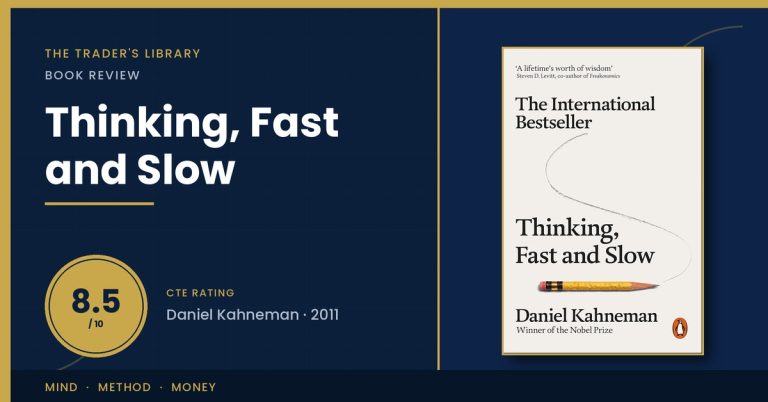
- Kahneman, D. (2011). Thinking, Fast and Slow. Farrar, Straus and Giroux. Especially relevant for the System 1 / System 2 framework underlying why autopilot decision-making fails in high-stakes contexts and why explicit checks help.
- Wiehler, A., Branzoli, F., Adanyeguh, I., Mochel, F., Pessiglione, M. (2022). A neuro-metabolic account of why daylong cognitive work alters the control of economic decisions. Current Biology, 32(16), 3564-3575. The biological evidence underpinning why late-session decisions are systematically worse. doi:10.1016/j.cub.2022.07.010
The Complete Trader’s Edge
70 chapters across Mind, Method, and Money. The book that builds your full trading system, not just your physical foundation.
The Trader’s Physical Edge Series
 The Complete Trader's Edge
The full Mind · Method · Money framework. 70 chapters.
View on Amazon →
The Complete Trader's Edge
The full Mind · Method · Money framework. 70 chapters.
View on Amazon →
 Market Mayhem
400 years of bubbles, crashes, and the pattern that keeps repeating.
Buy on Amazon →
Market Mayhem
400 years of bubbles, crashes, and the pattern that keeps repeating.
Buy on Amazon →
 Greatest Companies
How the world's greatest companies were built — and what traders learn from them.
View on Amazon →
Greatest Companies
How the world's greatest companies were built — and what traders learn from them.
View on Amazon →
 Greatest Traders
Eighty-six lives that explain the markets — Livermore to Madoff, told with the losses left in.
View on Amazon →
Greatest Traders
Eighty-six lives that explain the markets — Livermore to Madoff, told with the losses left in.
View on Amazon →