
A trader blows their account at $10,000 for the third time. They refund, rebuild, and get back to $10,000. Then they blow it again. Different strategy each time. Different market conditions. Different mistakes on the surface. But the same result, at the same number, with the same eerie consistency. This is not bad luck. This is a paradigm at work.
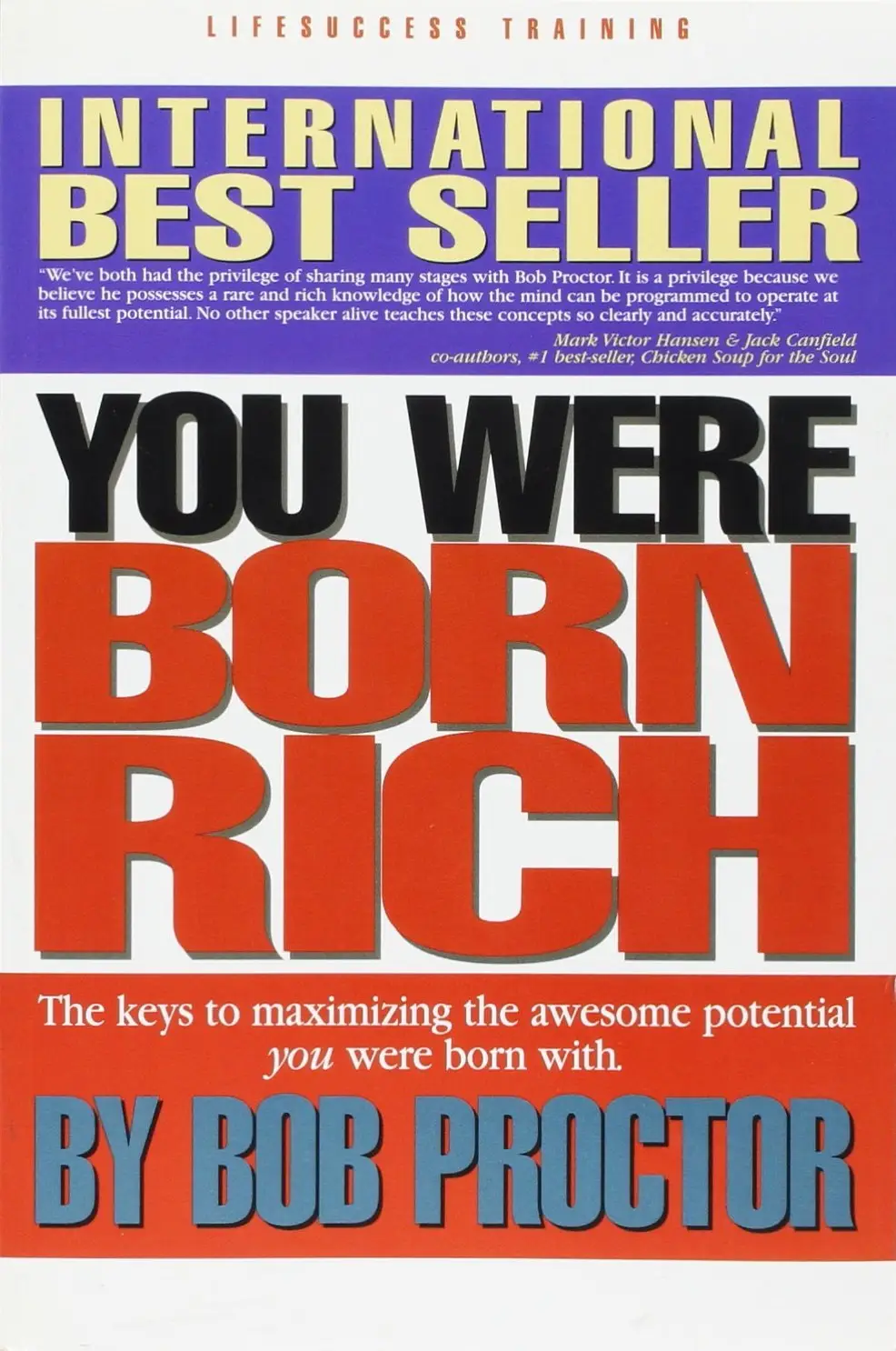
Bob Proctor spent over sixty years teaching one central idea: your results in life are determined by your paradigm, the collection of beliefs, habits, and self-image that operate beneath your conscious awareness. You can have the best strategy in the world, the most comprehensive trading plan ever written, and the clearest understanding of risk management available. If your paradigm says “I am not the kind of person who has $50,000 in a trading account,” you will unconsciously engineer your behaviour to keep the account below that number. Every time.
Proctor, who passed away in 2022 at the age of 87, was a protege of Earl Nightingale and one of the original teachers featured in the film The Secret. His work drew from Napoleon Hill’s Think and Grow Rich, which he reportedly read every day for decades. His core framework is not about positive thinking or wishful manifesting. It is about understanding the subconscious operating system that produces your results, and deliberately reprogramming it to produce different ones.
For traders, this is the missing layer beneath all tactical psychology. Mark Douglas teaches you to think in probabilities. Mel Robbins gives you the countdown to execute. Tony Robbins teaches state management. But Proctor asks the deeper question: why does your subconscious keep returning you to the same results regardless of what your conscious mind knows? The answer is the paradigm, and until you change it, nothing else changes permanently.
Proctor’s book on paradigms and the subconscious limits people place on their own earning. Treat the mechanism claims sceptically; the observation about self-imposed ceilings holds up.
What Is a Paradigm?
Proctor defined a paradigm as a multitude of habits fixed in the subconscious mind. These are not the habits you consciously chose. They are the patterns you absorbed from childhood, from your environment, from the people who raised you, from the culture you grew up in, and from your earliest experiences with money, risk, success, and failure.
Your paradigm determines your comfort zone. Not the comfort zone of physical ease, but the psychological range within which you feel “normal.” Your subconscious mind is constantly monitoring your results and adjusting your behaviour to keep you within that range. When you exceed it, you feel anxious, uncomfortable, and restless until you do something to bring yourself back down. When you fall below it, you feel motivated and driven until you recover.
This is why traders who blow accounts often recover to the same level before blowing up again. The paradigm has a set point, and the subconscious mind enforces it with remarkable precision. It does not matter that the conscious mind wants $100,000. If the paradigm says “$10,000 is where I belong,” every action the trader takes will be subtly influenced to maintain that level. The stop that gets moved. The position that gets oversized. The rule that gets broken at the exact moment it would have produced a breakthrough. These are not random failures. They are the paradigm in operation.
The Money Thermostat
Proctor’s most powerful metaphor for traders is the money thermostat. Just as a thermostat in a room maintains a set temperature by turning the heating on when it drops below the set point and off when it rises above it, your subconscious mind maintains a set level of financial results.
If your thermostat is set to $5,000 per month, you will unconsciously produce behaviours that generate approximately $5,000 per month. In months where you exceed it, you will find ways to give back the excess: overtrading, taking reckless positions, breaking rules, or simply losing focus. In months where you fall short, you will find renewed motivation and discipline to get back to the set point.
This explains one of the most frustrating patterns in trading: the trader who has a great month, then immediately gives it all back. The conscious explanation is always technical: “I got overconfident,” “I changed my strategy,” “I increased my size.” But the subconscious explanation is simpler and more accurate: the trader exceeded their paradigm’s set point, the subconscious generated discomfort, and the discomfort drove behaviour that returned them to the familiar level.
The fix is not more discipline at the conscious level. Conscious discipline is finite and operates on willpower, which depletes. The fix is changing the set point itself, which requires working at the subconscious level through the methods Proctor spent his career teaching.
How Paradigms Form in Traders
Your trading paradigm was not formed when you opened a brokerage account. It was formed decades earlier, through every experience you had with money, risk, and self-worth.
Childhood Money Programming
If you grew up hearing “money doesn’t grow on trees,” “rich people are greedy,” “we can’t afford that,” or “people like us don’t get ahead,” these statements installed beliefs about money that now operate as default assumptions in your subconscious. You may consciously want to make $20,000 per month trading, but if your deepest programming says “people like me don’t earn that kind of money,” your subconscious will find ways to prevent it.
This connects directly to building your trader identity. Your identity is not just who you think you are. It is who your paradigm says you are. And these two can be in direct conflict, with the paradigm winning every time because it operates automatically while conscious intention requires constant effort.
Early Risk Experiences
Your relationship with risk was shaped long before you traded your first position. If risk was punished in your childhood (mistakes led to criticism, failure led to shame), your subconscious associates risk with danger. Taking a trade, even a well-planned one with defined risk, triggers a fear response that has nothing to do with the trade and everything to do with a thirty-year-old association between risk and punishment.
Self-Worth Programming
Perhaps the most fundamental component of the trading paradigm is your sense of self-worth. Proctor taught that you will never consistently earn more than you believe you are worth. If your deep programming says you are worth $50,000 per year, you will find ways to cap your trading income at approximately that level. Exceeding it produces a dissonance that the subconscious resolves by generating self-sabotaging behaviour.
This is why some traders can follow their rules perfectly when the account is small and start breaking them the moment the account reaches a size that feels “too much.” The rules did not change. The market did not change. What changed is that the account exceeded the paradigm’s comfort zone, and the subconscious initiated its corrective programme.
How to Shift Your Paradigm
Proctor taught two primary methods for paradigm change, and both require sustained daily practice over weeks and months. There is no instant fix for subconscious programming. It was installed over years. It changes over weeks, but only with consistent effort.
Method 1: Repetition of New Ideas
The paradigm was built through repetition of old ideas. It is rebuilt through repetition of new ones. Proctor prescribed writing a clear, specific description of the person you want to become and the results you want to produce, and reading it aloud twice per day, morning and evening, with emotional engagement.
For a trader, this might be: “I am a disciplined, patient trader who follows my rules with precision. I earn $15,000 per month consistently through the systematic execution of my trading plan. I take stops without hesitation because I understand that losses are a normal cost of capturing my edge. I feel comfortable and confident with a $100,000 account because I deserve the results my discipline produces.”
Proctor was emphatic that this is not affirmation in the passive sense. You must read it with conviction, visualise it as already real, and feel the emotional state of the person described. The feeling is what penetrates the subconscious. Words without feeling change nothing. Words with feeling, repeated daily for sixty to ninety days, begin to shift the paradigm at its root.
This aligns with Tony Robbins’ incantation practice, the full-body, emotion-driven declaration that rewires identity. Both Proctor and Robbins understood that the subconscious responds to repetition and emotion, not to logic.
Method 2: Immersion in New Environments
Proctor taught that you become the average of the ideas you are exposed to most frequently. If your daily information diet consists of struggling traders, negative market commentary, and social media accounts that glamorise gambling, your paradigm will absorb those inputs and calibrate your behaviour accordingly.
The fix is deliberate immersion in environments that reflect the paradigm you want to install. Surround yourself with traders who are where you want to be. Read books written by people who achieved the results you are pursuing. Listen to interviews with consistently profitable traders. Study the Legendary Traders series not just for their strategies but for their mindsets, their habits, their beliefs about what is possible.
This is not casual entertainment. It is paradigm programming. Every hour you spend absorbing the mindset of a professional trader is an hour that shifts your subconscious away from the amateur paradigm and toward the professional one. Over months, the shift becomes noticeable. Over years, it becomes permanent.
The Terror Barrier
Proctor’s concept of the terror barrier is one of his most important contributions for traders. He described it as the wall of fear that appears whenever you attempt to move beyond your current paradigm. The terror barrier is not the fear of a specific loss or a specific trade. It is the generalised fear of becoming someone you have never been, of operating at a level you have never sustained, of leaving the familiar zone that your entire subconscious is designed to protect.
In trading, the terror barrier appears at predictable moments: when you reach a new equity high, when you are about to take a setup that would be your largest position ever (even though the percentage risk is the same), when you have your first $10,000 month, or when you contemplate going full-time.
Proctor taught that the terror barrier has only two possible outcomes. You either push through it, experience the discomfort, and expand your paradigm to include the new level. Or you retreat, return to the familiar, and the paradigm remains unchanged. There is no way to change the paradigm without encountering the terror barrier. It is the guardian at the gate, and every trader must face it.
The critical insight is that the terror barrier feels like danger but is actually growth. The discomfort is not a signal that you are doing something wrong. It is a signal that you are expanding beyond a boundary that your subconscious has been enforcing your entire life. Knowing this does not make the fear disappear, but it reframes it from a stop sign to a milestone.
Proctor’s “Stick Person” Model
Proctor used a simple diagram he called the Stick Person to illustrate the relationship between the conscious mind, the subconscious mind, and the body (behaviour). The conscious mind thinks, analyses, and decides. The subconscious mind stores habits, beliefs, and paradigms. The body acts.
The key insight of the model is the flow of influence. Most people believe: Conscious Mind → Body. “I decide, therefore I act.” Proctor taught that the actual flow is: Subconscious Mind → Body, with the Conscious Mind often overridden. You can decide consciously to follow your trading rules. But if your subconscious paradigm contains a belief that contradicts that decision (“I don’t deserve to be profitable” or “Risk always leads to pain”), the subconscious will override the conscious decision at the moment of execution.
| Key Concept | Original Context | Trading Translation |
|---|---|---|
| Paradigm shift | Your results are controlled by subconscious programming | If you keep breaking rules despite knowing better, your subconscious beliefs about money/risk are overriding your plan. |
| Vibration and action | Consistent actions aligned with goals change internal patterns | Daily routine, journalling, and rule-following reprogram your trading identity through repetition. |
| Self-image and results | You cannot outperform your self-image | If you see yourself as a losing trader, you will sabotage winning trades. Identity work is trading work. |
| The terror barrier | Fear spikes at the exact moment of breakthrough | Going live, sizing up, or holding to target feels terrifying precisely because it means you are growing. |
This is why knowledge alone does not produce results in trading. You can know that position sizing should be 1% per trade, consciously commit to it, and then find yourself sizing at 3% “just this once” when the setup looks perfect. The conscious decision was 1%. The subconscious override was 3%. The body followed the subconscious.
The solution, in Proctor’s framework, is not stronger willpower at the conscious level. It is reprogramming the subconscious so that the automatic response aligns with the desired behaviour. When your paradigm says “I am a disciplined trader who risks exactly 1% per trade,” the 1% sizing becomes the automatic response, not the one that requires willpower.
Why Traders Hit Income Ceilings
Proctor explained income ceilings as paradigm boundaries. Every person has an unconscious “earning image,” a picture of what they believe they are capable of earning and, more importantly, what they believe they deserve to earn. This image was formed early and operates continuously.
In trading, this manifests as consistent performance up to a certain level, followed by breakdown. The trader makes $3,000 per month consistently, then has a $5,000 month, then immediately gives back $2,000 in the following week through uncharacteristic rule violations. Their earning image allowed $3,000. The $5,000 exceeded it. The paradigm corrected.
Proctor’s solution is to consciously raise the earning image before the account reaches the new level. Visualise the larger account. Feel the emotional state of managing that capital. Write the new income level into your daily paradigm-shifting statement. Expose yourself to traders who operate at that level routinely. By the time your account reaches the new number, your paradigm should already be comfortable with it.
This pre-programming approach is far more effective than trying to push through the barrier reactively. The trader who has spent ninety days visualising a $50,000 account experiences far less paradigm resistance when they reach $50,000 than the trader who arrives there without preparation and is immediately overwhelmed by the subconscious response.
Proctor and the Mind · Method · Money Framework
Mind: Proctor’s work is the deepest layer of the Mind pillar. While other frameworks address symptoms (hesitation, fear, revenge trading), Proctor addresses the root cause: the subconscious paradigm that generates these symptoms automatically. His methods for paradigm change, repetition, visualisation, environment design, and pushing through the terror barrier, provide the mechanism for lasting psychological transformation that surface-level techniques cannot achieve.
Method: Proctor would say that your method is only as good as your ability to execute it, and your ability to execute it is determined by your paradigm. The best method in the world, operated by a trader whose paradigm says “I always give back my profits,” will produce results consistent with the paradigm, not the method. Fix the paradigm, and the method performs as designed.
Money: The money thermostat is a direct risk management concept. If your thermostat is set too low, you will unconsciously cap your earnings through self-sabotage. If your thermostat is set appropriately, position sizing decisions become automatic rather than agonised, stop losses are honoured without internal drama, and account growth feels natural rather than threatening. Raising the money thermostat is raising your capacity to manage and grow capital.
Continue Reading: The Inner Edge
▶ Tony Robbins: Peak Performance Principles for Traders
▶ Jordan Peterson: 12 Rules for Trading Discipline
▶ Mel Robbins: The 5 Second Rule for Traders
The Complete Trader’s Edge
This article is part of The Inner Edge series. The psychology principles explored here are covered in depth across the 22 chapters of the Mind pillar in The Complete Trader’s Edge.
Frequently Asked Questions
What is a paradigm and how does it affect trading?
A paradigm is a collection of habits, beliefs, and self-image stored in the subconscious mind. It determines your comfort zone and unconsciously drives behaviour to maintain results within that zone. In trading, your paradigm determines how much you believe you can earn, how much risk you can tolerate psychologically, and at what account level you begin to self-sabotage. Changing trading results permanently requires changing the underlying paradigm, not just the conscious strategy.
What is the money thermostat concept?
The money thermostat is Bob Proctor’s metaphor for the subconscious set point that determines your financial results. Just as a room thermostat maintains a set temperature, your subconscious maintains a set level of income or account size. When you exceed it, the subconscious generates discomfort that drives self-sabotaging behaviour to bring results back down. When you fall below it, renewed motivation pushes results back up. Changing sustained results requires resetting the thermostat, not just having a good month.
Why do traders keep blowing accounts at the same level?
Repeated account blowups at similar levels are a classic sign of a paradigm boundary. The trader’s subconscious has a set point for how large their account “should” be, based on deep programming about self-worth and money. When the account approaches or exceeds this set point, the subconscious generates anxiety that manifests as rule-breaking, oversizing, or loss of focus. The result looks like a strategic failure but is actually a paradigm enforcement mechanism.
How do you change a trading paradigm?
Paradigm change requires sustained daily practice through two methods: repetition of new ideas (writing and reading a detailed description of your desired trading identity and results twice daily with emotional engagement) and immersion in new environments (surrounding yourself with traders, books, and content that reflect the paradigm you want to install). The process takes sixty to ninety days of consistent practice before the subconscious begins to shift.
What is the terror barrier in trading?
The terror barrier is the wall of fear that appears when you attempt to operate beyond your current paradigm. It manifests at moments like reaching a new equity high, taking your first large position, or considering full-time trading. The fear feels like danger but is actually the boundary of your comfort zone. The only way to expand the paradigm is to push through the barrier and sustain the new level until the subconscious accepts it as normal.
 The Complete Trader's Edge
The full Mind · Method · Money framework. 70 chapters.
View on Amazon →
The Complete Trader's Edge
The full Mind · Method · Money framework. 70 chapters.
View on Amazon →
 Market Mayhem
400 years of bubbles, crashes, and the pattern that keeps repeating.
Buy on Amazon →
Market Mayhem
400 years of bubbles, crashes, and the pattern that keeps repeating.
Buy on Amazon →
 Greatest Companies
How the world's greatest companies were built — and what traders learn from them.
View on Amazon →
Greatest Companies
How the world's greatest companies were built — and what traders learn from them.
View on Amazon →
 Greatest Traders
Eighty-six lives that explain the markets — Livermore to Madoff, told with the losses left in.
View on Amazon →
Greatest Traders
Eighty-six lives that explain the markets — Livermore to Madoff, told with the losses left in.
View on Amazon →