

To trade futures you need four things settled before you ever click a buy button: a broker that clears on a real exchange, a contract whose tick value your account can absorb, a position size expressed in dollars rather than in contracts, and a written level at which you accept you were wrong. Everything else in this guide is detail hanging off those four things.
You also need an accurate picture of what you are walking into, and that picture is not the one sold to you in the advertisements. Peter Brandt, who has traded commodity futures since 1975, put it plainly in a post on X:
“There are a ton of research studies – academia, regulatory agencies, exchanges, brokerage firms – that document the near absolute failure of retail traders (especially in futures) to really exceed… Unlike stocks, futures are a ZERO sum game. There is a short for every long. If someone buys 10 contracts, it means someone else sold 10 contracts. If someone makes $10,000, it means that someone else lost it.”
– Peter Brandt, @PeterLBrandt
He is not being dramatic. He is describing the structure of the instrument. This guide takes that structure seriously and then explains, concretely, how the people who last actually operate: the contracts, the maths, the costs, the platforms, the sessions, the risk rules, and the discipline that separates the small population who survive from the large population who fund them.
If you have never seen a contract specification before, start with our futures trading primer for beginners and come back here. This page assumes you want the full operating manual.
Contents
- Futures Are Zero-Sum, and That Changes Everything
- Who Is Actually on the Other Side of Your Trade
- How a Futures Contract Actually Works
- The Contracts Worth Knowing
- The Maths That Comes Before the Chart
- Position Size Calculator
- Costs: How Zero-Sum Becomes Negative-Sum
- Getting Set Up: Broker, Platform, Data
- Where to Trade Futures
- When to Trade: Session Structure
- Four Ways Futures Are Actually Traded
- The Risk Rules That Decide the Outcome
- Tax and Structure
- A Note on Futures Prop Firms
- Brandt’s Survival List, Translated
- A Realistic First 90 Days
- Frequently Asked Questions
- Free Research Sheet
Futures Are Zero-Sum, and That Changes Everything
Equities are not a zero-sum game. When you buy shares in a profitable company, the company keeps producing cash flow, and over long horizons the aggregate pool of shareholders can all be better off. Value is created outside the market and distributed through it.
Futures do not work that way. A futures contract is created the moment a buyer and a seller agree to open opposing positions. It did not exist before that. Open interest goes up by one. When the position closes, the contract is extinguished. There is no underlying stream of earnings accruing to contract holders. Every dollar of gain on the long side is a dollar of loss on the short side, to the tick, in real time.
Before costs, the market is zero-sum. After costs, it is negative-sum. Commissions, exchange fees, clearing fees, regulatory fees, the bid-ask spread and slippage are extracted from the pool continuously. The aggregate participant community loses money in futures by definition. The only question is which participants absorb that loss.
What the Research Actually Found
Brandt refers to research, so it is worth naming it rather than gesturing at it.
The cleanest study is Brazilian. Fernando Chague, Rodrigo De-Losso and Bruno Giovannetti obtained regulator-level records for every individual who began day trading mini-Ibovespa equity index futures between 2013 and 2015 – 19,646 people – and tracked them through 2017. Most quit quickly, which is itself a finding. Of the 1,551 who persisted for more than 300 trading days, the group you would expect to have learnt the craft, 97% lost money net of fees. Only 1.1% earned more than the Brazilian minimum wage. Only 0.5% earned more than a bank teller’s starting salary. The single best performer in the entire sample averaged roughly US$310 a day with a daily standard deviation of about US$2,560, which is to say his edge was almost invisible inside his volatility.
The authors then tested directly whether performance improves with experience. They found no evidence of learning. Persistence, on its own, did not convert losing traders into profitable ones.
The equity-market equivalent comes from Taiwan, where Barber, Lee, Liu and Odean used complete exchange records and found that well under 1% of day traders earned reliable profits net of costs in a typical year. In Europe, the loss-rate disclosures that regulators forced onto retail derivative providers land in the same territory: national supervisors compiled by ESMA reported between 74% and 89% of retail CFD accounts losing money.
Three different jurisdictions, three different instruments, three different decades of data, one answer.
The Honest Counterweight
What the research does not say is that nobody makes money in futures. It says the base rate is severe and that time served does not fix it by itself. Brandt himself has traded futures for five decades. Commodity trading advisors run multi-billion-dollar futures programmes with audited records. Market makers extract a reliable living from the same order book you are trading in.
The distinction that matters is not talent. It is structure. The people who make money in futures generally have one of three things: an execution or latency advantage you cannot replicate, a genuine information advantage in a physical commodity you cannot replicate, or a time horizon and a risk discipline that you can replicate but almost certainly will not.
The third door is the only one open to you. It is a real door. It is also narrow, and it is nothing like the door being advertised.

Who Is Actually on the Other Side of Your Trade
Because futures are zero-sum, the identity of your counterparty is not a philosophical question. It is the single most useful thing you can understand about the market.
Commercial hedgers. The airline hedging jet fuel, the miner hedging gold production, the grain elevator hedging a crop, the pension fund hedging equity exposure. These participants are largely price-insensitive. They are not trying to beat you. They are transferring a risk they do not want, and they are willing to lose money on the futures leg because the offsetting physical position makes them whole. This is the reason futures markets exist and the reason a speculator can be paid at all. Hedgers are the closest thing to a natural source of profit in the system.
Managed money. CTAs, macro funds and systematic trend followers. Well capitalised, rules-based, patient, and operating on time frames measured in weeks and months. They are not your counterparty on a five-minute chart very often, but they set the direction of the moves you are trying to scalp.
Market makers and high-frequency firms. They provide the two-sided quotes you take, and they earn the spread for doing it. Their edge is speed, queue position and inventory management. It is permanent and it is not available to you. When you cross the spread with a market order, you are paying them.
Other retail traders. The largest, weakest and most consistently loss-making cohort. If you are profitable, this is almost certainly where the money is coming from.
The CFTC publishes the Commitments of Traders report every Friday, breaking open interest into commercial, non-commercial and non-reportable categories. It is free, it is lagged by three days, and it is the only public window into who holds what. It will not time your entries. It will stop you assuming the market is a machine rather than a room full of specific participants with specific mandates.
The practical conclusion is uncomfortable and important: your edge cannot be speed and it cannot be information. If your strategy depends on either, you are competing where you have no chance. What is left is time horizon, position sizing, and the willingness to sit still.

How a Futures Contract Actually Works
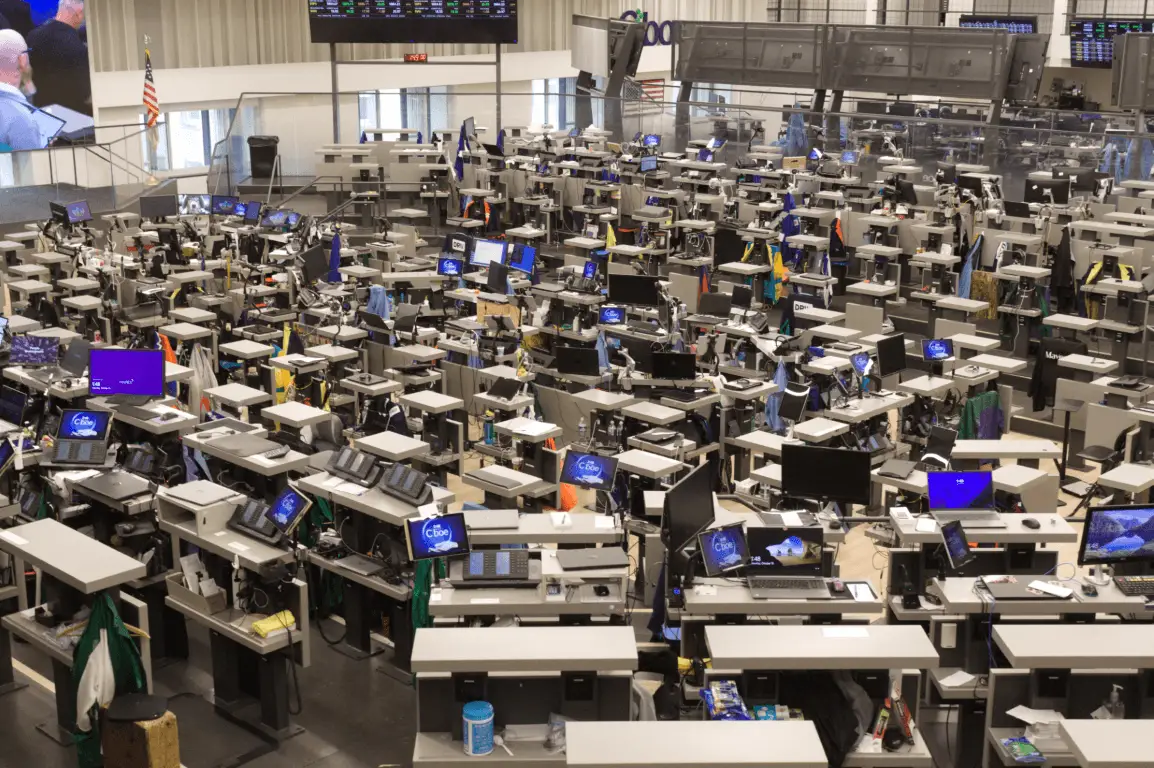
A futures contract is a standardised, exchange-cleared obligation to buy or sell a defined quantity of something at a defined date. Four elements define it: the underlying, the contract size, the expiration, and the minimum price increment.
Three mechanics inside that definition catch people out repeatedly.
Margin Is a Performance Bond, Not a Loan
When you buy shares on margin, you borrow money and pay interest. Futures margin is nothing like that. It is a good-faith deposit held to guarantee your performance on the contract. You are not borrowing and there is no interest charge. This is why the numbers look absurdly small relative to the exposure, and why so many new futures traders quietly take on leverage they never consciously chose.
Initial margin is set by the exchange and is the amount required to carry a position past the close. CME describes ES initial margin as running around 5% of notional, which produces roughly 20x leverage before you do anything clever. Recent levels have been in the region of $13,000 for one ES contract and roughly a tenth of that for one MES. Those numbers are reset by the clearing house when volatility changes, sometimes with very little notice. Check the CME margins page for the current figure rather than trusting any published article, including this one.
Maintenance margin is the floor your account must stay above while the position is open. Drop below it and you get a margin call, which in practice means deposit funds now or the position is liquidated by the risk desk.
Day-trading margin is a discretionary reduction offered by brokers for positions opened and closed inside the same session. NinjaTrader publishes $500 per contract on popular E-minis and $50 on micros; Optimus Futures advertises day-trade margins from $400 on E-minis and $50 on micros. These are broker risk decisions, not exchange rules, and they can be withdrawn at any time.
Understand what day-trade margin is and is not. It reduces the capital required to hold the position. It does not reduce a single dollar of risk. The contract still moves the same amount per tick. All the reduced margin has done is remove the friction that would otherwise have stopped you taking a position that size.
You Are Marked to Market Every Single Day
This is the mechanic that separates futures from almost everything else a retail trader has touched. At the end of each session the clearing house settles every open position at the day’s settlement price and moves cash. If the position went against you, the money leaves your account that night. This is called variation margin, and it is a real cash flow, not an unrealised paper figure.
You cannot hold a losing futures position and quietly wait for it to come back the way you can with a share certificate. The market takes the money daily and asks whether you can fund the next day. A position that would eventually have been right is worth nothing if you were liquidated in week three.
Cash Settlement Versus Physical Delivery
Equity index futures – ES, NQ, YM, RTY and their micros – settle in cash. At expiry the difference is paid and nothing is delivered.
Commodity futures are a different animal. Crude oil, gold, silver, natural gas and the grains are physically deliverable contracts. If you hold one past the first notice day, you are in the delivery process for 1,000 barrels of West Texas Intermediate at Cushing, Oklahoma. In practice, retail brokers force-liquidate customer positions before first notice day precisely because no retail account is set up to take delivery. Do not rely on it silently working. Know the first notice day for anything you hold in a physical contract.
The consequences of ignoring delivery mechanics are not theoretical. In April 2020, the expiring May WTI contract settled at negative $37.63 a barrel because holders of long contracts had nowhere to physically put the oil and were prepared to pay to be relieved of the obligation. Traders who had assumed the contract was a price ticker rather than a delivery obligation lost more than their accounts held.
Expiry, Rolling, and Why Continuous Charts Lie
Futures expire. Front-month equity index contracts expire on the third Friday of March, June, September and December, coded H, M, U and Z respectively. ESZ26 is the December 2026 E-mini S&P 500 contract.
Roughly a week to ten days before expiry, volume migrates from the front month to the next contract. That window is roll week. You close the expiring contract and open the equivalent position in the new one. Liquidity is split during the transition, spreads widen briefly, and your chart may look strange.
The important subtlety is that the two contracts do not trade at the same price. The difference is carry – storage, financing and convenience yield. When the far contract is more expensive the market is in contango; when it is cheaper, backwardation. Your charting platform stitches the contracts together into one continuous series so the chart looks unbroken. It does this by adjusting historical prices, which means the historical levels on a continuous chart are not the prices that actually traded. Any long-term level, gap or backtest drawn on a back-adjusted continuous chart carries that distortion. For anything longer than a few months, verify against the individual contract.

The Contracts Worth Knowing
The CME Group lists hundreds of products across CME, CBOT, NYMEX and COMEX. A retail futures trader realistically needs to know about fifteen. These are the specifications that drive every risk calculation you will ever make, so learn them before you learn a single setup.
| Contract | Symbol | Exchange | Contract Size | Tick | Tick Value | Settlement |
|---|---|---|---|---|---|---|
| E-mini S&P 500 | ES | CME | $50 × index | 0.25 | $12.50 | Cash |
| Micro E-mini S&P 500 | MES | CME | $5 × index | 0.25 | $1.25 | Cash |
| E-mini Nasdaq-100 | NQ | CME | $20 × index | 0.25 | $5.00 | Cash |
| Micro E-mini Nasdaq-100 | MNQ | CME | $2 × index | 0.25 | $0.50 | Cash |
| E-mini Dow | YM | CBOT | $5 × index | 1.00 | $5.00 | Cash |
| Micro E-mini Dow | MYM | CBOT | $0.50 × index | 1.00 | $0.50 | Cash |
| E-mini Russell 2000 | RTY | CME | $50 × index | 0.10 | $5.00 | Cash |
| Micro E-mini Russell 2000 | M2K | CME | $5 × index | 0.10 | $0.50 | Cash |
| Gold | GC | COMEX | 100 troy oz | 0.10 | $10.00 | Physical |
| Micro Gold | MGC | COMEX | 10 troy oz | 0.10 | $1.00 | Physical |
| Silver | SI | COMEX | 5,000 troy oz | 0.005 | $25.00 | Physical |
| Crude Oil (WTI) | CL | NYMEX | 1,000 barrels | 0.01 | $10.00 | Physical |
| Micro Crude Oil | MCL | NYMEX | 100 barrels | 0.01 | $1.00 | Physical |
| Natural Gas | NG | NYMEX | 10,000 MMBtu | 0.001 | $10.00 | Physical |
| 10-Year T-Note | ZN | CBOT | $100,000 face | 1/64 | $15.625 | Physical |
| 30-Year T-Bond | ZB | CBOT | $100,000 face | 1/32 | $31.25 | Physical |
| Euro FX | 6E | CME | €125,000 | 0.00005 | $6.25 | Physical |
Two observations from that table repay attention. First, tick value has nothing to do with how large the quoted price is. NQ trades at a far higher index level than ES but its tick is worth $5.00 against ES at $12.50. Second, the micro contracts are exact tenth-scale replicas: ten MES are mechanically identical to one ES, with none of the all-or-nothing sizing problem. For any account under roughly $25,000, micros are not a beginner’s compromise. They are the correct instrument.
If you want product-specific context on the index contracts, we have full guides to trading the S&P 500, trading the Nasdaq and trading the Dow Jones, plus a dedicated guide to trading gold.
The Maths That Comes Before the Chart
Most people who lose money in futures do not lose it because their analysis was wrong. They lose it because their size was wrong, and the size was wrong because they never converted the trade into dollars before taking it.
Notional Versus Margin
Take an index level of 6,000 purely as arithmetic. One ES contract at that level controls 6,000 × $50 = $300,000 of notional exposure. If your broker grants a $500 day-trade margin, your effective leverage on that position is 600 to 1.
Nobody sets out to take 600:1 leverage. They set out to take “one contract”. The word contract conceals the number. Run the notional calculation on every instrument before you trade it, once, and write it down.
Dollar Risk per Contract
The formula is unglamorous and non-negotiable:
Dollar risk = stop distance in ticks × tick value × number of contracts
Work an example. Account of $25,000. Risk limit of 0.5% per trade, which is $125. The setup is on MES and structure puts the invalidation 14 index points away. Fourteen points is 56 ticks. At $1.25 a tick that is $70 of risk per contract. $125 divided by $70 is 1.78, so you take one contract. You always round down.
Now run the identical trade on the full-size ES. Fourteen points at $50 a point is $700 per contract. On a $25,000 account that single contract represents 2.8% of capital at risk – nearly six times your stated limit, before you have made a second trade. The conclusion is not that the setup is bad. The conclusion is that a $25,000 account cannot trade one ES contract on a 14-point stop. The instrument does not fit the account.
This is the sentence that the micro contracts exist to solve, and the sentence that most blown accounts never confronted.
Size Follows the Stop, Never the Reverse
The stop is placed where the trade idea is invalidated. That location is decided by market structure and it is not negotiable to suit your preferred position size. Once the stop is fixed, the position size is arithmetic. If the arithmetic produces less than one contract, the trade is not available to you. Skip it.
Moving the stop closer to make the size work is the most common and most expensive error in leveraged trading. It converts a well-located stop into a stop sitting inside normal noise, which guarantees you are removed from correct trades at a high rate.
Rather than do that arithmetic by hand on every idea, run it here. The calculator uses the exact contract specifications in the table above.
CTE TOOL
Futures Position Size Calculator
Size follows the stop, never the reverse. Set the account, the risk and the stop, and this tells you how many contracts that allows – and whether the contract is simply too big for the account.
Broker fee plus exchange and NFA fees. $4 is a reasonable retail default.
Contract specifications are the CME Group, CBOT, COMEX and NYMEX standards listed in the table above. Margin is set by the exchange and raised at the broker’s discretion, changes with volatility, and is deliberately not estimated here – check your broker’s current day and overnight requirement before you size anything.
Education, not advice. Futures are leveraged and you can lose more than your deposit. A calculator cannot tell you whether the trade is any good.
Correlated Positions Are One Position
Long ES, long NQ and long YM at the same time is not three trades with 0.5% risk each. During a risk-off session these instruments move together at correlations approaching one. That is a single 1.5% bet wearing three hats. The same applies to gold and silver, to crude and natural gas in some regimes, and to any bond contract against another.
Set a total open-heat limit across correlated exposure – a fixed maximum of capital at risk across the whole book – and enforce it separately from your per-trade limit.
Costs: How Zero-Sum Becomes Negative-Sum
Friction is the mechanism by which a fair game becomes a losing one, and almost nobody models it before they start.
Four costs apply to every futures trade. Commission to your broker, typically quoted per side and ranging from single-digit cents on micros at discount routing to a few dollars at full-service brokers. Exchange and clearing fees, which the CME charges on every contract per side. The NFA assessment fee, a small per-side regulatory charge. And the spread, which is not a fee but is a cost: taking liquidity with a market order on ES means paying one tick, $12.50, every time you do it.
Model it honestly. Assume an all-in round-turn cost of $2.50 on one MES, and assume six round turns a day across 250 trading days. That is 1,500 round turns and $3,750 a year in friction. On a $10,000 account, you must generate a 37.5% gross return before you have made a cent. Note also that $2.50 on MES is two full ticks: every trade you take begins two ticks underwater.
Scale it to ES. Assume $4.50 all-in per round turn and the same 1,500 round turns: $6,750. Then add the spread. If half your entries and exits cross the market rather than resting on the bid or offer, that is another 1,500 crossings at $12.50, or roughly $9,375. Total annual friction lands north of $16,000 for a moderately active single-contract ES trader.
Two conclusions follow. First, trade frequency is a cost decision before it is a strategy decision, and most retail traders are trading far too often to overcome their own friction. Second, learning to use resting limit orders rather than market orders is worth more to a marginal trader than any indicator ever devised.
Getting Set Up: Broker, Platform, Data
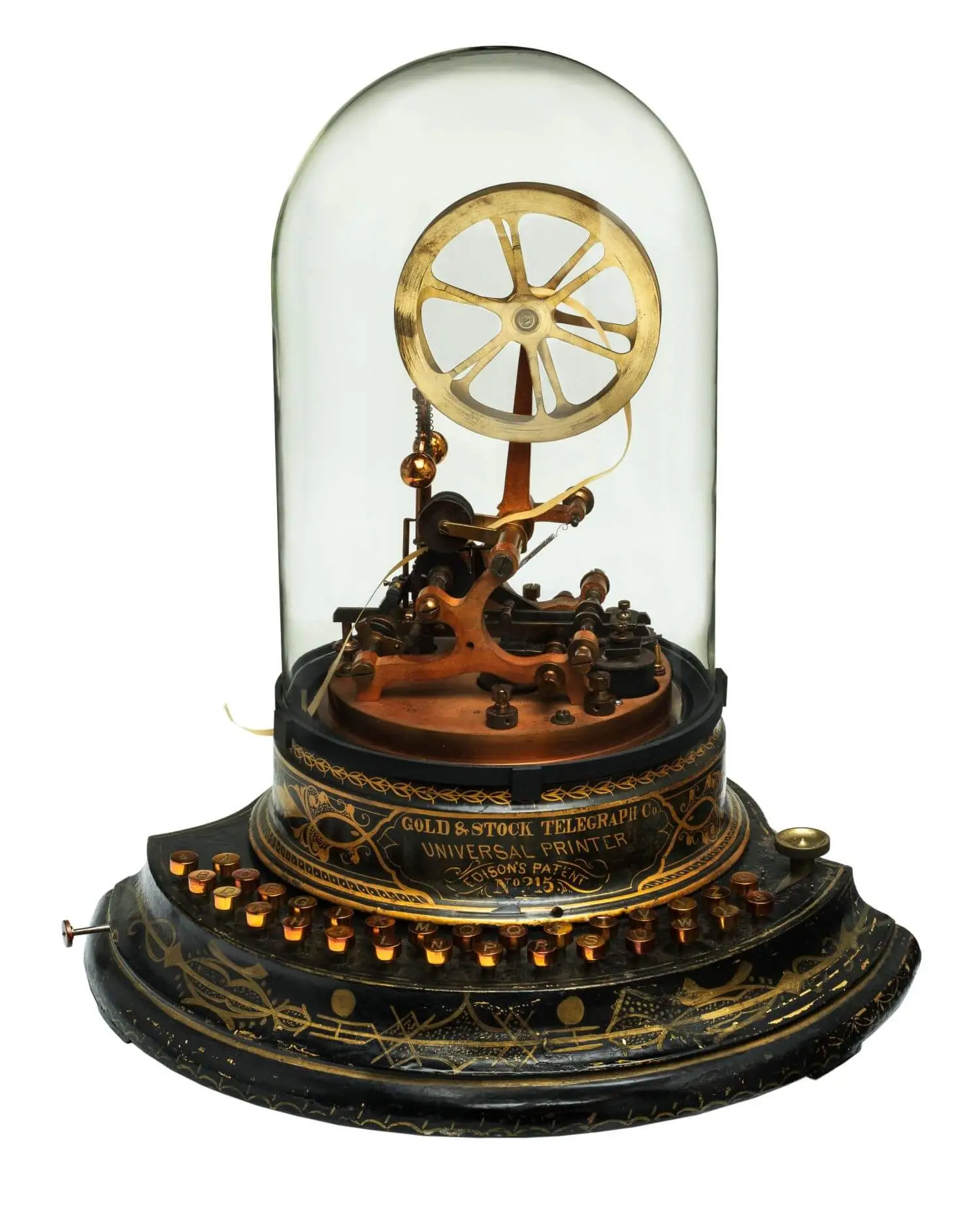
Futures cannot be traded through a spot forex or CFD account. You need access to the exchange, which means an account with a Futures Commission Merchant or with an introducing broker that clears through one.
Choosing the Broker
The commonly used retail routes are NinjaTrader, AMP Futures, Optimus Futures, Tradovate, Interactive Brokers and TradeStation. Rather than comparing headline commission rates, check the following before you fund anything.
- Registration. Confirm the firm on NFA BASIC. Verify whether it is an FCM holding your funds directly or an introducing broker, and identify which FCM actually clears.
- Segregation. Customer funds in a futures account are held in segregated accounts under CFTC rules. Understand that this is protection against firm insolvency, not against your own losses, and that there is no SIPC-equivalent coverage for futures positions.
- Total cost per round turn. Commission plus exchange plus clearing plus NFA, quoted as one number, on the specific contract you will trade. Rate cards change; ask for the current one.
- Routing. Rithmic, CQG and Teton are the common data and order routes. Which one you get affects latency and platform compatibility.
- Liquidation policy. Read exactly how and when the risk desk will auto-liquidate you for an intraday margin breach or for holding a day-trade-margin position into the close. Find this out in writing before it happens, not during.
Choosing the Platform
Platform choice should follow the kind of trading you intend to do, not the other way round.
For chart-based swing and positional trading, TradingView with a connected futures broker is sufficient and costs nothing extra in software. For intraday execution with a proper depth-of-market ladder, NinjaTrader and Sierra Chart are the long-standing choices, with Quantower and ATAS covering the order-flow and footprint end. For liquidity visualisation, Bookmap renders the resting order book over time in a way no candle chart can.
Resist the temptation to buy the deepest toolset first. Order-flow software answers questions that a trader without a defined strategy has not yet learnt to ask, and the monthly subscription is a real drag on a small account.
Data Subscriptions
Real-time CME data is licensed by the exchange, not given away by the broker. Expect a modest monthly fee per exchange – CME, CBOT, NYMEX and COMEX are billed separately – and make sure you are registered as a non-professional subscriber, because the professional rate is many times higher. Budget for it. It is a fixed cost that runs whether you trade or not.
Where to trade futures
Platforms, funded accounts and the honest gaps
Futures need three things a spot account does not: a broker that clears on the exchange, a platform that shows you the order book properly, and a real-time data subscription you pay the exchange for. Below is what we use and what we have reviewed. Where we have no partnership, we say so.
1 · Platform and data
The chart is not the product. For futures, the order book is.
Footprint, DOM and volume profile built for futures specifically. The tool to reach for if you want to see absorption rather than infer it.
Best charting and the easiest way to study futures before you fund anything. Weak on depth-of-market, so it is a companion, not a replacement.
NinjaTrader · Bookmap · Sierra Chart
All three reviewed in full. We hold no partnership with any of them, so those reviews are opinion with nothing attached.
2 · Funded futures accounts
Cheaper than funding a futures account yourself, and a completely different rule set.
Runs futures challenges alongside its CFD accounts, on the contracts in the table above. Read the drawdown type before you buy – on futures it is the whole game.
Topstep, Apex, My Funded Futures
The three largest US futures prop firms. We hold no affiliate arrangement with any of them and earn nothing if you sign up, but they belong in any honest shortlist and they are in the tracker.
3 · Before you fund anything
The reading that saves more money than any platform choice.
Sizing every trade against a daily loss limit rather than against your own account.
What a funded account actually is
What you are buying, what you are not, and the rules that catch people out.
The full stack, with costs, across charting, order flow, journalling and data.
If gold is why you are here, the history and the drivers are worth an hour before the first contract.
Disclosure. Some links are partner links – they cost you nothing and help keep these guides free. We earn nothing from NinjaTrader, Bookmap, Sierra Chart, Topstep, Apex or My Funded Futures, and list them anyway. Futures are leveraged and you can lose more than you deposit.

When to Trade: Session Structure
Futures trade almost around the clock, which is a feature and a trap. The contract is open for roughly 23 hours a day, Sunday evening through Friday afternoon US time, with a one-hour maintenance break. That does not mean 23 hours are worth trading.
Regular Trading Hours for the equity index contracts run 09:30 to 16:00 New York time, matching the cash equity session. This is where the overwhelming majority of volume prints, where institutional participation is real, and where the day’s structure is actually decided.
Electronic Trading Hours cover everything else. Overnight liquidity is thinner, spreads are wider, and the same stop distance carries meaningfully more slippage risk. Overnight sessions are useful for establishing a range and a bias. They are a poor place for a small account to be taking size.
Each product has its own rhythm on top of that. Crude oil reacts to the weekly EIA inventory release. Treasury contracts move around auctions and Federal Reserve communications. Gold responds to the London fix and to US real-yield data. Equity indices concentrate their volatility into the opening 90 minutes and the closing hour, when index rebalancing and market-on-close orders come through.
Trading around scheduled economic releases is a distinct discipline, not a bolt-on. Spreads widen, stops fill at prices well away from where they were placed, and the direction of the initial move frequently reverses inside ten minutes. If you have not deliberately built a strategy for that environment, be flat through it.
One structural risk worth naming: equity index futures are subject to price limits overnight and to the cash market’s circuit breaker levels during the session. In a genuine dislocation, the market can lock limit and you may be unable to exit at any price until it reopens. A stop order does not protect you against a market that is not trading.
Four Ways Futures Are Actually Traded
There is no single method. There are four broad approaches, and they demand different temperaments, different capital and different amounts of your attention.
Positional trend following. Weekly and daily charts, a small number of trades per year, wide stops, small size, holding periods of weeks to months. This is Brandt’s territory and the CTA industry’s territory. Win rates are frequently below 50%; the returns come from a small number of large trends. It requires the least screen time and the most patience, and it is the approach with the deepest audited track record behind it. It is also the approach retail traders find least emotionally tolerable, because most of the time nothing is happening.
Swing trading structure. Four-hour and daily charts, holding for days, entering at defined structural levels. A reasonable middle ground for someone with a job, provided you accept overnight gap and variation-margin exposure and size accordingly.
Intraday auction and order-flow trading. Volume profile, value areas, the depth of market and footprint analysis, flat by the close. This is the most-taught approach and the most competitive, because it is the arena where the speed advantage of professional firms is most direct. It is viable, but the friction maths above applies with full force and the required screen discipline is real.
Spread trading. Long one contract month against short another, or one product against a related product – a calendar spread in crude, the crack spread, the gold-silver ratio, a Treasury curve trade. Spreads carry substantially lower margin because the exchange recognises the offsetting risk, and they carry far lower volatility. They are almost entirely absent from retail trading education and they are how a great deal of professional commodity trading is actually done.
If you have a full-time job, the honest ranking is positional first, swing second, spread third and intraday last. That is the inverse of how the internet ranks them, for reasons that have more to do with what is easy to sell than what is likely to work.
The Risk Rules That Decide the Outcome
Leverage does not create losses. It compresses the time available to correct a mistake. These rules exist to preserve that time.
- Fixed fractional risk. A defined percentage of current equity per trade, recalculated as equity changes. For a leveraged instrument, 0.25% to 0.5% is a serious number. One percent is aggressive. Two percent, taken repeatedly on correlated futures positions, is a plan for a short career.
- A hard daily loss limit. A dollar figure that ends the session when hit. No exceptions, no last trade to get it back. Set it at roughly two to three times your per-trade risk.
- Total open heat. A cap on combined risk across all positions, with correlated instruments counted as one.
- No overnight positions on day-trade margin. If you intend to hold past the close, you must be capitalised for full exchange initial margin. Otherwise the risk desk decides your exit for you.
- Know the first notice day. On any physically deliverable contract, put it in the calendar the day you open the position.
- One instrument until you are consistent. Learn one contract’s behaviour completely before adding another. Every additional product multiplies the number of ways you can be surprised.
Write these down before the session. Rules invented during a drawdown are not rules.
Tax and Structure
US traders should understand that most futures contracts fall under Section 1256, which applies the 60/40 rule: 60% of gains treated as long-term and 40% as short-term regardless of holding period, with positions marked to market at year end. For an active trader this is typically more favourable than the short-term treatment applied to equities, and it is one of the genuine structural advantages of the instrument. The detail is covered in our guide to how US traders are taxed.
Traders outside the US should assume none of this applies and take local advice. Treatment of futures gains varies widely by jurisdiction, and the difference between capital and income treatment can be larger than any edge you generate.
A Note on Futures Prop Firms
Evaluation-based futures funding is now a large industry, and it is worth being clear about what it is. You pay a monthly or one-off fee, trade a simulated account against a profit target and a drawdown rule, and on passing you receive an account whose terms are set by the firm. Some of these firms are reputable operations. The economics of the industry, however, depend on the failure rate of participants, and the drawdown mechanics – particularly trailing drawdowns – are designed around that.
The point worth holding on to is that an evaluation account teaches you to satisfy a rule set. It does not teach you to trade a live futures position with real variation margin, real overnight exposure, real delivery obligations and real capital. Those are different skills. Treat a funded account as an income supplement or a discipline test, not as an alternative to understanding the instrument.
CTE RESEARCH SERIES · FUTURES
Futures contracts & sizing research sheet
All seventeen contract specifications, the three sizing formulas with worked examples, and a table showing how far price must move on each contract just to cover commission. Five pages, printable, free, no email required.
Brandt’s Survival List, Translated Into Practice
Brandt ended his post with what he thought a trader must do to be among the few. Each item is a behaviour, not a sentiment, and each one has a concrete operational form.
“Admit and OWN the fact that you have no idea where some market is going to go.” Practically: stop writing price targets and start writing invalidation levels. Before entry, define only two things – where you are wrong, and what you risk being wrong. Where price might go is not knowable and is not required for the trade to work.
“Rid yourself of any and all pride and false hopes.” Practically: keep a journal that records the process rather than the outcome, and stop posting results anywhere public. Pride is what makes you widen a stop. A trade defended in public is a trade you will not exit cleanly.
“Learn to love small losses.” Practically: the small loss is the product. A high frequency of small losses is what a correctly run leveraged strategy looks like from the inside. If your losses are large and your wins are small, you have inverted the business and no amount of analysis will fix it.
“Stop thinking in narratives.” Practically: the story about the Fed, the war, the shortage or the earnings print is a reason to hold a losing position. Prices move for reasons that are not published. Trade the level and the risk; if you find yourself explaining a position, you are already in trouble.
“Become asset class agnostic.” Practically: your edge lives in the setup, not the symbol. Attachment to one market means forcing trades in it during periods when it offers nothing. Scanning a basket of uncorrelated contracts and waiting for the structure to appear somewhere is a materially different business from staring at one chart all day.
“Stop being conned by false hope.” Practically: apply the arithmetic in this article to every claim you encounter. Anyone advertising consistent monthly percentage returns in a zero-sum, negative-sum-after-costs market is describing something the research says is close to nonexistent. The industry that sells trading education is not in the zero-sum game. It is selling to the people who are.
“Admit that your success, if it comes, has little to do with your brains, ambitions and hard work.” This is the hardest one, and it is the point of the whole list. Brandt’s conclusion is that a trader needs to survive roughly five years to have any real evidence that trading can be a career. Survival, not brilliance, is the qualifying condition. Everything in this guide about sizing, costs and risk rules is in service of that single objective: staying in the seat long enough to find out whether you have anything.
A Realistic First 90 Days
Days 1–30. No live capital. Pick one contract, ideally MES or MNQ. Learn its specification until you can state tick value, point value and notional exposure without looking. Trade it in simulation and journal every trade with the setup, the invalidation level, the dollar risk and the reason for the exit. Read the CME contract specification page and the margin page directly rather than a summary.
Days 31–60. One micro contract, live. Live execution behaves differently from simulation in ways that matter, principally in how fills and emotions work. Trade the minimum size the exchange allows. The purpose of this period is not profit. It is to find out what you do when real money moves against you.
Days 61–90. Measure the process, not the balance. Compute your expectancy: average win multiplied by win rate, minus average loss multiplied by loss rate. Compute your total friction as a percentage of the capital you traded. Compute your maximum drawdown. A profitable 90 days on a sample of forty trades tells you almost nothing. A recorded, repeatable process with controlled losses tells you a great deal.
The go or no-go decision at the end is not “did I make money”. It is whether you followed your own rules on every single trade. If the answer is no, size is not the problem and neither is the market.
Frequently Asked Questions
How much money do I need to start trading futures?
With micro contracts, $2,000 to $5,000 allows genuine risk management: at a 0.5% risk limit that is $10 to $25 per trade, which fits an MES or MNQ stop of reasonable width. For standard E-mini contracts, $25,000 is a realistic floor and even then a single ES contract on a normal stop will exceed a conservative risk limit. Day-trade margin will let you open a position on far less. That is a statement about the broker’s risk appetite, not about yours.
Are futures better than CFDs or spot forex?
Structurally, yes, in specific ways. You trade on a central exchange rather than against your broker, you see real exchange-reported volume and a genuine order book, there is no overnight swap charge, and clearing removes broker counterparty risk. What futures do not do is change your odds. The zero-sum arithmetic applies equally, and the research on retail failure rates in futures is if anything harsher than in CFDs.
Can I hold a futures position long term?
Yes, but with two conditions. You must be capitalised for full exchange initial margin rather than day-trade margin, and you must roll the contract each quarter, accepting the carry cost embedded in the spread between contract months. For multi-year exposure to an index, an ETF is usually the more sensible vehicle. Futures are built for leveraged, defined-horizon exposure.
What happens if I forget to close a physically settled contract?
In practice, retail brokers force-liquidate customer positions in deliverable contracts before first notice day, precisely because retail accounts cannot take delivery. Do not treat that as a guarantee. Know the first notice day for every physical contract you hold, and close or roll well before it.
Do I need order-flow tools like footprint charts and a DOM?
No. Real volume and depth data is one of the genuine advantages of exchange-traded instruments, but it answers questions a trader without a defined strategy has not yet learnt to ask. Start with price structure and volume profile. Add the deeper tooling if and when your process produces a question that requires it.
Why does my continuous futures chart show prices that never traded?
Because it is back-adjusted. To stitch expiring contracts into an unbroken series, platforms shift historical prices by the roll difference. The shape of the chart is preserved; the absolute levels are not. For anything longer-term, check levels against the individual contract rather than the continuous series.
Is it realistic to make a living trading futures?
The evidence says it is possible and extremely rare. In the Brazilian dataset, of the 1,551 individuals who persisted beyond 300 trading days, eight earned more than a bank teller’s starting salary, and did so with daily volatility that dwarfed the income. Treat futures as a skill you are attempting to acquire over years while your living comes from elsewhere. The traders who survive almost universally did it that way.
▶ Continue Reading
▸ Futures Trading for Beginners: How NQ, ES and Gold Futures Actually Work
▸ How to Trade the S&P 500: The Complete Strategy Guide
The Complete Trader’s Edge
This article is adapted from The Complete Trader’s Edge by Louw van Riet. The book covers futures, forex, crypto and the complete Mind · Method · Money framework across 70 chapters.
 The Complete Trader's Edge
The full Mind · Method · Money framework. 70 chapters.
View on Amazon →
The Complete Trader's Edge
The full Mind · Method · Money framework. 70 chapters.
View on Amazon →
 Market Mayhem
400 years of bubbles, crashes, and the pattern that keeps repeating.
Buy on Amazon →
Market Mayhem
400 years of bubbles, crashes, and the pattern that keeps repeating.
Buy on Amazon →
 Greatest Companies
How the world's greatest companies were built — and what traders learn from them.
View on Amazon →
Greatest Companies
How the world's greatest companies were built — and what traders learn from them.
View on Amazon →
 Greatest Traders
Eighty-six lives that explain the markets — Livermore to Madoff, told with the losses left in.
View on Amazon →
Greatest Traders
Eighty-six lives that explain the markets — Livermore to Madoff, told with the losses left in.
View on Amazon →