The average trader checks their phone 96 times per day. They have Twitter open in one tab, a Discord server in another, a YouTube livestream playing in the background, and their trading platform somewhere behind all of it. They call this “monitoring the market.” Cal Newport would call it something else: the systematic destruction of the cognitive capacity that profitable trading requires.
Cal Newport is a computer science professor at Georgetown University and the author of Deep Work, Digital Minimalism, and A World Without Email. His central thesis, supported by extensive research in cognitive science, is that the ability to focus without distraction on a cognitively demanding task is becoming both increasingly rare and increasingly valuable. He calls this ability “deep work,” and he argues that it is the skill that separates world-class performers from everyone else in virtually every knowledge-intensive field.
| Key Concept | Original Context | Trading Translation |
|---|---|---|
| Deep work | Focused, distraction-free concentration on cognitively demanding tasks | Chart analysis during Kill Zones requires deep work. Social media, news, and Discord destroy your focus. |
| Attention residue | Switching tasks leaves cognitive residue that degrades performance | Checking Twitter between setups leaves attention residue that impairs your next trading decision. |
| Digital minimalism | Use technology intentionally, not reactively | TradingView for charts. Journal for review. Economic calendar for events. Nothing else during trading hours. |
| The craftsman approach | Develop rare and valuable skills through deliberate practice | Chart reading is a craft. 1,000 hours of deliberate practice (backtesting, journalling) produces genuine skill. |
| Quit social media | Most social media provides entertainment disguised as value | Trading Twitter is 95% noise, 5% insight. Unfollow signal providers. Your own journal data is worth more. |
Trading is a knowledge-intensive field where decisions are made under uncertainty, where the quality of attention directly determines the quality of execution, and where a single moment of distraction can cost more than an entire day’s preparation. If any profession needs the deep work framework, it is trading. And if any community is further from it, it is also trading, where the culture of constant connectivity, social media engagement, and real-time information consumption actively destroys the focused attention that profitable execution demands.
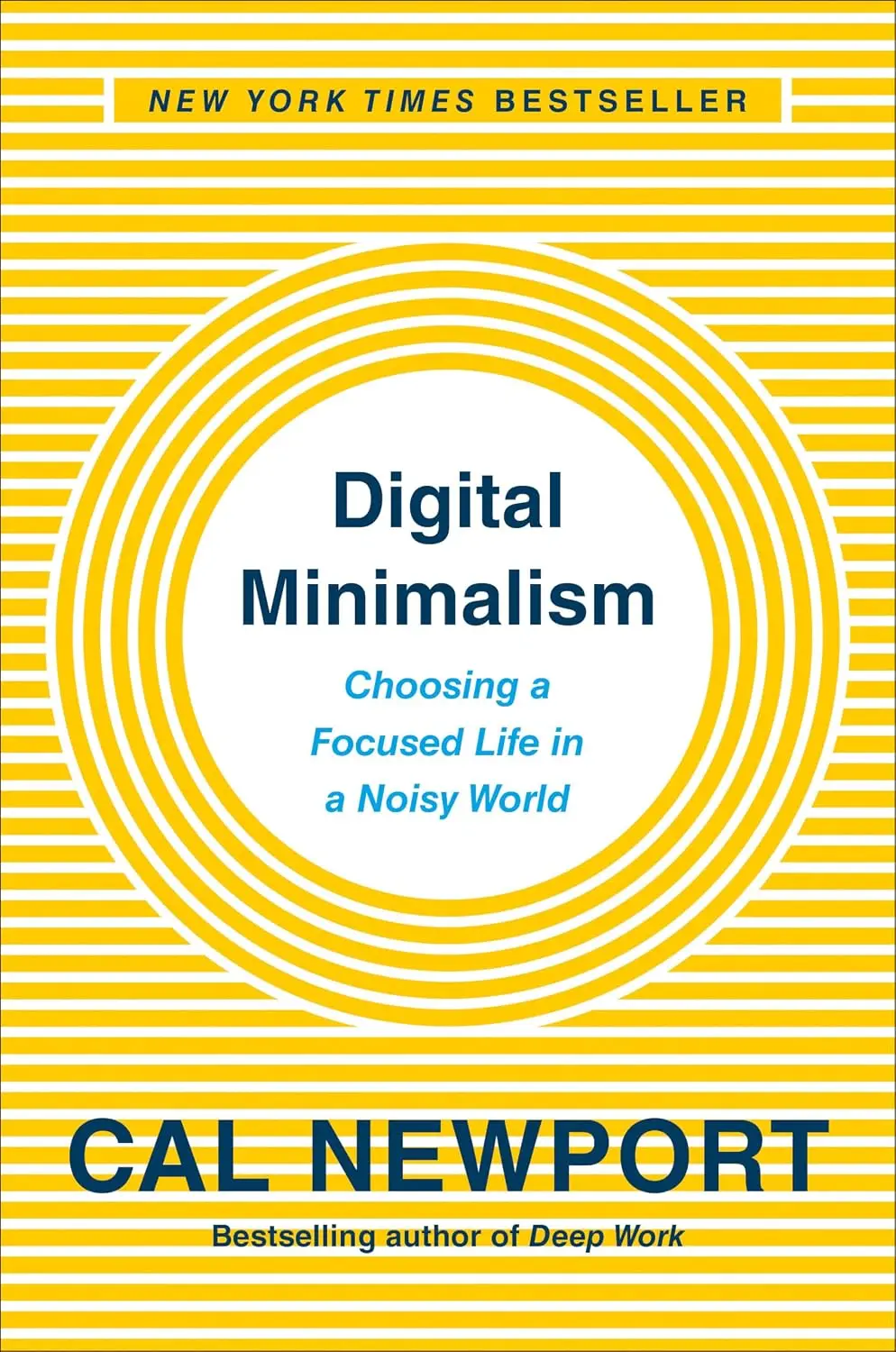
Deep Work makes the case for concentration; Digital Minimalism is the practical clear-out that makes it possible.
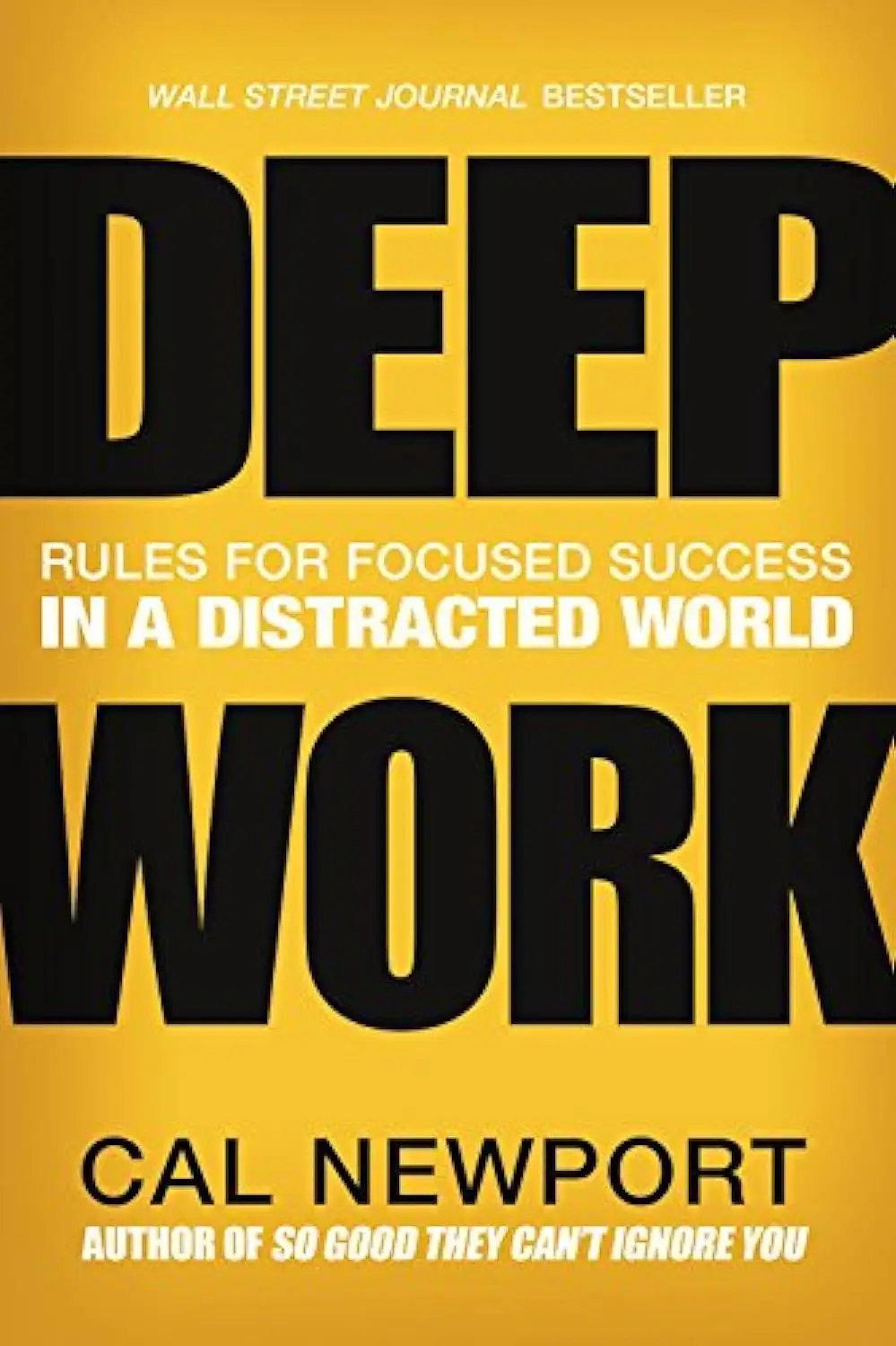
Deep Work: The Trading Edge Nobody Talks About
Newport defines deep work as professional activities performed in a state of distraction-free concentration that push your cognitive capabilities to their limit. These efforts create new value, improve your skill, and are hard to replicate. He contrasts this with shallow work: non-cognitively demanding, logistical-style tasks performed while distracted, which tend not to create new value and are easy to replicate.
In trading:
Deep work includes: Analysing market structure on the daily and 4-hour timeframes with full concentration. Backtesting a setup across 200 historical examples with meticulous data recording. Reviewing your trading journal for patterns across the last 50 trades. Executing your A-grade setups during the live session with complete focus on price action and your predefined levels.
Shallow work includes: Scrolling trading Twitter. Checking your P&L between trades. Reading market commentary that does not change your plan. Watching a YouTube video while “monitoring” the charts. Participating in Discord conversations during the session. Checking your phone during a live trade.
Newport’s research shows that shallow work does not just fail to produce value. It actively degrades your capacity for deep work. Every time you switch your attention from the chart to Twitter and back, there is a residue of the previous task that lingers in your working memory for several minutes. Your brain is not fully on the chart anymore. It is partially on the tweet you just read, partially on the opinion someone expressed, and partially on the anxiety that the opinion generated. You are trading with a fragmented mind, and a fragmented mind makes fragmented decisions.
The Attention Residue Problem
Newport highlights research by Sophie Leroy on attention residue: when you switch from Task A to Task B, your attention does not instantly transfer. A residue of Task A remains, occupying cognitive resources and reducing performance on Task B. The more frequently you switch, the worse the residue effect becomes.
For traders, this is devastating. Consider a typical scenario: you are analysing a potential setup on the 15-minute chart. Your phone buzzes. You check it, it is a message in your trading group. Someone posted a chart with an opposing view. You read it, feel a twinge of doubt, and return to your chart. You are now analysing the same setup with reduced cognitive capacity, increased doubt, and attention residue from both the phone notification and the opposing opinion.
The setup was valid before the interruption. Your analysis was clear. The interruption did not provide new information that changed the setup. It provided noise that degraded your ability to act on the setup. And if this pattern repeats ten or twenty times per session, you are effectively trading with a cognitive handicap for the entire day.
Newport’s solution is radical by modern standards: eliminate the interruptions entirely. Phone off or in another room during the trading session. Social media closed. Discord muted. No notifications. Just you, the chart, and the plan. This feels extreme to traders who are accustomed to constant connectivity. It also feels like what every legendary trader describes about their best sessions: total focus, no distractions, clean execution.
Time Blocking for Traders
Newport’s primary productivity tool is time blocking: scheduling every minute of the working day in advance, assigning specific tasks to specific blocks, and protecting those blocks from interruption. This is more structured than Brian Tracy’s prioritisation and more specific than general time management advice.
For traders, the ideal time-blocked day might look like:
5:00-6:00 AM: Deep work block — 20/20/20 Formula (exercise, reflection, learning).
6:00-7:00 AM: Deep work block — Pre-session analysis. Mark levels, determine bias, write plan. Zero distractions.
7:00-10:00 AM: Deep work block — Live trading session. Phone off. Social media closed. Only the chart and the plan.
10:00-10:30 AM: Shallow work block — Journal today’s trades. Brief check of messages.
10:30-11:30 AM: Deep work block — Trading education, backtesting, or journal review.
Afternoon: Non-trading activities. The trading day is complete.
The critical insight is that deep work blocks must be defended absolutely. No phone checks during the live session. No “quick look” at Twitter during analysis. The block is sacred. The quality of your trading is directly proportional to the quality of your focus during these blocks, and focus is destroyed by even brief interruptions.
Digital Minimalism and the Information Diet
Newport’s Digital Minimalism prescribes a 30-day “digital declutter” followed by a deliberate, values-based reintroduction of only the technologies that serve your highest priorities. Everything else is eliminated permanently.
For traders, this means ruthlessly auditing every information source:
Does this Twitter account improve my trading? If not, unfollow. Does this Discord server improve my execution? If not, leave. Does checking my phone during the session improve my results? Obviously not. Does watching three different analysts before the session improve my plan? Almost certainly not, because conflicting opinions produce analysis paralysis rather than clarity.
The monastic approach that Jay Shetty teaches arrives at the same conclusion from a different direction: less input produces clearer output. Newport provides the scientific framework. The monk provides the philosophical one. Both say the same thing: the trader who consumes less information and focuses more deeply on their own analysis will outperform the trader who consumes everything and analyses nothing.
Craftsman Approach to Skill Development
Newport advocates what he calls the craftsman approach: treating your professional skills as a craft that requires deliberate practice, sustained concentration, and years of dedicated improvement. This contrasts with the “passion” approach, which says “follow your passion and the skill will come.” Newport’s research shows the opposite: the skill comes first, through deep work, and the passion follows as you become excellent.
For traders, this means treating every session as a training opportunity, not a gambling opportunity. The goal of today’s session is not to make money. It is to execute your plan with precision. The money follows the precision, not the other way around. The trader who focuses on execution quality during the live session is practising their craft. The trader who focuses on P&L is hoping for luck.
This connects to the entire Mind pillar: Mark Douglas’s process-over-outcome thinking, James Clear’s identity-based habits, Jordan Peterson’s “compare yourself to who you were yesterday.” All of these frameworks are telling you the same thing Newport is: focus on the craft, measure the practice, and trust that the results follow the skill development.
Cal Newport and the Mind · Method · Money Framework
Mind: Deep work is the cognitive infrastructure that all other trading psychology depends on. You cannot think in probabilities, manage your state, or maintain detachment from outcomes when your attention is fragmented across fifteen information sources. Newport provides the scientific case for why focused attention is not just helpful but essential for the kind of decision-making trading demands.
Method: The quality of your market structure analysis, multi-timeframe work, and setup identification is directly proportional to the depth of focus you bring to the task. Shallow analysis produces shallow setups. Deep analysis produces the kind of high-conviction entries that sustain positive expectancy. Newport’s framework ensures the analysis is deep.
Money: Every distraction-induced mistake has a financial cost. The FOMO entry triggered by a tweet. The moved stop caused by checking a Discord opinion. The missed setup because you were watching YouTube. Risk management includes managing the information environment that your decisions are made within. Newport’s digital minimalism is a form of cognitive risk management that protects the capital your rules are designed to preserve.
Continue Reading: The Inner Edge
▶ Jay Shetty: Think Like a Monk for Traders
▶ Robin Sharma: The 5 AM Club for Traders
▶ Tim Ferriss: The 80/20 Principle for Traders
The Complete Trader’s Edge
This article is part of The Inner Edge series. The psychology principles explored here are covered in depth across the 22 chapters of the Mind pillar in The Complete Trader’s Edge.
Frequently Asked Questions
What is deep work and why does it matter for trading?
Deep work is focused, distraction-free concentration on cognitively demanding tasks. In trading, this includes pre-session analysis, live execution, journal review, and backtesting. Research shows that even brief interruptions create attention residue that degrades performance for several minutes. The trader who eliminates distractions during their session makes measurably better decisions than one who constantly switches between charts, social media, and messages.
How does attention residue affect trading decisions?
When you switch from one task to another (checking Twitter then returning to your chart), cognitive residue from the first task lingers and reduces performance on the second. During a trading session, this means every phone check, every Discord message, and every YouTube tab degrades your ability to read price action and execute your plan. The effect compounds across an entire session.
What is digital minimalism for traders?
Digital minimalism means auditing every information source and eliminating those that do not directly improve trading results. This includes unfollowing accounts that trigger FOMO, leaving chat rooms that promote undisciplined behaviour, turning off phone notifications during sessions, and reducing information consumption to only what supports your specific trading plan.
How should traders structure their day for deep work?
Time-block the trading day into distinct segments: morning routine and physical activation, pre-session analysis with zero distractions, live trading session with all notifications off, post-session journaling and review, and a separate education block. Each block has one purpose and is protected from interruption. The quality of focus during these blocks determines the quality of trading results.
Can you be a profitable trader while active on social media?
Yes, but not during your trading session. Newport’s framework separates consumption time from production time. Social media engagement belongs in a scheduled shallow work block after the trading day is complete, never during preparation, analysis, or live execution. The traders who post on social media during live sessions are performing for an audience, not performing for their account.
 The Complete Trader's Edge
The full Mind · Method · Money framework. 70 chapters.
View on Amazon →
The Complete Trader's Edge
The full Mind · Method · Money framework. 70 chapters.
View on Amazon →
 Market Mayhem
400 years of bubbles, crashes, and the pattern that keeps repeating.
Buy on Amazon →
Market Mayhem
400 years of bubbles, crashes, and the pattern that keeps repeating.
Buy on Amazon →
 Greatest Companies
How the world's greatest companies were built — and what traders learn from them.
View on Amazon →
Greatest Companies
How the world's greatest companies were built — and what traders learn from them.
View on Amazon →
 Greatest Traders
Eighty-six lives that explain the markets — Livermore to Madoff, told with the losses left in.
View on Amazon →
Greatest Traders
Eighty-six lives that explain the markets — Livermore to Madoff, told with the losses left in.
View on Amazon →