

GREATEST TRADERS · MARKET WIZARDS: THE NEXT GENERATION
Kelvin Chiu
He Was Right. It Cost Him $10 Million.
Listen on Spotify
Watch on YouTube
Also available on Apple Podcasts · Amazon Music · iHeart
Kelvin Chiu is the institutional outlier in Market Wizards: The Next Generation, the 2026 volume Jack Schwager wrote with George Coyle. Most of the traders in that book came up through prop desks or taught themselves from a small account. Chiu came through Goldman Sachs and Vitol, trading agricultural futures and options with other people’s money, and only later took that experience into his own capital.
Eighty-six lives read through Mind · Method · Money, from Livermore reading a chalkboard in 1892 to the traders still working from those ideas today. Told as they happened, with the losses left in, and every quotation traced to a source.
His chapter is titled “Trading Both Sides of Asymmetric Trades”. Almost every write-up of him online treats that as a philosophy about lopsided payoffs. It is not. It is a precise technical framework with its own vocabulary, and it was born out of a single trade that cost him roughly $10 million.

This profile covers the verified record, the method as he describes it, the psychology work almost nobody writes about, and the parts that do not transfer to a retail account.
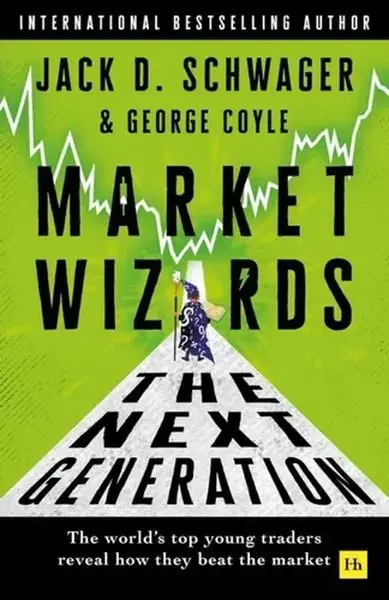
Kelvin Chiu at a glance
| Field | Detail |
|---|---|
| Raised | Hong Kong |
| Education | Economics, University of Cambridge, graduated at 22 |
| Institutional career | Goldman Sachs 2008–2014 (agricultural options and futures, London), Vitol 2014–2018 (Singapore) |
| Best year at Vitol | $35 million |
| Went independent | 2018, aged 31 |
| Core method | Calendar spreads and relative value in grains and oilseeds, later broadened to equities, metals and carbon |
| Now runs | SilverCape Investments and Silverstrand Capital, both Singapore |
The record, and what it actually tells you
The performance figures in the chapter cover seven-plus years of trading his own capital after leaving Vitol. Schwager and Coyle publish them alongside S&P 500 comparators for the same period, which is the only way return numbers mean anything.
| Metric | Chiu | S&P 500, same period |
|---|---|---|
| Compound annual growth rate | 108.7% | 14.5% |
| Sharpe ratio | 2.0 | 0.7 |
| Adjusted Sortino ratio | 6.2 | 0.9 |
| Gain-to-pain ratio | 5.7 | 0.8 |
| MAR ratio | 4.0 | 0.6 |
A 108.7% compound annual return is the number everyone repeats, and on its own it is almost useless. Here is what it does to $100,000 if you let it run, against the S&P over the same seven years.
| Year | At 108.7% | At 14.5% |
|---|---|---|
| 1 | $208,700 | $114,500 |
| 3 | $909,007 | $150,073 |
| 5 | $3,959,244 | $196,715 |
| 7 | $17,244,760 | $258,011 |
Numbers like that usually mean one of three things: enormous leverage, a tiny account, or a short window that happened to catch a trend. The interesting part of Chiu’s record is the ratio set underneath the headline, because it rules out the first explanation and points at something specific.
Why the Sortino ratio matters more than the Sharpe here
Sharpe measures return against the volatility of returns. It has a well-known flaw: it penalises volatility in both directions, so a trader who occasionally makes an enormous gain is punished for it in exactly the same way as one who occasionally takes an enormous loss. Sortino counts only downside deviation. Schwager notes in the book that he prefers the adjusted Sortino for precisely this reason.
Chiu’s adjusted Sortino of 6.2 sits against a Sharpe of 2.0. That gap of roughly three times is not decoration. It is the statistical signature of a return distribution that is heavily skewed to the right, meaning the large moves in his equity curve were overwhelmingly gains rather than losses. The gain-to-pain ratio of 5.7 says the same thing from another angle, and the MAR of 4.0 says the drawdowns stayed shallow relative to the return.
Read together, those four numbers describe a book built almost entirely out of positions where the loss was bounded and the gain was not. Which is exactly what the chapter title says he does. The statistics are not evidence that he is a good forecaster. They are evidence about the shape of what he was trading.
That is the whole story, and to understand where it came from you have to start with him failing.
The three years he lost money, and the demotion that made him
Chiu grew up in Hong Kong in a household where, by his account, hard work was the operating assumption. He came top fifty in the citywide exam, which in Hong Kong carries something close to celebrity status, then went to Cambridge and graduated at 22 with an unbroken record of academic success.
He has since concluded that this was a handicap rather than an advantage. His argument is that people who have never failed do not know what to do the first time they are knocked down, and that consistently high expectations tend to produce low resilience. Trading, as he puts it, requires a great deal of resilience.
He interned on the Goldman trading floor in London in 2007, during his penultimate year at Cambridge, and chose the commodities desk about a month into a two-month rotation. He liked that commodities were tangible and that prices responded to things you could point at: weather, mine strikes, real-world supply and demand.
He joined full time, was put on the London options desk, and at 23 was handed the agricultural options book. Not because he was ready. Both senior options traders had left, the book was vacant, and he was the most mathematically inclined person available.
The first three years were bad. He had no method. He tried fundamentals, technicals, headlines, other brokers’ opinions, and copying the trades of people around him. He traded on emotion and spent a great deal of energy on negative self-talk over small losses. In both 2010 and 2011 he finished down just under $1 million, against a mandate that expected him to make around $5 million a year on up to $1 million of daily value-at-risk.
After two years of that, the most senior partner in the commodities division took his book away, merged it into the sugar trader’s book, and made him the junior trader on the combined desk.
Having his book taken away turned out to be one of the best things that ever happened to him.
He was humiliated. Getting his own book early had been a badge of honour and losing it announced his failure to everyone in his starting class. But the pressure came off, the fear subsided, and he found he could think again. What replaced the fear was curiosity, and he spent the next few years watching how other people traded.
That mentorship period is where the method actually came from. The agricultural desk was staffed with people who had come from physical commodity firms, and they taught him to read a market through aggregate supply and demand rather than through price action. He also started tracking and reviewing his own trades in detail, a habit he still keeps.
Two conclusions came out of it. Options were not for him; he found the game too difficult and did not enjoy it. And what did suit him was calendar spread trading and relative value trading. He also worked on the psychology, and the book he names as the most influential he read in that period is Mark Douglas’s Trading in the Zone. The takeaway he took from it was process over outcome, which he freely admits is trading 101, and which he says landed on him like a revelation anyway.
Vitol, and the $35 million year
He left Goldman in mid-2014. The trigger was the Volcker Rule finally taking effect, which pushed management to redirect the desk towards customer business. He had spent six years learning to trade proprietary risk and had no interest in servicing client flow.
Vitol was building out an agriculture desk and wanted a derivatives person. The role was in Singapore, closer to his family in Hong Kong, and unlike Goldman it was pure proprietary trading with no client obligations. He describes Vitol as the most aggressive trading house in the commodities business, prudent about it, but willing to carry serious risk. Traders there swung seven or eight million dollars in a day as a matter of routine.
His average trade went from a few hundred contracts at Goldman to a few thousand. He specialised in grains and oilseeds, and his reasoning for that focus is worth understanding: they are annual crops, so prices have to move enough to balance supply and demand by the end of every crop year. Coffee and cocoa run on multi-year cycles and can stay out of balance for a long time. An annual crop gives you a deadline.
His best year at Vitol produced $35 million. He reports it in the chapter and then immediately undercuts it by noting that some traders on the same floor were up ten times that amount. That instinct, to give the number and then take the shine off it, runs through the whole interview.
The $10 million loss that created the method
In March and April of 2016 the global soybean balance tightened sharply. Brazilian yields disappointed, heavy rain hit the Argentine harvest, and Chinese demand ran hotter than expected. US soybeans suddenly looked cheap, and old crop futures started gaining on new crop futures across both soybeans and soybean meal.
Chiu’s read was that the soybean move was fundamentally justified and the meal move was not. There was no tightness in the meal market. The old crop and new crop meal spread was simply widening in sympathy with the soybean spread. So he went short old crop July meal futures and long new crop December meal futures.
He was right. That is the part that matters.
The spread had started around 2. He went short at 14. It ran to 45. He added to his shorts at 45, then exited at an average of 38 because the pain became unbearable and he had no idea how much further it could go. The loss was roughly $10 million.
After he was out, the spread went straight back down to 2.
He took it extremely badly. He could not eat or sleep properly even after closing the position, though he says one of his proudest moments was trading his way back out of the hole to finish the year with a positive P&L. His boss, the head of Asia, used the lightest possible touch: a scheduled thirty-minute meeting spent mostly on perspective, ending with a question about how much he was down and a short assurance that he would be fine.
The lesson he drew is the foundation of everything that came afterwards.
Convex and concave: the framework nobody else explains
Chiu has his own vocabulary for trade shapes, and it is far more useful than the risk-reward language most retail education runs on.
The two shapes
Convex trade. Limited downside, theoretically unlimited upside. You know roughly the worst case before you enter, and the best case is open-ended.
Concave trade. Limited upside, theoretically unlimited downside. The gain is capped by the structure, and the fat tail is on the losing side.
The soybean meal trade was concave. Shorting a spread trading at 14 that should be worth 2 caps your maximum gain at 12. There is no ceiling on how far it can widen against you before it converges, and it went to 45. He was right about the destination and nearly destroyed by the path, because the shape of the trade gave the market far more room to hurt him than to pay him.
After that loss he swore off concave trades entirely, and for the next several years he deliberately structured positions so the downside was bounded.
Why storable commodity spreads offer real convexity
This is where the mechanism gets specific, and it is worth understanding even if you never trade grain.
In storable agricultural futures, a more forward-dated contract normally trades above a nearby contract, because somebody has to pay storage costs and forgo interest to hold the physical commodity in the interim. That premium has a natural ceiling known as full carry.
If the spread tries to widen beyond full carry, an arbitrage appears. A trader can buy the nearby contract, take delivery, hold the commodity, and redeliver against the forward contract at a risk-free profit. That mechanism caps how far the discount can go.
So a long nearby, short forward position bought close to full carry has a floor underneath it. In the other direction there is no theoretical limit, because a nearby contract can gain on a forward contract without bound if a genuine near-term shortage appears. Limited risk, unlimited profit potential. That is convexity built into the structure of the market rather than imposed by a stop loss.
Chiu’s core independent strategy is buying those spreads at levels where they genuinely cannot fall much further. They either sit where they are or they drift higher, and occasionally something dislocates and they run.
Why the edge has not been arbitraged away
He gives two reasons, and both are honest.
First, the profit available on any single one of these trades is too small for large hedge funds to justify staffing. A team is not built to capture a few hundred thousand dollars.
Second, he holds an independent membership of the Chicago Board of Trade, which gives him materially lower trading costs than a non-member. On trades where the edge is thin and the size is large, execution cost is the edge.
He is direct about what that makes him in those situations. He is not predicting anything. He is the arbitrageur.
Asymmetry is not the same as risk-reward
This distinction matters enormously and almost every retail article gets it wrong.
Anyone can manufacture a 1:5 risk-reward ratio by putting a stop close to entry and a target a long way away. That is an arithmetic ratio, not asymmetry. The market has no obligation to respect either level, and a tight stop on a noisy instrument mostly guarantees you get taken out before the move.
Asymmetry in Chiu’s sense is a property of the situation itself. The full carry boundary genuinely exists. The delivery arbitrage genuinely caps the downside. The bound is imposed by economics, not by where you dragged a line.
The test is simple. If your downside is limited only because you promised yourself you would exit, that is a stop loss. If your downside is limited because the structure of the market prevents it going further, that is convexity. Our risk-to-reward guide covers the arithmetic; this is the layer above it.
Model the two shapes yourself
The calculator below lets you switch between a convex and a concave payoff, set the tail multiple, and watch what happens to expectancy. Load the 2016 soybean meal preset to see the exact shape that cost Chiu $10 million, and the Kansas City wheat preset to see the mirror image.
In a convex trade the loss is capped by market structure and the gain is open ended. Drag the sliders to see how the shape drives expectancy.
Units are spread points. Figures for the two presets are drawn from Chapter 6 of Market Wizards: The Next Generation. This is an educational model, not trading advice.
The good trade: Kansas City wheat, 2016
The same year as the meal disaster, Chiu put on the trade he still cites as his example of a good one, and it is a textbook boundary condition.
The hard red winter wheat crop was enormous. The surplus pushed Kansas City wheat futures, which are pegged to hard red winter wheat, to such a deep discount against Chicago wheat futures that the spread reached its own boundary. The discount got wide enough that it became economically profitable for commercial grain companies to buy the cheaper hard red winter wheat, rail it to Chicago, and deliver it against the soft red wheat contract.
Once that arbitrage is live, there is effectively unlimited commercial buying of Kansas City futures and selling of Chicago futures at the prevailing spread. The discount cannot get meaningfully wider, because the physical market will not let it. He bought Kansas City and sold Chicago in as large a size as he could.
Convex, by construction. The downside was sealed by physical economics and the upside was open.
The trade he refused: corn, 2019
This is the discipline proof, and it is the section most worth reading twice.
The spring of 2019 was chaotic in the Midwest. It would not stop raining, farmers could not plant, and the situation was being amplified on social media by videos of people jet skiing in flooded fields. The USDA cut its yield and acreage estimates significantly in June. Veteran observers thought the cuts had not gone far enough and that the balance sheet would end up tighter than the 2012 drought year. Expectations were grim.
The subsequent Crop Production reports came in as major surprises in the other direction. The decline in planted acreage was much smaller than expected and the estimated yield was better than anticipated. Around the August and October releases, the old crop and new crop July/December 2020 spread was very elevated.
The obvious trade was to short July and go long December. Chiu’s own analysis said there was a wide margin of safety in shorting the spread. The situation would have had to deteriorate dramatically for the spread to be worth its price.
He did not take it. Shorting the front month and buying the back month is a concave trade, exactly the same shape as the one that cost him $10 million three years earlier, and he had a rule against those.
Passing on a trade you have correctly analysed, because the shape violates a rule you wrote after being hurt, is a far harder thing to do than taking it. Most traders would have called it conviction and taken it.
The 2021 drawdown, and the therapy nobody writes about
By 2021 Chiu was independent, compounding hard, and running conviction-based rather than price-based exits. He does not use a fixed exit price. His approach depends on the fundamentally driven end-game value of a spread, so he exits when his conviction declines rather than when a level is touched. He cites Charlie Munger’s standard on this: you should be able to argue the opposing case better than anyone else and know exactly what would change your mind. Our piece on Munger’s latticework covers where that discipline comes from.
He also caps his maximum loss at around 15% of capital on any single high-conviction trade.
Then he took a drawdown of over 25% in 2021, double anything he had experienced before in percentage terms. He reacted badly, and the important part is what he concluded from that reaction: he still had unresolved emotional difficulty managing drawdowns, and no amount of method was going to fix it.
So he went and did something almost no profiled trader has publicly done. He worked through cognitive behavioural therapy, with extensive reading and a counsellor.
The limiting belief CBT surfaced was that he measured his self-worth as the sum of his achievements. Framed that way, every drawdown becomes a crisis of identity rather than a business expense. If success is how you define yourself, a losing month is not a losing month, it is evidence about who you are.
The reframe was to attach his identity to three values instead: growth, resilience and courage. Measured against those, he could be winning regardless of the outcome of any given trade, because every position either makes money or teaches him something. He also connects this to the cliché that you are only as good as your last trade, which he regards as faulty logic. It is the process that defines a trader, and judging yourself by individual outcomes is a guaranteed route to disappointment.
CBT had a second effect he did not expect. It forced him to challenge another limiting belief, that he was only good at trading grains. Once he stopped accepting that, he expanded into other markets and took sizeable wins in equities, copper and EU carbon allowances in 2021. He now trades a broad range of markets and says he enjoys learning new ones.
He did not fix the drawdown problem with a better system. He fixed it by changing what a drawdown meant about him.
For anyone working through the psychology side of trading, that sequence is the most transferable thing in the entire chapter. The method was already excellent in 2021. The constraint was upstream of the method.
What his edge means if you trade a chart
A large part of our audience trades ICT and smart money concepts on indices and gold, not grain spreads. There is still something here, and it is contained in one idea: for Chiu, the chart is an output rather than an input.
Weather, inventories, freight rates, crop cycles, the shape of the futures curve. Those are causes. The price action is the footprint they leave behind. He is explicit that for outright directional positions he uses technical analysis to drive entry and exit timing, but that using fundamental analysis alone for directional trades does not work and will eventually produce huge losses, because fundamentals give you no risk management anchor. If you buy wheat at $7 and it falls to $6 with no change in the fundamental picture, the logically consistent response is to add, and that is how accounts die.
So he uses both, in specific roles. Fundamentals decide whether a situation is worth engaging with at all. Technicals decide when to engage and when to leave.
The transferable version for a chart trader: an order block or a fair value gap is a footprint. It tells you where size traded. It does not tell you whether the underlying situation offers a bounded downside. If you only read footprints you will take every clean setup in a market that is pricing a shock which has not happened yet, and the setup quality will have nothing to do with whether the payoff was ever lopsided.
Where this collides with the 1% rule
We need to be straight about a real tension here, because glossing it would be dishonest.
Most of what we teach on this site runs on fixed fractional risk. One percent of the account per trade, sometimes less, applied consistently. Chiu caps a single high-conviction position at around 15% of capital, and he is a strong advocate of concentrating on high-conviction trades, avoiding small-potato distractions, and implementing in size. He puts it plainly: you have to be aggressive when you see an exceptional trading opportunity.
Those two approaches cannot both be right for the same trader.
The resolution is not to abandon fixed fractional risk. It is to notice what makes his sizing survivable. He is sizing into structurally bounded downside, on positions where the worst case is defined by market mechanics rather than hope, after a decade of institutional training in exactly those instruments, with a membership that lowers his costs. Take away the bounded downside and 15% of capital on one idea is simply gambling.
If you want a usable version, it looks like this. Keep 1% as the ceiling on ordinary trades. Maintain a separate, written list of what qualifies as an exceptional opportunity for you specifically, with a pre-committed and higher fraction, a hard cap on how many of those you may hold at once, and a monthly budget for the whole category. Decide all of that before you see the setup, not while you are looking at it.
Our position sizing guide and the Kelly criterion piece both bear on this. Kelly, in particular, formalises the idea that edge and sizing are linked, which is the mathematical version of what Chiu does by judgement.
The nine questions
Drawn from how he describes his own process, this is the sequence worth running before capital goes anywhere.
The Chiu test
- What is mispriced?
- Why is it mispriced, and why has nobody else taken it?
- What is the shape of this trade: convex or concave?
- Is the downside bounded by market structure, or only by my own promise to exit?
- What would change my mind, and can I argue the opposing case properly?
- What do I lose if I am wrong, in currency and as a percentage of capital?
- What do I realistically make if I am right?
- Am I taking this because it qualifies, or because I am bored?
- If the thesis weakens, what is the new price, today, not later?
Question three is the one nobody else asks, and it is the one that would have saved him $10 million.
Free research sheet
Kelvin Chiu: The Complete Research Sheet
Six pages covering the career timeline, the convex versus concave framework, the two 2016 trades side by side, the verified performance table with S&P comparators, and the nine questions as a printable pre-trade checklist.
What he does now: SilverCape and Silverstrand
Chiu left Vitol in March 2018. His stated reasons were that he was two layers removed from the firm’s core business, since he was trading neither physical commodities nor energy, and that he had reached a stage of life where he valued autonomy.
The plan had been forming for a while. At conferences in the US he had met independent traders who struck him as the sharpest people in the room, with excellent risk management and total autonomy over their own decisions. He set a target of saving $10 million while still at Vitol, funded largely by bonuses he had banked over a decade of being frugal, plus around $1 million from his immediate family. He went solo a few million short of the target because he was too impatient to wait.
He runs two Singapore vehicles now, and readers regularly confuse them.
SilverCape Investments is the market book, covering equities, macro and commodities. It is also where the convex-trade logic has grown into something closer to activism. The clearest public example is PetMed Express, the US online pet pharmacy. SilverCape built a stake of roughly 12%, submitted a non-binding proposal to buy the company at $4.00 a share in December 2025, then returned on 29 June 2026 with a revised proposal at $3.00, a premium of around 70% to the $1.76 close at the time. The open letter to the board argued the company was no longer viable as a public company. The board confirmed receipt and said it was reviewing.
Silverstrand Capital is the other half, and it is not a trading vehicle. Founded around 2018 or 2019, it is an impact investor focused on biodiversity, regenerative agriculture, aquaculture and natural capital measurement. Its largest public commitment is to Aqua-Spark, a Dutch aquaculture fund, where a further €15 million in late 2022 took the total to €25 million and earned Chiu a seat on the advisory board. It has funded a conservation finance scholarship at the National University of Singapore. Chiu has said a diving trip to Raja Ampat in Indonesia was the point at which the cause became personal.
Do not copy the PetMed trade
A concentrated activist stake in a small, deteriorating company is a family office position. It requires a balance sheet that can absorb being wrong for years and a legal apparatus most readers do not have.
The copyable part is the repricing. He cut his own bid by 25% when the underlying situation worsened, in public, having already committed to a number. Being willing to mark your own thesis down, on the record, is the behaviour worth stealing. The 12% position is not.
Chiu against the other Next Generation traders
| Kelvin Chiu | Kristjan Kullamägi | Lance Breitstein | |
|---|---|---|---|
| Arena | Grain and oilseed spreads, later multi-market | US small-cap momentum | Prop, discretionary |
| Edge | Bounded-downside structures | Repeatable breakout setups | Process and relentless review |
| Origin failure | $10m concave spread, 2016 | Years of losses before the method | Early struggle before systemisation |
| Sitting out | Flat until a structure qualifies | No setup, no trade | Walked away from more money |
| What a small account can copy | The nine questions and the shape test | The three setups | The review habit |
The common thread across all three is that none of them is trying to trade more. They are all trying to trade better opportunities and hold cash the rest of the time.
The nine traders in Market Wizards: The Next Generation
- Kristjan Kullamägi
- Lance Breitstein
- Simon Russo
- Lukas Fröhlich
- Phil Goedeker
- Kelvin Chiu
- Jason Berry
- Kenny Sharkness
- Rick Bandazian Jr.
Profiles for the remaining traders are in production. Our full review of the book covers the cohort, the lessons that carry across all nine, and where the book falls short.
The counterweight
Four honest cautions belong on this profile.
The record is published, not audited by us. The figures above come from Chapter 6 of the book, where Schwager and Coyle describe their verification process. That process is serious and we have no reason to doubt it, but Complete Trader’s Edge has not seen the underlying account statements and does not present them as independently certified.
The edge is not available in the form he ran it. He learned physical commodity markets inside two of the best-resourced institutions on earth, and his independent strategy leans on a Chicago Board of Trade membership that lowers his execution costs below those of non-members. Both of those are structural advantages, not insights. What transfers is the thinking about trade shape, not the trades.
Schwager’s own caution applies. In his closing note on the chapter he observes that concave trades expose traders to large losses and are best avoided by most traders, and that they can only be handled with an effective timing strategy and strict risk management. He is explicit that this style will not suit most people. If the author of the book is telling you to be careful, be careful.
The framework kept evolving. Chiu eventually concluded that refusing all concave trades was costing him attractive opportunities and materially reducing his total dollar profit, so he began reintroducing them with much stricter timing rules, waiting for a clear top and for expiry to be close enough that a renewed move against him became unlikely. So the rule that saved him was not permanent. It was a stage.
Mind, Method, Money
How Chiu maps to the three pillars
Mind. He did not out-discipline his emotional response to drawdowns. He went into therapy, found the belief underneath it, and changed what a losing period meant about him. Then he used the same process to remove a belief that was limiting the markets he traded.
Method. He stopped asking which way the market was going and started asking what shape the payoff was. Fundamentals decide whether a situation is worth engaging with. Technicals decide the timing. The structure decides the risk.
Money. Size to conviction on the rare qualifying trades, sit flat when nothing qualifies, cap the single-trade loss in advance, and reprice publicly when the thesis weakens.
The line that ties it together: his edge was never finding trades. It was knowing which trades deserved his capital, and being willing to hold none for long stretches while he waited.
Frequently asked questions
Who is Kelvin Chiu?
A Hong Kong-raised, Cambridge-educated commodities and macro trader who spent his first decade at Goldman Sachs and Vitol trading agricultural futures and options, then went independent in 2018. He now runs two Singapore vehicles, SilverCape Investments and Silverstrand Capital, and is profiled in Chapter 6 of Market Wizards: The Next Generation (2026).
What is Kelvin Chiu’s trading record?
The book reports a compound annual growth rate of 108.7% over seven-plus years of independent trading, with a Sharpe ratio of 2.0, an adjusted Sortino of 6.2, a gain-to-pain ratio of 5.7 and a MAR ratio of 4.0. The S&P 500 returned 14.5% annually over the same period. His best year at Vitol produced $35 million. These figures are published in the book and verified by its authors; we have not independently audited them.
What is a convex trade?
In Chiu’s terminology, a trade where the downside is limited by the structure of the market and the upside is theoretically unlimited. His core example is buying a storable commodity calendar spread close to full carry, where physical delivery arbitrage caps how far the spread can move against you.
What is a concave trade?
The inverse: limited upside and theoretically unlimited downside. A short position in a spread that should converge has a capped maximum gain but no ceiling on how far it can widen first. A concave soybean meal spread cost Chiu roughly $10 million in 2016 despite his fundamental analysis being correct.
Is asymmetry the same as a good risk-reward ratio?
No. A risk-reward ratio is arithmetic you impose by choosing a stop and a target. Asymmetry is a property of the situation, where something in the market’s structure genuinely bounds one side of the outcome. You can create a 1:5 ratio on any chart; you cannot create a full carry boundary.
What is the difference between SilverCape and Silverstrand?
SilverCape Investments is the trading and investment book, covering equities, macro and commodities, and is where the PetMed Express activist campaign sits. Silverstrand Capital is a separate impact vehicle focused on biodiversity, aquaculture and natural capital, with its largest public commitment being €25 million to Aqua-Spark.
Can a retail trader copy Kelvin Chiu?
Not the trades. The grain spread book requires institutional market knowledge and an exchange membership that lowers costs enough to make thin edges viable. What does transfer is the nine-question process, the convex versus concave test, the discipline of sitting flat, and the willingness to work on the psychology underneath the method rather than adding another indicator on top of it.
Which Market Wizards book is he in?
Market Wizards: The Next Generation (2026) by Jack Schwager and George Coyle, Chapter 6, titled “Trading Both Sides of Asymmetric Trades”. See our full review of the book.
Sources and further reading
- Jack Schwager and George Coyle, Market Wizards: The Next Generation (Harriman House, 2026), Chapter 6 and Appendix 1
- SilverCape Investments corporate information and public correspondence regarding PetMed Express
- PetMed Express filings with the US Securities and Exchange Commission
- Silverstrand Capital press and media archive, including the Aqua-Spark commitment
Continue Learning
- Market Wizards: The Next Generation Book Review (2026)
- Kristjan Kullamägi (Qullamaggie): The $105 Million That Lasted a Few Days
- Lance Breitstein: $46 Million at Trillium, $71 Million on His Own
- Chris Camillo: Beating Wall Street With Social Arbitrage (from Unknown Market Wizards, not this volume)
- Position Sizing: The Complete Guide
- The Kelly Criterion for Traders
- The Three Pillars: Mind, Method, Money
- The Complete Trader’s Edge — The Book
 The Complete Trader's Edge
The full Mind · Method · Money framework. 70 chapters.
View on Amazon →
The Complete Trader's Edge
The full Mind · Method · Money framework. 70 chapters.
View on Amazon →
 Market Mayhem
400 years of bubbles, crashes, and the pattern that keeps repeating.
Buy on Amazon →
Market Mayhem
400 years of bubbles, crashes, and the pattern that keeps repeating.
Buy on Amazon →
 Greatest Companies
How the world's greatest companies were built — and what traders learn from them.
View on Amazon →
Greatest Companies
How the world's greatest companies were built — and what traders learn from them.
View on Amazon →
 Greatest Traders
Eighty-six lives that explain the markets — Livermore to Madoff, told with the losses left in.
View on Amazon →
Greatest Traders
Eighty-six lives that explain the markets — Livermore to Madoff, told with the losses left in.
View on Amazon →