A monk walks into a trading room and watches twenty traders stare at screens. Half are agitated, clicking furiously, muttering at candles that moved against them. The other half are calm, waiting, executing with a stillness that seems out of place in a room full of financial pressure. The monk would recognise the difference immediately. It is not skill. It is not experience. It is detachment, the ability to act without being enslaved by the outcome of the action.
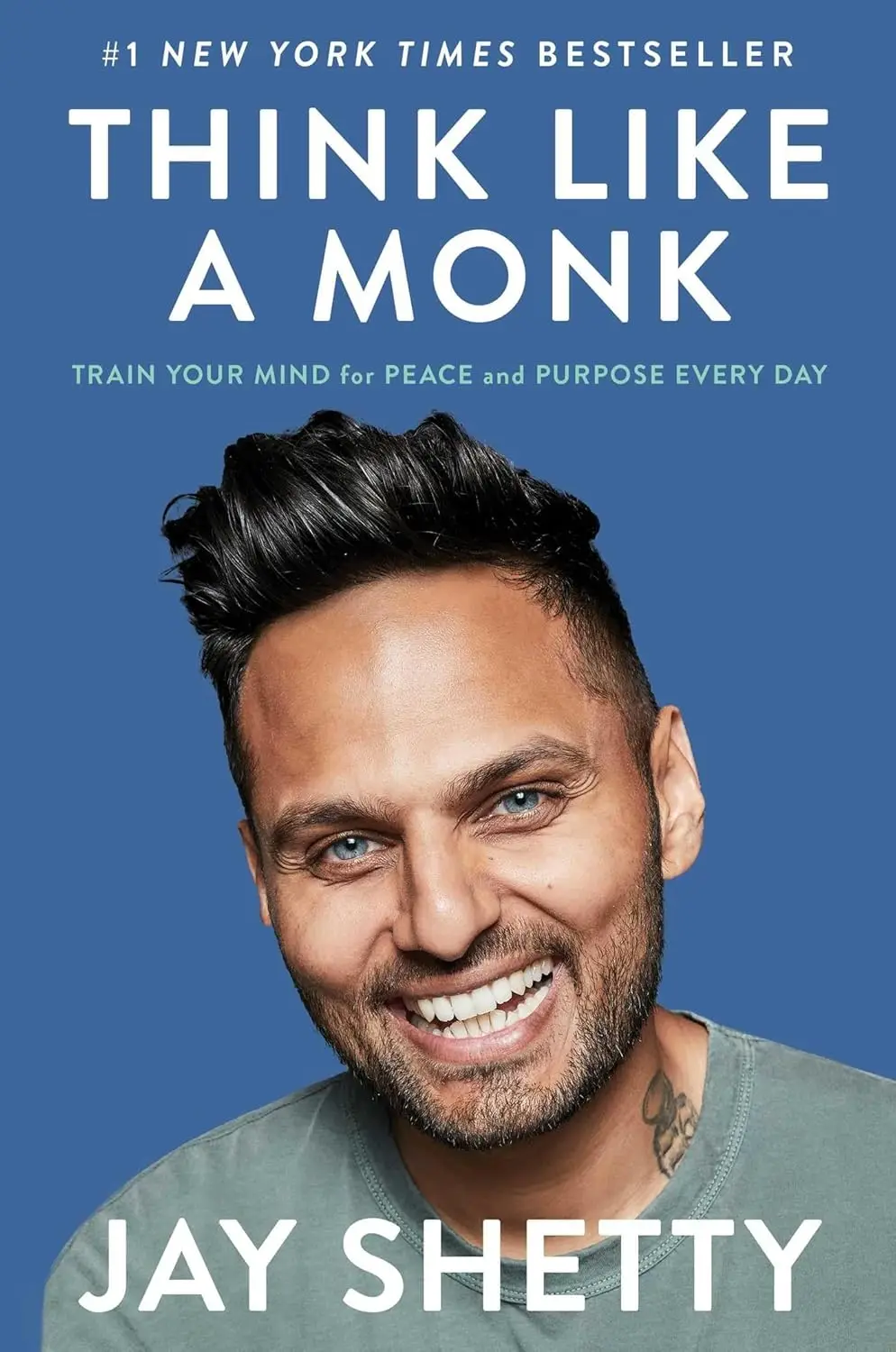
Jay Shetty spent three years living as a monk in an ashram in India before returning to the modern world and becoming one of the most followed personal development voices on the planet. His book Think Like a Monk distils the principles he learned during that period into a framework for living with purpose, clarity, and emotional freedom in a world designed to keep you reactive, distracted, and attached to outcomes you cannot control.
| Key Concept | Original Context | Trading Translation |
|---|---|---|
| Detachment from outcomes | Focus on the effort, release attachment to results | Process adherence IS the goal. P&L is the byproduct of consistent process. Detach from individual trade results. |
| Monkey mind awareness | Recognise when your thoughts are scattered and reactive | The urge to check charts every 30 seconds between setups is monkey mind. Set check-in intervals and obey them. |
| Ikigai in practice | Find the intersection of what you love, are good at, and what the world needs | If you love analysis, have the patience for swing trading, and the market rewards your edge: you have found your trading ikigai. |
| Morning routine as anchor | Start each day with intention and clarity | The pre-session routine is your meditation. Mark levels, define bias, write scenarios. Begin with clarity, not chaos. |
Those three qualities, purpose, clarity, and emotional freedom, are exactly what profitable trading demands. And they are exactly what most traders lack. The monk’s approach to life is, with striking precision, the ideal psychological framework for operating in markets. This article maps Shetty’s most powerful monastic principles onto the daily reality of trading, revealing why the ancient wisdom of detachment may be the most modern edge a trader can develop.
Shetty’s monastic training translated into practices for ordinary life. The detachment material is the part that maps to trading.
Detachment from Outcomes: The Monk’s Edge
The central teaching of monastic life, across Buddhist, Hindu, and Stoic traditions, is detachment from outcomes. This does not mean not caring. It means performing your actions with full commitment and skill while releasing your attachment to the specific result. You do your best work. You accept whatever comes. You do not let the outcome determine your emotional state or your next action.
In trading, this principle is transformative. The trader who is attached to the outcome of every trade is on an emotional roller coaster that destroys consistency. A win produces euphoria, which leads to overconfidence and oversizing on the next trade. A loss produces despair, which leads to revenge trading or paralysis. The emotional volatility mirrors the market’s volatility, and the trader becomes a reactive instrument rather than a deliberate operator.
The detached trader executes the plan with full commitment but no attachment to whether this particular trade wins or loses. They know their system has positive expectancy over a sample. They know that any individual trade is a coin flip within that sample. The outcome does not change their behaviour because their behaviour is not driven by outcomes. It is driven by process.
This is the probability mindset expressed in monastic language. Mark Douglas called it “thinking in probabilities.” The monks called it “non-attachment.” The words are different. The psychological state is identical. And the traders who achieve it are the ones who sustain profitability through every market condition.
The Monkey Mind: Why Your Brain Sabotages Your Trading
Shetty describes the monkey mind, a Buddhist concept referring to the restless, chattering, undisciplined quality of the untrained mind. The monkey mind jumps from thought to thought, generates anxiety about the future and regret about the past, and cannot sustain focus on the present moment for more than a few seconds.
In trading, the monkey mind is the voice that says: “What if this trade loses? What if I miss the next move? What did I do wrong yesterday? Why is everyone else profitable except me? Maybe I should try a different strategy. Maybe I should add this indicator. Maybe I should check my P&L one more time.”
This constant mental noise is not analysis. It is distraction. And distraction in trading is expensive. The trader who is processing fifteen anxious thoughts while a setup develops will either miss the entry, enter too late, enter at the wrong size, or not enter at all. The monkey mind does not produce better decisions. It produces worse ones, faster.
Shetty’s solution is the same one monks have used for millennia: meditation. Not as a spiritual exercise (though it can be), but as a practical tool for training the mind to focus on one thing at a time and let everything else pass without engagement. Ten minutes of daily meditation has been shown in peer-reviewed research to reduce amygdala reactivity, improve sustained attention, and increase the gap between stimulus and response, the exact gap that determines whether you follow your trading plan or override it.
For the trader who has never meditated, the starting point is simple: sit for ten minutes before the session. Focus on your breath. When thoughts arise (they will, constantly), notice them without engaging and return to the breath. You will “fail” dozens of times in ten minutes. That is not failure. That is the practice. Every return to the breath is a repetition that strengthens your ability to return to your plan when the market generates its own noise.
Ego vs. Soul Decisions
Shetty makes a sharp distinction between decisions made from the ego and decisions made from the soul (or higher self). Ego decisions are driven by fear, comparison, the need for validation, and the desire to appear successful. Soul decisions are driven by purpose, values, long-term growth, and alignment with who you genuinely want to become.
In trading, this distinction is immediately applicable:
Ego decisions: Taking a trade because someone in your group chat posted their entry and you do not want to miss out. Refusing to take a stop because admitting the loss feels like admitting failure. Increasing position size after a win because you want to post a bigger number. Trading outside your plan because sitting out feels like weakness.
Soul decisions: Waiting for your A+ setup even when the market is moving without you. Taking the stop loss immediately because it protects your capital for tomorrow. Keeping position size consistent because the math says so regardless of your feelings. Closing the platform at your planned time because the routine serves your long-term development.
Every trading decision exists on this spectrum. The ego wants to feel good now. The soul wants to be good over time. The ego measures success by today’s P&L. The soul measures success by the quality of today’s execution. When you can distinguish which voice is driving your decisions, you have gained one of the most valuable psychological skills in all of trading.
The Four Types of People (and Traders)
Shetty describes four stages of awareness, borrowed from Vedic philosophy, that map remarkably well to the stages of trader development:
Stage 1: Unconscious Incompetence
You do not know what you do not know. This is the beginner trader who believes that a good setup guarantees a win, that losses indicate a broken strategy, and that consistent profitability is a matter of finding the right indicator. They are not yet aware of the psychological dimension of trading, the role of probability, or the depth of the development required.
Stage 2: Conscious Incompetence
You know what you do not know, and it is painful. This is the trader who has studied enough to understand that their psychology is the problem, that fear and greed are driving their decisions, that their journal reveals the same mistakes repeated, and that the gap between knowledge and execution is the actual challenge. This stage is where most traders quit, because the awareness of the problem without the ability to solve it is deeply frustrating.
Stage 3: Conscious Competence
You can do it, but it requires effort. This is the trader who follows their rules but has to fight themselves to do it. Every stop loss requires willpower. Every entry requires a 5-second countdown. Every session ends with mental exhaustion because the discipline was maintained through conscious effort. This stage is sustainable but tiring, and it is where the installation of habits becomes critical.
Stage 4: Unconscious Competence
You do it without thinking. This is the professional. The rules are not followed through willpower. They are followed because they have become automatic. The stop is honoured without internal debate. The entry is taken without hesitation. The journal is completed without resistance. This is the “zone” that Mark Douglas describes, and it is the result of months or years of deliberate practice at Stage 3.
Shetty’s framework says: know which stage you are in. Do not pretend to be at Stage 4 when you are at Stage 2. Do the work that each stage requires. Stage 2 requires education and self-awareness. Stage 3 requires discipline and routine. Stage 4 requires patience, because you cannot force it. It arrives as the result of sustained Stage 3 practice, not as a sudden breakthrough.
Breathwork and Emotional Regulation
Shetty is a strong advocate for breathwork as a practical tool for emotional regulation, drawing from pranayama traditions that monks have used for thousands of years. His specific recommendations include box breathing (4 counts in, 4 hold, 4 out, 4 hold) and extended exhale breathing (shorter inhale, longer exhale) for activating the parasympathetic nervous system.
For traders, breathwork is the fastest intervention available for managing acute stress. When a trade moves sharply against you and your cortisol spikes, your breathing becomes shallow and rapid. This triggers a cascade of physiological responses, increased heart rate, narrowed focus, impaired judgment, that make your next decision almost certainly worse than the one you would make from a calm state.
Three rounds of box breathing take sixty seconds. In that sixty seconds, your heart rate drops, your cortisol begins to normalise, and your prefrontal cortex regains control over your amygdala. The decision you make after those sixty seconds will be measurably better than the one you would have made in the heat of the moment. This is not meditation. It is a tactical intervention that works in real time, at the desk, between trades.
Gratitude as a Performance Tool
Shetty teaches daily gratitude practice not as feel-good advice but as a neurological intervention. Gratitude activates the brain’s reward circuits, releases dopamine and serotonin, and creates a neurochemical baseline of sufficiency rather than scarcity. A brain operating from sufficiency makes fundamentally different decisions than one operating from scarcity.
The scarcity-driven trader thinks: “I need to make money today. I need this trade to work. I cannot afford another loss.” Every decision from this state is contaminated by desperation. The sufficiency-driven trader thinks: “I have a tested system. I have capital. I have the skills to execute. Today is one session in a series of hundreds.”
The difference in execution quality between these two states is enormous. Gratitude does not make you soft. It makes you dangerous, because a trader who is not desperate is a trader who can wait, who can be selective, who can honour their stops without flinching, and who can sit out entirely when the market does not offer their setup. Desperation trades. Abundance waits. And waiting, in trading, is almost always more profitable than forcing.
Digital Minimalism and Information Fasting
Shetty advocates for regular periods of reduced information consumption, what he calls information fasting. The principle: most of the information you consume does not improve your decisions. It increases your anxiety, fragments your attention, and replaces your own analysis with other people’s opinions.
For traders, this is directly applicable. The trader who follows twenty accounts on trading Twitter, watches three YouTube analysts before the session, reads multiple market commentaries, and monitors a Discord chat during live trading is not well-informed. They are over-stimulated. Their analysis is contaminated by other people’s biases. Their confidence in their own plan is undermined by exposure to conflicting opinions.
The monastic approach says: reduce inputs to the essential. Your chart. Your levels. Your plan. Your journal. That is enough. Everything else is noise, and noise degrades execution. Cal Newport’s Deep Work concept, which we explore elsewhere in this series, expands on this principle, but Shetty’s monastic framing is the original and the most radical: the less you consume, the clearer you see.
Jay Shetty and the Mind · Method · Money Framework
Mind: Shetty’s entire framework is a Mind pillar masterclass. Detachment from outcomes, meditation for focus, breathwork for emotional regulation, the ego/soul distinction for decision-making, and the four stages of awareness for honest self-assessment. These tools address the full spectrum of trading psychology, from the acute (managing fear in the moment) to the developmental (progressing through the stages of competence over years).
Method: The monk’s approach to method is simplicity and mastery of fundamentals. Rather than accumulating more indicators, more strategies, more complexity, the monastic principle says: master one approach completely. Go deep rather than wide. Know your setups so thoroughly that recognising them becomes automatic. The monk does not need a hundred techniques. They need one, practised ten thousand times.
Money: Detachment is the ultimate risk management psychology. The trader who is detached from the outcome of any single trade will honour their stop loss without hesitation, because the loss does not threaten their identity. They will size positions according to their plan, because the need to “make up for yesterday” does not exist when you are not attached to yesterday’s result. Risk management becomes effortless when the ego is removed from the equation.
Continue Reading: The Inner Edge
▶ Tony Robbins: Peak Performance Principles for Traders
▶ Jordan Peterson: 12 Rules for Trading Discipline
▶ Mel Robbins: The 5 Second Rule for Traders
The Complete Trader’s Edge
This article is part of The Inner Edge series. The psychology principles explored here are covered in depth across the 22 chapters of the Mind pillar in The Complete Trader’s Edge.
Frequently Asked Questions
How does Jay Shetty’s Think Like a Monk apply to trading?
Shetty’s monastic framework teaches detachment from outcomes, meditation for focus, breathwork for emotional regulation, and the distinction between ego-driven and purpose-driven decisions. These principles directly address why traders override their own rules: attachment to being right, inability to manage fear in real time, and ego-driven decision-making that prioritises feeling good now over performing well over time.
What is detachment from outcomes and why does it matter for traders?
Detachment means executing your trading plan with full commitment while releasing attachment to whether any individual trade wins or loses. This eliminates the emotional roller coaster of euphoria after wins and despair after losses, both of which degrade subsequent decision-making. Detached traders honour stops without hesitation, hold winners to target without premature exits, and maintain consistent execution regardless of recent results.
How does meditation improve trading performance?
Meditation trains the mind to sustain focus and let distracting thoughts pass without engagement. For traders, this translates to better concentration during live sessions, reduced reactivity to sudden price movements, and an increased gap between emotional trigger and behavioural response. Research shows that regular meditation practice reduces amygdala reactivity and improves prefrontal cortex function, the exact neurological changes that improve trading discipline.
What are ego decisions versus soul decisions in trading?
Ego decisions are driven by fear, comparison, and the need for validation: taking trades because others are in them, refusing stop losses to avoid feeling wrong, or oversizing to post impressive screenshots. Soul decisions are driven by process, long-term growth, and alignment with your trading plan: waiting for A-grade setups, honouring risk management rules, and choosing consistency over excitement. Recognising which voice is driving your decisions is one of the most valuable psychological skills in trading.
How does information fasting help traders make better decisions?
Most trading information consumption increases anxiety and opinion contamination without improving decision quality. Information fasting means reducing inputs to the essentials: your chart, your levels, your plan, and your journal. This eliminates the conflicting opinions from social media, YouTube analysts, and chat rooms that undermine confidence in your own analysis and replace it with other people’s biases.
 The Complete Trader's Edge
The full Mind · Method · Money framework. 70 chapters.
View on Amazon →
The Complete Trader's Edge
The full Mind · Method · Money framework. 70 chapters.
View on Amazon →
 Market Mayhem
400 years of bubbles, crashes, and the pattern that keeps repeating.
Buy on Amazon →
Market Mayhem
400 years of bubbles, crashes, and the pattern that keeps repeating.
Buy on Amazon →
 Greatest Companies
How the world's greatest companies were built — and what traders learn from them.
View on Amazon →
Greatest Companies
How the world's greatest companies were built — and what traders learn from them.
View on Amazon →
 Greatest Traders
Eighty-six lives that explain the markets — Livermore to Madoff, told with the losses left in.
View on Amazon →
Greatest Traders
Eighty-six lives that explain the markets — Livermore to Madoff, told with the losses left in.
View on Amazon →