

Explore all 80 books in the Trader’s Library →
The most dangerous moment in a trader’s career is not the first big loss. It is the first big win.
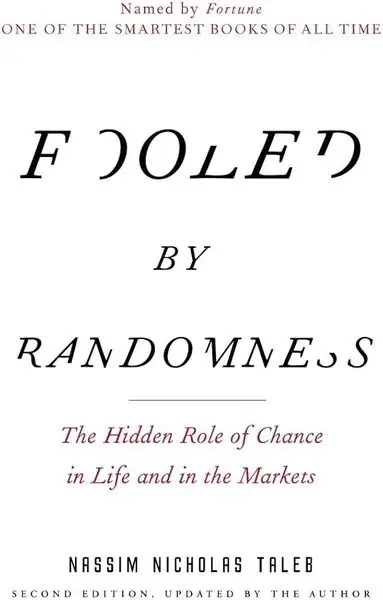
That is the argument at the heart of Fooled by Randomness, and it remains the single sharpest critique of trading psychology ever published. Nassim Nicholas Taleb is not interested in teaching you a method or a system. He is interested in showing you why every trader, including the ones who think they have figured out the market, is systematically misled by the structure of probability itself.
The book sits awkwardly in trading literature because Taleb refuses to play the role of an educator. He is a working trader and an academic, and the book reads like someone who has spent twenty years watching people destroy themselves and finally cannot hold back the criticism. The tone is acerbic. The arguments are uncomfortable. The conclusions are unwelcome to anyone who wants to believe their wins are the result of their skill.
This review breaks down what the book actually delivers, why it remains the most important psychological complement to position-sizing texts like Van Tharp’s, where Taleb’s argument has limits, and how to read the book without falling into the trap of weaponising his framework against everyone except yourself.
At a Glance
| Author | Nassim Nicholas Taleb |
| First Published | 2001 (2nd edition 2004) |
| Pages | ~316 |
| Genre | Probability theory / trading philosophy |
| Difficulty | Intermediate — accessible writing, demanding ideas |
| Best For | Any trader who has had a good run and started to feel confident |
| Skip If | You believe your recent wins prove you have an edge. You are exactly who Taleb wrote this for. |
OVERALL RATING: 9.0 / 10
Who Should Read This Book
| Reader | Verdict | Why |
|---|---|---|
| New trader (0–1 year) | Read it now | Read this before you have your first good run. It will inoculate you against the worst psychological trap in trading. |
| Intermediate (1–3 years) | Read it immediately | You have the scar tissue to recognise yourself in the book’s case studies. The recognition is uncomfortable and educational. |
| Advanced / professional | Re-read regularly | The arguments compound. Each re-read reveals patterns you missed when your statistics looked better than they should have. |
| SMC / ICT trader | Read it | No matter how good the framework, sample size matters. Taleb gives you the tools to evaluate whether your edge is real. |
| Algo / quant trader | Required reading | The book’s critique of backtest overfitting and survivorship bias should be on every quant’s required reading list |
| Anyone in a great run | Read it today | The book is dangerous to your ego and protective of your account. Both are valuable right now. |
The Book in Context
Nassim Taleb was a working options trader and quant when he published the first edition in 2001. He had spent years on trading floors and in academic settings, and the book emerged from his frustration with how badly even sophisticated practitioners reasoned about probability.
The book’s timing was prescient. It came out as the dot-com bubble was deflating, took on extra urgency after the 2008 financial crisis (which Taleb famously predicted as a structural inevitability), and has only become more relevant in subsequent decades as algorithmic trading, retail options speculation, and crypto have multiplied the opportunities for people to mistake luck for skill.
The book is the first in what Taleb later called his Incerto series, which includes The Black Swan, The Bed of Procrustes, Antifragile, and Skin in the Game. The series builds on the foundations laid in this book. Most readers find Fooled by Randomness the most accessible entry point and the most directly applicable to trading.
The Core Argument: Survivorship Bias Is Everywhere
Taleb’s central thesis is uncomfortable. He argues that the population of “successful traders” is heavily contaminated by survivorship bias, that random good outcomes are systematically mistaken for skill, and that the human mind is poorly equipped to distinguish the two.
The argument works through a simple thought experiment. Start with 10,000 traders. Each year, half lose money and quit. After five years, you have approximately 312 surviving traders, all of whom have positive five-year track records. Some of them will have been genuinely skilled. Most of them are simply the lucky tail of a distribution. The market does not provide any way to distinguish between the two from track record alone.
The result is that the trading world is full of people with impressive track records who are not skilled, and we have collectively built an industry around interviewing them, reading their books, and following their advice. The methodology is contaminated at the source.
Taleb does not stop at this critique. He uses it as the foundation for a broader argument about how to think probabilistically. If you cannot tell whether your own success is skill or luck, you need decision frameworks that survive either case. That, ultimately, is the practical takeaway of the book.
“Lucky fools do not bear the slightest suspicion that they may be lucky fools. By definition, they do not know they belong to such a category.”
— from Fooled by Randomness
The Six Biases Taleb Exposes
The book is a catalogue of cognitive errors that produce systematically bad trading decisions. Six of them are particularly relevant for active traders and worth knowing by name.
Six Cognitive Errors That Wreck Traders
| # | The Bias | How It Wrecks Traders |
|---|---|---|
| 1 | Survivorship bias | We only see the winners. We do not see the equally disciplined traders who blew up. The population we study is contaminated. |
| 2 | Narrative fallacy | We construct stories explaining why our wins happened. The stories feel true and add false confidence to our next decision. |
| 3 | Confirmation bias | We weigh evidence supporting our positions more heavily than evidence against. Then we are surprised when reality disagrees. |
| 4 | Hindsight bias | We believe past events were more predictable than they actually were. Then we expect to predict the future with the same false clarity. |
| 5 | Underestimation of rare events | We assume the future will look like the recent past. Then we get destroyed by a rare event that was always possible. |
| 6 | Confusing variance with skill | Good runs feel like skill. Bad runs feel like bad luck. The asymmetry of attribution is one of the most reliable predictors of eventual blow-up. |
All six biases work together to make traders systematically overconfident at exactly the moments when caution would help them most.
Each bias on its own is well-documented in the behavioural finance literature. What Taleb does is show how they compound in trading specifically. A trader on a good run is simultaneously the victim of survivorship bias (they survived their early mistakes), narrative fallacy (they have constructed a story explaining their wins), confirmation bias (they read their results as proof their story is right), and the others. The result is that the moments of greatest false confidence are the moments of greatest danger.
The Dentist Who Beats the Trader
One of the book’s most famous thought experiments compares a dentist’s expected lifetime earnings to a trader’s. The dentist has a high-probability career with low variance. The trader has a low-probability career with high variance. On expected value, the trader might win, but on the probability of any individual trader winning, the dentist wins by an enormous margin.
The point is not that trading is a bad career. The point is that most aspiring traders systematically underestimate how much of the trader population is in the failure mode. They look at successful traders and assume they are representative. They are not. They are the surviving tail.
This is one of the most useful frames in the entire book because it forces you to ask the right question. Not “how do I trade like the successful traders?” but “how do I trade in a way that survives the failure mode that most traders fall into?” The answer to the second question is largely about risk management and position sizing, which is why Taleb pairs so well with Van Tharp.
How Taleb Built the Book
The book is structured unusually. It is not a textbook, not a memoir, and not a system manual. It is closer to a series of essays held together by a single argument. Three structural choices give it its distinctive character.
Anecdote-driven argument. Most of the book’s claims are illustrated through fictional or composite characters: traders Taleb has known, stories from the floor, archetypes representing common failure modes. The approach makes the abstract concepts concrete in ways academic prose could not.
Aggressive tone. Taleb is rude about people who think they have figured out markets. He is rude about journalists, business books, MBA programs, and most other authority figures in finance. The tone is a feature, not a bug. It signals that the book is not a polite invitation to consider these ideas. It is a confrontation.
Intellectual range. Taleb draws from probability theory, ancient philosophy, behavioural psychology, and personal anecdotes from his own trading career. The breadth is part of the argument: he is showing you that the failure modes of traders are general features of human cognition, not specific to finance.
Five Passages Worth Carrying With You
“Mild success can be explainable by skills and labor. Wild success is attributable to variance.”
The reframe that explains why the most spectacular trading stories are almost always lucky and why the steady, boring traders are almost always skilled.
“It is hard to resist the urge to construct a coherent narrative from random events. The narrative is what makes us feel safe. The events themselves did not require it.”
The narrative fallacy in one sentence. Every trade you take is followed by a story that explains the outcome. Most of those stories are wrong.
“What matters is not how often you are right, but how much you make when you are right and how much you lose when you are wrong.”
The expectancy argument framed as a Taleb-style provocation. The win rate is almost irrelevant. The asymmetry of outcomes is everything.
“Probability is not a mere computation of odds on the dice. It is the acceptance of the lack of certainty in our knowledge.”
The line that connects probability to humility. Operating under uncertainty is not a flaw in trading. It is the entire job.
“The greatest enemy of skepticism is success.”
The single most important sentence in the book. Every successful run convinces you that your methods are better than they are. The book’s purpose is to make you suspicious of your own success.
Common Misreadings of the Book
Misreading #1: “Taleb is saying trading is impossible”
He is not. Taleb himself is a working trader. He is saying that most traders mistake luck for skill and therefore take risks they cannot survive. The book is a guide to surviving the failure mode, not an argument that trading should not be attempted.
Misreading #2: “If everything is luck, I should give up”
Taleb does not say everything is luck. He says individual outcomes are heavily influenced by luck and that distinguishing luck from skill requires careful thought and statistical literacy. The right response is not despair. It is rigor.
Misreading #3: “Use Taleb’s framework to dismiss other traders”
The most common misuse of the book. Readers weaponise the survivorship-bias argument against everyone except themselves. The proper application is to apply the same skepticism to your own results that you would apply to someone else’s. Most readers fail this test.
Misreading #4: “Taleb hates technical analysis”
Taleb is skeptical of any framework that produces overconfident predictions, which includes much of what passes for technical analysis. But he is not against the use of charts. He is against treating chart patterns as deterministic predictors. The distinction matters.
Misreading #5: “The book is just contrarianism for its own sake”
The book is not contrarian for its own sake. It is contrarian in service of a specific argument about probability and cognition. The argument has been validated by decades of behavioural finance research. Dismissing the book as contrarianism is a way of avoiding the implications of the argument.
Where the Book Falls Short
- No methodology. The book diagnoses problems without prescribing solutions. Readers looking for a “what to do” framework will be frustrated. The book’s intentional gap.
- The tone is polarising. Taleb’s rudeness about other practitioners is part of the book’s character but it also means many readers stop engaging with the actual arguments because they are put off by the style. Some of the criticism is fair. Some is overreach.
- Heavy on philosophical digressions. The classical philosophy and literary references can feel like the author showing off rather than serving the argument. Most readers prefer the trading-specific sections.
- Limited engagement with modern markets. The book predates the rise of algorithmic trading, ETFs, crypto, and retail options at scale. Some of the examples feel dated, though the underlying arguments still apply.
- Some statistical hand-waving. Taleb invokes statistical concepts without always working through them in detail. Readers without a probability background may feel they are being asked to take his word for things.
- The author has improved since. Later books in the Incerto series (especially The Black Swan and Antifragile) develop these ideas more rigorously. Some readers prefer the later books even though Fooled by Randomness remains the most directly trading-relevant.
How the Book Fits the Mind · Method · Money Framework
This is a Mind-pillar book that complements rather than substitutes for Mark Douglas. Where Douglas teaches you what to believe, Taleb teaches you to be skeptical of all beliefs, including your own conclusions about your trading.
| Pillar | Contribution | What the Book Delivers |
|---|---|---|
| MIND | PRIMARY | Probabilistic thinking, survivorship bias awareness, narrative fallacy resistance, the discipline of distinguishing luck from skill, the importance of skepticism about one’s own success |
| METHOD | LIGHT TOUCH | Critiques common methodological errors but does not propose specific methods |
| MONEY | SECONDARY | Implicit argument for asymmetric position sizing, surviving rare events, the centrality of risk management as the only defence against probability |
If you have read The Complete Trader’s Edge, Taleb gives you the skeptical foundation for everything else. Reading the book alongside the Mind · Method · Money framework creates a powerful pairing: the framework gives you operational structure, and Taleb gives you the philosophical discipline to keep questioning whether your structure is actually working or just appearing to work because of luck. For more on the psychology pillar specifically, see our complete guide to trading psychology.
Read This Instead Of / Read This After
| Relationship | Book | Why |
|---|---|---|
| Read after | Trading in the Zone by Mark Douglas | Douglas teaches you what to believe. Taleb teaches you to be skeptical of all your beliefs. They are complementary, not competing. |
| Read alongside | Trade Your Way to Financial Freedom by Van Tharp | Tharp gives you the mathematical framework. Taleb gives you the epistemic humility to use it properly. |
| Read after | The Black Swan by Nassim Taleb | Taleb’s follow-up develops the rare-event argument more rigorously. Read after Fooled by Randomness to see how the ideas extend. |
| Read alongside | Thinking, Fast and Slow by Daniel Kahneman | Kahneman is the academic foundation for the biases Taleb describes operationally. Both together give you the complete picture. |
| Read instead of | Most “success story” trader memoirs | Success memoirs are the rawest survivorship bias in trading literature. Read Taleb first to inoculate yourself against the genre. |
Final Verdict: Should You Read This Book in 2026?
Yes. And then read it again every time you have a good run.
The book remains the sharpest critique of the cognitive errors that destroy trading careers. Most traders never have it pointed out to them that their wins might be lucky. Most never get explicit training in skepticism. Most do not have a framework for distinguishing skill from variance. Taleb provides all of these in one volume, and the lessons compound across re-readings.
The caveat is that the book is uncomfortable in a specific way: it is uncomfortable because the arguments apply to you, not just to other traders. Most readers either weaponise the framework against others or quietly exempt themselves. The minority who apply the same skepticism to their own results that they apply to everyone else are the ones who get the actual benefit of the book.
CTE Rating Breakdown
9.0/10
Essential Reading
| Readability | 8 | |
| Actionability | 7 | |
| Timelessness | 10 | |
| Beginner-Friendly | 7 | |
| Modern Relevance | 10 |
Frequently Asked Questions
What is Fooled by Randomness actually about?
The book is about how traders systematically mistake luck for skill, the cognitive biases that drive the confusion, and the discipline of probabilistic thinking required to distinguish the two. It is primarily a psychology and probability book applied to trading.
Is it still relevant in 2026?
More relevant, not less. The retail trading boom, algorithmic systems, crypto markets, and the rise of social-media trading personalities have multiplied the opportunities for survivorship bias and narrative fallacy to mislead traders. The book is as current as it was in 2001.
Is the book good for complete beginners?
Yes. The writing is accessible even when the ideas are demanding. Beginners benefit from reading it early because the lessons inoculate against the worst psychological traps before bad habits develop.
How long does it take to read?
Around 12 to 16 hours for the full 316 pages. The book reads quickly when you let it. Most traders re-read it multiple times because the ideas land differently at different career stages.
What is survivorship bias?
The systematic error of studying only the people or systems that survived and ignoring the equally common ones that failed. Applied to trading: the successful traders we hear from are a biased sample because the failures left the industry without writing books.
What is the narrative fallacy?
The human tendency to construct stories that explain past events and to believe those stories with more confidence than the evidence supports. Applied to trading: every winning trade gets a story about why it worked. Most of those stories are wrong but feel satisfying.
Should I read Fooled by Randomness or The Black Swan first?
Fooled by Randomness first. It is the most directly trading-relevant of the Incerto series and the most accessible entry point. The Black Swan develops the rare-event argument in more depth and benefits from the foundation laid in the earlier book.
Is there an audiobook?
Yes. The audiobook works well because the book is prose rather than chart-heavy. Many traders listen to it during commutes and pick up new layers on repeat listening.
Does the book work for non-traders?
Yes. The arguments apply to any field where outcomes have a strong stochastic component, including business, investing, and life-planning. Trading is the case study, but the lessons are general.
What is the single most important takeaway from the book?
Apply the same skepticism to your own success that you apply to other people’s. The wins you most want to attribute to skill are the ones most likely to be lucky. The losses you most want to attribute to bad luck are the ones most likely to reflect real flaws in your process.
About the Author
Nassim Nicholas Taleb (b. 1960)
Nassim Taleb is a Lebanese-American mathematical statistician, former options trader, and author. He spent over twenty years on Wall Street as a derivatives trader, building expertise in options pricing and tail-risk hedging. He holds a PhD from the University of Paris and has taught risk engineering at NYU. His Incerto book series has become required reading in finance, philosophy, and decision theory.
Other notable works in the Incerto series: The Black Swan (2007), The Bed of Procrustes (2010), Antifragile (2012), Skin in the Game (2018). Each book builds on the foundations of the previous one while standing alone as an independent argument.
Taleb continues to write, trade, and publish, remaining one of the most cited (and most polarising) voices in modern finance and risk thinking.
Continue Learning
- The Three Pillars: Mind, Method, Money
- Trading Psychology: The Complete Guide
- Trading in the Zone Book Review (2026)
- Trade Your Way to Financial Freedom Book Review (2026)
- Market Wizards Book Review (2026)
- The Complete Trader’s Edge — The Book
 The Complete Trader's Edge
The full Mind · Method · Money framework. 70 chapters.
View on Amazon →
The Complete Trader's Edge
The full Mind · Method · Money framework. 70 chapters.
View on Amazon →
 Market Mayhem
400 years of bubbles, crashes, and the pattern that keeps repeating.
Buy on Amazon →
Market Mayhem
400 years of bubbles, crashes, and the pattern that keeps repeating.
Buy on Amazon →
 Greatest Companies
How the world's greatest companies were built — and what traders learn from them.
View on Amazon →
Greatest Companies
How the world's greatest companies were built — and what traders learn from them.
View on Amazon →
 Greatest Traders
Eighty-six lives that explain the markets — Livermore to Madoff, told with the losses left in.
View on Amazon →
Greatest Traders
Eighty-six lives that explain the markets — Livermore to Madoff, told with the losses left in.
View on Amazon →