Explore all 80 books in the Trader’s Library →
Most trading books pick a lane. They teach you setups, or they teach you psychology, or they teach you position sizing, and they leave you to assemble the rest yourself. Alexander Elder refused to do that.
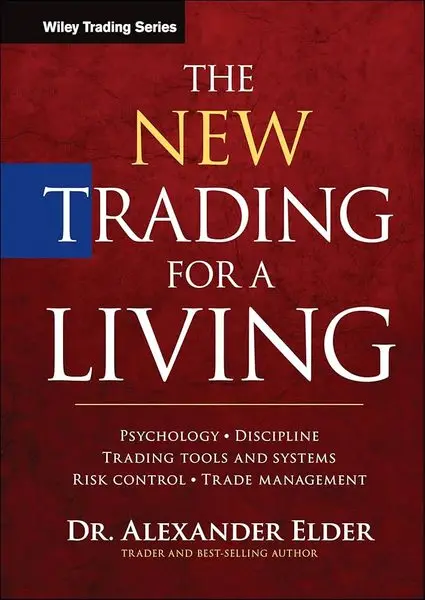
Trading for a Living arrived in 1993 and did something unusual for its time. It argued that trading success rests on three legs of equal importance, and that a trader strong in one but weak in another will still fail. Elder called these the three M’s: Mind, Method, and Money. The New Trading for a Living (2014) is his full rewrite of that classic for the screen era.
If those three words look familiar, they should. The Mind · Method · Money framework that runs through everything we publish here traces its lineage straight back to Elder. He was the first author to insist, in plain language, that a trader is only as strong as their weakest M. Reading this book is reading the source code.
This review covers what the book actually delivers across all three pillars, the money-management rules that are still the best in the genre, the parts that have aged (the indicator-heavy method chapters), and who should read it in 2026.
At a Glance
| Author | Dr. Alexander Elder |
| First Published | 1993 (original) · 2014 (New edition, Wiley) |
| Pages | ~300 |
| Genre | Complete trading manual (psychology, method, money management) |
| Difficulty | Beginner to intermediate — clearly written, broad scope |
| Best For | Traders building a complete system from the ground up, in one book |
| Skip If | You already have a full framework and only want pure price-action setups |
OVERALL RATING: 8.5 / 10
Who Should Read This Book
| Reader | Verdict | Why |
|---|---|---|
| New trader (0–1 year) | Read it first | The best single-volume orientation to what trading actually requires. It will save you from the one-dimensional trap. |
| Intermediate (1–3 years) | Read for the M’s | Skim the indicator chapters, study the psychology and money-management sections closely |
| Advanced / professional | Reference, not cover-to-cover | The 2% and 6% rules and the record-keeping framework are worth revisiting even if the rest is familiar |
| SMC / ICT trader | Read for Mind & Money | Elder’s method layer is indicator-based, not structure-based, but the psychology and risk chapters port directly to any approach |
| Prop-firm candidate | Read the money chapters | The 6% monthly drawdown rule maps almost exactly onto how prop firms think about risk. Internalise it before you take a challenge. |
| Long-term investor | Skip | This is a book for active traders. Investors will get more from Graham, Lynch, or Marks. |
The Book in Context
Alexander Elder has an unusual biography for a trading author. He trained as a psychiatrist, was born in the Soviet Union, and defected to the West as a young man. He came to markets already equipped with a clinical understanding of how the mind sabotages itself under pressure, and that lens is what separates his work from the dozens of indicator manuals published in the same era.
The original Trading for a Living became one of the best-selling trading books of the 1990s precisely because it refused to be just another charting book. It put psychology first, method second, and money management as the discipline that holds the other two together. The New Trading for a Living is Elder’s 2014 rewrite, updated for electronic markets, with cleaner charts and an expanded treatment of record-keeping.
The rewrite is the version to buy. The original holds up, but the New edition reflects how markets actually work now, and the production quality is far better.
The Core Argument: Three M’s, Equal Weight
Elder’s central claim is deceptively simple. Successful trading rests on three pillars, and they are not optional extras for each other. A trader with a brilliant method but no money management will eventually be wiped out by a single position. A trader with perfect risk control but no psychological discipline will override their own rules at the worst moment. A trader with iron discipline and tight risk but no edge will simply bleed slowly.
This sounds obvious now. It was not obvious in 1993, when the genre was dominated by single-method books promising that one indicator or one pattern was the key. Elder’s contribution was to reframe the entire problem: the question is not “what is the best setup,” it is “am I strong in all three M’s at once.”
“The goal of a successful trader is to make the best trades. Money is secondary.”
— Alexander Elder
The Three M’s in Detail
| Pillar | What Elder Argues |
|---|---|
| MIND | Trading is a psychological endeavour first. Most losses come from emotional decisions, not bad analysis. Discipline is a structure you build, not a trait you are born with. |
| METHOD | A repeatable, tested way of finding and managing trades. Elder teaches his own indicator toolkit and the Triple Screen system, but insists the specific method matters less than having one you trust and follow. |
| MONEY | Position sizing and risk limits. This is where the book is strongest. The 2% and 6% rules are the most practical money-management framework in any trading classic. |
Strong in all three, or you fail. That is the whole book in one sentence.
Elder’s Signature Tools
The method chapters are where the book shows its age, and where an honest review has to be careful. Elder built and popularised several tools that are still in trading platforms today.
- The Triple Screen trading system. Analyse the market on three timeframes, filtering with the trend on the higher one and timing entries on the lower one. The multi-timeframe logic is genuinely useful and survives intact in modern top-down analysis, including SMC.
- The Impulse System. A colour-coded filter combining trend and momentum to tell you when you are allowed to trade in a given direction and when you must stand aside.
- Force Index. Elder’s own indicator combining price change and volume to gauge the power behind a move.
- Elder-ray (Bull Power and Bear Power). A way of measuring buying and selling pressure relative to a moving average.
The honest verdict: the Triple Screen concept is timeless, the multi-timeframe discipline ports to any methodology, but the specific indicators are a 1990s toolkit. A modern structure-based or volume-profile trader will not adopt the Force Index. What you take from these chapters is the habit of confirming a trade across timeframes, not the indicators themselves.
The Money Management Rules That Still Matter Most
If you read nothing else in this book, read the money-management chapters. Elder gives the cleanest formulation of two rules that every serious trader should have tattooed somewhere.
| Rule | What It Means |
|---|---|
| The 2% Rule | Never risk more than 2% of your account on a single trade. This caps the damage any one loss can do and keeps a losing streak survivable. It protects you from the single position that ends a career. |
| The 6% Rule | If your account is down 6% for the month, stop trading until the next month. This is the rule almost nobody else teaches, and it is the one that saves accounts during a tilt spiral. |
The 6% rule deserves special attention. Most money-management advice stops at per-trade risk. Elder adds a portfolio-level circuit breaker that forces you out of the chair during exactly the kind of losing streak that destroys traders. It is no accident that prop firms think in almost identical terms, with daily and overall drawdown limits. If you are preparing for a funded challenge, the 6% rule is the single most useful page in the book.
The Psychiatrist’s Insight: Trading and the Addiction Parallel
Elder’s clinical background produces the book’s most original chapter. He draws a direct parallel between undisciplined, compulsive trading and addiction, and argues that a trader who cannot stop chasing losses is behaving the way an alcoholic behaves around drink.
His prescription follows from the diagnosis. Recovery, he argues, comes from the same structures that work for addiction: admitting the problem, building external accountability, and following rigid rules precisely because you cannot trust yourself to improvise in the heat of the moment. This is where his record-keeping obsession comes from. The trade journal is not bookkeeping, it is the accountability structure that keeps an emotional animal honest.
Whether or not the addiction framing fits you personally, the underlying point is sound and ahead of its time: discipline is not willpower, it is structure. You do not white-knuckle your way to consistency. You build systems that remove the moment of weak decision-making.
Common Misreadings of the Book
Misreading #1: “It’s an indicator book”
People who skim remember the Force Index and the Elder-ray and conclude the book is a charting manual. It is not. The indicators are one third of one pillar. The heart of the book is the argument that mind and money matter as much as method, and most readers who dismiss it never absorbed that.
Misreading #2: “The 2% rule is too conservative”
New traders constantly argue the 2% cap is too small to grow an account quickly. That impatience is exactly what the rule exists to protect you from. Elder’s point is that survival compounds and blow-ups do not. The traders who think 2% is too slow are the ones who do not last long enough to compound at all.
Misreading #3: “Triple Screen is outdated, so skip the method”
The specific indicators in Triple Screen are dated. The structure, analyse the higher timeframe for direction and the lower one for timing, is exactly what modern top-down and SMC traders do every day. Throw out the oscillators, keep the multi-timeframe discipline.
Misreading #4: “The original and the New edition are the same”
They are not. The New edition is a genuine rewrite with updated charts, electronic-market context, and a stronger record-keeping section. If you are buying it now, buy the New edition.
Where the Book Falls Short
An honest review names the weaknesses.
- The method layer is indicator-heavy and dated. Elder’s toolkit predates the modern structure-and-liquidity approach. Price-action, volume-profile, and SMC traders will use almost none of the specific indicators.
- Breadth over depth. Because the book covers all three M’s, no single pillar gets the depth a dedicated book offers. Douglas goes deeper on psychology, Tharp goes deeper on position sizing.
- US-equity and futures flavour. The examples skew toward US stocks and futures. Forex and crypto traders have to translate.
- The addiction framing will not fit everyone. Some readers find the clinical analogy powerful, others find it heavy-handed. Take what is useful and leave the rest.
- It cannot replace screen time. Like every trading book, it gives you the map, not the territory. Reading it will not make you consistent. Practising its rules might.
How the Book Fits the Mind · Method · Money Framework
This is the rare book where the framework fit is total, because Elder is where the framework comes from. The three M’s we use here are his vocabulary, and reading the book is reading the original statement of the idea.
| Pillar | Contribution | What the Book Delivers |
|---|---|---|
| MIND | PRIMARY | Discipline as structure, the addiction parallel, the case that emotion not analysis is the main cause of loss |
| METHOD | SECONDARY | Triple Screen and the multi-timeframe discipline, plus a dated but historically important indicator toolkit |
| MONEY | PRIMARY | The 2% and 6% rules, the best practical money-management framework in any trading classic |
If you have read The Complete Trader’s Edge, you will see the bones of Elder throughout it. The Mind · Method · Money framework takes his core insight, that you must be strong in all three at once, and builds it out for the modern structure-based trader. Reading Elder first is reading where the conversation started.
Read This Instead Of / Read This After
| Relationship | Book | Why |
|---|---|---|
| Read after | Trading in the Zone by Mark Douglas | Elder introduces the psychology, Douglas goes deep on it. Read Elder for breadth, Douglas for the operating manual. |
| Read after | Trade Your Way to Financial Freedom by Van Tharp | Tharp turns Elder’s money-management chapters into a full position-sizing discipline. The natural next step on the Money pillar. |
| Read alongside | Market Wizards by Jack Schwager | Elder gives you the framework, Schwager shows seventeen traders living it. Theory and evidence together. |
| Read instead of | Generic single-indicator “system” books | If you are tempted by a book promising one magic setup, read this instead. It will cure you of the one-dimensional trap. |
Final Verdict: Should You Read This Book in 2026?
Yes, especially if you are early in your trading and assembling a complete approach for the first time. No other single book gives you all three pillars under one cover with this clarity.
The caveat is the method layer. Treat the indicator chapters as historical context and the multi-timeframe discipline as the takeaway. The Mind and Money chapters are where the lasting value lives, and the 2% and 6% rules alone are worth the price of the book. Buy the New edition, not the original.
CTE Rating Breakdown
8.5/10
Foundational Reading
| Readability | 9 | |
| Actionability | 8 | |
| Timelessness | 8 | |
| Beginner-Friendly | 9 | |
| Modern Relevance | 7 |
Ready to read it?
Available in paperback, Kindle, and audiobook. Get the New edition (2014).
Frequently Asked Questions
What is The New Trading for a Living about?
It is a complete trading manual organised around three pillars Elder calls the three M’s: Mind (psychology and discipline), Method (analysis and trade selection), and Money (position sizing and risk control). The argument is that you must be strong in all three at once.
Should I read the original or the New edition?
The New edition (2014). It is a full rewrite with updated charts, electronic-market context, and a stronger record-keeping section. The original from 1993 holds up but the New edition is the better buy today.
What are Elder’s 2% and 6% rules?
The 2% rule says never risk more than 2% of your account on a single trade. The 6% rule says stop trading for the rest of the month once your account is down 6%. Together they cap single-trade damage and force you out of the chair during a losing streak.
Is the book good for beginners?
Yes. It is one of the best first trading books because it shows the full picture rather than selling a single setup. Beginners should read the Mind and Money chapters most closely and treat the indicator chapters as background.
Are Elder’s indicators still useful?
The specific indicators (Force Index, Elder-ray) are a 1990s toolkit and most modern structure-based or volume-profile traders will not use them. The Triple Screen multi-timeframe concept, however, is still the standard way serious traders analyse markets top-down.
What is the Triple Screen trading system?
A method for analysing a market across three timeframes: use the higher timeframe to establish the trend, a middle timeframe to find the swing, and the lower timeframe to time the entry. The principle of filtering with the higher timeframe and timing on the lower one is timeless.
How does this book compare to Trading in the Zone?
Elder covers all three pillars in breadth; Mark Douglas goes deep on psychology alone. Read Elder for the complete framework, then read Douglas to go deeper on the Mind pillar specifically.
Is this book relevant for forex or crypto traders?
The examples skew toward US stocks and futures, so you have to translate the instruments. The psychology and money-management chapters apply to any market without modification.
Why does Elder compare trading to addiction?
Elder trained as a psychiatrist. He argues that compulsive, loss-chasing trading resembles addiction and responds to the same remedies: admitting the problem, building accountability, and following strict rules instead of relying on willpower. It is the source of his emphasis on record-keeping.
What is the single most important takeaway?
That you cannot win on method alone. Mind, Method, and Money are equally load-bearing, and your results will be limited by whichever of the three is weakest. Diagnose your weakest M and fix that first.
About the Author
Dr. Alexander Elder
Alexander Elder is a professional trader and a trained psychiatrist. Born in the Soviet Union, he defected to the West as a young man and built a career that combined clinical psychology with active trading. That dual background is what gives his writing its distinctive focus on the mental side of markets, and it made Trading for a Living one of the best-selling trading books of its generation.
Other notable works: Come Into My Trading Room, Trading for a Living (the 1993 original), The New Sell and Sell Short, and Two Roads Diverged, alongside a long-running trader-education business.
His lasting contribution is the three M’s. The idea that trading is psychology, method, and money management in equal measure is now so widely accepted that most traders do not realise it had an author. It did, and this is the book.
Continue Learning
- The Three Pillars: Mind, Method, Money
- Trading Psychology: The Complete Guide
- Trading in the Zone Book Review (2026)
- Trade Your Way to Financial Freedom Book Review (2026)
- Market Wizards Book Review (2026)
- The Complete Trader’s Edge — The Book
 The Complete Trader's Edge
The full Mind · Method · Money framework. 70 chapters.
View on Amazon →
The Complete Trader's Edge
The full Mind · Method · Money framework. 70 chapters.
View on Amazon →
 Market Mayhem
400 years of bubbles, crashes, and the pattern that keeps repeating.
Buy on Amazon →
Market Mayhem
400 years of bubbles, crashes, and the pattern that keeps repeating.
Buy on Amazon →
 Greatest Companies
How the world's greatest companies were built — and what traders learn from them.
View on Amazon →
Greatest Companies
How the world's greatest companies were built — and what traders learn from them.
View on Amazon →
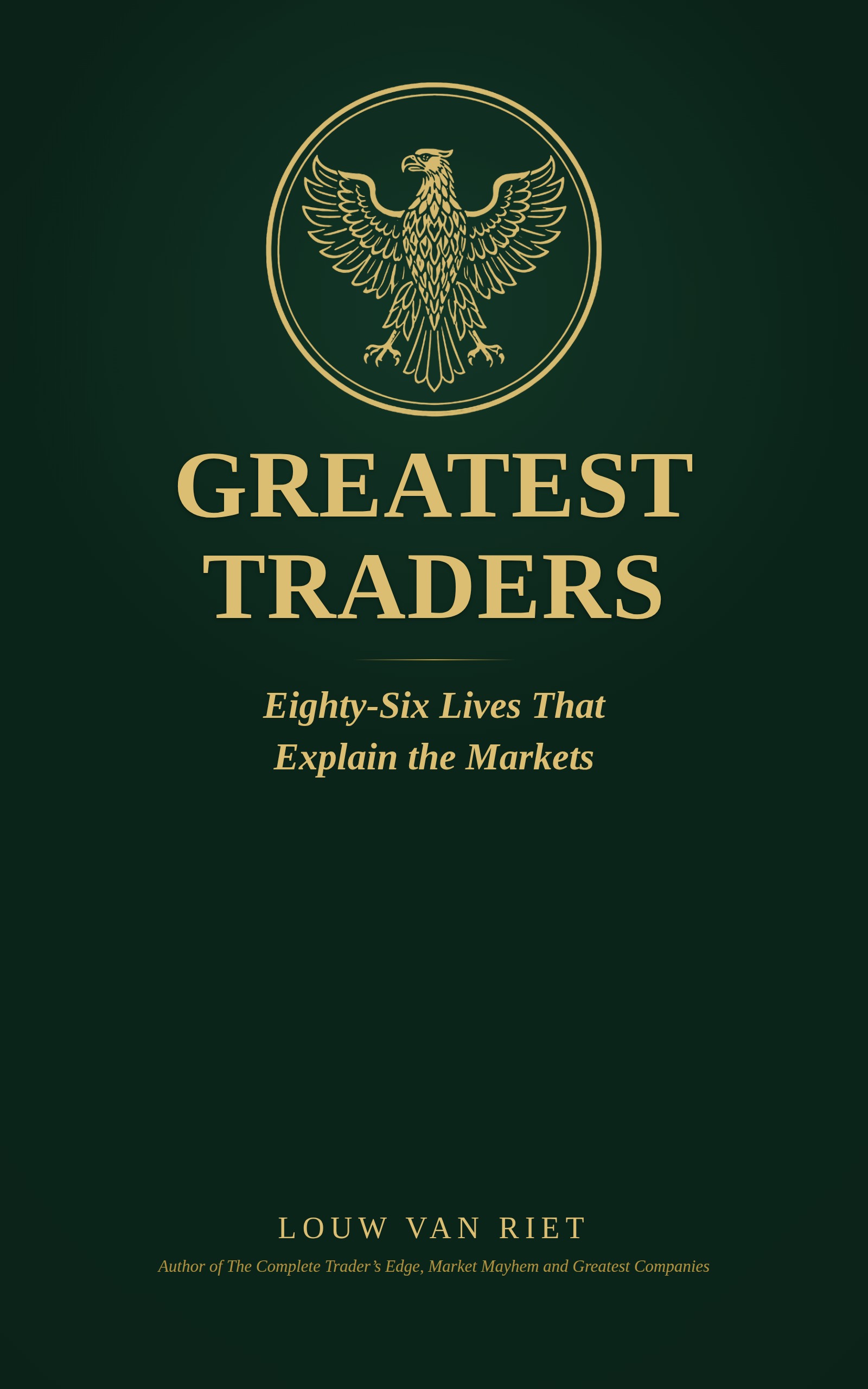 Greatest Traders
Eighty-six lives that explain the markets — Livermore to Madoff, told with the losses left in.
View on Amazon →
Greatest Traders
Eighty-six lives that explain the markets — Livermore to Madoff, told with the losses left in.
View on Amazon →