

Most traders lose money before the market even opens. They wake up late, check their phone in bed, scroll through social media, absorb other people’s opinions, and arrive at their charts already reactive, distracted, and emotionally compromised. By the time the London session begins, they have already handed the day’s first advantage to the market. Robin Sharma would diagnose the problem in one sentence: you lost the morning, so you lost the day.
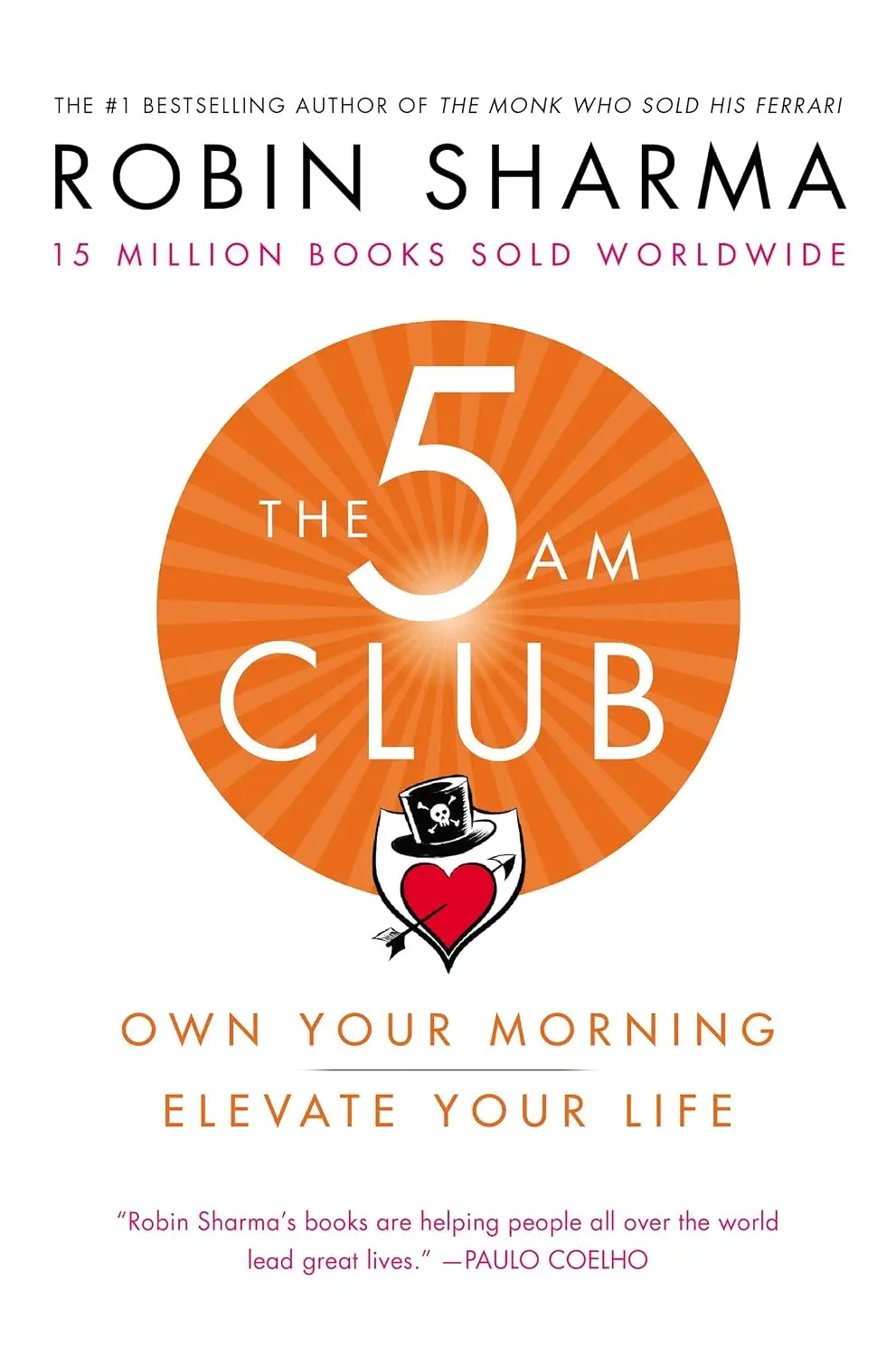
Robin Sharma is the author of The 5 AM Club, The Monk Who Sold His Ferrari, and one of the most influential voices in peak performance and personal mastery. His work focuses on the rituals, habits, and identity-level shifts that separate world-class performers from everyone else. He has coached Fortune 500 CEOs, professional athletes, and entrepreneurs for over twenty-five years, and his central thesis has remained consistent: your morning routine determines your life’s results.
| Key Concept | Original Context | Trading Translation |
|---|---|---|
| The 5 AM Club | Win the first hour of the day to win the day | A structured pre-session routine before the Kill Zone sets the quality of every trade that follows. |
| The 20/20/20 formula | 20 min exercise, 20 min reflection, 20 min learning | Before trading: move your body, review yesterdays journal, study one chart pattern. Then trade. |
| Consistency over intensity | Small daily disciplines beat occasional massive efforts | Daily 15-minute journal entries beat a 4-hour monthly review. Consistency is the compound interest of skill. |
| Protect your cognitive bandwidth | Eliminate distractions that drain mental energy | Close social media, news, and Discord during your Kill Zone. Every distraction degrades execution quality. |
For traders, this is not motivational fluff. It is an operational reality. The quality of your pre-market preparation directly determines the quality of your execution. The trader who has spent sixty minutes in deliberate preparation before the session makes fundamentally different decisions than the one who rolls out of bed five minutes before the open. Robin Sharma’s frameworks provide the architecture for building a morning that makes disciplined trading the default rather than the struggle.
Sharma’s 20/20/20 morning formula is the practical core. Note that it is written as a parable, which some readers love and others find slow.
The 5 AM Club: Why the Early Morning Matters
Sharma’s most famous concept is the 5 AM Club, the practice of waking at 5 AM and dedicating the first hour of the day to personal development before the world’s demands begin. His argument is not simply that early risers are more productive (though research supports this). It is that the period between 5 AM and 6 AM offers something that no other hour of the day provides: freedom from distraction.
No emails have arrived. No one is texting. Social media has not yet generated today’s opinions. The markets are not moving. In this window, you have the rarest commodity in modern life: uninterrupted time to work on yourself rather than react to the world.
For traders, this window is transformative. The London session opens at 8 AM GMT. If you are awake at 5 AM, you have three full hours before the first candle prints. Three hours to exercise, prime your psychology, review your levels, journal yesterday’s trades, study a chapter of your trading education, and arrive at the charts in a state of calm readiness rather than rushed panic.
Compare this to the trader who wakes at 7:45, grabs coffee, opens the chart at 7:58, and tries to make sense of pre-market price action while still half-asleep. One of these traders has built an edge before the first trade. The other has built a disadvantage. The market does not care which one you are. It will take your money either way. But the prepared trader keeps more of theirs.
The 20/20/20 Formula
Sharma’s specific morning protocol is the 20/20/20 Formula, which divides the first hour of the day into three equal segments, each designed to activate a different dimension of peak performance.
First 20 Minutes: Move (5:00–5:20 AM)
The first twenty minutes are dedicated to intense physical exercise. Not gentle stretching. Not a leisurely walk. Sharma prescribes vigorous movement that elevates your heart rate and triggers the release of BDNF (brain-derived neurotrophic factor), dopamine, and serotonin. These neurochemicals sharpen focus, elevate mood, and create the physiological foundation for high-quality decision-making.
For traders, this is the physical activation that Tony Robbins’ priming protocol also prescribes. The science is unambiguous: physical exercise before cognitive work improves reaction time, reduces emotional reactivity, and enhances the ability to follow rules under pressure. A twenty-minute run, a HIIT session, or a bodyweight circuit before the trading session is not a luxury. It is a performance tool.
The trader who exercises before the session has lower cortisol (less anxiety), higher dopamine (better focus), and improved prefrontal cortex function (stronger discipline). The trader who skips it starts the day in a neurochemical deficit. Over hundreds of sessions, this difference compounds into dramatically different equity curves.
Second 20 Minutes: Reflect (5:20–5:40 AM)
The second segment is dedicated to reflection: journaling, meditation, contemplation, or gratitude practice. Sharma calls this the “pocket of stillness” that allows you to process the previous day’s experiences and set intentional focus for the day ahead.
For traders, this is the journal review window. Not writing new entries, but reading yesterday’s. What trades did you take? Were they in the plan? How was your emotional state? Where did you deviate? What pattern are you seeing across the last week? This twenty minutes of honest reflection produces more improvement than twenty hours of chart analysis, because it addresses the variable that actually determines your results: your own behaviour.
Meditation during this segment is particularly valuable for traders. Even ten minutes of focused breathing reduces amygdala reactivity for several hours afterward. The trader who meditates before the session is literally less likely to panic, revenge trade, or make impulsive decisions. This is not philosophy. It is neuroscience, and the Stoic tradition has been prescribing it for two thousand years.
Third 20 Minutes: Grow (5:40–6:00 AM)
The final segment is dedicated to learning: reading, studying, skill development. Sharma prescribes this as the daily investment in your own growth, the compound interest of knowledge that accumulates over months and years into genuine expertise.
For traders, this is twenty minutes of deliberate education. Read a chapter of a trading book. Study an advanced concept you have been avoiding. Watch a replay of a setup from yesterday and analyse where the entry could have been improved. Review the economic calendar for today’s events. This is not casual screen time. It is targeted skill development that moves you one step closer to mastery every single day.
Twenty minutes per day is 120 hours per year. That is the equivalent of fifteen eight-hour days of pure education. Over three years, you will have accumulated the equivalent of a semester of study, all from twenty minutes each morning that most traders spend scrolling Twitter.
The Monk Who Sold His Ferrari: Ego, Simplicity, and Letting Go
Sharma’s first major book, The Monk Who Sold His Ferrari, tells the story of a high-powered lawyer who gives up his material success to find purpose and peace. The book’s core message is that external achievement without internal mastery produces emptiness, and that genuine fulfilment comes from aligning your daily actions with your deepest values.
For traders, this book addresses the ego problem that destroys more accounts than any market condition. The trader whose identity is wrapped up in being “right,” in showing impressive P&L screenshots, in being recognised as a successful trader, is trading from ego rather than from process. When the ego is the driver, losses become personal attacks rather than statistical outcomes. Fear and greed intensify because the stakes are no longer financial. They are existential.
Sharma’s monk gives up the Ferrari, the mansion, the prestige, not because they are bad but because they have become the purpose rather than the byproduct. In trading, the equivalent is giving up the need to be impressive. Stop trading for screenshots. Stop trading to prove something to others. Stop trading to validate your identity. Start trading to execute a process that you have tested, that you trust, and that produces results over a sample regardless of what any individual trade does.
This is the identity shift that the Mind pillar of The Complete Trader’s Edge describes: the transition from “I am a person who trades” to “I am a disciplined executor of a tested process.” The first identity is fragile because it depends on outcomes. The second is resilient because it depends on behaviour, and behaviour is within your control.
The Four Interior Empires
Sharma teaches that world-class performance requires mastery of what he calls the Four Interior Empires: Mindset, Heartset, Healthset, and Soulset. Each empire governs a different dimension of your internal world, and weakness in any one undermines performance in all the others.
Mindset: How You Think
Your beliefs about trading determine your results. If you believe that consistent profitability is impossible for retail traders, you will unconsciously produce results that confirm that belief. If you believe that losses mean you are a bad trader, you will avoid taking stops and let small losses become account-threatening ones. Mindset work means identifying the beliefs that are producing your current results and deliberately replacing them with beliefs that support the results you want.
This is the territory of Mark Douglas’s probability mindset: replacing the belief that you need to be right on every trade with the belief that you need to execute a positive-expectancy system consistently over a large sample.
Heartset: How You Feel
Unprocessed emotions leak into your trading. If you are angry about something in your personal life, that anger will show up in aggressive position sizing. If you are anxious about finances, that anxiety will show up in premature exits. If you are grieving a personal loss, that grief will show up in apathy toward your rules.
Sharma’s Heartset work means processing your emotions before they process your trading. The twenty-minute reflection period in the 20/20/20 Formula is designed for exactly this. Journaling, meditation, and honest self-examination allow you to arrive at the charts emotionally clear rather than emotionally loaded.
Healthset: Your Physical Foundation
Sharma is adamant that physical health is not separate from professional performance. Sleep, nutrition, exercise, and recovery directly determine the quality of your cognitive function, your emotional regulation, and your decision-making under pressure.
For traders, this means that the late-night trading session followed by four hours of sleep and a fast-food breakfast is not just unhealthy. It is a direct attack on your profitability. The trading routine must include physical self-care as a non-negotiable component, not because it sounds nice but because the data shows that sleep-deprived decision-makers are measurably worse at risk assessment, impulse control, and complex analysis.
Soulset: Your Deeper Purpose
Sharma’s final empire is the one most traders never address: why are you doing this? If the answer is “to make money,” you have a weak Soulset. Money is a result, not a purpose. The traders who sustain long careers have deeper reasons: freedom, mastery, proving that discipline and process can conquer uncertainty, building something that they can teach, creating a life on their own terms.
When the purpose is deeper than money, the drawdowns do not break you. They test you. And there is a difference. Simon Sinek’s “Start With Why” addresses this same territory: the trader who knows why they trade can endure years of difficulty. The one who only knows what they trade cannot.
The “10X Rule” of Preparation
Sharma teaches that elite performers prepare ten times more than average performers. They do not just practise. They over-prepare to the point where execution becomes automatic, because when pressure arrives, you do not rise to the level of your expectations. You fall to the level of your preparation.
For traders, 10X preparation means more than drawing lines on a chart. It means having contingency plans for every scenario. What will you do if price gaps through your level? What is your response if a red-folder news event hits mid-trade? What if your broker’s platform goes down? What if you hit your daily loss limit in the first hour? What if you are up significantly and the urge to overtrade kicks in?
The trader who has thought through these scenarios in advance and written their responses in their trading plan will navigate them calmly. The trader who encounters them for the first time in real time will panic. Sharma’s 10X principle says: invest the preparation time that makes the execution effortless.
Consistency and the “Installation” Concept
Sharma uses the word installation to describe the process of making a new habit permanent. He argues that it takes approximately 66 days of consistent repetition for a behaviour to become automatic (this aligns with research from University College London). During those 66 days, the behaviour requires willpower. After those 66 days, it requires almost none.
For traders, this reframes the challenge of consistency. You are not trying to be disciplined forever through sheer willpower. You are trying to be disciplined for 66 consecutive sessions until the discipline becomes automatic. After that, following your rules is the default, and breaking them requires effort.
The 5 AM wake-up, the 20/20/20 Formula, the journal review, the pre-session routine, each of these behaviours becomes easier with repetition until eventually they become the path of least resistance. The first two weeks are the hardest. The first month is uncomfortable. By month three, you feel wrong when you skip them. That is installation, and it is the mechanism through which temporary discipline becomes permanent character.
Robin Sharma and the Mind · Method · Money Framework
Mind: Sharma’s entire body of work is a Mind pillar blueprint. His emphasis on morning routines, the Four Interior Empires, identity-level change, and the installation of elite habits provides the daily architecture that converts psychological knowledge into consistent behaviour. The 5 AM Club is not about the time on the clock. It is about the commitment to starting each day from a position of preparation rather than reaction.
Method: Sharma’s 20/20/20 Formula provides the structure for the pre-session routine that the Method pillar requires. The twenty minutes of growth (learning) ensures you are constantly deepening your understanding of market structure, ICT concepts, and volume profile analysis. Method mastery is not a destination. It is a daily practice, and Sharma’s framework makes that practice non-negotiable.
Money: The Healthset empire connects directly to risk management. A well-rested, physically prepared, emotionally clear trader makes better position sizing decisions, honours stops more consistently, and avoids the impulsive overleveraging that comes from fatigue and emotional compromise. Protecting your capital starts with protecting your cognitive capacity, and that starts with how you spend the first hour of your day.
Continue Reading: The Inner Edge
▶ Tony Robbins: Peak Performance Principles for Traders
▶ Jordan Peterson: 12 Rules for Trading Discipline
▶ Mel Robbins: The 5 Second Rule for Traders
The Complete Trader’s Edge
This article is part of The Inner Edge series. The psychology principles explored here are covered in depth across the 22 chapters of the Mind pillar in The Complete Trader’s Edge.
Frequently Asked Questions
How does Robin Sharma’s 5 AM Club apply to trading?
The 5 AM Club provides three hours of preparation before the London session opens. This time is used for physical exercise (which optimises neurochemistry for decision-making), journal review and meditation (which clears emotional residue from previous sessions), and deliberate learning (which deepens market knowledge). Traders who use this protocol arrive at the charts in a fundamentally different psychological and physiological state than those who rush to the screen minutes before the open.
What is the 20/20/20 Formula for traders?
The 20/20/20 Formula divides the first hour into Move (vigorous exercise for neurochemical activation), Reflect (journal review, meditation, and gratitude for emotional clarity), and Grow (deliberate trading education and study). This sequence addresses the three foundations of trading performance: physical readiness, psychological clarity, and technical knowledge. Each twenty-minute block serves a specific neurological function that improves trading execution.
How does morning routine affect trading performance?
Morning routine affects trading performance through its impact on neurochemistry, emotional regulation, and cognitive readiness. Exercise releases BDNF, dopamine, and serotonin, which improve focus and reduce anxiety. Meditation reduces amygdala reactivity, lowering the probability of fear-driven decisions. Journaling builds self-awareness of recurring patterns. The compound effect of these practices, performed daily, produces measurably better decision-making during live trading sessions.
What are the Four Interior Empires and how do they relate to trading?
The Four Interior Empires are Mindset (beliefs about trading and probability), Heartset (emotional clarity and processing), Healthset (physical fitness, sleep, and nutrition), and Soulset (deeper purpose and motivation). Weakness in any empire undermines performance in all others. A trader with excellent technical knowledge but poor sleep, unprocessed emotions, and no deeper purpose will consistently underperform their potential regardless of their strategy quality.
How long does it take to install a new trading habit?
Research and Sharma’s framework suggest approximately 66 days of consistent repetition for a new behaviour to become automatic. During this installation period, the habit requires conscious effort and willpower. After installation, it becomes the default and requires almost no willpower to maintain. This applies directly to trading habits like following stop losses, completing journal entries, and executing pre-session routines.
 The Complete Trader's Edge
The full Mind · Method · Money framework. 70 chapters.
View on Amazon →
The Complete Trader's Edge
The full Mind · Method · Money framework. 70 chapters.
View on Amazon →
 Market Mayhem
400 years of bubbles, crashes, and the pattern that keeps repeating.
Buy on Amazon →
Market Mayhem
400 years of bubbles, crashes, and the pattern that keeps repeating.
Buy on Amazon →
 Greatest Companies
How the world's greatest companies were built — and what traders learn from them.
View on Amazon →
Greatest Companies
How the world's greatest companies were built — and what traders learn from them.
View on Amazon →
 Greatest Traders
Eighty-six lives that explain the markets — Livermore to Madoff, told with the losses left in.
View on Amazon →
Greatest Traders
Eighty-six lives that explain the markets — Livermore to Madoff, told with the losses left in.
View on Amazon →