

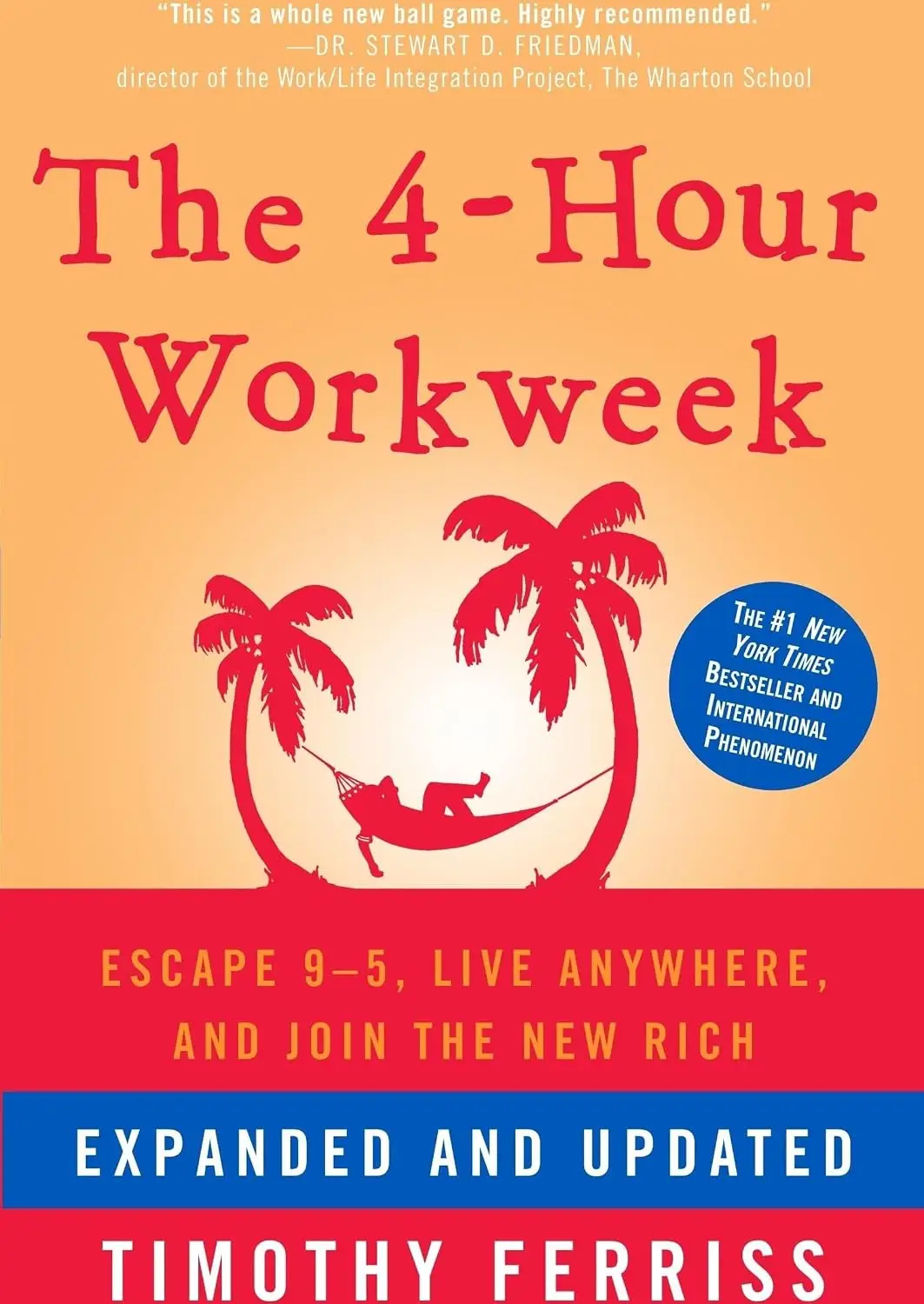
Tim Ferriss became famous by asking a question that most people never consider: what would this look like if it were easy? He applied that question to business, fitness, cooking, language learning, and lifestyle design, and the answers he found made him one of the most influential thinkers in modern productivity. His book The 4-Hour Workweek sold millions of copies. His podcast, The Tim Ferriss Show, has been downloaded over 900 million times. His approach to life is built on a single principle: systematic experimentation applied to everything.
That principle, applied to trading, is devastatingly effective. Most traders approach their development chaotically. They try random strategies, add indicators without testing them, switch timeframes based on feelings, and never systematically isolate the variables that actually produce their results. Ferriss would look at this and say: you are not trading. You are guessing. And the fix is not more knowledge. It is a better experimental framework.
This article maps Ferriss’s most powerful productivity, decision-making, and lifestyle-design frameworks onto the specific challenges of becoming a consistently profitable trader. If you have ever felt overwhelmed by the number of things you “should” be doing to improve your trading, Ferriss’s approach will cut through the noise with surgical precision.
The 80/20 elimination method and the fear-setting exercise used in this article are both laid out in full here.
The 80/20 Principle: Finding Your Vital Few Setups
Ferriss’s entire approach is built on Pareto’s Principle: roughly 80% of results come from 20% of efforts. He applies this ruthlessly. When learning a language, he identifies the 1,200 most common words (which cover 80% of everyday conversation) and ignores the rest. When optimising a business, he identifies the 20% of clients generating 80% of revenue and focuses exclusively on them.
| Key Concept | Original Context | Trading Translation |
|---|---|---|
| The 80/20 principle | 80% of results come from 20% of efforts | 80% of your profits come from 20% of your setups. Identify your best setup type and trade only that. |
| Fear-setting | Define the worst-case scenario to overcome paralysis | Write down: worst case if I take this trade = -1R. Worst case if I do not take it = miss a 3R winner. Act accordingly. |
| Minimum effective dose | The smallest input that produces a desired outcome | 3 trades per day at 1% risk with 1:2 R:R is enough. More trades do not mean more profit. |
| Lifestyle design | Build your work around your life, not vice versa | Choose swing trading if you want freedom. Choose day trading if you want intensity. Match style to life. |
In trading, the 80/20 principle reveals something most traders already know but refuse to act on: a small number of your setups produce the vast majority of your profits.
Open your trading journal and audit the last 100 trades. Sort them by setup type. You will almost certainly find that two or three specific setups account for 70-80% of your total profit. The rest, the marginal setups, the “maybe” trades, the boredom trades, the setups that “sort of” meet your criteria, collectively produce close to zero or negative returns.
Ferriss’s response would be immediate: stop trading everything except the vital few setups. This is not oversimplification. It is optimisation. Every marginal trade you eliminate does two things: it removes a source of losses (or mediocre returns), and it frees cognitive energy to execute your best setups with full focus and conviction.
If your FVG entries during London Kill Zone produce 80% of your profits, and your ranging-market scalps produce the other 20% of your trades but net zero, the correct decision is to stop scalping ranges entirely. Not reduce them. Eliminate them. Trade only the setups where you have a demonstrated, journaled edge. This is the 80/20 principle applied with the ruthlessness that Ferriss demands.
Fear-Setting: The Exercise That Fixes Entry Paralysis
While most personal development teaches goal-setting, Ferriss introduced fear-setting, the practice of explicitly defining and examining your fears rather than trying to ignore them. He argues that we overestimate the cost of action and underestimate the cost of inaction, and that the cure is to make both costs explicit.
The fear-setting exercise has three columns:
Column 1 — Define: What are you afraid of? Be specific. “I am afraid that if I take this trade, it will lose and I will feel stupid.”
Column 2 — Prevent: What can you do to prevent or minimise the fear? “I can use a stop loss that limits the loss to 1% of my account. I can verify that the setup meets all my criteria before entering. I can review my system’s historical win rate to remind myself that losses are normal.”
Column 3 — Repair: If the worst case happens, what can you do to repair the damage? “A 1% loss is recoverable within a few trades. The loss does not threaten my account. I can journal the trade, learn from it, and take the next valid setup. My system’s expectancy means that this loss will be offset by future wins.”
Now add a fourth consideration that Ferriss emphasises: what is the cost of inaction? If you do not take the trade, what happens? You miss a setup that your system says has positive expectancy. Over 100 missed trades, the cost of inaction is the entire expected value of your edge, potentially thousands of dollars of missed profit, all because you were afraid of a 1% loss that your system was designed to absorb.
Fear-setting makes the irrational rational. When you see the actual numbers, the 1% defined risk versus the compound cost of missed opportunities, the hesitation dissolves. Not because the fear is gone, but because you have proven to yourself that the fear is disproportionate to the reality.
This exercise should be done once, thoroughly, for each of your core setups. Write it out. Put it next to your trading station. When the fear arrives (and it will), you do not need to re-analyse. You refer to the fear-setting sheet. The work is already done. The answer is already clear.
“What Would This Look Like If It Were Easy?”
This is Ferriss’s signature question, and it is the single most powerful question a trader can ask about their own process. Most traders make trading harder than it needs to be. They add indicators until their chart looks like a Christmas tree. They monitor six timeframes simultaneously. They follow twenty trading accounts and try to synthesise conflicting opinions. They create elaborate entry checklists with fifteen confirmation criteria that rarely align.
What would your trading look like if it were easy?
One instrument. One timeframe for bias. One lower timeframe for entries. One setup. One risk percentage. One journal format. One pre-session routine. One review process.
Ed Seykota’s rules fit in twelve words: “Cut losses. Ride winners. Manage risk. Use stops.” Nicolas Darvas traded with newspaper stock tables and telegrams. The simplest approaches in trading history produced the greatest returns. Complexity is not sophistication. It is usually confusion disguised as effort.
Ferriss’s question forces you to strip your approach to its essence. What is the minimum viable trading system? What is the one setup that produces the best results? What is the simplest version of your process that still captures your edge? Start there. Add complexity only when you have mastered the simple version, and only if the complexity demonstrably improves results.
The Minimum Effective Dose
In fitness, Ferriss popularised the concept of the Minimum Effective Dose (MED): the smallest input that produces the desired output. Boiling water requires 100°C. Going to 150°C does not make it “more boiled.” It wastes energy. The MED for boiling water is 100°C, nothing more.
In trading, the MED principle asks: what is the minimum amount of screen time, analysis, and trading activity needed to capture your edge?
Most traders dramatically over-trade. They believe that more screen time equals more opportunity. In reality, more screen time often equals more noise, more marginal trades, more decision fatigue, and worse execution on the setups that actually matter. The trader who spends eight hours at the screen and takes twelve trades will almost certainly underperform the trader who spends two focused hours, takes two A-grade setups, and closes the platform.
Ferriss would say: find your MED for trading. Maybe it is two hours during London Kill Zone. Maybe it is one setup per day. Maybe it is three trades per week. Whatever the number, the principle is the same: do enough to capture your edge and not one unit more. Everything beyond the MED is waste, and in trading, waste is not just inefficient. It is actively destructive because it introduces unnecessary risk.
This connects directly to Gary Vee’s patience principle: less trading, done better, produces more money. The MED makes this principle mathematically precise.
Lifestyle Design and Trading as a Business
Ferriss is fundamentally a lifestyle designer. His core question is not “how do I make more money?” but “how do I design a life I actually want to live?” Money is a tool within that design, not the purpose of it.
For traders, this reframing is critical. Most traders are chasing a P&L number. Ferriss would ask: what life are you trying to build? If the answer is “freedom to work from anywhere, set my own schedule, and not answer to a boss,” then the trading approach should be optimised for that life, not for maximum possible returns.
This might mean swing trading rather than day trading (more freedom, less screen time). It might mean targeting 3-5% monthly returns rather than 20% (achievable without the stress that destroys quality of life). It might mean trading only during London session and spending the rest of the day on other projects, relationships, or health. The trading-as-a-business framework that The Complete Trader’s Edge teaches is exactly this: designing a trading practice that serves your life rather than consuming it.
Ferriss’s principle: define the lifestyle first, then design the trading practice to support it. Not the other way around. The trader who designs their life around their trading becomes a slave to the screen. The trader who designs their trading around their life becomes free.
Systematic Experimentation: The A/B Testing Approach
Ferriss approaches every domain as a scientist. He does not accept conventional wisdom. He tests it. He runs experiments with controlled variables, measures the results, and keeps what works while discarding what does not. His entire career is a series of documented experiments.
Most traders never experiment systematically. They change multiple variables simultaneously (new indicator AND new timeframe AND new risk percentage), which makes it impossible to know which change produced the result. They do not track enough data to draw statistically valid conclusions. They abandon tests after a few trades because the early results do not look promising.
Ferriss’s approach to trading improvement would look like this:
Step 1: Isolate one variable. Do not change everything at once. If you want to test whether adding a volume filter improves your breakout entries, change only the volume filter. Keep everything else identical: same instrument, same timeframe, same risk, same session times.
Step 2: Define the measurement. What specifically are you measuring? Win rate? Average R-multiple? Expectancy per trade? Maximum drawdown? Define it before the test begins so you cannot retroactively choose the metric that makes the result look best.
Step 3: Set a sample size. Ferriss would demand statistical significance. In trading, this means a minimum of 30 trades under the new condition before drawing any conclusion. Preferably 50-100. The first five trades tell you nothing. The first thirty tell you something. The first hundred tell you the truth.
Step 4: Record everything. Every trade in the test goes in the journal with the test condition noted. This creates the dataset that allows you to make an informed decision when the test is complete.
Step 5: Decide based on data. At the end of the test, the numbers speak. If the volume filter improved expectancy, keep it. If it did not, discard it. Do not let feelings override data. Do not keep a modification because it “felt better” if the numbers say it was not better.
This is how professional trading operations refine their edge. They do not guess. They test, measure, and optimise. Ferriss’s contribution is making this process accessible and systematic for individual traders who tend to make changes based on intuition rather than evidence.
The “Not-To-Do” List
Ferriss argues that a “not-to-do” list is more important than a to-do list. Eliminating the activities that waste time and produce negative outcomes creates more value than adding new activities ever could.
For traders, the not-to-do list might include: do not trade before completing the pre-session routine. Do not check social media during live trading. Do not trade news events without a specific plan. Do not add to losing positions. Do not trade after hitting the daily loss limit. Do not change the plan mid-session. Do not take setups that do not meet every criterion.
Each item on this list eliminates a specific source of losses or degraded performance. The cumulative effect of a well-enforced not-to-do list is often more powerful than any new strategy, because it removes the behaviours that are actively working against you. Your stop loss discipline, your position sizing rules, and your session limits are all “not-to-do” items: things you have committed to never doing because the cost of doing them exceeds any possible benefit.
Batching and Time-Blocking for Traders
Ferriss is a strong advocate for batching, grouping similar tasks together to reduce the cognitive cost of context-switching. He checks email at predetermined times rather than continuously. He makes phone calls in blocks. He writes in uninterrupted multi-hour sessions.
For traders, batching means separating your trading activities into distinct, non-overlapping blocks:
Block 1: Preparation (pre-market). Analysis, level marking, bias determination, plan writing. No trading during this block.
Block 2: Execution (live session). Trading only. No analysis, no learning, no journal writing. Just execution of the plan prepared in Block 1.
Block 3: Review (post-session). Journaling, performance review, lesson extraction. No trading during this block.
Block 4: Education (separate from trading entirely). Reading, studying, backtesting. No live charts.
Most traders mix all four activities simultaneously and do none of them well. They analyse while trading, which delays entries. They journal while the session is still open, which distracts from execution. They study while watching live charts, which prevents deep learning. Ferriss’s batching principle says: do one thing at a time, do it fully, then move to the next. This is the trading routine optimised for cognitive performance.
Tim Ferriss and the Mind · Method · Money Framework
Mind: Ferriss’s fear-setting exercise is the most practical tool for addressing entry paralysis and risk aversion in the entire Inner Edge series. By making fears explicit and quantifying both the cost of action and the cost of inaction, it transforms the vague anxiety that prevents execution into a clear, rational calculation that supports it. His “what would this look like if it were easy?” question cuts through the complexity that most traders hide behind.
Method: The 80/20 principle and systematic experimentation provide the framework for refining your trading method with scientific rigour. Instead of adding complexity, strip to the vital few setups. Instead of guessing which modifications improve performance, test them with controlled experiments and measured outcomes. This is how a trading method evolves from a collection of ideas into a precision instrument.
Money: The Minimum Effective Dose principle directly serves risk management. Less trading means fewer opportunities to make mistakes. Fewer setups means higher average quality per trade. The not-to-do list eliminates the specific behaviours that erode capital. Ferriss’s approach to money in trading is subtractive: remove the waste, and the edge compounds on its own.
Continue Reading: The Inner Edge
▶ Tony Robbins: Peak Performance Principles for Traders
▶ Jordan Peterson: 12 Rules for Trading Discipline
▶ Mel Robbins: The 5 Second Rule for Traders
The Complete Trader’s Edge
This article is part of The Inner Edge series. The psychology principles explored here are covered in depth across the 22 chapters of the Mind pillar in The Complete Trader’s Edge.
Frequently Asked Questions
How does the 80/20 principle apply to trading?
Roughly 80% of your trading profits come from about 20% of your setups. By auditing your trading journal and identifying which specific setups produce the best results, you can eliminate marginal trades that dilute your edge and focus exclusively on the vital few setups where you have a demonstrated statistical advantage. This reduces risk, improves average trade quality, and simplifies your entire trading process.
What is fear-setting and how does it help traders?
Fear-setting is Tim Ferriss’s exercise for addressing fears that prevent action. You explicitly define the fear, list ways to prevent or minimise the worst case, plan how to repair the damage if it happens, and then calculate the cost of inaction. For traders, this exercise proves mathematically that the cost of missing positive-expectancy trades due to hesitation far exceeds the cost of any individual defined-risk loss, dissolving the irrational fear that causes entry paralysis.
What is the Minimum Effective Dose for trading?
The Minimum Effective Dose is the smallest amount of screen time, analysis, and trading activity needed to capture your edge. Many traders dramatically overtrade, believing more screen time equals more profit. In reality, the MED might be two focused hours during your best session, two or three A-grade setups per day, and a structured post-session review. Everything beyond the MED introduces unnecessary risk and decision fatigue without proportionally increasing returns.
How can Tim Ferriss’s productivity methods improve trading results?
Ferriss’s methods improve trading through elimination (removing low-value activities via the not-to-do list), batching (separating preparation, execution, review, and education into distinct blocks), systematic experimentation (testing changes one variable at a time with defined sample sizes), and the simplification question (“what would this look like if it were easy?”). Together, these methods transform chaotic trading into a structured, optimised practice.
What is the connection between lifestyle design and trading success?
Ferriss teaches designing your work around the life you want, not the reverse. For traders, this means defining the lifestyle first (freedom, flexibility, income target) and then designing the trading practice to support it. This might mean choosing swing trading over day trading for more freedom, or capping daily screen time to preserve health and relationships. The trading practice serves the life, not the other way around.
 The Complete Trader's Edge
The full Mind · Method · Money framework. 70 chapters.
View on Amazon →
The Complete Trader's Edge
The full Mind · Method · Money framework. 70 chapters.
View on Amazon →
 Market Mayhem
400 years of bubbles, crashes, and the pattern that keeps repeating.
Buy on Amazon →
Market Mayhem
400 years of bubbles, crashes, and the pattern that keeps repeating.
Buy on Amazon →
 Greatest Companies
How the world's greatest companies were built — and what traders learn from them.
View on Amazon →
Greatest Companies
How the world's greatest companies were built — and what traders learn from them.
View on Amazon →
 Greatest Traders
Eighty-six lives that explain the markets — Livermore to Madoff, told with the losses left in.
View on Amazon →
Greatest Traders
Eighty-six lives that explain the markets — Livermore to Madoff, told with the losses left in.
View on Amazon →