

The London Stock Exchange did not begin in a marble hall. It began in a coffee house, with a broker pinning up prices. In 1698 John Castaing started publishing a list called The Course of the Exchange and other things from Jonathan’s Coffee House in Exchange Alley. It carried share prices alongside gold, ducats, silver and pieces of eight, and at first it appeared only a few days a week. Every price screen you have ever traded from descends from that sheet of paper.
What grew from it is the longest continuous record of market behaviour on earth. London gave the world the South Sea Bubble, the first regulated stock exchange, the first rulebook, the first emerging-markets crash, the Railway Mania, the lender of last resort, the rescue of Barings, a five-month closure in 1914, Britain’s worst crash of the twentieth century, and the Big Bang of 1986, which emptied a centuries-old trading floor in a matter of weeks. On 2 January 2026 the FTSE 100 traded above 10,000 for the first time. Over the same few years, some of Britain’s best-known companies moved their main listings to New York.
This is the full history of the London Stock Exchange, from the coffee house to the screen, with the numbers checked and the myths labelled as myths. It is a long read, so use the contents to jump around. And read it as a trader. Almost every mistake it is possible to make with money was made first in the Square Mile, usually by someone cleverer than you.
Contents
- London Stock Exchange History at a Glance
- Before the Exchange: Gresham’s Royal Exchange
- Exchange Alley: When the Market Was a Coffee House
- 1720: The South Sea Bubble
- From Coffee House to Club: 1761, 1773 and 1801
- 1812: The First Rulebook
- 1814: The Great Stock Exchange Fraud
- The Rothschild Waterloo Myth
- 1825: Poyais and the First Emerging-Markets Crash
- 1845–1847: Railway Mania
- 1866: Overend Gurney and the Lender of Last Resort
- 1890: Saving Barings
- The Capital of Capital
- 1914: The Day London Shut
- Hatry, the Slump and the Blitz
- The Gentlemen’s Club
- 1972–1974: London’s Worst Crash
- The Big Bang: 27 October 1986
- 1987: A Hurricane, Then a Crash
- Bombs, Black Wednesday and Barings
- From Members’ Club to Global Company
- Northern Rock, 2008 and the Gilt Crisis
- The Listings Exodus
- FTSE 100 History in One Chart
- London’s Great Drawdowns
- How the London Stock Exchange Works Today
- How Traders Trade the FTSE 100
- Ten Lessons From Three Centuries of London
- Frequently Asked Questions
- Sources and Further Reading
London Stock Exchange History at a Glance
Three and a quarter centuries in one table. Every line is expanded in the sections that follow.
| Date | Event | Why it mattered |
|---|---|---|
| 23 Jan 1571 | Elizabeth I opens Gresham’s Royal Exchange | London’s first purpose-built trading hall |
| 1694 | Bank of England founded | A permanent market in government debt begins |
| 1698 | Castaing’s price list at Jonathan’s | The first systematic record of London prices |
| 1720 | South Sea Bubble; Bubble Act passed in June | Shares run from about £128 to £1,000, then back to £150 |
| 1761 | 150 brokers and jobbers form a club | The market becomes a membership |
| 1773 | New Jonathan’s opens in Sweeting’s Alley | Soon renamed the Stock Exchange |
| 3 Mar 1801 | Subscription-only exchange founded | The first regulated stock exchange |
| 1812 | First codified rulebook | Settlement and default written down |
| 21 Feb 1814 | The Great Stock Exchange Fraud | A fake officer and a fake death move the market |
| 1825 | Latin American bubble and Poyais bonds burst | More than one in ten country banks fail |
| 1845–1847 | Railway Mania peaks and breaks | 272 railway Acts in 1846 alone |
| 10 May 1866 | Overend Gurney fails | Bagehot writes the lender-of-last-resort rulebook |
| Nov 1890 | Barings rescued | A £17.1m guarantee fund saves the City |
| 31 Jul 1914 | Exchange closes for five months | New York replaces London as lender to the world |
| 1923 | Coat of arms with “Dictum Meum Pactum” | My word is my bond |
| 20 Sep 1929 | Hatry group suspended | London’s own crash, weeks before Wall Street’s |
| 8 Nov 1972 | The Queen opens the 26-storey Stock Exchange Tower | Home of the last trading floor |
| 1973 | Women and foreign-born members admitted; regional exchanges merged | The club opens its doors |
| 1972–1975 | FT 30 falls 73% | Britain’s worst modern crash |
| 3 Jan 1984 | FTSE 100 launched at 1,000 | A new headline number for the market |
| 27 Oct 1986 | Big Bang | Floor trading gives way to screens |
| 19–20 Oct 1987 | FTSE 100 falls from 2,302 to 1,802 | After a hurricane had shut the City |
| 20 Jul 1990 | IRA bomb at the Stock Exchange Tower | No injuries; screen trading carries on |
| 16 Sep 1992 | Black Wednesday | Sterling forced out of the ERM |
| 11 Mar 1993 | TAURUS settlement project abandoned | £75m lost; CREST replaces it in 1996 |
| Feb 1995 | Barings collapses | No rescue this time |
| 1995 | AIM launched | A market for smaller growth companies |
| Jul 2001 | LSE lists on its own market | The members’ club becomes a company |
| Jul 2004 | Move to Paternoster Square | The Old Broad Street tower is left behind |
| Sep 2023 | Arm lists in New York rather than London | The listings debate goes mainstream |
| 29 Jul 2024 | New UK Listing Rules take effect | Premium and standard segments merged |
| 2 Jan 2026 | FTSE 100 trades above 10,000 | 171 days after first crossing 9,000 |
Eighty-six lives read through Mind · Method · Money, from Livermore reading a chalkboard in 1892 to the traders still working from those ideas today. Told as they happened, with the losses left in, and every quotation traced to a source.
Before the Exchange: Gresham’s Royal Exchange
London traded long before it had a stock exchange. For most of the sixteenth century its merchants did business in the open air on Lombard Street, until the financier Sir Thomas Gresham, who had watched the bourse at Antwerp at work, paid for a proper building. Elizabeth I opened it on 23 January 1571, gave it the title Royal Exchange, and granted it a licence to sell alcohol. Business ran in two sessions a day, each marked by the bell in the tower.
The Royal Exchange was built for merchants dealing in goods, bills and news. It was not built for the new trade that arrived in the seventeenth century: dealing in shares of joint-stock companies such as the East India Company, and in the debts of a government that fought expensive wars. The men who made that market, the brokers and the stockjobbers, were not welcome. The traditional account, repeated by the Exchange itself, is that they were barred from the Royal Exchange for their rowdiness and rude manners, and took their business to the coffee houses of the alleys nearby.
It is one of history’s better jokes that London’s stock market exists because its founders were thrown out of the building for behaving like traders. The Royal Exchange itself burned in the Great Fire of 1666, was rebuilt, burned again in January 1838, and was rebuilt a third time. That third building still stands at Bank junction. The stock market never moved back in.
Exchange Alley: When the Market Was a Coffee House
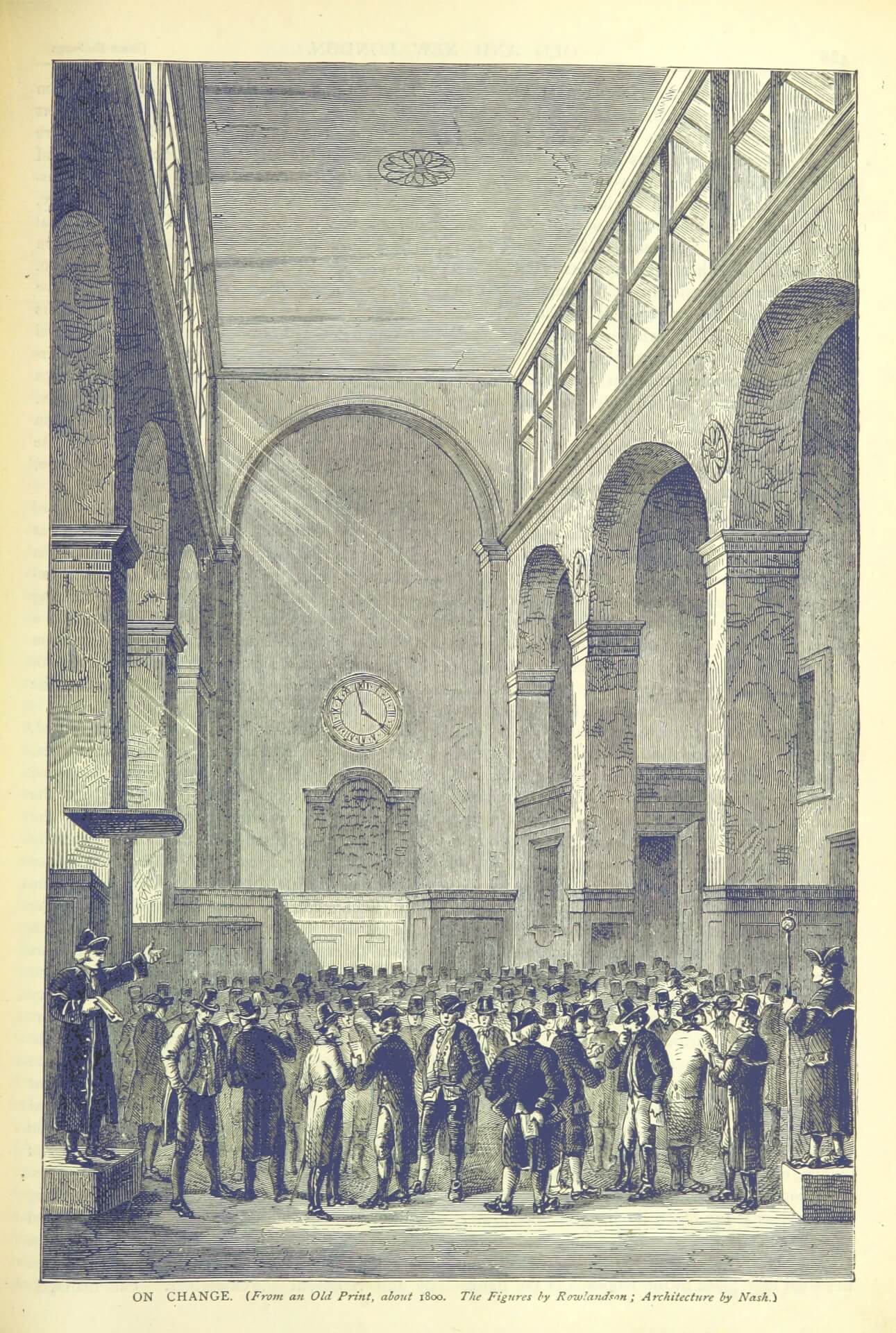
Jonathan’s Coffee House was opened around 1680 by Jonathan Miles in Change Alley, also known as Exchange Alley, a few yards from the Royal Exchange. By 1694 it was one of a handful of coffee houses where you could find a broker and get a price. Its customers were not always respectable: in 1696 several of them were implicated in a plot to assassinate William III.
The timing was perfect for a market to form. The Bank of England was founded in 1694 to lend to the government, and government debt became the deepest, most traded paper in the country. Joint-stock companies needed their shares to change hands. The coffee houses supplied the one thing a market cannot run without: a place where buyers, sellers and information meet. Deals were struck over newspapers and tobacco smoke, and the man with the freshest news had the edge.
In 1698 Castaing gave that chaos its first common reference point. His list, The Course of the Exchange and other things, priced stocks next to gold, ducats, silver staters and pieces of eight. It is the earliest systematic evidence of securities trading in London, and it did for London what every price feed has done since: it turned rumour into a number that everyone could see. The same year, dealers pushed out of the Royal Exchange settled at Jonathan’s and at Garraway’s nearby.
Change Alley was the scene of the South Sea Bubble and of the panic of 1745. By 1748 the London securities market was centred at Jonathan’s. That year the coffee house was destroyed by fire, and rebuilt. The market simply carried on.
The oldest edge in the market
A coffee house was an information exchange that happened to serve coffee. Ships’ news, war news and political gossip arrived there first, and prices moved on it before most of London knew anything had happened. Three centuries later the edge has the same shape. It has moved from the table nearest the door to the fibre-optic cable nearest the matching engine, but whoever organises information best, and acts on it with discipline, still takes the money of whoever does not.
1720: The South Sea Bubble
London’s first great mania arrived within a generation of Castaing’s list. The South Sea Company was founded in 1711 with a trading monopoly in South America and a much more important job: taking on part of the national debt, which the War of the Spanish Succession had swollen. In 1720 it offered to take over most of the rest, swapping government debt for its own shares. The higher its share price, the better the swap looked. So the directors did everything they could to push the price up.
They lent investors money to buy the shares. They allotted stock to politicians and courtiers, including the King’s mistress, on terms that let them profit without paying up front. The price went from about £128 in January to £175 in February, £330 in March, £550 in May and about £1,000 by the summer. Hundreds of copycat “bubble” companies floated in its slipstream. By the end of September the shares were back at £150.

The detail that matters most is the one least often told. The Bubble Act, which received royal assent on 11 June 1720 and banned joint-stock companies without a charter, was promoted by the South Sea Company itself. It was written to kill the competition for investors’ money, not to protect investors. It stayed on the statute book until 1825. The company’s founders also traded on advance knowledge of the debt conversions, which today would be called insider dealing.
Isaac Newton, then Master of the Mint, is said to have lost around £20,000. The line usually attached to him, about calculating the motions of the heavens but not the madness of people, has no contemporary source, so we leave it out. What happened next is stranger than any quotation. Stripped of its fantasy, the South Sea Company spent the rest of the century as a holder of government debt, one of the three most traded stocks in London on the strength of its steady interest income, until it was wound up in 1855. The bubble stock became a bond fund.
We tell the whole story, with the Mississippi scheme that ran alongside it in Paris, in The Bubble That Broke Britain and The Wizard of the Mississippi, both from Market Mayhem.
Read the Bubble Act as a trader. The rule that followed the mania was written by the biggest player in it, to protect its own price. When a regulation appears in the middle of a boom, ask who drafted it and whose position it helps before you assume it makes the market safer.
From Coffee House to Club: 1761, 1773 and 1801
For most of the eighteenth century anyone could walk into Jonathan’s and trade. That openness was also the problem. In 1761 a group of about 150 brokers and jobbers formed a club to deal among themselves. In 1773 they built their own premises in Sweeting’s Alley, a modest building with a frontage of about 35 feet, a dealing room on the ground floor and a coffee room above. They called it New Jonathan’s. It was soon renamed the Stock Exchange.
Entry still cost only a daily fee, and a string of frauds made the case for something tighter. On 3 March 1801 the Exchange became a subscription room open only to elected members who paid an annual fee and could be expelled for misconduct. That is why London can fairly claim the first regulated stock exchange in the world. Amsterdam invented the stock market; London was the first to make admission to it conditional on keeping the rules.
The members moved into a purpose-built house designed by James Peacock on Bartholomew Lane, with no real street frontage, only a narrow entrance in Capel Court. It stood next door to Mendoza’s boxing rooms. Inside, a gallery ran round the main hall lined with desks and bookcases, and a member who wanted a book would call up to a clerk to throw it down. Unglamorous as it was, this building helped the government raise the enormous sums it borrowed to fight Napoleon.


1812: The First Rulebook
A members’ club still needs rules, and in its first decade the Exchange kept discovering that it did not have enough of them. In February 1812 its General Purpose Committee confirmed a set of recommendations that became the first codified rulebook. The economist David Ricardo, himself a member, is credited with pushing for it. The document was short, but its sections on settlement and default were thorough, and it banned members from setting off fireworks and playing football on the premises.
The jokes should not hide what those rules did. Settlement and default are the plumbing of trust: who pays whom, by when, and what happens when someone cannot. A market where you cannot be sure the other side will pay is a market that charges everyone for that doubt. London’s early advantage was not cleverness. It was a reputation for trades that settled.
The Exchange later summed that culture up in three Latin words.
“Dictum Meum Pactum” – My word is my bond.
Motto of the London Stock Exchange
Getting the date right
The motto is often written into the story of 1801 as if the founders chose it. The histories we could trace place it on the coat of arms the Exchange received in 1923. The idea it expresses is much older: deals on the floor were struck by word of mouth for most of the Exchange’s history, and a member who broke his word could be expelled.
1814: The Great Stock Exchange Fraud
In the early hours of Monday 21 February 1814, a man in a staff officer’s uniform arrived at the Ship Inn in Dover. He called himself Colonel du Bourg, aide-de-camp to Lord Cathcart, and he brought sensational news: Napoleon had been killed and the Bourbon monarchy restored. He travelled to London telling the story at every stop along the road.
The market believed him. The price of Omnium, a bundle of government stocks that traded like a bet on the war, jumped from a premium of 26½ to above 30 as the news spread through the City. By the afternoon the government had confirmed there was no such victory, and prices fell straight back. The Stock Exchange committee investigated and found that more than £1.1 million of government stock had been sold that Monday, most of it bought the previous week.
The “colonel” was Charles Random de Berenger. Eight people were convicted of conspiracy, among them Lord Cochrane, a naval hero and Radical MP, his uncle Andrew Cochrane-Johnstone, and their broker Richard Butt. The sentences included prison, fines and the pillory, and Cochrane lost his naval rank, his knighthood and his seat in the Commons. Many historians now believe Cochrane himself did not know about the scheme, which was his uncle’s attempt to escape a losing position in Omnium.
Every trader who has watched a market spike on a headline that turned out to be false has lived a small version of 21 February 1814. The delivery has changed, from a uniform at a coaching inn to a hacked news account, but the mechanism has not. A price that moves on unverified news can move back just as fast, and whoever sold into the spike keeps the money.
The Rothschild Waterloo Myth
The most famous story ever told about the London Stock Exchange is false. In its usual form, Nathan Mayer Rothschild watched Wellington win at Waterloo in June 1815, raced to London ahead of the official news, sold heavily to make the market think the battle was lost, then bought everything back at the bottom and made a vast fortune.
Myth, and what the record shows
Where the story came from. It traces to a pamphlet published in Paris in 1846 under the name “Satan”, written by an antisemitic French polemicist. Later retellings moved Nathan from the battlefield to the Exchange floor, but kept the fortune and the trickery.
What historians found. Nathan Rothschild was not at Waterloo. The journalist and historian Brian Cathcart, who investigated the story in detail, found nothing to show he was the first person in London to know of the victory; Wellington’s dispatch reached the Secretary for War on the evening of 21 June. Any profit Rothschild made that week was likely modest, and there is no evidence of deception.
What he actually did. The real Rothschild business of the war was less cinematic and far larger: a government contract to move gold coin to Wellington’s army in 1814 and 1815.
The myth survives because it flatters a belief every losing trader wants to hold: that the market is rigged by insiders with secret knowledge, so losses are not your fault. Sometimes there is an insider. Far more often there is a crowd, a rumour and a trader without a stop.
1825: Poyais and the First Emerging-Markets Crash
Peace in 1815 left British investors with savings to deploy and low returns at home. The newly independent republics of Latin America offered higher yields, and London’s merchant banks were happy to underwrite their bonds for a fee. From 1824 shares in Latin American gold and silver mines joined the boom. Most investors had never been to South America and had no way to check a word of the prospectuses.
The purest product of that blindness was Poyais. In 1822 the London market floated bonds for a Central American country that did not exist, invented by a Scottish adventurer named Gregor MacGregor. He sold land in it, printed its currency and shipped settlers to a jungle coast where many of them died. Poyais bonds priced on terms similar to those of Chile.
Share prices peaked in January 1825. As the Bank of England tightened and the schemes were exposed, the bubble broke. By December the panic had reached the banks: more than one in ten of England’s country banks failed during or shortly after the crisis, and the Bank of England itself was saved only by a shipment of gold from the Banque de France. The reforms that followed included the repeal of the Bubble Act and new rules allowing joint-stock banks to open branches, and the Bank learned for the first time how to act as a lender of last resort.
The pattern is worth memorising, because it has repeated in 1890, 1982, 1994 and 1997: cheap money at home, a high-yield story abroad, investors who cannot see what they own, and a crash that travels back up the chain to the lenders.
1845–1847: Railway Mania
The railway was not a fantasy. The Liverpool and Manchester line opened in 1830, the early trunk lines paid real dividends, and the technology changed Britain for good. That is exactly what made the mania so dangerous. If the first lines were profitable, the next ones must be too, and the ones after that.
By 1845 London was floating railway companies faster than anyone could check them. Parliament, many of whose members held railway shares, passed 272 railway Acts in 1846 alone, authorising some 9,500 miles of new track. Investors did not pay for their shares up front. They put down a deposit of around ten per cent, with the balance due in instalments, called calls, as construction needed the money. In a rising market that was leverage. In a falling market it was a trap.
The Bank of England raised its rate in October 1845, and the calls kept coming just as prices fell. Many investors could not pay and were ruined not by what they had put in but by what they had promised. Charlotte, Emily and Anne Brontë lost most of the money they had put into the York and North Midland Railway. That line’s chairman, George Hudson, the “Railway King” who controlled close to a third of England’s railways, was exposed in 1849 for paying dividends out of capital.
The full story is in Iron Horses and Paper Fortunes. For anyone holding AI stocks in 2026, the comparison with the dot-com bubble is worth reading alongside it.
The railways worked. Most railway shares did not. Know your total obligation before you enter, not when the call arrives. A modern margin call is a railway call with a faster delivery: it arrives when prices are lowest and liquidity is thinnest.
1866: Overend Gurney and the Lender of Last Resort
Overend, Gurney and Company was known as the Corner House, after its offices on the corner of Lombard Street and Birchin Lane. It was the largest discount house in London, bigger than its three nearest competitors combined, and for decades it was as safe as a firm could be. Then it began making long, badly judged loans with short-term money. It converted to a limited company in 1865 to raise capital, and the losses kept coming.
On 9 May 1866 Overend Gurney asked the Bank of England for help. The Bank refused, on the grounds that the firm was insolvent. At 15:30 the next day, Thursday 10 May, Overend Gurney suspended payments. Friday 11 May became the City’s Black Friday: crowds packed Lombard Street, the panic spread by telegraph to Liverpool, Manchester, Norwich, Derby and Bristol, and dozens of other firms failed.
The Bank of England, then still a private company, did something new. It refused to rescue the insolvent firm, but it lent on an unprecedented scale to everyone else who could offer sound security, raising its rate to 10% and drawing heavily on its own reserves while the government suspended the legal limit on its note issue.
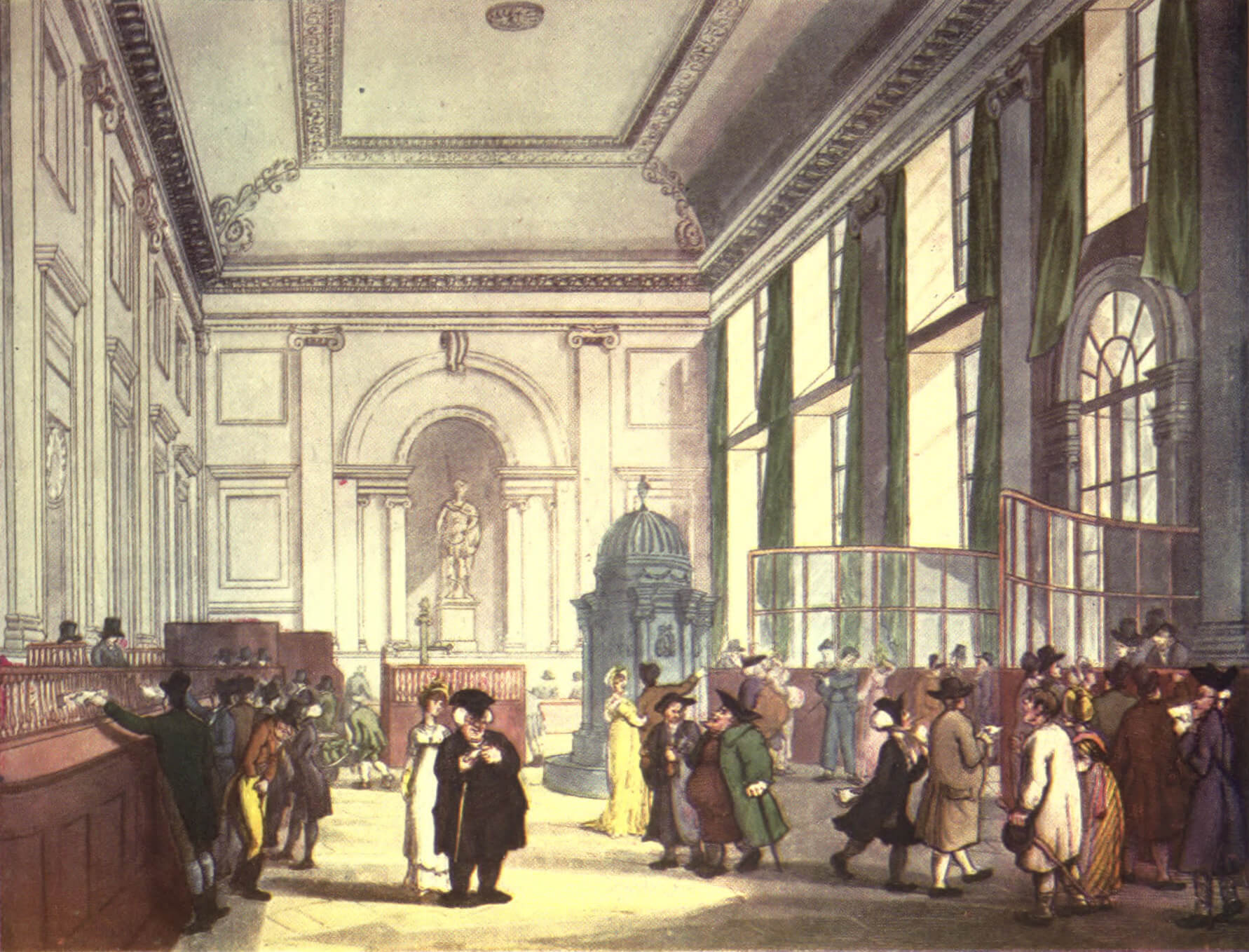
Walter Bagehot, the editor of The Economist, turned that improvisation into doctrine in Lombard Street in 1873. In a panic, he argued, the central bank should lend quickly, freely and readily, at a high rate, against good collateral. Every central bank crisis response since, from 1890 to 2008 to the gilt crisis of 2022, has been measured against that page. The 2008 crisis was Overend Gurney on a planetary scale: long, illiquid assets funded with short-term money, and a run when the lenders stopped trusting the borrower.
1890: Saving Barings
Baring Brothers, founded in 1762, was one of the grandest names in the City, and by the 1880s it was heavily committed to Argentina, underwriting bonds that it could not always sell on. When Argentina defaulted in 1890, Barings was left holding millions of pounds of paper nobody wanted.
On Saturday 8 November 1890 the firm’s partners told the Governor of the Bank of England, William Lidderdale, that they could not meet their obligations. The Bank’s own gold reserve had fallen to £10.8 million, not enough to fund a rescue that might need £8 million or more. Lidderdale asked the Chancellor to have Nathaniel Rothschild approach his Paris cousins, and the Banque de France swapped £3 million of gold for Treasury bills, with Russia adding £1.5 million.
With the Bank’s reserve restored, Lidderdale assembled a guarantee fund that reached £17.1 million. Every major London house contributed, and some of the largest shares were assigned to the banks whose careless lending had let Barings grow so exposed. There was no public panic. Argentina was not so lucky: its real GDP fell by 11% between 1890 and 1891.
Barings was the first financial firm in London to be treated as too big to fail. It would not be the last time the name appeared in this story.
The Capital of Capital
Through the Victorian age, trust compounded into dominance. The Exchange rebuilt and enlarged its house in 1854 and again in the 1880s as membership outgrew the floor. Technology did the rest. The telegraph shrank the world: by 1866, prices from the floor of the New York exchange reached London in about 20 minutes rather than 16 days. The ticker tape followed, and in 1880 the telephone.
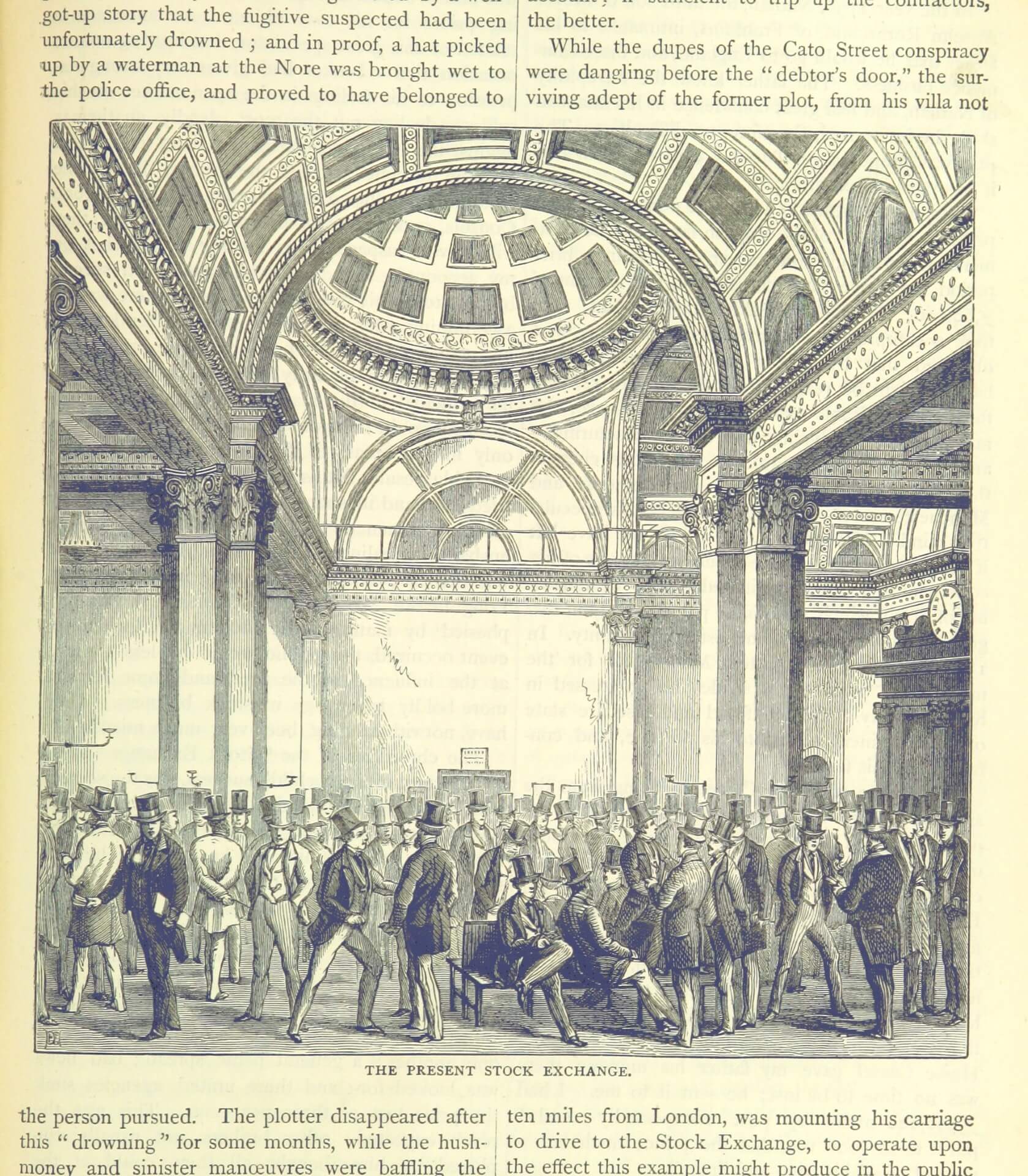
London became the place where the world raised money. Its market financed British railways and industry, and then railways, mines, ports and governments on every continent. If a country or a company anywhere needed serious capital, it came to the Square Mile, and a British investor’s portfolio often held more foreign paper than domestic.
What made London the centre
- Sterling on the gold standard, which made London paper safe to hold across borders
- A settled market with written rules and a record of trades that completed
- Information: the telegraph, the ticker and the telephone arrived in London first
- Deep pools of savings looking for yield overseas
- A central bank that had learned, by 1866, to stop a panic
What that dominance hid
- Heavy exposure to foreign borrowers who could default, as Argentina did in 1890
- A club culture that treated insiders gently
- Rules written by members for members
- A dependence on the gold standard and on peace, both of which ended in 1914
- A floor that made money from the way things had always been done
1914: The Day London Shut
In the last week of July 1914, as Europe slid towards war, the City’s foreign exchange and discount markets stopped working. Foreign borrowers could not remit, the accepting houses that had guaranteed their bills faced ruin, and queues formed at the Bank of England of people changing banknotes for gold sovereigns.
Shortly after ten o’clock on the morning of Friday 31 July 1914, less than an hour before trading was due to begin, the London Stock Exchange closed its doors, for the first time since its founding in 1801. The government declared an extended bank holiday, and Britain went to war at 11pm on 4 August. Trading in securities did not stop entirely: dealers carried on in the street outside. The House itself stayed shut until Monday 4 January 1915, and reopened under strict restrictions, with dealings for cash only.
The war changed London’s place in the world. The Exchange handled the sale of almost a quarter of British-owned overseas securities to pay for the fighting, and nearly a thousand members left the Exchange between 1914 and 1918. The economist William Silber concluded that by January 1915 the New York capital market had replaced London as lender to the world. The American market would hold that crown for the rest of the century.
The risk nobody models
A five-month closure is the ultimate gap. Every stop-loss in London was worthless from 31 July until the following January, because there was no market to execute it in. Weekend gaps, halted stocks and closed exchanges are rarer versions of the same risk. Position size is the only protection that works when the exit is locked.
Hatry, the Slump and the Blitz
London had its own crash in 1929, and it came first. Clarence Hatry was a company promoter who had built a group of businesses ranging from photo booths to an ambitious plan to merge much of British steel. When his financing fell through, he covered the gap with forged municipal stock certificates. On 20 September 1929 the Stock Exchange suspended the shares of the Hatry group, and Hatry and his associates were arrested. He received a long prison sentence.
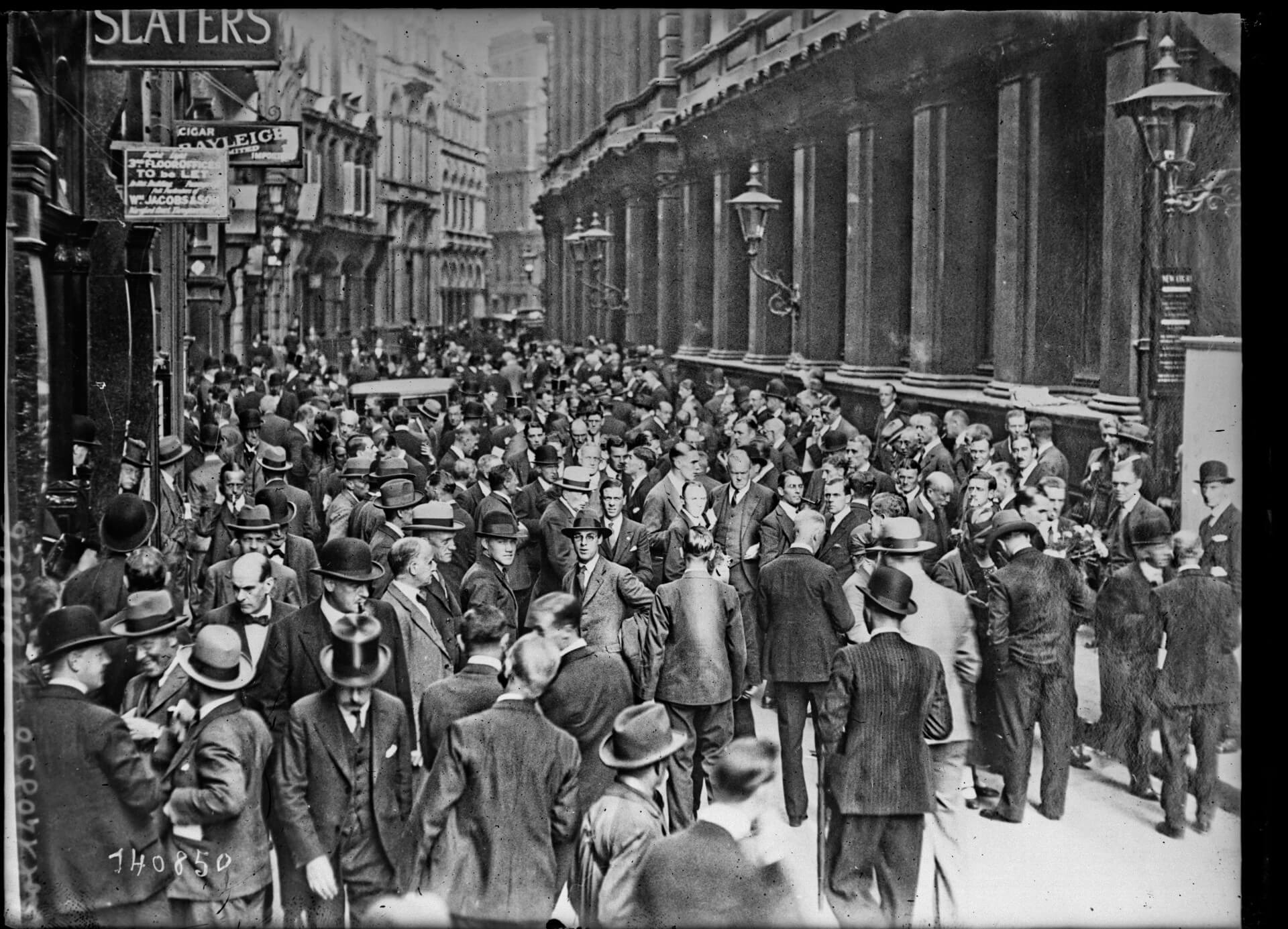
Did Hatry cause the Wall Street Crash?
It is often claimed that the Hatry collapse triggered the Wall Street Crash a month later, by forcing British investors to sell American shares to cover their losses. The evidence is thinner than the story. One review of the suspended companies found that they amounted to roughly 0.1% of the value of shares traded in London. Treat Hatry as a sign of how fragile confidence had become, not as the cause of the crash.
The Second World War tested the building rather than the market. The Exchange closed for six days when war broke out and reopened on 7 September 1939. On the night of 29 December 1940, one of the worst nights of the Blitz, incendiary bombs fell on the trading floor and were quickly put out, and much of the business moved to the telephone. In 1945 damage from a V2 rocket closed the floor for a day, and trading carried on in the basement.
The Gentlemen’s Club
After the war London was no longer the world’s banker, but its stock exchange kept the habits of the years when it had been. Two kinds of member did the business. Brokers acted as agents for clients and earned a commission. Jobbers made the market, holding stock on their own books and quoting prices to the brokers on the floor. A firm could be one or the other, never both: this was the “single capacity” rule. Commissions were fixed at a minimum. Member firms had to be independent rather than part of a larger group, and foreigners could not be members at all.

Business boomed in the late 1950s, and the Exchange decided it needed a new home. Work began in 1967 on a tower in Old Broad Street, 321 feet high with 26 storeys and a trading floor of 23,000 square feet. Queen Elizabeth II opened it on 8 November 1972.
The next year the club began to open up. Following a report from the Monopolies and Mergers Commission, women and foreign-born members were admitted to the floor for the first time in 1973, and in March of that year the London exchange formally merged with the 11 regional exchanges of Britain and Ireland. It was reform at the speed of a gentlemen’s club. The real shock was still thirteen years away.
Outside the floor, the rules of the game were loosening. In 1974 Stuart Wheeler founded IG Index to let people bet on the price of gold at a time when exchange controls made buying the metal itself difficult for British residents; spread betting, one of the most British of trading products, grew from that workaround, and IG is still one of the largest firms in it. In October 1979 the new Conservative government abolished exchange controls, and British money was free to leave the country for the first time in forty years.
1972–1974: London’s Worst Crash
The worst crash in the modern history of the London market is not the famous one. From 1 May 1972 to 13 December 1974 the FT 30 index lost 73% of its value, a fall bigger than the market suffered in either world war or in the Great Depression. The definitive low came on 6 January 1975, when the index closed at 146.
Everything went wrong at once. A property boom collapsed. Dozens of small “secondary” banks that had lent against property faced ruin, and the Bank of England organised a lifeboat that rescued around 30 of them and helped some 30 more, at an estimated cost to the Bank of £100 million. The oil shock of 1973 arrived on top, followed by recession, industrial unrest, a falling pound and inflation that reached 25% in 1975.
Then the market turned with a violence nobody expected. After a rent freeze was lifted on 19 December 1974, property prices could adjust, and the FT 30 practically doubled in just over three months. Over the following year share prices rose by around 150%. The investors who had been forced out at the bottom, by margin calls or by fear, missed all of it.
Sit with the arithmetic of 1974. A 73% fall needs a 270% gain to get back to even. The traders who survived were the ones still holding capital, and nerve, when the market doubled in three months. Survival comes before profit, because only survivors are there for the recovery.
The Big Bang: 27 October 1986
The Big Bang began as a court case. Under the previous government, the Office of Fair Trading had taken the Stock Exchange to the Restrictive Practices Court over its rulebook: fixed minimum commissions, single capacity, the requirement that member firms be independent, and the exclusion of foreigners. After the Conservatives won the 1983 election, the Exchange’s chairman, Sir Nicholas Goodison, offered the new Trade and Industry Secretary, Cecil Parkinson, a deal. If the case was dropped, the Exchange would reform itself, with fixed commissions gone and international firms admitted by the end of 1986.
The changes landed together on Monday 27 October 1986. Commissions became negotiable. Single capacity was abolished, so firms could act as brokers and as market makers at the same time. Outside firms, including foreign banks, could own member firms outright. And prices moved from the floor to screens, through a quotation system called SEAQ, modelled on America’s NASDAQ.
Nobody expected the floor to die as fast as it did. Before the Big Bang there had been nineteen jobbing firms on the floor, and twenty-eight of the new market makers planned to keep a presence there. According to the Bank of England, within the first few weeks about three-quarters of the Exchange’s business, outside traded options, had moved to dealing rooms, and by December the figure was perhaps 95%. SEAQ had technical problems at the outset. Traders used it anyway. A trading floor that had been the centre of London finance for most of two centuries was empty within weeks.
What the Big Bang changed
- Negotiable commissions replaced fixed minimum rates
- Dual capacity: one firm could broker and make markets
- Foreign and outside ownership of member firms
- Screen-based quotes through SEAQ instead of face-to-face dealing
- London’s place as the hinge between the Asian and American trading days
What it cost
- Most of the old partnerships, bought by larger banks
- The floor, and the knowledge that lived on it
- A market increasingly concentrated in a few large institutions
- Conflicts of interest that single capacity had kept apart
- A culture critics link to the risk-taking that surfaced in 2008
The Big Bang is the great case study in adaptation. An institution nearly three centuries old deleted its own traditions in a day rather than die with them. Every trader faces the same choice in miniature. The setup that made your first good year is not guaranteed to make your next one, and loyalty to an edge the market has stopped paying for is slow ruin.
1987: A Hurricane, Then a Crash
The new electronic market was barely a year old when it met its first real test. The FTSE 100 began 1987 at around 1,680 and rose by more than 45% in six months, to a peak of 2,443 on 16 July. By the close on Thursday 15 October it had slipped back to 2,302.
That night the Great Storm tore across the south of England. Trains into London were cancelled and the City’s markets were all but shut on the Friday, the same day Wall Street fell 4.6%. London traders spent the weekend reading about a market they had not been able to sell. On Monday 19 October prices were marked sharply lower from the open; the FTSE fell below 2,000 in the afternoon and closed at 2,052, down 11%. That evening the Dow Jones lost 22.6%. On Tuesday the FTSE opened at 1,866, touched 1,748 and closed at 1,802.
Two sessions took more than a fifth off the index. The full story of the day, and of the portfolio insurance that fed the selling, is in Black Monday 1987: 508 Points in 508 Minutes. The London lesson is simpler. On the Friday that mattered, the market was closed to anyone who wanted out.
Bombs, Black Wednesday and Barings
At 08:49 on 20 July 1990 a bomb planted by the Provisional IRA exploded in the men’s toilets behind the visitors’ gallery of the Stock Exchange Tower. A telephoned warning had given time to evacuate the building, and nobody was hurt, though the blast tore a hole about ten feet across and the gallery never reopened to the public. Trading, by then done almost entirely on screens and telephones, carried on. The floor the bombers might have hit had been empty for years.

On 16 September 1992, Black Wednesday, the government spent the day trying to hold sterling inside the European Exchange Rate Mechanism, raising interest rates from 10% to 12% and announcing a further rise to 15%. It failed, and sterling left the ERM that evening. George Soros, whose fund had built a huge position against the pound, made about a billion dollars and became known as the man who broke the Bank of England.
The Exchange had its own humiliation the following spring. TAURUS, a project to replace paper share certificates with electronic settlement, had grown into a design by committee that tried to satisfy everyone. On 11 March 1993 the Exchange’s board abandoned it, and the chief executive resigned. The Exchange had lost about £75 million; the Financial Times put the all-in cost to the industry at around £400 million. A Bank of England team built the simpler replacement, CREST, which went live in 1996.
In February 1995 Barings collapsed, 105 years after the City had saved it. A single trader in its Singapore office, Nick Leeson, had run up losses of £827 million on Japanese futures and hidden them in an error account. This time there was no guarantee fund. The oldest merchant bank in London was sold to the Dutch group ING for £1. The difference between 1890 and 1995 was not the size of the hole. It was that nobody inside the bank had been watching the one trader who made it.
In between the disasters, the market kept building. The Alternative Investment Market, AIM, opened in 1995 for smaller and younger companies, and in October 1997 the Exchange launched SETS, an electronic order book that matched buyers and sellers of the largest shares automatically.
From Members’ Club to Global Company
An exchange owned by its members struggles to compete with exchanges owned by shareholders. In 2000 the members voted to turn the London Stock Exchange into a company, and in July 2001 it listed its own shares on its own market. In 2000 it had also handed its role as the UK’s listing authority to the Financial Services Authority. In July 2004 it left the Old Broad Street tower for a new building in Paternoster Square beside St Paul’s Cathedral.

A listed exchange is also a takeover target, and the next decade was a procession of bids and merger plans. Nasdaq built a large stake and a hostile bid, and gave up in August 2007, selling most of its shares to Borse Dubai. The same year London merged with Borsa Italiana, the Milan exchange. A merger with the owner of the Toronto exchange was agreed in 2011 and then abandoned. A merger with Deutsche Börse was blocked by the European Commission in 2017, and an approach from Hong Kong Exchanges and Clearing was rejected in 2019.
The deal that changed the company came in January 2021, when it completed the purchase of Refinitiv, the former Thomson Reuters financial data business. London Stock Exchange Group now runs data and analytics, the FTSE Russell indices, clearing and risk services as well as its markets, and reported revenue of £9.1 billion for 2025. The coffee-house price list has come full circle: the company that grew out of it now earns much of its living by selling information.
Northern Rock, 2008 and the Gilt Crisis
In September 2007 depositors queued outside branches of Northern Rock, a mortgage lender that had funded long-term home loans with short-term wholesale money. It was the first run on a British bank in well over a century, and the obvious comparison was Overend Gurney in 1866. A year later the government was recapitalising the country’s largest banks, and London was at the centre of the global financial crisis.
The City’s newer markets produced their own shocks. In March 2022 the London Metal Exchange cancelled a day of nickel trades after the price more than doubled in a squeeze, a story told in The LME Nickel Squeeze. That September, after the government’s mini-budget, gilt yields rose so fast that pension funds using liability-driven investment strategies were forced to sell gilts to meet collateral calls, which pushed yields higher still. On 28 September 2022 the Bank of England stepped in to buy long-dated gilts. Bagehot would have recognised the problem immediately: leverage hidden inside an asset everyone considered safe, and a lender of last resort buying time.
The Listings Exodus
The story of the London Stock Exchange in the 2020s is partly the story of companies leaving it. The number of UK-listed companies has fallen by roughly 40% from its modern peak in 2008, according to the UK Listing Review commissioned by the Treasury. In 2024 just 18 companies floated in London, raising £777.7 million, while 88 left the market, the sharpest exodus since the financial crisis.
The departures that stung were the big British names. Arm, the Cambridge chip designer that had been listed in London for 18 years before SoftBank bought it in 2016, chose Nasdaq for its return to the market in September 2023, the largest flotation anywhere that year. The building materials group CRH moved its primary listing to New York in 2023, and the betting company Flutter followed in 2024. In 2026 CRH completed its exit from London in April, the payments firm Wise made Nasdaq its primary market in May, and Flutter cancelled its London listing on 3 August. AstraZeneca, one of London’s most valuable companies, has said it is staying but added a direct listing of its shares in the United States.
The reasons companies give are consistent: higher valuations in New York, deeper investor demand and more analyst coverage. The response has been the largest overhaul of the rules in more than a decade. On 29 July 2024 new UK Listing Rules replaced the old premium and standard segments with a single category for commercial companies, and removed the requirement for shareholder votes on most large transactions.
The other side of the argument
A listing venue is a financing decision. None of these moves shifted a factory or an office across the Atlantic, and a lower valuation for UK shares is also a higher dividend yield for whoever buys them. The FTSE 100 set record after record in 2025 and 2026 while the companies were leaving. In September 2026 the mobile money business Airtel Money confirmed plans for a London listing that could be the city’s largest since 2021. Whether the exodus has peaked is an open question, and anyone who tells you they know the answer is selling something.
FTSE 100 History in One Chart
The FTSE 100 was launched on 3 January 1984 with a base value of 1,000, as an index of the hundred largest companies on the London market. It replaced the FT 30 as the number people quote, and it was barely three years old when it lived through the Big Bang and the crash of 1987.
Milestone prints only, not a continuous price series. The 2026 high is the top of the London Stock Exchange’s one-year chart to 23 September 2026. The FTSE 100 is a price index, so none of these figures include dividends.
The chart hides the patience the index has demanded. It first reached 6,000 in March 1998 and did not reach 7,000 until 2015, a gap of 6,206 days that took in the dot-com bust and the financial crisis. It then first closed above 9,000 on 15 July 2025, and traded above 10,000 on 2 January 2026, just 171 days later, the fastest thousand-point climb in its history. It closed that first day at 9,951, below the milestone. The index rose 21.5% in 2025, its best year since 2009, and stood around 10,719 on 23 September 2026.
Two facts about the FTSE 100 matter more to a trader than its level. It is a price index, so over long periods it understates what shareholders earned, because the index leaves out the dividends that make up much of the return on UK shares. And it is not really an index of the British economy: its members are global banks, miners, oil companies and drug makers, and around a quarter of their revenue comes from the United States alone. Domestic Britain lives in the FTSE 250, which rose only about 9% in 2025 while the FTSE 100 was having its best year in sixteen.
London’s Great Drawdowns
Every market’s history is a list of the prices people were certain about. These are four of London’s worst falls, measured from peak to trough.
The South Sea figure uses the approximate summer peak and the end-September price of 1720. The 1987 bar is two trading days, the others are years. Speed and depth are different risks, and a stop-loss only protects you from one of them if the market is open.
The two ends of this chart teach different lessons. The long, grinding falls of 1720, 1972–74 and 2000–03 punish leverage and hope: they give you months to be wrong in, and the people who were ruined mostly chose to stay. The fast fall of October 1987 punishes position size: it did its damage while London’s traders were locked out by a storm.
How the London Stock Exchange Works Today
Today’s exchange runs two main equity markets. The Main Market is for larger, established companies, including every member of the FTSE 100 and FTSE 250. AIM, launched in 1995, is for smaller and younger companies and has lighter admission rules, which makes its shares cheaper to list and riskier to own. Both are operated by London Stock Exchange Group from Paternoster Square.
Shares in the largest companies trade on SETS, the electronic order book, between 08:00 and 16:30 London time, with an opening auction from 07:50 and a closing auction just after 16:30. Trades settle through CREST, the system that replaced the failed TAURUS project. The opening auction matters to anyone trading UK shares or the index around the open: overnight news from Asia and the US is priced in the first minutes, and gaps are common.
London’s biggest market is not shares at all. The City is the world’s largest centre for foreign exchange, and the London session is the heaviest stretch of the forex day, particularly where it overlaps with New York. If you trade currencies, London’s hours shape your volatility whether you trade UK shares or not; our guide to the London, New York and Asian sessions sets out the timings.
How Traders Trade the FTSE 100
Very few traders buy all hundred shares. Most get exposure to the index in one of three ways. Index CFDs, usually listed as UK100, track the cash index with leverage; they carry overnight financing charges, and the price is adjusted when member companies go ex-dividend. FTSE 100 futures trade on ICE Futures Europe, with standardised contracts, margin and fixed expiry dates. And in Britain, spread betting offers similar exposure through a different legal wrapper. Whichever you use, the index opens at 08:00 London time with a gap risk that a stop-loss cannot remove, so size every position for the gap rather than for the stop.
Where to trade the FTSE 100
The venues we actually use
Three routes into the same index, with different capital requirements and completely different rules. Check that UK100 is on the instrument list, and read the news-trading policy, before you pay for anything.
1 · Your own capital
Index CFDs through a retail broker. No rules but your own, which is the problem.
Low minimum deposit, MT4 and MT5, UK and other major indices alongside forex and gold.
Exness
Tight spreads and fast execution on index CFDs. Availability and leverage caps vary by jurisdiction.
2 · Someone else’s capital
Prop firm CFD accounts. Bigger size, but a daily loss limit that an 08:00 gap can eat.
Pays a share of evaluation-stage profit. Read the funded-stage news rules twice.
Cheap entry and static drawdown on the 2-Step Standard. Check index leverage before you size.
Long operating history and a slower, scaling-led model that suits swing trading.
The oldest name in the category and the strictest. We hold no partnership here, so the review is the whole of our opinion.
3 · Decide first
Do the homework before the deposit. All free, all on this site.
When London, New York and Asia overlap, and why the open is where the gaps live.
Prop Firm Tracker & Matchmaker
Drawdown type, news policy and payout terms across the firms we track.
The exchange-listed route: contract sizes, margin and expiry.
The UK’s best-known spread betting firm, tested.
Disclosure. Some links are partner links – they cost you nothing and help keep these guides free. We earn nothing from FTMO and list it anyway. Prop firms change rules often, so verify on the firm’s own site before you buy. Leveraged index trading can lose you more than you deposit.
Ten Lessons From Three Centuries of London
- Information is the oldest edge. Castaing’s list, the telegraph and the screen all rewarded whoever organised information best. Method.
- Trust is infrastructure. London won on settlement and reputation, not cleverness. Your equivalent is trusting yourself to follow your own plan. Mind.
- Ask who wrote the rule. The Bubble Act protected the South Sea Company, not its shareholders. Method.
- Verify the headline before you trade it. A fake colonel moved the market in 1814, and fake news still does. Mind.
- Distrust stories about insiders. The Rothschild legend was a smear. Most losses come from the crowd and a missing stop, not a conspiracy. Mind.
- Know your total obligation. Railway calls and margin calls arrive at the worst moment. Money.
- Short money for long assets ends in a run. Overend Gurney, Northern Rock and the 2022 gilt funds all learned it. Money.
- Exits can close. In 1914 for five months, in 1987 for a stormy Friday. Size for the gap, not for the stop. Money.
- The bottom arrives in despair. The FT 30 doubled in three months after the worst crash in its history. Only survivors were there to see it. Mind.
- Adapt or be deleted. The Big Bang emptied a centuries-old floor in weeks. Loyalty to an edge the market has stopped paying is slow ruin. Method.
Beneath all ten runs the same current as Amsterdam, New York and every market since: a crowd swinging between fear and greed, from the South Sea to the Railway Mania to yesterday’s session. The city changes and the technology changes. The game does not. Trade it with a repeatable method, strict risk control and a disciplined mind: Mind, Method and Money.
Frequently Asked Questions
When was the London Stock Exchange founded?
The London Stock Exchange traces its origins to 1698, when John Castaing began publishing share and commodity prices at Jonathan’s Coffee House in Exchange Alley. Brokers formed a club in 1761 and opened their own building, New Jonathan’s, in 1773. The modern exchange dates from 3 March 1801, when it became a subscription-only market with elected members, making it the first regulated stock exchange in the world.
Why were stockbrokers thrown out of the Royal Exchange?
According to the traditional account, repeated by the Exchange itself, brokers and stockjobbers were barred from the Royal Exchange for their rowdiness and rude manners. They moved their business to the coffee houses of Exchange Alley, above all Jonathan’s and Garraway’s, where the London stock market grew up.
What was the Big Bang of 1986?
The Big Bang was the deregulation of the London Stock Exchange on 27 October 1986. It abolished fixed minimum commissions, ended the single-capacity rule that separated brokers from jobbers, allowed outside and foreign firms to own member firms, and moved trading from the floor to screens through the SEAQ quotation system. It settled a competition case brought by the Office of Fair Trading, and within weeks most business had left the trading floor.
When was the FTSE 100 launched, and when did it reach 10,000?
The FTSE 100 was launched on 3 January 1984 with a base of 1,000. It first traded above 10,000 on 2 January 2026, reaching 10,046 during the session, though it closed that day at 9,951. It had first closed above 9,000 on 15 July 2025.
What was the worst crash in the history of the London Stock Exchange?
In modern times, the bear market of 1972 to 1974, when the FT 30 index fell 73% amid a property crash, a secondary banking crisis, an oil shock and high inflation. It bottomed on 6 January 1975 and then nearly doubled in just over three months. The South Sea Bubble of 1720 was a larger fall in a single stock, from about £1,000 to £150.
Did Nathan Rothschild make a fortune from the Battle of Waterloo?
No. The story that Rothschild learned of Wellington’s victory first and tricked the market into a crash comes from an antisemitic pamphlet published in Paris in 1846. Historians including Brian Cathcart have found no evidence that he was first to know, and any profit he made that week was likely modest. His real wartime business was supplying gold to Wellington’s army.
Why are companies leaving the London Stock Exchange?
Companies that moved their main listing to New York, including CRH, Flutter and Wise, have pointed to higher valuations, deeper investor demand and more analyst coverage in the US. Arm chose Nasdaq over London for its 2023 flotation. The UK responded with new listing rules from 29 July 2024 that merged the premium and standard segments and removed many shareholder votes on large deals.
What are the London Stock Exchange trading hours?
Continuous trading in the largest UK shares runs from 08:00 to 16:30 London time, with an opening auction from 07:50 and a closing auction just after 16:30. Index CFDs and futures on the FTSE 100 trade for longer hours, but liquidity is deepest while the cash market is open.
How can I trade the FTSE 100?
Most retail traders use index CFDs, usually listed as UK100, through brokers such as XM or Exness, or trade the index on a funded prop firm account. FTSE 100 futures trade on ICE Futures Europe, and UK residents can also use spread betting. Start on a demo account, size every position for the gap at the 08:00 open, and never risk more than 1% of your capital on one trade. (Some of these are partner links; they cost you nothing and help keep our guides free.)
Sources and Further Reading
Institutional and primary
London Stock Exchange Group and the London Stock Exchange – published histories of the Exchange, from Castaing’s list to AIM and the 2001 listing.
Bank of England – Quarterly Bulletin, 1987, on the Stock Exchange after the Big Bang; The demise of Overend Gurney (2016); the 1995 bulletin on the CREST project.
Eugene White, Rescuing a SIFI, Halting a Panic: the Barings Crisis of 1890, Bank Underground.
Brian Cathcart, Nathan Rothschild and the Battle of Waterloo, The Rothschild Archive; and The News from Waterloo (2015).
Financial Conduct Authority – UK Listing Rules, in force 29 July 2024; the UK Listing Review (2021).
Books
Walter Bagehot, Lombard Street: A Description of the Money Market (1873). Richard Roberts, Saving the City: The Great Financial Crisis of 1914. William Silber, When Washington Shut Down Wall Street. Chris Swinson, Share Trading, Fraud and the Crash of 1929: A Biography of Clarence Hatry. David Kynaston, The City of London.
On this site
South Sea Bubble 1720 · Railway Mania · Black Monday 1987 · The History of Gold · The History of the Indian Stock Market · Anthony Bolton · Colm O’Shea
The South Sea Bubble, the Railway Mania, Black Monday and twenty more of history’s great market disasters are told in full in Market Mayhem by Louw van Riet, and the framework for surviving them is in The Complete Trader’s Edge: Mind · Method · Money.
 The Complete Trader's Edge
The full Mind · Method · Money framework. 70 chapters.
View on Amazon →
The Complete Trader's Edge
The full Mind · Method · Money framework. 70 chapters.
View on Amazon →
 Market Mayhem
400 years of bubbles, crashes, and the pattern that keeps repeating.
Buy on Amazon →
Market Mayhem
400 years of bubbles, crashes, and the pattern that keeps repeating.
Buy on Amazon →
 Greatest Companies
How the world's greatest companies were built — and what traders learn from them.
View on Amazon →
Greatest Companies
How the world's greatest companies were built — and what traders learn from them.
View on Amazon →
 Greatest Traders
Eighty-six lives that explain the markets — Livermore to Madoff, told with the losses left in.
View on Amazon →
Greatest Traders
Eighty-six lives that explain the markets — Livermore to Madoff, told with the losses left in.
View on Amazon →